By Mariana Gavaghan
 Bullying is…..
   unwanted, aggressive behavior


 Bullying includes:
   actions such as making threats
   spreading rumors
   attacking someone physically or verbally
   excluding someone from a group on purpose.
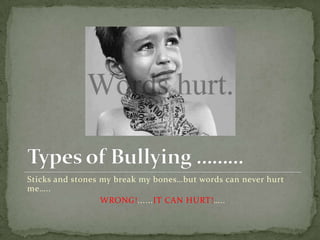
Sticks and stones my break my bones…but words can never hurt
me…..
                  WRONG!......IT CAN HURT!…..
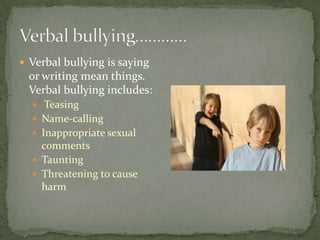
 Verbal bullying is saying
 or writing mean things.
 Verbal bullying includes:
   Teasing
   Name-calling
   Inappropriate sexual
    comments
   Taunting
   Threatening to cause
    harm
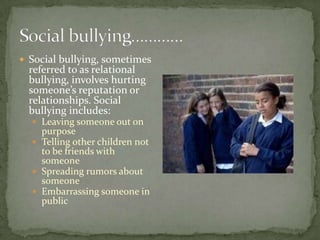
 Social bullying, sometimes
  referred to as relational
  bullying, involves hurting
  someone’s reputation or
  relationships. Social
  bullying includes:
   Leaving someone out on
    purpose
   Telling other children not
    to be friends with
    someone
   Spreading rumors about
    someone
   Embarrassing someone in
    public
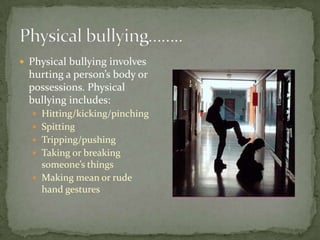
 Physical bullying involves
  hurting a person’s body or
  possessions. Physical
  bullying includes:
   Hitting/kicking/pinching
   Spitting
   Tripping/pushing
   Taking or breaking
    someone’s things
   Making mean or rude
    hand gestures
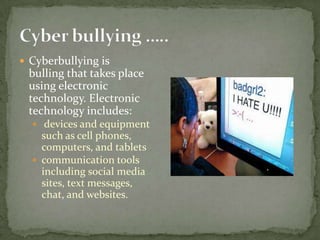
 Cyberbullying is
 bulling that takes place
 using electronic
 technology. Electronic
 technology includes:
   devices and equipment
    such as cell phones,
    computers, and tablets
   communication tools
    including social media
    sites, text messages,
    chat, and websites.
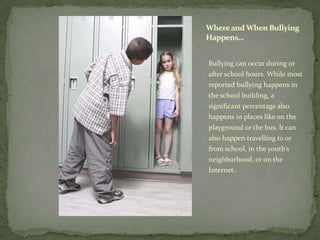
Where and When Bullying
Happens…


Bullying can occur during or
after school hours. While most
reported bullying happens in
the school building, a
significant percentage also
happens in places like on the
playground or the bus. It can
also happen travelling to or
from school, in the youth’s
neighborhood, or on the
Internet.
How to Talk About
Bullying ……                                    Prevention at School….
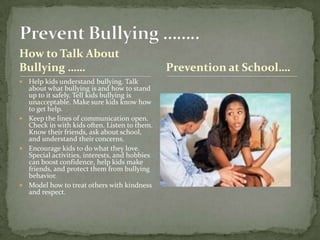
 Help kids understand bullying. Talk
  about what bullying is and how to stand
  up to it safely. Tell kids bullying is
  unacceptable. Make sure kids know how
  to get help.
 Keep the lines of communication open.
  Check in with kids often. Listen to them.
  Know their friends, ask about school,
  and understand their concerns.
 Encourage kids to do what they love.
  Special activities, interests, and hobbies
  can boost confidence, help kids make
  friends, and protect them from bullying
  behavior.
 Model how to treat others with kindness
  and respect.
How you respond can make an impact on bullying over time……
There are simple steps adults can take to stop bullying on the spot
and keep kids safe………….
 When adults respond quickly and consistently to
 bullying behavior they send the message that it is
 not acceptable..
Avoid these common
Do………                              mistakes…….
 Intervene immediately. It is      Don’t ignore it. Don’t think kids
    ok to get another adult to         can work it out without adult
    help.                              help.
   Separate the kids involved.       Don’t immediately try to sort out
                                       the facts.
   Make sure everyone is safe.       Don’t force other kids to say
   Meet any immediate medical         publicly what they saw.
    or mental health needs.           Don’t question the children
   Stay calm. Reassure the kids       involved in front of other kids.
    involved, including               Don’t talk to the kids involved
    bystanders.                        together, only separately.
   Model respectful behavior         Don’t make the kids involved
    when you intervene.                apologize or patch up relations
                                       on the spot.
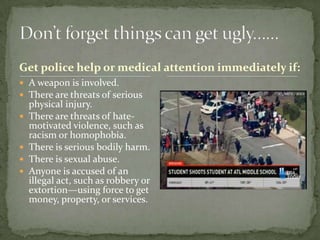
Get police help or medical attention immediately if:
 A weapon is involved.
 There are threats of serious
    physical injury.
   There are threats of hate-
    motivated violence, such as
    racism or homophobia.
   There is serious bodily harm.
   There is sexual abuse.
   Anyone is accused of an
    illegal act, such as robbery or
    extortion—using force to get
    money, property, or services.
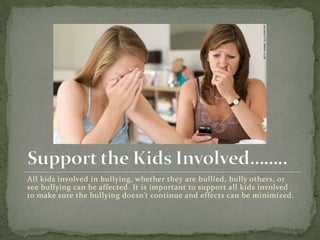
All kids involved in bullying, whether they are bullied, bully others, or
see bullying can be affected. It is important to support all kids involved
to make sure the bullying doesn’t continue and effects can be minimized.
 Listen and focus on the child.
   Learn what’s been going on and show you want to help.
 Assure the child that bullying is not their fault.
 Know that kids who are bullied may struggle with
 talking about it.
   Consider referring them to a school counselor, psychologist,
    or other mental health service.
 Give advice about what to do.
   This may involve role-playing and thinking through how the
    child might react if the bullying occurs again.
 Work together to resolve the situation and protect the
 bullied child.
   The child, parents, and school or organization may all have
    valuable input
 Make sure the child knows what the problem
 behavior is.
   Young people who bully must learn their behavior is
    wrong and harms others.
 Show kids that bullying is taken seriously.
   Calmly tell the child that bullying will not be tolerated.
    Model respectful behavior when addressing the
    problem.
 Work with the child to understand some of the
 reasons he or she bullied.
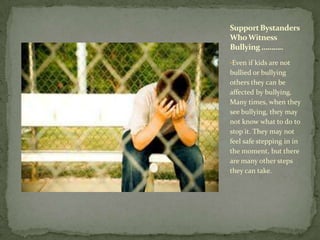
Support Bystanders
Who Witness
Bullying ………..
•Even if kids are not
bullied or bullying
others they can be
affected by bullying.
Many times, when they
see bullying, they may
not know what to do to
stop it. They may not
feel safe stepping in in
the moment, but there
are many other steps
they can take.
Stop bullying

Stop bullying

  • 1.
  • 2.
     Bullying is…..  unwanted, aggressive behavior  Bullying includes:  actions such as making threats  spreading rumors  attacking someone physically or verbally  excluding someone from a group on purpose.
  • 3.
    Sticks and stonesmy break my bones…but words can never hurt me….. WRONG!......IT CAN HURT!…..
  • 4.
     Verbal bullyingis saying or writing mean things. Verbal bullying includes:  Teasing  Name-calling  Inappropriate sexual comments  Taunting  Threatening to cause harm
  • 5.
     Social bullying,sometimes referred to as relational bullying, involves hurting someone’s reputation or relationships. Social bullying includes:  Leaving someone out on purpose  Telling other children not to be friends with someone  Spreading rumors about someone  Embarrassing someone in public
  • 6.
     Physical bullyinginvolves hurting a person’s body or possessions. Physical bullying includes:  Hitting/kicking/pinching  Spitting  Tripping/pushing  Taking or breaking someone’s things  Making mean or rude hand gestures
  • 7.
     Cyberbullying is bulling that takes place using electronic technology. Electronic technology includes:  devices and equipment such as cell phones, computers, and tablets  communication tools including social media sites, text messages, chat, and websites.
  • 8.
    Where and WhenBullying Happens… Bullying can occur during or after school hours. While most reported bullying happens in the school building, a significant percentage also happens in places like on the playground or the bus. It can also happen travelling to or from school, in the youth’s neighborhood, or on the Internet.
  • 9.
    How to TalkAbout Bullying …… Prevention at School….  Help kids understand bullying. Talk about what bullying is and how to stand up to it safely. Tell kids bullying is unacceptable. Make sure kids know how to get help.  Keep the lines of communication open. Check in with kids often. Listen to them. Know their friends, ask about school, and understand their concerns.  Encourage kids to do what they love. Special activities, interests, and hobbies can boost confidence, help kids make friends, and protect them from bullying behavior.  Model how to treat others with kindness and respect.
  • 10.
    How you respondcan make an impact on bullying over time…… There are simple steps adults can take to stop bullying on the spot and keep kids safe………….
  • 11.
     When adultsrespond quickly and consistently to bullying behavior they send the message that it is not acceptable..
  • 12.
    Avoid these common Do……… mistakes…….  Intervene immediately. It is  Don’t ignore it. Don’t think kids ok to get another adult to can work it out without adult help. help.  Separate the kids involved.  Don’t immediately try to sort out the facts.  Make sure everyone is safe.  Don’t force other kids to say  Meet any immediate medical publicly what they saw. or mental health needs.  Don’t question the children  Stay calm. Reassure the kids involved in front of other kids. involved, including  Don’t talk to the kids involved bystanders. together, only separately.  Model respectful behavior  Don’t make the kids involved when you intervene. apologize or patch up relations on the spot.
  • 13.
    Get police helpor medical attention immediately if:  A weapon is involved.  There are threats of serious physical injury.  There are threats of hate- motivated violence, such as racism or homophobia.  There is serious bodily harm.  There is sexual abuse.  Anyone is accused of an illegal act, such as robbery or extortion—using force to get money, property, or services.
  • 14.
    All kids involvedin bullying, whether they are bullied, bully others, or see bullying can be affected. It is important to support all kids involved to make sure the bullying doesn’t continue and effects can be minimized.
  • 15.
     Listen andfocus on the child.  Learn what’s been going on and show you want to help.  Assure the child that bullying is not their fault.  Know that kids who are bullied may struggle with talking about it.  Consider referring them to a school counselor, psychologist, or other mental health service.  Give advice about what to do.  This may involve role-playing and thinking through how the child might react if the bullying occurs again.  Work together to resolve the situation and protect the bullied child.  The child, parents, and school or organization may all have valuable input
  • 16.
     Make surethe child knows what the problem behavior is.  Young people who bully must learn their behavior is wrong and harms others.  Show kids that bullying is taken seriously.  Calmly tell the child that bullying will not be tolerated. Model respectful behavior when addressing the problem.  Work with the child to understand some of the reasons he or she bullied.
  • 17.
    Support Bystanders Who Witness Bullying……….. •Even if kids are not bullied or bullying others they can be affected by bullying. Many times, when they see bullying, they may not know what to do to stop it. They may not feel safe stepping in in the moment, but there are many other steps they can take.