Stoichiometry of combustion
Problems on volumetric and
gravimetric analysis
By
Dr. S. PUGALENDHI, Dr. D. RAMESH, Er. T. AYISHA NAZIBA
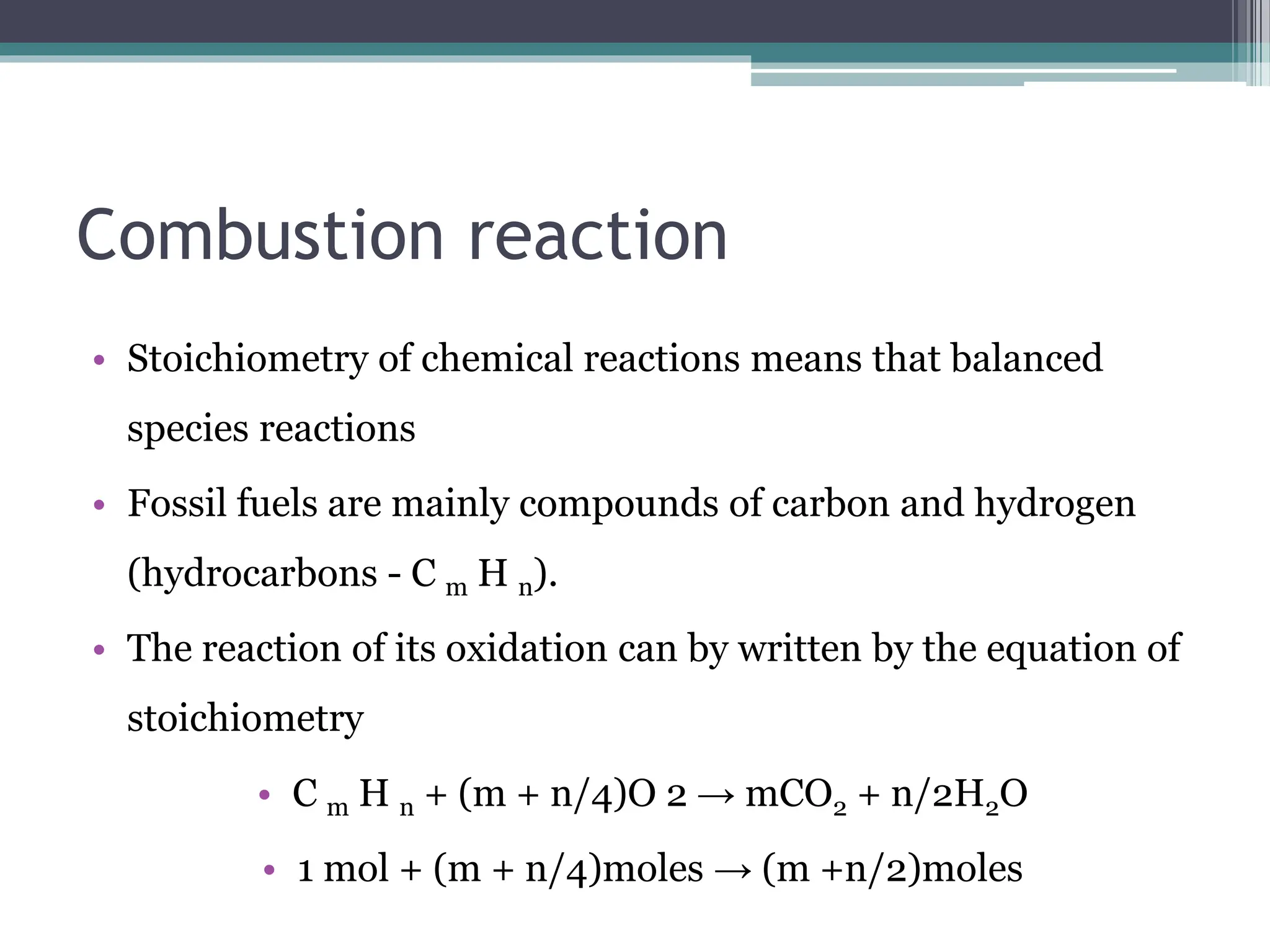
Combustion reaction
• Stoichiometry of chemical reactions means that balanced
species reactions
• Fossil fuels are mainly compounds of carbon and hydrogen
(hydrocarbons - C m H n).
• The reaction of its oxidation can by written by the equation of
stoichiometry
• C m H n + (m + n/4)O 2 → mCO2 + n/2H2O
• 1 mol + (m + n/4)moles → (m +n/2)moles
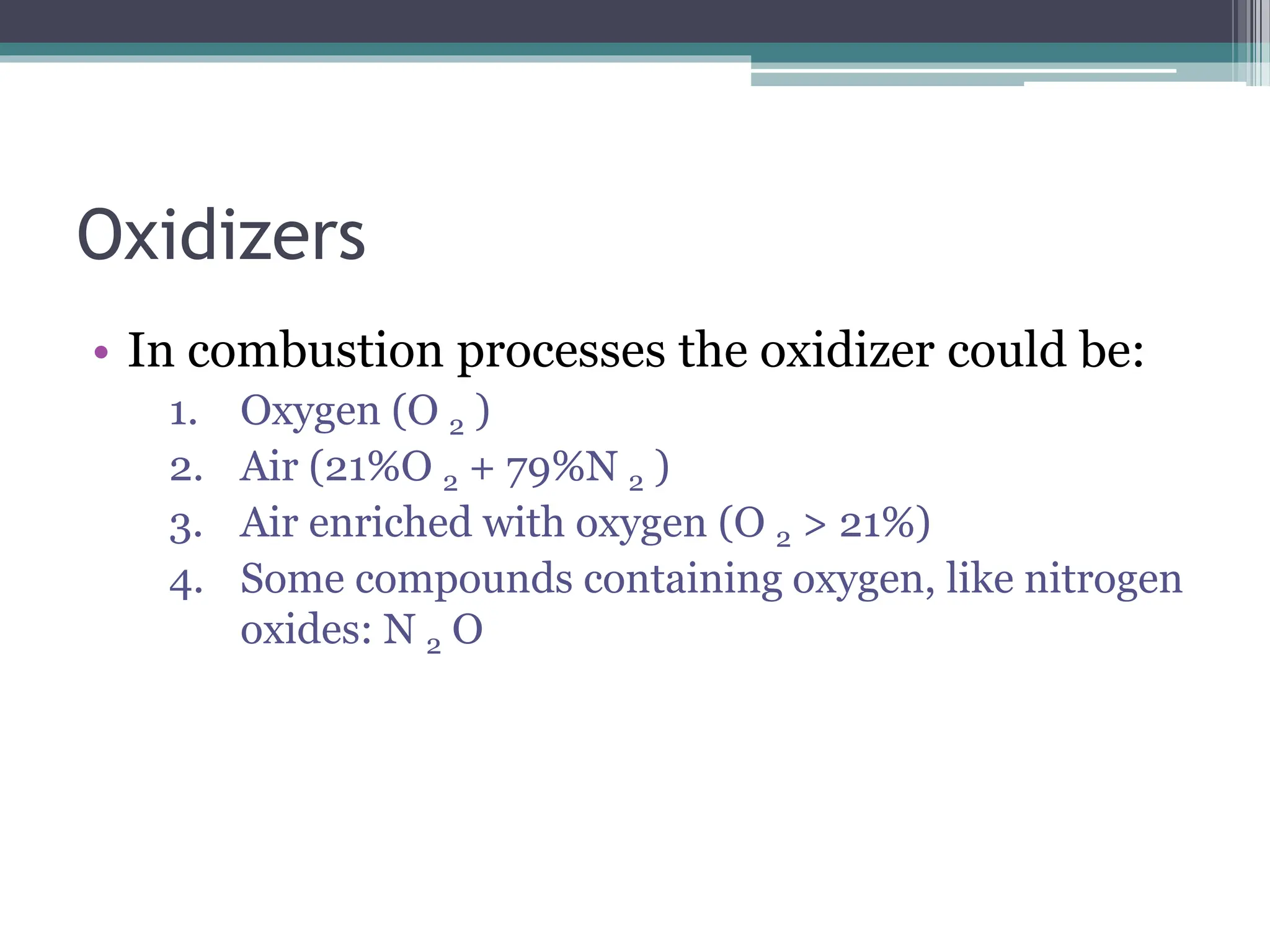
Oxidizers
• In combustion processes the oxidizer could be:
1. Oxygen (O 2 )
2. Air (21%O 2 + 79%N 2 )
3. Air enriched with oxygen (O 2 > 21%)
4. Some compounds containing oxygen, like nitrogen
oxides: N 2 O
Combustion equations of solid fuels
• C + O2  CO2
• 1 mol + 1mol  1mol
• 12 kg + 32kg  44 kg
• 1 kg +8/3 kg 11/3 kg
• 2C + O2  2CO
• 2 mol + 1mol  2mol
• 24 kg + 32kg  56 kg
• 1 kg +4/3 kg 7/3 kg
• 2CO + O2  2CO2
• 2 mol + 1mol  2mol
• 56 kg + 32kg  88 kg
• 1 kg +4/7 kg 11/7 kg
• S + O2  SO2
• 1 mol + 1mol  1mol
• 32kg + 32kg  64kg
• 1 kg +1 kg 2 kg
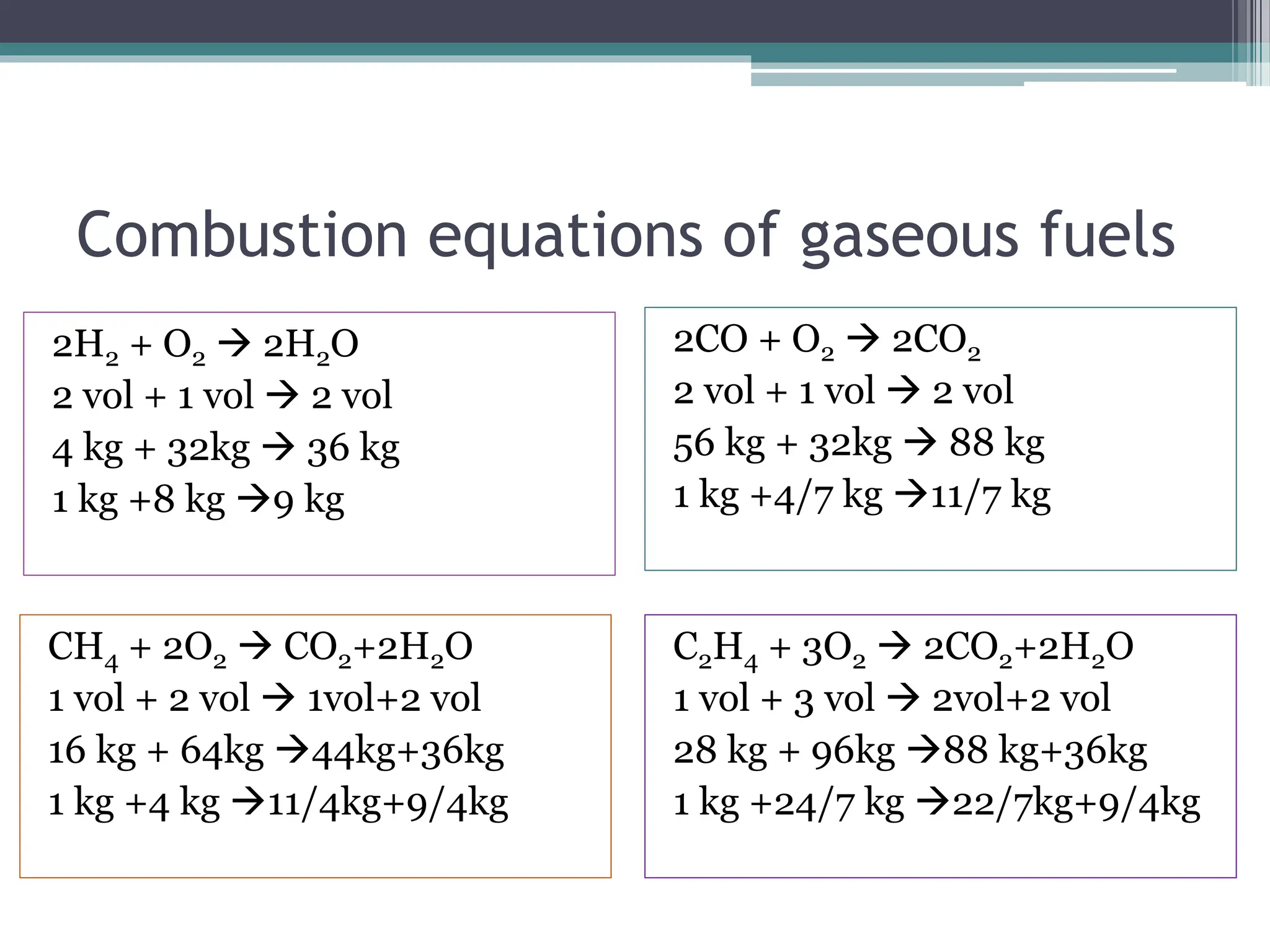
Combustion equations of gaseous fuels
2H2 + O2  2H2O
2 vol + 1 vol  2 vol
4 kg + 32kg  36 kg
1 kg +8 kg 9 kg
CH4 + 2O2  CO2+2H2O
1 vol + 2 vol  1vol+2 vol
16 kg + 64kg 44kg+36kg
1 kg +4 kg 11/4kg+9/4kg
2CO + O2  2CO2
2 vol + 1 vol  2 vol
56 kg + 32kg  88 kg
1 kg +4/7 kg 11/7 kg
C2H4 + 3O2  2CO2+2H2O
1 vol + 3 vol  2vol+2 vol
28 kg + 96kg 88 kg+36kg
1 kg +24/7 kg 22/7kg+9/4kg
Theoretical air requirement
= 100/23 [(8/3C + 8H2 + S)-O2 ] kg
= 100/21 [(0.5CO+ 0.5H2 +2CH4 + 3C2H4)-O2 ]m3
Volumetric to Mass analysis
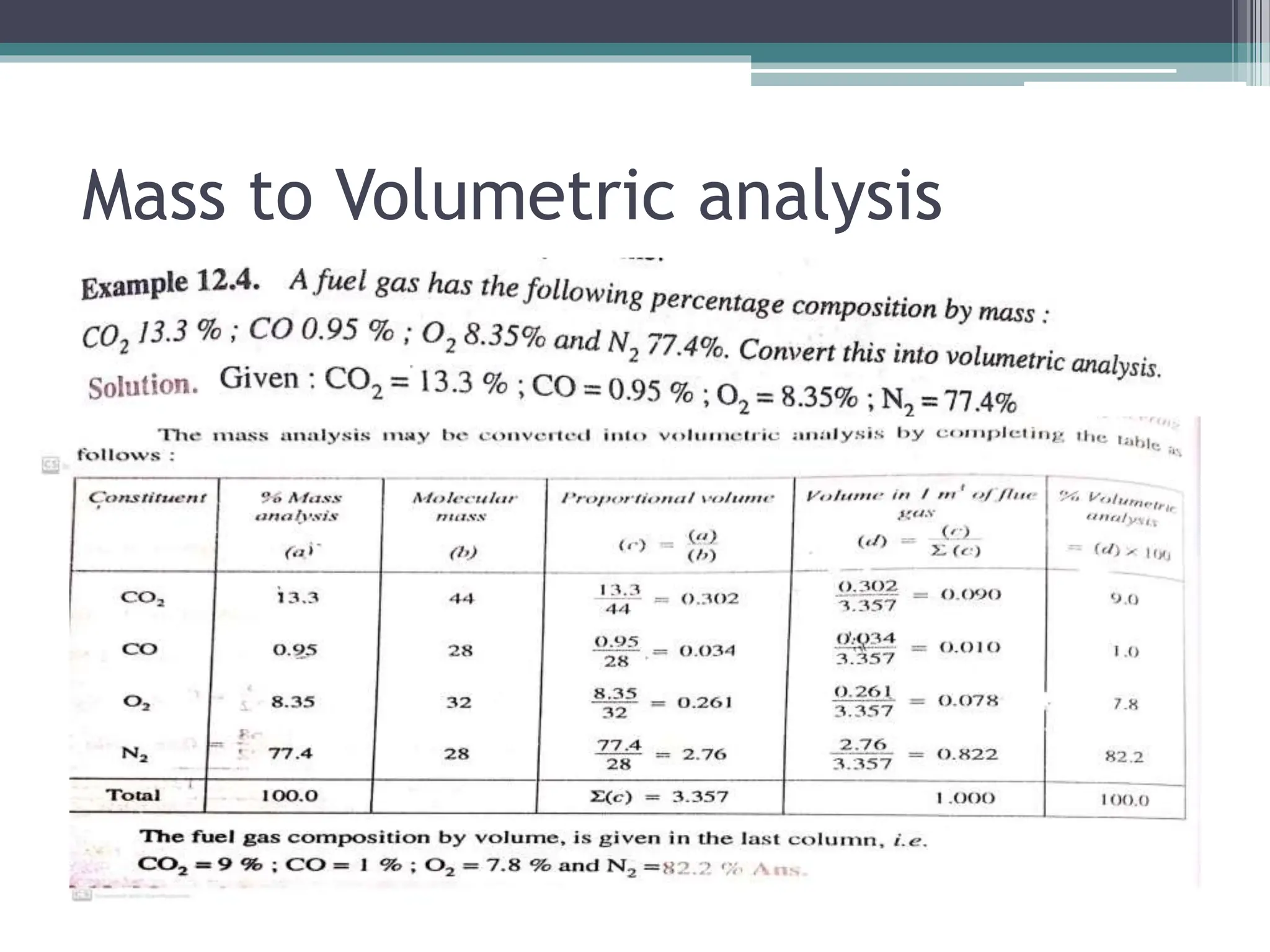
Mass to Volumetric analysis
Stoichiometry of combustion of fuels.pptx

Stoichiometry of combustion of fuels.pptx

  • 1.
    Stoichiometry of combustion Problemson volumetric and gravimetric analysis By Dr. S. PUGALENDHI, Dr. D. RAMESH, Er. T. AYISHA NAZIBA
  • 2.
    Combustion reaction • Stoichiometryof chemical reactions means that balanced species reactions • Fossil fuels are mainly compounds of carbon and hydrogen (hydrocarbons - C m H n). • The reaction of its oxidation can by written by the equation of stoichiometry • C m H n + (m + n/4)O 2 → mCO2 + n/2H2O • 1 mol + (m + n/4)moles → (m +n/2)moles
  • 3.
    Oxidizers • In combustionprocesses the oxidizer could be: 1. Oxygen (O 2 ) 2. Air (21%O 2 + 79%N 2 ) 3. Air enriched with oxygen (O 2 > 21%) 4. Some compounds containing oxygen, like nitrogen oxides: N 2 O
  • 4.
    Combustion equations ofsolid fuels • C + O2  CO2 • 1 mol + 1mol  1mol • 12 kg + 32kg  44 kg • 1 kg +8/3 kg 11/3 kg • 2C + O2  2CO • 2 mol + 1mol  2mol • 24 kg + 32kg  56 kg • 1 kg +4/3 kg 7/3 kg • 2CO + O2  2CO2 • 2 mol + 1mol  2mol • 56 kg + 32kg  88 kg • 1 kg +4/7 kg 11/7 kg • S + O2  SO2 • 1 mol + 1mol  1mol • 32kg + 32kg  64kg • 1 kg +1 kg 2 kg
  • 5.
    Combustion equations ofgaseous fuels 2H2 + O2  2H2O 2 vol + 1 vol  2 vol 4 kg + 32kg  36 kg 1 kg +8 kg 9 kg CH4 + 2O2  CO2+2H2O 1 vol + 2 vol  1vol+2 vol 16 kg + 64kg 44kg+36kg 1 kg +4 kg 11/4kg+9/4kg 2CO + O2  2CO2 2 vol + 1 vol  2 vol 56 kg + 32kg  88 kg 1 kg +4/7 kg 11/7 kg C2H4 + 3O2  2CO2+2H2O 1 vol + 3 vol  2vol+2 vol 28 kg + 96kg 88 kg+36kg 1 kg +24/7 kg 22/7kg+9/4kg
  • 6.
    Theoretical air requirement =100/23 [(8/3C + 8H2 + S)-O2 ] kg = 100/21 [(0.5CO+ 0.5H2 +2CH4 + 3C2H4)-O2 ]m3
  • 7.
  • 8.