Steam Turbine Condition and
Performance Assessment (Case Study)
Pichai Chaibamrung
ty_giuly@Hotmail.com
Challenging
• Dismantling for inspection is expensive cost not only
maintenance but also contribution from production
• Calculation steam turbine performance is difficult because it is
varied on throttle flow
• Uncontrolled extraction can not control its condition (P,T,F)
and its flow is not measured
• The wetness fraction at exhaust can not measured by typical
instrument
Manual calculation can not take into account
Objective
• To evaluate the current performance of steam turbine
package comparing to design performance
• To assess condition of turbine sealing, blade profile, governor
valve, heat exchanger fouling without opening
• To support information for maintenance team for preparing
outage work
• To support information to refurbish or upgrade performance
• To assess instrument condition
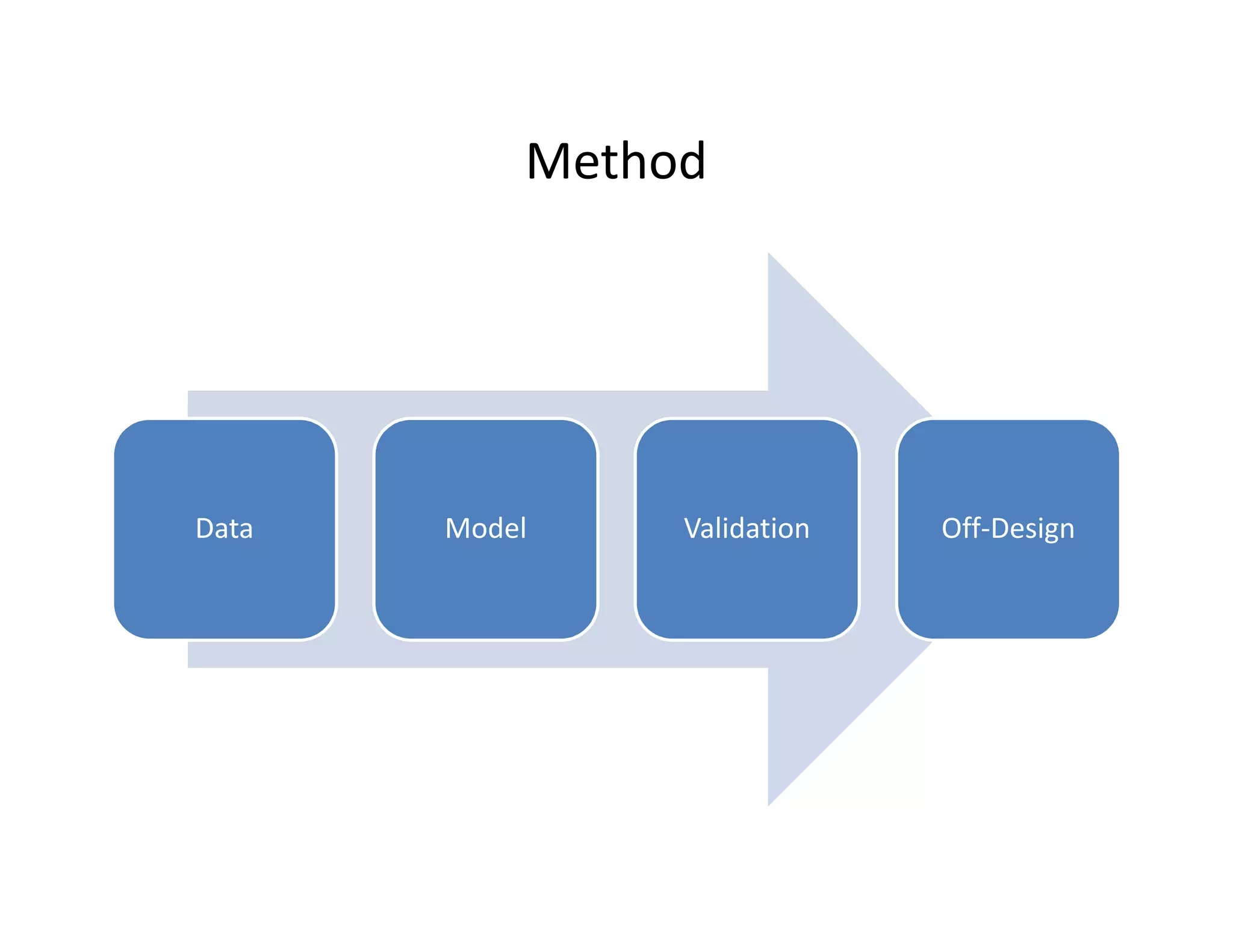
Method
Data Model Validation Off-Design
Method
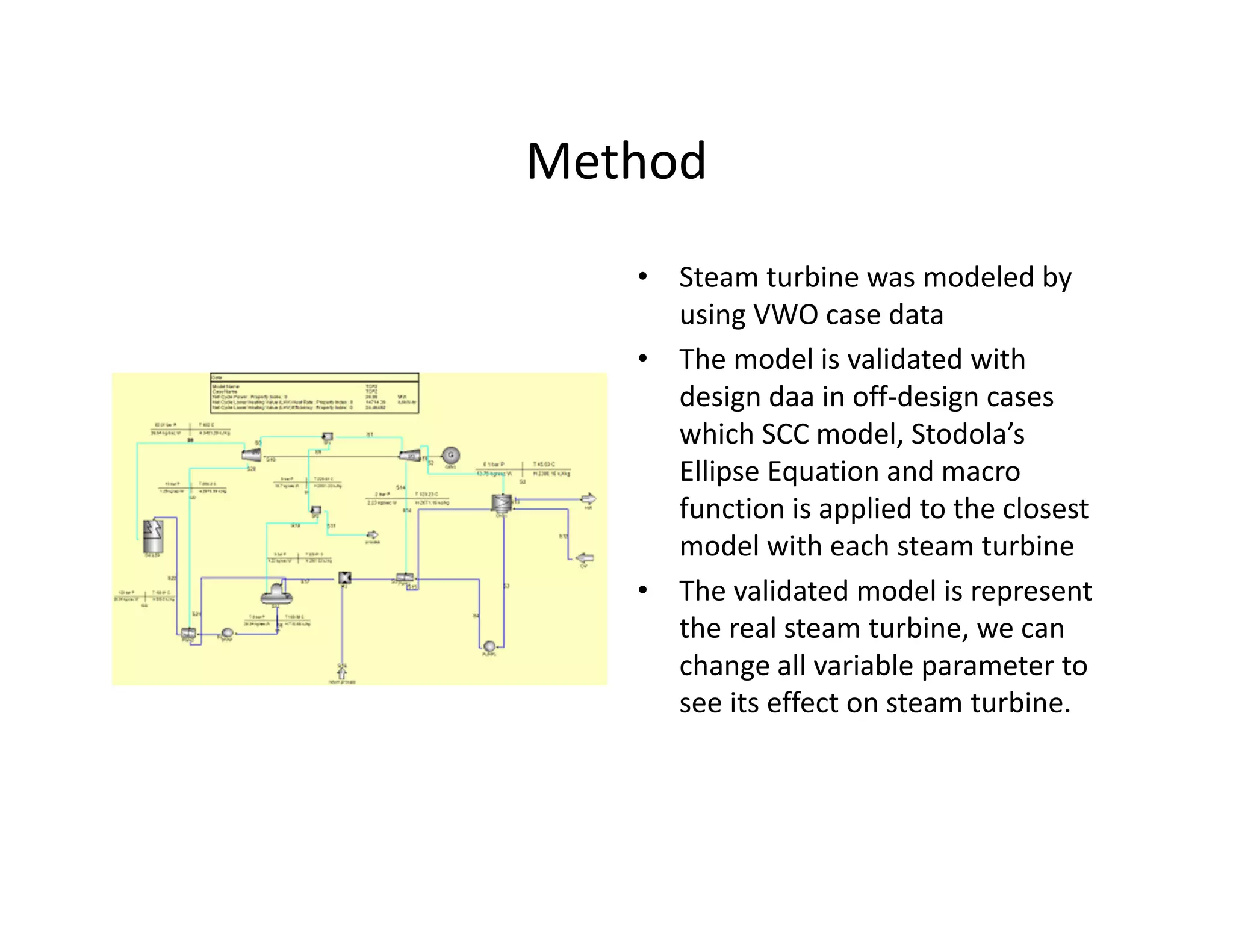
• Steam turbine was modeled by
using VWO case data
• The model is validated with
design daa in off-design cases
which SCC model, Stodola’s
Ellipse Equation and macro
function is applied to the closest
model with each steam turbine
• The validated model is represent
the real steam turbine, we can
change all variable parameter to
see its effect on steam turbine.
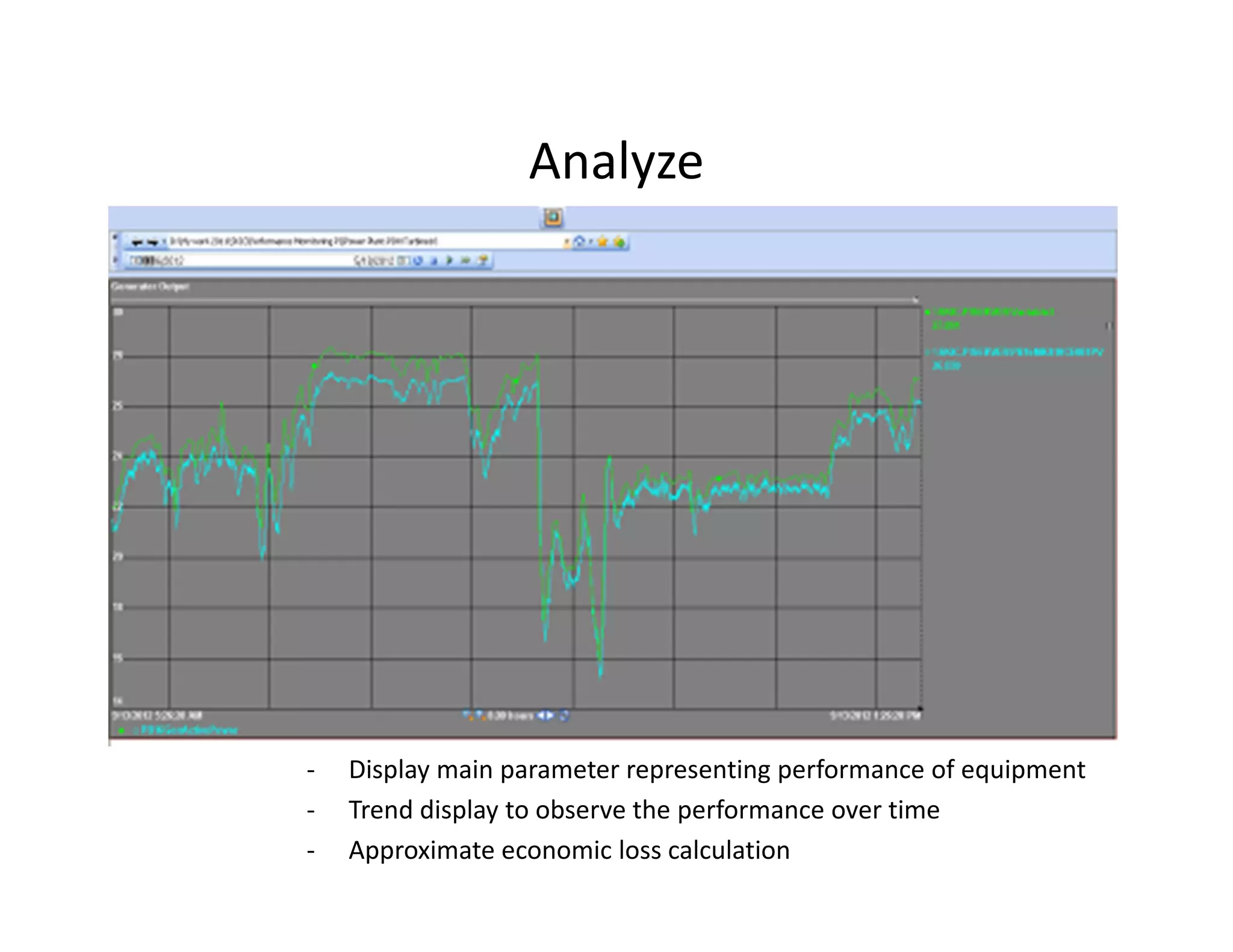
Analyze
- Display main parameter representing performance of equipment
- Trend display to observe the performance over time
- Approximate economic loss calculation
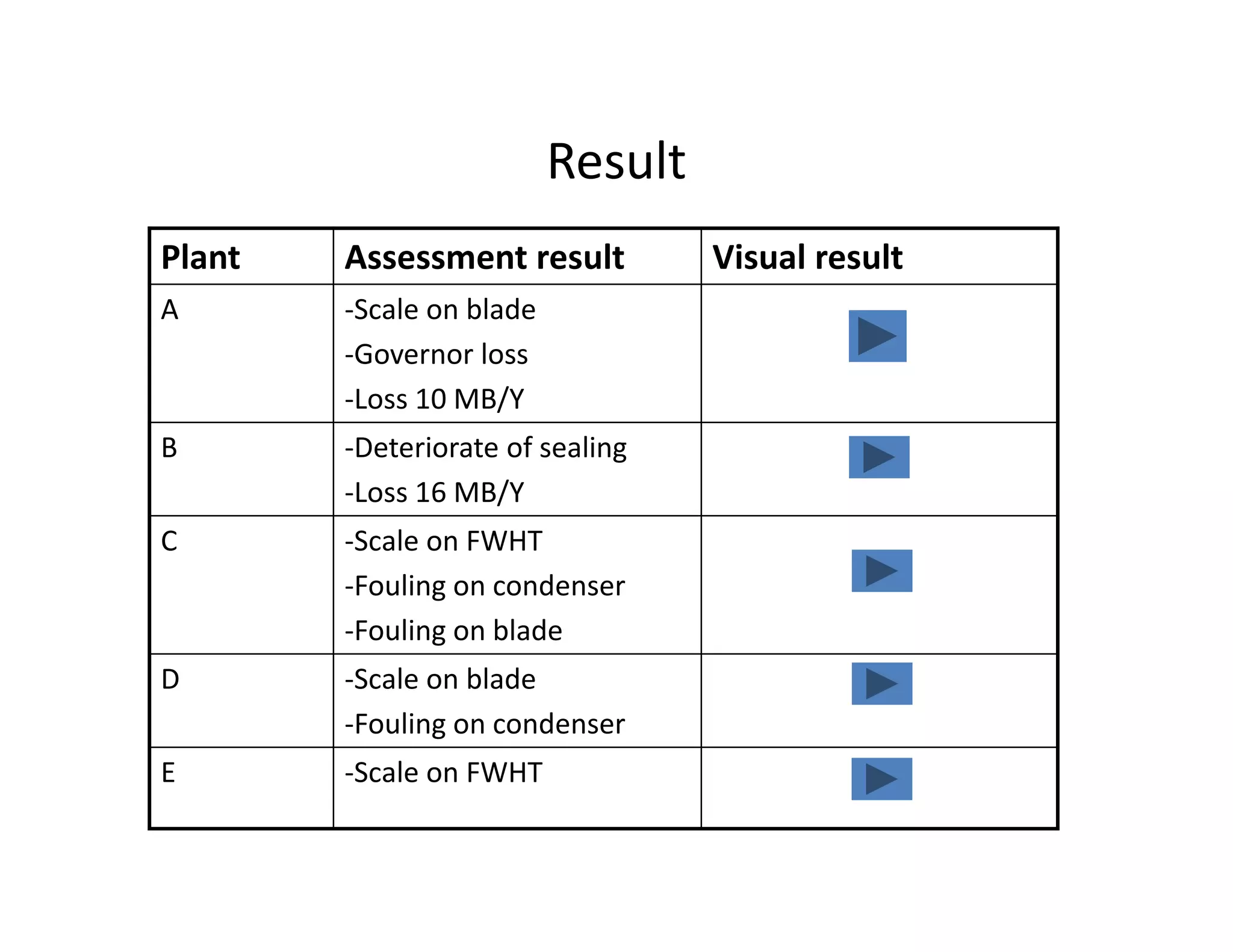
Result
Plant Assessment result Visual result
A -Scale on blade
-Governor loss
-Loss 10 MB/Y
B -Deteriorate of sealing
-Loss 16 MB/Y
C -Scale on FWHT
-Fouling on condenser
-Fouling on blade
D -Scale on blade
-Fouling on condenser
E -Scale on FWHT
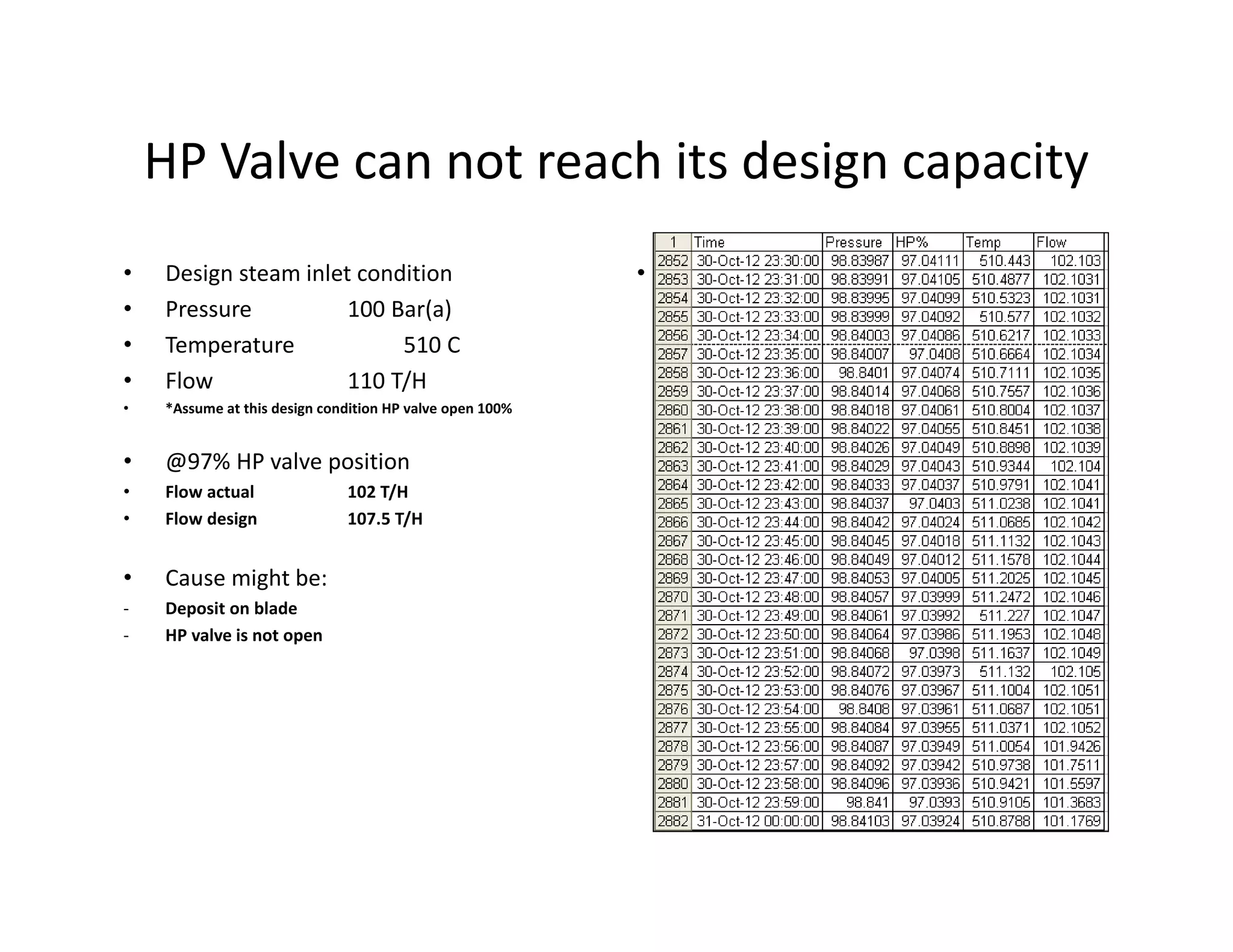
HP Valve can not reach its design capacity
• Design steam inlet condition
• Pressure 100 Bar(a)
• Temperature 510 C
• Flow 110 T/H
• *Assume at this design condition HP valve open 100%
• @97% HP valve position
• Flow actual 102 T/H
• Flow design 107.5 T/H
• Cause might be:
- Deposit on blade
- HP valve is not open
• Actual Operation
Wheel pressure chamber to high
Wheel Pressure Chamber @ 107 T/H
60
62
64
66
68
70
72
74
76
78
2551 2552 2553 2554 2555
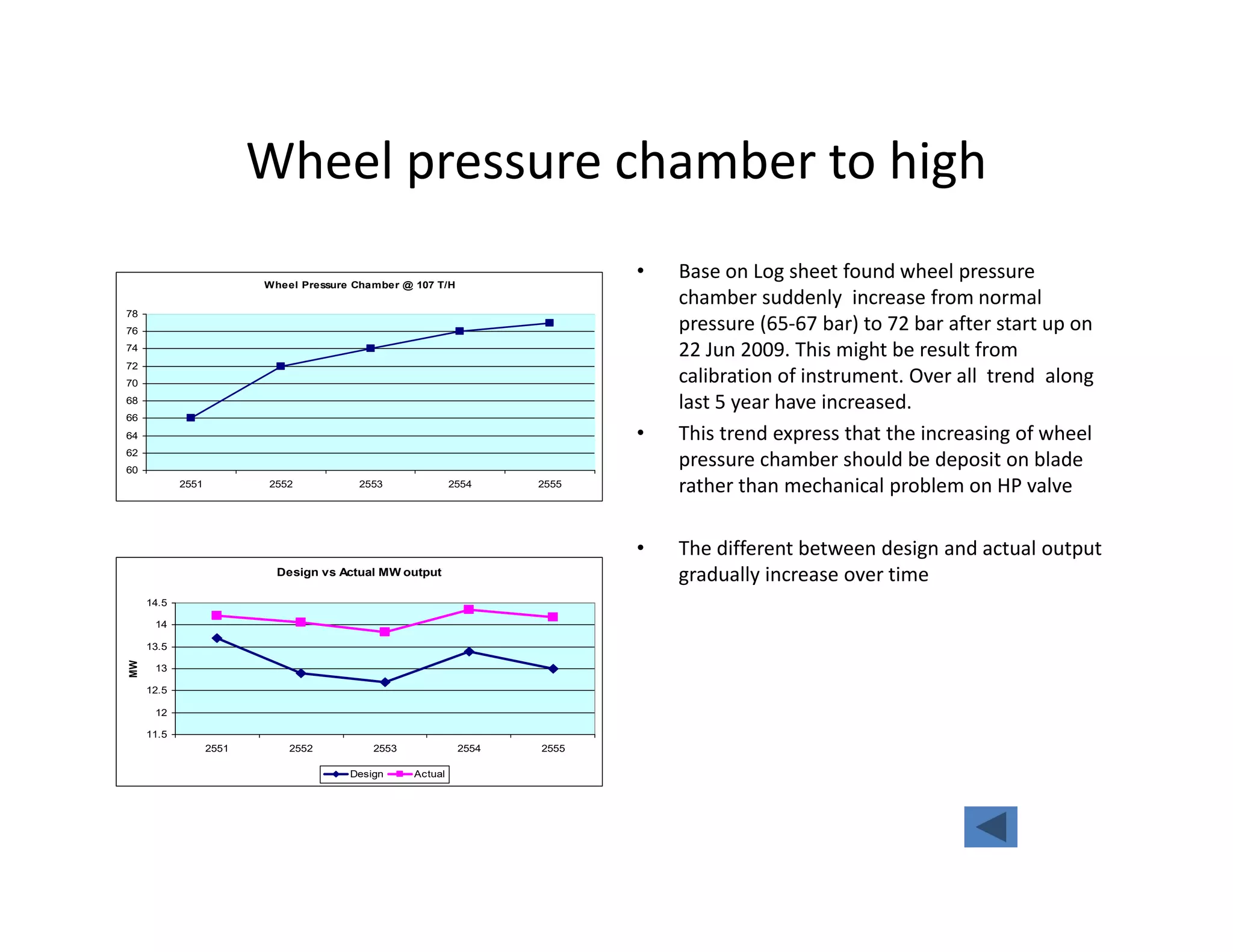
• Base on Log sheet found wheel pressure
chamber suddenly increase from normal
pressure (65-67 bar) to 72 bar after start up on
22 Jun 2009. This might be result from
calibration of instrument. Over all trend along
last 5 year have increased.
• This trend express that the increasing of wheel
pressure chamber should be deposit on blade
rather than mechanical problem on HP valve
• The different between design and actual output
gradually increase over timeDesign vs Actual MW output
11.5
12
12.5
13
13.5
14
14.5
2551 2552 2553 2554 2555
MW
Design Actual
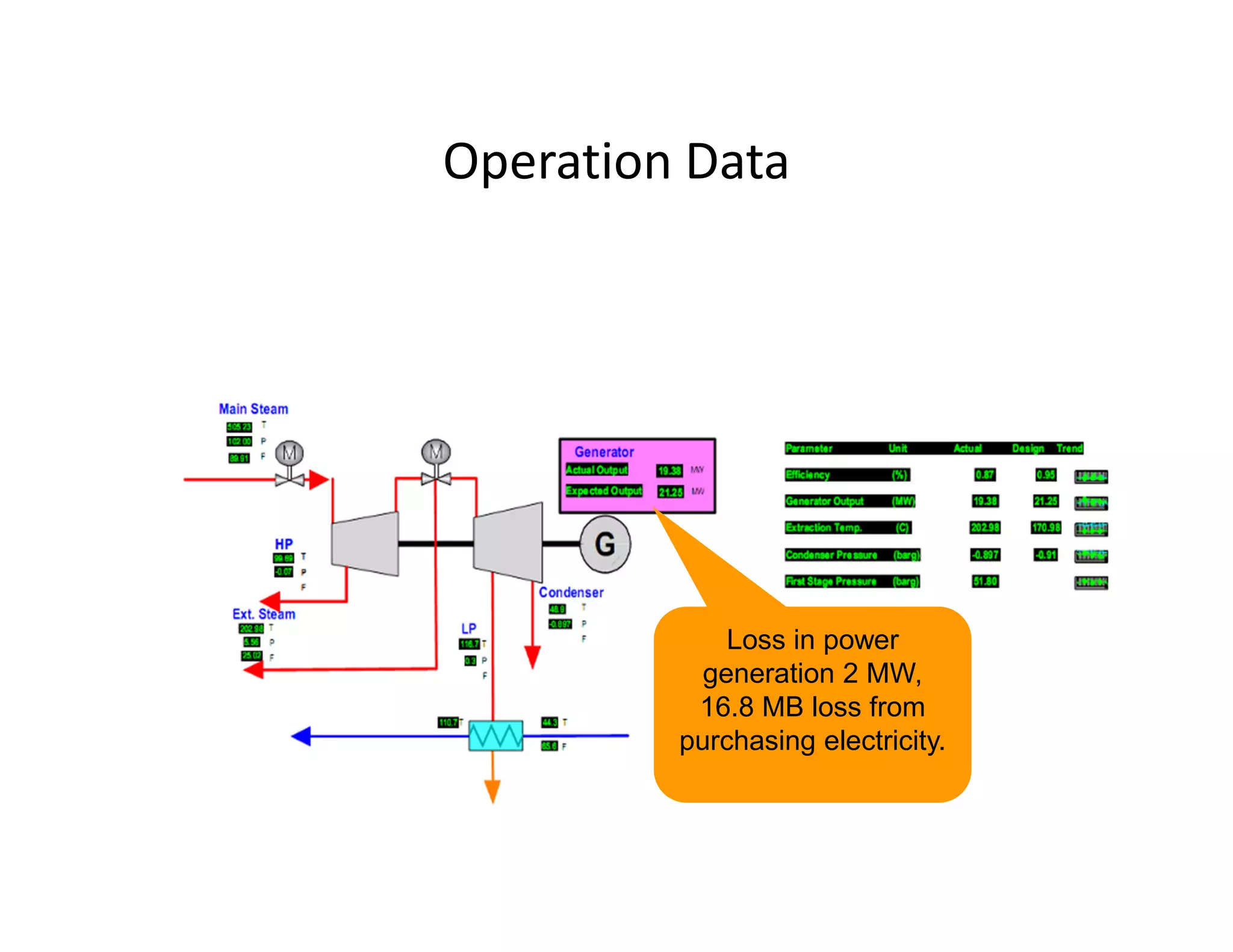
Operation Data
Loss in power
generation 2 MW,
16.8 MB loss from
purchasing electricity.
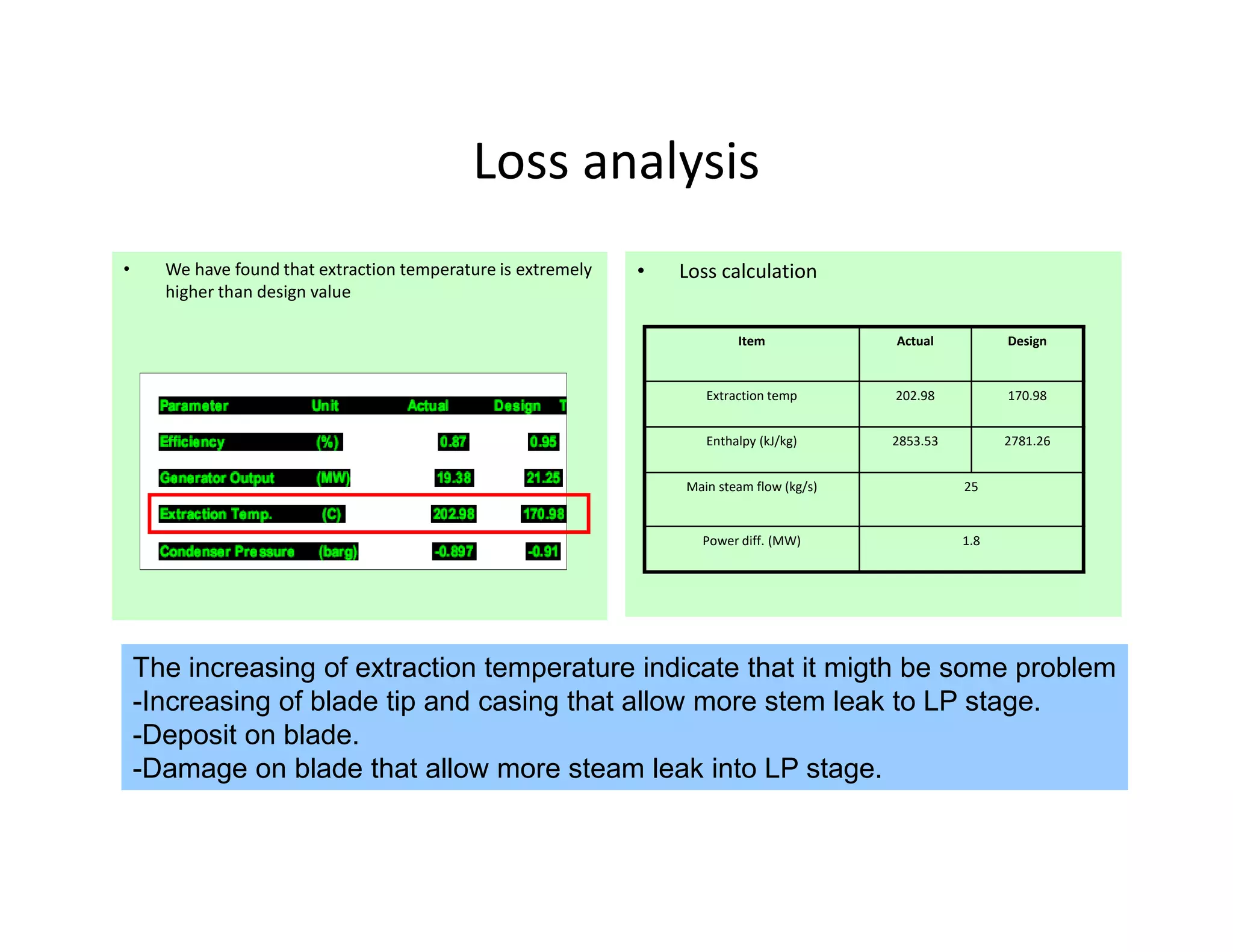
Loss analysis
• We have found that extraction temperature is extremely
higher than design value
• Loss calculation
Item Actual Design
Extraction temp 202.98 170.98
Enthalpy (kJ/kg) 2853.53 2781.26
Main steam flow (kg/s) 25
Power diff. (MW) 1.8
The increasing of extraction temperature indicate that it migth be some problem
-Increasing of blade tip and casing that allow more stem leak to LP stage.
-Deposit on blade.
-Damage on blade that allow more steam leak into LP stage.
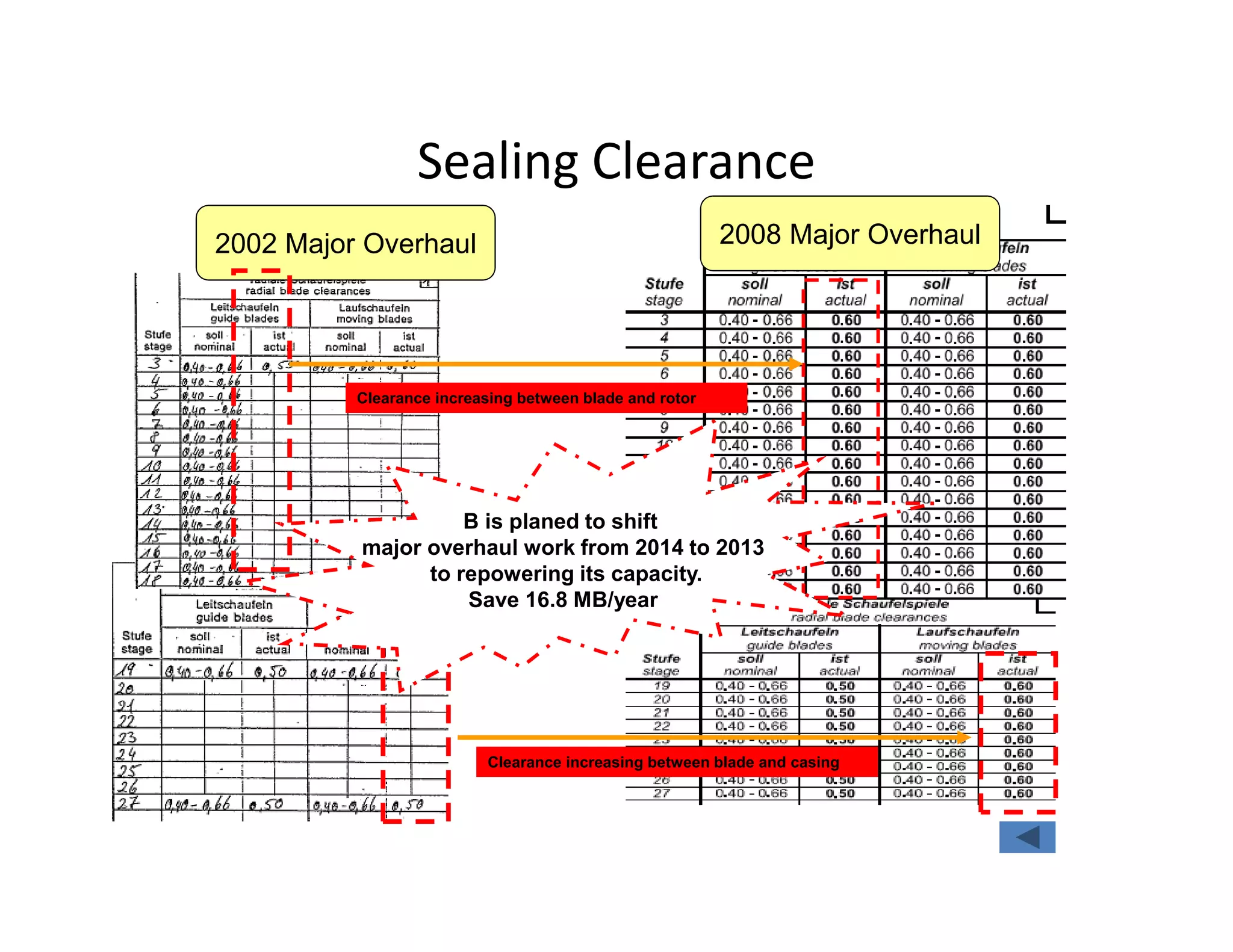
Sealing Clearance
2002 Major Overhaul 2008 Major Overhaul
B is planed to shift
major overhaul work from 2014 to 2013
to repowering its capacity.
Save 16.8 MB/year
Clearance increasing between blade and casing
Clearance increasing between blade and rotor
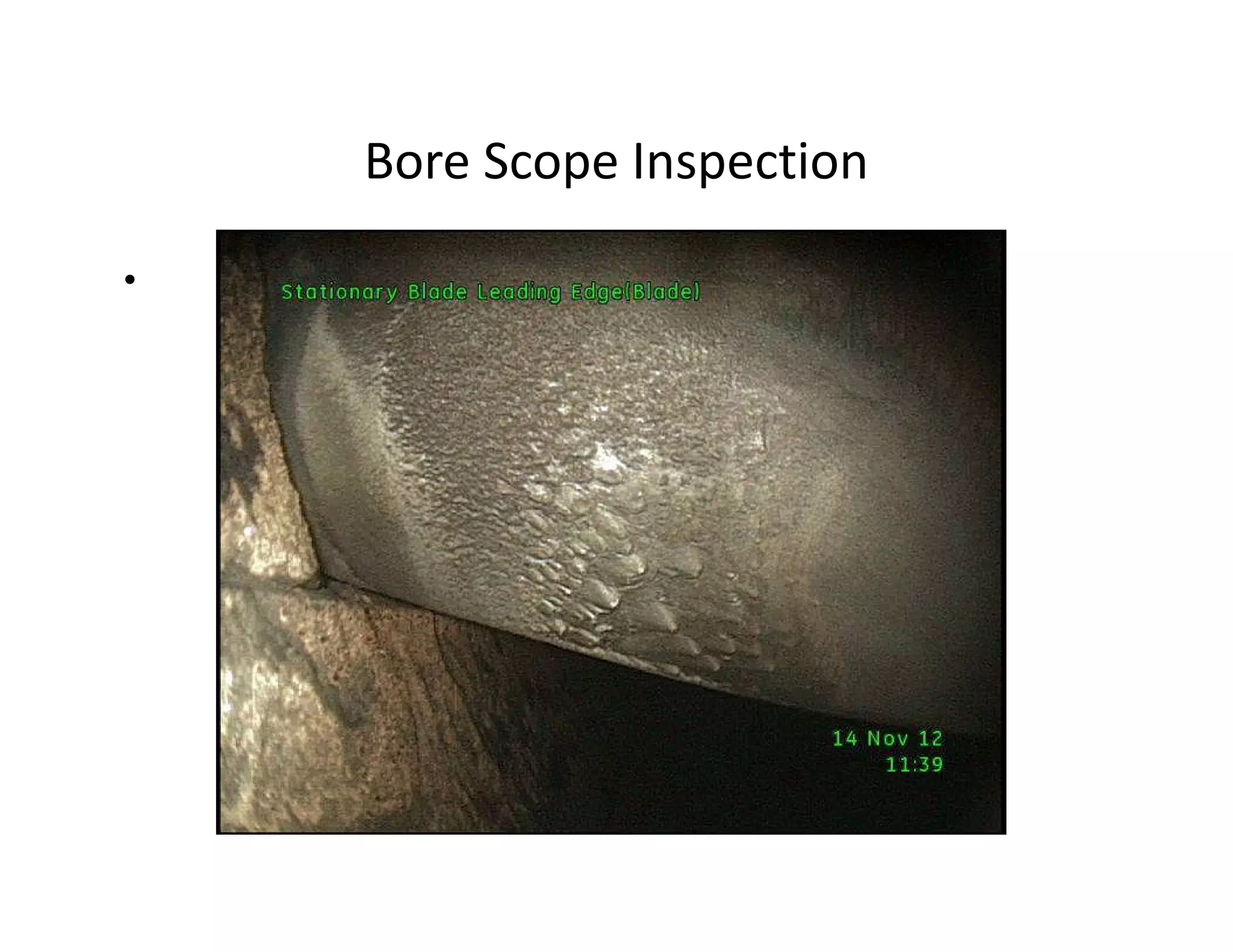
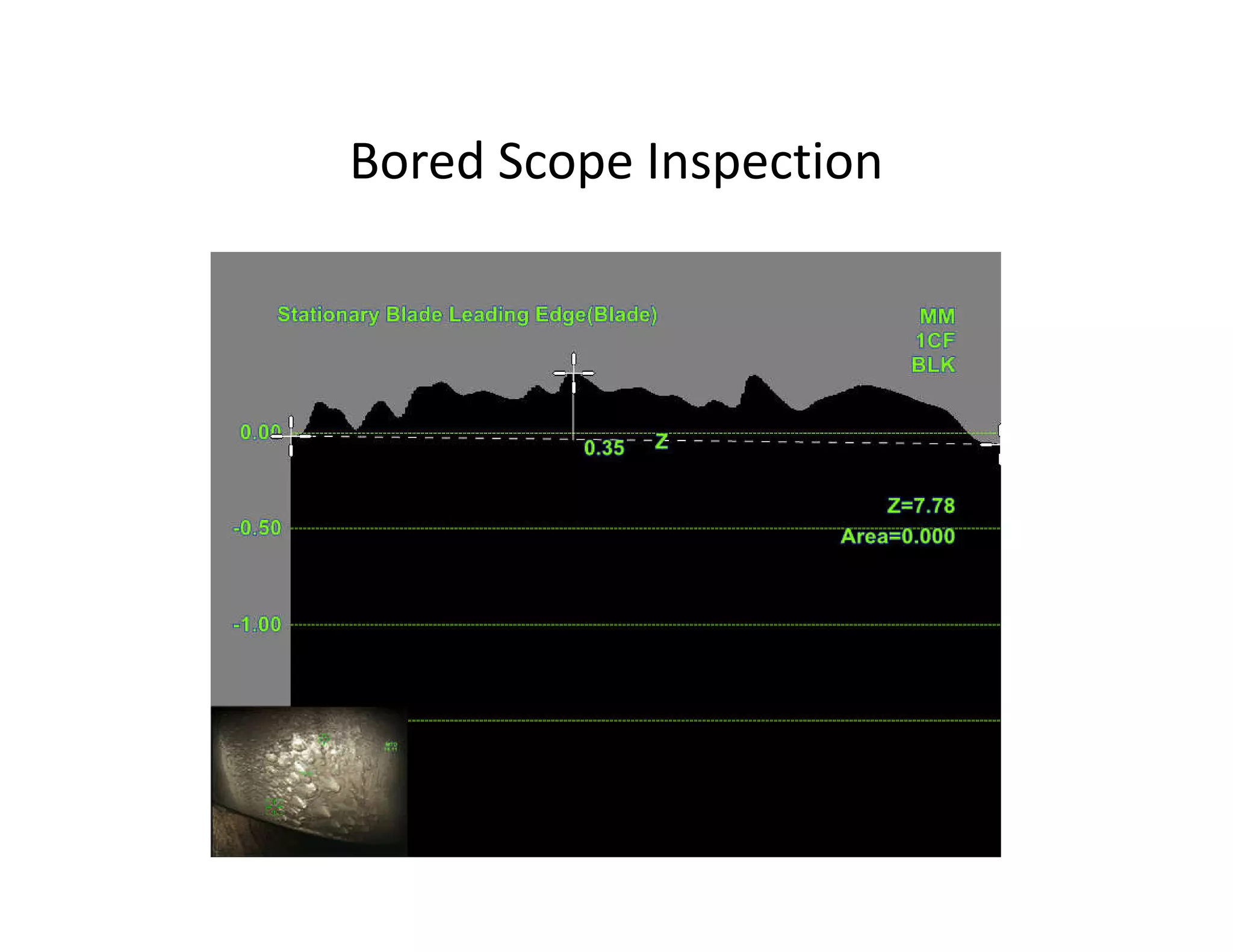
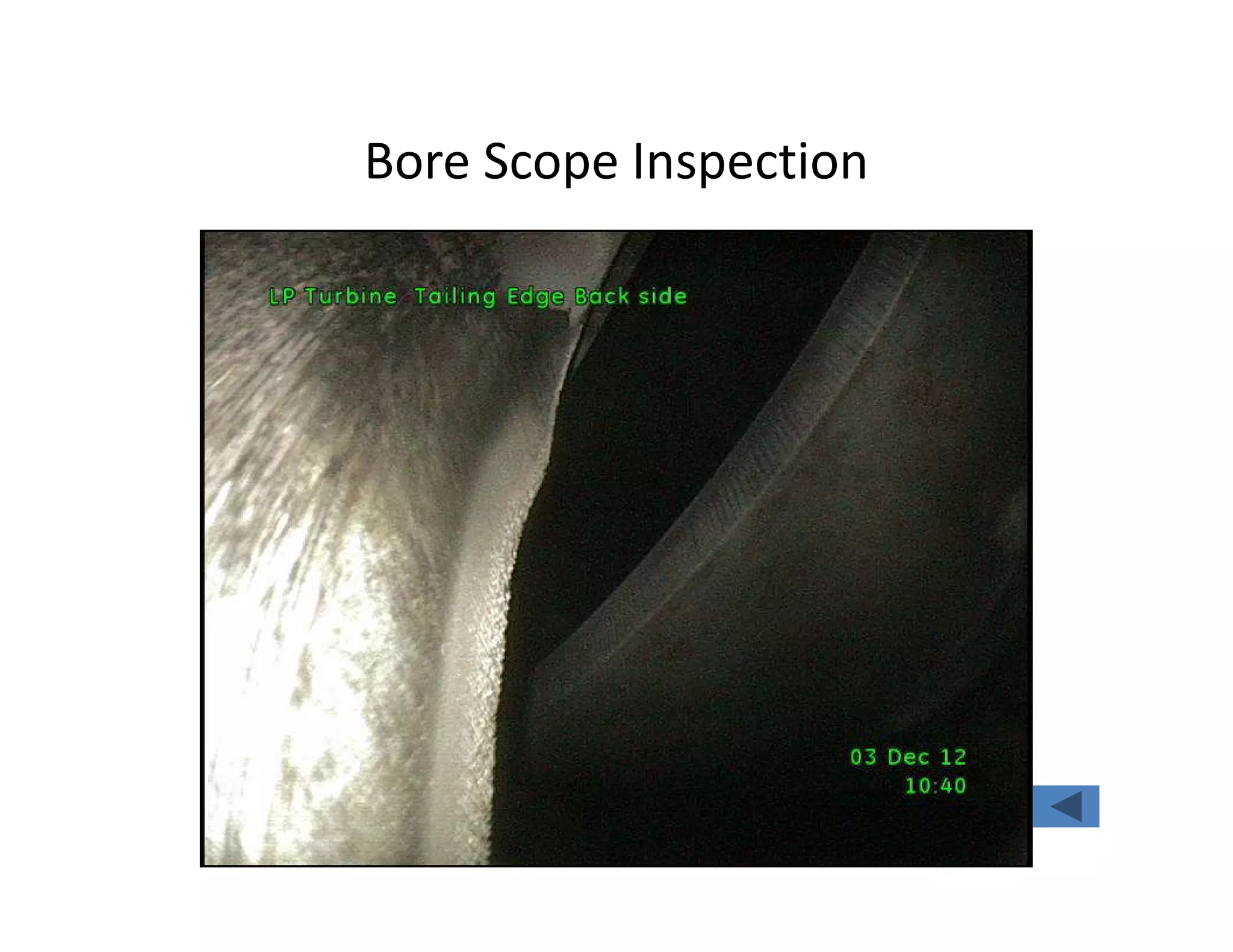
Bore Scope Inspection
•
Bored Scope Inspection
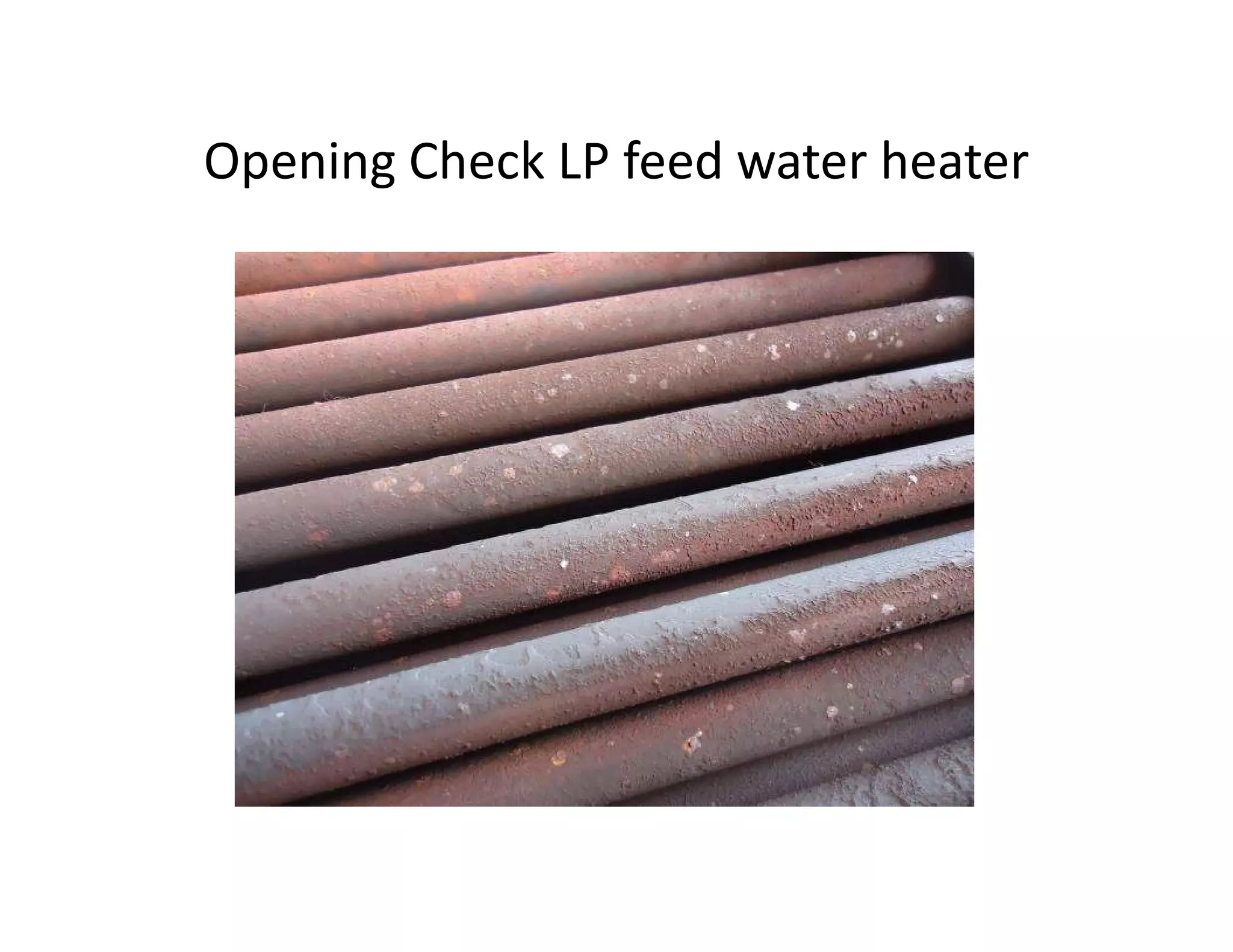
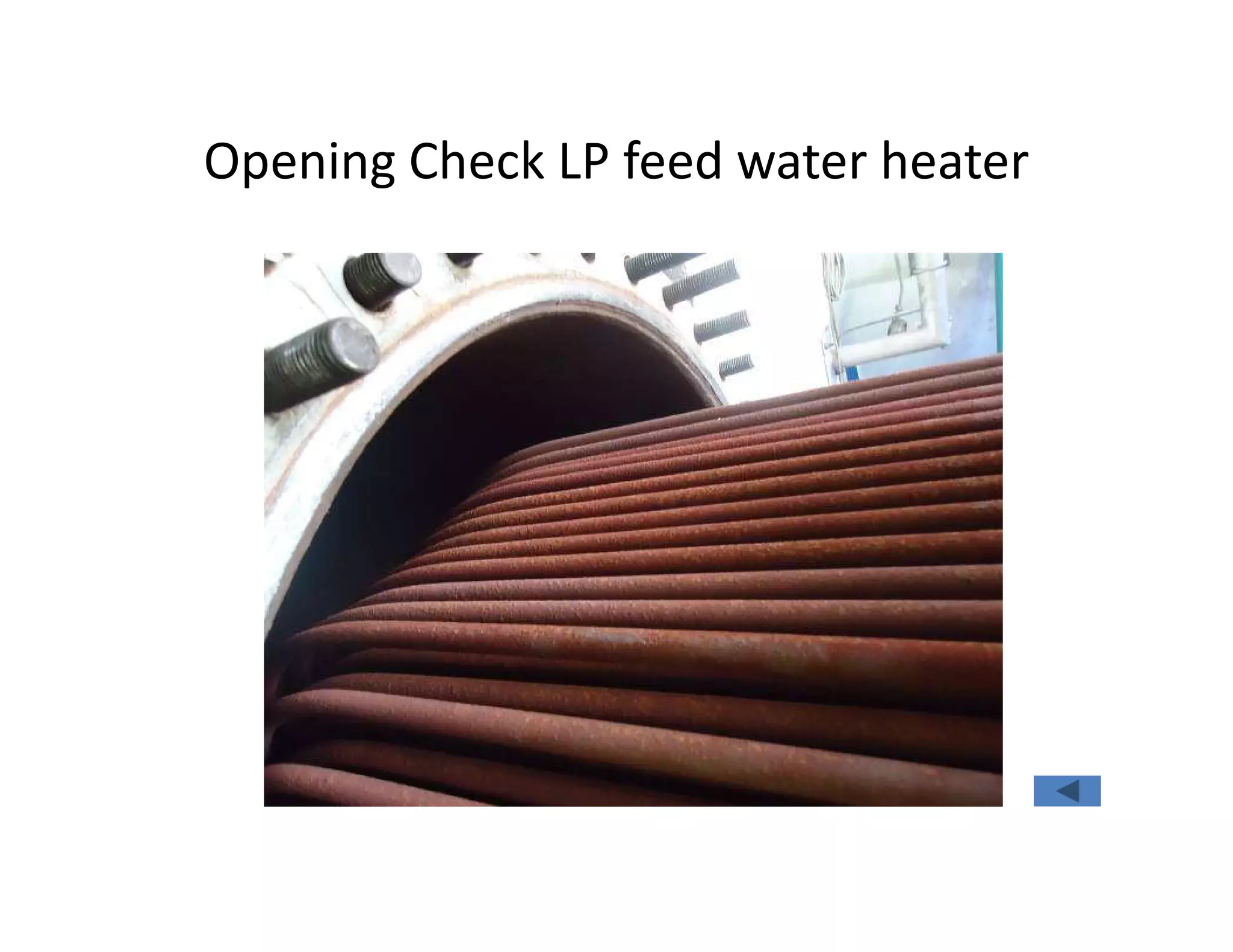
Opening Check LP feed water heater
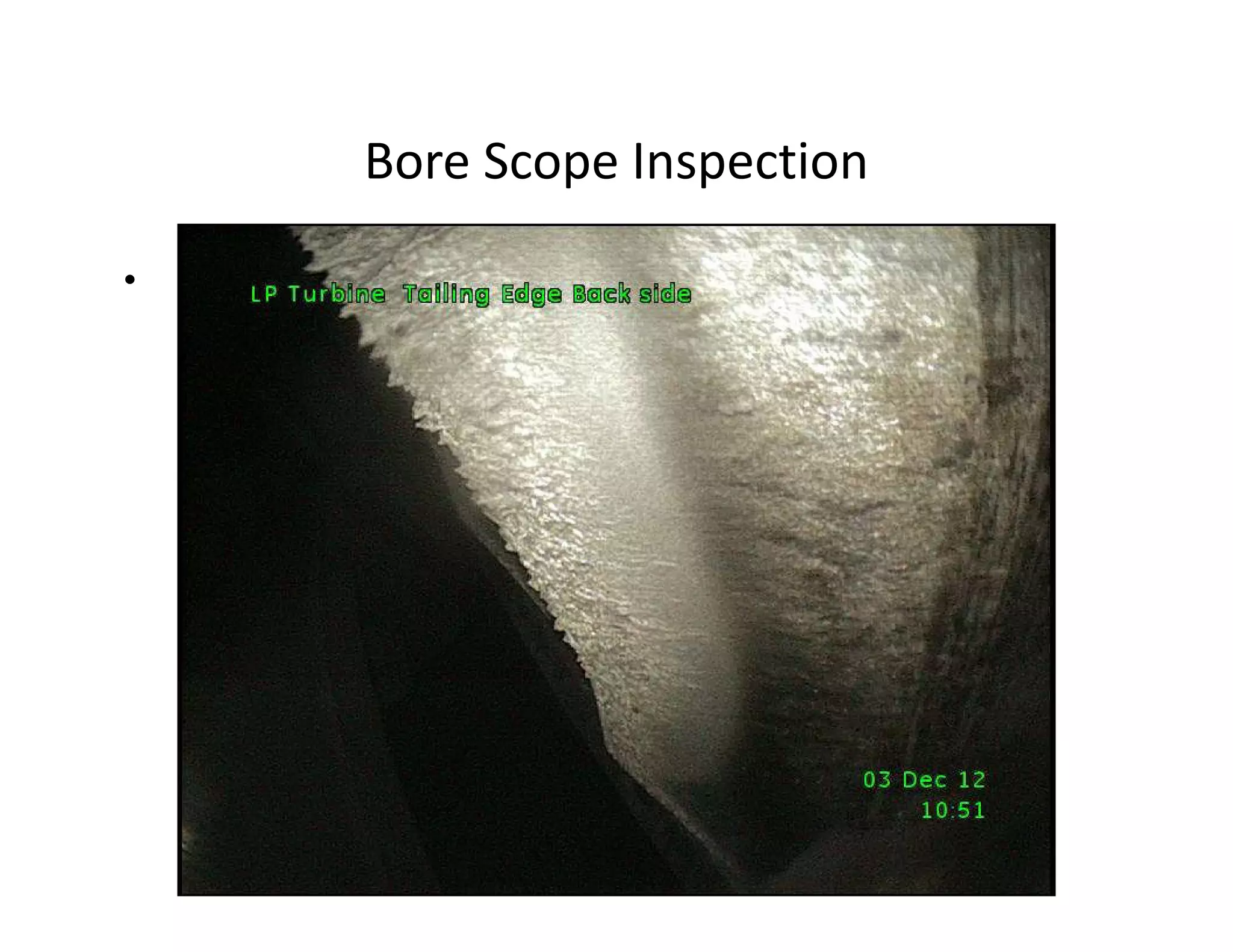
Bore Scope Inspection
•
Bore Scope Inspection
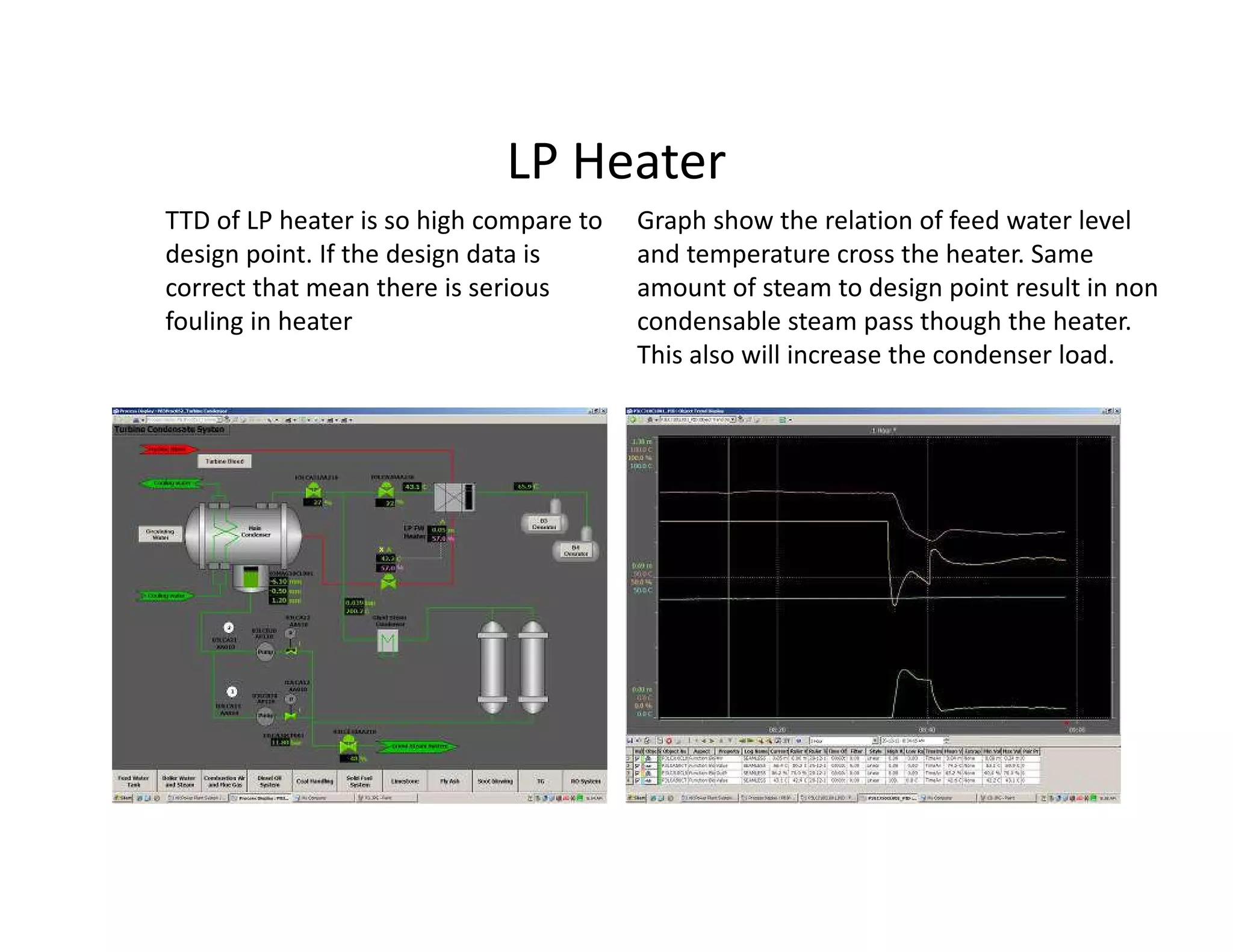
LP Heater
TTD of LP heater is so high compare to
design point. If the design data is
correct that mean there is serious
fouling in heater
Graph show the relation of feed water level
and temperature cross the heater. Same
amount of steam to design point result in non
condensable steam pass though the heater.
This also will increase the condenser load.
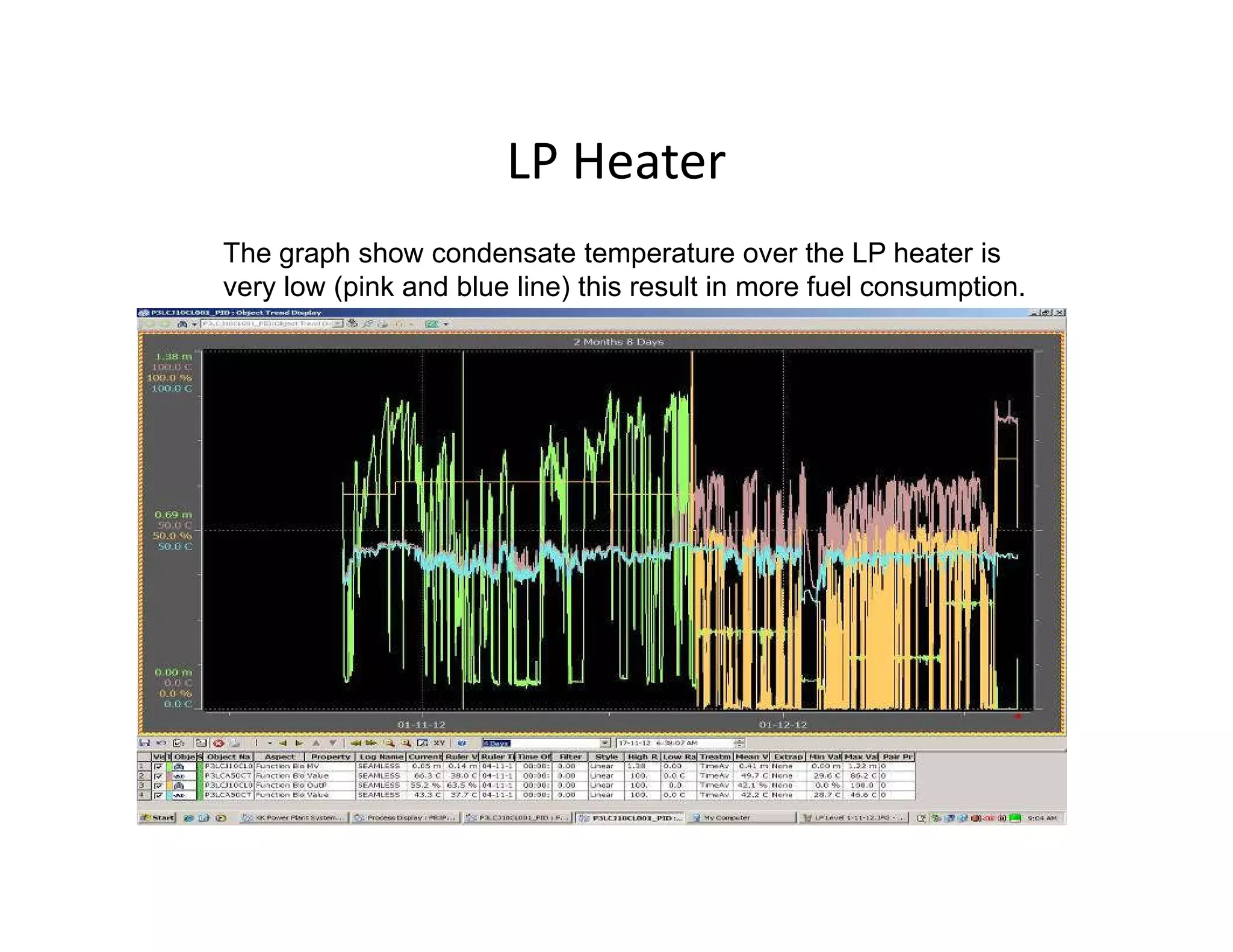
LP Heater
The graph show condensate temperature over the LP heater is
very low (pink and blue line) this result in more fuel consumption.
Summary
• Performance analysis can help us to predict the condition of
machine
• Earlier inspection can support information to prepare
maintenance work and decide major work

Steam turbine performance & condition assessment (Case Study)

  • 1.
    Steam Turbine Conditionand Performance Assessment (Case Study) Pichai Chaibamrung ty_giuly@Hotmail.com
  • 2.
    Challenging • Dismantling forinspection is expensive cost not only maintenance but also contribution from production • Calculation steam turbine performance is difficult because it is varied on throttle flow • Uncontrolled extraction can not control its condition (P,T,F) and its flow is not measured • The wetness fraction at exhaust can not measured by typical instrument Manual calculation can not take into account
  • 3.
    Objective • To evaluatethe current performance of steam turbine package comparing to design performance • To assess condition of turbine sealing, blade profile, governor valve, heat exchanger fouling without opening • To support information for maintenance team for preparing outage work • To support information to refurbish or upgrade performance • To assess instrument condition
  • 4.
  • 5.
    Method • Steam turbinewas modeled by using VWO case data • The model is validated with design daa in off-design cases which SCC model, Stodola’s Ellipse Equation and macro function is applied to the closest model with each steam turbine • The validated model is represent the real steam turbine, we can change all variable parameter to see its effect on steam turbine.
  • 6.
    Analyze - Display mainparameter representing performance of equipment - Trend display to observe the performance over time - Approximate economic loss calculation
  • 7.
    Result Plant Assessment resultVisual result A -Scale on blade -Governor loss -Loss 10 MB/Y B -Deteriorate of sealing -Loss 16 MB/Y C -Scale on FWHT -Fouling on condenser -Fouling on blade D -Scale on blade -Fouling on condenser E -Scale on FWHT
  • 8.
    HP Valve cannot reach its design capacity • Design steam inlet condition • Pressure 100 Bar(a) • Temperature 510 C • Flow 110 T/H • *Assume at this design condition HP valve open 100% • @97% HP valve position • Flow actual 102 T/H • Flow design 107.5 T/H • Cause might be: - Deposit on blade - HP valve is not open • Actual Operation
  • 9.
    Wheel pressure chamberto high Wheel Pressure Chamber @ 107 T/H 60 62 64 66 68 70 72 74 76 78 2551 2552 2553 2554 2555 • Base on Log sheet found wheel pressure chamber suddenly increase from normal pressure (65-67 bar) to 72 bar after start up on 22 Jun 2009. This might be result from calibration of instrument. Over all trend along last 5 year have increased. • This trend express that the increasing of wheel pressure chamber should be deposit on blade rather than mechanical problem on HP valve • The different between design and actual output gradually increase over timeDesign vs Actual MW output 11.5 12 12.5 13 13.5 14 14.5 2551 2552 2553 2554 2555 MW Design Actual
  • 10.
    Operation Data Loss inpower generation 2 MW, 16.8 MB loss from purchasing electricity.
  • 11.
    Loss analysis • Wehave found that extraction temperature is extremely higher than design value • Loss calculation Item Actual Design Extraction temp 202.98 170.98 Enthalpy (kJ/kg) 2853.53 2781.26 Main steam flow (kg/s) 25 Power diff. (MW) 1.8 The increasing of extraction temperature indicate that it migth be some problem -Increasing of blade tip and casing that allow more stem leak to LP stage. -Deposit on blade. -Damage on blade that allow more steam leak into LP stage.
  • 12.
    Sealing Clearance 2002 MajorOverhaul 2008 Major Overhaul B is planed to shift major overhaul work from 2014 to 2013 to repowering its capacity. Save 16.8 MB/year Clearance increasing between blade and casing Clearance increasing between blade and rotor
  • 13.
  • 14.
  • 15.
    Opening Check LPfeed water heater
  • 16.
    Opening Check LPfeed water heater
  • 17.
  • 18.
  • 19.
    LP Heater TTD ofLP heater is so high compare to design point. If the design data is correct that mean there is serious fouling in heater Graph show the relation of feed water level and temperature cross the heater. Same amount of steam to design point result in non condensable steam pass though the heater. This also will increase the condenser load.
  • 20.
    LP Heater The graphshow condensate temperature over the LP heater is very low (pink and blue line) this result in more fuel consumption.
  • 21.
    Summary • Performance analysiscan help us to predict the condition of machine • Earlier inspection can support information to prepare maintenance work and decide major work