DON’T LOSE SIGHT!
STAYING SECURE WHEN MOVING TO THE CLOUD
DAVE MILLIER, CEO UZADO, CSO QUICK INTELLIGENCE, CEO MIDAC SOLUTIONS
AUTHOR OF THE SECURITY NOVEL, “BREACHED!”
AGENDA FOR TODAY
• Quick intro to Dave
• Security Challenges Moving to the Cloud
• Visibility Today
• Maintaining Visibility In The Cloud
• Cloud Security Alliance Cloud Controls Matrix
• Call to Action (yes, this means you!)
• Serial Entrepreneur, bought and sold 10+ companies over past 20 years
• Currently owns 3 IT-related Companies: MIDAC, Qi, Uzado
• Sold InfoSec company in 2014 to Robert Herjavec from Shark Tank
• Involved in Networking & InfoSec/Cybersecurity for about 25 years
• Loves tech!
• Loves dirt biking, owns a dirt bike and ATV training school!
ABOUT DAVE
• A lot of people simply don’t understand what the cloud is (or isn’t!)
• More companies moving more services to the cloud every day
• Migration isn’t always done in a coordinated, well thought-out fashion
• Cloud is supposed to streamline things, but getting there isn’t always painless
SOME OF THE BIGGEST CHALLENGES
WHAT ARE THE SECURITY CONSIDERATIONS?
• Managing users access, permissions
• Protecting our data at rest
• Ensuring secure access to data (the right people at the right time)
• Knowing who is accessing what when
• Understanding where our data will reside (data residency issues)
VISIBILITY!!!
WHAT’S THE CORE FOR MANY OF THESE ITEMS?
“You can’t manage what you can’t measure.”
- Peter Drucker, known as the Founder of Modern Management
VISIBILITY TODAY
• Logs from our servers, network devices, security devices
• Logs from our authentication devices / vpn devices
• Real-time network monitoring from security tools on the wire
• Logs from our applications
• Vulnerability scan results from our assets
• Lack of visibility into what’s happening (can’t always get logs)
• Lack of control over users (corporate accounts and permissions don’t usually
carry over)
• Lack of understanding of what data is being stored where
• Data Residency
WHAT DO WE LOSE?
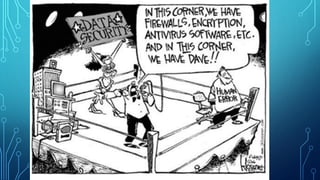
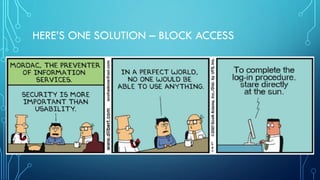
HERE’S ONE SOLUTION – BLOCK ACCESS
HOSTING PROVIDER VISIBILITY
• AWS and other providers give you access to a wealth of security and
operational information (AWS CloudTrail for example)
• Incorporate the information into your existing data sources
• Redesign your incident response process to use these data sources as part of
an investigation
• Figure out what information you have access to now, and map that to “new”
source(s) of information provided by the cloud provider
• Make them part of your incident response process!!!
SECURITY TOOLS VISIBILITY
• Virtual appliances (firewalls, IPS, WAF, etc.) - located elsewhere but use the
information they provide as you would if it was local
• If security is outsourced to hosting provider or to another 3rd party, ensure
they have comparable visibility into your new environment as they had before
• Providers like CloudCheckr have automated and streamlined the visibility into
AWS, leverage the heck out of them!
USER VISIBILITY
• Leverage federated identity management solutions where possible. Less
accounts for users, easier to migrate to cloud (assuming provider supports)
• Make sure that you maintain visibility into encrypted sessions (who’s logging in
from where when, what did they do?)
• Determine current levels of user behaviour visibility and try to maintain that
level of detail when you move the user workloads to the cloud
SERVER AND APPLICATION VISIBILITY
• Hosted servers still generate logs, collect them if at all possible
• Determine what you’re logging on local servers and configure hosted servers
the same
• Make sure your web apps have proper logging!
• Applications need to have proper auditing built in; even if you don’t see the
user activity you can recreate sessions with proper app logging
• Logging invalid activity just as important (don’t just log what was successful,
log what failed!)
CLOUD SECURITY ALLIANCE
• Cloud Controls Matrix
• Control framework based on 13 security and operational domains
• Foundation is mapped to industry recognized standards and frameworks such
as COBIT, ISO 27001/27002, PCI, NIST, NERC CIP, PIPEDA, HIPAA
• Tailors Information Security practices to the cloud
• Helps companies evaluate cloud vendor security
• Helps companies make decisions on their own cloud security requirements
USING THE CSA MATRIX
• Use the matrix to do a self-assessment against your organization, identifying
areas of criticality
• Use the matrix to perform an evaluation against a potential cloud vendor
• Compare results from cloud vendors against your areas of concern/focus
• Use gap analysis results to make educated informed decisions.
• May address findings by augmenting YOUR security, may choose a different
provider, may work with provider to identify potential shortcomings
DEFENSE IN DEPTH
• Don’t rely on a single security solution to protect your cloud deployment
• Many virtual firewalls/security devices have A/V and anti-malware scanners
built into them, use them! Along with host-based protection you now have
multiple controls in place complementing each other, so that even if one of
them fails another one can compensate
• Each layer of defense should support each other and provide an additional
level of protection (“Defense in Depth”)
WHAT DO YOU NEED TO DO NEXT?
• Go back to your office and ask questions
• What type of visibility do we have into our systems, our user activity, our security devices, and our
applications today? (same question whether locally hosted or already in the cloud)
• Have we used the CSA Cloud Controls Matrix to evaluate our vendors/partners?
• How do we ensure we keep the same level of visibility we have today in the cloud?
• How well do we understand our data, where it resides and what we are doing to protect it?
• There are a lot more questions that could be asked, but hopefully this helps get you
started!
FINAL THOUGHT
Secure it before you regret it!
Questions?
Dave Millier
www.davemillier.com
dmillier@Uzado.com

Staying Secure When Moving to the Cloud - Dave Millier

  • 1.
    DON’T LOSE SIGHT! STAYINGSECURE WHEN MOVING TO THE CLOUD DAVE MILLIER, CEO UZADO, CSO QUICK INTELLIGENCE, CEO MIDAC SOLUTIONS AUTHOR OF THE SECURITY NOVEL, “BREACHED!”
  • 2.
    AGENDA FOR TODAY •Quick intro to Dave • Security Challenges Moving to the Cloud • Visibility Today • Maintaining Visibility In The Cloud • Cloud Security Alliance Cloud Controls Matrix • Call to Action (yes, this means you!)
  • 5.
    • Serial Entrepreneur,bought and sold 10+ companies over past 20 years • Currently owns 3 IT-related Companies: MIDAC, Qi, Uzado • Sold InfoSec company in 2014 to Robert Herjavec from Shark Tank • Involved in Networking & InfoSec/Cybersecurity for about 25 years • Loves tech! • Loves dirt biking, owns a dirt bike and ATV training school! ABOUT DAVE
  • 7.
    • A lotof people simply don’t understand what the cloud is (or isn’t!) • More companies moving more services to the cloud every day • Migration isn’t always done in a coordinated, well thought-out fashion • Cloud is supposed to streamline things, but getting there isn’t always painless SOME OF THE BIGGEST CHALLENGES
  • 8.
    WHAT ARE THESECURITY CONSIDERATIONS? • Managing users access, permissions • Protecting our data at rest • Ensuring secure access to data (the right people at the right time) • Knowing who is accessing what when • Understanding where our data will reside (data residency issues)
  • 9.
    VISIBILITY!!! WHAT’S THE COREFOR MANY OF THESE ITEMS?
  • 10.
    “You can’t managewhat you can’t measure.” - Peter Drucker, known as the Founder of Modern Management
  • 11.
    VISIBILITY TODAY • Logsfrom our servers, network devices, security devices • Logs from our authentication devices / vpn devices • Real-time network monitoring from security tools on the wire • Logs from our applications • Vulnerability scan results from our assets
  • 12.
    • Lack ofvisibility into what’s happening (can’t always get logs) • Lack of control over users (corporate accounts and permissions don’t usually carry over) • Lack of understanding of what data is being stored where • Data Residency WHAT DO WE LOSE?
  • 13.
    HERE’S ONE SOLUTION– BLOCK ACCESS
  • 14.
    HOSTING PROVIDER VISIBILITY •AWS and other providers give you access to a wealth of security and operational information (AWS CloudTrail for example) • Incorporate the information into your existing data sources • Redesign your incident response process to use these data sources as part of an investigation • Figure out what information you have access to now, and map that to “new” source(s) of information provided by the cloud provider • Make them part of your incident response process!!!
  • 15.
    SECURITY TOOLS VISIBILITY •Virtual appliances (firewalls, IPS, WAF, etc.) - located elsewhere but use the information they provide as you would if it was local • If security is outsourced to hosting provider or to another 3rd party, ensure they have comparable visibility into your new environment as they had before • Providers like CloudCheckr have automated and streamlined the visibility into AWS, leverage the heck out of them!
  • 16.
    USER VISIBILITY • Leveragefederated identity management solutions where possible. Less accounts for users, easier to migrate to cloud (assuming provider supports) • Make sure that you maintain visibility into encrypted sessions (who’s logging in from where when, what did they do?) • Determine current levels of user behaviour visibility and try to maintain that level of detail when you move the user workloads to the cloud
  • 17.
    SERVER AND APPLICATIONVISIBILITY • Hosted servers still generate logs, collect them if at all possible • Determine what you’re logging on local servers and configure hosted servers the same • Make sure your web apps have proper logging! • Applications need to have proper auditing built in; even if you don’t see the user activity you can recreate sessions with proper app logging • Logging invalid activity just as important (don’t just log what was successful, log what failed!)
  • 18.
    CLOUD SECURITY ALLIANCE •Cloud Controls Matrix • Control framework based on 13 security and operational domains • Foundation is mapped to industry recognized standards and frameworks such as COBIT, ISO 27001/27002, PCI, NIST, NERC CIP, PIPEDA, HIPAA • Tailors Information Security practices to the cloud • Helps companies evaluate cloud vendor security • Helps companies make decisions on their own cloud security requirements
  • 19.
    USING THE CSAMATRIX • Use the matrix to do a self-assessment against your organization, identifying areas of criticality • Use the matrix to perform an evaluation against a potential cloud vendor • Compare results from cloud vendors against your areas of concern/focus • Use gap analysis results to make educated informed decisions. • May address findings by augmenting YOUR security, may choose a different provider, may work with provider to identify potential shortcomings
  • 20.
    DEFENSE IN DEPTH •Don’t rely on a single security solution to protect your cloud deployment • Many virtual firewalls/security devices have A/V and anti-malware scanners built into them, use them! Along with host-based protection you now have multiple controls in place complementing each other, so that even if one of them fails another one can compensate • Each layer of defense should support each other and provide an additional level of protection (“Defense in Depth”)
  • 21.
    WHAT DO YOUNEED TO DO NEXT? • Go back to your office and ask questions • What type of visibility do we have into our systems, our user activity, our security devices, and our applications today? (same question whether locally hosted or already in the cloud) • Have we used the CSA Cloud Controls Matrix to evaluate our vendors/partners? • How do we ensure we keep the same level of visibility we have today in the cloud? • How well do we understand our data, where it resides and what we are doing to protect it? • There are a lot more questions that could be asked, but hopefully this helps get you started!
  • 22.
    FINAL THOUGHT Secure itbefore you regret it!
  • 23.