Status Epilepticus
By: Dr Aamir Khan
Definition
● SE is defined as continuous convulsive activity or recurrent
generalized convulsive seizure activity without regaining of
consciousness (t1 = 5 min, t2 ≥ 30 min).
For focal seizures with impaired awareness (t1 = 10 min, t2 = 30 min)
and absence SE (t1 = 10-15 min, t2 = unknown).
● Most seizures cease within a minute or two and if the seizure is
prolonged beyond a few minutes, it is unlikely to stop by itself.
Causes
● New-onset epilepsy of any type
● drug intoxication (e.g.tricyclic antidepressants) in children
● drug withdrawal or overdose in patients taking AEDs
● hypoglycemia
● hypocalcemia
● hyponatremia
● hypomagnesemia
● acute head trauma
● encephalitis
● Meningitis
● Febrile SE is the most common cause in children less than five years of age, trauma and
infections are important in older children
Pathophysiology
The mechanisms leading to the establishment of sustained seizure activity seen
in SE appear to involve
1. failure of desensitization of AMPA glutamate receptors, thus causing the
persistence of increased excitability.
1. Reduction of GABA-mediated inhibition as a result of intracellular
internalization of GABAA receptors.
Types
● Convulsive status epilepticus (generalized tonic, clonic, or tonic-clonic)
It is the most common type of SE.
● Nonconvulsive status manifests as a confusional state, dementia,
hyperactivity with behavioral problems, fluctuating impairment of consciousness
with at times unsteady sitting or walking, fluctuating mental status, confusional
state, hallucinations, paranoia, aggressiveness catatonia, and or psychotic
Symptoms.
● Refractory status epilepticus is SE that has failed to respond to therapy,
usually with at least two medications (such as a benzodiazepine and another
medication)
Management
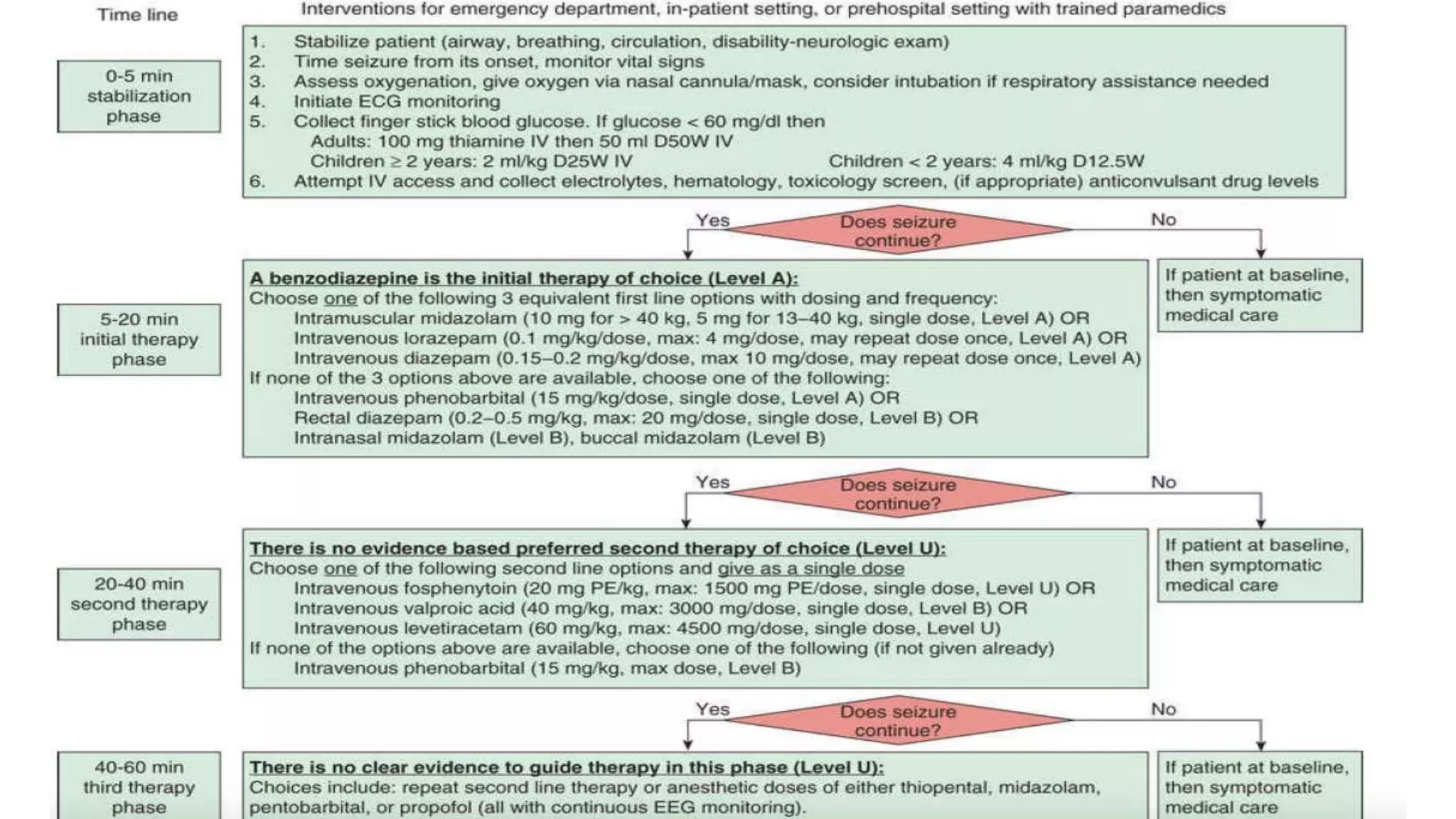
● SE is a medical emergency that requires initial and continuous attention to
securing the airway, breathing, and circulation (with continuous monitoring of
vital signs including ECG) and determination and management of the underlying
etiology.
● Laboratory studies, including glucose, sodium,
calcium, magnesium, complete blood count, basic metabolic panel, CT scan, and
continuous EEG, are needed for all patients. Blood and spinal fluid cultures,
toxic drug screens, and tests for inborn errors of metabolism are often needed.
AED levels need to be determined in all patients known already to be taking
these drugs.
● A recent large randomized clinical trial compared lorazepam and diazepam in children with
convulsive status epilepticus.The only difference in secondary outcomes was that patients in the
lorazepam group were more likely to be sedated than those in the diazepam group (67% vs.
50%). The study concluded that the data did not support preferential use of lorazepam over
diazepam
● The American Epilepsy Society’s guideline concludes that respiratory depression was the most
common adverse event associated with anti-seizure medication treatment (level A evidence) and that
there was no difference in respiratory depression between midazolam, lorazepam, and diazepam by any
administration route (level B evidence)
● In surveys of pediatric emergency providers [67] and neurologists [68], phenytoin or fosphenytoin
remain the most-used anti-seizure medications if status epilepticus persists after administration of
benzodiazepines. However, this historical role is based on few data that these medications are more
effective than other options such as levetiracetam, phenobarbital, or valproate. For example, a recent
meta-analysis of drugs administered for benzodiazepine refractory convulsive status epilepticus found
phenytoin had lower efficacy (50%) than levetiracetam (69%), phenobarbital (74%), and valproate
(76%)
Refractory status epilepticus
● The definition of RSE includes seizures that have not responded to sequential treatment of
lorazepam, phenytoin and phenobarbitone or a seizure continuing for over sixty minutes in spite
of adequate treatment.
● Patient should be managed in an intensive care unit where facilities for monitoring and
ventilatory support are available.
● Midazolam infusion 0.15 mg/kg bolus is followed by an infusion of 1 g/kg/min every 15
minutes till seizure control is achieved or maximum dose of 18 g/kg/min is reached.
● The infusion should be maintained for twelve hours after the last seizure and then
gradually tapered off.
● Complete control of seizures with midazolam infusion can be achieved in over 90% of children
within an hour; at a mean infusion rate of 3 mg/kg/min.
THANK YOU
Status epilepticus

Status epilepticus

  • 1.
  • 2.
    Definition ● SE isdefined as continuous convulsive activity or recurrent generalized convulsive seizure activity without regaining of consciousness (t1 = 5 min, t2 ≥ 30 min). For focal seizures with impaired awareness (t1 = 10 min, t2 = 30 min) and absence SE (t1 = 10-15 min, t2 = unknown). ● Most seizures cease within a minute or two and if the seizure is prolonged beyond a few minutes, it is unlikely to stop by itself.
  • 3.
    Causes ● New-onset epilepsyof any type ● drug intoxication (e.g.tricyclic antidepressants) in children ● drug withdrawal or overdose in patients taking AEDs ● hypoglycemia ● hypocalcemia ● hyponatremia ● hypomagnesemia ● acute head trauma ● encephalitis ● Meningitis ● Febrile SE is the most common cause in children less than five years of age, trauma and infections are important in older children
  • 5.
    Pathophysiology The mechanisms leadingto the establishment of sustained seizure activity seen in SE appear to involve 1. failure of desensitization of AMPA glutamate receptors, thus causing the persistence of increased excitability. 1. Reduction of GABA-mediated inhibition as a result of intracellular internalization of GABAA receptors.
  • 7.
    Types ● Convulsive statusepilepticus (generalized tonic, clonic, or tonic-clonic) It is the most common type of SE. ● Nonconvulsive status manifests as a confusional state, dementia, hyperactivity with behavioral problems, fluctuating impairment of consciousness with at times unsteady sitting or walking, fluctuating mental status, confusional state, hallucinations, paranoia, aggressiveness catatonia, and or psychotic Symptoms. ● Refractory status epilepticus is SE that has failed to respond to therapy, usually with at least two medications (such as a benzodiazepine and another medication)
  • 8.
    Management ● SE isa medical emergency that requires initial and continuous attention to securing the airway, breathing, and circulation (with continuous monitoring of vital signs including ECG) and determination and management of the underlying etiology. ● Laboratory studies, including glucose, sodium, calcium, magnesium, complete blood count, basic metabolic panel, CT scan, and continuous EEG, are needed for all patients. Blood and spinal fluid cultures, toxic drug screens, and tests for inborn errors of metabolism are often needed. AED levels need to be determined in all patients known already to be taking these drugs.
  • 12.
    ● A recentlarge randomized clinical trial compared lorazepam and diazepam in children with convulsive status epilepticus.The only difference in secondary outcomes was that patients in the lorazepam group were more likely to be sedated than those in the diazepam group (67% vs. 50%). The study concluded that the data did not support preferential use of lorazepam over diazepam ● The American Epilepsy Society’s guideline concludes that respiratory depression was the most common adverse event associated with anti-seizure medication treatment (level A evidence) and that there was no difference in respiratory depression between midazolam, lorazepam, and diazepam by any administration route (level B evidence) ● In surveys of pediatric emergency providers [67] and neurologists [68], phenytoin or fosphenytoin remain the most-used anti-seizure medications if status epilepticus persists after administration of benzodiazepines. However, this historical role is based on few data that these medications are more effective than other options such as levetiracetam, phenobarbital, or valproate. For example, a recent meta-analysis of drugs administered for benzodiazepine refractory convulsive status epilepticus found phenytoin had lower efficacy (50%) than levetiracetam (69%), phenobarbital (74%), and valproate (76%)
  • 13.
    Refractory status epilepticus ●The definition of RSE includes seizures that have not responded to sequential treatment of lorazepam, phenytoin and phenobarbitone or a seizure continuing for over sixty minutes in spite of adequate treatment. ● Patient should be managed in an intensive care unit where facilities for monitoring and ventilatory support are available. ● Midazolam infusion 0.15 mg/kg bolus is followed by an infusion of 1 g/kg/min every 15 minutes till seizure control is achieved or maximum dose of 18 g/kg/min is reached. ● The infusion should be maintained for twelve hours after the last seizure and then gradually tapered off. ● Complete control of seizures with midazolam infusion can be achieved in over 90% of children within an hour; at a mean infusion rate of 3 mg/kg/min.
  • 15.