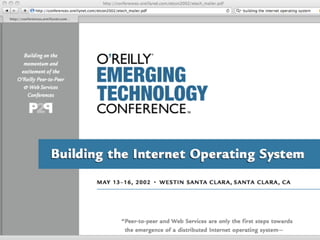
The State of the Internet Operating System


                              Tim O’Reilly

                         Paypal Innovate
                        November 3, 2009
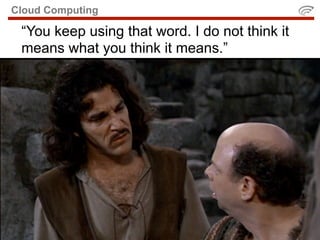
Cloud Computing

 “You keep using that word. I do not think it
 means what you think it means.”
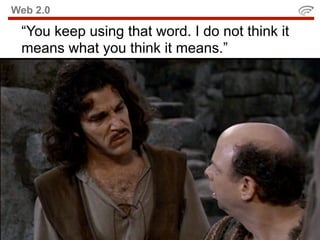
Web 2.0

 “You keep using that word. I do not think it
 means what you think it means.”
What Web 2.0 and Cloud Computing Are Really All About


 We’re building an internet operating system
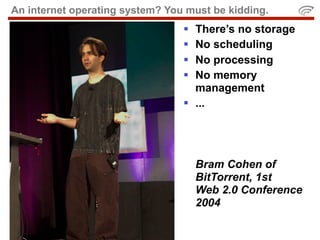
An internet operating system? You must be kidding.
                                  There’s no storage
                                  No scheduling
                                  No processing
                                  No memory
                                   management
                                  ...


                                     Bram Cohen of
                                     BitTorrent, 1st
                                     Web 2.0 Conference
                                     2004
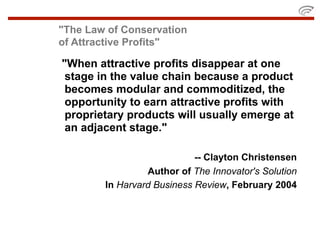
"The Law of Conservation
of Attractive Profits"

"When attractive profits disappear at one
 stage in the value chain because a product
 becomes modular and commoditized, the
 opportunity to earn attractive profits with
 proprietary products will usually emerge at
 an adjacent stage."

                            -- Clayton Christensen
                 Author of The Innovator's Solution
        In Harvard Business Review, February 2004
Internet Operating System

 “You keep using that word. I do not think it
 means what you think it means.”
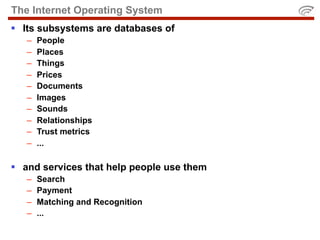
The Internet Operating System
 Its subsystems are databases of
   –   People
   –   Places
   –   Things
   –   Prices
   –   Documents
   –   Images
   –   Sounds
   –   Relationships
   –   Trust metrics
   –   ...

 and services that help people use them
   –   Search
   –   Payment
   –   Matching and Recognition
   –   ...
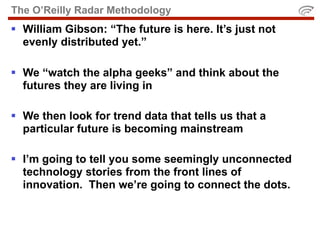
The O’Reilly Radar Methodology
 William Gibson: “The future is here. It’s just not
  evenly distributed yet.”

 We “watch the alpha geeks” and think about the
  futures they are living in

 We then look for trend data that tells us that a
  particular future is becoming mainstream

 I’m going to tell you some seemingly unconnected
  technology stories from the front lines of
  innovation. Then we’re going to connect the dots.
<1>
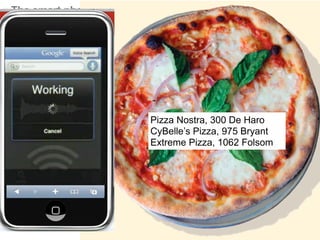
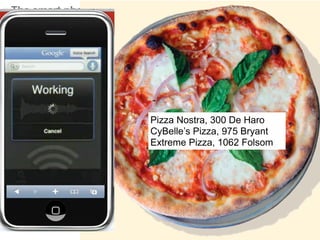
The smart phone plus local search. Today pizza,


                           Pizza Nostra, 300 De Haro
                           CyBelle’s Pizza, 975 Bryant
                           Extreme Pizza, 1062 Folsom
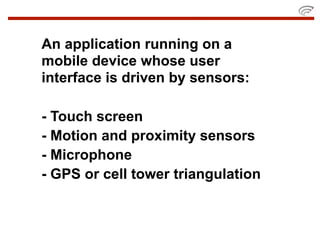
An application running on a
mobile device whose user
interface is driven by sensors:

- Touch screen
- Motion and proximity sensors
- Microphone
- GPS or cell tower triangulation
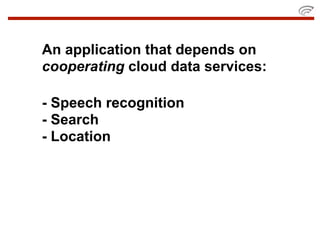
An application that depends on
cooperating cloud data services:

- Speech recognition
- Search
- Location
These cloud data services are
combined to do a job that none
of them could do alone.
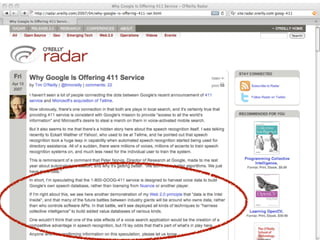
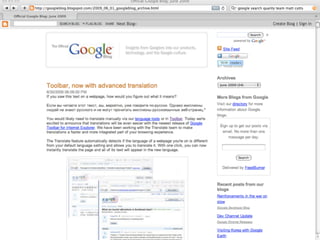
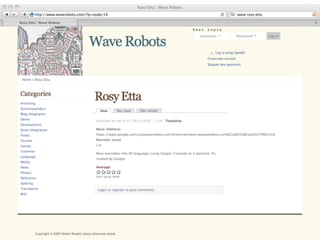
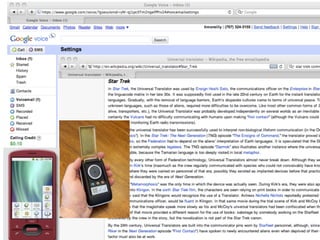
Expect auto-translation
These suggest mindbending possibilities
 Expect automated speech recognition and
  automated real-time translation throughout
  Google products
 Google Suggest “database of intentions” gives
  them an advantage in understanding what people
  intend to say
 The Star Trek universal translator is within the
  scope of Google’s ambition
 These products will be relatively weak at
  introduction but will get better the more people
  use them.
 Speech recognition and translation will be
  integrated with other applications via web services
 Pretty darn cool, and definitely NOT a PC-era
  operating system!
<2>
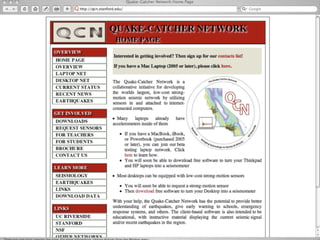
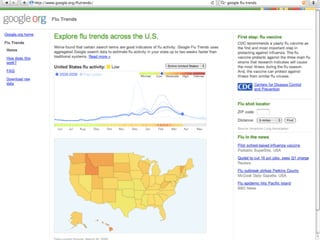
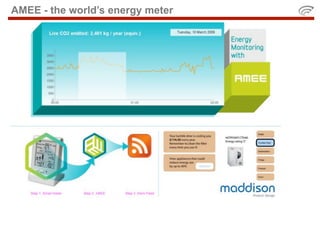
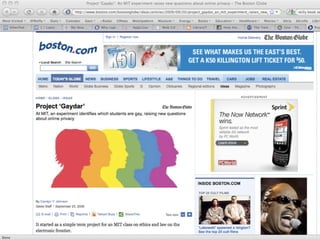
Our devices are full of sensors. New applications
are figuring out how to learn from those sensors.
AMEE - the world’s energy meter
The real world casts information shadows
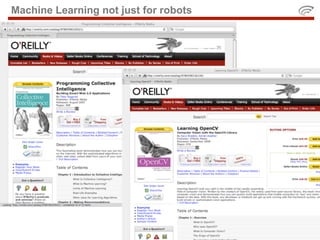
Machine Learning not just for robots
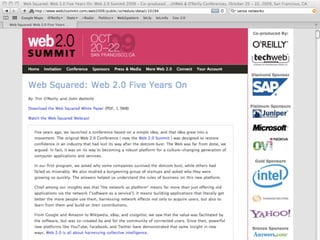
Web 2.0 is about finding meaning
             in user-generated data,
  and turning that meaning into real-time user-
facing services. “Web Squared” takes that same
        concept to real-time sensor data.
<3>
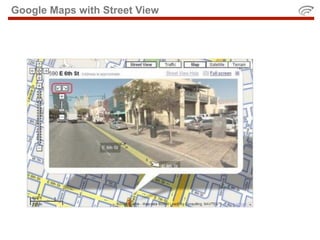
Google Maps with Street View
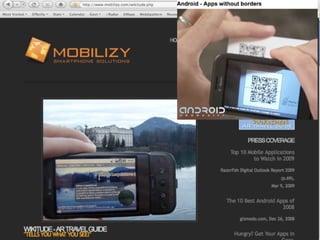
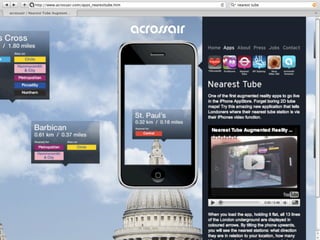
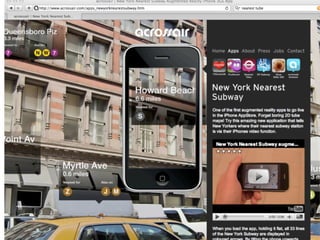
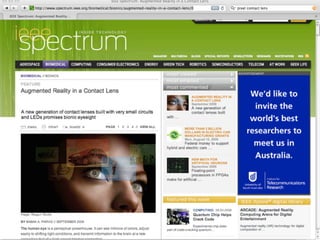
Cloud + mobile = “Augmented Reality”
<4>
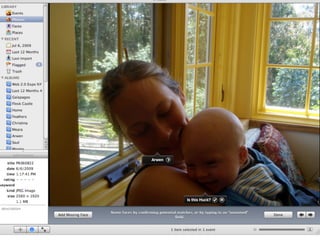
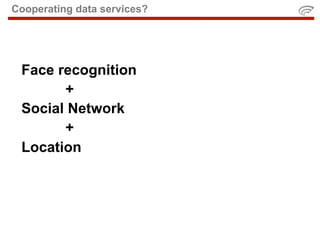
Cooperating data services?


 Face recognition
       +
 Social Network
       +
 Location
We learn by “context accumulation.”
 Future applications will do so too.
<5>
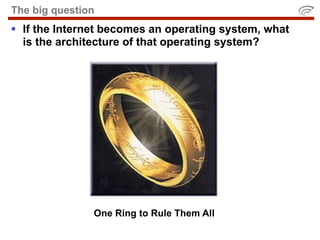
The big question
 If the Internet becomes an operating system, what
  is the architecture of that operating system?


               One Ring to Rule Them All
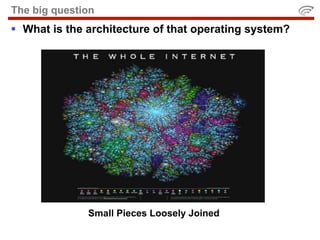
The big question
 What is the architecture of that operating system?


              Small Pieces Loosely Joined
The smart phone plus local search. Today pizza,


                           Pizza Nostra, 300 De Haro
                           CyBelle’s Pizza, 975 Bryant
                           Extreme Pizza, 1062 Folsom
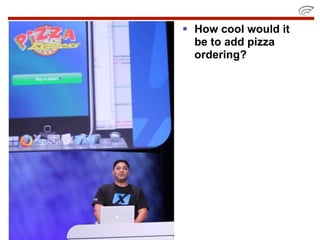
 How cool would it
  be to add pizza
  ordering?
<6>
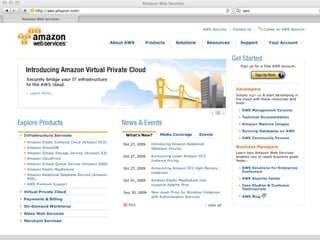
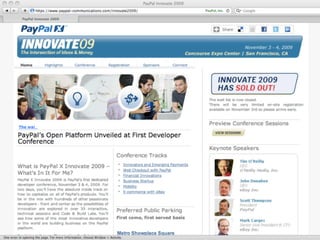
PayPal
 A first order Internet data subsystem
   –   80 million active users
   –   15,000 financial institutions
   –   190 countries, 24 currencies
   –   Not just payment but identity, fraud detection, risk
       management, and more

 Inherently Decentralized
   – Internet endpoints call the service to get the benefit of
     the networked data at the center
   – P2P Payments
   – Decentralized website checkout for 60% of e-commerce

 A model for the way the internet operating system
  ought to work
Advice for PayPal
“API design is like sex: make one mistake and
support if for the rest of your life.”

                       --attributed to Josh Bloch
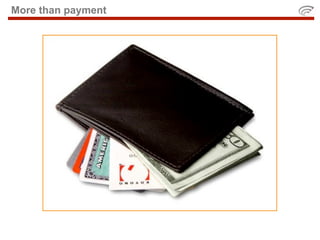
More than payment
You use your wallet for
   Payment
   Identification
   Loyalty cards, discount coupons
   Receipts
   Special things to keep and share


 All of these things are moving out of the physical
  wallet, many of them onto the phone

 There is a huge opportunity to build innovative
  new services to do these jobs.
 PayPal provides a unique back-end
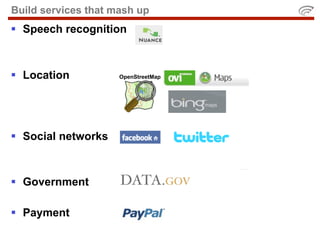
Build services that mash up
 Speech recognition


 Location           OpenStreetMap


 Social networks


 Government

 Payment
The Robustness Principle


 “TCP implementations should follow a general
 principle of robustness: be conservative in what
 you do, be liberal in what you accept from others.”

       --Jon Postel in RFC 761 (Transmission Control Protocol, 1980)
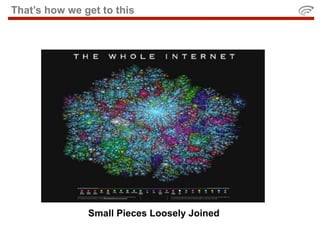
That’s how we get to this


               Small Pieces Loosely Joined
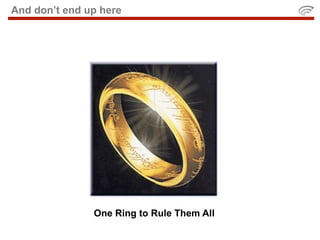
And don’t end up here


               One Ring to Rule Them All

State of the Internet Operating System

  • 1.
    The State ofthe Internet Operating System Tim O’Reilly Paypal Innovate November 3, 2009
  • 2.
    Cloud Computing “Youkeep using that word. I do not think it means what you think it means.”
  • 3.
    Web 2.0 “Youkeep using that word. I do not think it means what you think it means.”
  • 4.
    What Web 2.0and Cloud Computing Are Really All About We’re building an internet operating system
  • 6.
    An internet operatingsystem? You must be kidding.  There’s no storage  No scheduling  No processing  No memory management  ... Bram Cohen of BitTorrent, 1st Web 2.0 Conference 2004
  • 12.
    "The Law ofConservation of Attractive Profits" "When attractive profits disappear at one stage in the value chain because a product becomes modular and commoditized, the opportunity to earn attractive profits with proprietary products will usually emerge at an adjacent stage." -- Clayton Christensen Author of The Innovator's Solution In Harvard Business Review, February 2004
  • 13.
    Internet Operating System “You keep using that word. I do not think it means what you think it means.”
  • 14.
    The Internet OperatingSystem  Its subsystems are databases of – People – Places – Things – Prices – Documents – Images – Sounds – Relationships – Trust metrics – ...  and services that help people use them – Search – Payment – Matching and Recognition – ...
  • 15.
    The O’Reilly RadarMethodology  William Gibson: “The future is here. It’s just not evenly distributed yet.”  We “watch the alpha geeks” and think about the futures they are living in  We then look for trend data that tells us that a particular future is becoming mainstream  I’m going to tell you some seemingly unconnected technology stories from the front lines of innovation. Then we’re going to connect the dots.
  • 16.
  • 17.
    The smart phoneplus local search. Today pizza, Pizza Nostra, 300 De Haro CyBelle’s Pizza, 975 Bryant Extreme Pizza, 1062 Folsom
  • 18.
    An application runningon a mobile device whose user interface is driven by sensors: - Touch screen - Motion and proximity sensors - Microphone - GPS or cell tower triangulation
  • 19.
    An application thatdepends on cooperating cloud data services: - Speech recognition - Search - Location
  • 20.
    These cloud dataservices are combined to do a job that none of them could do alone.
  • 24.
  • 25.
    These suggest mindbendingpossibilities  Expect automated speech recognition and automated real-time translation throughout Google products  Google Suggest “database of intentions” gives them an advantage in understanding what people intend to say  The Star Trek universal translator is within the scope of Google’s ambition  These products will be relatively weak at introduction but will get better the more people use them.  Speech recognition and translation will be integrated with other applications via web services  Pretty darn cool, and definitely NOT a PC-era operating system!
  • 26.
  • 31.
    Our devices arefull of sensors. New applications are figuring out how to learn from those sensors.
  • 33.
    AMEE - theworld’s energy meter
  • 35.
    The real worldcasts information shadows
  • 36.
    Machine Learning notjust for robots
  • 37.
    Web 2.0 isabout finding meaning in user-generated data, and turning that meaning into real-time user- facing services. “Web Squared” takes that same concept to real-time sensor data.
  • 39.
  • 43.
    Google Maps withStreet View
  • 44.
    Cloud + mobile= “Augmented Reality”
  • 46.
  • 48.
    Cooperating data services? Face recognition + Social Network + Location
  • 49.
    We learn by“context accumulation.” Future applications will do so too.
  • 50.
  • 51.
    The big question If the Internet becomes an operating system, what is the architecture of that operating system? One Ring to Rule Them All
  • 52.
    The big question What is the architecture of that operating system? Small Pieces Loosely Joined
  • 60.
    The smart phoneplus local search. Today pizza, Pizza Nostra, 300 De Haro CyBelle’s Pizza, 975 Bryant Extreme Pizza, 1062 Folsom
  • 61.
     How coolwould it be to add pizza ordering?
  • 66.
  • 69.
    PayPal  A firstorder Internet data subsystem – 80 million active users – 15,000 financial institutions – 190 countries, 24 currencies – Not just payment but identity, fraud detection, risk management, and more  Inherently Decentralized – Internet endpoints call the service to get the benefit of the networked data at the center – P2P Payments – Decentralized website checkout for 60% of e-commerce  A model for the way the internet operating system ought to work
  • 70.
  • 71.
    “API design islike sex: make one mistake and support if for the rest of your life.” --attributed to Josh Bloch
  • 72.
  • 73.
    You use yourwallet for  Payment  Identification  Loyalty cards, discount coupons  Receipts  Special things to keep and share  All of these things are moving out of the physical wallet, many of them onto the phone  There is a huge opportunity to build innovative new services to do these jobs.  PayPal provides a unique back-end
  • 74.
    Build services thatmash up  Speech recognition  Location OpenStreetMap  Social networks  Government  Payment
  • 78.
    The Robustness Principle “TCP implementations should follow a general principle of robustness: be conservative in what you do, be liberal in what you accept from others.” --Jon Postel in RFC 761 (Transmission Control Protocol, 1980)
  • 79.
    That’s how weget to this Small Pieces Loosely Joined
  • 80.
    And don’t endup here One Ring to Rule Them All

Editor's Notes

  • #22 Google decided to make their own speech database. Microsoft bought Tellme. Ditto location: Nokia bought Navteq, Google has done its own, upping the ante with streetview.
  • #23 The same principle applies to translation. It gets better with more data. Expect google to offer mobile translation products within the next year or two, integrated with Google Voice...
  • #24 The Wave Robots list is a great way to look at possible futures.
  • #25 Imagine auto-translation added here.
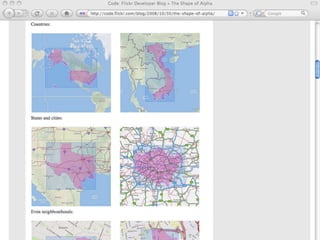
  • #29 Results from 90 million geotagged photos on Flickr: http://code.flickr.com/blog/2008/10/30/the-shape-of-alpha/
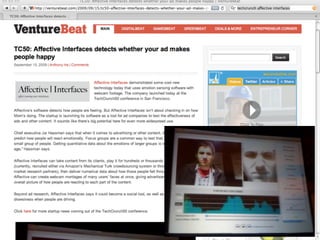
  • #30 &amp;#x201C;Reality mining.&amp;#x201D;
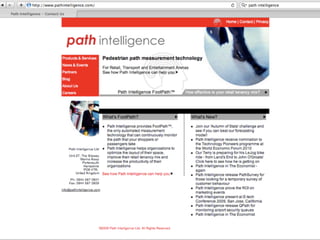
  • #34 Reality mining :-)
  • #35 Each device is recognizable solely from its &amp;#x201C;energy signature.&amp;#x201D;
  • #36 Telling who&amp;#x2019;s gay by who their friends are. No privacy in the era of machine learning.
  • #38 If possible talk here about the changing nature of knowledge work. How google search quality works.
  • #41 Sensors and machine learning
  • #48 Sensors and machine learning
  • #49 Let&amp;#x2019;s do a little forward-looking speculation about image recognition.
  • #52 Sensors and machine learning
  • #72 Ribbit, from BT, works a lot like Google Voice, but lets you start with any phone number
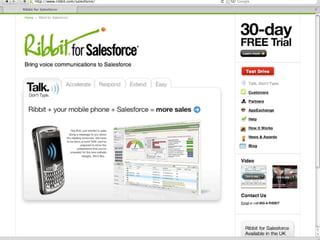
  • #79 Ribbit&amp;#x2019;s SF integration shows how voice can be an add-in UI to other applications, via web services. Expect Google to follow this lead.