
A presentation by :
     Meghana Bhogle
         Ronak Gala
    Anupam Khandre
      Karan Parmar
         Prachi Raut
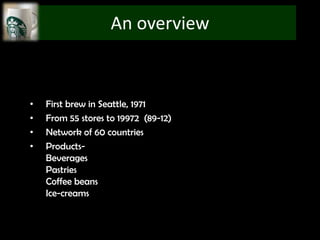
An overview


•   First brew in Seattle, 1971
•   From 55 stores to 19972 (89-12)
•   Network of 60 countries
•   Products-
    Beverages
    Pastries
    Coffee beans
    Ice-creams
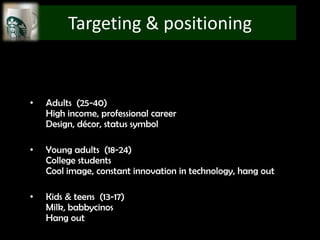
Targeting & positioning


•   Adults (25-40)
    High income, professional career
    Design, décor, status symbol

•   Young adults (18-24)
    College students
    Cool image, constant innovation in technology, hang out

•   Kids & teens (13-17)
    Milk, babbycinos
    Hang out
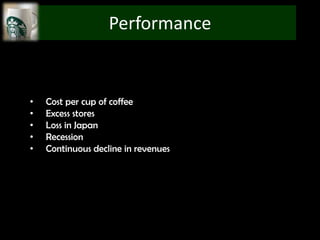
Performance


•   Cost per cup of coffee
•   Excess stores
•   Loss in Japan
•   Recession
•   Continuous decline in revenues
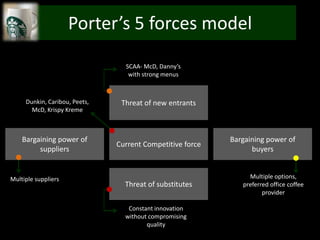
Porter’s 5 forces model

                                 SCAA- McD, Danny’s
                                  with strong menus


     Dunkin, Caribou, Peets,    Threat of new entrants
       McD, Krispy Kreme


    Bargaining power of                                    Bargaining power of
                               Current Competitive force
         suppliers                                               buyers


Multiple suppliers                                              Multiple options,
                                 Threat of substitutes        preferred office coffee
                                                                     provider

                                  Constant innovation
                                 without compromising
                                        quality
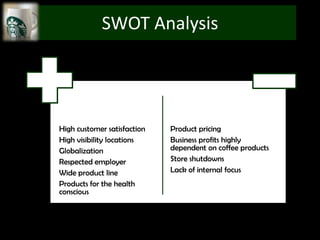
SWOT Analysis


High customer satisfaction   Product pricing
High visibility locations    Business profits highly
Globalization                dependent on coffee products
Respected employer           Store shutdowns
Wide product line            Lack of internal focus
Products for the health
conscious
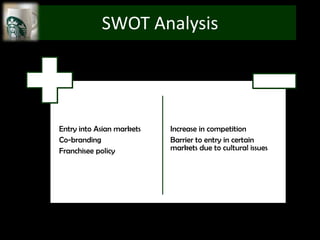
SWOT Analysis


Entry into Asian markets   Increase in competition
Co-branding                Barrier to entry in certain
Franchisee policy          markets due to cultural issues
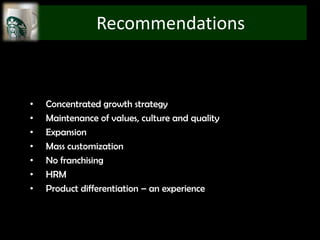
Recommendations


•   Concentrated growth strategy
•   Maintenance of values, culture and quality
•   Expansion
•   Mass customization
•   No franchising
•   HRM
•   Product differentiation – an experience
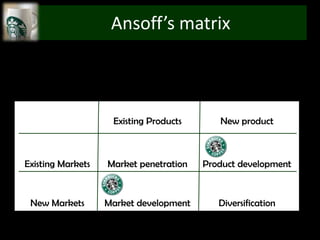
Ansoff’s matrix


                    Existing Products      New product


Existing Markets   Market penetration   Product development


 New Markets       Market development      Diversification
Desi brew


•   JV, tie-ups
•   Aspirational brand
•   Price sensitivity
•   Competition
•   Location
•   Marketing efforts
•   Uniformity in procedures/ practices

Starbucks

  • 1.
    A presentation by: Meghana Bhogle Ronak Gala Anupam Khandre Karan Parmar Prachi Raut
  • 2.
    An overview • First brew in Seattle, 1971 • From 55 stores to 19972 (89-12) • Network of 60 countries • Products- Beverages Pastries Coffee beans Ice-creams
  • 3.
    Targeting & positioning • Adults (25-40) High income, professional career Design, décor, status symbol • Young adults (18-24) College students Cool image, constant innovation in technology, hang out • Kids & teens (13-17) Milk, babbycinos Hang out
  • 4.
    Performance • Cost per cup of coffee • Excess stores • Loss in Japan • Recession • Continuous decline in revenues
  • 5.
    Porter’s 5 forcesmodel SCAA- McD, Danny’s with strong menus Dunkin, Caribou, Peets, Threat of new entrants McD, Krispy Kreme Bargaining power of Bargaining power of Current Competitive force suppliers buyers Multiple suppliers Multiple options, Threat of substitutes preferred office coffee provider Constant innovation without compromising quality
  • 6.
    SWOT Analysis High customersatisfaction Product pricing High visibility locations Business profits highly Globalization dependent on coffee products Respected employer Store shutdowns Wide product line Lack of internal focus Products for the health conscious
  • 7.
    SWOT Analysis Entry intoAsian markets Increase in competition Co-branding Barrier to entry in certain Franchisee policy markets due to cultural issues
  • 8.
    Recommendations • Concentrated growth strategy • Maintenance of values, culture and quality • Expansion • Mass customization • No franchising • HRM • Product differentiation – an experience
  • 9.
    Ansoff’s matrix Existing Products New product Existing Markets Market penetration Product development New Markets Market development Diversification
  • 10.
    Desi brew • JV, tie-ups • Aspirational brand • Price sensitivity • Competition • Location • Marketing efforts • Uniformity in procedures/ practices