Staffing for
Service
Serving the Guests
Front-of-the-house (front liners or customer-
contact employees)
•They are whom the guests interacts with that has
the most direct influence.
•They are frequently the one that can turn a guest
experience into a wow that is memorable
•Responsible for providing the value and quality of
an exceptional experience between the guest and
the company.
•Examples: Front desk agents, concierge, bell
mans, restaurant servers, receptionists, and etc.
Supporting the Service
Back-of-the-house
•People providing support to those
employees interacting with the guests.
•Heart of the house who creates the service
experience.
•Examples: kitchen staff, housekeeping staff,
laundry staff and maintenance crew.
The Role of the Manager
•The hospitality industry is such a labor-intensive
industry that there must also be managers to
supervise, coach, and coordinate the many
employees doing the different jobs.
•Management also plays a critical role because they
hire employees, train, evaluate, reward, discipline,
celebrate, promote, and oversee all the other tasks
that must be done at the right time and place ready
to serve guest.
•Managers in service firms are faced with very
different issues than managers in product-
producing firms.
The Selection Process
1.Study the Job
2.Recruit a Pool of Qualified
Candidates
3.Select the Best Candidate
4.Hire the Best Applicant
5.Make the New Hire Feel Welcome
6.Turnover – Selecting People Out of
an Organization
Human Resource Planning
•It is the process of analyzing an
organization’s current human resource
capabilities and the organization’s human
resource needs that are required to meet
organizational objectives.
•Selecting the best person for the job should
begin by first looking not at the applicants
but at the job.
Step 1: Study the Job
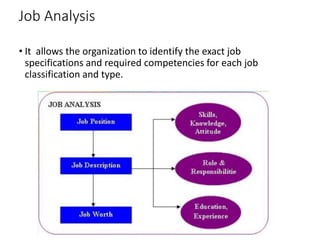
Job Analysis
• It allows the organization to identify the exact job
specifications and required competencies for each job
classification and type.
Study Your Best Performers
• The intangibility of the guest experience and the uniqueness of
what each guest expects from it have led some hospitality
organizations to use a secondary strategy for identifying good
candidates: study the organization’s best performers and identify
their personal traits, tendencies, talents, and personality
characteristics.
Develop Talent Profiles
•The idea here is to look at an organization’s strong
performers and, based on their talents, develop
talent profiles for each major job category. Then,
they use these benchmark profiles to screen new
applicants.
Other Key Characteristics for Service
Personnel
•There are some known characteristics
that are needed by the employees who
are actually serving customers, clients or
guests.
•Enthusiasm
•Emotional Labor
•Emotional Relationship
•Surface Acting
•Deep Acting
•Passion for Service
Step 2: Recruit a Pool of Qualified
Candidates
• Many companies prefer internal recruitment for several reasons.
• In fact, the practice of hiring from within is often seen as a best
practice of human resource management.
• Factors:
• Known Quantity
• Internal Equity
• Experience
• Knowing the Culture
• Lower Cost
• Difficulties:
• Specific skills and knowledge
• Diversity
Hiring Internal Candidates
Hiring External Candidates
•Looking outside the company for new employees
has a number of advantages and disadvantages.
•The disadvantage of hiring internally which usually
involves promotions and transfers that limit the
diversity of experience of the candidate population.
•Factors:
• New ideas and fresh perspectives
External Search Strategies
1. Public Advertising – advertising in newspapers, magazines
and weeklies targeting potential employees, aggressive
recruiters use more creative means to reach people.
2. Internet - The widespread use and accessibility of the
Internet has turned Internet recruiting into a multibillion
dollar industry.
3. Niches - Targeting specific segments of the labor market to
identify potential employees is another recruiting strategy.
4. Professional Networks and Placement Services -
Successful hospitality managers join professional
organizations to find both good employees and good ideas
about how to find good employees.
5. Student Recruiting - An important strategy for finding the
many people that the hospitality industry needs is student
recruiting. A number of programs develop pools of
potential employees among young people who are either
still in school or have recently graduated.
6. Employee Referrals - Another large and successful source
of employees for many hospitality organizations is
referrals by current employees. A great way to get the kind
of new employees you want is to ask your star employees
to find them.
7. Employers of Choice - A company’s reputation can also aid
in recruitment. These employers are characterized as
being good places to work, where the organization makes
efforts to create and maintain a humane and respectful
workplace.
8. Walk-ins – Some hospitality organizations rely on
walk-ins.
9. The Competition – Everyone likes to be
recognized, and if, by asking people to consider a
job opportunity
10.Call Back Fire – Usually there are more applicants
than positions.
Step 3: Select the Best
Candidate
Once you know what you want in a candidate, you must
collect information on your applicants to make the best
hiring decision.
Screening Tools:
•Application Forms
•Interviews
•Psychological Tests
•Assessment Centers
•References, Background Check, and Drug Tests
Selecting and Evaluating Applicants
Step 4: Hire the Best Applicant
•After all the information has been collected
on potential applicants, selecting the right
people from the applicants becomes the next
critical step, in ensuring that the company
gets the employees who will provide the
level of service that the organization expects.
While finding and hiring the right people is
challenging for all organizations, it is
especially difficult for the hospitality industry.
Activity No. 3
1. Create a basic organizational chart of a hotel or a restaurant
showing the back-of-the-house and front-of-the-house
departments.
2. From the organizational chart that you have created, choose a
certain position that you want to have in the future and explain
why you chose that.
3. Describe the job description or the duties and responsibilities of
your chosen position.
4. Assess yourself, where do you think you will fit best in the back-of-
the-house or the front-of-the-house department? Explain why.
Staffing for Service.pptx

Staffing for Service.pptx

  • 1.
  • 2.
    Serving the Guests Front-of-the-house(front liners or customer- contact employees) •They are whom the guests interacts with that has the most direct influence. •They are frequently the one that can turn a guest experience into a wow that is memorable •Responsible for providing the value and quality of an exceptional experience between the guest and the company. •Examples: Front desk agents, concierge, bell mans, restaurant servers, receptionists, and etc.
  • 3.
    Supporting the Service Back-of-the-house •Peopleproviding support to those employees interacting with the guests. •Heart of the house who creates the service experience. •Examples: kitchen staff, housekeeping staff, laundry staff and maintenance crew.
  • 4.
    The Role ofthe Manager •The hospitality industry is such a labor-intensive industry that there must also be managers to supervise, coach, and coordinate the many employees doing the different jobs. •Management also plays a critical role because they hire employees, train, evaluate, reward, discipline, celebrate, promote, and oversee all the other tasks that must be done at the right time and place ready to serve guest. •Managers in service firms are faced with very different issues than managers in product- producing firms.
  • 5.
    The Selection Process 1.Studythe Job 2.Recruit a Pool of Qualified Candidates 3.Select the Best Candidate 4.Hire the Best Applicant 5.Make the New Hire Feel Welcome 6.Turnover – Selecting People Out of an Organization
  • 6.
    Human Resource Planning •Itis the process of analyzing an organization’s current human resource capabilities and the organization’s human resource needs that are required to meet organizational objectives. •Selecting the best person for the job should begin by first looking not at the applicants but at the job. Step 1: Study the Job
  • 7.
    Job Analysis • Itallows the organization to identify the exact job specifications and required competencies for each job classification and type.
  • 8.
    Study Your BestPerformers • The intangibility of the guest experience and the uniqueness of what each guest expects from it have led some hospitality organizations to use a secondary strategy for identifying good candidates: study the organization’s best performers and identify their personal traits, tendencies, talents, and personality characteristics. Develop Talent Profiles •The idea here is to look at an organization’s strong performers and, based on their talents, develop talent profiles for each major job category. Then, they use these benchmark profiles to screen new applicants.
  • 9.
    Other Key Characteristicsfor Service Personnel •There are some known characteristics that are needed by the employees who are actually serving customers, clients or guests. •Enthusiasm •Emotional Labor •Emotional Relationship •Surface Acting •Deep Acting •Passion for Service
  • 10.
    Step 2: Recruita Pool of Qualified Candidates • Many companies prefer internal recruitment for several reasons. • In fact, the practice of hiring from within is often seen as a best practice of human resource management. • Factors: • Known Quantity • Internal Equity • Experience • Knowing the Culture • Lower Cost • Difficulties: • Specific skills and knowledge • Diversity Hiring Internal Candidates
  • 11.
    Hiring External Candidates •Lookingoutside the company for new employees has a number of advantages and disadvantages. •The disadvantage of hiring internally which usually involves promotions and transfers that limit the diversity of experience of the candidate population. •Factors: • New ideas and fresh perspectives
  • 12.
    External Search Strategies 1.Public Advertising – advertising in newspapers, magazines and weeklies targeting potential employees, aggressive recruiters use more creative means to reach people. 2. Internet - The widespread use and accessibility of the Internet has turned Internet recruiting into a multibillion dollar industry. 3. Niches - Targeting specific segments of the labor market to identify potential employees is another recruiting strategy. 4. Professional Networks and Placement Services - Successful hospitality managers join professional organizations to find both good employees and good ideas about how to find good employees.
  • 13.
    5. Student Recruiting- An important strategy for finding the many people that the hospitality industry needs is student recruiting. A number of programs develop pools of potential employees among young people who are either still in school or have recently graduated. 6. Employee Referrals - Another large and successful source of employees for many hospitality organizations is referrals by current employees. A great way to get the kind of new employees you want is to ask your star employees to find them. 7. Employers of Choice - A company’s reputation can also aid in recruitment. These employers are characterized as being good places to work, where the organization makes efforts to create and maintain a humane and respectful workplace.
  • 14.
    8. Walk-ins –Some hospitality organizations rely on walk-ins. 9. The Competition – Everyone likes to be recognized, and if, by asking people to consider a job opportunity 10.Call Back Fire – Usually there are more applicants than positions.
  • 15.
    Step 3: Selectthe Best Candidate Once you know what you want in a candidate, you must collect information on your applicants to make the best hiring decision. Screening Tools: •Application Forms •Interviews •Psychological Tests •Assessment Centers •References, Background Check, and Drug Tests Selecting and Evaluating Applicants
  • 16.
    Step 4: Hirethe Best Applicant •After all the information has been collected on potential applicants, selecting the right people from the applicants becomes the next critical step, in ensuring that the company gets the employees who will provide the level of service that the organization expects. While finding and hiring the right people is challenging for all organizations, it is especially difficult for the hospitality industry.
  • 17.
    Activity No. 3 1.Create a basic organizational chart of a hotel or a restaurant showing the back-of-the-house and front-of-the-house departments. 2. From the organizational chart that you have created, choose a certain position that you want to have in the future and explain why you chose that. 3. Describe the job description or the duties and responsibilities of your chosen position. 4. Assess yourself, where do you think you will fit best in the back-of- the-house or the front-of-the-house department? Explain why.