* HAM ASSIGNMENT
Name: Yash Gawde
Roll no: 05
* Recruitment and Selection
Introduction: Welcome to today's presentation on Recruitment and Selection in the
Hotel Industry. In the dynamic world of hospitality, where excellence in service is
paramount, the role of recruiting and selecting the right talent cannot be overstated.
As we delve into the intricate process of building an effective workforce, we will
explore the unique challenges, innovative strategies, and best practices that define
successful recruitment and selection in the hotel industry. The hotel sector is
renowned for its fast-paced environment, diverse workforce, and the constant
pursuit of providing unparalleled guest experiences. Finding individuals who not only
meet the skill requirements but also embody the values and ethos of a hotel is a
multifaceted challenge. In today's discussion, we will unravel the intricacies of the
recruitment and selection process specific to the hospitality landscape.
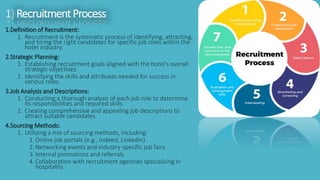
1.Definition of Recruitment:
1. Recruitment is the systematic process of identifying, attracting,
and hiring the right candidates for specific job roles within the
hotel industry.
2.Strategic Planning:
1. Establishing recruitment goals aligned with the hotel's overall
strategic objectives.
2. Identifying the skills and attributes needed for success in
various roles.
3.Job Analysis and Descriptions:
1. Conducting a thorough analysis of each job role to determine
its responsibilities and required skills.
2. Creating comprehensive and appealing job descriptions to
attract suitable candidates.
4.Sourcing Methods:
1. Utilizing a mix of sourcing methods, including:
1.Online job portals (e.g., Indeed, LinkedIn).
2.Networking events and industry-specific job fairs.
3.Internal promotions and referrals.
4.Collaboration with recruitment agencies specializing in
hospitality.
1) RecruitmentProcess
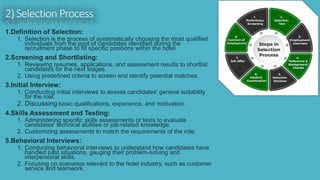
2) Selection Process
1.Definition of Selection:
1. Selection is the process of systematically choosing the most qualified
individuals from the pool of candidates identified during the
recruitment phase to fill specific positions within the hotel.
2.Screening and Shortlisting:
1. Reviewing resumes, applications, and assessment results to shortlist
candidates for the next stages.
2. Using predefined criteria to screen and identify potential matches.
3.Initial Interview:
1. Conducting initial interviews to assess candidates' general suitability
for the role.
2. Discussing basic qualifications, experience, and motivation.
4.Skills Assessment and Testing:
1. Administering specific skills assessments or tests to evaluate
candidates' technical abilities or job-related knowledge.
2. Customizing assessments to match the requirements of the role.
5.Behavioral Interviews:
1. Conducting behavioral interviews to understand how candidates have
handled past situations, gauging their problem-solving and
interpersonal skills.
2. Focusing on scenarios relevant to the hotel industry, such as customer
service and teamwork.
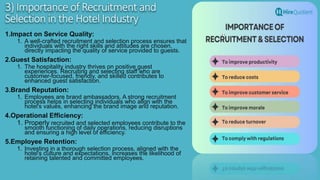
3) Importance of Recruitment and
Selection in the Hotel Industry
1.Impact on Service Quality:
1. A well-crafted recruitment and selection process ensures that
individuals with the right skills and attitudes are chosen,
directly impacting the quality of service provided to guests.
2.Guest Satisfaction:
1. The hospitality industry thrives on positive guest
experiences. Recruiting and selecting staff who are
customer-focused, friendly, and skilled contributes to
enhanced guest satisfaction.
3.Brand Reputation:
1. Employees are brand ambassadors. A strong recruitment
process helps in selecting individuals who align with the
hotel's values, enhancing the brand image and reputation.
4.Operational Efficiency:
1. Properly recruited and selected employees contribute to the
smooth functioning of daily operations, reducing disruptions
and ensuring a high level of efficiency.
5.Employee Retention:
1. Investing in a thorough selection process, aligned with the
hotel's culture and expectations, increases the likelihood of
retaining talented and committed employees.
4) Challenges in Recruitment and
Selection
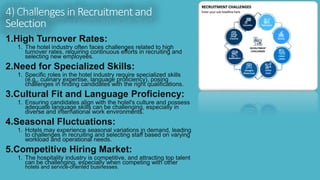
1.High Turnover Rates:
1. The hotel industry often faces challenges related to high
turnover rates, requiring continuous efforts in recruiting and
selecting new employees.
2.Need for Specialized Skills:
1. Specific roles in the hotel industry require specialized skills
(e.g., culinary expertise, language proficiency), posing
challenges in finding candidates with the right qualifications.
3.Cultural Fit and Language Proficiency:
1. Ensuring candidates align with the hotel's culture and possess
adequate language skills can be challenging, especially in
diverse and international work environments.
4.Seasonal Fluctuations:
1. Hotels may experience seasonal variations in demand, leading
to challenges in recruiting and selecting staff based on varying
workload and operational needs.
5.Competitive Hiring Market:
1. The hospitality industry is competitive, and attracting top talent
can be challenging, especially when competing with other
hotels and service-oriented businesses.
5) Best Practices in Recruitment and
Selection
1.Strategic Workforce Planning:
1. Align recruitment efforts with the hotel's overall strategic goals,
ensuring a proactive and strategic approach to workforce
planning.
2.Job Description Clarity:
1. Craft clear and comprehensive job descriptions that accurately
reflect the role's responsibilities, qualifications, and
expectations.
3.Employer Branding:
1. Actively promote the hotel's employer brand to attract top
talent, emphasizing the unique aspects of working for the
hotel, including culture, benefits, and growth opportunities.
4.Diverse Sourcing Channels:
1. Utilize diverse sourcing channels, including online job portals,
industry events, networking, employee referrals, and
partnerships with recruitment agencies.
5.Data-Driven Decision-Making:
1. Use data analytics to assess the effectiveness of different
recruitment channels, ensuring a data-driven approach to
6) Diversity and Inclusion
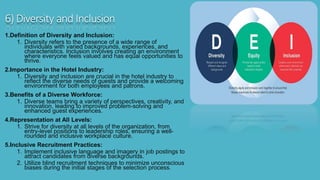
1.Definition of Diversity and Inclusion:
1. Diversity refers to the presence of a wide range of
individuals with varied backgrounds, experiences, and
characteristics. Inclusion involves creating an environment
where everyone feels valued and has equal opportunities to
thrive.
2.Importance in the Hotel Industry:
1. Diversity and inclusion are crucial in the hotel industry to
reflect the diverse needs of guests and provide a welcoming
environment for both employees and patrons.
3.Benefits of a Diverse Workforce:
1. Diverse teams bring a variety of perspectives, creativity, and
innovation, leading to improved problem-solving and
enhanced guest experiences.
4.Representation at All Levels:
1. Strive for diversity at all levels of the organization, from
entry-level positions to leadership roles, ensuring a well-
rounded and inclusive workplace culture.
5.Inclusive Recruitment Practices:
1. Implement inclusive language and imagery in job postings to
attract candidates from diverse backgrounds.
2. Utilize blind recruitment techniques to minimize unconscious
biases during the initial stages of the selection process.
7) Training and Development
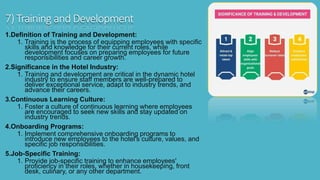
1.Definition of Training and Development:
1. Training is the process of equipping employees with specific
skills and knowledge for their current roles, while
development focuses on preparing employees for future
responsibilities and career growth.
2.Significance in the Hotel Industry:
1. Training and development are critical in the dynamic hotel
industry to ensure staff members are well-prepared to
deliver exceptional service, adapt to industry trends, and
advance their careers.
3.Continuous Learning Culture:
1. Foster a culture of continuous learning where employees
are encouraged to seek new skills and stay updated on
industry trends.
4.Onboarding Programs:
1. Implement comprehensive onboarding programs to
introduce new employees to the hotel's culture, values, and
specific job responsibilities.
5.Job-Specific Training:
1. Provide job-specific training to enhance employees'
proficiency in their roles, whether in housekeeping, front
desk, culinary, or any other department.
Thank you

Ham Assignment Food........................................

  • 1.
    * HAM ASSIGNMENT Name:Yash Gawde Roll no: 05
  • 2.
    * Recruitment andSelection Introduction: Welcome to today's presentation on Recruitment and Selection in the Hotel Industry. In the dynamic world of hospitality, where excellence in service is paramount, the role of recruiting and selecting the right talent cannot be overstated. As we delve into the intricate process of building an effective workforce, we will explore the unique challenges, innovative strategies, and best practices that define successful recruitment and selection in the hotel industry. The hotel sector is renowned for its fast-paced environment, diverse workforce, and the constant pursuit of providing unparalleled guest experiences. Finding individuals who not only meet the skill requirements but also embody the values and ethos of a hotel is a multifaceted challenge. In today's discussion, we will unravel the intricacies of the recruitment and selection process specific to the hospitality landscape.
  • 3.
    1.Definition of Recruitment: 1.Recruitment is the systematic process of identifying, attracting, and hiring the right candidates for specific job roles within the hotel industry. 2.Strategic Planning: 1. Establishing recruitment goals aligned with the hotel's overall strategic objectives. 2. Identifying the skills and attributes needed for success in various roles. 3.Job Analysis and Descriptions: 1. Conducting a thorough analysis of each job role to determine its responsibilities and required skills. 2. Creating comprehensive and appealing job descriptions to attract suitable candidates. 4.Sourcing Methods: 1. Utilizing a mix of sourcing methods, including: 1.Online job portals (e.g., Indeed, LinkedIn). 2.Networking events and industry-specific job fairs. 3.Internal promotions and referrals. 4.Collaboration with recruitment agencies specializing in hospitality. 1) RecruitmentProcess
  • 4.
    2) Selection Process 1.Definitionof Selection: 1. Selection is the process of systematically choosing the most qualified individuals from the pool of candidates identified during the recruitment phase to fill specific positions within the hotel. 2.Screening and Shortlisting: 1. Reviewing resumes, applications, and assessment results to shortlist candidates for the next stages. 2. Using predefined criteria to screen and identify potential matches. 3.Initial Interview: 1. Conducting initial interviews to assess candidates' general suitability for the role. 2. Discussing basic qualifications, experience, and motivation. 4.Skills Assessment and Testing: 1. Administering specific skills assessments or tests to evaluate candidates' technical abilities or job-related knowledge. 2. Customizing assessments to match the requirements of the role. 5.Behavioral Interviews: 1. Conducting behavioral interviews to understand how candidates have handled past situations, gauging their problem-solving and interpersonal skills. 2. Focusing on scenarios relevant to the hotel industry, such as customer service and teamwork.
  • 5.
    3) Importance ofRecruitment and Selection in the Hotel Industry 1.Impact on Service Quality: 1. A well-crafted recruitment and selection process ensures that individuals with the right skills and attitudes are chosen, directly impacting the quality of service provided to guests. 2.Guest Satisfaction: 1. The hospitality industry thrives on positive guest experiences. Recruiting and selecting staff who are customer-focused, friendly, and skilled contributes to enhanced guest satisfaction. 3.Brand Reputation: 1. Employees are brand ambassadors. A strong recruitment process helps in selecting individuals who align with the hotel's values, enhancing the brand image and reputation. 4.Operational Efficiency: 1. Properly recruited and selected employees contribute to the smooth functioning of daily operations, reducing disruptions and ensuring a high level of efficiency. 5.Employee Retention: 1. Investing in a thorough selection process, aligned with the hotel's culture and expectations, increases the likelihood of retaining talented and committed employees.
  • 6.
    4) Challenges inRecruitment and Selection 1.High Turnover Rates: 1. The hotel industry often faces challenges related to high turnover rates, requiring continuous efforts in recruiting and selecting new employees. 2.Need for Specialized Skills: 1. Specific roles in the hotel industry require specialized skills (e.g., culinary expertise, language proficiency), posing challenges in finding candidates with the right qualifications. 3.Cultural Fit and Language Proficiency: 1. Ensuring candidates align with the hotel's culture and possess adequate language skills can be challenging, especially in diverse and international work environments. 4.Seasonal Fluctuations: 1. Hotels may experience seasonal variations in demand, leading to challenges in recruiting and selecting staff based on varying workload and operational needs. 5.Competitive Hiring Market: 1. The hospitality industry is competitive, and attracting top talent can be challenging, especially when competing with other hotels and service-oriented businesses.
  • 7.
    5) Best Practicesin Recruitment and Selection 1.Strategic Workforce Planning: 1. Align recruitment efforts with the hotel's overall strategic goals, ensuring a proactive and strategic approach to workforce planning. 2.Job Description Clarity: 1. Craft clear and comprehensive job descriptions that accurately reflect the role's responsibilities, qualifications, and expectations. 3.Employer Branding: 1. Actively promote the hotel's employer brand to attract top talent, emphasizing the unique aspects of working for the hotel, including culture, benefits, and growth opportunities. 4.Diverse Sourcing Channels: 1. Utilize diverse sourcing channels, including online job portals, industry events, networking, employee referrals, and partnerships with recruitment agencies. 5.Data-Driven Decision-Making: 1. Use data analytics to assess the effectiveness of different recruitment channels, ensuring a data-driven approach to
  • 8.
    6) Diversity andInclusion 1.Definition of Diversity and Inclusion: 1. Diversity refers to the presence of a wide range of individuals with varied backgrounds, experiences, and characteristics. Inclusion involves creating an environment where everyone feels valued and has equal opportunities to thrive. 2.Importance in the Hotel Industry: 1. Diversity and inclusion are crucial in the hotel industry to reflect the diverse needs of guests and provide a welcoming environment for both employees and patrons. 3.Benefits of a Diverse Workforce: 1. Diverse teams bring a variety of perspectives, creativity, and innovation, leading to improved problem-solving and enhanced guest experiences. 4.Representation at All Levels: 1. Strive for diversity at all levels of the organization, from entry-level positions to leadership roles, ensuring a well- rounded and inclusive workplace culture. 5.Inclusive Recruitment Practices: 1. Implement inclusive language and imagery in job postings to attract candidates from diverse backgrounds. 2. Utilize blind recruitment techniques to minimize unconscious biases during the initial stages of the selection process.
  • 9.
    7) Training andDevelopment 1.Definition of Training and Development: 1. Training is the process of equipping employees with specific skills and knowledge for their current roles, while development focuses on preparing employees for future responsibilities and career growth. 2.Significance in the Hotel Industry: 1. Training and development are critical in the dynamic hotel industry to ensure staff members are well-prepared to deliver exceptional service, adapt to industry trends, and advance their careers. 3.Continuous Learning Culture: 1. Foster a culture of continuous learning where employees are encouraged to seek new skills and stay updated on industry trends. 4.Onboarding Programs: 1. Implement comprehensive onboarding programs to introduce new employees to the hotel's culture, values, and specific job responsibilities. 5.Job-Specific Training: 1. Provide job-specific training to enhance employees' proficiency in their roles, whether in housekeeping, front desk, culinary, or any other department.
  • 10.