Handmade Thinking
Student Drawings
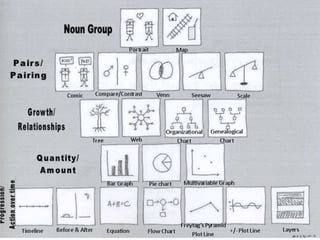
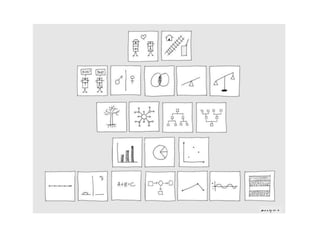
in 21 formats
Laurence Musgrove
Angelo State University
They are in response to a variety of reading
assignments, including MAUS, Scott McCloud’s
Understanding Comics, John Gage’s The Shape of
Reason, and selections from American Earth:
Environmental Writing Since Thoreau and from The
Oxford Book of American Short Stories.
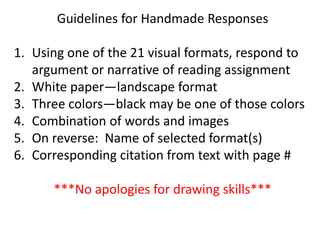
Guidelines for Handmade Responses
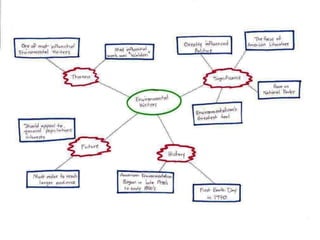
1. Using one of the 21 visual formats, respond to
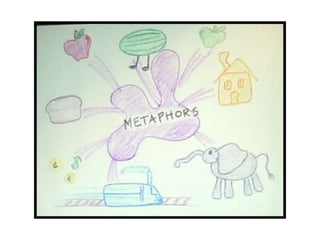
argument or narrative of reading assignment
2. White paper—landscape format
3. Three colors—black may be one of those colors
4. Combination of words and images
5. On reverse: Name of selected format(s)
6. Corresponding citation from text with page #
***No apologies for drawing skills***
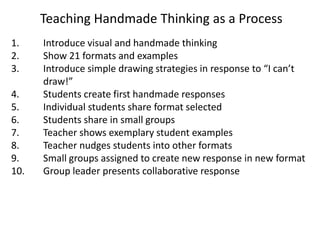
Teaching Handmade Thinking as a Process
1. Introduce visual and handmade thinking
2. Show 21 formats and examples
3. Introduce simple drawing strategies in response to “I can’t
draw!”
4. Students create first handmade responses
5. Individual students share format selected
6. Students share in small groups
7. Teacher shows exemplary student examples
8. Teacher nudges students into other formats
9. Small groups assigned to create new response in new format
10. Group leader presents collaborative response
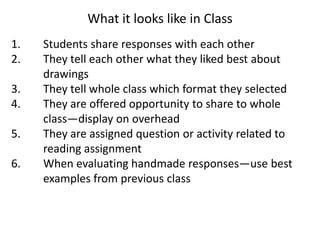
What it looks like in Class
1. Students share responses with each other
2. They tell each other what they liked best about
drawings
3. They tell whole class which format they selected
4. They are offered opportunity to share to whole
class—display on overhead
5. They are assigned question or activity related to
reading assignment
6. When evaluating handmade responses—use best
examples from previous class
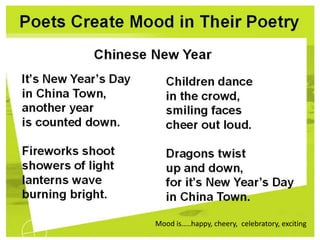
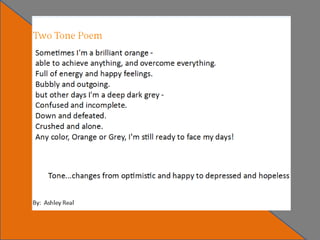
Mood is…..happy, cheery, celebratory, exciting
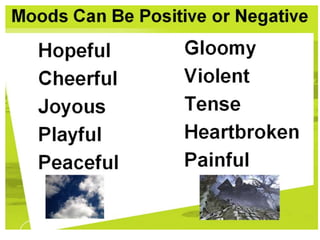
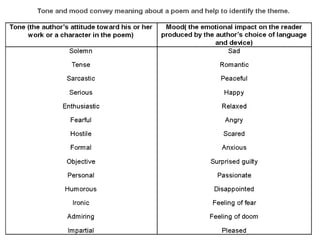
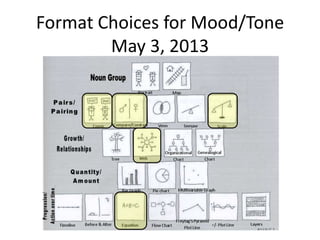
Format Choices for Mood/Tone
May 3, 2013
POEM: See it Through
by STACEY
When you’re up against a trouble
Meet it squarely, face to face;
Lift your chin and set your shoulders,
Plant your feet and take a brace.
When it’s vain to try to dodge it,
Do the best that you can do;
You may fail, but you may conquer,
See it through!
Black may be the clouds about you
And your future may seem grim,
But don’t let your nerve desert you;
Keep yourself in fighting trim.
If the worst is bound to happen,
Spite of all that you can do,
Running from it will not save you,
See it through!
Even hope may seem but futile,
When with troubles you’re beset,
But remember you are facing
Just what other men have met.
You may fail, but fall still fighting;
Don’t give up, whate’er you do;
Eyes front, head high to the finish.
See it through!
Assignment:
1. Using this poem and your
knowledge about Hatchet from
your reading class to formulate a
theme that the two have in
common.
2. Generate a Handmade Thinking
Product depicting the theme
3. Use a text quote from the book or
the poem to accompany your
Handmade Thinking Product.
4. You may use any of the formats, so
take a minute to evaluate the 21
Handmade Thinking Products to
determine which one best fits your
needs.
5. If time permits, at the end of class
you will share your product with a
partner, explain your reasoning
and defend your theme.
For more on handmade thinking,
visit www.handmadethinking.com.

Staff development for handmade thinking

  • 1.
    Handmade Thinking Student Drawings in21 formats Laurence Musgrove Angelo State University
  • 3.
    They are inresponse to a variety of reading assignments, including MAUS, Scott McCloud’s Understanding Comics, John Gage’s The Shape of Reason, and selections from American Earth: Environmental Writing Since Thoreau and from The Oxford Book of American Short Stories.
  • 7.
    Guidelines for HandmadeResponses 1. Using one of the 21 visual formats, respond to argument or narrative of reading assignment 2. White paper—landscape format 3. Three colors—black may be one of those colors 4. Combination of words and images 5. On reverse: Name of selected format(s) 6. Corresponding citation from text with page # ***No apologies for drawing skills***
  • 8.
    Teaching Handmade Thinkingas a Process 1. Introduce visual and handmade thinking 2. Show 21 formats and examples 3. Introduce simple drawing strategies in response to “I can’t draw!” 4. Students create first handmade responses 5. Individual students share format selected 6. Students share in small groups 7. Teacher shows exemplary student examples 8. Teacher nudges students into other formats 9. Small groups assigned to create new response in new format 10. Group leader presents collaborative response
  • 9.
    What it lookslike in Class 1. Students share responses with each other 2. They tell each other what they liked best about drawings 3. They tell whole class which format they selected 4. They are offered opportunity to share to whole class—display on overhead 5. They are assigned question or activity related to reading assignment 6. When evaluating handmade responses—use best examples from previous class
  • 75.
    Mood is…..happy, cheery,celebratory, exciting
  • 79.
    Format Choices forMood/Tone May 3, 2013
  • 81.
    POEM: See itThrough by STACEY When you’re up against a trouble Meet it squarely, face to face; Lift your chin and set your shoulders, Plant your feet and take a brace. When it’s vain to try to dodge it, Do the best that you can do; You may fail, but you may conquer, See it through! Black may be the clouds about you And your future may seem grim, But don’t let your nerve desert you; Keep yourself in fighting trim. If the worst is bound to happen, Spite of all that you can do, Running from it will not save you, See it through! Even hope may seem but futile, When with troubles you’re beset, But remember you are facing Just what other men have met. You may fail, but fall still fighting; Don’t give up, whate’er you do; Eyes front, head high to the finish. See it through! Assignment: 1. Using this poem and your knowledge about Hatchet from your reading class to formulate a theme that the two have in common. 2. Generate a Handmade Thinking Product depicting the theme 3. Use a text quote from the book or the poem to accompany your Handmade Thinking Product. 4. You may use any of the formats, so take a minute to evaluate the 21 Handmade Thinking Products to determine which one best fits your needs. 5. If time permits, at the end of class you will share your product with a partner, explain your reasoning and defend your theme.
  • 83.
    For more onhandmade thinking, visit www.handmadethinking.com.

Editor's Notes

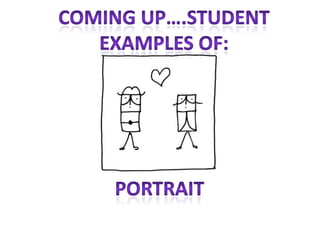
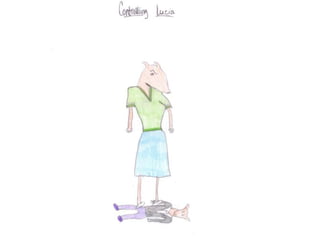
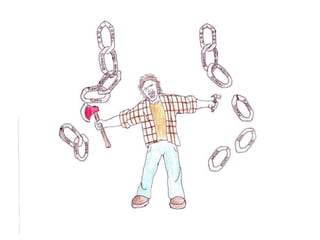
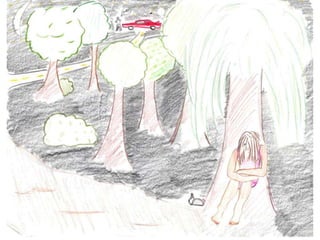
  • #11 Portraits
  • #12 From Speigelman’s MAUS I.
  • #13 from SAND COUNTY ALMANAC by Aldo Leopold
  • #14 Elmer Kelton’s THE TIME IT NEVER RAINED
  • #15 Mary Karr’s CHERRY
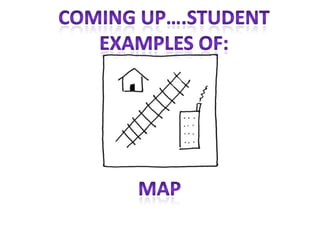
  • #17 Maps
  • #18 From “The White Heron” by Sarah Orne Jewett
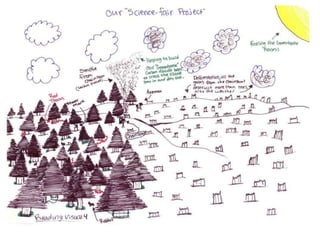
  • #19 from THE END OF NATURE by Bill McKibben
  • #20 Scott McCloud’s UNDERSTANDING COMICS
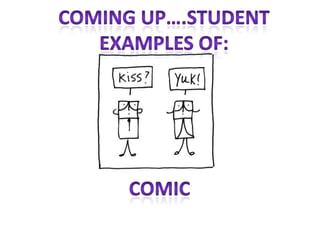
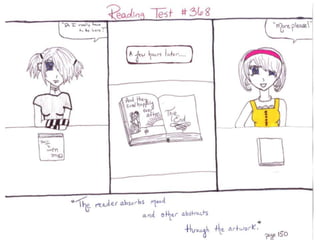
  • #22 This a comic panel with two people in dialogue.
  • #23 Scott McCloud’s UNDERSTANDING COMICS
  • #25 Scott McCloud’s UNDERSTANDING COMICS
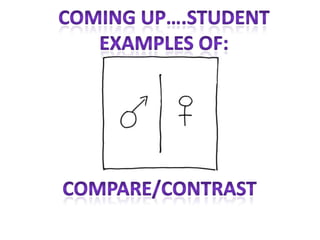
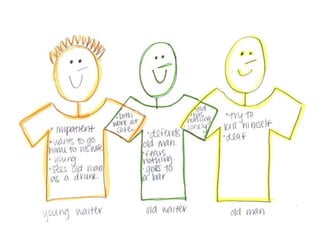
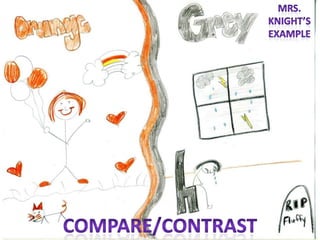
  • #27 Comparison/contrast
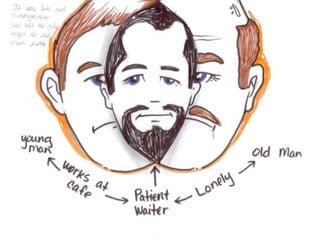
  • #29 Venn diagram
  • #30 From “The White Heron” by Sarah Orne Jewett
  • #31 “A Clean Well-Lighted Place” by Ernest Hemingway
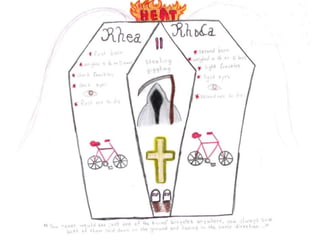
  • #33 “Heat” by Joyce Carol Oates
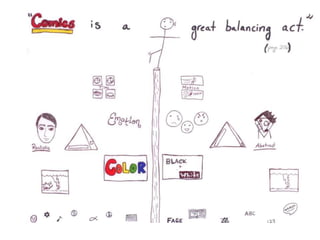
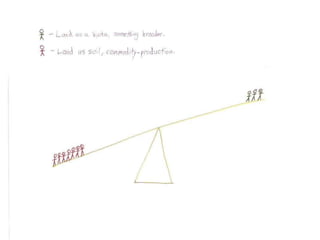
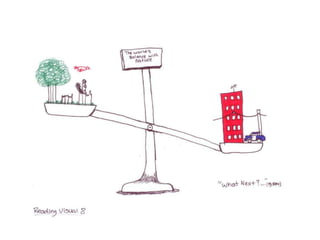
  • #34 Seesaw
  • #35 From “The White Heron” by Sarah Orne Jewett
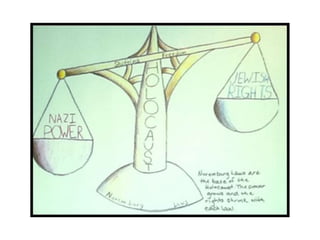
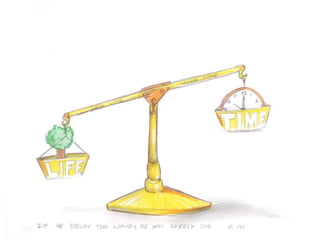
  • #38 Scales
  • #40 “In a Far Country” by Jack London
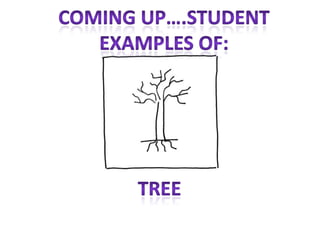
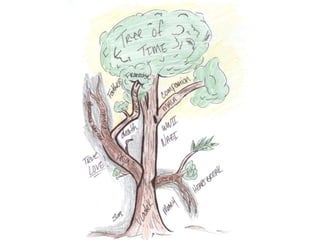
  • #42 Like a tree.
  • #43 Speigelman’s MAUS I
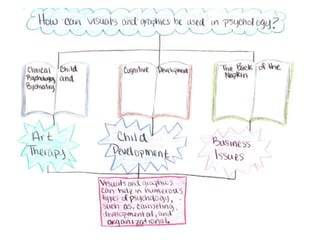
  • #44 Draft of Argument 1 in English 1302: Writing Across the Curriculum on Dan Roam’s THE BACK OF THE NAPKIN
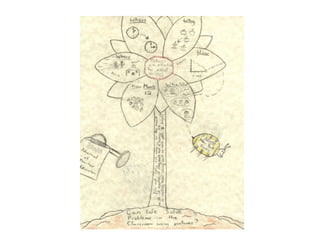
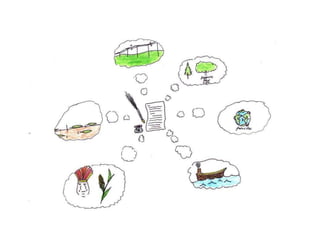
  • #45 The common web for brainstorming and mindmapping.
  • #46 Bill McKibben’s Introduction to AMERICAN EARTH: ENVIRONMENTAL WRITING SINCE THOREAU
  • #48 Thoreau’s JOURNALS
  • #49 The organizational chart.
  • #52 Which becomes a genealogical chart if you flip it.
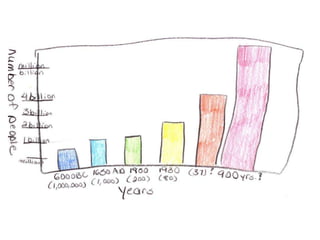
  • #54 Bar charts
  • #55 from “The Population Bomb” by Paul Ehrlich
  • #56 “A Clean Well-Lighted Place” by Ernest Hemingway
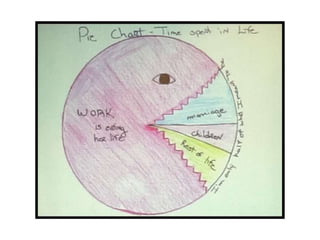
  • #57 Pie charts
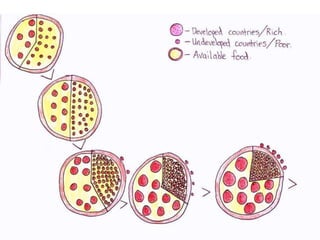
  • #60 from “The Population Bomb” by Paul Ehrlich
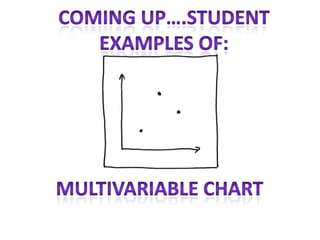
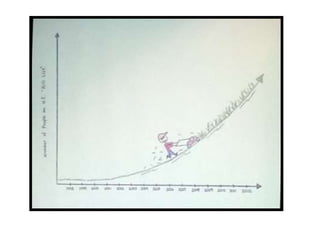
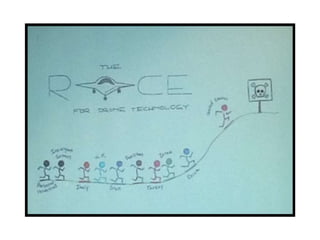
  • #61 And multivariable charts. Roam puts this in the “why?” category.
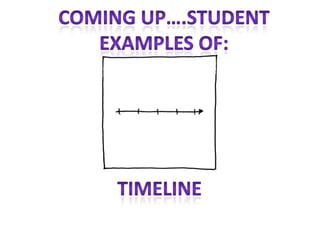
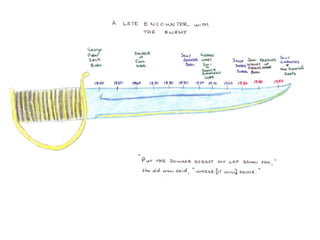
  • #65 Timeline
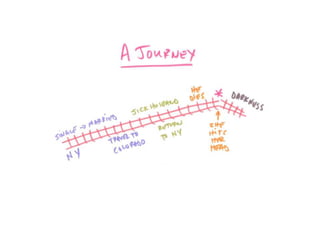
  • #66 “A Journey” by Edith Wharton
  • #68 Speigelman’s MAUS I
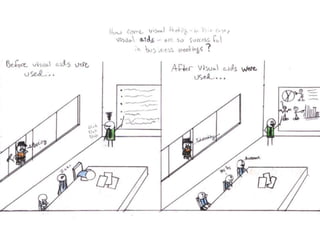
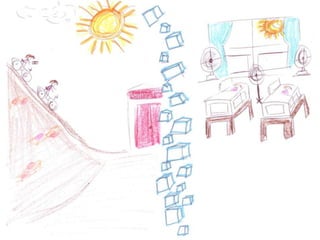
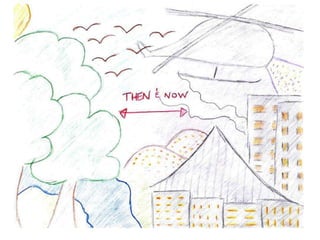
  • #69 Before and after. Also, could fit in the “pairs” category.
  • #70 “Heat” by Joyce Carol Oates
  • #72 Scott McCloud’s UNDERSTANDING COMICS
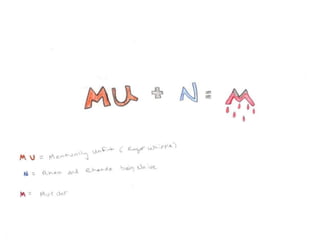
  • #73 Speigelman’s MAUS I
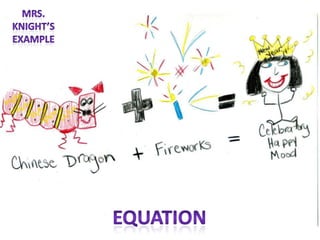
  • #74 The equation.
  • #75 “Heat” by Joyce Carol Oates
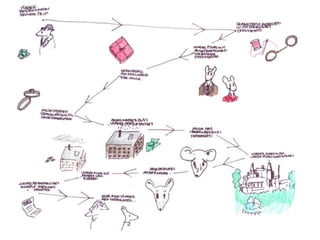
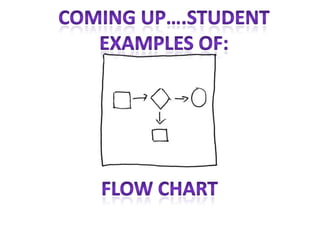
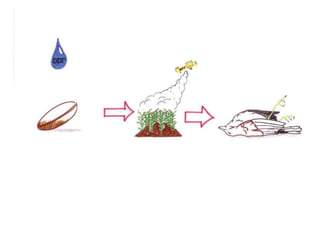
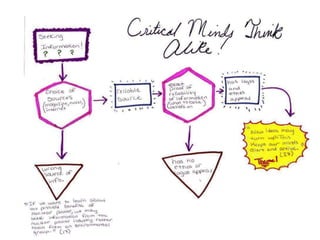
  • #77 A flow chart.
  • #78 From SILENT SPRING by Rachel Carson
  • #79 John Gage’s THE SHAPE OF ARGUMENT
  • #80 Draft of Argument 1 in English 1302: Writing Across the Curriculum
  • #81 John Gage’s THE SHAPE OF ARGUMENT
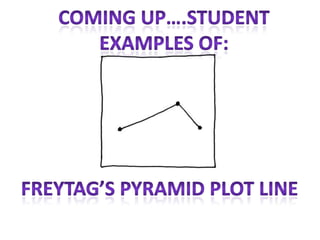
  • #82 Freytag’s pyramid plot line
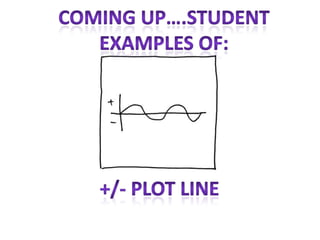
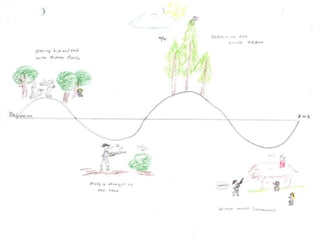
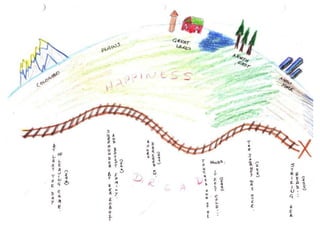
  • #84 This is another multivariable chart or +/- plot line that shows progression up and down and left to right. I learned about this from my friend Austin Kleon who learned it from Kurt Vonnegut’s book Palm Sunday. I don’t know where Kurt Vonnegut learned it.
  • #85 “A White Heron” by Sarah Orne Jewett
  • #86 “A Journey” by Edith Wharton
  • #87 “A Journey” by Edith Wharton
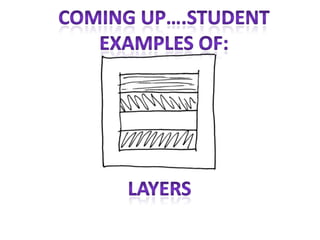
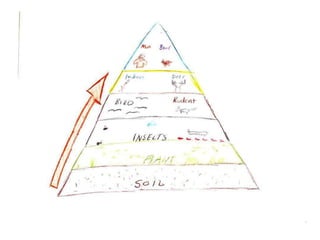
  • #88 This image is sediment, layers moving from bottom to top.
  • #89 from SAND COUNTY ALMANAC by Aldo Leopold
  • #101 Here they are again.
  • #102 Questions?