Problem Solving with
          Children
    Angela Searcy, M.S. and Tyln Sumerset
    Simple Solutions Educational Services
www.overtherainbowsimplesolutions.com
       asearcya@aol.com
     708-845-2343/866-660-3899
Developed by: Angela Searcy

                         Presented by: Lyn Sumerset

• Talyn Sumerset, M.A., Talyn also holds a B.A. degree in
  Psychology and Sociology from the University of Illinois and
  is a Doctorial (Psy.D) candidate at the Chicago School of
  Professional Psychology in Clinical Psychology, Specialization
  in Counseling with a concentration in child and adolescent
  psychology.

• A former research associate at the Illinois Institute for
  Juvenile Research, Talyn’s research contributions have
  revolved primarily around the impact of home visitation in
  disadvantage communities. Talyn has a wealth of experience
  working as a patients’ aid coordinator, case management,
  parent educator, mental health and as a child development
  specialist.
     Simple Solutions For School Success! 1-866-660-3899 www.overtherainbowsimplesolutions.com   asearcya@aol.com
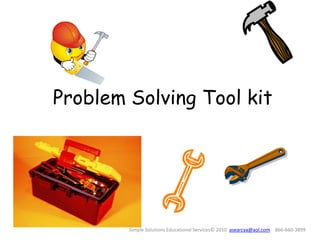
Problem Solving Tool kit


        Simple Solutions Educational Services© 2010 asearcya@aol.com 866-660-3899
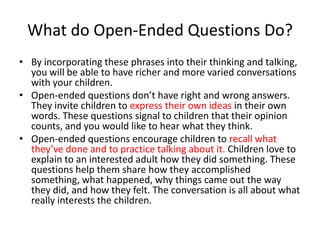
What do Open-Ended Questions Do?
• By incorporating these phrases into their thinking and talking,
  you will be able to have richer and more varied conversations
  with your children.
• Open-ended questions don’t have right and wrong answers.
  They invite children to express their own ideas in their own
  words. These questions signal to children that their opinion
  counts, and you would like to hear what they think.
• Open-ended questions encourage children to recall what
  they’ve done and to practice talking about it. Children love to
  explain to an interested adult how they did something. These
  questions help them share how they accomplished
  something, what happened, why things came out the way
  they did, and how they felt. The conversation is all about what
  really interests the children.
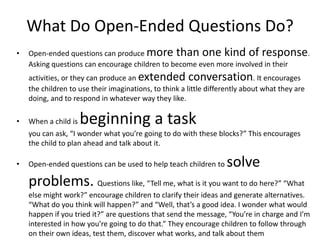
What Do Open-Ended Questions Do?
•   Open-ended questions can produce more than one kind of response.
    Asking questions can encourage children to become even more involved in their
    activities, or they can produce an extended conversation. It encourages
    the children to use their imaginations, to think a little differently about what they are
    doing, and to respond in whatever way they like.

•   When a child is   beginning a task
    you can ask, “I wonder what you’re going to do with these blocks?” This encourages
    the child to plan ahead and talk about it.

•   Open-ended questions can be used to help teach children to     solve
    problems. Questions like, “Tell me, what is it you want to do here?” “What
    else might work?” encourage children to clarify their ideas and generate alternatives.
    “What do you think will happen?” and “Well, that’s a good idea. I wonder what would
    happen if you tried it?” are questions that send the message, “You’re in charge and I’m
    interested in how you’re going to do that.” They encourage children to follow through
    on their own ideas, test them, discover what works, and talk about them
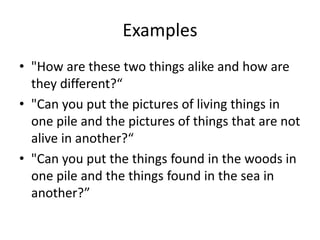
Examples
• "How are these two things alike and how are
  they different?“
• "Can you put the pictures of living things in
  one pile and the pictures of things that are not
  alive in another?“
• "Can you put the things found in the woods in
  one pile and the things found in the sea in
  another?”
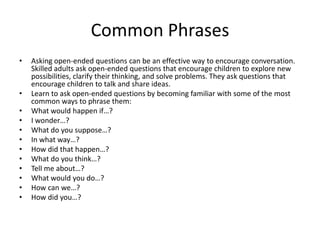
Common Phrases
•   Asking open-ended questions can be an effective way to encourage conversation.
    Skilled adults ask open-ended questions that encourage children to explore new
    possibilities, clarify their thinking, and solve problems. They ask questions that
    encourage children to talk and share ideas.
•   Learn to ask open-ended questions by becoming familiar with some of the most
    common ways to phrase them:
•   What would happen if…?
•   I wonder…?
•   What do you suppose…?
•   In what way…?
•   How did that happen…?
•   What do you think…?
•   Tell me about…?
•   What would you do…?
•   How can we…?
•   How did you…?
Divergent Questions…
• A teacher can ask divergent questions to elicit many
  different answers.

•   Imagine...
•   Suppose...
•   Predict...
•   If..., then...
•   How might...
•   Can you create...
•   What are some of the possible consequences...
•   What if...
What Do You Remember???
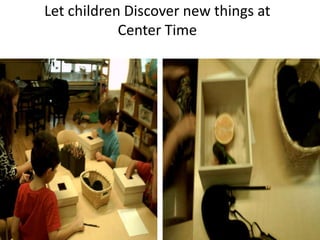
Let children Discover new things at
            Center Time
Is Your Solution….
•Safe?
•Fair?
•How will everyone feel?

         Simple Solutions Educational Services© 2010 asearcya@aol.com 866-660-3899
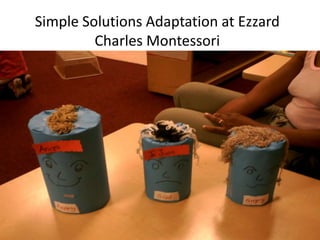
Simple Solutions Adaptation at Ezzard
         Charles Montessori
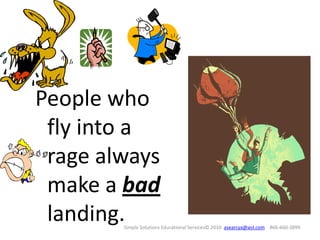
People who
 fly into a
 rage always
 make a bad
 landing.
        Simple Solutions Educational Services© 2010 asearcya@aol.com 866-660-3899
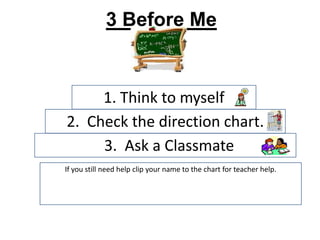
3 Before Me


     1. Think to myself
2. Check the direction chart.
     3. Ask a Classmate
If you still need help clip your name to the chart for teacher help.
HSCI Curriculum Modifications Module


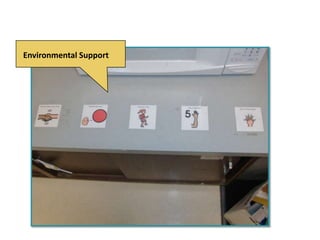
    Environmental Support
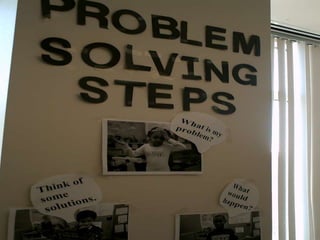
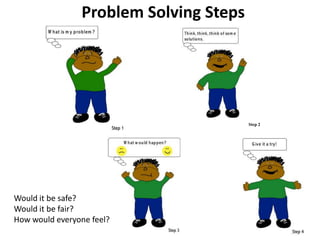
Problem Solving Steps


                                        Step 2


Would it be safe?
Would it be fair?
How would everyone feel?
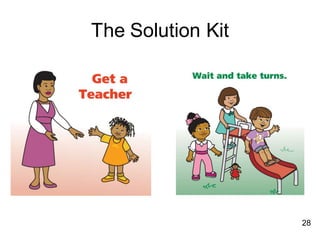
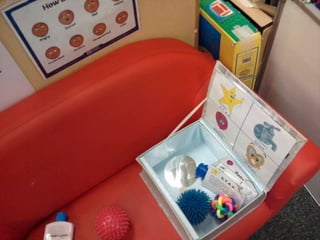
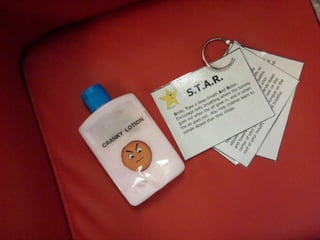
The Solution Kit


                   28
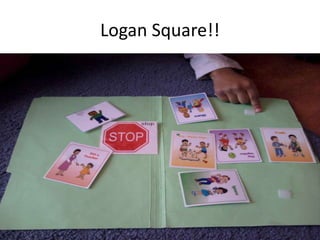
Logan Square!!
What is CSEFEL?
The Center on the Social and Emotional Foundations
                 for Early Learning
     www.vanderbilt.edu/csefel

A Federally Funded Center Focused on Improving the Social Emotional
Outcomes of Children Birth to Age Five.
Partners:
•    Vanderbilt University
•    University of Illinois at Urbana-Champaign
•    University of Colorado at Denver
•    University of South Florida
•    ZERO to THREE
•    Georgetown Center for Child and Human Development
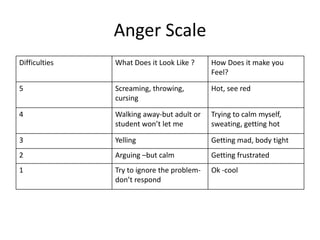
Anger Scale
Difficulties   What Does it Look Like ?     How Does it make you
                                            Feel?

5              Screaming, throwing,         Hot, see red
               cursing

4              Walking away-but adult or    Trying to calm myself,
               student won’t let me         sweating, getting hot

3              Yelling                      Getting mad, body tight
2              Arguing –but calm            Getting frustrated
1              Try to ignore the problem-   Ok -cool
               don’t respond
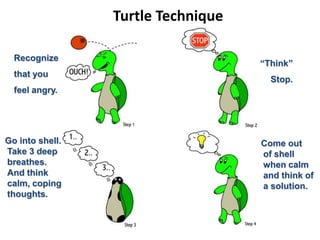
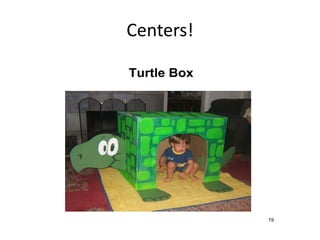
Turtle Technique

  Recognize
                                    “Think”
  that you
                                      Stop.
  feel angry.


Go into shell.                      Come out
Take 3 deep                         of shell
breathes.                           when calm
And think                           and think of
calm, coping                        a solution.
thoughts.
Centers!

Turtle Box


             19
What is Conscious Discipline for
             Educators?
  www.consciousdiscipline.com

Conscious Discipline is a comprehensive self-regulation
program that integrates social-emotional learning and
                       discipline.

Problem solving loretta 2012

  • 1.
    Problem Solving with Children Angela Searcy, M.S. and Tyln Sumerset Simple Solutions Educational Services www.overtherainbowsimplesolutions.com asearcya@aol.com 708-845-2343/866-660-3899
  • 2.
    Developed by: AngelaSearcy Presented by: Lyn Sumerset • Talyn Sumerset, M.A., Talyn also holds a B.A. degree in Psychology and Sociology from the University of Illinois and is a Doctorial (Psy.D) candidate at the Chicago School of Professional Psychology in Clinical Psychology, Specialization in Counseling with a concentration in child and adolescent psychology. • A former research associate at the Illinois Institute for Juvenile Research, Talyn’s research contributions have revolved primarily around the impact of home visitation in disadvantage communities. Talyn has a wealth of experience working as a patients’ aid coordinator, case management, parent educator, mental health and as a child development specialist. Simple Solutions For School Success! 1-866-660-3899 www.overtherainbowsimplesolutions.com asearcya@aol.com
  • 3.
    Problem Solving Toolkit Simple Solutions Educational Services© 2010 asearcya@aol.com 866-660-3899
  • 4.
    What do Open-EndedQuestions Do? • By incorporating these phrases into their thinking and talking, you will be able to have richer and more varied conversations with your children. • Open-ended questions don’t have right and wrong answers. They invite children to express their own ideas in their own words. These questions signal to children that their opinion counts, and you would like to hear what they think. • Open-ended questions encourage children to recall what they’ve done and to practice talking about it. Children love to explain to an interested adult how they did something. These questions help them share how they accomplished something, what happened, why things came out the way they did, and how they felt. The conversation is all about what really interests the children.
  • 5.
    What Do Open-EndedQuestions Do? • Open-ended questions can produce more than one kind of response. Asking questions can encourage children to become even more involved in their activities, or they can produce an extended conversation. It encourages the children to use their imaginations, to think a little differently about what they are doing, and to respond in whatever way they like. • When a child is beginning a task you can ask, “I wonder what you’re going to do with these blocks?” This encourages the child to plan ahead and talk about it. • Open-ended questions can be used to help teach children to solve problems. Questions like, “Tell me, what is it you want to do here?” “What else might work?” encourage children to clarify their ideas and generate alternatives. “What do you think will happen?” and “Well, that’s a good idea. I wonder what would happen if you tried it?” are questions that send the message, “You’re in charge and I’m interested in how you’re going to do that.” They encourage children to follow through on their own ideas, test them, discover what works, and talk about them
  • 6.
    Examples • "How arethese two things alike and how are they different?“ • "Can you put the pictures of living things in one pile and the pictures of things that are not alive in another?“ • "Can you put the things found in the woods in one pile and the things found in the sea in another?”
  • 7.
    Common Phrases • Asking open-ended questions can be an effective way to encourage conversation. Skilled adults ask open-ended questions that encourage children to explore new possibilities, clarify their thinking, and solve problems. They ask questions that encourage children to talk and share ideas. • Learn to ask open-ended questions by becoming familiar with some of the most common ways to phrase them: • What would happen if…? • I wonder…? • What do you suppose…? • In what way…? • How did that happen…? • What do you think…? • Tell me about…? • What would you do…? • How can we…? • How did you…?
  • 8.
    Divergent Questions… • Ateacher can ask divergent questions to elicit many different answers. • Imagine... • Suppose... • Predict... • If..., then... • How might... • Can you create... • What are some of the possible consequences... • What if...
  • 9.
    What Do YouRemember???
  • 10.
    Let children Discovernew things at Center Time
  • 11.
    Is Your Solution…. •Safe? •Fair? •Howwill everyone feel? Simple Solutions Educational Services© 2010 asearcya@aol.com 866-660-3899
  • 12.
    Simple Solutions Adaptationat Ezzard Charles Montessori
  • 14.
    People who flyinto a rage always make a bad landing. Simple Solutions Educational Services© 2010 asearcya@aol.com 866-660-3899
  • 16.
    3 Before Me 1. Think to myself 2. Check the direction chart. 3. Ask a Classmate If you still need help clip your name to the chart for teacher help.
  • 17.
    HSCI Curriculum ModificationsModule Environmental Support
  • 20.
    Problem Solving Steps Step 2 Would it be safe? Would it be fair? How would everyone feel?
  • 22.
  • 23.
  • 24.
    What is CSEFEL? TheCenter on the Social and Emotional Foundations for Early Learning www.vanderbilt.edu/csefel A Federally Funded Center Focused on Improving the Social Emotional Outcomes of Children Birth to Age Five. Partners: • Vanderbilt University • University of Illinois at Urbana-Champaign • University of Colorado at Denver • University of South Florida • ZERO to THREE • Georgetown Center for Child and Human Development
  • 26.
    Anger Scale Difficulties What Does it Look Like ? How Does it make you Feel? 5 Screaming, throwing, Hot, see red cursing 4 Walking away-but adult or Trying to calm myself, student won’t let me sweating, getting hot 3 Yelling Getting mad, body tight 2 Arguing –but calm Getting frustrated 1 Try to ignore the problem- Ok -cool don’t respond
  • 27.
    Turtle Technique Recognize “Think” that you Stop. feel angry. Go into shell. Come out Take 3 deep of shell breathes. when calm And think and think of calm, coping a solution. thoughts.
  • 28.
  • 31.
    What is ConsciousDiscipline for Educators? www.consciousdiscipline.com Conscious Discipline is a comprehensive self-regulation program that integrates social-emotional learning and discipline.

Editor's Notes

  • #15 Focus on the behavior, not the student.—Take charge of negative emotions—Avoid escalating the situation.—Discuss misbehavior later.—Allow students to save face.