
WHAT IS SSR?
SSR is an acronym for sustained silent
reading. first developed over thirty
years ago by Lyman hunt at the
university of Vermont, SSR has
become a common practice in
classrooms. Some teachers go further
and build SSR into every school day.
SSR occurs often in elementary and
middle school settings, and in high
school are beginning to embrace this
 Increase student reading proficiency
1. comprehension
2.build a belief in self as a better reader
3.achievement
 improve student motivation to read
 facilitate overall language development
Research in vocabulary
development supports
reading books direct
instruction
 This method is practical
 This method does not disturb students
activities in the reading classes
 This method can be used as the
building knowledge of the lesson
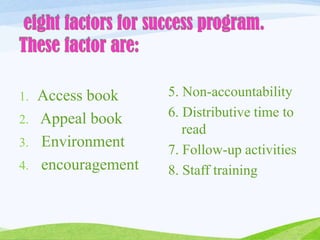
1. Access book
2. Appeal book
3. Environment
4. encouragement
5. Non-accountability
6. Distributive time to
read
7. Follow-up activities
8. Staff training
Ensuring students have access to
a wide range of reading material
Material are provided directly to
students.
Tapping into students
reading interest and
letting them choose
their own materials,
offer a range of
readability levels, and
display material
attractively.
 Providing a comfortable atmosphere
in which to read
 Seating that is not cramped
Implementing various
strategies to support
students in developing
effective reading habits
Need all staff support to
encourage student to
engage in reading
Teacher read after SSR
to followed by sharing
and discussion.
 Provide a non evaluative atmosphere
 Students allowed to stop reading a book if
they find it uninteresting
 Emphasis is on the pleasure of reading
Creating opportunities to read on a regular
basis
Give between 15-30 minutes of reading time
Minimum of twice a week
Goal is for free reading to become a habit
Establishing activities that
occur after SSR to allow
students to share what they
are reading with others. Goal
is to sustain student excitement
about books they are reading
 Supporting staff in the rationale for SSR as well as
best practice for effective implementation
 Develop roles as active in helping students connect
with books
 Establish practical guidelines
 Provide support and opportunity to work together to
build the program
 if student are excepted to a reading ,
teacher should do the same.
 teacher should comment talk about
books they read
 the teacher can serve as a model by
talking about the book her or she is
reading
 Teacher the thought processes that
accompany reading by talking about the
author’s use of language.
 This reading model build relationships,
reinforces internal monitoring of
comprehension
 Promotes reading as a dynamic process
of conversation among reader, peers,
and author
 and the last motivates readers to read
more
This method is practical and can be
used as the building knowledge of the
lesson. The more students know and
understand the better they do in
school, the more exposure they have
to unfamiliar vocabulary and content
knowledge.

SSR ( SUSTAINED SILENT READING )

  • 2.
    WHAT IS SSR? SSRis an acronym for sustained silent reading. first developed over thirty years ago by Lyman hunt at the university of Vermont, SSR has become a common practice in classrooms. Some teachers go further and build SSR into every school day. SSR occurs often in elementary and middle school settings, and in high school are beginning to embrace this
  • 3.
     Increase studentreading proficiency 1. comprehension 2.build a belief in self as a better reader 3.achievement  improve student motivation to read  facilitate overall language development
  • 4.
    Research in vocabulary developmentsupports reading books direct instruction
  • 5.
     This methodis practical  This method does not disturb students activities in the reading classes  This method can be used as the building knowledge of the lesson
  • 6.
    1. Access book 2.Appeal book 3. Environment 4. encouragement 5. Non-accountability 6. Distributive time to read 7. Follow-up activities 8. Staff training
  • 7.
    Ensuring students haveaccess to a wide range of reading material Material are provided directly to students.
  • 8.
    Tapping into students readinginterest and letting them choose their own materials, offer a range of readability levels, and display material attractively.
  • 9.
     Providing acomfortable atmosphere in which to read  Seating that is not cramped
  • 10.
    Implementing various strategies tosupport students in developing effective reading habits Need all staff support to encourage student to engage in reading Teacher read after SSR to followed by sharing and discussion.
  • 11.
     Provide anon evaluative atmosphere  Students allowed to stop reading a book if they find it uninteresting  Emphasis is on the pleasure of reading
  • 12.
    Creating opportunities toread on a regular basis Give between 15-30 minutes of reading time Minimum of twice a week Goal is for free reading to become a habit
  • 13.
    Establishing activities that occurafter SSR to allow students to share what they are reading with others. Goal is to sustain student excitement about books they are reading
  • 14.
     Supporting staffin the rationale for SSR as well as best practice for effective implementation  Develop roles as active in helping students connect with books  Establish practical guidelines  Provide support and opportunity to work together to build the program
  • 15.
     if studentare excepted to a reading , teacher should do the same.  teacher should comment talk about books they read  the teacher can serve as a model by talking about the book her or she is reading  Teacher the thought processes that accompany reading by talking about the author’s use of language.
  • 16.
     This readingmodel build relationships, reinforces internal monitoring of comprehension  Promotes reading as a dynamic process of conversation among reader, peers, and author  and the last motivates readers to read more
  • 17.
    This method ispractical and can be used as the building knowledge of the lesson. The more students know and understand the better they do in school, the more exposure they have to unfamiliar vocabulary and content knowledge.