Voicemail Sales Prospecting Strategies 
Michael Halper 
Sales Prospecting 101
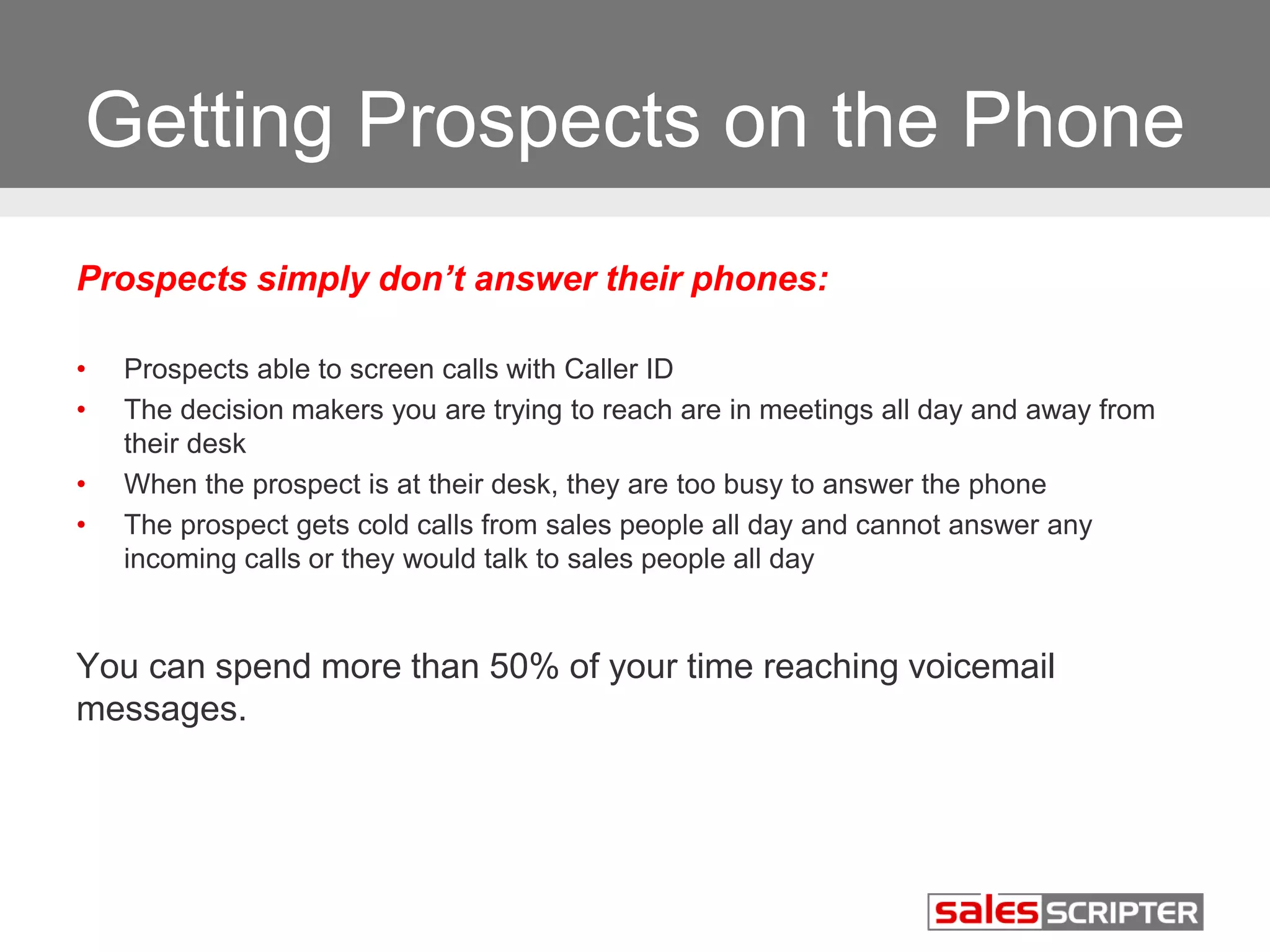
Getting Prospects on the Phone 
Prospects simply don’t answer their phones: 
• Prospects able to screen calls with Caller ID 
• The decision makers you are trying to reach are in meetings all day and away from 
their desk 
• When the prospect is at their desk, they are too busy to answer the phone 
• The prospect gets cold calls from sales people all day and cannot answer any 
incoming calls or they would talk to sales people all day 
You can spend more than 50% of your time reaching voicemail 
messages.
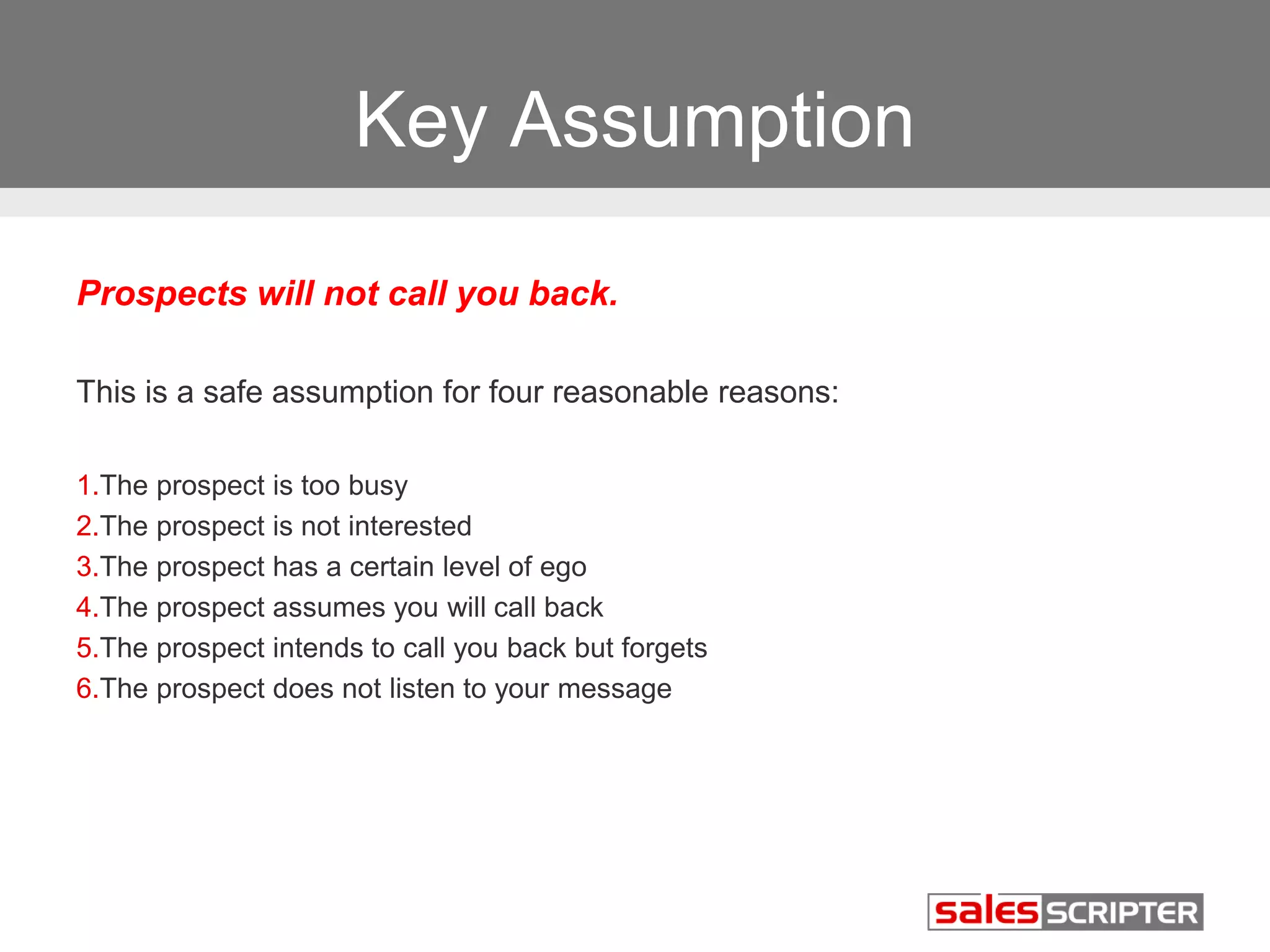
Key Assumption 
Prospects will not call you back. 
This is a safe assumption for four reasonable reasons: 
1.The prospect is too busy 
2.The prospect is not interested 
3.The prospect has a certain level of ego 
4.The prospect assumes you will call back 
5.The prospect intends to call you back but forgets 
6.The prospect does not listen to your message
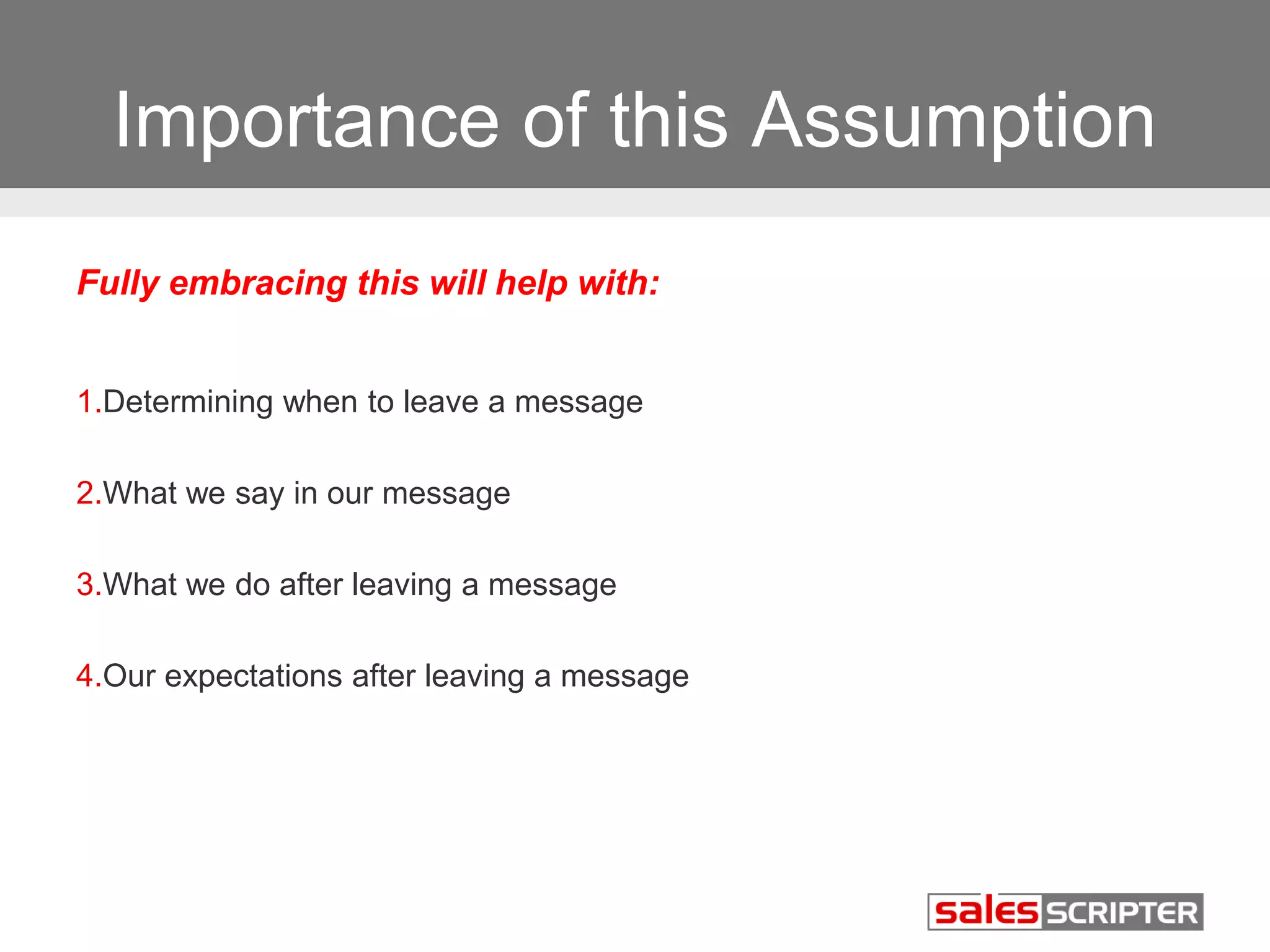
Importance of this Assumption 
Fully embracing this will help with: 
1.Determining when to leave a message 
2.What we say in our message 
3.What we do after leaving a message 
4.Our expectations after leaving a message
Voicemail Message Core Concepts 
• Use brevity - 20 to 30 seconds in length 
• Goal is not to get a call back 
• Goal is to educate the prospect 
• Say contact info slow and twice 
• Send email after you leave a message
Voicemail Message Examples 
Focus on your value: 
Hello [Prospect Name], this is [Your Name] from [Your Company]. 
Purpose for my call is that we help [your technical, business, or personal value]. I actually 
do not know if you are a fit for what we do and that is why I was calling you with a 
question or two. 
I will try you again next week. If you would like to reach me in the meantime, my number 
is [Your Number]. 
Again, this is [Your Name] calling from [Your Company], [Your Number]. 
Thank you and I look forward to talking with you soon.
Voicemail Message Examples 
Focus on the pain you resolve: 
Hello [Prospect Name], this is [Your Name] from [Your Company]. 
Purpose for my call is that we find that many companies like yours have challenges with: 
(Share a couple common pain points) 
I actually do not know if you all are concerned about any of those areas and that is why I 
was calling you with a question or two. 
I will try you again next week. If you would like to reach me in the meantime, my number 
is [Your Number]. 
Again, this is [Your Name] calling from [Your Company], [Your Number]. 
Thank you and I look forward to talking with you soon.
Voicemail Message Examples 
Focus on a name drop example: 
Hello [Prospect Name], this is [Your Name] from [Your Company]. 
Purpose for my call is that we worked with [a name drop client of yours] and helped them 
to [technical benefit] and this led to [business benefit]. 
I actually do not know if we can help you in the same way and that is why I was calling 
you with a question or two. 
I will try you again next week. If you would like to reach me in the meantime, my number 
is [Your Number]. 
Again, this is [Your Name] calling from [Your Company], [Your Number]. 
Thank you and I look forward to talking with you soon.
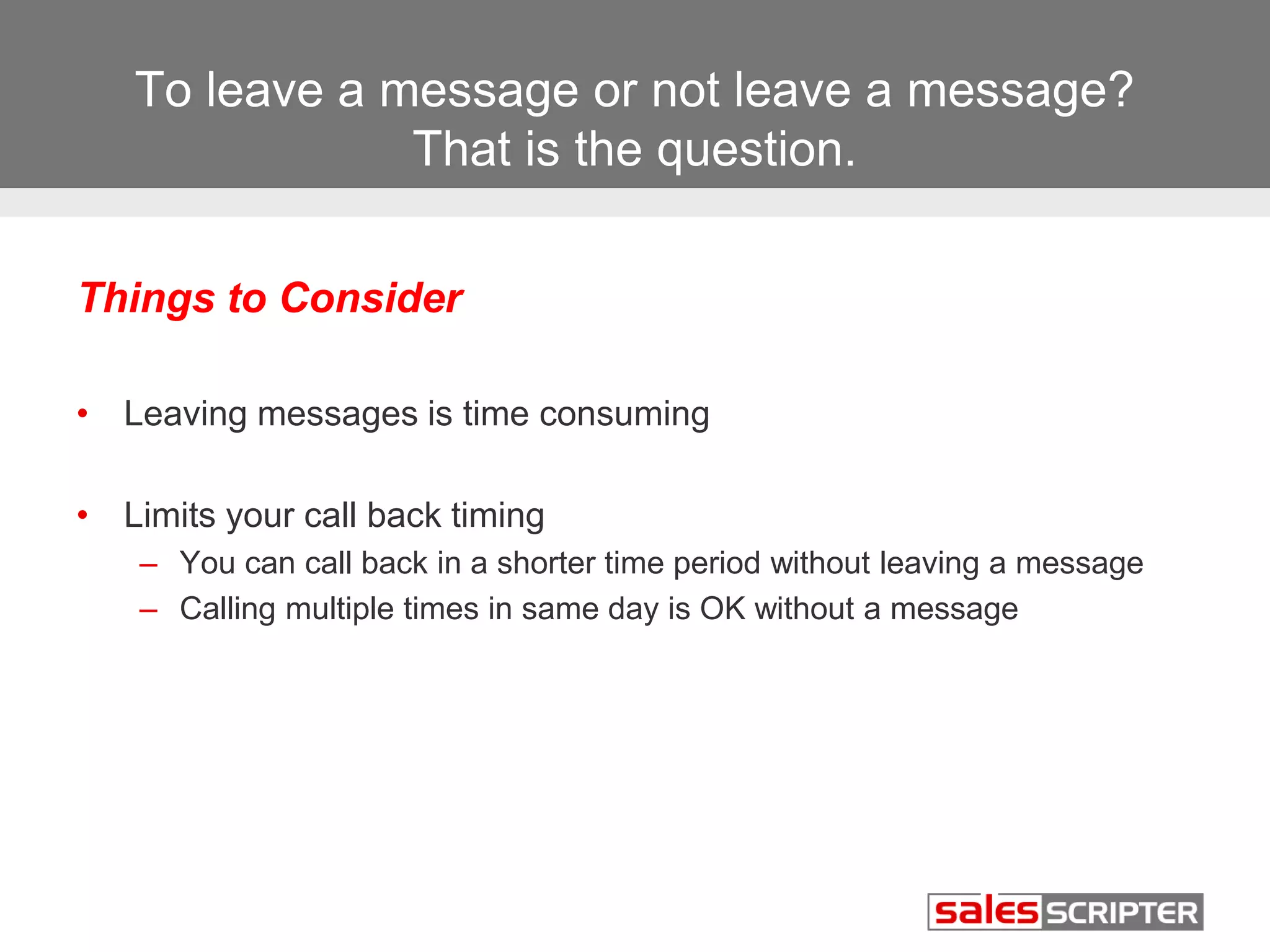
To leave a message or not leave a message? 
That is the question. 
Things to Consider 
• Leaving messages is time consuming 
• Limits your call back timing 
– You can call back in a shorter time period without leaving a message 
– Calling multiple times in same day is OK without a message
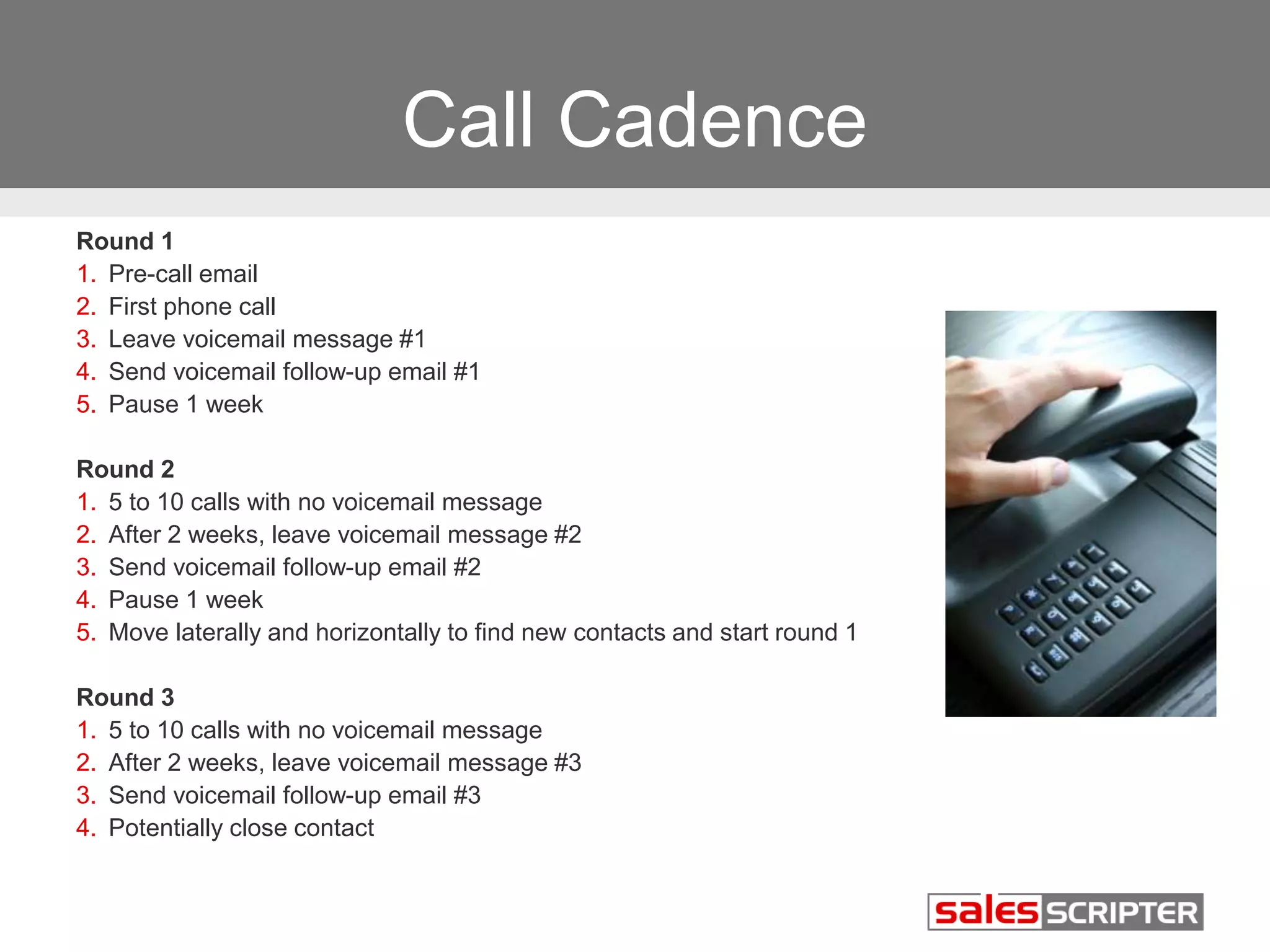
Call Cadence 
Round 1 
1. Pre-call email 
2. First phone call 
3. Leave voicemail message #1 
4. Send voicemail follow-up email #1 
5. Pause 1 week 
Round 2 
1. 5 to 10 calls with no voicemail message 
2. After 2 weeks, leave voicemail message #2 
3. Send voicemail follow-up email #2 
4. Pause 1 week 
5. Move laterally and horizontally to find new contacts and start round 1 
Round 3 
1. 5 to 10 calls with no voicemail message 
2. After 2 weeks, leave voicemail message #3 
3. Send voicemail follow-up email #3 
4. Potentially close contact
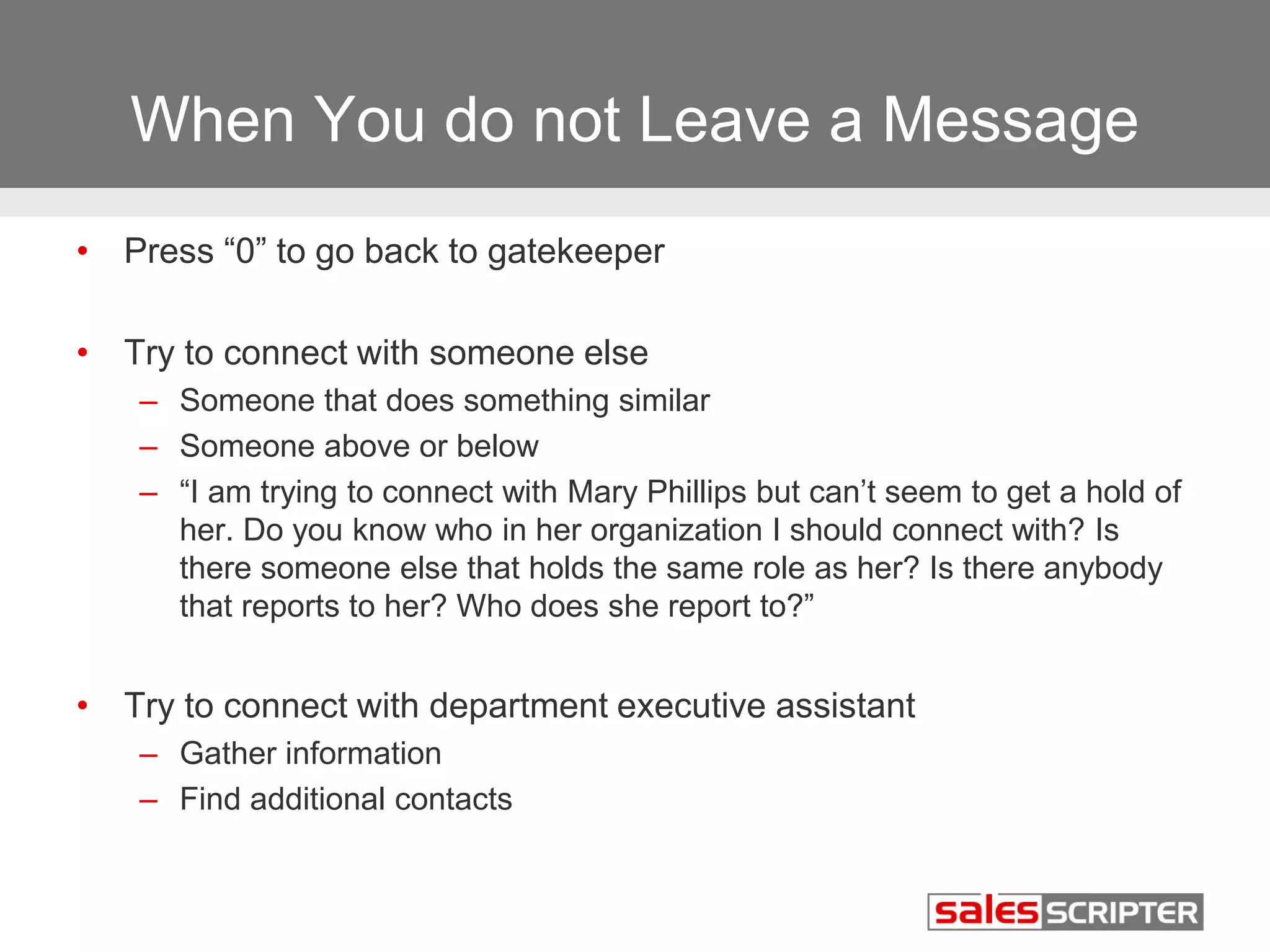
When You do not Leave a Message 
• Press “0” to go back to gatekeeper 
• Try to connect with someone else 
– Someone that does something similar 
– Someone above or below 
– “I am trying to connect with Mary Phillips but can’t seem to get a hold of 
her. Do you know who in her organization I should connect with? Is 
there someone else that holds the same role as her? Is there anybody 
that reports to her? Who does she report to?” 
• Try to connect with department executive assistant 
– Gather information 
– Find additional contacts
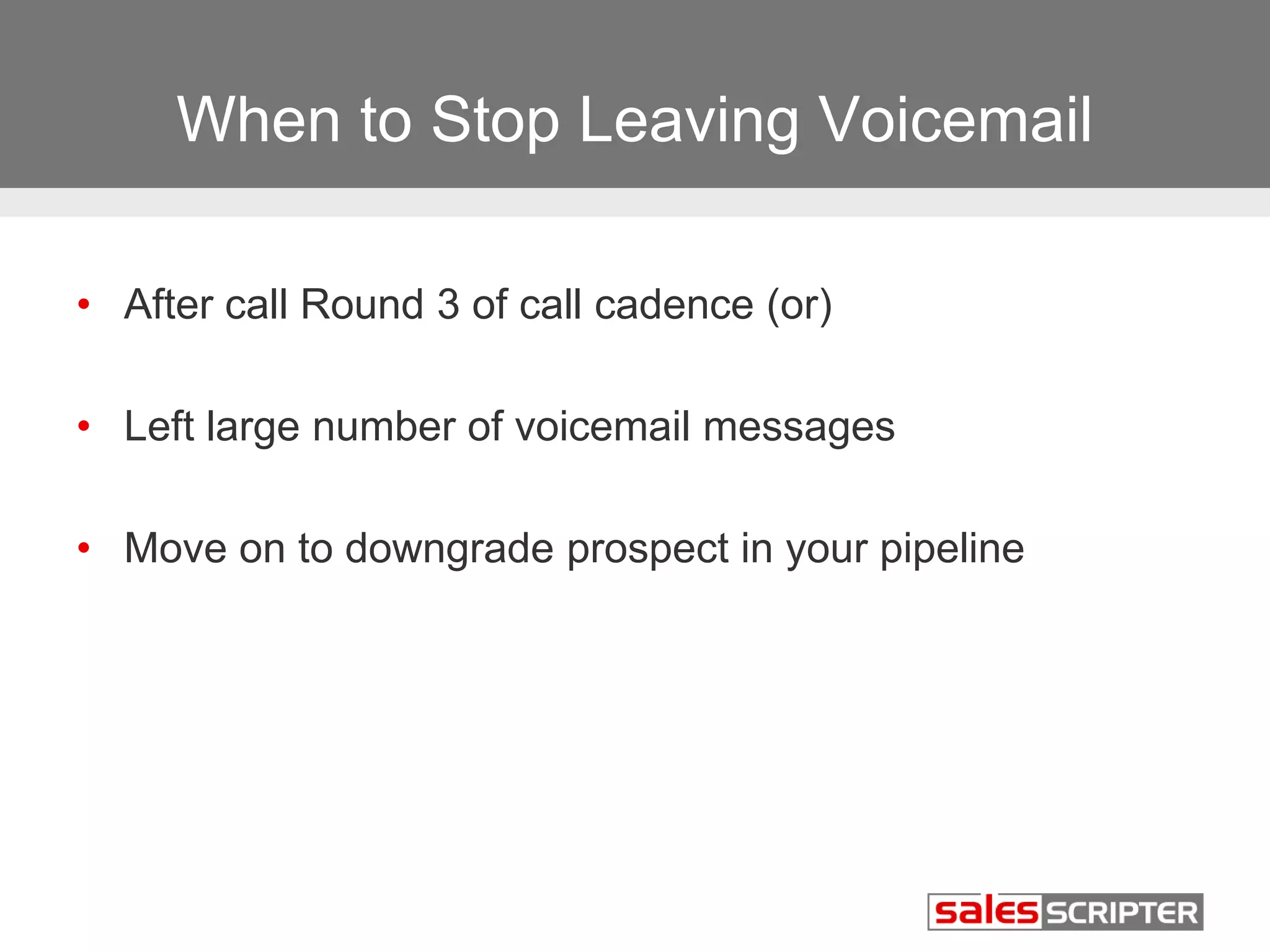
When to Stop Leaving Voicemail 
• After call Round 3 of call cadence (or) 
• Left large number of voicemail messages 
• Move on to downgrade prospect in your pipeline
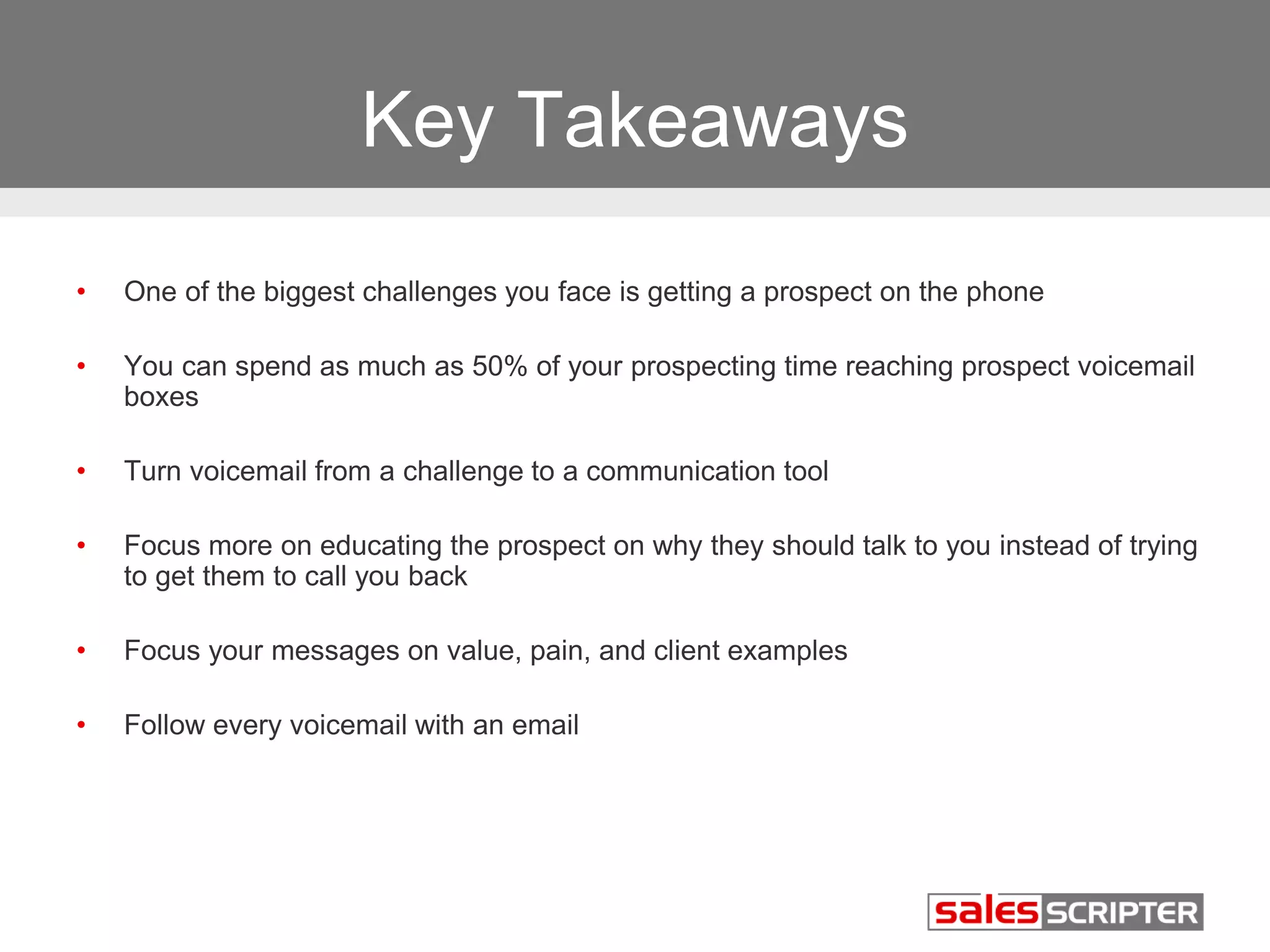
Key Takeaways 
• One of the biggest challenges you face is getting a prospect on the phone 
• You can spend as much as 50% of your prospecting time reaching prospect voicemail 
boxes 
• Turn voicemail from a challenge to a communication tool 
• Focus more on educating the prospect on why they should talk to you instead of trying 
to get them to call you back 
• Focus your messages on value, pain, and client examples 
• Follow every voicemail with an email
www.salesscripter.com | info@salesscripter.com | 713-802-2026

How to Deal with Voicemail When Prospecting

  • 1.
    Voicemail Sales ProspectingStrategies Michael Halper Sales Prospecting 101
  • 2.
    Getting Prospects onthe Phone Prospects simply don’t answer their phones: • Prospects able to screen calls with Caller ID • The decision makers you are trying to reach are in meetings all day and away from their desk • When the prospect is at their desk, they are too busy to answer the phone • The prospect gets cold calls from sales people all day and cannot answer any incoming calls or they would talk to sales people all day You can spend more than 50% of your time reaching voicemail messages.
  • 3.
    Key Assumption Prospectswill not call you back. This is a safe assumption for four reasonable reasons: 1.The prospect is too busy 2.The prospect is not interested 3.The prospect has a certain level of ego 4.The prospect assumes you will call back 5.The prospect intends to call you back but forgets 6.The prospect does not listen to your message
  • 4.
    Importance of thisAssumption Fully embracing this will help with: 1.Determining when to leave a message 2.What we say in our message 3.What we do after leaving a message 4.Our expectations after leaving a message
  • 5.
    Voicemail Message CoreConcepts • Use brevity - 20 to 30 seconds in length • Goal is not to get a call back • Goal is to educate the prospect • Say contact info slow and twice • Send email after you leave a message
  • 6.
    Voicemail Message Examples Focus on your value: Hello [Prospect Name], this is [Your Name] from [Your Company]. Purpose for my call is that we help [your technical, business, or personal value]. I actually do not know if you are a fit for what we do and that is why I was calling you with a question or two. I will try you again next week. If you would like to reach me in the meantime, my number is [Your Number]. Again, this is [Your Name] calling from [Your Company], [Your Number]. Thank you and I look forward to talking with you soon.
  • 7.
    Voicemail Message Examples Focus on the pain you resolve: Hello [Prospect Name], this is [Your Name] from [Your Company]. Purpose for my call is that we find that many companies like yours have challenges with: (Share a couple common pain points) I actually do not know if you all are concerned about any of those areas and that is why I was calling you with a question or two. I will try you again next week. If you would like to reach me in the meantime, my number is [Your Number]. Again, this is [Your Name] calling from [Your Company], [Your Number]. Thank you and I look forward to talking with you soon.
  • 8.
    Voicemail Message Examples Focus on a name drop example: Hello [Prospect Name], this is [Your Name] from [Your Company]. Purpose for my call is that we worked with [a name drop client of yours] and helped them to [technical benefit] and this led to [business benefit]. I actually do not know if we can help you in the same way and that is why I was calling you with a question or two. I will try you again next week. If you would like to reach me in the meantime, my number is [Your Number]. Again, this is [Your Name] calling from [Your Company], [Your Number]. Thank you and I look forward to talking with you soon.
  • 9.
    To leave amessage or not leave a message? That is the question. Things to Consider • Leaving messages is time consuming • Limits your call back timing – You can call back in a shorter time period without leaving a message – Calling multiple times in same day is OK without a message
  • 10.
    Call Cadence Round1 1. Pre-call email 2. First phone call 3. Leave voicemail message #1 4. Send voicemail follow-up email #1 5. Pause 1 week Round 2 1. 5 to 10 calls with no voicemail message 2. After 2 weeks, leave voicemail message #2 3. Send voicemail follow-up email #2 4. Pause 1 week 5. Move laterally and horizontally to find new contacts and start round 1 Round 3 1. 5 to 10 calls with no voicemail message 2. After 2 weeks, leave voicemail message #3 3. Send voicemail follow-up email #3 4. Potentially close contact
  • 11.
    When You donot Leave a Message • Press “0” to go back to gatekeeper • Try to connect with someone else – Someone that does something similar – Someone above or below – “I am trying to connect with Mary Phillips but can’t seem to get a hold of her. Do you know who in her organization I should connect with? Is there someone else that holds the same role as her? Is there anybody that reports to her? Who does she report to?” • Try to connect with department executive assistant – Gather information – Find additional contacts
  • 12.
    When to StopLeaving Voicemail • After call Round 3 of call cadence (or) • Left large number of voicemail messages • Move on to downgrade prospect in your pipeline
  • 13.
    Key Takeaways •One of the biggest challenges you face is getting a prospect on the phone • You can spend as much as 50% of your prospecting time reaching prospect voicemail boxes • Turn voicemail from a challenge to a communication tool • Focus more on educating the prospect on why they should talk to you instead of trying to get them to call you back • Focus your messages on value, pain, and client examples • Follow every voicemail with an email
  • 14.