How to Be an Awesome Networker
Michael Halper
Founder and CEO
SalesScripter
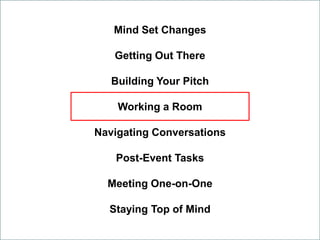
Mind Set Changes
Getting Out There
Building Your Pitch
Working a Room
Navigating Conversations
Post-Event Tasks
Meeting One-on-One
Staying Top of Mind
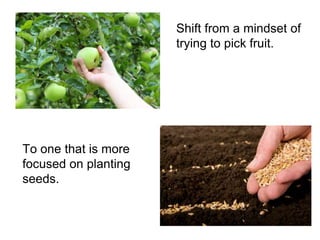
Shift from a mindset of
trying to pick fruit.
To one that is more
focused on planting
seeds.
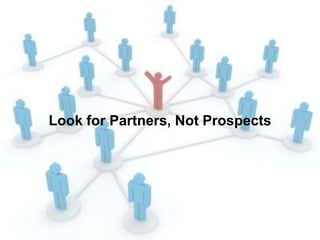
Look for Partners, Not Prospects
Rule of Reciprocity
In social psychology, reciprocity is a social rule that says
people should repay, in kind, what another person has
provided for them; that is, people give back (reciprocate)
the kind of treatment they have received from another.
Mind Set Changes
Getting Out There
Building Your Pitch
Working a Room
Navigating Conversations
Post-Event Tasks
Meeting One-on-One
Staying Top of Mind
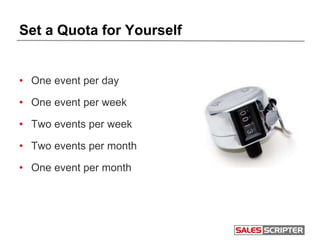
Set a Quota for Yourself
• One event per day
• One event per week
• Two events per week
• Two events per month
• One event per month
Finding Events
• Industry associations
• Local news resources
• Meetup.com
• Alumni associations
• Local universities
• Charitable and volunteer organizations
Mind Set Changes
Getting Out There
Building Your Pitch
Working a Room
Navigating Conversations
Post-Event Tasks
Meeting One-on-One
Staying Top of Mind
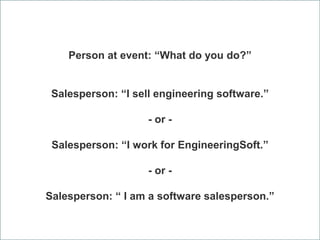
Person at event: “What do you do?”
Salesperson: “I sell engineering software.”
- or -
Salesperson: “I work for EngineeringSoft.”
- or -
Salesperson: “ I am a software salesperson.”
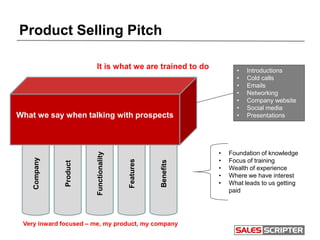
Benefits
Product Selling Pitch
Product
Company
Features
Functionality
What we say when talking with prospects
Very inward focused – me, my product, my company
• Foundation of knowledge
• Focus of training
• Wealth of experience
• Where we have interest
• What leads to us getting
paid
• Introductions
• Cold calls
• Emails
• Networking
• Company website
• Social media
• Presentations
It is what we are trained to do
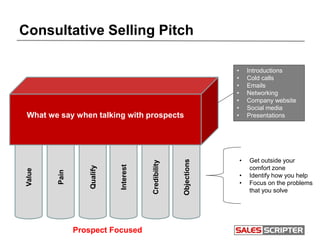
Interest
Consultative Selling PitchValue
Pain
Qualify
Credibility
Objections
Prospect Focused
What we say when talking with prospects
• Get outside your
comfort zone
• Identify how you help
• Focus on the problems
that you solve
• Introductions
• Cold calls
• Emails
• Networking
• Company website
• Social media
• Presentations
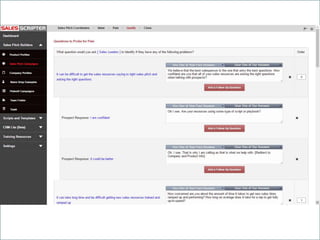
Building Your Email Messages
Mind Set Changes
Getting Out There
Building Your Pitch
Working a Room
Navigating Conversations
Post-Event Tasks
Meeting One-on-One
Staying Top of Mind
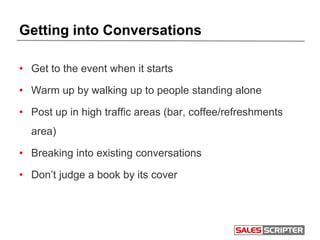
Getting into Conversations
• Get to the event when it starts
• Warm up by walking up to people standing alone
• Post up in high traffic areas (bar, coffee/refreshments
area)
• Breaking into existing conversations
• Don’t judge a book by its cover
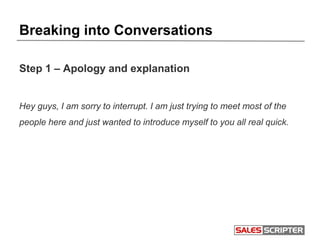
Breaking into Conversations
Step 1 – Apology and explanation
Hey guys, I am sorry to interrupt. I am just trying to meet most of the
people here and just wanted to introduce myself to you all real quick.
Breaking into Conversations
Step 3 – Introduction
(To the contact closest to you)
I am [your name]. (hand extended for handshake)
[They respond with their name] Who are you with? (Ask this instead of
inquiring about what they do as the answer can be very short)
Great.
Breaking into Conversations
Step 3 – Introduction (cont.)
(To the second contact)
Hi, I am [your name]. (hand extended for handshake)
[They respond with their name] Who are you with? (Ask this instead of
inquiring about what they do as the answer can be very short)
Great.
Breaking into Conversations
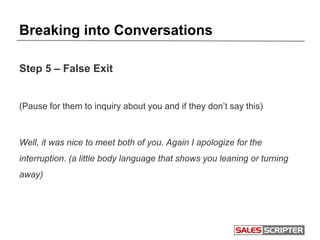
Step 5 – False Exit
(Pause for them to inquiry about you and if they don’t say this)
Well, it was nice to meet both of you. Again I apologize for the
interruption. (a little body language that shows you leaning or turning
away)
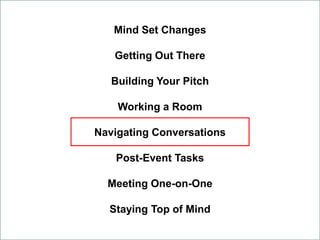
Mind Set Changes
Getting Out There
Building Your Pitch
Working a Room
Navigating Conversations
Post-Event Tasks
Meeting One-on-One
Staying Top of Mind
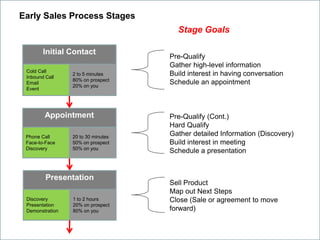
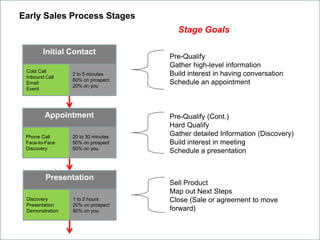
Early Sales Process Stages
Stage Goals
Initial Contact
Cold Call
Inbound Call
Email
Event
2 to 5 minutes
80% on prospect
20% on you
Appointment
Phone Call
Face-to-Face
Discovery
20 to 30 minutes
50% on prospect
50% on you
Presentation
Discovery
Presentation
Demonstration
1 to 2 hours
20% on prospect
80% on you
Pre-Qualify
Gather high-level information
Build interest in having conversation
Schedule an appointment
Pre-Qualify (Cont.)
Hard Qualify
Gather detailed Information (Discovery)
Build interest in meeting
Schedule a presentation
Sell Product
Map out Next Steps
Close (Sale or agreement to move
forward)
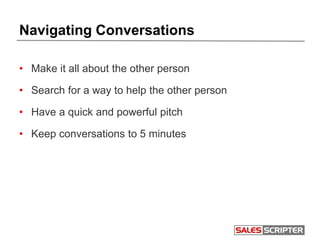
Navigating Conversations
• Make it all about the other person
• Search for a way to help the other person
• Have a quick and powerful pitch
• Keep conversations to 5 minutes
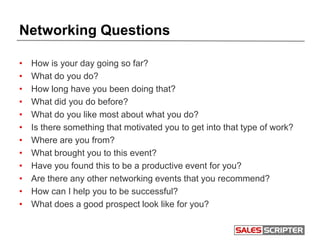
Networking Questions
• How is your day going so far?
• What do you do?
• How long have you been doing that?
• What did you do before?
• What do you like most about what you do?
• Is there something that motivated you to get into that type of work?
• Where are you from?
• What brought you to this event?
• Have you found this to be a productive event for you?
• Are there any other networking events that you recommend?
• How can I help you to be successful?
• What does a good prospect look like for you?
Mind Set Changes
Getting Out There
Building Your Pitch
Working a Room
Navigating Conversations
Post-Event Tasks
Meeting One-on-One
Staying Top of Mind
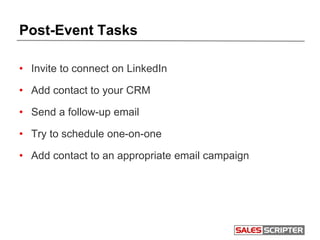
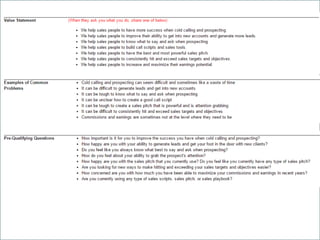
Post-Event Tasks
• Invite to connect on LinkedIn
• Add contact to your CRM
• Send a follow-up email
• Try to schedule one-on-one
• Add contact to an appropriate email campaign
Mind Set Changes
Getting Out There
Building Your Pitch
Working a Room
Navigating Conversations
Post-Event Tasks
Meeting One-on-One
Staying Top of Mind
Early Sales Process Stages
Stage Goals
Initial Contact
Cold Call
Inbound Call
Email
Event
2 to 5 minutes
80% on prospect
20% on you
Appointment
Phone Call
Face-to-Face
Discovery
20 to 30 minutes
50% on prospect
50% on you
Presentation
Discovery
Presentation
Demonstration
1 to 2 hours
20% on prospect
80% on you
Pre-Qualify
Gather high-level information
Build interest in having conversation
Schedule an appointment
Pre-Qualify (Cont.)
Hard Qualify
Gather detailed Information (Discovery)
Build interest in meeting
Schedule a presentation
Sell Product
Map out Next Steps
Close (Sale or agreement to move
forward)
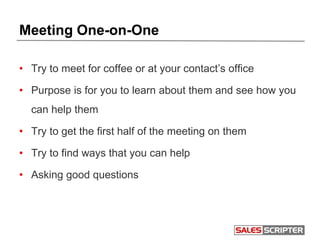
Meeting One-on-One
• Try to meet for coffee or at your contact’s office
• Purpose is for you to learn about them and see how you
can help them
• Try to get the first half of the meeting on them
• Try to find ways that you can help
• Asking good questions
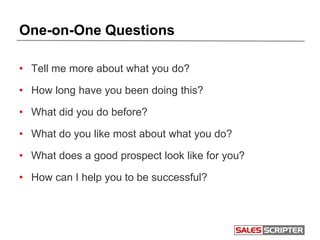
One-on-One Questions
• Tell me more about what you do?
• How long have you been doing this?
• What did you do before?
• What do you like most about what you do?
• What does a good prospect look like for you?
• How can I help you to be successful?
Mind Set Changes
Getting Out There
Building Your Pitch
Working a Room
Navigating Conversations
Post-Event Tasks
Meeting One-on-One
Staying Top of Mind
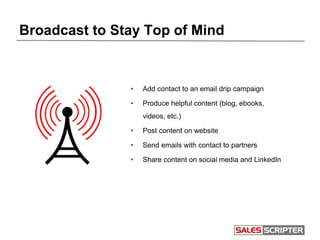
Broadcast to Stay Top of Mind
• Add contact to an email drip campaign
• Produce helpful content (blog, ebooks,
videos, etc.)
• Post content on website
• Send emails with contact to partners
• Share content on social media and LinkedIn
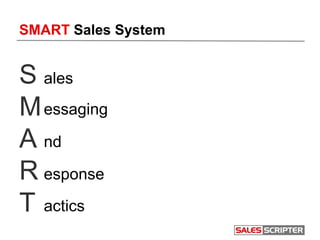
SMART Sales System
S
M
A
R
T
ales
essaging
nd
esponse
actics
SMART Sales System
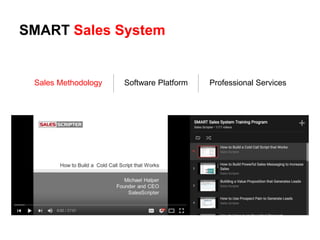
Sales Methodology Software Platform Professional Services
SMART Sales System
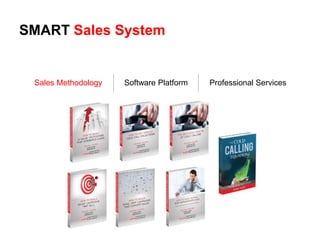
Sales Methodology Software Platform Professional Services
SMART Sales System
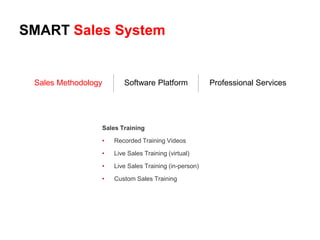
Sales Methodology Software Platform Professional Services
Sales Training
• Recorded Training Videos
• Live Sales Training (virtual)
• Live Sales Training (in-person)
• Custom Sales Training
SMART Sales System
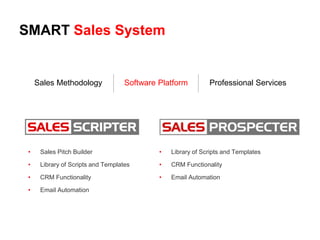
Sales Methodology Software Platform Professional Services
• Sales Pitch Builder
• Library of Scripts and Templates
• CRM Functionality
• Email Automation
• Library of Scripts and Templates
• CRM Functionality
• Email Automation
SMART Sales System
Sales Methodology Software Platform Professional Services
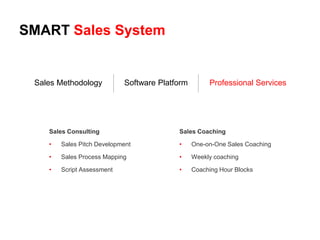
Sales Consulting
• Sales Pitch Development
• Sales Process Mapping
• Script Assessment
Sales Coaching
• One-on-One Sales Coaching
• Weekly coaching
• Coaching Hour Blocks
Contact Us
Michael Halper
Founder and CEO
SalesScripter
mhalper@salesscripter.com
@salesscripter

How to Be an Awesome Networker

  • 1.
    How to Bean Awesome Networker Michael Halper Founder and CEO SalesScripter
  • 2.
    Mind Set Changes GettingOut There Building Your Pitch Working a Room Navigating Conversations Post-Event Tasks Meeting One-on-One Staying Top of Mind
  • 3.
    Shift from amindset of trying to pick fruit. To one that is more focused on planting seeds.
  • 4.
    Look for Partners,Not Prospects
  • 5.
    Rule of Reciprocity Insocial psychology, reciprocity is a social rule that says people should repay, in kind, what another person has provided for them; that is, people give back (reciprocate) the kind of treatment they have received from another.
  • 6.
    Mind Set Changes GettingOut There Building Your Pitch Working a Room Navigating Conversations Post-Event Tasks Meeting One-on-One Staying Top of Mind
  • 7.
    Set a Quotafor Yourself • One event per day • One event per week • Two events per week • Two events per month • One event per month
  • 8.
    Finding Events • Industryassociations • Local news resources • Meetup.com • Alumni associations • Local universities • Charitable and volunteer organizations
  • 9.
    Mind Set Changes GettingOut There Building Your Pitch Working a Room Navigating Conversations Post-Event Tasks Meeting One-on-One Staying Top of Mind
  • 10.
    Person at event:“What do you do?” Salesperson: “I sell engineering software.” - or - Salesperson: “I work for EngineeringSoft.” - or - Salesperson: “ I am a software salesperson.”
  • 11.
    Benefits Product Selling Pitch Product Company Features Functionality Whatwe say when talking with prospects Very inward focused – me, my product, my company • Foundation of knowledge • Focus of training • Wealth of experience • Where we have interest • What leads to us getting paid • Introductions • Cold calls • Emails • Networking • Company website • Social media • Presentations It is what we are trained to do
  • 12.
    Interest Consultative Selling PitchValue Pain Qualify Credibility Objections ProspectFocused What we say when talking with prospects • Get outside your comfort zone • Identify how you help • Focus on the problems that you solve • Introductions • Cold calls • Emails • Networking • Company website • Social media • Presentations
  • 13.
  • 15.
    Mind Set Changes GettingOut There Building Your Pitch Working a Room Navigating Conversations Post-Event Tasks Meeting One-on-One Staying Top of Mind
  • 16.
    Getting into Conversations •Get to the event when it starts • Warm up by walking up to people standing alone • Post up in high traffic areas (bar, coffee/refreshments area) • Breaking into existing conversations • Don’t judge a book by its cover
  • 17.
    Breaking into Conversations Step1 – Apology and explanation Hey guys, I am sorry to interrupt. I am just trying to meet most of the people here and just wanted to introduce myself to you all real quick.
  • 18.
    Breaking into Conversations Step3 – Introduction (To the contact closest to you) I am [your name]. (hand extended for handshake) [They respond with their name] Who are you with? (Ask this instead of inquiring about what they do as the answer can be very short) Great.
  • 19.
    Breaking into Conversations Step3 – Introduction (cont.) (To the second contact) Hi, I am [your name]. (hand extended for handshake) [They respond with their name] Who are you with? (Ask this instead of inquiring about what they do as the answer can be very short) Great.
  • 20.
    Breaking into Conversations Step5 – False Exit (Pause for them to inquiry about you and if they don’t say this) Well, it was nice to meet both of you. Again I apologize for the interruption. (a little body language that shows you leaning or turning away)
  • 21.
    Mind Set Changes GettingOut There Building Your Pitch Working a Room Navigating Conversations Post-Event Tasks Meeting One-on-One Staying Top of Mind
  • 22.
    Early Sales ProcessStages Stage Goals Initial Contact Cold Call Inbound Call Email Event 2 to 5 minutes 80% on prospect 20% on you Appointment Phone Call Face-to-Face Discovery 20 to 30 minutes 50% on prospect 50% on you Presentation Discovery Presentation Demonstration 1 to 2 hours 20% on prospect 80% on you Pre-Qualify Gather high-level information Build interest in having conversation Schedule an appointment Pre-Qualify (Cont.) Hard Qualify Gather detailed Information (Discovery) Build interest in meeting Schedule a presentation Sell Product Map out Next Steps Close (Sale or agreement to move forward)
  • 23.
    Navigating Conversations • Makeit all about the other person • Search for a way to help the other person • Have a quick and powerful pitch • Keep conversations to 5 minutes
  • 24.
    Networking Questions • Howis your day going so far? • What do you do? • How long have you been doing that? • What did you do before? • What do you like most about what you do? • Is there something that motivated you to get into that type of work? • Where are you from? • What brought you to this event? • Have you found this to be a productive event for you? • Are there any other networking events that you recommend? • How can I help you to be successful? • What does a good prospect look like for you?
  • 26.
    Mind Set Changes GettingOut There Building Your Pitch Working a Room Navigating Conversations Post-Event Tasks Meeting One-on-One Staying Top of Mind
  • 27.
    Post-Event Tasks • Inviteto connect on LinkedIn • Add contact to your CRM • Send a follow-up email • Try to schedule one-on-one • Add contact to an appropriate email campaign
  • 28.
    Mind Set Changes GettingOut There Building Your Pitch Working a Room Navigating Conversations Post-Event Tasks Meeting One-on-One Staying Top of Mind
  • 29.
    Early Sales ProcessStages Stage Goals Initial Contact Cold Call Inbound Call Email Event 2 to 5 minutes 80% on prospect 20% on you Appointment Phone Call Face-to-Face Discovery 20 to 30 minutes 50% on prospect 50% on you Presentation Discovery Presentation Demonstration 1 to 2 hours 20% on prospect 80% on you Pre-Qualify Gather high-level information Build interest in having conversation Schedule an appointment Pre-Qualify (Cont.) Hard Qualify Gather detailed Information (Discovery) Build interest in meeting Schedule a presentation Sell Product Map out Next Steps Close (Sale or agreement to move forward)
  • 30.
    Meeting One-on-One • Tryto meet for coffee or at your contact’s office • Purpose is for you to learn about them and see how you can help them • Try to get the first half of the meeting on them • Try to find ways that you can help • Asking good questions
  • 31.
    One-on-One Questions • Tellme more about what you do? • How long have you been doing this? • What did you do before? • What do you like most about what you do? • What does a good prospect look like for you? • How can I help you to be successful?
  • 33.
    Mind Set Changes GettingOut There Building Your Pitch Working a Room Navigating Conversations Post-Event Tasks Meeting One-on-One Staying Top of Mind
  • 34.
    Broadcast to StayTop of Mind • Add contact to an email drip campaign • Produce helpful content (blog, ebooks, videos, etc.) • Post content on website • Send emails with contact to partners • Share content on social media and LinkedIn
  • 35.
  • 36.
    SMART Sales System SalesMethodology Software Platform Professional Services
  • 37.
    SMART Sales System SalesMethodology Software Platform Professional Services
  • 38.
    SMART Sales System SalesMethodology Software Platform Professional Services Sales Training • Recorded Training Videos • Live Sales Training (virtual) • Live Sales Training (in-person) • Custom Sales Training
  • 39.
    SMART Sales System SalesMethodology Software Platform Professional Services • Sales Pitch Builder • Library of Scripts and Templates • CRM Functionality • Email Automation • Library of Scripts and Templates • CRM Functionality • Email Automation
  • 40.
    SMART Sales System SalesMethodology Software Platform Professional Services Sales Consulting • Sales Pitch Development • Sales Process Mapping • Script Assessment Sales Coaching • One-on-One Sales Coaching • Weekly coaching • Coaching Hour Blocks
  • 41.
    Contact Us Michael Halper Founderand CEO SalesScripter mhalper@salesscripter.com @salesscripter