‫أ‬.‫نشوان‬ ‫القادر‬ ‫عبد‬
‫األورام‬ ‫علم‬ ‫تمريض‬ ‫ماجستير‬
‫يفخر‬‫المركز‬‫الوطني‬‫لرعاية‬‫وأبحاث‬
‫السرطان‬‫بلعب‬‫دور‬‫هاما‬‫في‬‫جعل‬
‫السرطان‬‫مرض‬‫يمكن‬‫الوقاية‬‫منه‬‫من‬
‫خالل‬‫تثقيف‬‫الجمهور‬‫ودعم‬‫برامج‬
‫التوعية‬‫المجتمعية‬
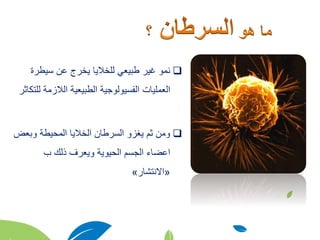
‫سيطرة‬ ‫عن‬ ‫يخرج‬ ‫للخاليا‬ ‫طبيعي‬ ‫غير‬ ‫نمو‬
‫ل‬ ‫الالزمة‬ ‫الطبيعية‬ ‫الفسيولوجية‬ ‫العمليات‬‫لتكاثر‬
‫وبعض‬ ‫المحيطة‬ ‫الخاليا‬ ‫السرطان‬ ‫يغزو‬ ‫ثم‬ ‫ومن‬
‫ب‬ ‫ذلك‬ ‫ويعرف‬ ‫الحيوية‬ ‫الجسم‬ ‫اعضاء‬
«‫االنتشار‬»
1.‫والبكتيريا‬ ‫الفيروسات‬
2.‫الفيزيائية‬ ‫العوامل‬(‫االشعاع‬)
3.‫الكيميائية‬ ‫العوامل‬
4.‫الوراثي‬ ‫واالستعداد‬ ‫الجينية‬ ‫العوامل‬
5.‫التغذية‬ ‫بنظام‬ ‫متعلقة‬ ‫عوامل‬
6.‫هرمونية‬ ‫عوامل‬
‫جسدك‬ ‫على‬ ‫تطرأ‬ ‫قد‬ ‫التي‬ ‫التغيرات‬ ‫على‬ ‫تعرف‬
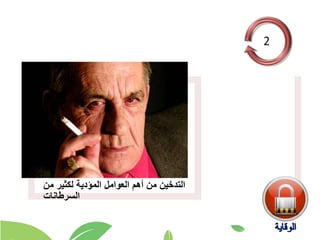
‫من‬ ‫لكثير‬ ‫المؤدية‬ ‫العوامل‬ ‫أهم‬ ‫من‬ ‫التدخين‬
‫السرطانات‬
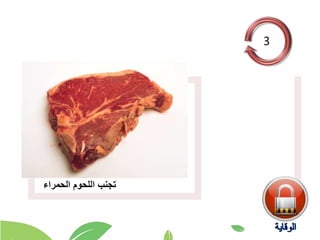
‫الحمراء‬ ‫اللحوم‬ ‫تجنب‬
‫الكحولية‬ ‫المشروبات‬ ‫تناول‬ ‫عن‬ ‫االمتناع‬
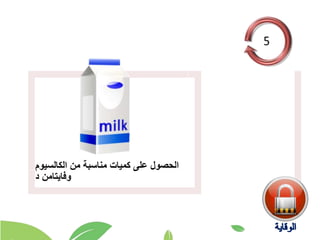
‫الكالسيوم‬ ‫من‬ ‫مناسبة‬ ‫كميات‬ ‫على‬ ‫الحصول‬
‫د‬ ‫وفايتامن‬
‫صحي‬ ‫وزن‬ ‫على‬ ‫الحفاظ‬
‫ألشعة‬ ‫المتواصل‬ ‫التعرض‬ ‫تجنب‬
‫الشمس‬
‫المختلفة‬ ‫الرياضات‬ ‫ممارسة‬
‫باي‬ ‫االشتباه‬ ‫حال‬ ‫في‬ ‫المبكر‬ ‫الكشف‬
‫طبيعية‬ ‫غير‬ ‫تغييرات‬
‫للعائلة‬ ‫المرضي‬ ‫التاريخ‬ ‫معرفة‬
‫الضرورة‬ ‫عند‬ ‫الجينية‬ ‫االستشارات‬ ‫عمل‬
‫األخضر‬ ‫الشاي‬ ‫شرب‬
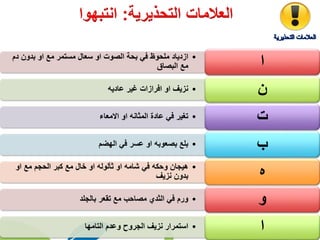
•‫د‬ ‫بدون‬ ‫او‬ ‫مع‬ ‫مستمر‬ ‫سعال‬ ‫او‬ ‫الصوت‬ ‫بحة‬ ‫في‬ ‫ملحوظ‬ ‫ازدياد‬‫م‬
‫البصاق‬ ‫مع‬ ‫ا‬
•‫عاديه‬ ‫غير‬ ‫افرازات‬ ‫او‬ ‫نزيف‬ ‫ن‬
•‫االمعاء‬ ‫او‬ ‫المثانه‬ ‫عادة‬ ‫في‬ ‫تغير‬ ‫ت‬
•‫الهضم‬ ‫في‬ ‫عسر‬ ‫او‬ ‫بصعوبه‬ ‫بلع‬ ‫ب‬
•‫او‬ ‫شامه‬ ‫في‬ ‫وحكه‬ ‫هيجان‬‫خال‬ ‫او‬ ‫ثألوله‬‫او‬ ‫مع‬ ‫الحجم‬ ‫كبر‬ ‫مع‬
‫نزيف‬ ‫بدون‬ ‫ه‬
•‫بالجلد‬ ‫تقعر‬ ‫مع‬ ‫مصاحب‬ ‫الثدي‬ ‫في‬ ‫ورم‬ ‫و‬
•‫التامها‬ ‫وعدم‬ ‫الجروح‬ ‫نزيف‬ ‫استمرار‬ ‫ا‬
‫التحذيرية‬ ‫العالمات‬:‫انتبهوا‬
‫الجراحة‬
‫تشخيصية‬
‫وقائية‬
‫تلطيفية‬
‫تجميلية‬
‫االشعاعي‬ ‫العالج‬
‫خارجي‬
‫داخلي‬
‫الكيماوي‬ ‫العالج‬
‫نوعي‬
‫نوعي‬ ‫غير‬
‫انتقائي‬ ‫عالج‬
‫اخرى‬ ‫عالجية‬ ‫خيارات‬
‫نخاع‬ ‫زراعة‬
‫العظم‬
‫الجيني‬ ‫العالج‬
‫بالتبريد‬ ‫العالج‬
‫الحيوي‬ ‫العالج‬
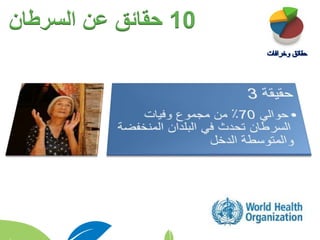
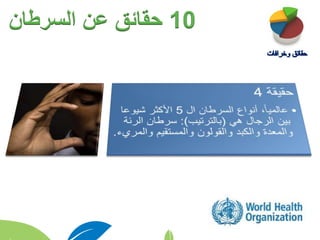
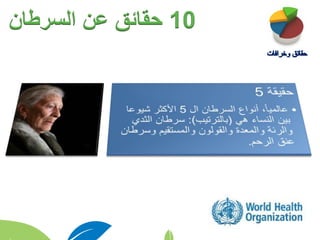
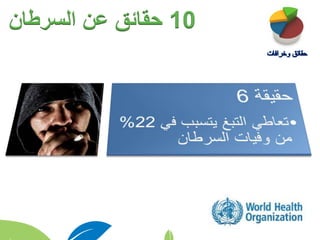
10‫عن‬ ‫حقائق‬
‫السرطان‬
10‫السرطان‬ ‫عن‬ ‫حقائق‬
•‫السرطان؟‬ ‫هو‬ ‫ما‬
•‫الخطورة؟‬ ‫عوامل‬
•‫الوقاية؟‬ ‫طرق‬
•‫التحذيرية؟‬ ‫العالمات‬
•‫العالج؟‬ ‫أساليب‬
•10‫السرطان؟‬ ‫عن‬ ‫حقائق‬
ما هو السرطان؟
ما هو السرطان؟

ما هو السرطان؟

Editor's Notes

  • #10 Consult your health care professional for recommended prophylactic methods

  • #11 Most people know smoking causes lung cancer and heart attacks. But you can add colorectal cancer to the list.
  • #12 Numerous studies have linked red-meat consumption to a higher risk of colorectal cancer, as well as diets heavy in processed, salted, smoked, or cured meats such as bacon, sausage, and hot dogs.
  • #13 Heavy drinking may increase your risk of colorectal cancer.
  • #14 Adequate amounts of calcium and vitamin D may help prevent colorectal cancer—but don't overdo it.
  • #15 Obesity is linked to colon-cancer risk, especially for men. And there's some evidence that abdominal obesity—aka belly fat—may be the key factor.
  • #16 This one doesn't have the rock-solid evidence of benefit that, say, quitting smoking does.
  • #17 There's strong evidence that exercise cuts the risk of colon cancer and polyps, and sedentary living increases it.
  • #18 Screening for colorectal cancer is actually one of the very few cancer screening tests that can actually prevent the disease.
  • #19 Heredity plays a big role in colon cancer; up to 20% of people who develop colorectal cancer have a relative with the disease.
  • #20 Up to 10% of colon cancers are caused by inherited genetic defects or mutations.
  • #21 There have been reports that green tea can prevent cancer, but the data is conflicting.
  • #23 Early detection is your best defense against cancer. Cancer can cause a variety of symptoms, depending on the site of the disease. Recognizing the symptoms and knowing when to seek treatment can save your life. Notify your doctors immediately if you experience any of the following seven warning signs of Cancer. C –Changes in bowel or bladder habits What you should look for Changes in the color, consistency , size or shape of stool Blood present in urine or stool Frequent urination or feeling as if you need to go but not being able to urinate. Rectal bleeding A – A sore that does not heal What you should look for Lump getting bigger and painful Starting to bleed Changes on the skin color, appearance and texture U – Unusual bleeding or discharge What you should look for Blood in the urine or stool Discharge from any parts of your body, for example nipples, penis, etc.   T – Thickening or lump in the breast ,testicles for men, or elsewhere What you should look for Any lump in the scrotum when doing a self exam Other lump found in any part of the body.   I - Indigestion or difficult Swallowing What you should look for Feeling of pressure in throat or chest which makes swallowing uncomfortable. Feeling full without food or with a small amount of food. Unintended weight loss. Lack of appetite, abdominal pain or vague discomfort in the abdomen usually above the umbilicus (naval)   O –Obvious change in the size, color, shape, or thickness of a wart, mole, or mouth sore. What you should look for Spots on the skin that change in size shape or color. Unusual sore, lump, blemish, marking or any changes of the skin.   N – Nagging cough or hoarseness What you should look for Changes in voice/hoarseness Sputum with blood Difficult in swallowing Lump or mass in the neck Other symptom that does not go away like sore throat , trouble swallowing,, pain with swallowing ,trouble while breathing , ear pain.
  • #25 Diagnostic Surgery: to obtain a tissue sample for analysis of cells suspected to be malignant (biopsy) Prophylactic Surgery: removing nonvital tissues or organs that are likely to develop cancer (e.g., bilateral mastectomy for high-risk women) Palliative Surgery: when cure is impossible, the goals of treatment is to make patient as comfortable as possible and to promote a satisfying and productive life for as long as possible. Palliative surgery is performed in an attempt to relieve complications of cancer, such as ulcerations, obstructions, hemorrhage, pain, and malignant effusions Reconstructive Surgery Reconstructive surgery may follow curative or radical surgery and is carried out in an attempt to improve function or obtain a more desirable cosmetic effect. Chemotherapy is used primarily to treat systemic disease rather than lesions that are localized and amenable to surgery or radiation. Chemotherapy may be combined with surgery or radiation therapy, or both, to reduce tumor size preoperatively, to destroy any remaining tumor cells postoperatively, or to treat some forms of leukemia. The goals of chemotherapy (cure, control, palliation) Normal cells most susceptible to chemotherapy are bone marrow, GI tract, & hair follicles – most adverse effects are seen in these parts
  • #35 for example human papillomavirus (HPV) causes cervical cancer and hepatitis B virus (HBV) causes liver cancer
  • #38 mainly by not using tobacco, having a healthy diet, being physically active and moderating the use of alcohol. In developing countries up to 20% of cancer deaths could be prevented by immunization against the infection of HBV and HPV. Once Pap testing was introduced broadly cervical cancer mortality rates in UK, has halved between 1990 and 2010.