Downloaded 51 times

![[Briefly…]
Data Recovery12](https://image.slidesharecdn.com/sqlserverhighavailability-190424064124/85/SQL-Server-High-Availability-and-Disaster-Recovery-12-320.jpg)
![[Skip if time is running short.]
Complimentary Technologies36](https://image.slidesharecdn.com/sqlserverhighavailability-190424064124/85/SQL-Server-High-Availability-and-Disaster-Recovery-36-320.jpg)
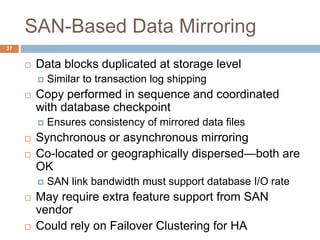
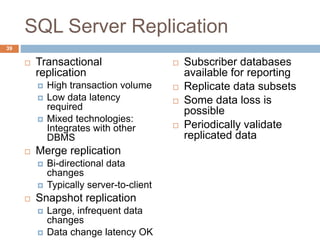
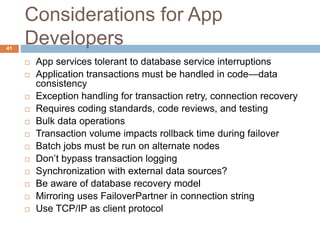
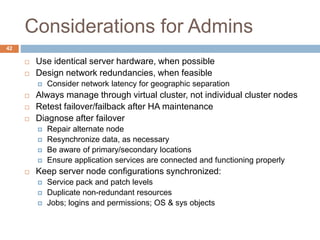
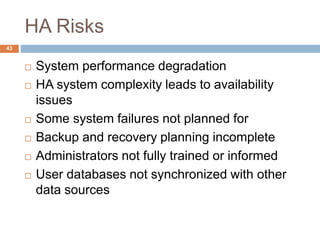
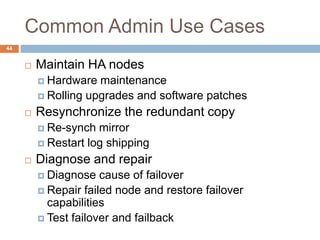
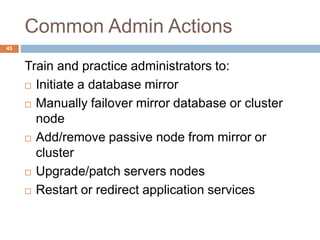

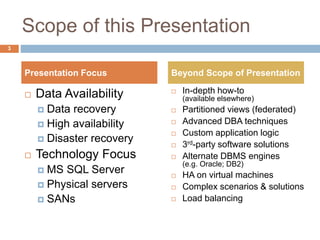
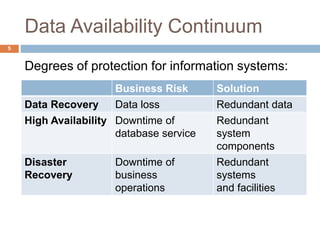
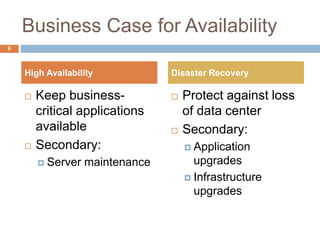
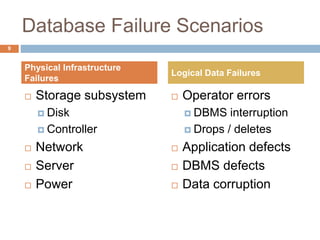
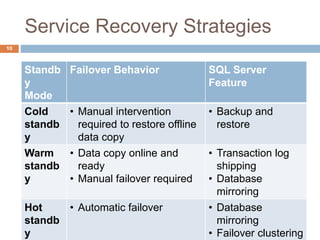
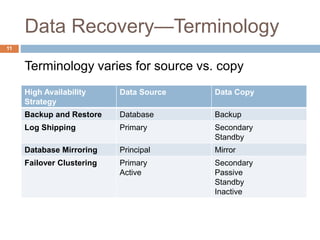
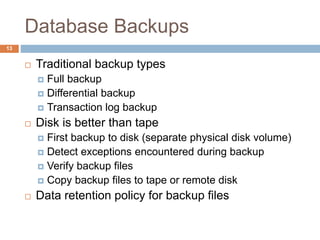
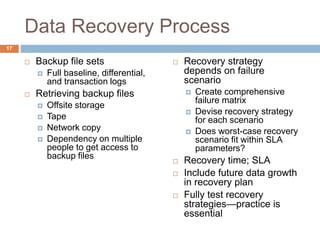
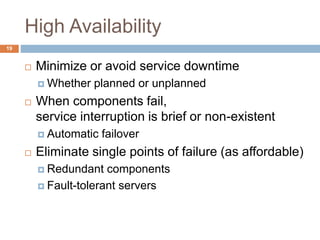
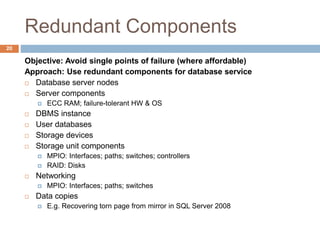
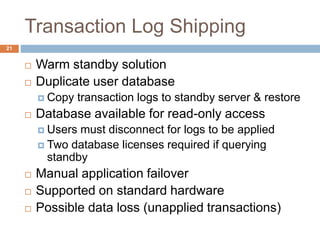
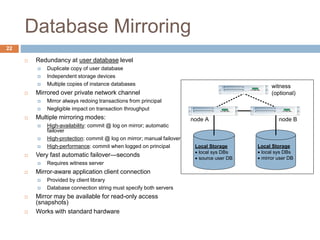
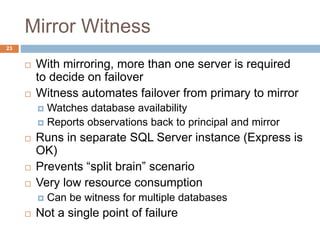
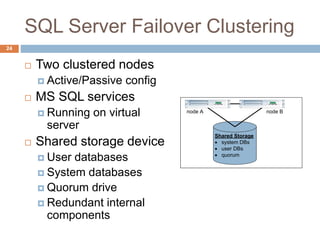
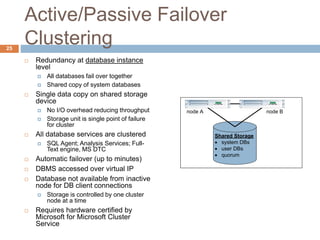
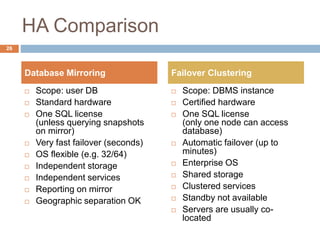
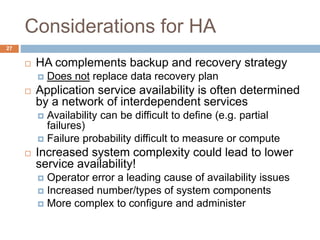
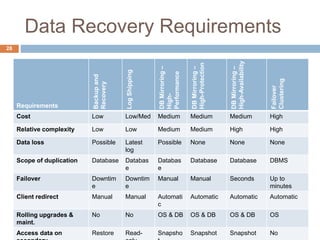
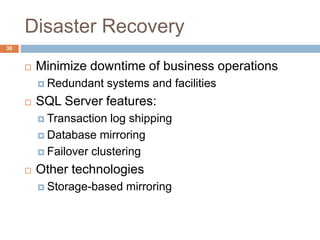
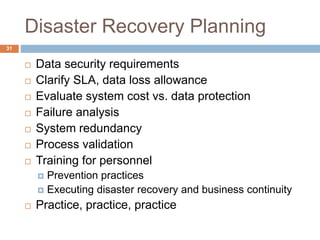
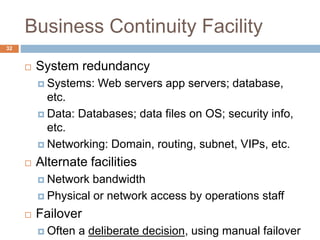
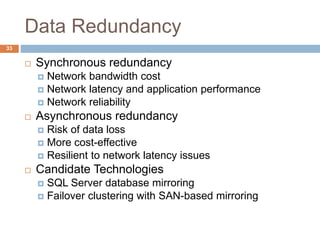
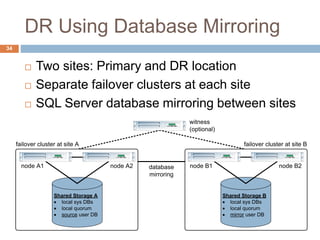
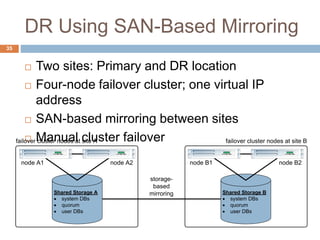
High availability and disaster recovery strategies for Microsoft SQL Server databases are discussed. Key points include: 1) High availability aims to minimize downtime through redundant components and automatic failover, while disaster recovery protects against total data center outage through redundant systems and facilities. 2) Various SQL Server high availability options are examined, including database mirroring, log shipping, and failover clustering, each with different capabilities like automatic failover speed and hardware requirements. 3) Disaster recovery focuses on having a redundant system in a separate location that can be switched over to if the primary system fails. It requires strategies for backup, offsite storage, and recovery of data at the redundant location.


