A Walk in the Park
7.21.16
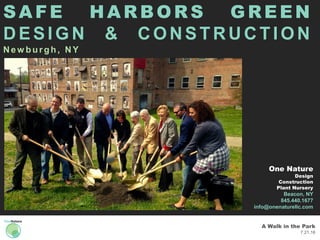
SA FE H A R B OR S G REEN
DESI G N & CONSTRU C TI O N
Ne w burgh, NY
One Nature
Design
Construction
Plant Nursery
Beacon, NY
845.440.1677
info@onenaturellc.com
A Walk in the Park
7.21.16
 WHO WE ARE
 BACKGROUND
 SITE
 Location
 History
 CONTEXT
 Evolution
 DESIGN
 Before We Started
 Topography
 Hydrology
 PLANTS
▪ Selection
▪ Native vs. Non-native
▪ Plan
▪ Ecological Functions
 PROJECT DETAILS
 VALUE ENGINEERING
 CONSTRUCTION
 SITE TOUR
A Walk in the Park
7.21.16
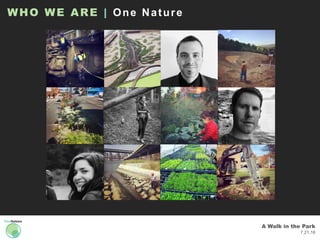
WHO WE ARE | One Nature
A Walk in the Park
7.21.16
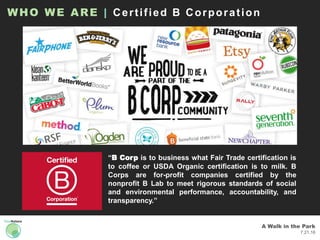
“B Corp is to business what Fair Trade certification is
to coffee or USDA Organic certification is to milk. B
Corps are for-profit companies certified by the
nonprofit B Lab to meet rigorous standards of social
and environmental performance, accountability, and
transparency.”
WHO WE ARE | Certified B Corporation
A Walk in the Park
7.21.16
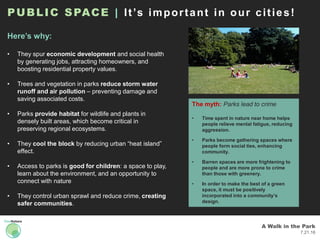
PUBLIC SPACE | It’s important in our cities!
Here’s why:
• They spur economic development and social health
by generating jobs, attracting homeowners, and
boosting residential property values.
• Trees and vegetation in parks reduce storm water
runoff and air pollution – preventing damage and
saving associated costs.
• Parks provide habitat for wildlife and plants in
densely built areas, which become critical in
preserving regional ecosystems.
• They cool the block by reducing urban “heat island”
effect.
• Access to parks is good for children: a space to play,
learn about the environment, and an opportunity to
connect with nature
• They control urban sprawl and reduce crime, creating
safer communities.
The myth: Parks lead to crime
• Time spent in nature near home helps
people relieve mental fatigue, reducing
aggression.
• Parks become gathering spaces where
people form social ties, enhancing
community.
• Barren spaces are more frightening to
people and are more prone to crime
than those with greenery.
• In order to make the best of a green
space, it must be positively
incorporated into a community’s
design.
A Walk in the Park
7.21.16
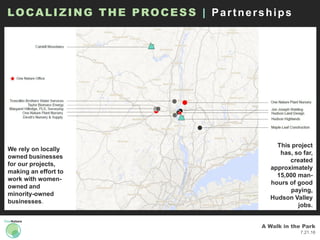
LOCALIZING THE PROCESS | Partnerships
We rely on locally
owned businesses
for our projects,
making an effort to
work with women-
owned and
minority-owned
businesses.
This project
has, so far,
created
approximately
15,000 man-
hours of good
paying,
Hudson Valley
jobs.
A Walk in the Park
7.21.16
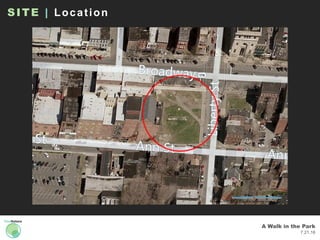
SITE | Location
A Walk in the Park
7.21.16
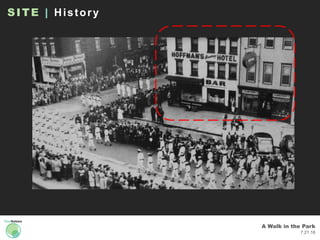
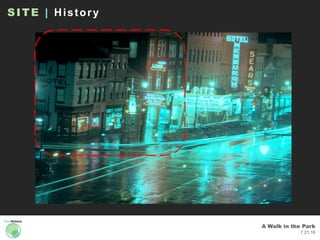
SITE | History
A Walk in the Park
7.21.16
SITE | History
A Walk in the Park
7.21.16
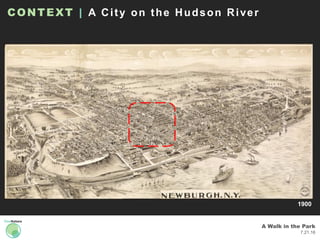
CONTEXT | A City on the Hudson River
1900
A Walk in the Park
7.21.16
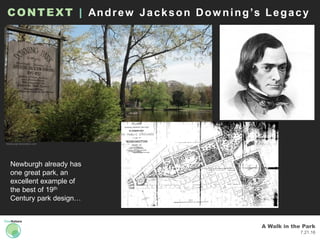
CONTEXT | Andrew Jackson Downing’s Legacy
Newburgh already has
one great park, an
excellent example of
the best of 19th
Century park design…
Newburghrestoration.com
A Walk in the Park
7.21.16
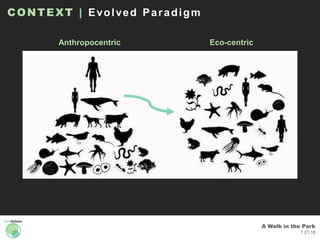
CONTEXT | Evolved Paradigm
Anthropocentric Eco-centric
A Walk in the Park
7.21.16
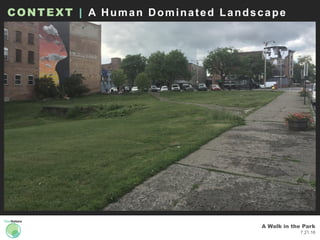
CONTEXT | A Human Dominated Landscape
A Walk in the Park
7.21.16
DESIGN
A Walk in the Park
7.21.16
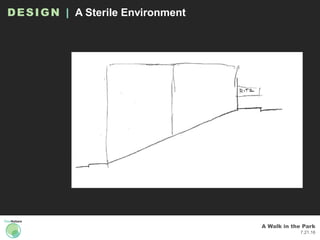
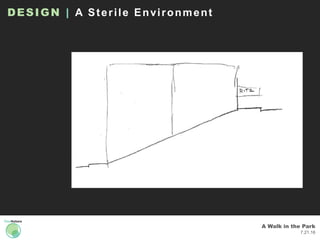
DESIGN | A Sterile Environment
A Walk in the Park
7.21.16
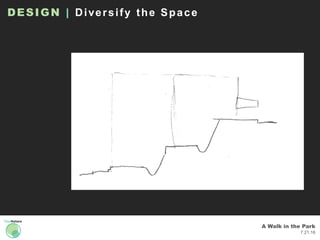
DESIGN | Diversify the Space
A Walk in the Park
7.21.16
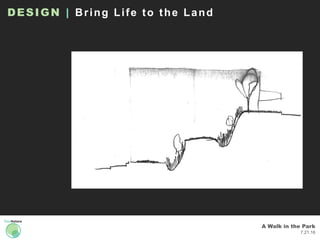
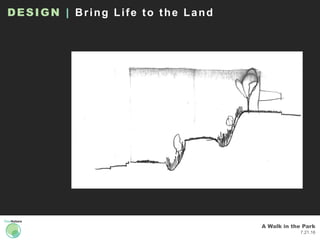
DESIGN | Bring Life to the Land
A Walk in the Park
7.21.16
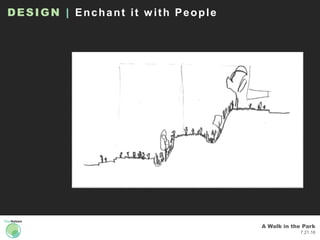
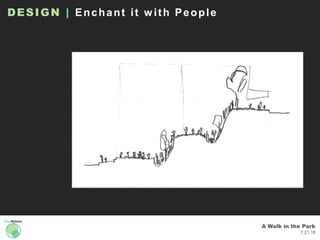
DESIGN | Enchant it with People
A Walk in the Park
7.21.16
DESIGN | A Sterile Environment
A Walk in the Park
7.21.16
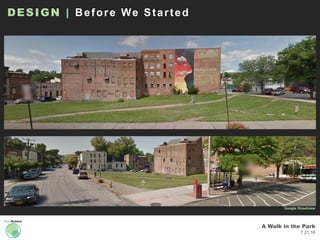
DESIGN | Before We Started
Google Streetview
A Walk in the Park
7.21.16
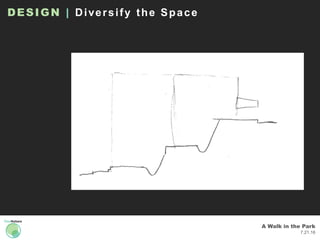
DESIGN | Diversify the Space
A Walk in the Park
7.21.16
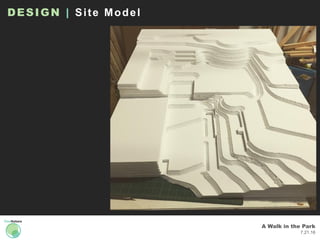
DESIGN | Site Model
A Walk in the Park
7.21.16
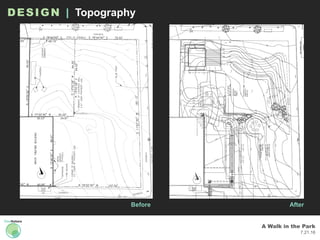
DESIGN | Topography
Before After
A Walk in the Park
7.21.16
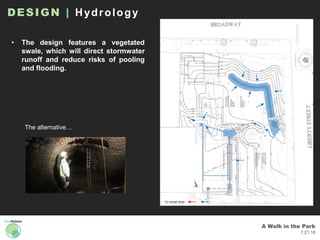
DESIGN | Hydrology
To street drain
• The design features a vegetated
swale, which will direct stormwater
runoff and reduce risks of pooling
and flooding.
The alternative…
A Walk in the Park
7.21.16
DESIGN | Bring Life to the Land
A Walk in the Park
7.21.16
PLANTS
A Walk in the Park
7.21.16
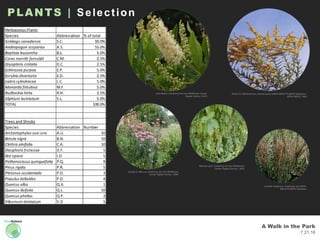
PLANTS | Selection
Robert H. Mohlenbrock, hosted by the USDA-NRCS PLANTS Database /
USDA NRCS. 1995
Jennifer Anderson, hosted by the USDA-
NRCS PLANTS Database
Julie Makin, hosted by the LBJ Wildflower Center
Digital Library / 2012
Joseph A. Marcus, hosted by the LBJ Wildflower
Center Digital Library / 2003
Melody Lytle, hosted by the LBJ Wildflower
Center Digital Library / 2003
A Walk in the Park
7.21.16
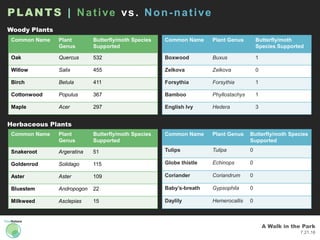
PLANTS | Native vs. Non-native
Common Name Plant
Genus
Butterfly/moth Species
Supported
Oak Quercus 532
Willow Salix 455
Birch Betula 411
Cottonwood Populus 367
Maple Acer 297
Common Name Plant Genus Butterfly/moth
Species Supported
Boxwood Buxus 1
Zelkova Zelkova 0
Forsythia Forsythia 1
Bamboo Phyllostachys 1
English Ivy Hedera 3
Common Name Plant
Genus
Butterfly/moth Species
Supported
Snakeroot Argeratina 51
Goldenrod Solidago 115
Aster Aster 109
Bluestem Andropogon 22
Milkweed Asclepias 15
Common Name Plant Genus Butterfly/moth Species
Supported
Tulips Tulipa 0
Globe thistle Echinops 0
Coriander Coriandrum 0
Baby’s-breath Gypsophila 0
Daylily Hemerocallis 0
Woody Plants
Herbaceous Plants
A Walk in the Park
7.21.16
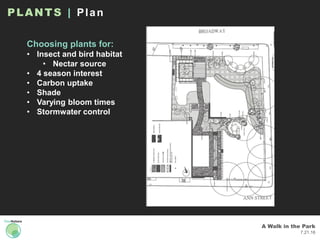
PLANTS | Plan
Choosing plants for:
• Insect and bird habitat
• Nectar source
• 4 season interest
• Carbon uptake
• Shade
• Varying bloom times
• Stormwater control
A Walk in the Park
7.21.16
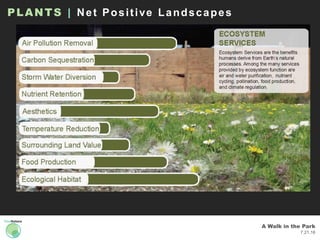
PLANTS | Net Positive Landscapes
A Walk in the Park
7.21.16
PROJECT
DETAILS
A Walk in the Park
7.21.16
DESIGN | Enchant it with People
A Walk in the Park
7.21.16
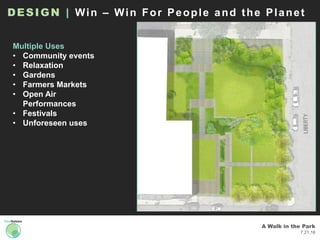
DESIGN | Win – Win For People and the Planet
Site Plan
Multiple Uses
• Community events
• Relaxation
• Gardens
• Farmers Markets
• Open Air
Performances
• Festivals
• Unforeseen uses
A Walk in the Park
7.21.16
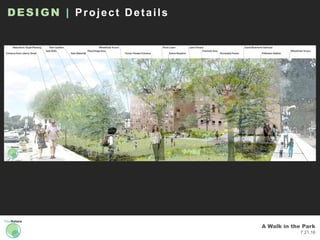
DESIGN | Project Details
A Walk in the Park
7.21.16
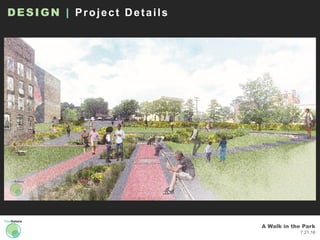
DESIGN | Project Details
A Walk in the Park
7.21.16
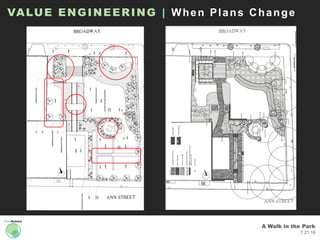
VALUE ENGINEERING | When Plans Change
A Walk in the Park
7.21.16
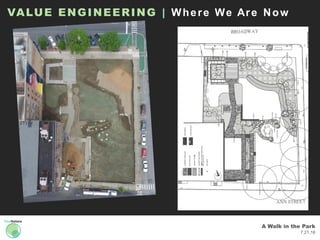
VALUE ENGINEERING | Where We Are Now
A Walk in the Park
7.21.16
CONSTRUCTION
A Walk in the Park
7.21.16
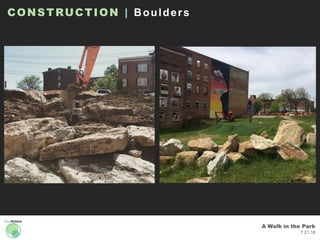
CONSTRUCTION | Boulders
A Walk in the Park
7.21.16
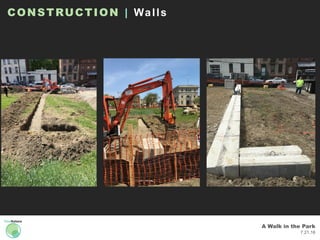
CONSTRUCTION | Walls
A Walk in the Park
7.21.16
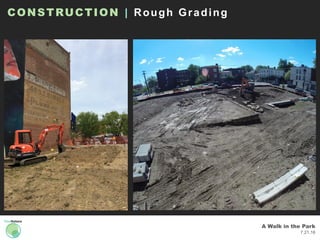
CONSTRUCTION | Rough Grading
A Walk in the Park
7.21.16
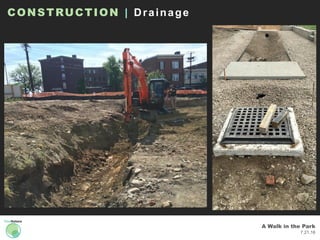
CONSTRUCTION | Drainage
A Walk in the Park
7.21.16
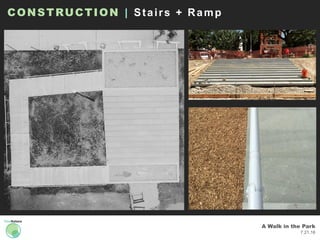
CONSTRUCTION | Stairs + Ramp
A Walk in the Park
7.21.16
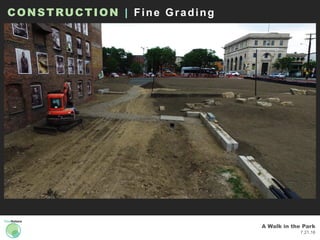
CONSTRUCTION | Fine Grading
A Walk in the Park
7.21.16
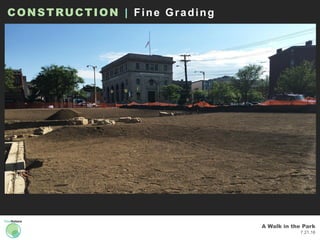
CONSTRUCTION | Fine Grading
A Walk in the Park
7.21.16
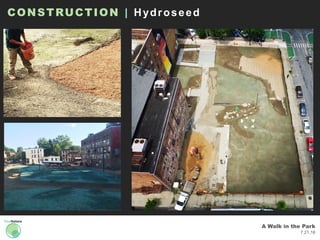
CONSTRUCTION | Hydroseed
A Walk in the Park
7.21.16
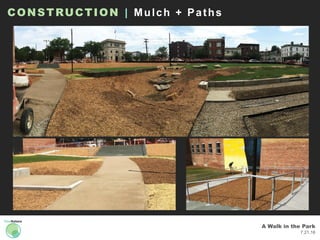
CONSTRUCTION | Mulch + Paths
A Walk in the Park
7.21.16
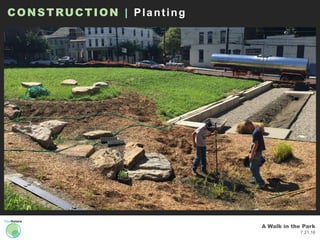
CONSTRUCTION | Planting
A Walk in the Park
7.21.16
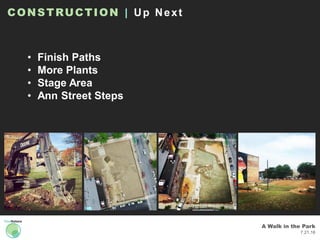
CONSTRUCTION | Up Next
• Finish Paths
• More Plants
• Stage Area
• Ann Street Steps
A Walk in the Park
7.21.16
LET’S GO OUTSIDE
AND CHECK IT OUT
A Walk in the Park
7.21.16
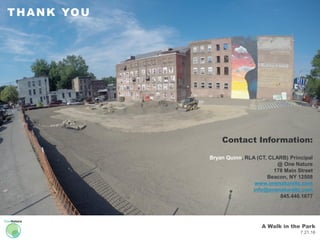
THANK YOU
Contact Information:
Bryan Quinn, RLA (CT, CLARB) Principal
@ One Nature
178 Main Street
Beacon, NY 12508
www.onenaturellc.com
info@onenaturellc.com
845.440.1677

Safe Harbors Green Design and Construction Process

  • 1.
    A Walk inthe Park 7.21.16 SA FE H A R B OR S G REEN DESI G N & CONSTRU C TI O N Ne w burgh, NY One Nature Design Construction Plant Nursery Beacon, NY 845.440.1677 info@onenaturellc.com
  • 2.
    A Walk inthe Park 7.21.16  WHO WE ARE  BACKGROUND  SITE  Location  History  CONTEXT  Evolution  DESIGN  Before We Started  Topography  Hydrology  PLANTS ▪ Selection ▪ Native vs. Non-native ▪ Plan ▪ Ecological Functions  PROJECT DETAILS  VALUE ENGINEERING  CONSTRUCTION  SITE TOUR
  • 3.
    A Walk inthe Park 7.21.16 WHO WE ARE | One Nature
  • 4.
    A Walk inthe Park 7.21.16 “B Corp is to business what Fair Trade certification is to coffee or USDA Organic certification is to milk. B Corps are for-profit companies certified by the nonprofit B Lab to meet rigorous standards of social and environmental performance, accountability, and transparency.” WHO WE ARE | Certified B Corporation
  • 5.
    A Walk inthe Park 7.21.16 PUBLIC SPACE | It’s important in our cities! Here’s why: • They spur economic development and social health by generating jobs, attracting homeowners, and boosting residential property values. • Trees and vegetation in parks reduce storm water runoff and air pollution – preventing damage and saving associated costs. • Parks provide habitat for wildlife and plants in densely built areas, which become critical in preserving regional ecosystems. • They cool the block by reducing urban “heat island” effect. • Access to parks is good for children: a space to play, learn about the environment, and an opportunity to connect with nature • They control urban sprawl and reduce crime, creating safer communities. The myth: Parks lead to crime • Time spent in nature near home helps people relieve mental fatigue, reducing aggression. • Parks become gathering spaces where people form social ties, enhancing community. • Barren spaces are more frightening to people and are more prone to crime than those with greenery. • In order to make the best of a green space, it must be positively incorporated into a community’s design.
  • 6.
    A Walk inthe Park 7.21.16 LOCALIZING THE PROCESS | Partnerships We rely on locally owned businesses for our projects, making an effort to work with women- owned and minority-owned businesses. This project has, so far, created approximately 15,000 man- hours of good paying, Hudson Valley jobs.
  • 7.
    A Walk inthe Park 7.21.16 SITE | Location
  • 8.
    A Walk inthe Park 7.21.16 SITE | History
  • 9.
    A Walk inthe Park 7.21.16 SITE | History
  • 10.
    A Walk inthe Park 7.21.16 CONTEXT | A City on the Hudson River 1900
  • 11.
    A Walk inthe Park 7.21.16 CONTEXT | Andrew Jackson Downing’s Legacy Newburgh already has one great park, an excellent example of the best of 19th Century park design… Newburghrestoration.com
  • 12.
    A Walk inthe Park 7.21.16 CONTEXT | Evolved Paradigm Anthropocentric Eco-centric
  • 13.
    A Walk inthe Park 7.21.16 CONTEXT | A Human Dominated Landscape
  • 14.
    A Walk inthe Park 7.21.16 DESIGN
  • 15.
    A Walk inthe Park 7.21.16 DESIGN | A Sterile Environment
  • 16.
    A Walk inthe Park 7.21.16 DESIGN | Diversify the Space
  • 17.
    A Walk inthe Park 7.21.16 DESIGN | Bring Life to the Land
  • 18.
    A Walk inthe Park 7.21.16 DESIGN | Enchant it with People
  • 19.
    A Walk inthe Park 7.21.16 DESIGN | A Sterile Environment
  • 20.
    A Walk inthe Park 7.21.16 DESIGN | Before We Started Google Streetview
  • 21.
    A Walk inthe Park 7.21.16 DESIGN | Diversify the Space
  • 22.
    A Walk inthe Park 7.21.16 DESIGN | Site Model
  • 23.
    A Walk inthe Park 7.21.16 DESIGN | Topography Before After
  • 24.
    A Walk inthe Park 7.21.16 DESIGN | Hydrology To street drain • The design features a vegetated swale, which will direct stormwater runoff and reduce risks of pooling and flooding. The alternative…
  • 25.
    A Walk inthe Park 7.21.16 DESIGN | Bring Life to the Land
  • 26.
    A Walk inthe Park 7.21.16 PLANTS
  • 27.
    A Walk inthe Park 7.21.16 PLANTS | Selection Robert H. Mohlenbrock, hosted by the USDA-NRCS PLANTS Database / USDA NRCS. 1995 Jennifer Anderson, hosted by the USDA- NRCS PLANTS Database Julie Makin, hosted by the LBJ Wildflower Center Digital Library / 2012 Joseph A. Marcus, hosted by the LBJ Wildflower Center Digital Library / 2003 Melody Lytle, hosted by the LBJ Wildflower Center Digital Library / 2003
  • 28.
    A Walk inthe Park 7.21.16 PLANTS | Native vs. Non-native Common Name Plant Genus Butterfly/moth Species Supported Oak Quercus 532 Willow Salix 455 Birch Betula 411 Cottonwood Populus 367 Maple Acer 297 Common Name Plant Genus Butterfly/moth Species Supported Boxwood Buxus 1 Zelkova Zelkova 0 Forsythia Forsythia 1 Bamboo Phyllostachys 1 English Ivy Hedera 3 Common Name Plant Genus Butterfly/moth Species Supported Snakeroot Argeratina 51 Goldenrod Solidago 115 Aster Aster 109 Bluestem Andropogon 22 Milkweed Asclepias 15 Common Name Plant Genus Butterfly/moth Species Supported Tulips Tulipa 0 Globe thistle Echinops 0 Coriander Coriandrum 0 Baby’s-breath Gypsophila 0 Daylily Hemerocallis 0 Woody Plants Herbaceous Plants
  • 29.
    A Walk inthe Park 7.21.16 PLANTS | Plan Choosing plants for: • Insect and bird habitat • Nectar source • 4 season interest • Carbon uptake • Shade • Varying bloom times • Stormwater control
  • 30.
    A Walk inthe Park 7.21.16 PLANTS | Net Positive Landscapes
  • 31.
    A Walk inthe Park 7.21.16 PROJECT DETAILS
  • 32.
    A Walk inthe Park 7.21.16 DESIGN | Enchant it with People
  • 33.
    A Walk inthe Park 7.21.16 DESIGN | Win – Win For People and the Planet Site Plan Multiple Uses • Community events • Relaxation • Gardens • Farmers Markets • Open Air Performances • Festivals • Unforeseen uses
  • 34.
    A Walk inthe Park 7.21.16 DESIGN | Project Details
  • 35.
    A Walk inthe Park 7.21.16 DESIGN | Project Details
  • 36.
    A Walk inthe Park 7.21.16 VALUE ENGINEERING | When Plans Change
  • 37.
    A Walk inthe Park 7.21.16 VALUE ENGINEERING | Where We Are Now
  • 38.
    A Walk inthe Park 7.21.16 CONSTRUCTION
  • 39.
    A Walk inthe Park 7.21.16 CONSTRUCTION | Boulders
  • 40.
    A Walk inthe Park 7.21.16 CONSTRUCTION | Walls
  • 41.
    A Walk inthe Park 7.21.16 CONSTRUCTION | Rough Grading
  • 42.
    A Walk inthe Park 7.21.16 CONSTRUCTION | Drainage
  • 43.
    A Walk inthe Park 7.21.16 CONSTRUCTION | Stairs + Ramp
  • 44.
    A Walk inthe Park 7.21.16 CONSTRUCTION | Fine Grading
  • 45.
    A Walk inthe Park 7.21.16 CONSTRUCTION | Fine Grading
  • 46.
    A Walk inthe Park 7.21.16 CONSTRUCTION | Hydroseed
  • 47.
    A Walk inthe Park 7.21.16 CONSTRUCTION | Mulch + Paths
  • 48.
    A Walk inthe Park 7.21.16 CONSTRUCTION | Planting
  • 49.
    A Walk inthe Park 7.21.16 CONSTRUCTION | Up Next • Finish Paths • More Plants • Stage Area • Ann Street Steps
  • 50.
    A Walk inthe Park 7.21.16 LET’S GO OUTSIDE AND CHECK IT OUT
  • 51.
    A Walk inthe Park 7.21.16 THANK YOU Contact Information: Bryan Quinn, RLA (CT, CLARB) Principal @ One Nature 178 Main Street Beacon, NY 12508 www.onenaturellc.com info@onenaturellc.com 845.440.1677