SAVITRIBAI PHULE PUNE UNIVERSITY, PUNE
(FORMERLY UNIVERSITY OF PUNE)
FACULTY OF EDUCATION B.Ed. TWO YEAR PROGRAMME Choice Based Credit System
MAEER’s
MIT SAINT DNYANESHWAR B. ED. COLLEGE
Alandi Devachi, Pune
BED :105:
ADVANCED PEDAGOGY & APPLICATION OF ICT
By
DR.VIKAS S. TUPSUNDAR
(MA., M.ED., M.PHIL., PGDME., NET & PH.D.)
DATE : 12/09/2020
PRINCIPLES
OF
ADVANCED
PEDAGOGY
Advanced
Pedagogy
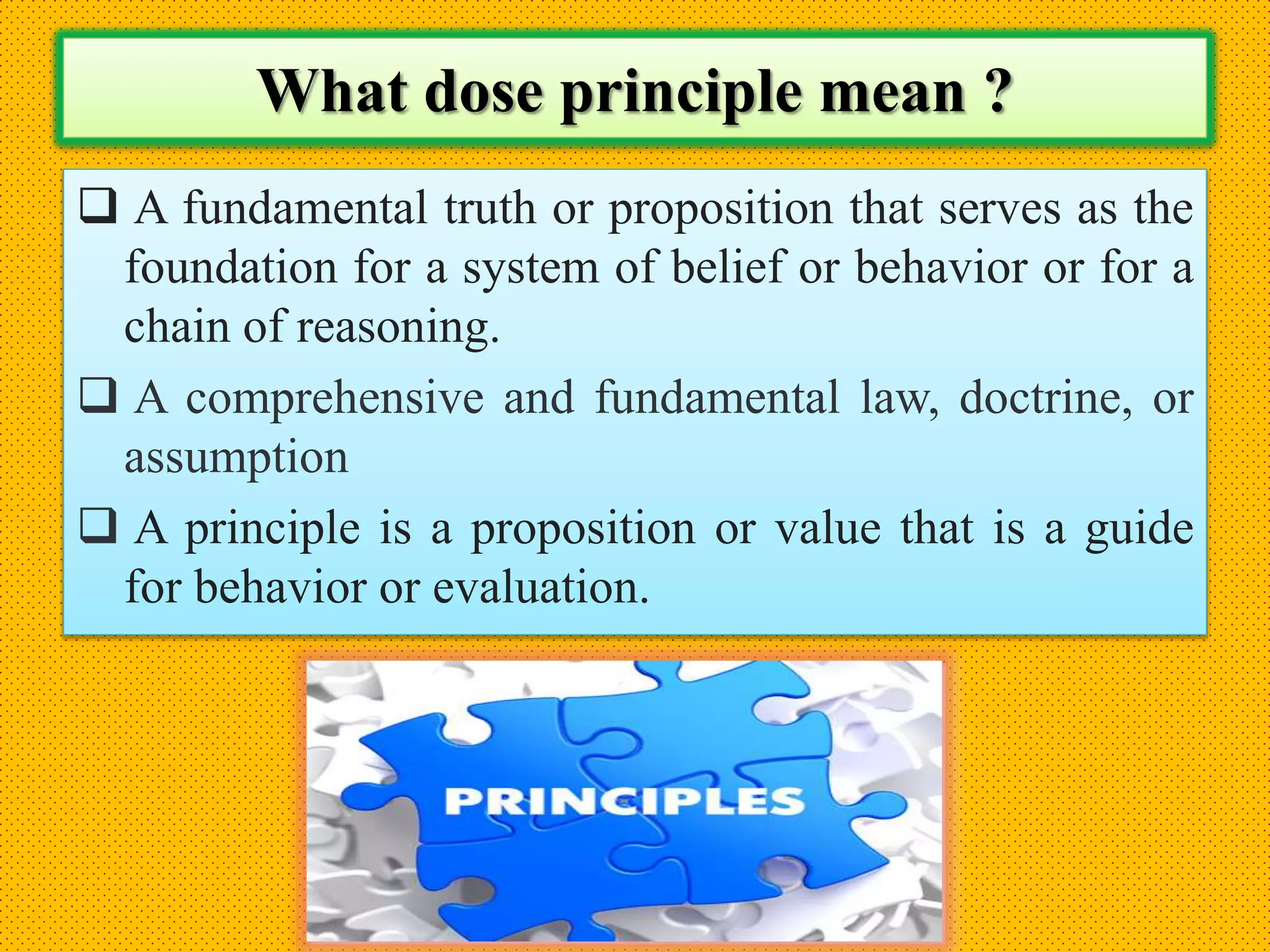
What dose principle mean ?
 A fundamental truth or proposition that serves as the
foundation for a system of belief or behavior or for a
chain of reasoning.
 A comprehensive and fundamental law, doctrine, or
assumption
 A principle is a proposition or value that is a guide
for behavior or evaluation.
1. Effective pedagogy equips learners for life in its
broadest sense.
 Learning should aim to help individuals and groups to
develop the intellectual, personal and social resources that
will enable them to participate as active citizens,
contribute to economic development and flourish as
individuals in a diverse and changing society.
 This means adopting a broad conception of worthwhile
learning outcomes and taking seriously issues of equity
and social justice for all
2. Effective pedagogy engages with valued forms of
knowledge.
 Pedagogy should engage learners with the big ideas,
key skills and processes, modes of discourse, ways of
thinking and practicing, attitudes and relationships,
which are the most valued learning processes and
outcomes in particular contexts.
 They need to understand what constitutes quality,
standards and expertise in different settings.
3. Effective pedagogy recognizes the importance of
prior experience and learning.
 Pedagogy should take account of what the learner
knows already in order for them, and those who
support their learning, to plan their next steps.
 This includes building on prior learning but also
taking account of the personal and cultural
experiences of different groups of learners.
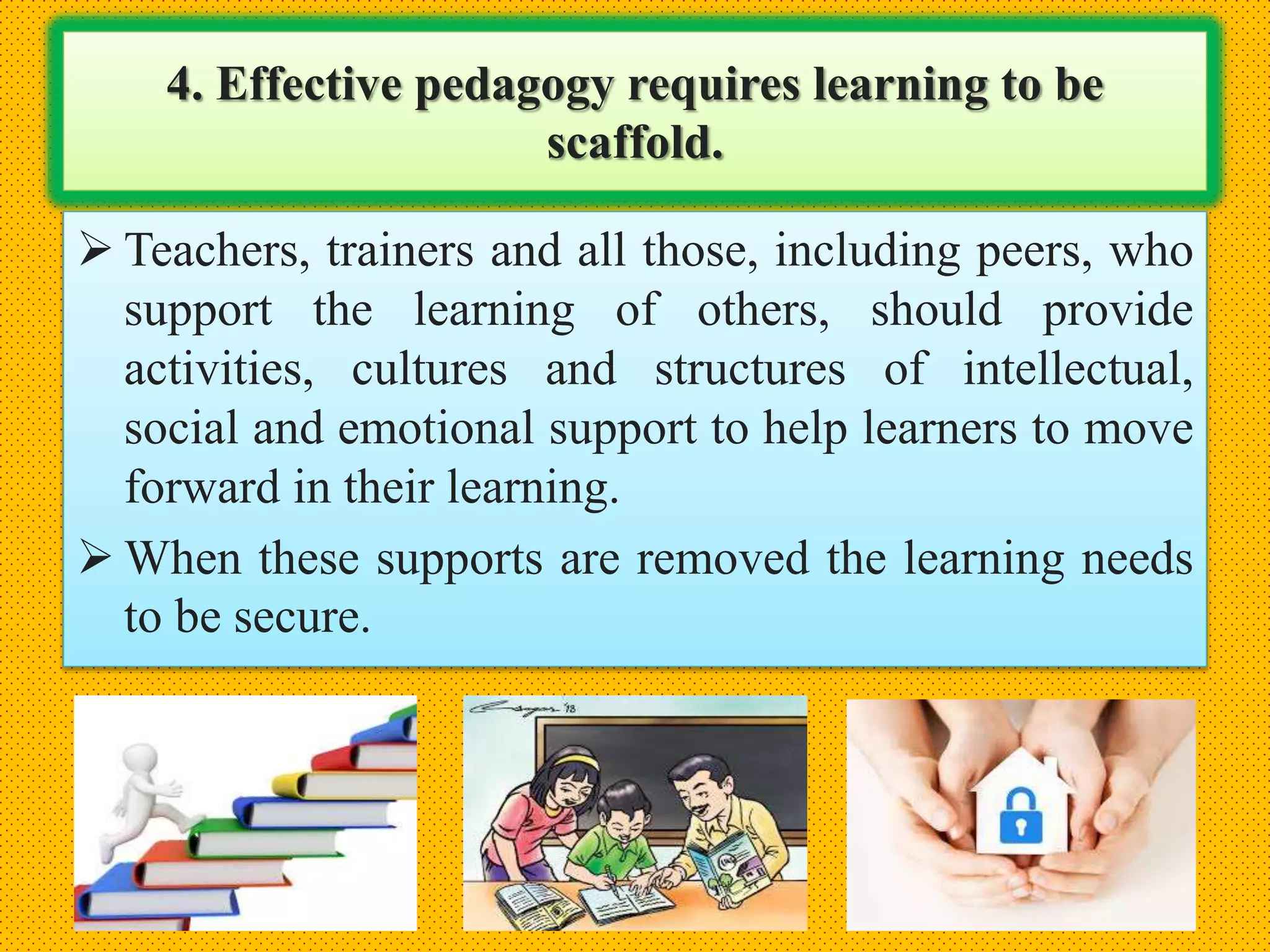
4. Effective pedagogy requires learning to be
scaffold.
 Teachers, trainers and all those, including peers, who
support the learning of others, should provide
activities, cultures and structures of intellectual,
social and emotional support to help learners to move
forward in their learning.
 When these supports are removed the learning needs
to be secure.
5. Effective pedagogy needs assessment to be
congruent with learning.
 Assessment should be designed and implemented
with the goal of achieving maximum validity both in
terms of learning outcomes and learning processes.
 It should help to advance learning as well as
determine whether learning has occurred.
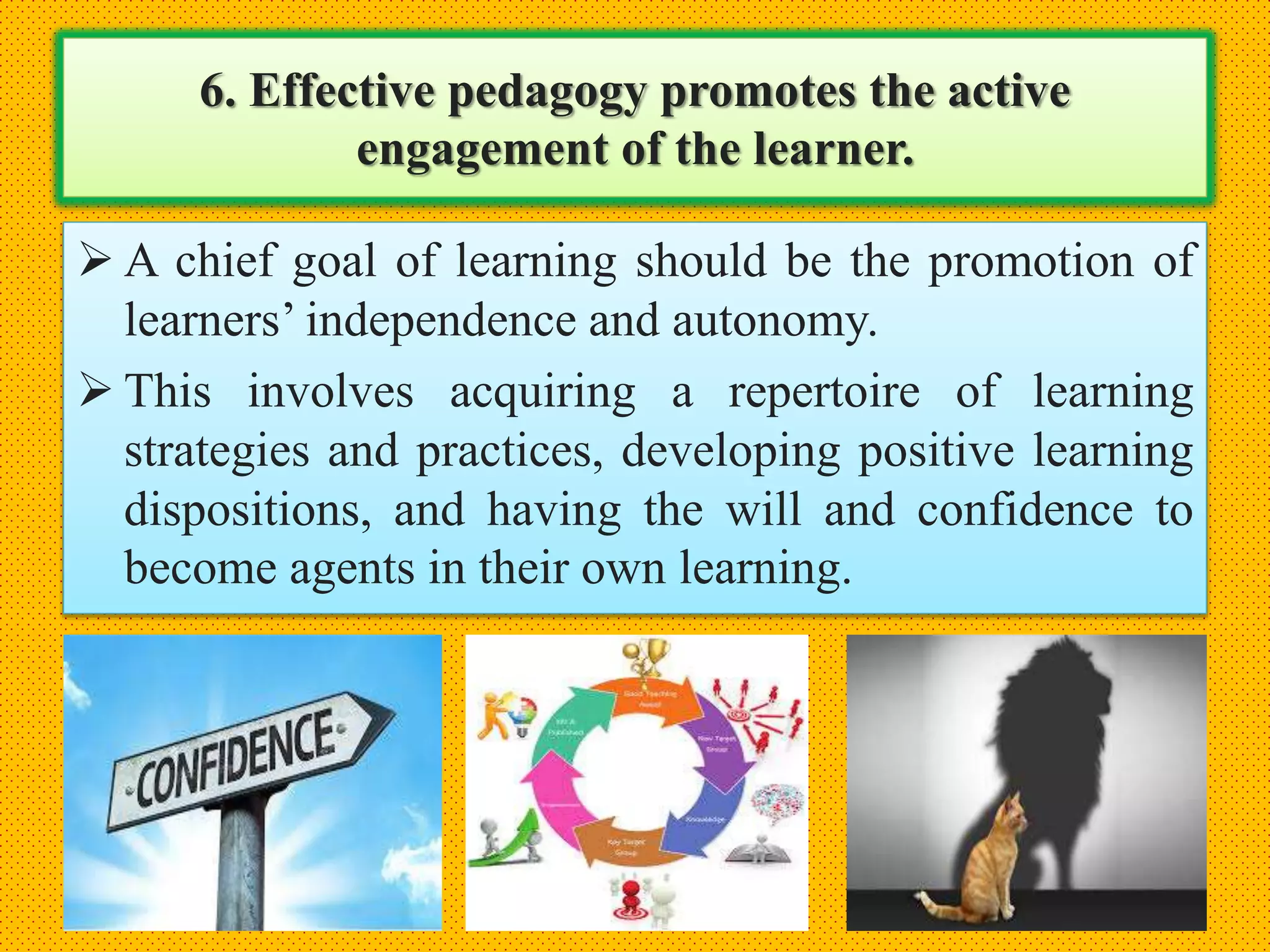
6. Effective pedagogy promotes the active
engagement of the learner.
 A chief goal of learning should be the promotion of
learners’ independence and autonomy.
 This involves acquiring a repertoire of learning
strategies and practices, developing positive learning
dispositions, and having the will and confidence to
become agents in their own learning.
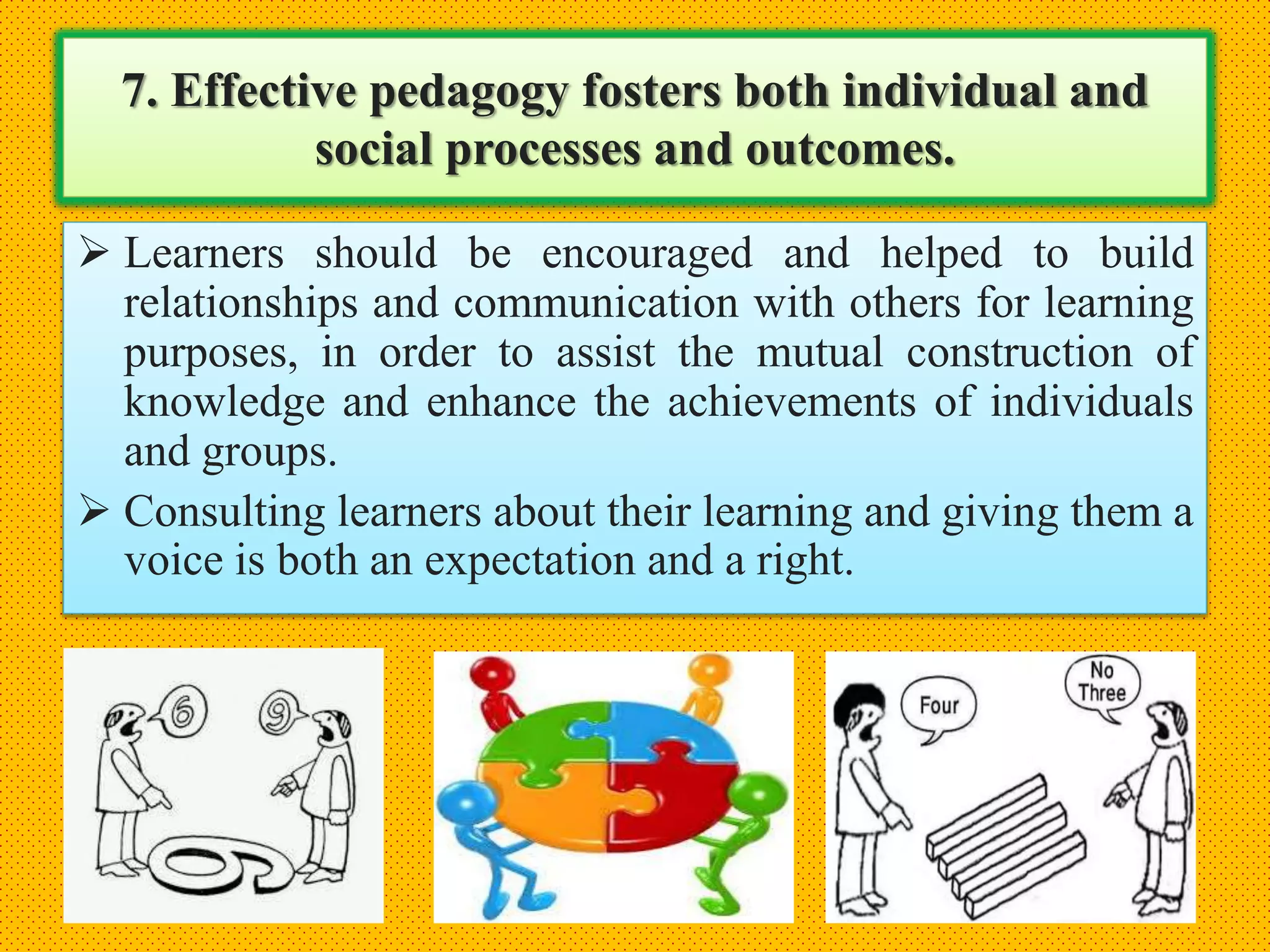
7. Effective pedagogy fosters both individual and
social processes and outcomes.
 Learners should be encouraged and helped to build
relationships and communication with others for learning
purposes, in order to assist the mutual construction of
knowledge and enhance the achievements of individuals
and groups.
 Consulting learners about their learning and giving them a
voice is both an expectation and a right.
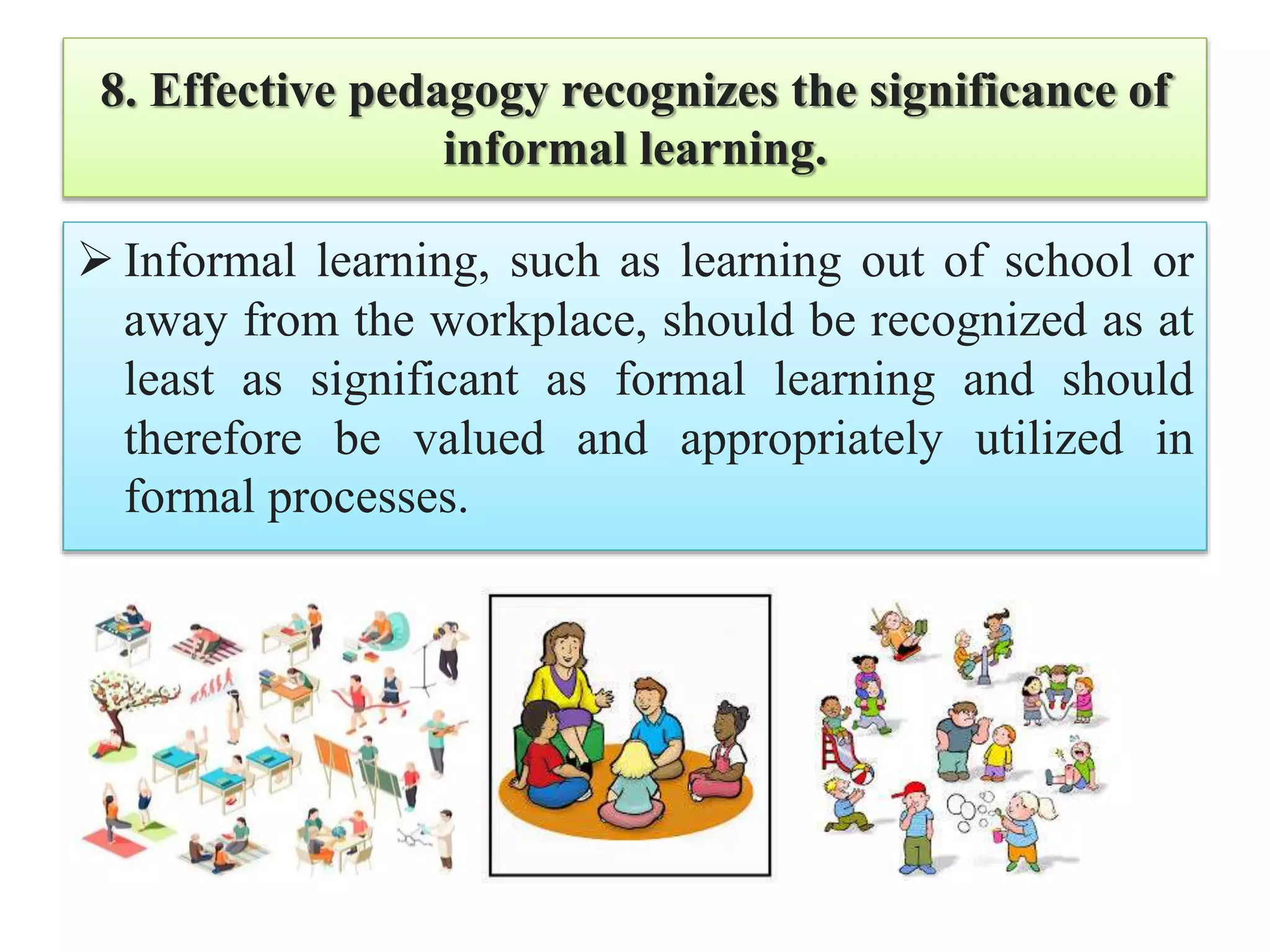
8. Effective pedagogy recognizes the significance of
informal learning.
 Informal learning, such as learning out of school or
away from the workplace, should be recognized as at
least as significant as formal learning and should
therefore be valued and appropriately utilized in
formal processes.
9. Effective pedagogy depends on the learning of all
those who support the learning of others.
 The need for lecturers, teachers, trainers and co-
workers to learn continuously in order to develop
their knowledge and skill, and adapt and develop their
roles, especially through practice-based inquiry,
should be recognized and supported.
10. Effective pedagogy demands consistent policy
frameworks with support for learning as their
primary focus.
 Organizational and system level policies need to
recognize the fundamental importance of continual
learning - for individual, team, organizational and
system success - and be designed to create effective
learning environments for all learners.

SPPU F.Y.B.Ed. Course Code BED-105 : Unit 1: principles of a.pedagogy

  • 1.
    SAVITRIBAI PHULE PUNEUNIVERSITY, PUNE (FORMERLY UNIVERSITY OF PUNE) FACULTY OF EDUCATION B.Ed. TWO YEAR PROGRAMME Choice Based Credit System MAEER’s MIT SAINT DNYANESHWAR B. ED. COLLEGE Alandi Devachi, Pune BED :105: ADVANCED PEDAGOGY & APPLICATION OF ICT By DR.VIKAS S. TUPSUNDAR (MA., M.ED., M.PHIL., PGDME., NET & PH.D.) DATE : 12/09/2020
  • 2.
  • 3.
  • 4.
    What dose principlemean ?  A fundamental truth or proposition that serves as the foundation for a system of belief or behavior or for a chain of reasoning.  A comprehensive and fundamental law, doctrine, or assumption  A principle is a proposition or value that is a guide for behavior or evaluation.
  • 5.
    1. Effective pedagogyequips learners for life in its broadest sense.  Learning should aim to help individuals and groups to develop the intellectual, personal and social resources that will enable them to participate as active citizens, contribute to economic development and flourish as individuals in a diverse and changing society.  This means adopting a broad conception of worthwhile learning outcomes and taking seriously issues of equity and social justice for all
  • 6.
    2. Effective pedagogyengages with valued forms of knowledge.  Pedagogy should engage learners with the big ideas, key skills and processes, modes of discourse, ways of thinking and practicing, attitudes and relationships, which are the most valued learning processes and outcomes in particular contexts.  They need to understand what constitutes quality, standards and expertise in different settings.
  • 7.
    3. Effective pedagogyrecognizes the importance of prior experience and learning.  Pedagogy should take account of what the learner knows already in order for them, and those who support their learning, to plan their next steps.  This includes building on prior learning but also taking account of the personal and cultural experiences of different groups of learners.
  • 8.
    4. Effective pedagogyrequires learning to be scaffold.  Teachers, trainers and all those, including peers, who support the learning of others, should provide activities, cultures and structures of intellectual, social and emotional support to help learners to move forward in their learning.  When these supports are removed the learning needs to be secure.
  • 9.
    5. Effective pedagogyneeds assessment to be congruent with learning.  Assessment should be designed and implemented with the goal of achieving maximum validity both in terms of learning outcomes and learning processes.  It should help to advance learning as well as determine whether learning has occurred.
  • 10.
    6. Effective pedagogypromotes the active engagement of the learner.  A chief goal of learning should be the promotion of learners’ independence and autonomy.  This involves acquiring a repertoire of learning strategies and practices, developing positive learning dispositions, and having the will and confidence to become agents in their own learning.
  • 11.
    7. Effective pedagogyfosters both individual and social processes and outcomes.  Learners should be encouraged and helped to build relationships and communication with others for learning purposes, in order to assist the mutual construction of knowledge and enhance the achievements of individuals and groups.  Consulting learners about their learning and giving them a voice is both an expectation and a right.
  • 12.
    8. Effective pedagogyrecognizes the significance of informal learning.  Informal learning, such as learning out of school or away from the workplace, should be recognized as at least as significant as formal learning and should therefore be valued and appropriately utilized in formal processes.
  • 13.
    9. Effective pedagogydepends on the learning of all those who support the learning of others.  The need for lecturers, teachers, trainers and co- workers to learn continuously in order to develop their knowledge and skill, and adapt and develop their roles, especially through practice-based inquiry, should be recognized and supported.
  • 14.
    10. Effective pedagogydemands consistent policy frameworks with support for learning as their primary focus.  Organizational and system level policies need to recognize the fundamental importance of continual learning - for individual, team, organizational and system success - and be designed to create effective learning environments for all learners.