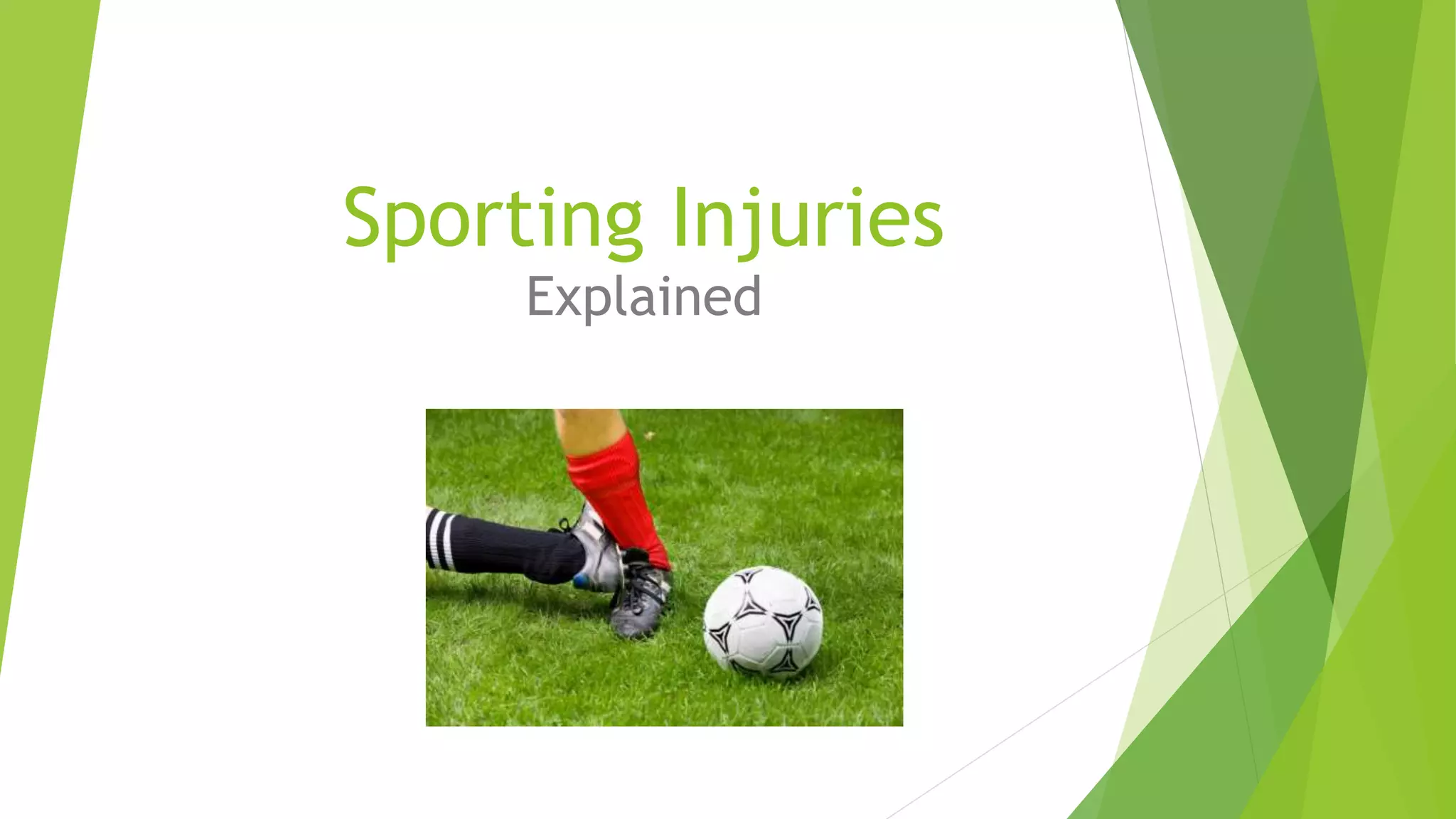
Sporting Injuries 
Explained
We are told keeping fit is 
good for us but… 
Repeated activity can cause 
wear and tear on the body 
that can lead to injury
Competition brings out 
the best in people 
…and the worst! 
Injuries are also caused by 
foul play.
Unfair actions or reckless behaviour can lead 
sporting injuries in team sports 
 Serious injuries = costly rehabilitation 
 Football injury claims and other sporting compensation 
cases are now specialist areas for solicitors 
 A dangerous challenge could cost more than the game
PREVENTION, BETTER THAN CURE 
Know the warning signs and take 
preventative action to avoid a injury. 
Here’s my top 10 injuries to look out 
for:
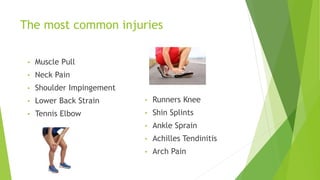
The most common injuries 
• Muscle Pull 
• Neck Pain 
• Shoulder Impingement 
• Lower Back Strain 
• Tennis Elbow 
• Runners Knee 
• Shin Splints 
• Ankle Sprain 
• Achilles Tendinitis 
• Arch Pain
Muscle Pull 
 The most common injury 
and it can happen to any 
muscle in the body. 
 Caused by taking a fall, 
fatigue or overuse. 
Fix it 
 Apply ice and rest 
until swelling has 
gone. 
 When tolerable do 
stretching exercised 
until fully recovered.
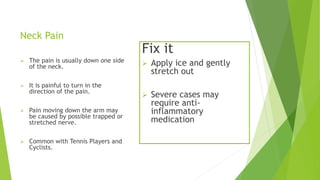
Neck Pain 
 The pain is usually down one side 
of the neck. 
 It is painful to turn in the 
direction of the pain. 
 Pain moving down the arm may 
be caused by possible trapped or 
stretched nerve. 
 Common with Tennis Players and 
Cyclists. 
Fix it 
 Apply ice and gently 
stretch out 
 Severe cases may 
require anti-inflammatory 
medication
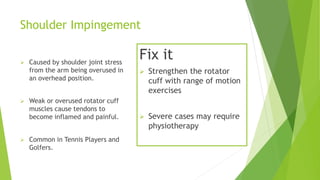
Shoulder Impingement 
 Caused by shoulder joint stress 
from the arm being overused in 
an overhead position. 
 Weak or overused rotator cuff 
muscles cause tendons to 
become inflamed and painful. 
 Common in Tennis Players and 
Golfers. 
Fix it 
 Strengthen the rotator 
cuff with range of motion 
exercises 
 Severe cases may require 
physiotherapy
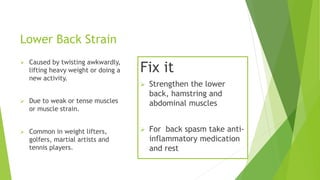
Lower Back Strain 
 Caused by twisting awkwardly, 
lifting heavy weight or doing a 
new activity. 
 Due to weak or tense muscles 
or muscle strain. 
 Common in weight lifters, 
golfers, martial artists and 
tennis players. 
Fix it 
 Strengthen the lower 
back, hamstring and 
abdominal muscles 
 For back spasm take anti-inflammatory 
medication 
and rest
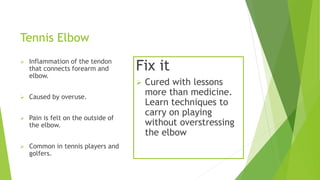
Tennis Elbow 
 Inflammation of the tendon 
that connects forearm and 
elbow. 
 Caused by overuse. 
 Pain is felt on the outside of 
the elbow. 
 Common in tennis players and 
golfers. 
Fix it 
 Cured with lessons 
more than medicine. 
Learn techniques to 
carry on playing 
without overstressing 
the elbow
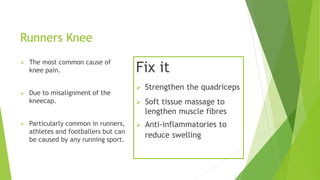
Runners Knee 
 The most common cause of 
knee pain. 
 Due to misalignment of the 
kneecap. 
 Particularly common in runners, 
athletes and footballers but can 
be caused by any running sport. 
Fix it 
 Strengthen the quadriceps 
 Soft tissue massage to 
lengthen muscle fibres 
 Anti-inflammatories to 
reduce swelling
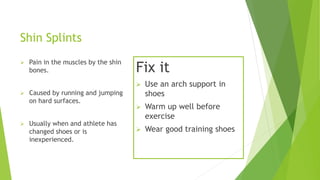
Shin Splints 
 Pain in the muscles by the shin 
bones. 
 Caused by running and jumping 
on hard surfaces. 
 Usually when and athlete has 
changed shoes or is 
inexperienced. 
Fix it 
 Use an arch support in 
shoes 
 Warm up well before 
exercise 
 Wear good training shoes
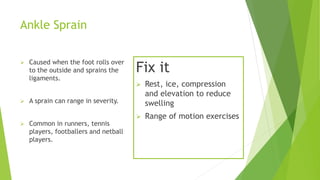
Ankle Sprain 
 Caused when the foot rolls over 
to the outside and sprains the 
ligaments. 
 A sprain can range in severity. 
 Common in runners, tennis 
players, footballers and netball 
players. 
Fix it 
 Rest, ice, compression 
and elevation to reduce 
swelling 
 Range of motion exercises
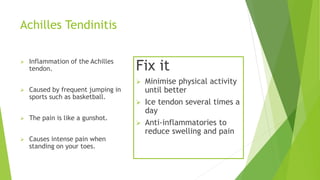
Achilles Tendinitis 
 Inflammation of the Achilles 
tendon. 
 Caused by frequent jumping in 
sports such as basketball. 
 The pain is like a gunshot. 
 Causes intense pain when 
standing on your toes. 
Fix it 
 Minimise physical activity 
until better 
 Ice tendon several times a 
day 
 Anti-inflammatories to 
reduce swelling and pain
Arch Pain 
 Happens to people with rigid 
arches. 
 Overstretching or tearing of the 
arch pad, know as planta 
fasiitis. 
 Runners and footballers are 
most susceptible but can 
happen to any athlete that is 
left standing for a long time. 
Fix it 
 Put an arch support in 
sports shoes 
 Avoid completely flat 
shoes and being barefoot 
 Swim or do upper body 
workouts whilst healing

Sporting Injuries Explained

  • 1.
  • 2.
    We are toldkeeping fit is good for us but… Repeated activity can cause wear and tear on the body that can lead to injury
  • 3.
    Competition brings out the best in people …and the worst! Injuries are also caused by foul play.
  • 4.
    Unfair actions orreckless behaviour can lead sporting injuries in team sports  Serious injuries = costly rehabilitation  Football injury claims and other sporting compensation cases are now specialist areas for solicitors  A dangerous challenge could cost more than the game
  • 5.
    PREVENTION, BETTER THANCURE Know the warning signs and take preventative action to avoid a injury. Here’s my top 10 injuries to look out for:
  • 6.
    The most commoninjuries • Muscle Pull • Neck Pain • Shoulder Impingement • Lower Back Strain • Tennis Elbow • Runners Knee • Shin Splints • Ankle Sprain • Achilles Tendinitis • Arch Pain
  • 7.
    Muscle Pull The most common injury and it can happen to any muscle in the body.  Caused by taking a fall, fatigue or overuse. Fix it  Apply ice and rest until swelling has gone.  When tolerable do stretching exercised until fully recovered.
  • 8.
    Neck Pain The pain is usually down one side of the neck.  It is painful to turn in the direction of the pain.  Pain moving down the arm may be caused by possible trapped or stretched nerve.  Common with Tennis Players and Cyclists. Fix it  Apply ice and gently stretch out  Severe cases may require anti-inflammatory medication
  • 9.
    Shoulder Impingement Caused by shoulder joint stress from the arm being overused in an overhead position.  Weak or overused rotator cuff muscles cause tendons to become inflamed and painful.  Common in Tennis Players and Golfers. Fix it  Strengthen the rotator cuff with range of motion exercises  Severe cases may require physiotherapy
  • 10.
    Lower Back Strain  Caused by twisting awkwardly, lifting heavy weight or doing a new activity.  Due to weak or tense muscles or muscle strain.  Common in weight lifters, golfers, martial artists and tennis players. Fix it  Strengthen the lower back, hamstring and abdominal muscles  For back spasm take anti-inflammatory medication and rest
  • 11.
    Tennis Elbow Inflammation of the tendon that connects forearm and elbow.  Caused by overuse.  Pain is felt on the outside of the elbow.  Common in tennis players and golfers. Fix it  Cured with lessons more than medicine. Learn techniques to carry on playing without overstressing the elbow
  • 12.
    Runners Knee The most common cause of knee pain.  Due to misalignment of the kneecap.  Particularly common in runners, athletes and footballers but can be caused by any running sport. Fix it  Strengthen the quadriceps  Soft tissue massage to lengthen muscle fibres  Anti-inflammatories to reduce swelling
  • 13.
    Shin Splints Pain in the muscles by the shin bones.  Caused by running and jumping on hard surfaces.  Usually when and athlete has changed shoes or is inexperienced. Fix it  Use an arch support in shoes  Warm up well before exercise  Wear good training shoes
  • 14.
    Ankle Sprain Caused when the foot rolls over to the outside and sprains the ligaments.  A sprain can range in severity.  Common in runners, tennis players, footballers and netball players. Fix it  Rest, ice, compression and elevation to reduce swelling  Range of motion exercises
  • 15.
    Achilles Tendinitis Inflammation of the Achilles tendon.  Caused by frequent jumping in sports such as basketball.  The pain is like a gunshot.  Causes intense pain when standing on your toes. Fix it  Minimise physical activity until better  Ice tendon several times a day  Anti-inflammatories to reduce swelling and pain
  • 16.
    Arch Pain Happens to people with rigid arches.  Overstretching or tearing of the arch pad, know as planta fasiitis.  Runners and footballers are most susceptible but can happen to any athlete that is left standing for a long time. Fix it  Put an arch support in sports shoes  Avoid completely flat shoes and being barefoot  Swim or do upper body workouts whilst healing