Safety Practices
and Sports Injury
Management
QUARTER 4-WEEKS 1 & 2
Direction: Choose the
best answer from the
given choices. Write
your answers in your
activity notebook.
1. It is a twist, pull or tear of a
muscle or tendon – a cord of
tissue connecting muscle to bone.
It is an acute, non-contact injury
that results from overstretching or
over-contraction.
A. Concussion B. Dislocation
C. Fracture D. Strain
2. It is a stretch or tear of a
ligament, the band of connective
tissues that joins the end of one
bone with another.
A. Concussion B.Dislocation
C. Fracture D.Sprain
3. When two bones that come
together to form a joint become
separated.
A. Concussion B.Dislocation
C. Fracture D. Sprain
4. A break in the bone that can
occur from after a quick, one-time
injury to the bone or from
repeated stress to the bone over
time.
A. Concussion B. Dislocation
C. Fracture D. Sprain
5. It is a life-threatening injury
because they disrupt the normal
function of the brain.
A. Concussion B.Dislocation
C. Fracture D. Sprain
6. Which of the following is NOT
classified as chronic injuries?
A. Bursitis B. Osteoarthritis
C. Sprain D. Stress Fracture
7. Which of the following is
classified as acute injuries?
A. Bursitis B. Osteoarthritis
C. Sprain D. Strain
8. It refers to damaged tissues or
organs which occur when it
encounters trauma or physical
force that is greater than what it
can resist or absorb.
Acute Injuries
B. Chronic injuries
C.Concussion
D. Injuries
9. In the acronym PRICED, what
does P stand for?
A. Perform
B. Place
C. Precise
D. Protection
10.In the acronym HARM, what
does H stand for?
A. Hands
B. Heat
C. Help
D. Hot
Task 1: Name Them!
Directions: Identify the type
of injury shown in the
pictures below. Choose the
correct answer among the
choices inside the box.
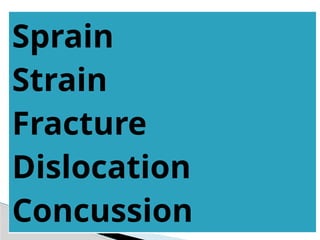
Sprain
Strain
Fracture
Dislocation
Concussion
What are injuries?
Why is my risk at
getting injured
higher now that I
am more active?
Individuals who engage in
various types of physical
activities like sports and
exercise, have a higher risk of
getting injured as compared
to those who practice a
sedentary lifestyle.
Most of the injuries are
preventable and awareness of
the risk factors will help in
reducing the risk. Furthermore,
proper warm-up and training,
vigilance, and safety measures
can dramatically reduce the
occurrence of injuries.
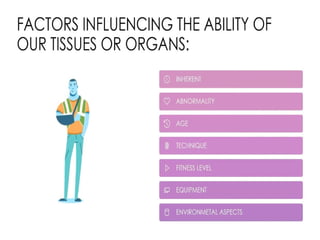
Aside from the knowledge of the
forces that cause injury, it is
important to understand the ability
of the structures to resist or absorb
forces. Injuries in sports and fitness
commonly affect the
musculoskeletal structures. The
ligaments, tendons, muscles, and
bones have inherent strength that
helps withstand strong forces.
The strength properties of
each musculoskeletal
structure vary according to
the density of collagen,
elastin fibers present and the
actual position of the body
structure at the time it was
exposed to these forces.
Jumping and landing on a fully
extended leg can cause injury than
when it is extended and flexed
gradually upon landing thereby
absorbing the impact which could
have caused an injury. Its ability to
withstand sudden or acute forces
also depends on the tissues (i.e., fat)
that soften the impact on the
structure.
In general, injuries including sports
injuries can be classified into two:
acute and chronic/overuse. Acute
injures have signs and symptoms (e.g.,
pain, swelling) that manifest
immediately after force application. On
the other hand, the signs and
symptoms of chronic or overuse
injuries occur after a long period of
exposure to the force.
Sprains, strains, fractures,
dislocations, and wounds are
examples of acute injuries. An
excessive stretching force can
cause the fibers of the
ligament, muscle, or tendon
to break.
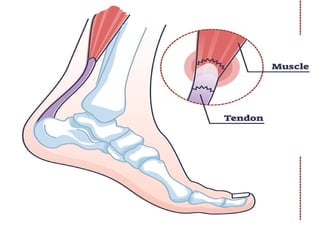
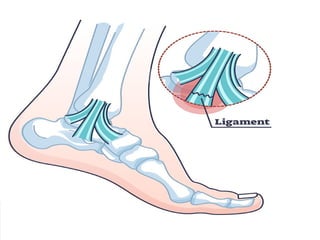
An overstretched ligament is
called a sprain. A strain is also
caused by excessive
stretching that causes tears in
the muscle-tendon unit.
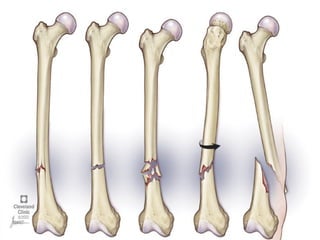
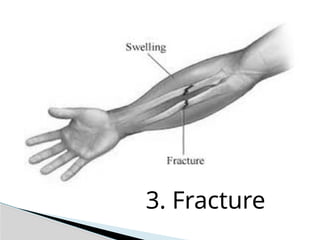
Fractures are breaks in the
continuity of the bone.
It usually occurs as a result of
high impact forces that cause
the bone to bend or twist.
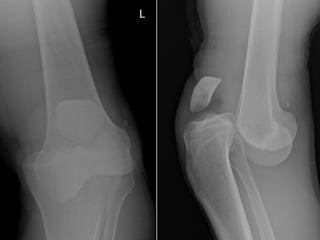
Dislocations are bones that are
pushed out from their joint
capsule. Remember: ligament is
to sprain, muscle-tendon unit is
to strain, fractures and
dislocations is for bones.
COMMON
SPORTS
INJURIES
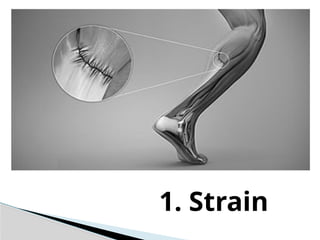
1. Strain
Strains are by far the
most common of all
sports-related injuries
simply because we use
so many muscles and
tendons when we
exercise or play.
These moving parts are
all susceptible to
stretching farther than
they should, or moving
in ways they shouldn’t
move, leaving them
torn, damaged and in
pain.
Common muscle strains
include pulled hamstrings,
pulled groin muscles and
strained quads. Most strains
are minor and heal naturally
with rest. The best way to
reduce the risk of strained
muscles and tendons is to
warm up and stretch before
engaging in strenuous activity.
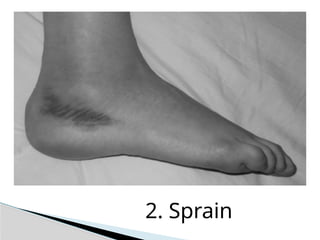
2. Sprain
Sprains are to ligaments
what strains are to
muscles. Ligaments are the
tissues that connect bone
to bone. When these
ligaments turn in a wrong
way, they can pull or tear.
Ankle sprains are
perhaps the most
frequent type of sprain
among athletes,
followed closely by knee
sprains, wrist and elbow
sprains, etc.
Sprains can be painful, take
longer to heal than strains, and
sometimes require
immobilization to protect against
further injury. Pre-workout
stretches and warm-ups can help
deter sprains, as well as
practicing good technique in the
sport you’re playing.
Sprains often leave the
ligament weak and
susceptible to future sprains,
so if you have a history of
spraining a knee or ankle, for
example, it would be good
idea to support that joint with
a brace while playing.
3. Fracture
Impact and contact sports
often lead to fractures of the
bone (mostly arms, legs and
feet), all of which can be
painful, take weeks of
immobilization to heal and
may sometimes require
surgery to correct.
Fractures are an inherent risk
with most strenuous and/or
contact sports, but you can
reduce the risk by wearing
the appropriate padding,
warming up, working out to
keep muscles strong and
flexible, practicing good
technique, etc.
Also, don’t “play through
the pain,” as sometimes
the pain is a sign of a strain
or sprain that left
untreated can make the
bone vulnerable to
fracture.
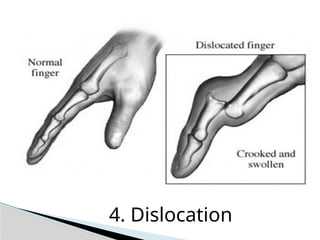
4. Dislocation
“dislocation is an injury in
which the ends of your
bones are forced from their
normal positions. The
cause is usually trauma
resulting from a fall, an
auto accident, or a collision
during contact or high-
speed sports.
Dislocation usually involves
the body's larger joints. In
adults, the most common
site of the injury is the
shoulder. In children, it's
the elbow.
Your thumb and fingers
also are vulnerable if
forcibly bent the wrong
way.The injury will
temporarily deform and
immobilize your joint and
may result in sudden and
severe pain and swelling.
A dislocation requires
prompt medical
attention to return
your bones to their
proper positions”.
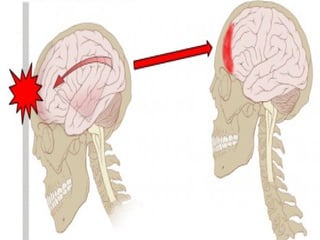
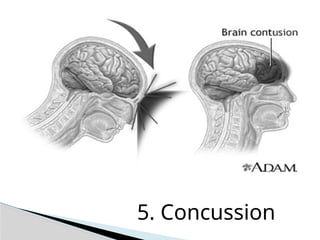
5. Concussion
concussion occurs when a
sudden impact to the head
causes the brain to lurch
inside the skull, sometimes
damaging the tissues
holding it in place.
Concussions may be mild
to severe, with symptoms
ranging from headache
and dizziness to sleepiness
and temporary loss of
consciousness.
Always seek a medical
evaluation from a spine-
and-brain specialist with
any blow to the head, as
sometimes more serious
symptoms may occur after
the fact.
Never continue to play
sports if symptoms of a
concussion exist.
Concussions usually heal
naturally with rest within a
week to several weeks.
The best way to reduce the
risk of concussion is to
wear appropriate
protective headgear when
playing contact sports like
hockey or football, or when
biking or skateboarding,
etc.
presentation1-230312191031-624b1ea2.pptx

presentation1-230312191031-624b1ea2.pptx

  • 1.
    Safety Practices and SportsInjury Management QUARTER 4-WEEKS 1 & 2
  • 2.
    Direction: Choose the bestanswer from the given choices. Write your answers in your activity notebook.
  • 3.
    1. It isa twist, pull or tear of a muscle or tendon – a cord of tissue connecting muscle to bone. It is an acute, non-contact injury that results from overstretching or over-contraction. A. Concussion B. Dislocation C. Fracture D. Strain
  • 4.
    2. It isa stretch or tear of a ligament, the band of connective tissues that joins the end of one bone with another. A. Concussion B.Dislocation C. Fracture D.Sprain
  • 5.
    3. When twobones that come together to form a joint become separated. A. Concussion B.Dislocation C. Fracture D. Sprain
  • 6.
    4. A breakin the bone that can occur from after a quick, one-time injury to the bone or from repeated stress to the bone over time. A. Concussion B. Dislocation C. Fracture D. Sprain
  • 7.
    5. It isa life-threatening injury because they disrupt the normal function of the brain. A. Concussion B.Dislocation C. Fracture D. Sprain
  • 8.
    6. Which ofthe following is NOT classified as chronic injuries? A. Bursitis B. Osteoarthritis C. Sprain D. Stress Fracture
  • 9.
    7. Which ofthe following is classified as acute injuries? A. Bursitis B. Osteoarthritis C. Sprain D. Strain
  • 10.
    8. It refersto damaged tissues or organs which occur when it encounters trauma or physical force that is greater than what it can resist or absorb. Acute Injuries B. Chronic injuries C.Concussion D. Injuries
  • 11.
    9. In theacronym PRICED, what does P stand for? A. Perform B. Place C. Precise D. Protection
  • 12.
    10.In the acronymHARM, what does H stand for? A. Hands B. Heat C. Help D. Hot
  • 13.
    Task 1: NameThem! Directions: Identify the type of injury shown in the pictures below. Choose the correct answer among the choices inside the box.
  • 14.
  • 20.
    What are injuries? Whyis my risk at getting injured higher now that I am more active?
  • 21.
    Individuals who engagein various types of physical activities like sports and exercise, have a higher risk of getting injured as compared to those who practice a sedentary lifestyle.
  • 22.
    Most of theinjuries are preventable and awareness of the risk factors will help in reducing the risk. Furthermore, proper warm-up and training, vigilance, and safety measures can dramatically reduce the occurrence of injuries.
  • 27.
    Aside from theknowledge of the forces that cause injury, it is important to understand the ability of the structures to resist or absorb forces. Injuries in sports and fitness commonly affect the musculoskeletal structures. The ligaments, tendons, muscles, and bones have inherent strength that helps withstand strong forces.
  • 28.
    The strength propertiesof each musculoskeletal structure vary according to the density of collagen, elastin fibers present and the actual position of the body structure at the time it was exposed to these forces.
  • 29.
    Jumping and landingon a fully extended leg can cause injury than when it is extended and flexed gradually upon landing thereby absorbing the impact which could have caused an injury. Its ability to withstand sudden or acute forces also depends on the tissues (i.e., fat) that soften the impact on the structure.
  • 30.
    In general, injuriesincluding sports injuries can be classified into two: acute and chronic/overuse. Acute injures have signs and symptoms (e.g., pain, swelling) that manifest immediately after force application. On the other hand, the signs and symptoms of chronic or overuse injuries occur after a long period of exposure to the force.
  • 31.
    Sprains, strains, fractures, dislocations,and wounds are examples of acute injuries. An excessive stretching force can cause the fibers of the ligament, muscle, or tendon to break.
  • 32.
    An overstretched ligamentis called a sprain. A strain is also caused by excessive stretching that causes tears in the muscle-tendon unit. Fractures are breaks in the continuity of the bone.
  • 33.
    It usually occursas a result of high impact forces that cause the bone to bend or twist. Dislocations are bones that are pushed out from their joint capsule. Remember: ligament is to sprain, muscle-tendon unit is to strain, fractures and dislocations is for bones.
  • 34.
  • 35.
  • 36.
    Strains are byfar the most common of all sports-related injuries simply because we use so many muscles and tendons when we exercise or play.
  • 37.
    These moving partsare all susceptible to stretching farther than they should, or moving in ways they shouldn’t move, leaving them torn, damaged and in pain.
  • 38.
    Common muscle strains includepulled hamstrings, pulled groin muscles and strained quads. Most strains are minor and heal naturally with rest. The best way to reduce the risk of strained muscles and tendons is to warm up and stretch before engaging in strenuous activity.
  • 39.
  • 40.
    Sprains are toligaments what strains are to muscles. Ligaments are the tissues that connect bone to bone. When these ligaments turn in a wrong way, they can pull or tear.
  • 41.
    Ankle sprains are perhapsthe most frequent type of sprain among athletes, followed closely by knee sprains, wrist and elbow sprains, etc.
  • 42.
    Sprains can bepainful, take longer to heal than strains, and sometimes require immobilization to protect against further injury. Pre-workout stretches and warm-ups can help deter sprains, as well as practicing good technique in the sport you’re playing.
  • 43.
    Sprains often leavethe ligament weak and susceptible to future sprains, so if you have a history of spraining a knee or ankle, for example, it would be good idea to support that joint with a brace while playing.
  • 44.
  • 45.
    Impact and contactsports often lead to fractures of the bone (mostly arms, legs and feet), all of which can be painful, take weeks of immobilization to heal and may sometimes require surgery to correct.
  • 46.
    Fractures are aninherent risk with most strenuous and/or contact sports, but you can reduce the risk by wearing the appropriate padding, warming up, working out to keep muscles strong and flexible, practicing good technique, etc.
  • 47.
    Also, don’t “playthrough the pain,” as sometimes the pain is a sign of a strain or sprain that left untreated can make the bone vulnerable to fracture.
  • 48.
  • 49.
    “dislocation is aninjury in which the ends of your bones are forced from their normal positions. The cause is usually trauma resulting from a fall, an auto accident, or a collision during contact or high- speed sports.
  • 50.
    Dislocation usually involves thebody's larger joints. In adults, the most common site of the injury is the shoulder. In children, it's the elbow.
  • 51.
    Your thumb andfingers also are vulnerable if forcibly bent the wrong way.The injury will temporarily deform and immobilize your joint and may result in sudden and severe pain and swelling.
  • 52.
    A dislocation requires promptmedical attention to return your bones to their proper positions”.
  • 53.
  • 54.
    concussion occurs whena sudden impact to the head causes the brain to lurch inside the skull, sometimes damaging the tissues holding it in place.
  • 55.
    Concussions may bemild to severe, with symptoms ranging from headache and dizziness to sleepiness and temporary loss of consciousness.
  • 56.
    Always seek amedical evaluation from a spine- and-brain specialist with any blow to the head, as sometimes more serious symptoms may occur after the fact.
  • 57.
    Never continue toplay sports if symptoms of a concussion exist. Concussions usually heal naturally with rest within a week to several weeks.
  • 58.
    The best wayto reduce the risk of concussion is to wear appropriate protective headgear when playing contact sports like hockey or football, or when biking or skateboarding, etc.

Editor's Notes

  • #1 According to Luig and Henke (2012), injury prevention in sports has a great benefit for individuals. Engaging in sports and physical activities gives a better health to individuals and enhances sports performance while enhancing sustainability of active lifestyles in populations and likewise reducing the costs of the health care system and of employers.
  • #15 CONCUSSION
  • #16 STRAIN
  • #17 SPRAIN
  • #18 FRACTURE
  • #19 DISLOCATION
  • #21 The more engaging the sport or the more rigorous the exercise is, the higher is the risk for injuries. However, the potential benefits of physical activities outweigh the risks of suffering an injury.