SPLANCHNIC CIRCULATION


                                 •Definition
                                 •Blood flow amount
                                 •Characteristics
                                 •Regulation
                                 •Factors affecting it


      Year 3 Medicine, UST Sana‘a, Spring 2010
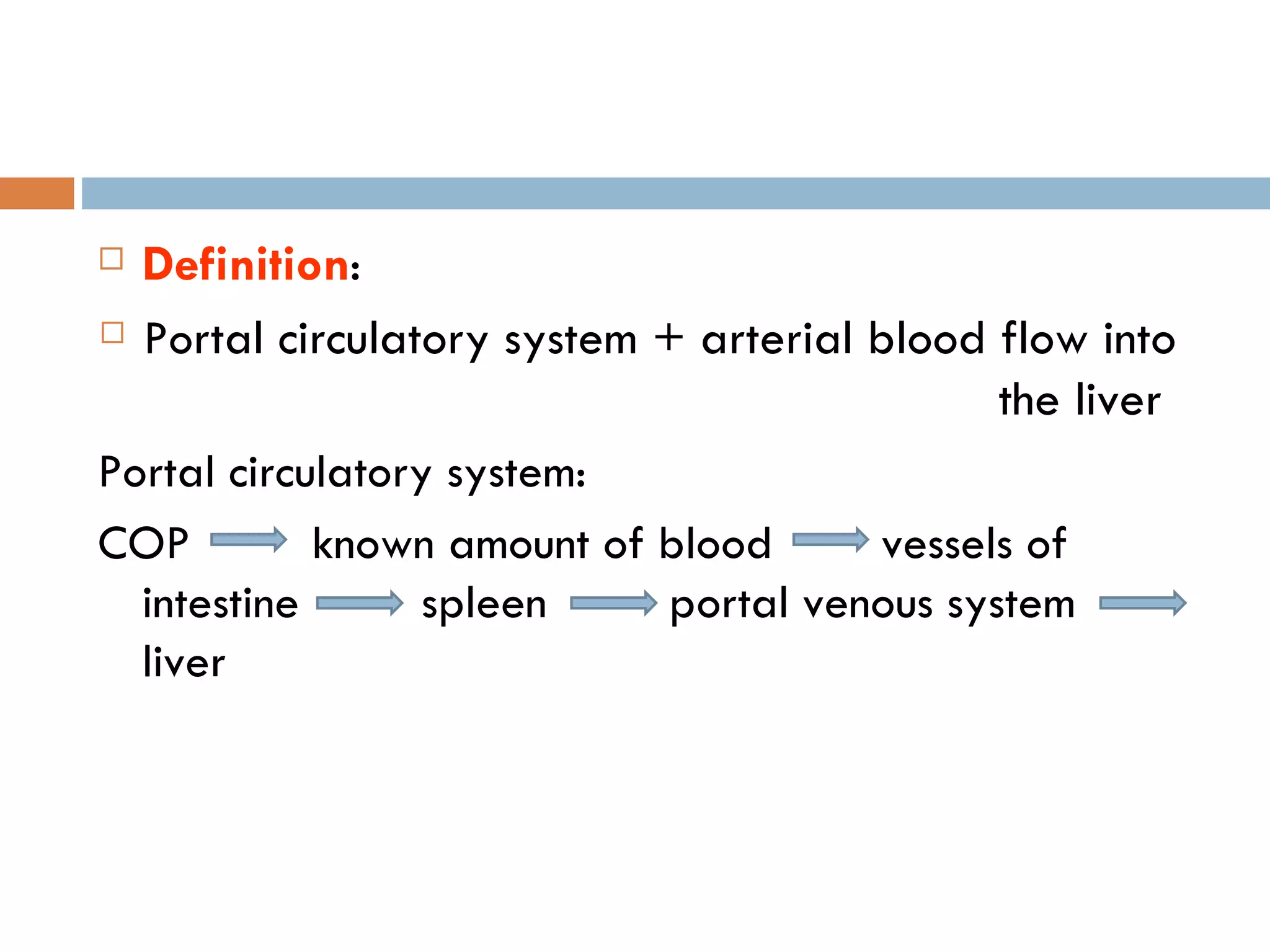
 Definition:
 Portal circulatory system + arterial blood flow into

                                             the liver
Portal circulatory system:
COP         known amount of blood      vessels of
  intestine       spleen    portal venous system
  liver
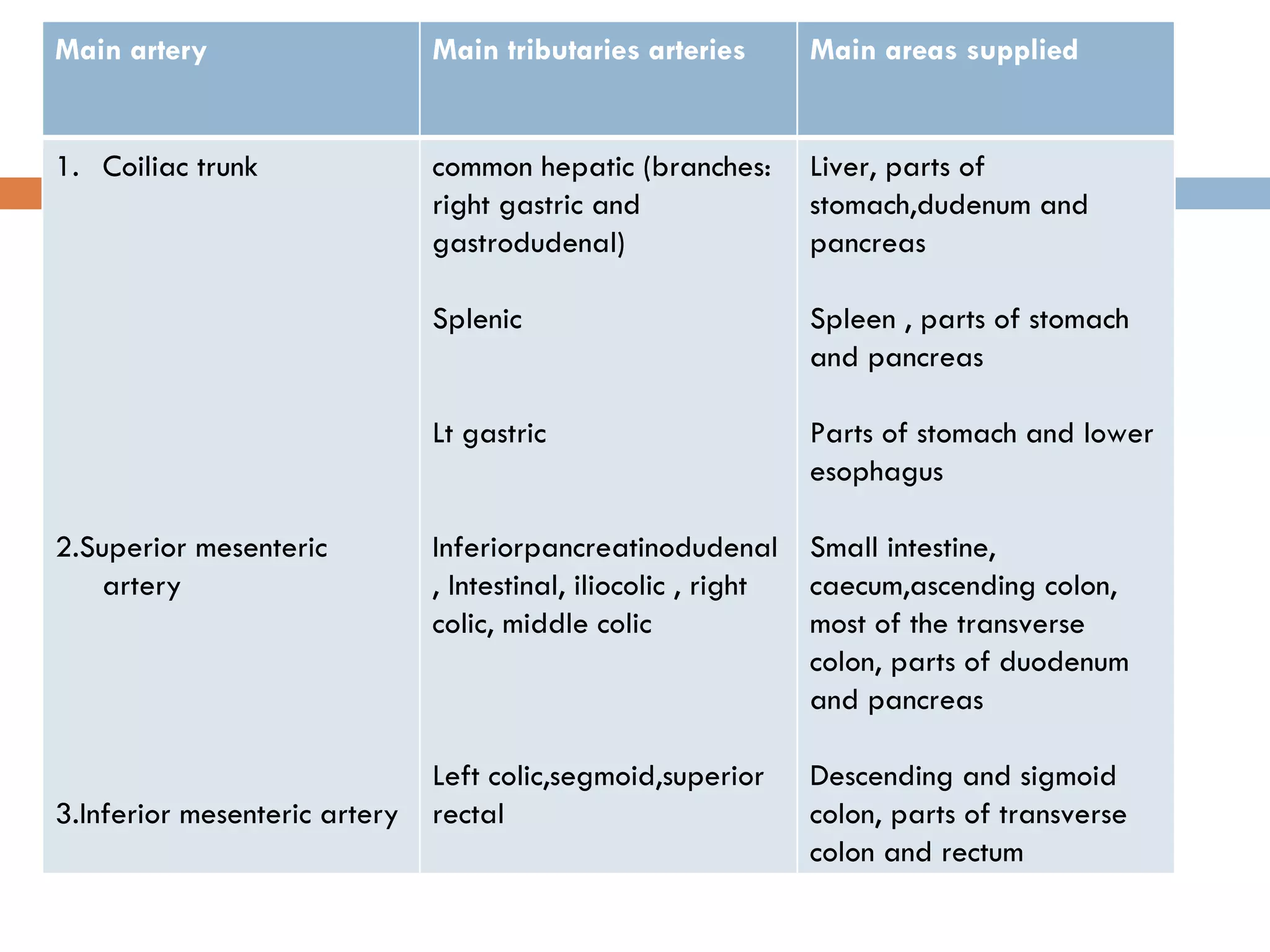
Main artery                    Main tributaries arteries     Main areas supplied


1. Coiliac trunk               common hepatic (branches:     Liver, parts of
                               right gastric and             stomach,dudenum and
                               gastrodudenal)                pancreas

                               Splenic                       Spleen , parts of stomach
                                                             and pancreas

                               Lt gastric                    Parts of stomach and lower
                                                             esophagus

2.Superior mesenteric          Inferiorpancreatinodudenal Small intestine,
    artery                     , Intestinal, iliocolic , right caecum,ascending colon,
                               colic, middle colic             most of the transverse
                                                               colon, parts of duodenum
                                                               and pancreas

                               Left colic,segmoid,superior   Descending and sigmoid
3.Inferior mesenteric artery   rectal                        colon, parts of transverse
                                                             colon and rectum
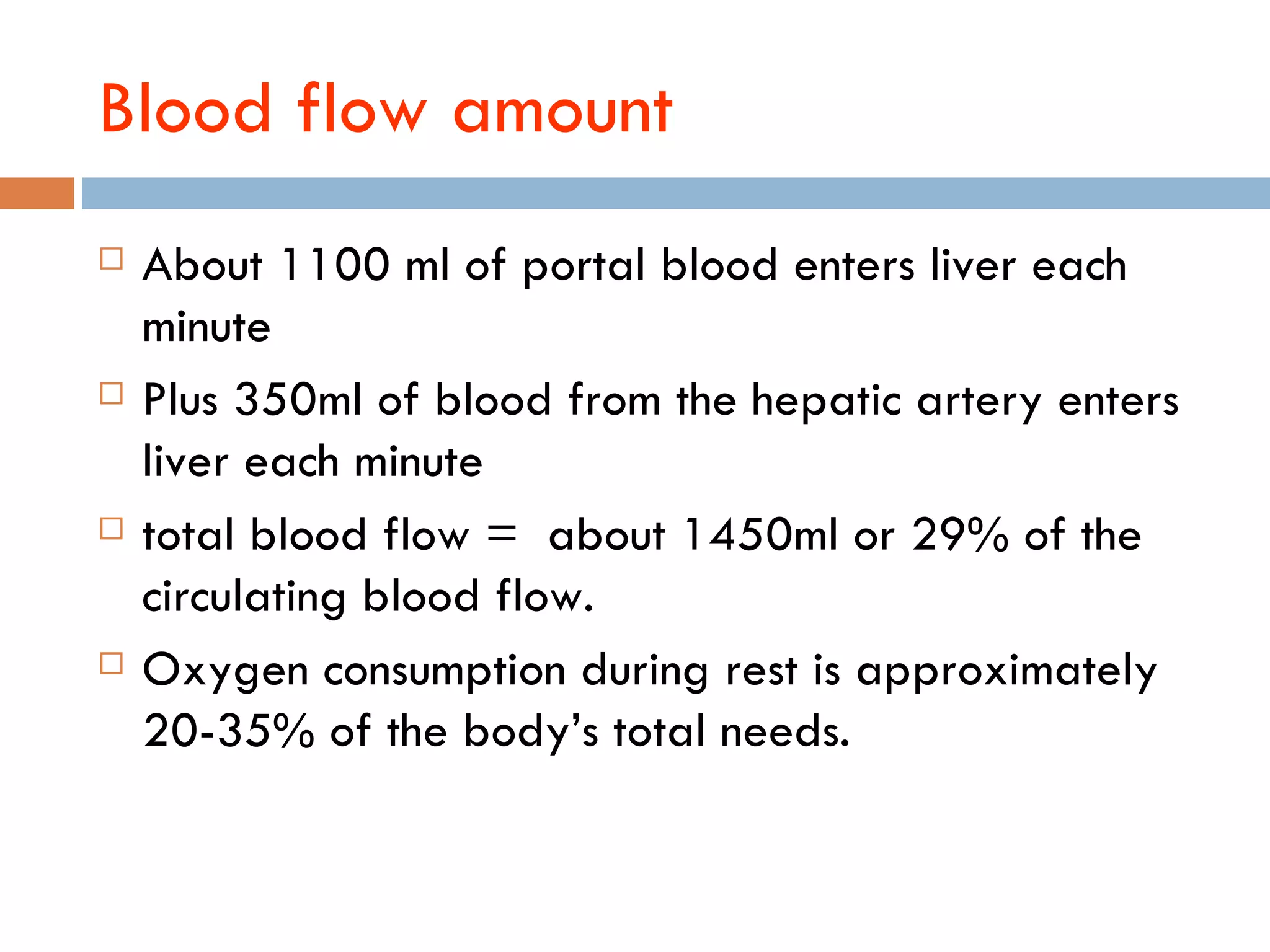
Blood flow amount
   About 1100 ml of portal blood enters liver each
    minute
   Plus 350ml of blood from the hepatic artery enters
    liver each minute
   total blood flow = about 1450ml or 29% of the
    circulating blood flow.
   Oxygen consumption during rest is approximately
    20-35% of the body‘s total needs.
   Characteristics:
   The splanchnic blood flow participates in the
    regulation of circulating blood volume as well as
    the systemic blood pressure.
   In case of acute hypovolaemia, such as in case of
    hemorrhage, the splanchnic circulation becomes
    markedly reduced to be able to supply more vital
    or essential organs such as the brain and heart.
   The splanchnic circulation is also an important source
    of inflammatory mediators.
   Characteristics continued:
   The blood flow to the mucosa is greater than that to
    the rest of the intestinal wall and it responds to
    changes in the metabolic activity (such as after
    meal, the blood flow doubles in the intestine and
    lasts up to 3 hours)
Types of regulations
   Regulation:
   1)intrinsic regulation
   2)extrinsic regulation
:Regulation

    1)intrinsic regulation
2.   Local metabolic control & myogenic control
3.   Local reflexes
4.   Locally produced vasoactive substances
    2)extrinsic regulation
6.   Sympathetic innervations
7.   Circulatory vasoactive substances
8.   Systemic hemodynamic changes
Intrinsic regulation(1
   Local metabolic control: responds by local
    vasodilators eg. oxygen and cellular
    metabolism
   Myogenic control: a response caused by an
    increase in the vascular transmural pressure by
    arterial vasoconscriction
   These two are important for maintaining adequate
    blood flow for metabolic needs
Intrinsic regulation cont‘d
    Local reflexes: occurs as a response of the
     presence of luminal contents
     Locally produced vasoactive substances
3)    gastrin
4)    secretin
5)    cholecystokenin
Extrinsic regulation(2

t  Sympathetic nervous activity: this dec. blood flow
   by increasing the vascular resistance of the
   arteries and arterioles.
e  Circulatory vasoactive substances eg:
   catecholamine
Alpha adrenoreceptors results in vc
Beta adrenoreseptors results in vd
Adrenaline is predomenantly active on alpha
   receptors thus vascular resistance in the intestine.
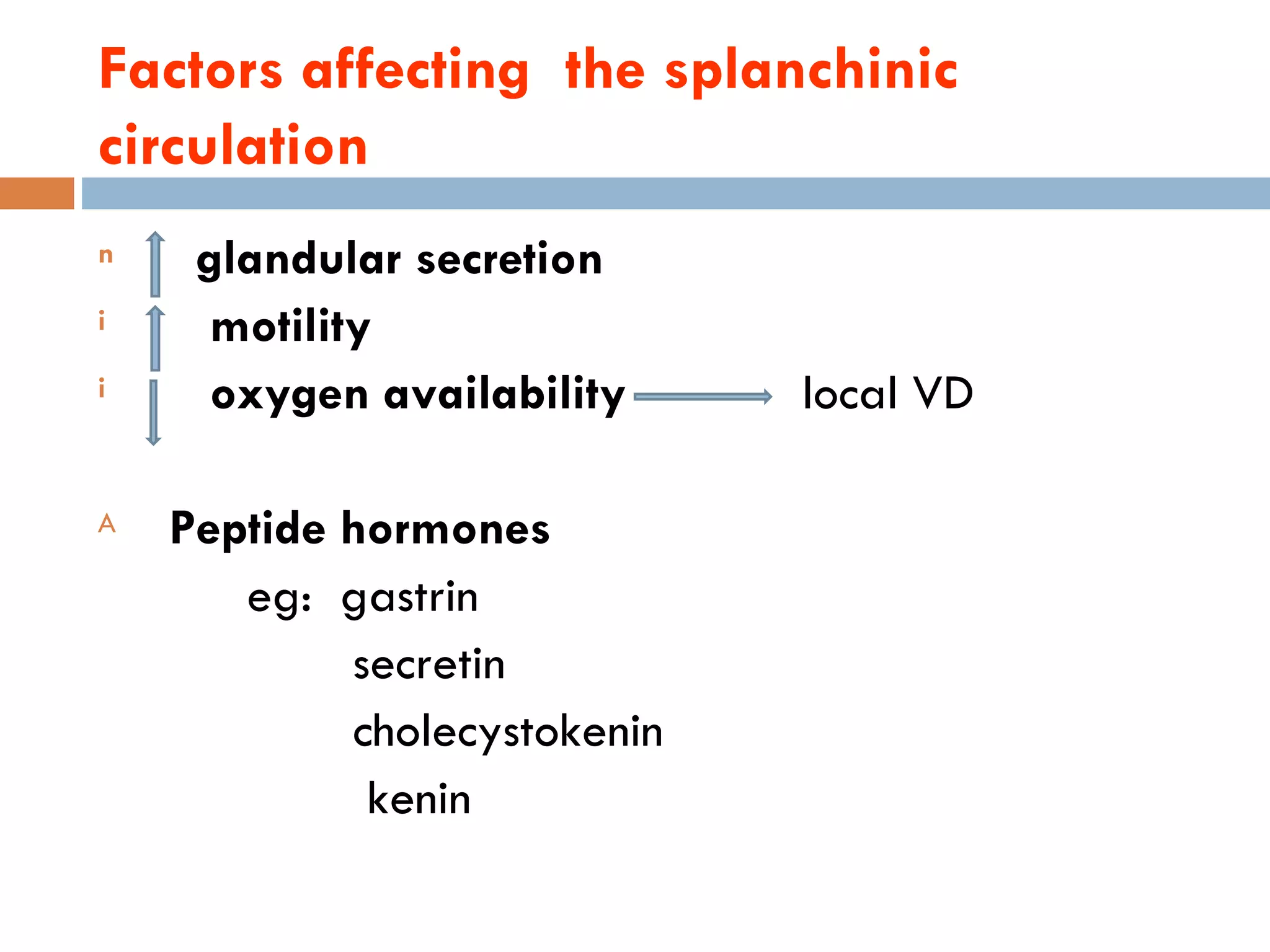
Factors affecting the splanchinic
circulation
n    glandular secretion
i     motility
i     oxygen availability     local VD

A   Peptide hormones
       eg: gastrin
            secretin
            cholecystokenin
             kenin
Factors affecting cont‘d
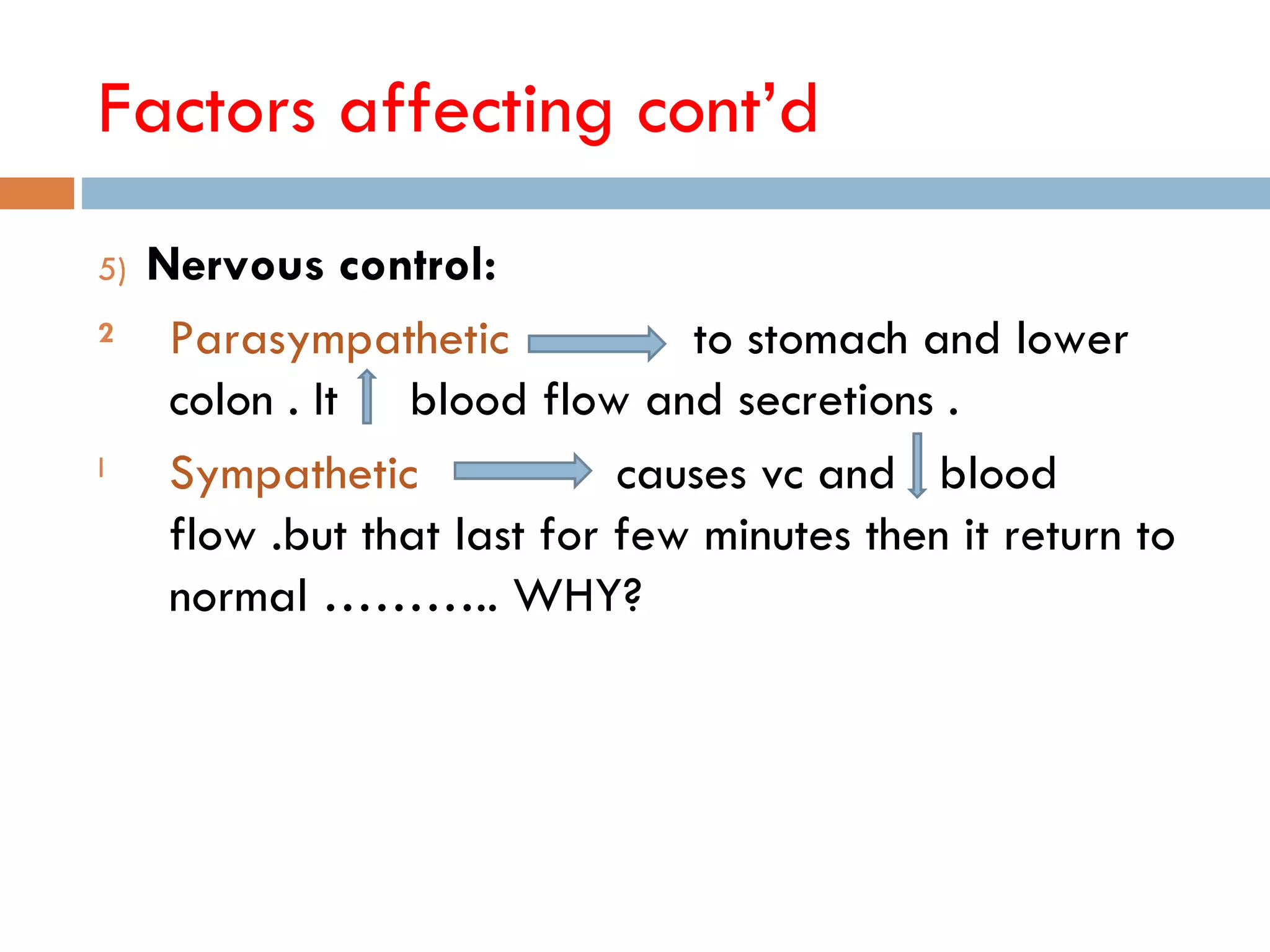
5)   Nervous control:
2     Parasympathetic            to stomach and lower
      colon . It blood flow and secretions .
l     Sympathetic             causes vc and blood
      flow .but that last for few minutes then it return to
      normal ……….. WHY?
Factors affecting cont‘d
   This is because of a mechanism known as Auto
    regulatory escape ……… local vasodilators
    mechanisms elicited by ischemia- hence the activity
    of the vasodilator metabolites ……..returns blood
    flow to the GIT and muscles.
Importance of sympathetic
:vasoconstriction
1.   Shutting off splanchenic circulation during exercise
     when inc, blood flow is needed by the skeletal
     muscle
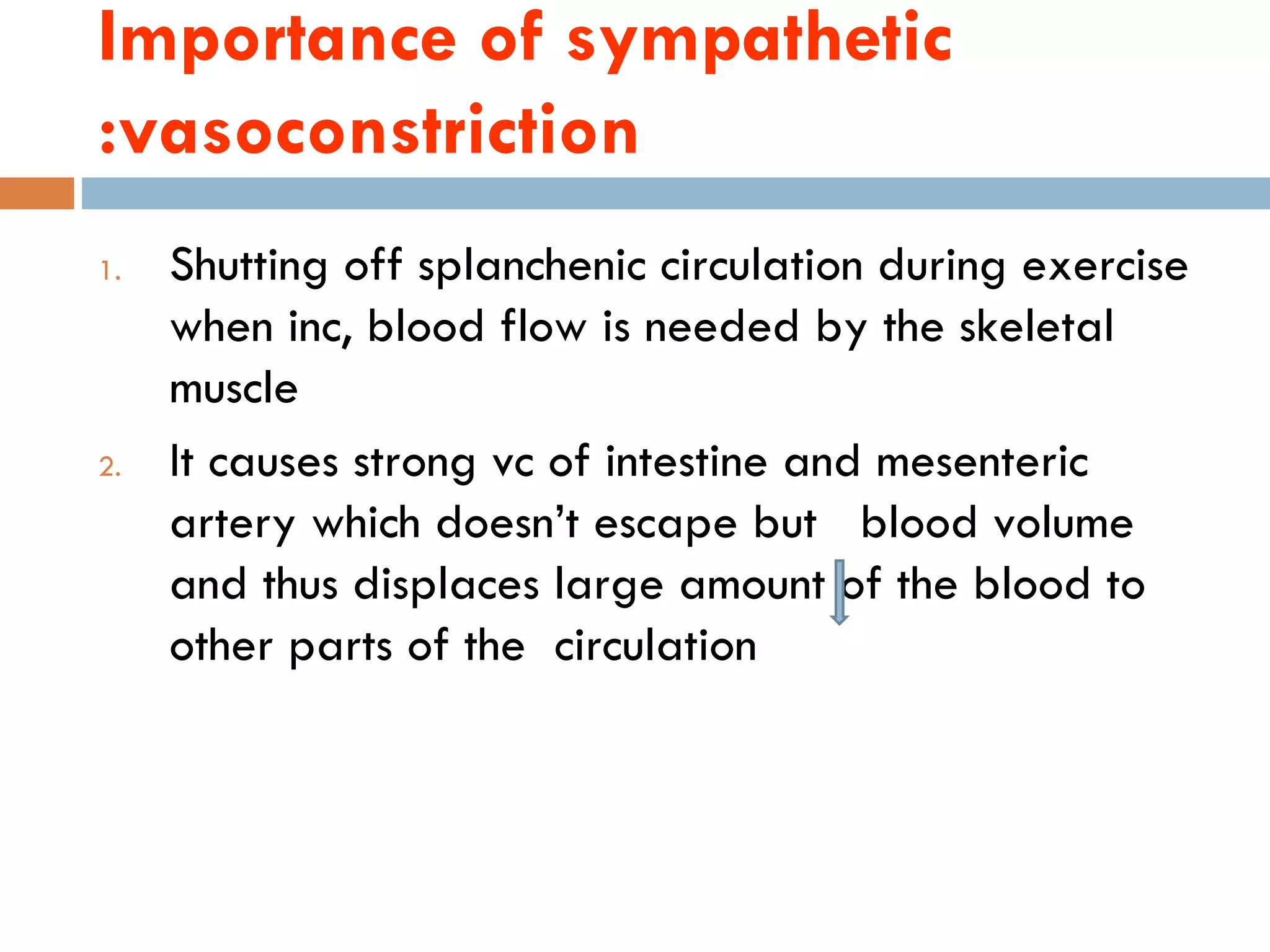
2.   It causes strong vc of intestine and mesenteric
     artery which doesn‘t escape but blood volume
     and thus displaces large amount of the blood to
     other parts of the circulation
Thank you

Splanchnic circulation

  • 1.
    SPLANCHNIC CIRCULATION •Definition •Blood flow amount •Characteristics •Regulation •Factors affecting it Year 3 Medicine, UST Sana‘a, Spring 2010
  • 2.
     Definition:  Portalcirculatory system + arterial blood flow into the liver Portal circulatory system: COP known amount of blood vessels of intestine spleen portal venous system liver
  • 3.
    Main artery Main tributaries arteries Main areas supplied 1. Coiliac trunk common hepatic (branches: Liver, parts of right gastric and stomach,dudenum and gastrodudenal) pancreas Splenic Spleen , parts of stomach and pancreas Lt gastric Parts of stomach and lower esophagus 2.Superior mesenteric Inferiorpancreatinodudenal Small intestine, artery , Intestinal, iliocolic , right caecum,ascending colon, colic, middle colic most of the transverse colon, parts of duodenum and pancreas Left colic,segmoid,superior Descending and sigmoid 3.Inferior mesenteric artery rectal colon, parts of transverse colon and rectum
  • 4.
    Blood flow amount  About 1100 ml of portal blood enters liver each minute  Plus 350ml of blood from the hepatic artery enters liver each minute  total blood flow = about 1450ml or 29% of the circulating blood flow.  Oxygen consumption during rest is approximately 20-35% of the body‘s total needs.
  • 5.
    Characteristics:  The splanchnic blood flow participates in the regulation of circulating blood volume as well as the systemic blood pressure.  In case of acute hypovolaemia, such as in case of hemorrhage, the splanchnic circulation becomes markedly reduced to be able to supply more vital or essential organs such as the brain and heart.  The splanchnic circulation is also an important source of inflammatory mediators.
  • 6.
    Characteristics continued:  The blood flow to the mucosa is greater than that to the rest of the intestinal wall and it responds to changes in the metabolic activity (such as after meal, the blood flow doubles in the intestine and lasts up to 3 hours)
  • 7.
    Types of regulations  Regulation:  1)intrinsic regulation  2)extrinsic regulation
  • 8.
    :Regulation  1)intrinsic regulation 2. Local metabolic control & myogenic control 3. Local reflexes 4. Locally produced vasoactive substances  2)extrinsic regulation 6. Sympathetic innervations 7. Circulatory vasoactive substances 8. Systemic hemodynamic changes
  • 9.
    Intrinsic regulation(1  Local metabolic control: responds by local vasodilators eg. oxygen and cellular metabolism  Myogenic control: a response caused by an increase in the vascular transmural pressure by arterial vasoconscriction  These two are important for maintaining adequate blood flow for metabolic needs
  • 10.
    Intrinsic regulation cont‘d  Local reflexes: occurs as a response of the presence of luminal contents  Locally produced vasoactive substances 3) gastrin 4) secretin 5) cholecystokenin
  • 11.
    Extrinsic regulation(2 t Sympathetic nervous activity: this dec. blood flow by increasing the vascular resistance of the arteries and arterioles. e Circulatory vasoactive substances eg: catecholamine Alpha adrenoreceptors results in vc Beta adrenoreseptors results in vd Adrenaline is predomenantly active on alpha receptors thus vascular resistance in the intestine.
  • 12.
    Factors affecting thesplanchinic circulation n glandular secretion i motility i oxygen availability local VD A Peptide hormones eg: gastrin secretin cholecystokenin kenin
  • 13.
    Factors affecting cont‘d 5) Nervous control: 2 Parasympathetic to stomach and lower colon . It blood flow and secretions . l Sympathetic causes vc and blood flow .but that last for few minutes then it return to normal ……….. WHY?
  • 14.
    Factors affecting cont‘d  This is because of a mechanism known as Auto regulatory escape ……… local vasodilators mechanisms elicited by ischemia- hence the activity of the vasodilator metabolites ……..returns blood flow to the GIT and muscles.
  • 15.
    Importance of sympathetic :vasoconstriction 1. Shutting off splanchenic circulation during exercise when inc, blood flow is needed by the skeletal muscle 2. It causes strong vc of intestine and mesenteric artery which doesn‘t escape but blood volume and thus displaces large amount of the blood to other parts of the circulation
  • 16.