Download to read offline
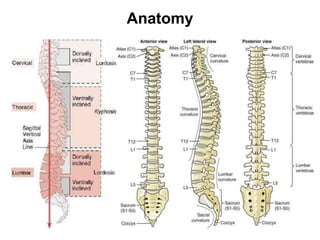
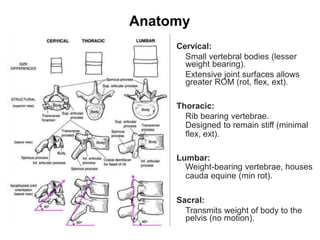
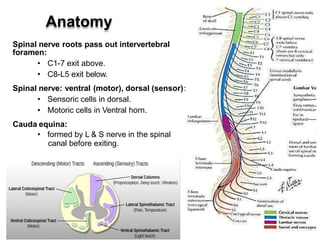
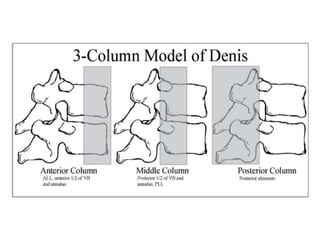
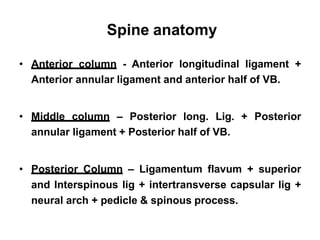
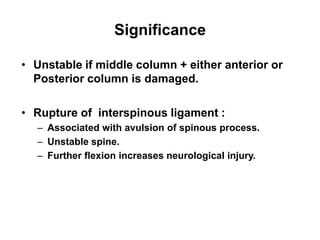
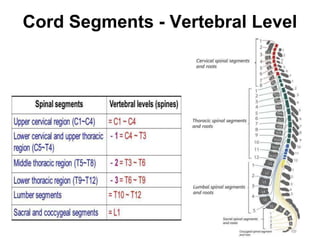
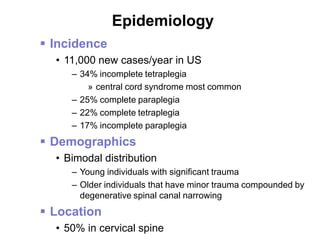
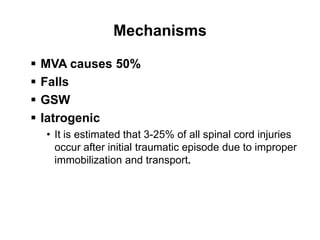
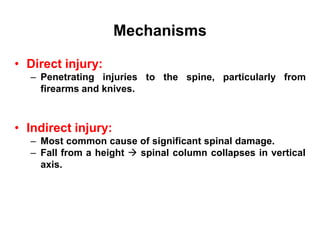
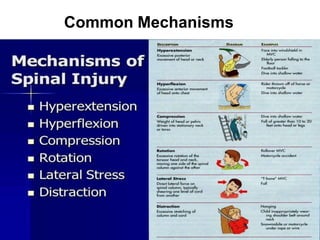
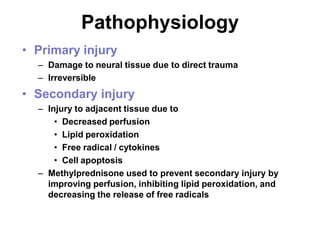
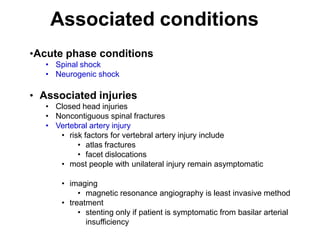
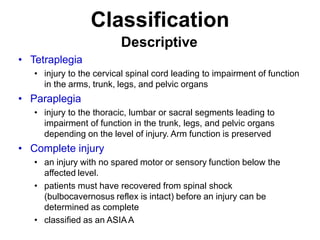
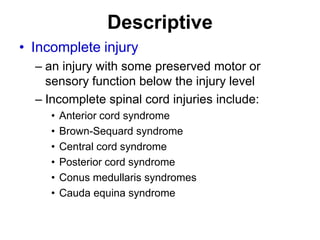
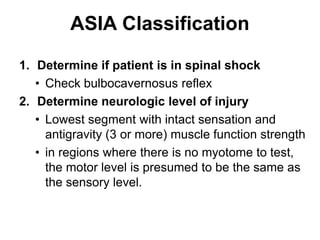
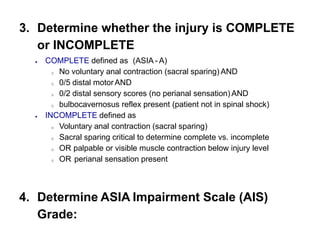
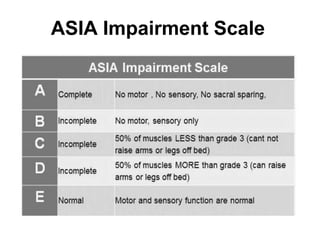
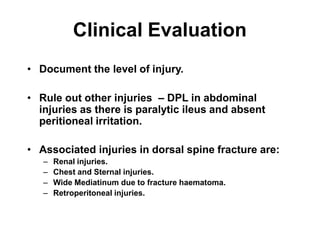
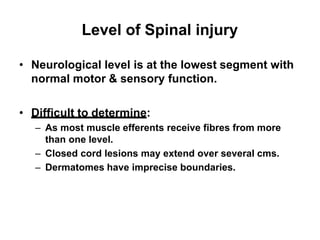
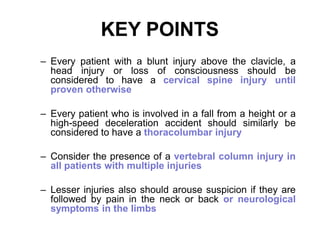
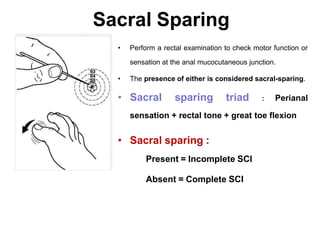
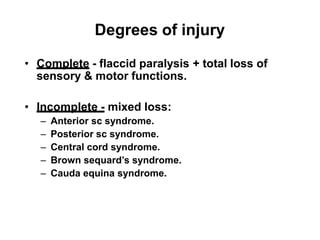
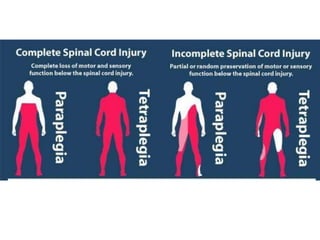
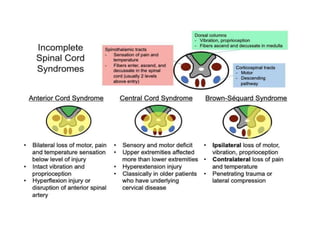
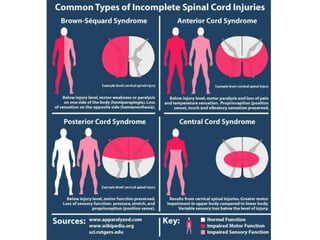
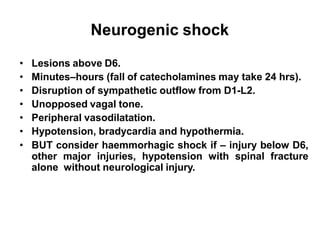
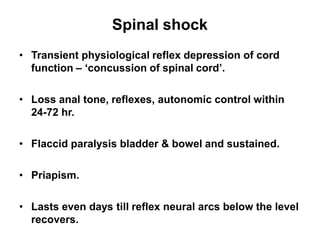
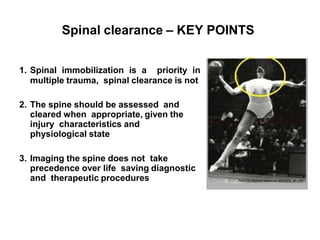
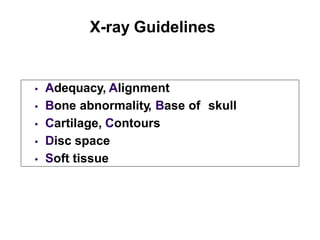
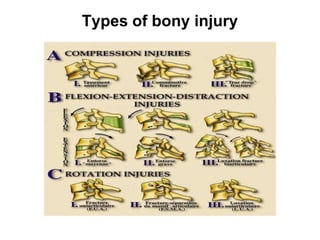
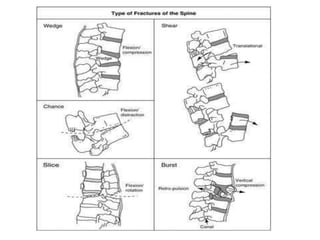
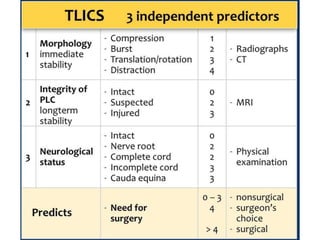
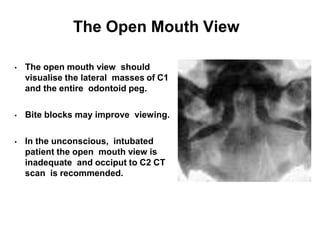
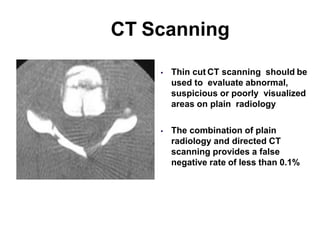


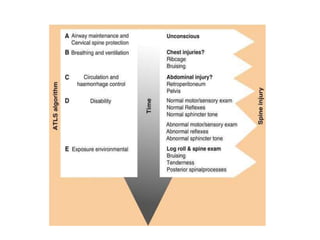

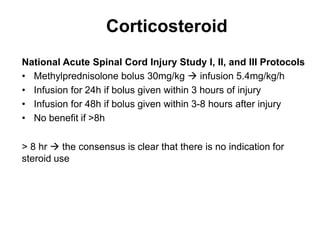
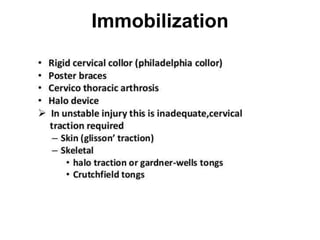
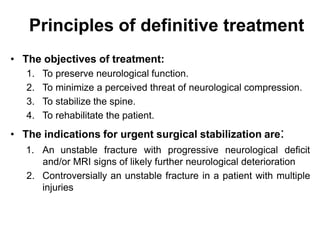
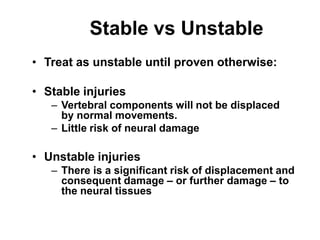


This document discusses spinal anatomy, trauma, and injury. It covers the epidemiology, mechanisms, classifications, diagnosis, and management of spinal cord injuries. Some key points include: - The cervical spine has greater range of motion while the thoracic and lumbar vertebrae are more rigid. - Spinal cord injuries can be complete or incomplete. Complete injuries have no motor or sensory function below the level of injury while incomplete injuries have some spared function. - Common mechanisms of injury are motor vehicle accidents, falls, and sports/recreation injuries. Indirect injuries from compression are most likely to cause significant damage. - Imaging like CT and MRI are important for diagnosis but patient stabilization takes priority over imaging in trauma situations


![APPROACH TO FEVER IN PEDIATRICS[1].pptTT](https://cdn.slidesharecdn.com/ss_thumbnails/approachtofeverinpediatrics1-260125081456-d559e079-thumbnail.jpg?width=640&height=640&fit=bounds)


