Real speech Community-all people who
use a given language or dialects
(Jhon Layons ).


“The linguistic behavior of individuals cannot
be understood without knowledge of the
communities they belong to.” - Labov
Definitions

Group- a number of people or things that are
considered or classed together.
- A number of people who are connected by
some shared activity, interest or quality.
- Merriam Webster
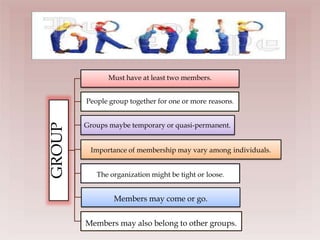
Must have at least two members.
People group together for one or more reasons.
Groups maybe temporary or quasi-permanent.
Importance of membership may vary among individuals.
The organization might be tight or loose.
Members may come or go.
Members may also belong to other groups.
GROUP

SPEECH
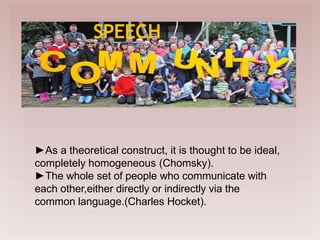
►As a theoretical construct, it is thought to be ideal,
completely homogeneous (Chomsky).
►The whole set of people who communicate with
each other,either directly or indirectly via the
common language.(Charles Hocket).

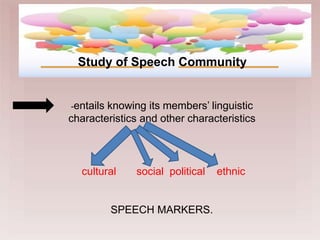
Study of Speech Community
-entails knowing its members’ linguistic
characteristics and other characteristics
cultural social political ethnic
SPEECH MARKERS.

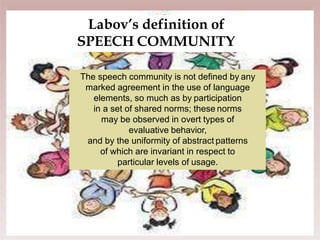
Labov’s definition of
SPEECH COMMUNITY
The speech community is not defined by any
marked agreement in the use of language
elements, so much as by participation
in a set of shared norms; these norms
may be observed in overt types of
evaluative behavior,
and by the uniformity of abstract patterns
of which are invariant in respect to
particular levels of usage.
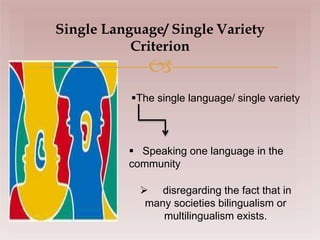
Single Language/ Single Variety
Criterion

The single language/ single variety
 Speaking one language in the
community
 disregarding the fact that in
many societies bilingualism or
multilingualism exists.
Linguistic
A social group which may be either monolingual
or multilingual, held together by frequency of
social interaction patterns and set off the
surrounding areas by weaknesses in the lines of
communication. Linguistic communities may
consist of small groups bound together by
face-to-face contact or may cover large regions.
- Gumperz

Other definitions of
Speech Community
►
►
► A speech community is a group of people who interact by
means of speech. Agroup or community should be defined
not only by what it is but also what is not. - Bloomfield
Any human aggregate characterized by regular and frequent
interaction by means of a shared body of verbal signs and
set off from similar aggregates by significant differences in language
usage. – Gumperz
A local unit characterized for its members by commonlocality
and primary interaction. – Reaffirmed by Hymes

 Hymes points out that speech
communities cannot be defined solely
through the use of linguistic criteria.The way
in which the people view the language they
speak is also important. The rules of using
languag may be as important as feelings
about the language itself.
 Morgan-
 “ For any speech community, the concept reflects
what people do and know when they interact with
one another. It assumes that when people come
together through discursive practices, they behave
as though they operate within a shared set of
norms, local knowledge, beliefs, and values.”
Speech


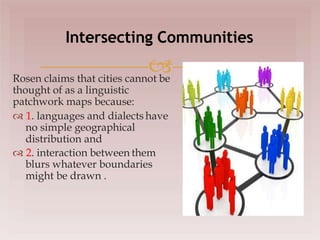
Rosen claims that cities cannot be
thought of as a linguistic
patchwork maps because:
 1. languages and dialects have
no simple geographical
distribution and
 2. interaction between them
blurs whatever boundaries
might be drawn .
Intersecting Communities

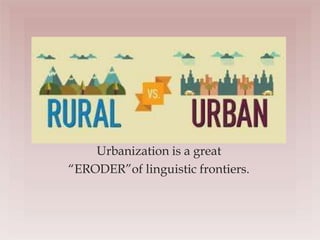
Urbanization is a great
“ERODER”of linguistic frontiers.
Bolinger
There is no limit to the ways in which human
beings league themselves together for self-
identification, security, gain, amusement, worship,
or any other purposes that are held in common.
‘’ Real Communities’’ Concept
1. Mismatch between subjective and objective
reality
• Communities exist only to the extent that we
are aware of them.

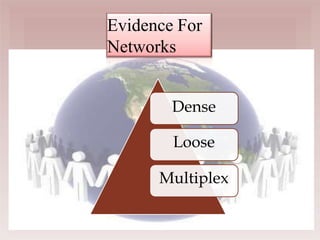
Dense
Loose
Multiplex
Evidence For
Networks
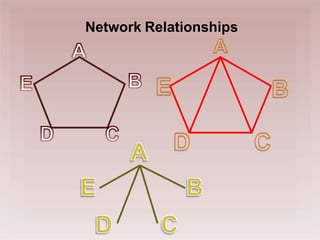
Network Relationships
Speech Repertoire
Members of community are
linguistically the same in some
sense.
 people do not even know
linguistic details of people who
live in the same city; what
about others hundered miles
away.
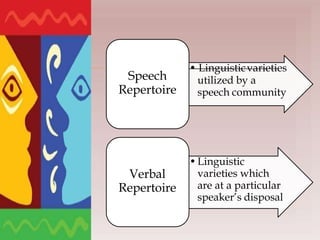
 • Linguisticvarieties
utilized by a
speech community
Speech
Repertoire
•Linguistic
varieties which
are at a particular
speaker’s disposal
Verbal
Repertoire
-Small Size of the most
important communities
The most important linguistically influence
communities are of small size
Such as: at home,at school,at work….
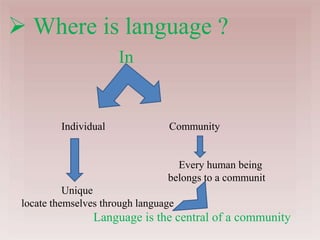
 Where is language ?
In
Individual Community
Every human being
belongs to a communit
Unique
locate themselves through language
Language is the central of a community

Speech Communities.pptx

  • 2.
    Real speech Community-allpeople who use a given language or dialects (Jhon Layons ). 
  • 3.
     “The linguistic behaviorof individuals cannot be understood without knowledge of the communities they belong to.” - Labov
  • 4.
    Definitions  Group- a numberof people or things that are considered or classed together. - A number of people who are connected by some shared activity, interest or quality. - Merriam Webster
  • 5.
    Must have atleast two members. People group together for one or more reasons. Groups maybe temporary or quasi-permanent. Importance of membership may vary among individuals. The organization might be tight or loose. Members may come or go. Members may also belong to other groups. GROUP
  • 6.
     SPEECH ►As a theoreticalconstruct, it is thought to be ideal, completely homogeneous (Chomsky). ►The whole set of people who communicate with each other,either directly or indirectly via the common language.(Charles Hocket).
  • 7.
     Study of SpeechCommunity -entails knowing its members’ linguistic characteristics and other characteristics cultural social political ethnic SPEECH MARKERS.
  • 8.
     Labov’s definition of SPEECHCOMMUNITY The speech community is not defined by any marked agreement in the use of language elements, so much as by participation in a set of shared norms; these norms may be observed in overt types of evaluative behavior, and by the uniformity of abstract patterns of which are invariant in respect to particular levels of usage.
  • 9.
    Single Language/ SingleVariety Criterion  The single language/ single variety  Speaking one language in the community  disregarding the fact that in many societies bilingualism or multilingualism exists.
  • 10.
    Linguistic A social groupwhich may be either monolingual or multilingual, held together by frequency of social interaction patterns and set off the surrounding areas by weaknesses in the lines of communication. Linguistic communities may consist of small groups bound together by face-to-face contact or may cover large regions. - Gumperz
  • 11.
     Other definitions of SpeechCommunity ► ► ► A speech community is a group of people who interact by means of speech. Agroup or community should be defined not only by what it is but also what is not. - Bloomfield Any human aggregate characterized by regular and frequent interaction by means of a shared body of verbal signs and set off from similar aggregates by significant differences in language usage. – Gumperz A local unit characterized for its members by commonlocality and primary interaction. – Reaffirmed by Hymes
  • 12.
      Hymes pointsout that speech communities cannot be defined solely through the use of linguistic criteria.The way in which the people view the language they speak is also important. The rules of using languag may be as important as feelings about the language itself.
  • 13.
     Morgan-  “For any speech community, the concept reflects what people do and know when they interact with one another. It assumes that when people come together through discursive practices, they behave as though they operate within a shared set of norms, local knowledge, beliefs, and values.” Speech 
  • 14.
     Rosen claims thatcities cannot be thought of as a linguistic patchwork maps because:  1. languages and dialects have no simple geographical distribution and  2. interaction between them blurs whatever boundaries might be drawn . Intersecting Communities
  • 15.
     Urbanization is agreat “ERODER”of linguistic frontiers.
  • 16.
    Bolinger There is nolimit to the ways in which human beings league themselves together for self- identification, security, gain, amusement, worship, or any other purposes that are held in common.
  • 17.
    ‘’ Real Communities’’Concept 1. Mismatch between subjective and objective reality • Communities exist only to the extent that we are aware of them.
  • 18.
  • 19.
  • 20.
    Speech Repertoire Members ofcommunity are linguistically the same in some sense.  people do not even know linguistic details of people who live in the same city; what about others hundered miles away.
  • 21.
     • Linguisticvarieties utilizedby a speech community Speech Repertoire •Linguistic varieties which are at a particular speaker’s disposal Verbal Repertoire
  • 22.
    -Small Size ofthe most important communities The most important linguistically influence communities are of small size Such as: at home,at school,at work….
  • 23.
     Where islanguage ? In Individual Community Every human being belongs to a communit Unique locate themselves through language Language is the central of a community