SOLVING THESOLVING THE
MYSTIQUEMYSTIQUE OFOF
INTERVIEWINGINTERVIEWING
DESINGED BY
2
THE OPPORTUNITYTHE OPPORTUNITY
 Always Be Ready to Interview
 Could Be Casual or Formal
 Could Be in a Store or On a Street Corner
 Could Be at Work or a Social Affair
 Could Be at a Professional or Fun Event
 First Impressions Really Count
Your NextYour Next ““BossBoss”” May Be Beside YouMay Be Beside You
- At An Unexpected Time Or Place- At An Unexpected Time Or Place
3
APPROACHAPPROACH
 Personal Preparation
 Modes of Interviewing
 Three Employer Concerns
 Five Critical Questions
 Seven Types of Interviews
 Experiences in Interviews
 Your Readiness
 The Interview
 Closing the Interview
 Post Interview Actions
 The Interview Aftermath
4
PERSONAL PREPARATIONPERSONAL PREPARATION
 What Are My Strengths and Weaknesses?
 What Are The Things I Do Well?
 What Are The Things I Like To Do?
 What Are The Things I Dislike Doing?
 What Are My Satisfiers, Constraints and
Needs?
 What Excites Me?
 How Do I Measure Success?
 What Kind of Person Am I?
5
What Kind Of Person Am I?What Kind Of Person Am I?
 An 8-5 Person
 An Introvert or Extrovert
 High Energy or Low Energy
 A Leader or Follower
 Easily Bored or a Hater of Routine
 Always "Up" or Easily Dismayed
 Uninterested or Untested
 A Risk Taker
6
MODES OF INTERVIEWINGMODES OF INTERVIEWING
 Telephone Screenings
 On-Campus Interview
 On-Site Interview
 Off-Site Interview
 Third Party
 Facility Visit
7
THREE EMPLOYER CONCERNSTHREE EMPLOYER CONCERNS
 Skill Concerns
• Can you do the job?
 Personal Characteristics Concerns
• Will you do the job?
• Will you get along well with others?
• Are you manageable?
 Money Concerns
• Can the company afford you?
8
FIVE CRITICAL QUESTIONSFIVE CRITICAL QUESTIONS
 What Do You Consider Your Weaknesses?
 What Do You Consider Your Strengths?
 Describe a Failure in Your Professional
Life
 Describe a Success in Your Professional
Life
 Why Are You Leaving Your Current
Position?
9
SEVEN TYPES OF INTERVIEWSSEVEN TYPES OF INTERVIEWS
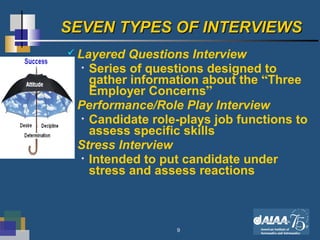
 Layered Questions Interview
• Series of questions designed to
gather information about the “Three
Employer Concerns”
 Performance/Role Play Interview
• Candidate role-plays job functions to
assess specific skills
 Stress Interview
• Intended to put candidate under
stress and assess reactions
10
SEVEN TYPES OF INTERVIEWSSEVEN TYPES OF INTERVIEWS
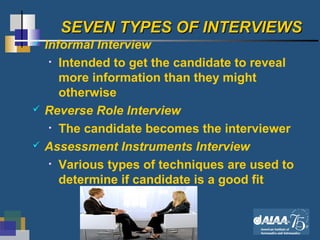
 Informal Interview
• Intended to get the candidate to reveal
more information than they might
otherwise
 Reverse Role Interview
• The candidate becomes the interviewer
 Assessment Instruments Interview
• Various types of techniques are used to
determine if candidate is a good fit
11
SEVEN TYPES OF INTERVIEWSSEVEN TYPES OF INTERVIEWS
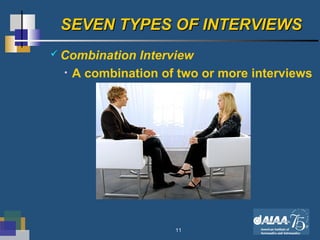
 Combination Interview
• A combination of two or more interviews
12
EXPERIENCES IN INTERVIEWSEXPERIENCES IN INTERVIEWS
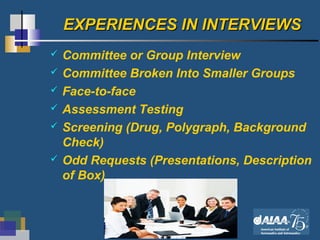
 Committee or Group Interview
 Committee Broken Into Smaller Groups
 Face-to-face
 Assessment Testing
 Screening (Drug, Polygraph, Background
Check)
 Odd Requests (Presentations, Description
of Box)
13
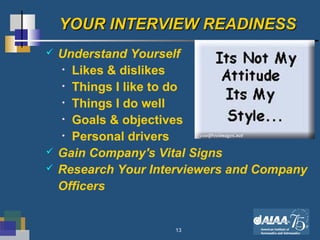
YOUR INTERVIEW READINESSYOUR INTERVIEW READINESS
 Understand Yourself
• Likes & dislikes
• Things I like to do
• Things I do well
• Goals & objectives
• Personal drivers
 Gain Company's Vital Signs
 Research Your Interviewers and Company
Officers
14
YOUR INTERVIEW READINESSYOUR INTERVIEW READINESS
 List Your Questions
• What is company mission?
• What is company culture?
• What is work environment?
• Explain org chart & responsibilities
• What is it like to work here?
• How do I fit in?
• How do you plan my intake?
• Other – perhaps personal needs
15
Are You Excited? . . .
You’d Better Be!
16
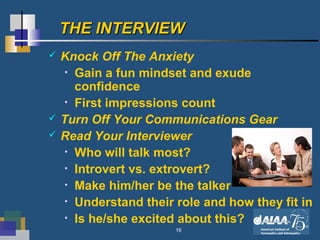
THE INTERVIEWTHE INTERVIEW
 Knock Off The Anxiety
• Gain a fun mindset and exude
confidence
• First impressions count
 Turn Off Your Communications Gear
 Read Your Interviewer
• Who will talk most?
• Introvert vs. extrovert?
• Make him/her be the talker
• Understand their role and how they fit in
• Is he/she excited about this?
17
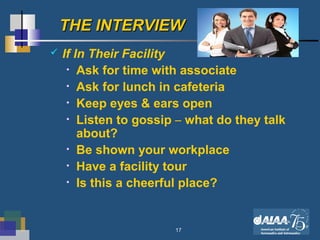
THE INTERVIEWTHE INTERVIEW
 If In Their Facility
• Ask for time with associate
• Ask for lunch in cafeteria
• Keep eyes & ears open
• Listen to gossip – what do they talk
about?
• Be shown your workplace
• Have a facility tour
• Is this a cheerful place?
18
THE INTERVIEWTHE INTERVIEW
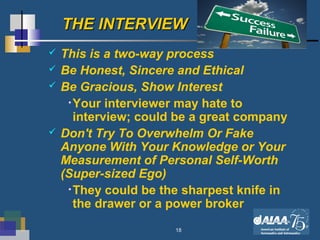
 This is a two-way process
 Be Honest, Sincere and Ethical
 Be Gracious, Show Interest
•Your interviewer may hate to
interview; could be a great company
 Don't Try To Overwhelm Or Fake
Anyone With Your Knowledge or Your
Measurement of Personal Self-Worth
(Super-sized Ego)
•They could be the sharpest knife in
the drawer or a power broker
19
THE INTERVIEWTHE INTERVIEW
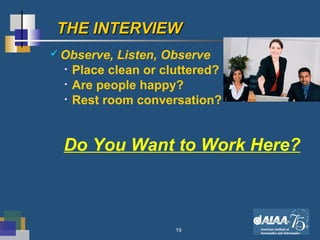
 Observe, Listen, Observe
• Place clean or cluttered?
• Are people happy?
• Rest room conversation?
Do You Want to Work Here?
20
CLOSING THE INTERVIEWCLOSING THE INTERVIEW
 Clarify Job Responsibilities and Your
Accountabilities
 Review Your Related Qualifications
 Assure Mutual “Understanding of
Expectations” – Yours and Theirs
 Ask Other Job Related Questions
• What are the measures of success for
the position?
• What are your immediate goals for the
position?
21
CLOSING THE INTERVIEWCLOSING THE INTERVIEW
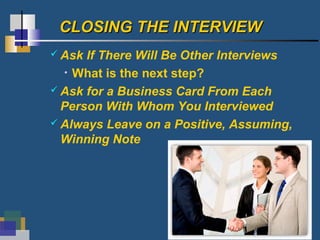
 Ask If There Will Be Other Interviews
• What is the next step?
 Ask for a Business Card From Each
Person With Whom You Interviewed
 Always Leave on a Positive, Assuming,
Winning Note
22
CLOSING THE INTERVIEWCLOSING THE INTERVIEW
 What NOT To Do:
• Don’t ask about salary or benefits
before the employer does
• Don’t call into question the employer’s
ethics
• Don’t ask for an evaluation of your
interviewing skills
• Don’t be negative
23
POST INTERVIEW ACTIONSPOST INTERVIEW ACTIONS
 Follow-up Communications
• Oral and written
 Position Acceptance/Rejection
• Oral and written
 Human Resources Organization
• Do not circumnavigate them unless
you have prior approval from them
24

Solving the mystique of interviewing

  • 1.
    SOLVING THESOLVING THE MYSTIQUEMYSTIQUEOFOF INTERVIEWINGINTERVIEWING DESINGED BY
  • 2.
    2 THE OPPORTUNITYTHE OPPORTUNITY Always Be Ready to Interview  Could Be Casual or Formal  Could Be in a Store or On a Street Corner  Could Be at Work or a Social Affair  Could Be at a Professional or Fun Event  First Impressions Really Count Your NextYour Next ““BossBoss”” May Be Beside YouMay Be Beside You - At An Unexpected Time Or Place- At An Unexpected Time Or Place
  • 3.
    3 APPROACHAPPROACH  Personal Preparation Modes of Interviewing  Three Employer Concerns  Five Critical Questions  Seven Types of Interviews  Experiences in Interviews  Your Readiness  The Interview  Closing the Interview  Post Interview Actions  The Interview Aftermath
  • 4.
    4 PERSONAL PREPARATIONPERSONAL PREPARATION What Are My Strengths and Weaknesses?  What Are The Things I Do Well?  What Are The Things I Like To Do?  What Are The Things I Dislike Doing?  What Are My Satisfiers, Constraints and Needs?  What Excites Me?  How Do I Measure Success?  What Kind of Person Am I?
  • 5.
    5 What Kind OfPerson Am I?What Kind Of Person Am I?  An 8-5 Person  An Introvert or Extrovert  High Energy or Low Energy  A Leader or Follower  Easily Bored or a Hater of Routine  Always "Up" or Easily Dismayed  Uninterested or Untested  A Risk Taker
  • 6.
    6 MODES OF INTERVIEWINGMODESOF INTERVIEWING  Telephone Screenings  On-Campus Interview  On-Site Interview  Off-Site Interview  Third Party  Facility Visit
  • 7.
    7 THREE EMPLOYER CONCERNSTHREEEMPLOYER CONCERNS  Skill Concerns • Can you do the job?  Personal Characteristics Concerns • Will you do the job? • Will you get along well with others? • Are you manageable?  Money Concerns • Can the company afford you?
  • 8.
    8 FIVE CRITICAL QUESTIONSFIVECRITICAL QUESTIONS  What Do You Consider Your Weaknesses?  What Do You Consider Your Strengths?  Describe a Failure in Your Professional Life  Describe a Success in Your Professional Life  Why Are You Leaving Your Current Position?
  • 9.
    9 SEVEN TYPES OFINTERVIEWSSEVEN TYPES OF INTERVIEWS  Layered Questions Interview • Series of questions designed to gather information about the “Three Employer Concerns”  Performance/Role Play Interview • Candidate role-plays job functions to assess specific skills  Stress Interview • Intended to put candidate under stress and assess reactions
  • 10.
    10 SEVEN TYPES OFINTERVIEWSSEVEN TYPES OF INTERVIEWS  Informal Interview • Intended to get the candidate to reveal more information than they might otherwise  Reverse Role Interview • The candidate becomes the interviewer  Assessment Instruments Interview • Various types of techniques are used to determine if candidate is a good fit
  • 11.
    11 SEVEN TYPES OFINTERVIEWSSEVEN TYPES OF INTERVIEWS  Combination Interview • A combination of two or more interviews
  • 12.
    12 EXPERIENCES IN INTERVIEWSEXPERIENCESIN INTERVIEWS  Committee or Group Interview  Committee Broken Into Smaller Groups  Face-to-face  Assessment Testing  Screening (Drug, Polygraph, Background Check)  Odd Requests (Presentations, Description of Box)
  • 13.
    13 YOUR INTERVIEW READINESSYOURINTERVIEW READINESS  Understand Yourself • Likes & dislikes • Things I like to do • Things I do well • Goals & objectives • Personal drivers  Gain Company's Vital Signs  Research Your Interviewers and Company Officers
  • 14.
    14 YOUR INTERVIEW READINESSYOURINTERVIEW READINESS  List Your Questions • What is company mission? • What is company culture? • What is work environment? • Explain org chart & responsibilities • What is it like to work here? • How do I fit in? • How do you plan my intake? • Other – perhaps personal needs
  • 15.
    15 Are You Excited?. . . You’d Better Be!
  • 16.
    16 THE INTERVIEWTHE INTERVIEW Knock Off The Anxiety • Gain a fun mindset and exude confidence • First impressions count  Turn Off Your Communications Gear  Read Your Interviewer • Who will talk most? • Introvert vs. extrovert? • Make him/her be the talker • Understand their role and how they fit in • Is he/she excited about this?
  • 17.
    17 THE INTERVIEWTHE INTERVIEW If In Their Facility • Ask for time with associate • Ask for lunch in cafeteria • Keep eyes & ears open • Listen to gossip – what do they talk about? • Be shown your workplace • Have a facility tour • Is this a cheerful place?
  • 18.
    18 THE INTERVIEWTHE INTERVIEW This is a two-way process  Be Honest, Sincere and Ethical  Be Gracious, Show Interest •Your interviewer may hate to interview; could be a great company  Don't Try To Overwhelm Or Fake Anyone With Your Knowledge or Your Measurement of Personal Self-Worth (Super-sized Ego) •They could be the sharpest knife in the drawer or a power broker
  • 19.
    19 THE INTERVIEWTHE INTERVIEW Observe, Listen, Observe • Place clean or cluttered? • Are people happy? • Rest room conversation? Do You Want to Work Here?
  • 20.
    20 CLOSING THE INTERVIEWCLOSINGTHE INTERVIEW  Clarify Job Responsibilities and Your Accountabilities  Review Your Related Qualifications  Assure Mutual “Understanding of Expectations” – Yours and Theirs  Ask Other Job Related Questions • What are the measures of success for the position? • What are your immediate goals for the position?
  • 21.
    21 CLOSING THE INTERVIEWCLOSINGTHE INTERVIEW  Ask If There Will Be Other Interviews • What is the next step?  Ask for a Business Card From Each Person With Whom You Interviewed  Always Leave on a Positive, Assuming, Winning Note
  • 22.
    22 CLOSING THE INTERVIEWCLOSINGTHE INTERVIEW  What NOT To Do: • Don’t ask about salary or benefits before the employer does • Don’t call into question the employer’s ethics • Don’t ask for an evaluation of your interviewing skills • Don’t be negative
  • 23.
    23 POST INTERVIEW ACTIONSPOSTINTERVIEW ACTIONS  Follow-up Communications • Oral and written  Position Acceptance/Rejection • Oral and written  Human Resources Organization • Do not circumnavigate them unless you have prior approval from them
  • 24.