How to survive
The Job Interview
 Occupational Prep II
        2012
Research the company
• Know the job duties
• Know the company
• Ask questions
Write down your strengths
• Identify your strengths
• Relate them to the job
• Give examples of where you have
  demonstrated these
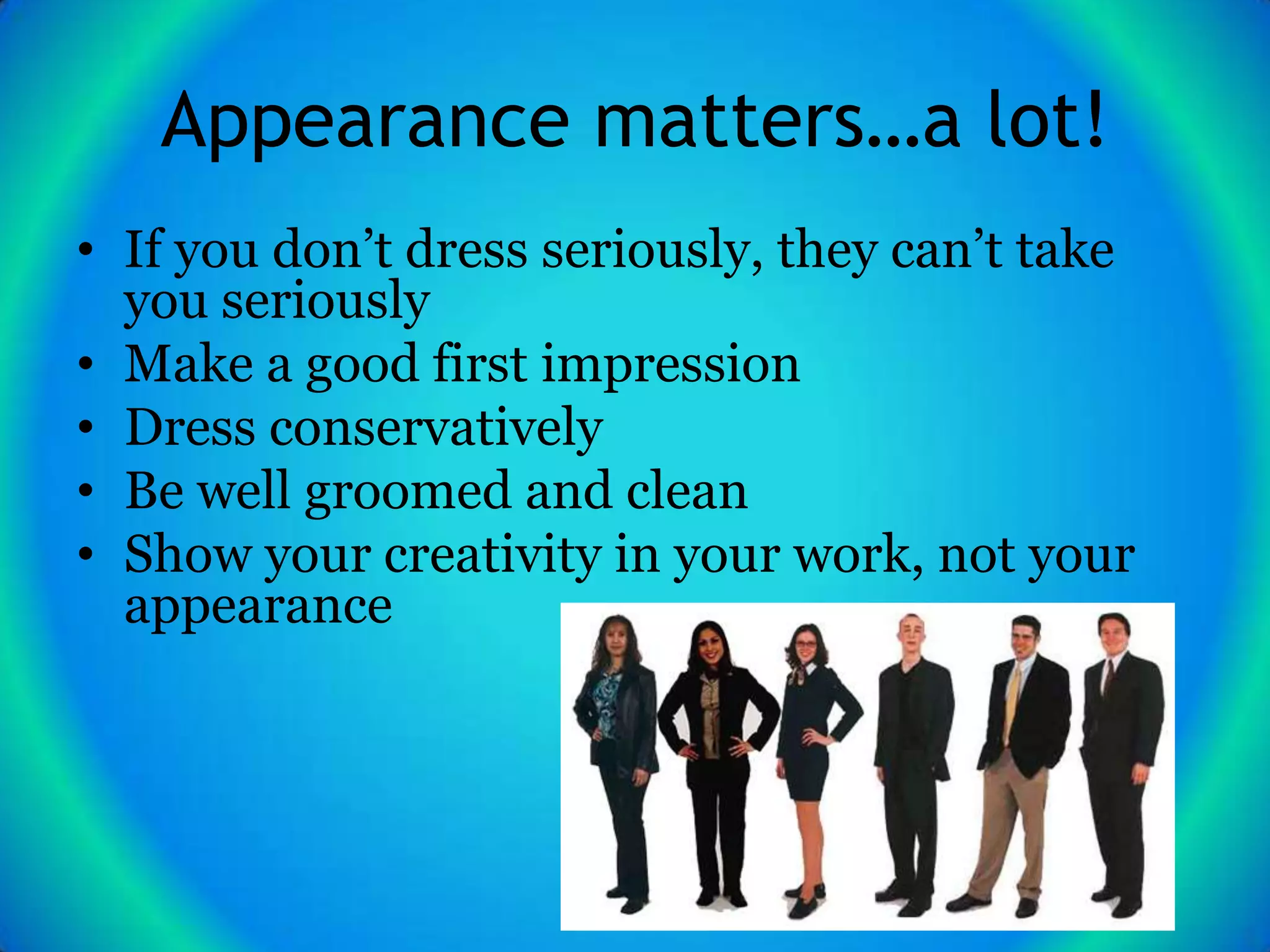
Appearance matters…a lot!
• If you don’t dress seriously, they can’t take
  you seriously
• Make a good first impression
• Dress conservatively
• Be well groomed and clean
• Show your creativity in your work, not your
  appearance
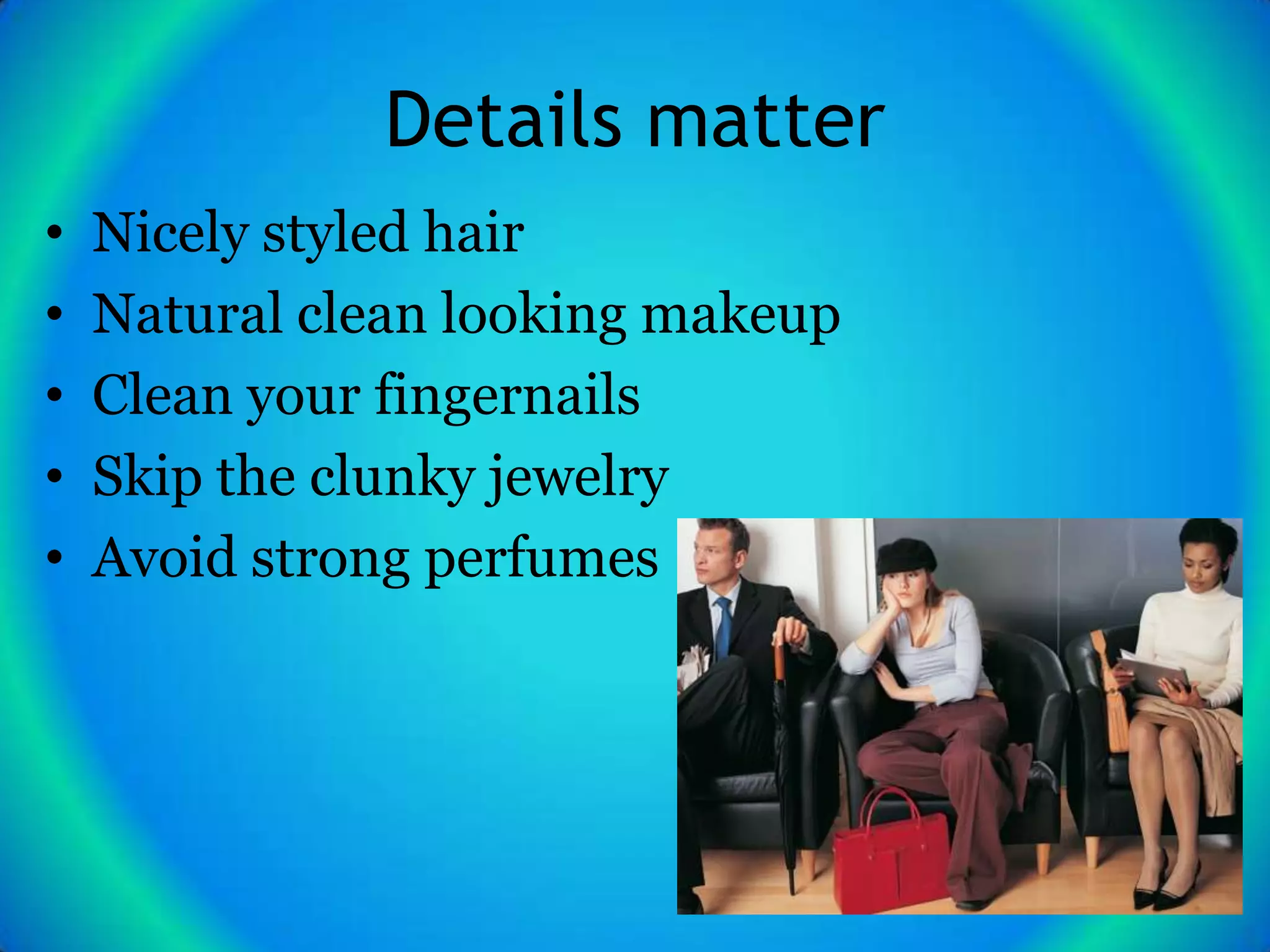
Details matter
•   Nicely styled hair
•   Natural clean looking makeup
•   Clean your fingernails
•   Skip the clunky jewelry
•   Avoid strong perfumes
Greeting & Introduction
 Be on time!
 Use Mr. or Ms. Unless they ask you to
  use first names.
 Give a firm handshake.               Only 1 chance
 Don’t sit until you are invited to  to make a good
                                        impression!
 Always make eye contact
 Smile!!
 Remember “please” and “Thank you”
 Small talk is good!
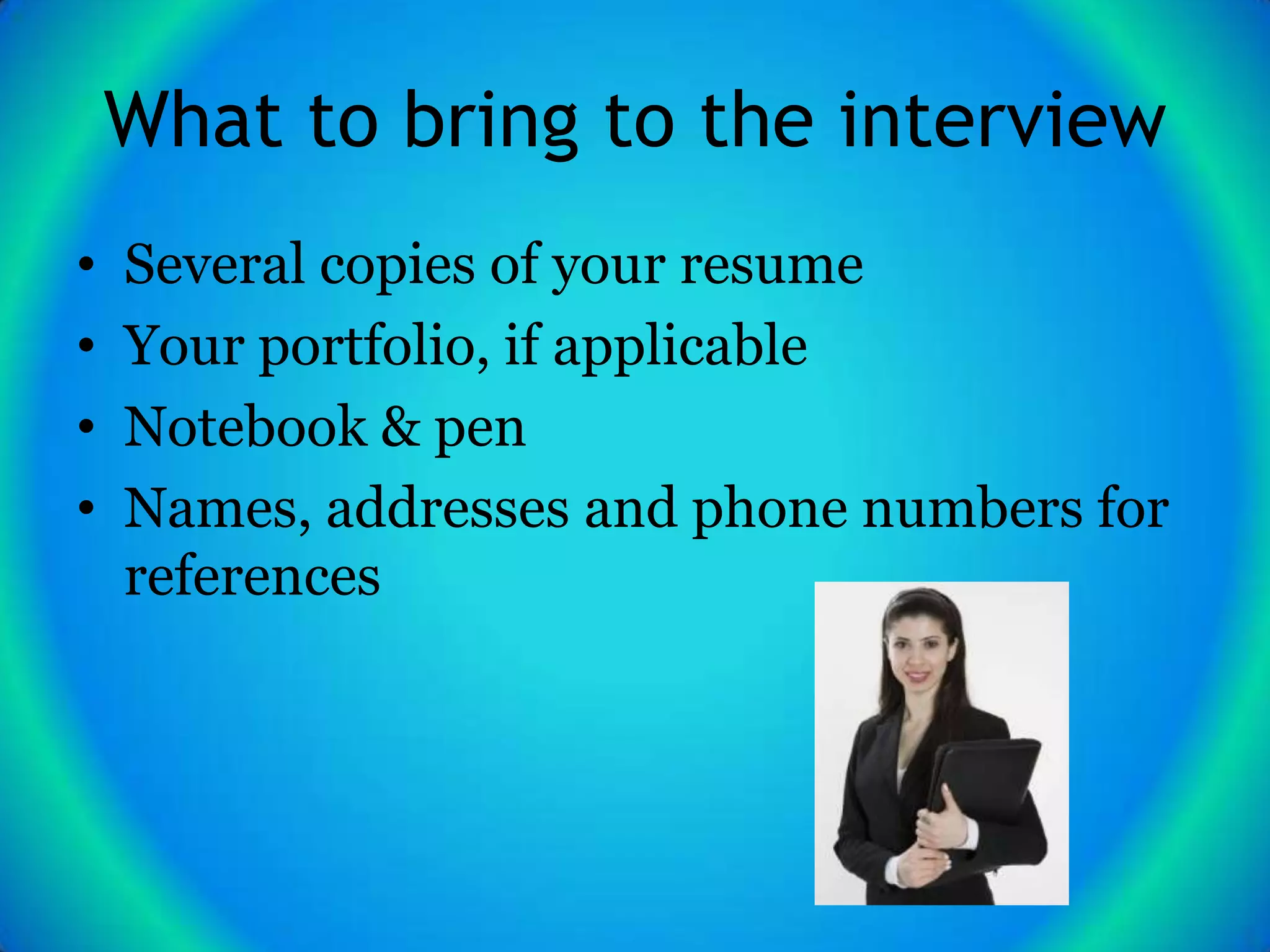
What to bring to the interview
•   Several copies of your resume
•   Your portfolio, if applicable
•   Notebook & pen
•   Names, addresses and phone numbers for
    references
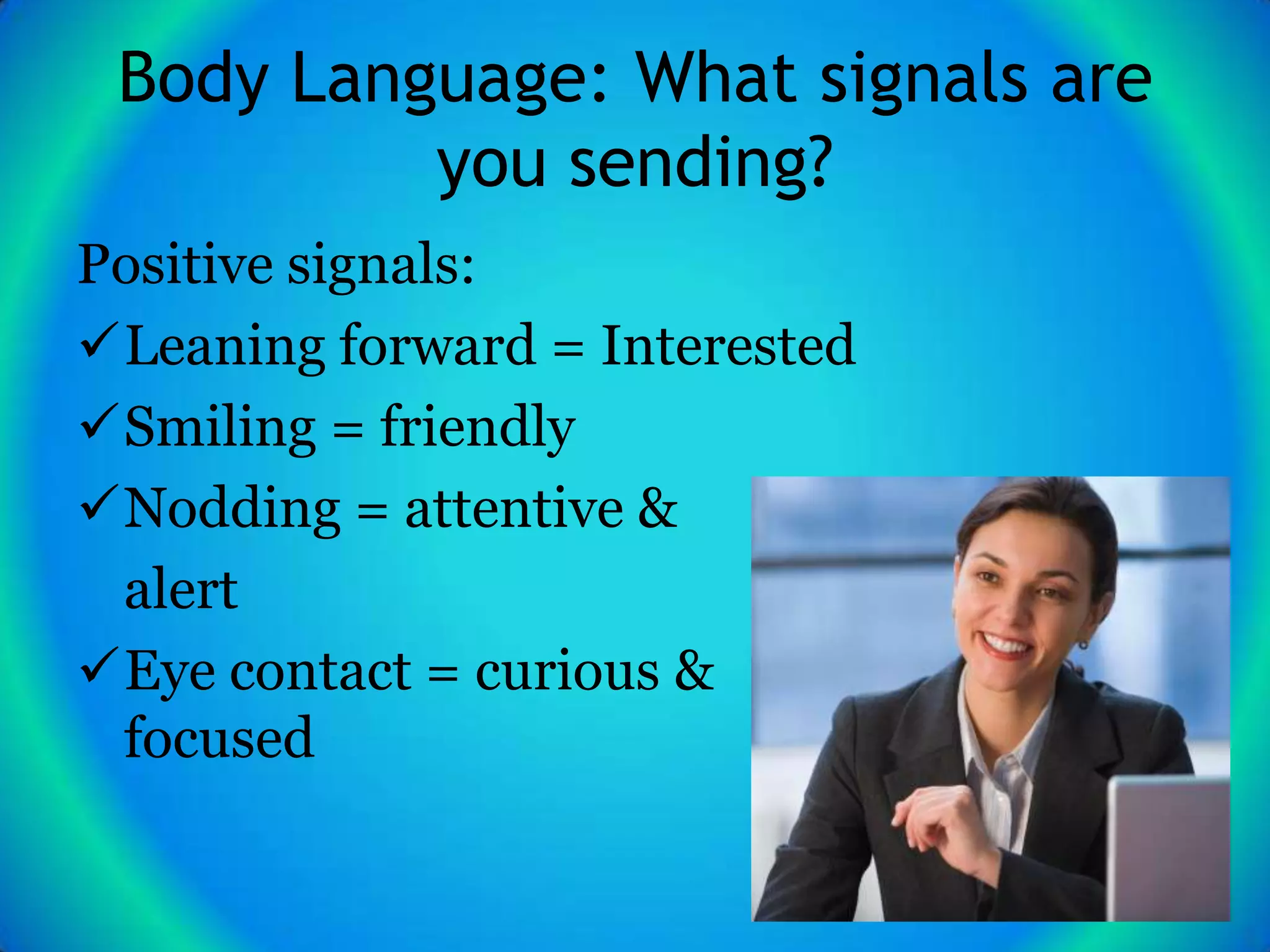
Body Language: What signals are
          you sending?
Positive signals:
Leaning forward = Interested
Smiling = friendly
Nodding = attentive &
 alert
Eye contact = curious &
 focused
Body Language
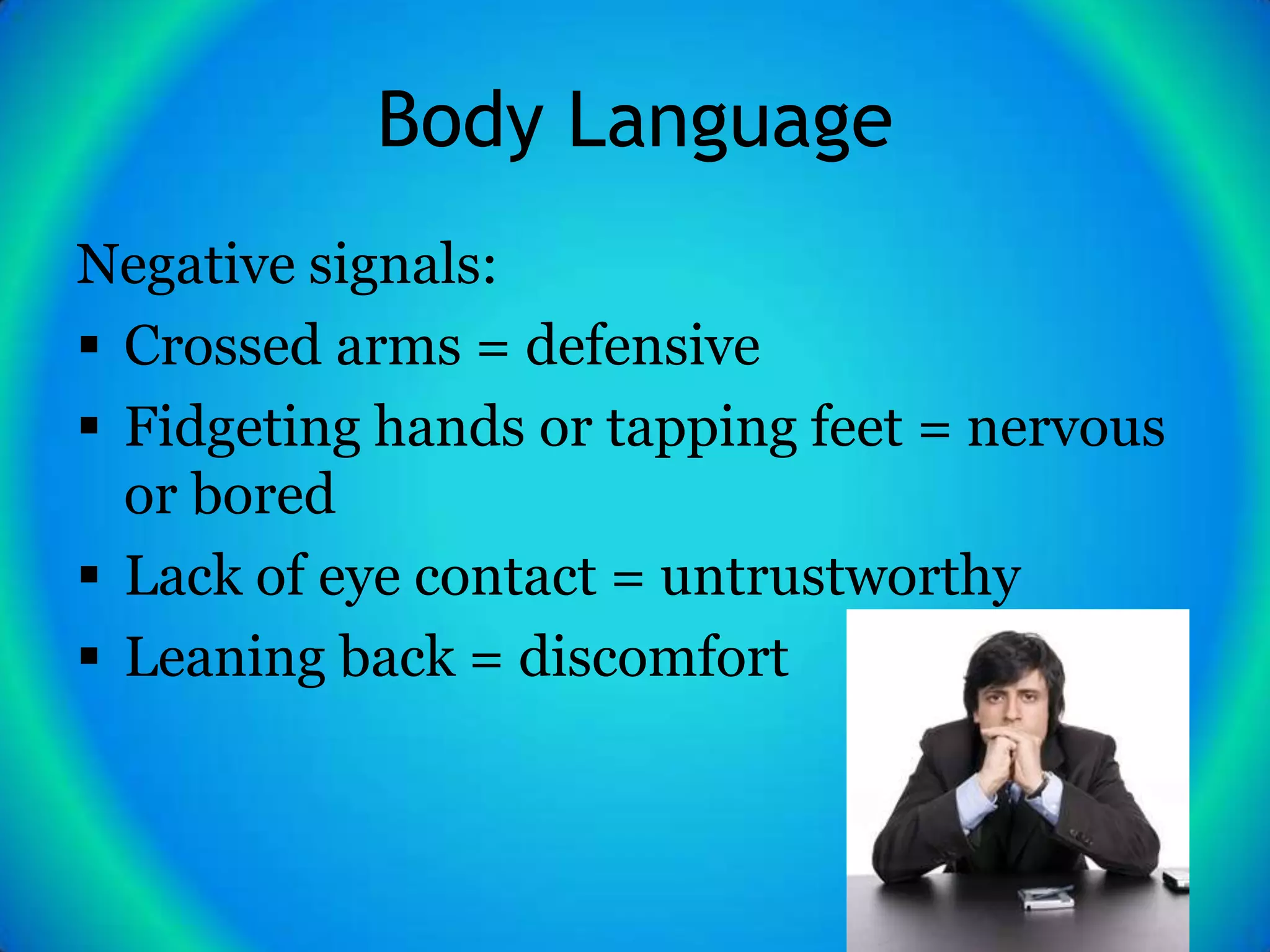
Negative signals:
 Crossed arms = defensive
 Fidgeting hands or tapping feet = nervous
  or bored
 Lack of eye contact = untrustworthy
 Leaning back = discomfort
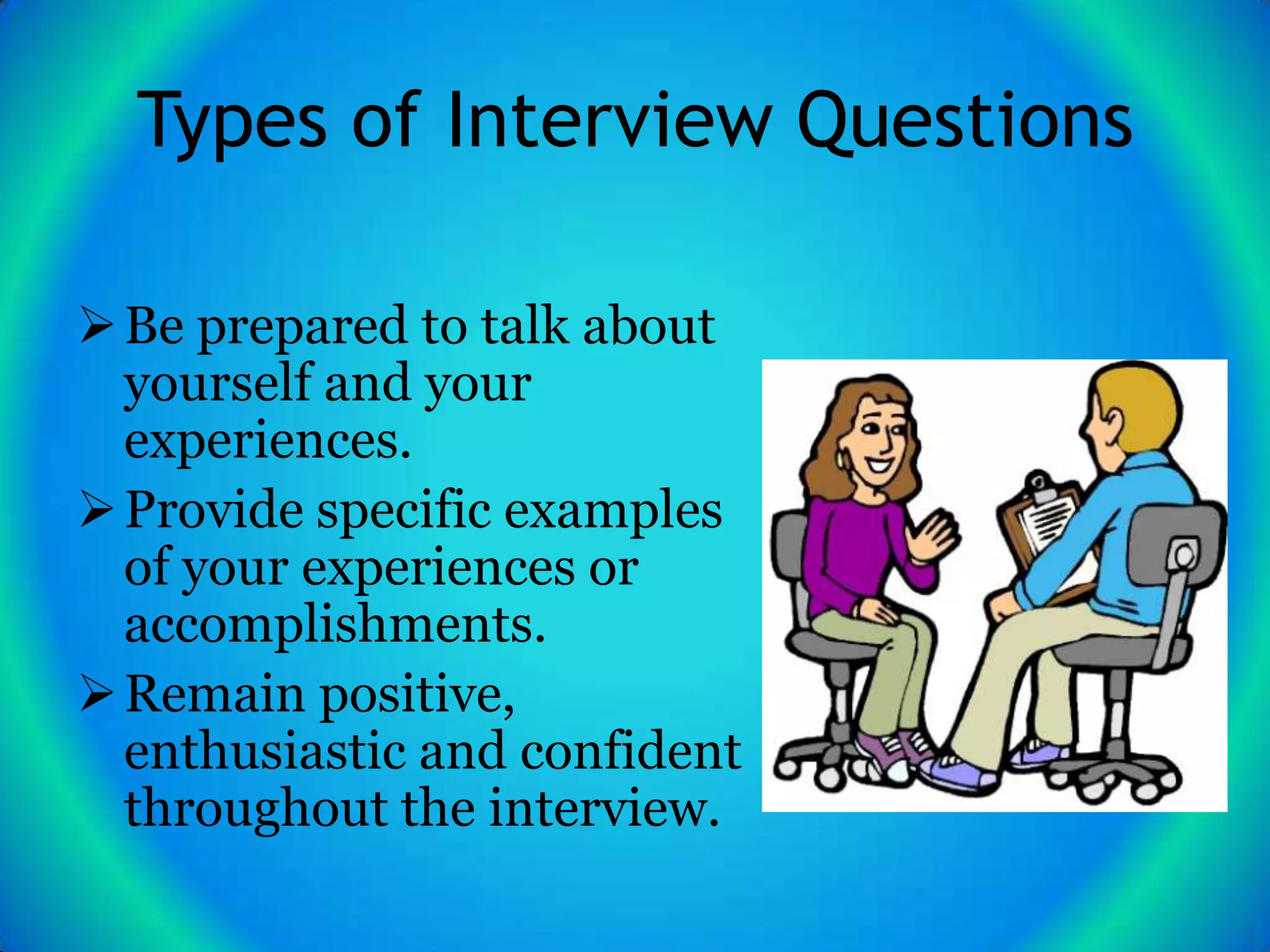
Types of Interview Questions

 Be prepared to talk about
  yourself and your
  experiences.
 Provide specific examples
  of your experiences or
  accomplishments.
 Remain positive,
  enthusiastic and confident
  throughout the interview.
Frequently asked questions
• Tell me about yourself
• How has your education prepared you for this
  position?
• Who or what has had the greatest influence on the
  development of your career interests?
• Why are you interested in this company?
• Tell me about your strengths.
• What are your weaknesses?
• Why should I hire you?
Frequently asked questions
• What has been your greatest challenge?
• What work experience has been the
  most valuable to you and why.
• How do you solve conflicts?
• Give me an example of a problem you
  solved.
• How do you motivate people?
• Do you consider yourself a “team
  player”?
• What frustrates you the most?
• What can you contribute to our
  company?
General Interview Strategies
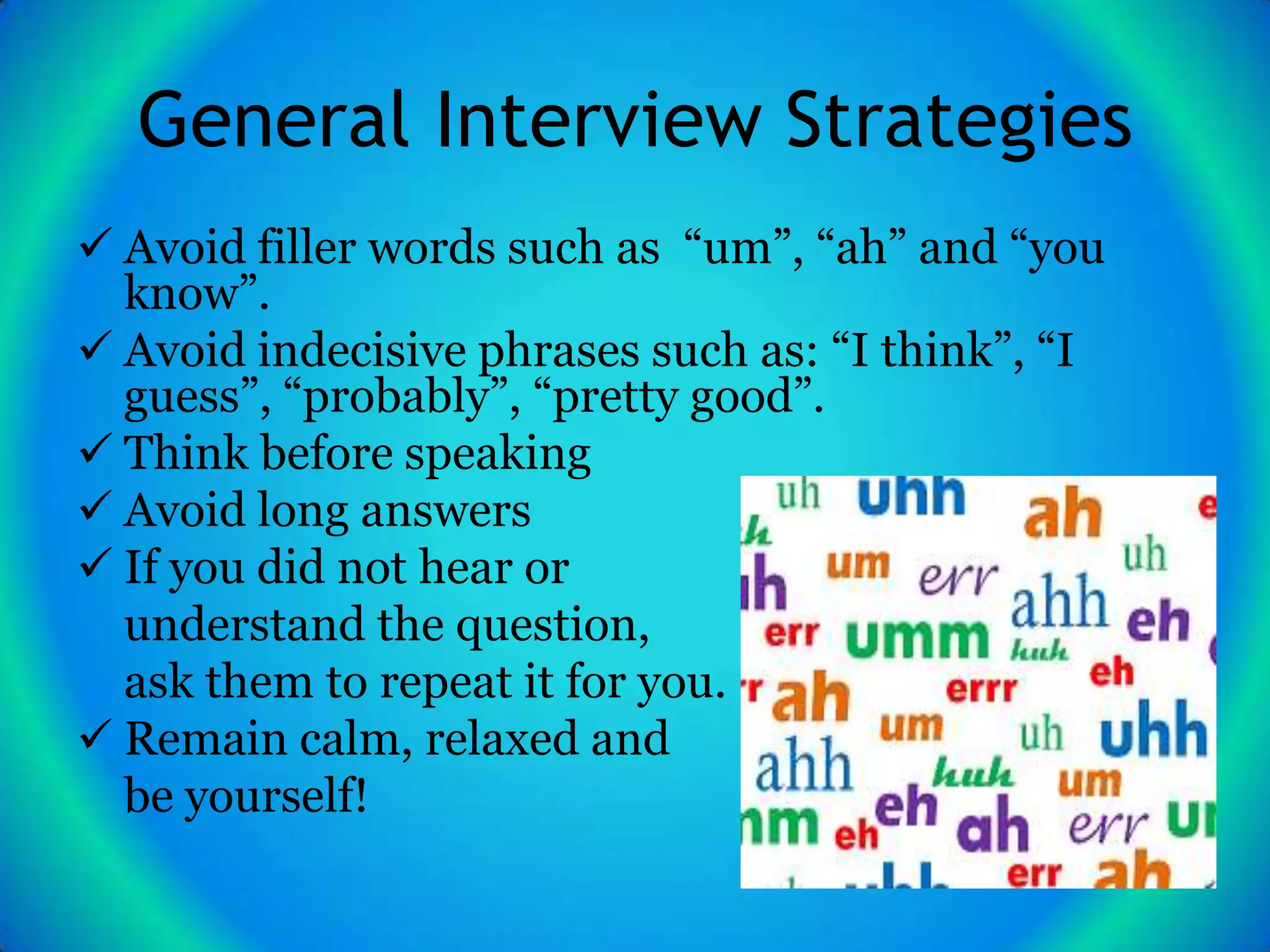
 Avoid filler words such as “um”, “ah” and “you
  know”.
 Avoid indecisive phrases such as: “I think”, “I
  guess”, “probably”, “pretty good”.
 Think before speaking
 Avoid long answers
 If you did not hear or
  understand the question,
  ask them to repeat it for you.
 Remain calm, relaxed and
  be yourself!
Make a solid Impression
• Ask good questions
• Thank the interviewer
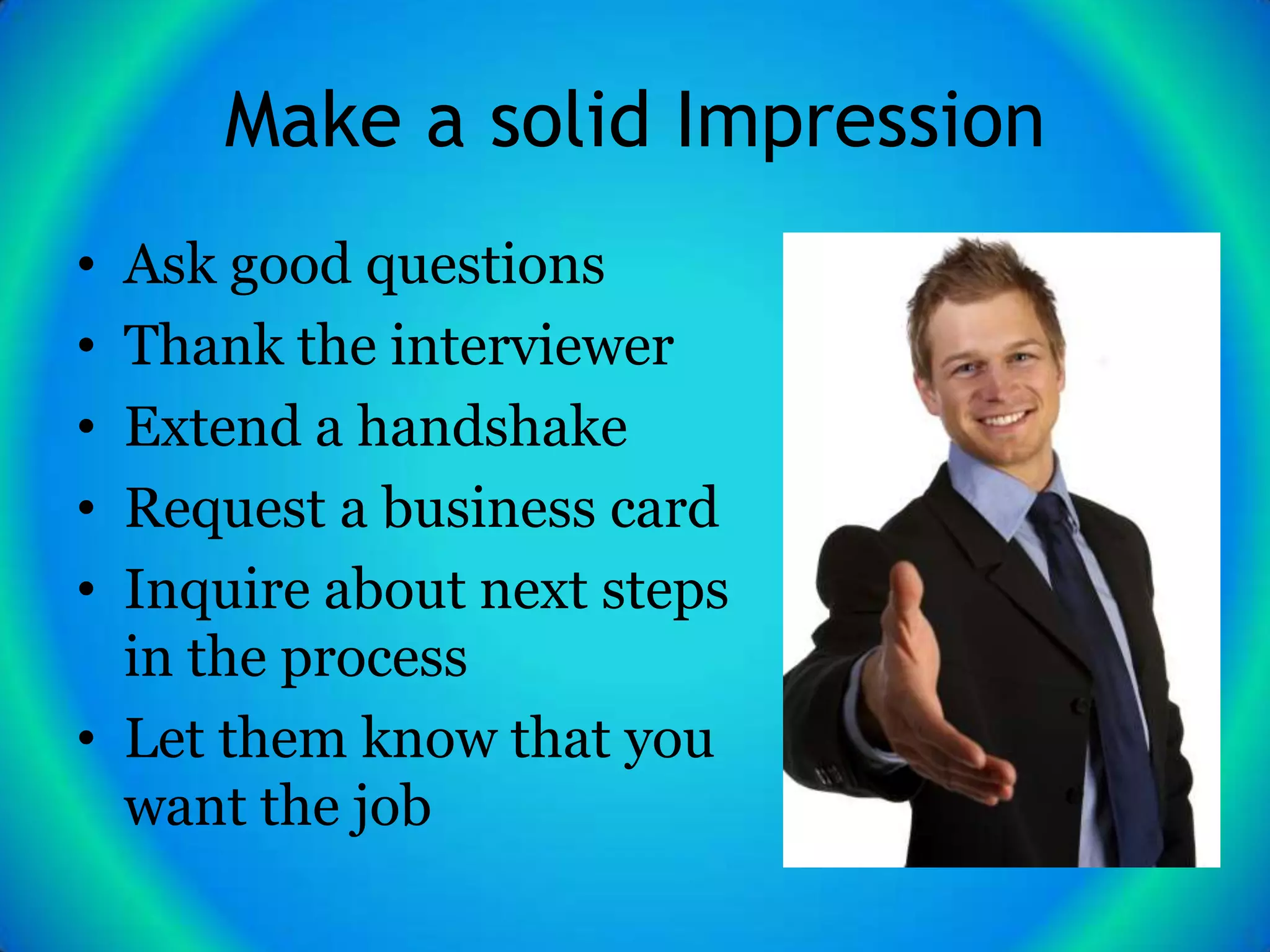
• Extend a handshake
• Request a business card
• Inquire about next steps
  in the process
• Let them know that you
  want the job
Interview don’ts
 Don’t make negative comments
  about previous employers or
  supervisors
 Don’t treat the interview too casually
 Don’t give the impression you are
  only interested about money
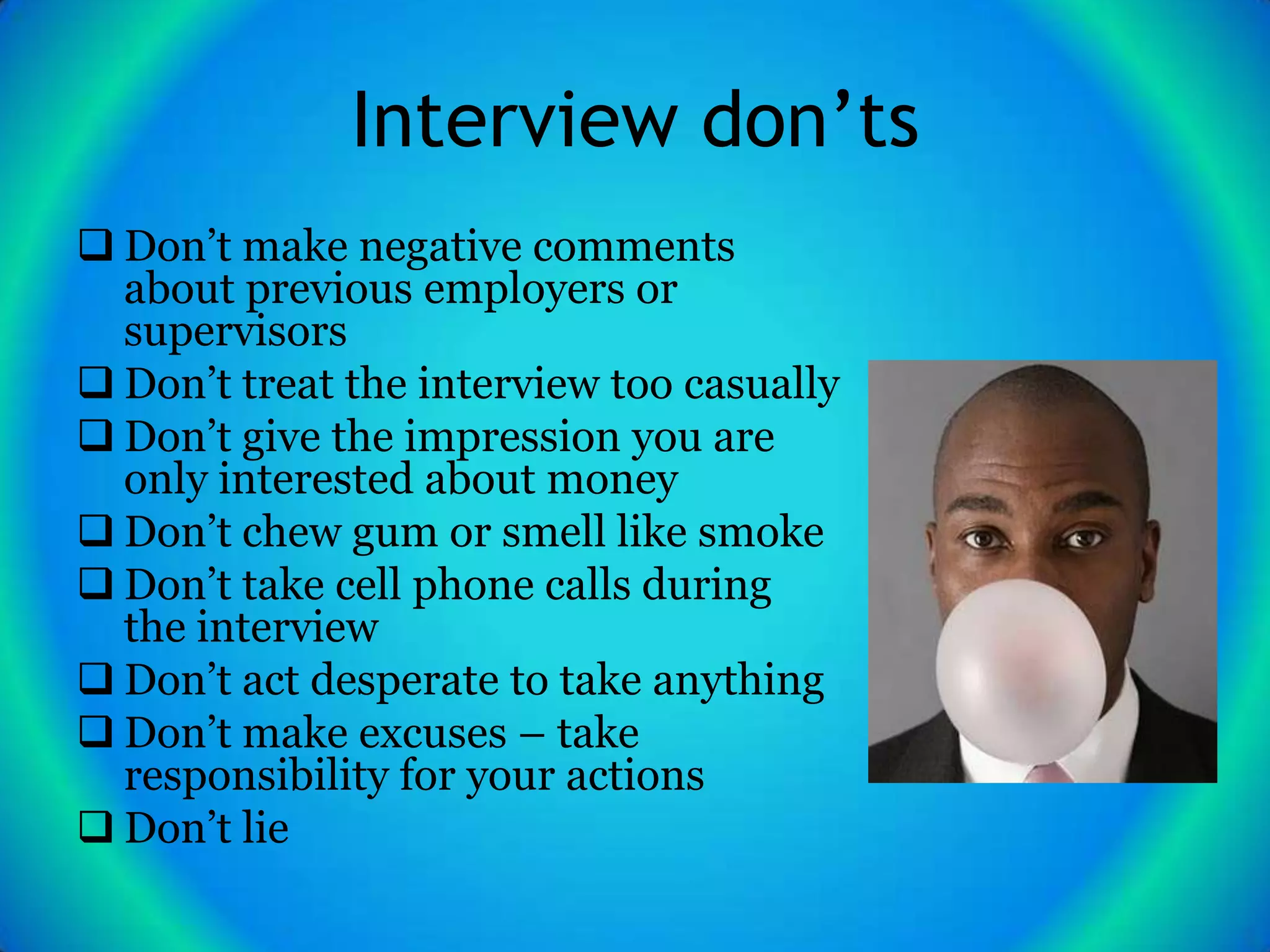
 Don’t chew gum or smell like smoke
 Don’t take cell phone calls during
  the interview
 Don’t act desperate to take anything
 Don’t make excuses – take
  responsibility for your actions
 Don’t lie
Follow up
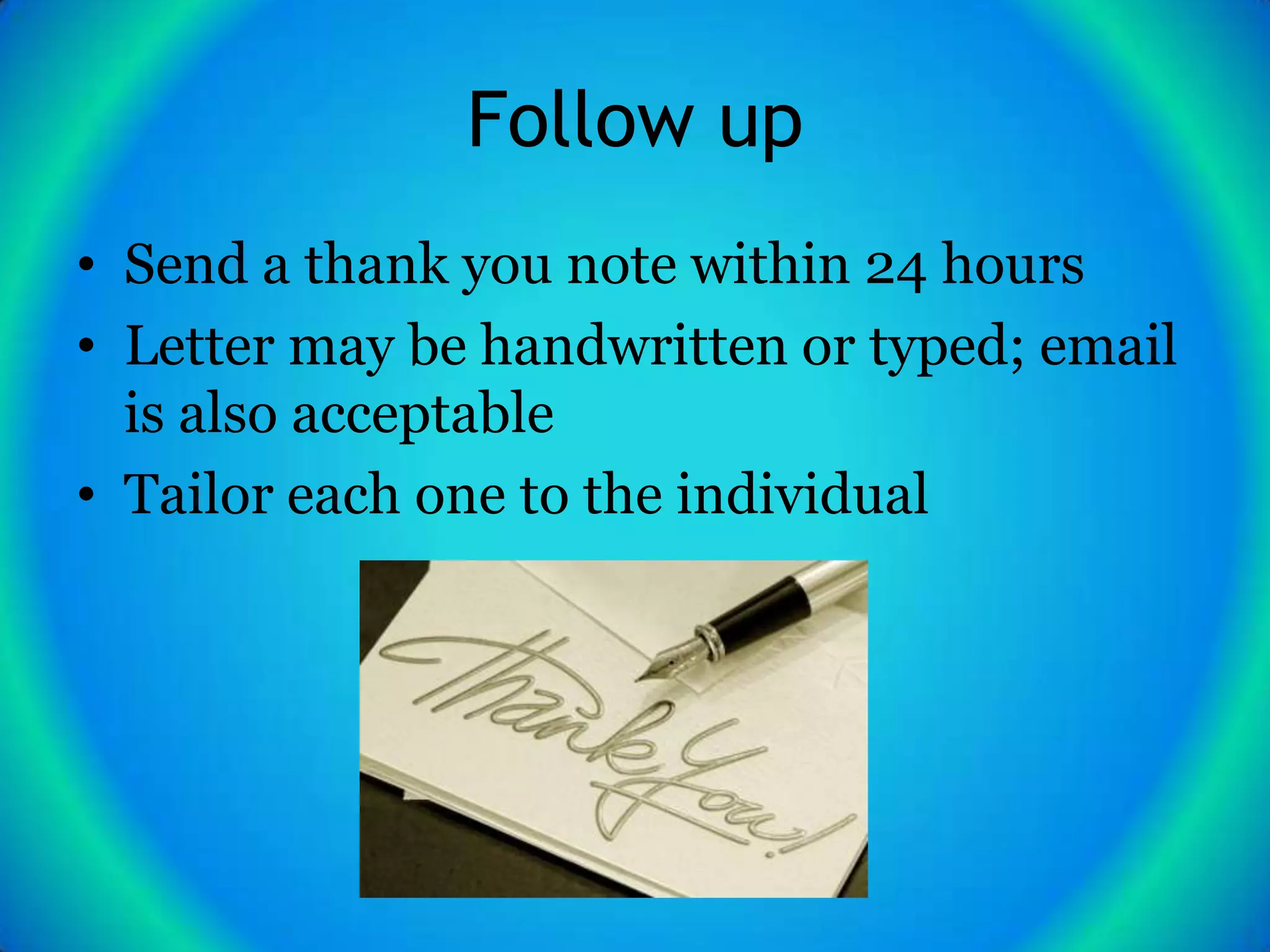
• Send a thank you note within 24 hours
• Letter may be handwritten or typed; email
  is also acceptable
• Tailor each one to the individual
Evaluate
After the interview, take some time to reflect.

   How did you do overall?
   What were your strengths?
   What needs improvement?
   What steps can I take next
    time to improve?
THANK YOU!

How to survive

  • 1.
    How to survive TheJob Interview Occupational Prep II 2012
  • 2.
    Research the company •Know the job duties • Know the company • Ask questions
  • 3.
    Write down yourstrengths • Identify your strengths • Relate them to the job • Give examples of where you have demonstrated these
  • 4.
    Appearance matters…a lot! •If you don’t dress seriously, they can’t take you seriously • Make a good first impression • Dress conservatively • Be well groomed and clean • Show your creativity in your work, not your appearance
  • 5.
    Details matter • Nicely styled hair • Natural clean looking makeup • Clean your fingernails • Skip the clunky jewelry • Avoid strong perfumes
  • 6.
    Greeting & Introduction Be on time!  Use Mr. or Ms. Unless they ask you to use first names.  Give a firm handshake. Only 1 chance  Don’t sit until you are invited to to make a good impression!  Always make eye contact  Smile!!  Remember “please” and “Thank you”  Small talk is good!
  • 7.
    What to bringto the interview • Several copies of your resume • Your portfolio, if applicable • Notebook & pen • Names, addresses and phone numbers for references
  • 8.
    Body Language: Whatsignals are you sending? Positive signals: Leaning forward = Interested Smiling = friendly Nodding = attentive & alert Eye contact = curious & focused
  • 9.
    Body Language Negative signals: Crossed arms = defensive  Fidgeting hands or tapping feet = nervous or bored  Lack of eye contact = untrustworthy  Leaning back = discomfort
  • 10.
    Types of InterviewQuestions  Be prepared to talk about yourself and your experiences.  Provide specific examples of your experiences or accomplishments.  Remain positive, enthusiastic and confident throughout the interview.
  • 11.
    Frequently asked questions •Tell me about yourself • How has your education prepared you for this position? • Who or what has had the greatest influence on the development of your career interests? • Why are you interested in this company? • Tell me about your strengths. • What are your weaknesses? • Why should I hire you?
  • 12.
    Frequently asked questions •What has been your greatest challenge? • What work experience has been the most valuable to you and why. • How do you solve conflicts? • Give me an example of a problem you solved. • How do you motivate people? • Do you consider yourself a “team player”? • What frustrates you the most? • What can you contribute to our company?
  • 13.
    General Interview Strategies Avoid filler words such as “um”, “ah” and “you know”.  Avoid indecisive phrases such as: “I think”, “I guess”, “probably”, “pretty good”.  Think before speaking  Avoid long answers  If you did not hear or understand the question, ask them to repeat it for you.  Remain calm, relaxed and be yourself!
  • 14.
    Make a solidImpression • Ask good questions • Thank the interviewer • Extend a handshake • Request a business card • Inquire about next steps in the process • Let them know that you want the job
  • 15.
    Interview don’ts  Don’tmake negative comments about previous employers or supervisors  Don’t treat the interview too casually  Don’t give the impression you are only interested about money  Don’t chew gum or smell like smoke  Don’t take cell phone calls during the interview  Don’t act desperate to take anything  Don’t make excuses – take responsibility for your actions  Don’t lie
  • 16.
    Follow up • Senda thank you note within 24 hours • Letter may be handwritten or typed; email is also acceptable • Tailor each one to the individual
  • 17.
    Evaluate After the interview,take some time to reflect.  How did you do overall?  What were your strengths?  What needs improvement?  What steps can I take next time to improve?
  • 18.