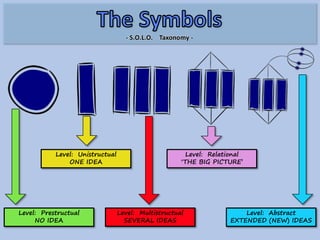
Level: Prestructual
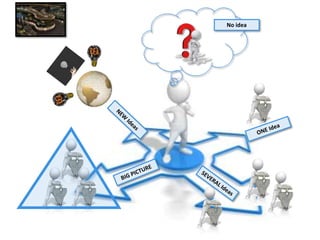
NO IDEA
Level: Unistructual
ONE IDEA
Level: Multistructual
SEVERAL IDEAS
Level: Relational
‘THE BIG PICTURE’
Level: Abstract
EXTENDED (NEW) IDEAS
- S.O.L.O. Taxonomy -
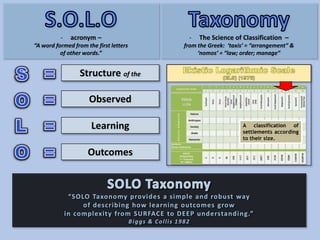
- acronym –
“A word formed from the first letters
of other words.”
- The Science of Classification –
from the Greek: ‘taxis’ = “arrangement” &
‘nomos’ = “law; order; manage”
Outcomes
Learning
Structure of the
Observed
“SOLO Taxonomy provides a simple and robust way
of describing how learning outcomes grow
in complexity from SURFACE to DEEP understanding.”
Biggs & Collis 1982
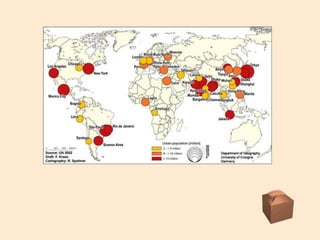
A classification of
settlements according
to their size.
- A Model of Learning -
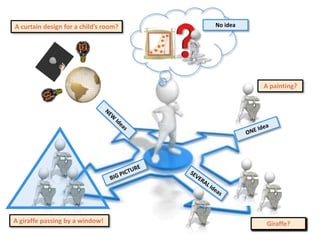
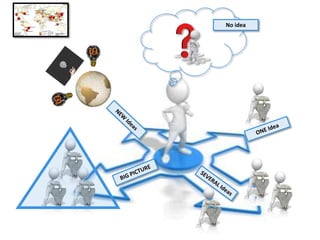
No idea
(prestructual level)
One idea
(unistructural l level)
Several ideas
(multistructual level)
(getting to the) BIG PICTURE
(Relational level)
Extended (new) ideas
([Extended] Abstract level)
Deep Knowledge
(Understanding: Big Picture)
Surface Knowledge
(Understanding: one & several ideas)
Conceptual Knowledge
(Understanding: extended (new) ideas)
Sorts out
‘a Learning Outcome’
into one of three (3) levels of
KNOWLEDGE:
Your UNDERSTANDING
of ‘a Learning Outcome’
may be pinpointed at any of five (5)
levels of complexity:
No idea
A painting?
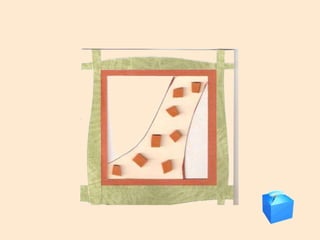
Boxes on Road?Riverbed?Artwork?Window?Spotted neck?Giraffe?A giraffe passing by a window!
A curtain design for a child’s room?
No idea
No idea
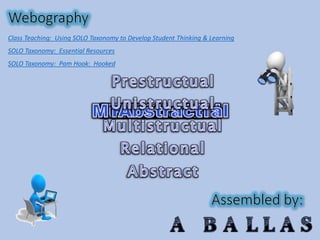
Class Teaching: Using SOLO Taxonomy to Develop Student Thinking & Learning
SOLO Taxonomy: Essential Resources
SOLO Taxonomy: Pam Hook: Hooked

S.O.L.O Taxonomy (SOLO Taxonomy for Junior Students) [Structure of the Observed Learning Outcome]

  • 2.
    Level: Prestructual NO IDEA Level:Unistructual ONE IDEA Level: Multistructual SEVERAL IDEAS Level: Relational ‘THE BIG PICTURE’ Level: Abstract EXTENDED (NEW) IDEAS - S.O.L.O. Taxonomy -
  • 3.
    - acronym – “Aword formed from the first letters of other words.” - The Science of Classification – from the Greek: ‘taxis’ = “arrangement” & ‘nomos’ = “law; order; manage” Outcomes Learning Structure of the Observed “SOLO Taxonomy provides a simple and robust way of describing how learning outcomes grow in complexity from SURFACE to DEEP understanding.” Biggs & Collis 1982 A classification of settlements according to their size.
  • 4.
    - A Modelof Learning - No idea (prestructual level) One idea (unistructural l level) Several ideas (multistructual level) (getting to the) BIG PICTURE (Relational level) Extended (new) ideas ([Extended] Abstract level) Deep Knowledge (Understanding: Big Picture) Surface Knowledge (Understanding: one & several ideas) Conceptual Knowledge (Understanding: extended (new) ideas) Sorts out ‘a Learning Outcome’ into one of three (3) levels of KNOWLEDGE: Your UNDERSTANDING of ‘a Learning Outcome’ may be pinpointed at any of five (5) levels of complexity:
  • 6.
    No idea A painting? Boxeson Road?Riverbed?Artwork?Window?Spotted neck?Giraffe?A giraffe passing by a window! A curtain design for a child’s room?
  • 8.
  • 10.
  • 11.
    Class Teaching: UsingSOLO Taxonomy to Develop Student Thinking & Learning SOLO Taxonomy: Essential Resources SOLO Taxonomy: Pam Hook: Hooked