Downloaded 239 times





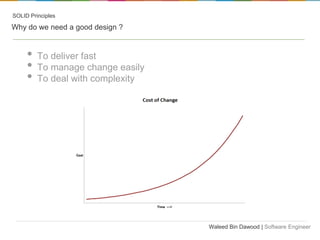

















The document discusses the significance of solid principles in object-oriented design, emphasizing the importance of client-centric teams and good software design practices. It outlines several principles such as the Single Responsibility Principle, Open/Closed Principle, Liskov Substitution Principle, Interface Segregation Principle, and Dependency Inversion Principle, along with their definitions and practical examples. The author argues that adhering to these principles leads to better design, management of complexity, and facilitates easier changes in software development.


