PRESENTED BY:
PANKAJ KUMAR
EE - 3rd YEAR
1636020015
SOLAR POWERED
AUTOMATIC IRRIGATION
SYSTEM
A
SEMINAR
PRESENTATION
On
WELCOME TO ALL OF YOU
INTRODUCTION:
 Solar energy is the most abundant source of energy in
the world.
 Solar power is not only an answer to today’s energy
crisis but also an environmental friendly form of
energy.
 Photovoltaic generation is an efficient approach for
using the solar energy.
Cont’d…
 Solar powered irrigation system can be a suitable
alternative for farmers in the present state of energy
crisis.
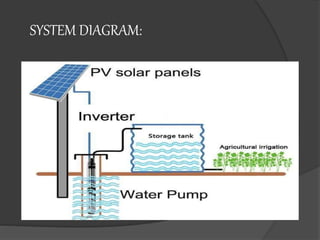
 The automatic irrigation system uses solar power which
drives water pumps to pump water from the bore well
to a tank and the outlet valve of the tank is
automatically regulated using controller and moisture
sensor to control the flow rate of water from the tank to
the irrigation field which optimizes the use of water.
SYSTEM DIAGRAM:
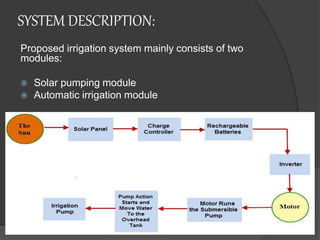
SYSTEM DESCRIPTION:
Proposed irrigation system mainly consists of two
modules:
 Solar pumping module
 Automatic irrigation module
Solar Panel:
 These panels are designed with solar cells composed of
semiconductor materials.
 The main function of Solar panels is to convert solar
energy into DC electrical energy generally of 12V,
which is further used for the rest of the circuit. The
number of cells required and their size depends on the
rating of the load.
 The collection of solar cells can produce maximum
electricity. But, the solar panel must place exactly at
right angles to the sun rays.
water Source:
 Water sources are available in the form of springs, drilled
wells, rivers, ponds, etc.
Submersible Pump:
 This solar system contains a submersible pump, a water
tank, an irrigation pump, associated water pumps.
 This system is designed with 450W of power, which is
capable of pumping 2000 liters of water within 60
minutes.
 This power capacity takes into account the height
difference between the water tank and the solar
submersible pump.
Charge Controller:
 A solar charge controller is very important device in
any solar- power system.
 It is used to maintain proper charging voltages of the
batteries.
 The charge controller controls current and voltage from
the solar panel and charges the battery, and also stops
the charging of the battery from over and undercharging
conditions.
Battery:
 The Battery is an electric device that is used to store
current which is produced from the solar panel and
supplied to the corresponding loads. The number of
batteries required depends on the load requirement.
Inverter:
 The main function of the inverter is that it converts the
battery’s voltage to AC voltage in order to activate the
loads. Therefore, it helps us to run many electronic
devices, home appliances and computers.
 There are numerous types of inverters available in the
market today.
 The characteristics of typical inverters include high
switching frequency, high conversion frequency and
less harmonic content, and so on.
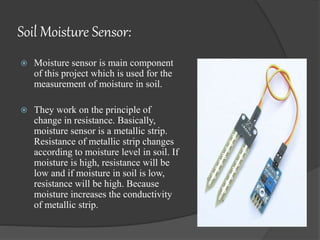
Soil Moisture Sensor:
 Moisture sensor is main component
of this project which is used for the
measurement of moisture in soil.
 They work on the principle of
change in resistance. Basically,
moisture sensor is a metallic strip.
Resistance of metallic strip changes
according to moisture level in soil. If
moisture is high, resistance will be
low and if moisture in soil is low,
resistance will be high. Because
moisture increases the conductivity
of metallic strip.
Solar Powered Auto Irrigation System:
 The main goal of this project is to develop an irrigation
system in the field of agriculture by using Solar Energy.
 The required components are 8051 series Microcontroller,
12V DC mini submersible pump, Op-Amp, LCD, Solar
Panel, MOSFET, Relay, Motor, Voltage Regulator, Diodes,
Capacitors, Resistors, LED, Crystal and Transistors.
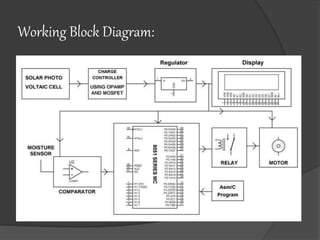
Working Block Diagram:
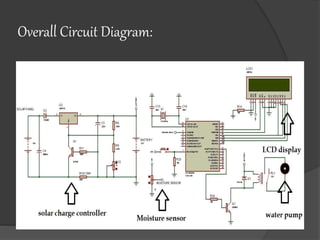
Overall Circuit Diagram:
Advantages:
 It helps in energy saving.
 There is no fuel cost – as it uses available free sunlight.
 Highly sensitive, low cost and reliable circuit.
 Works according to the soil condition.
 Complete elimination of manpower.
 The dependence on rain is reduced.
 System can be swapped into manual mode whenever
required.
 It is convenient to all climatic conditions and all sorts of
irrigation.
Disadvantages:
 This is applicable for only large farms due to high
initial implementation cost.
 Have limited life after installation due to the
deterioration of plastic components in a hot, arid
climate when exposed to UV-light.
 Bulky solar panels are required for the large power
production.
Applications:
 Irrigation can be completed in fields, gardens, farms,
etc.
 Agriculture livestock watering / crop irrigation, home
gardens and drip irrigation systems.
 Domestic portable water for remote homes,
campgrounds.
 Pond water management and water transfer.
 It is effective for diversities of crops.
Conclusions:
 By using the automatic irrigation system it optimizes
the usage of water by reducing wastage and reduce the
human intervention for farmers.
 The excess energy produced using solar panels can also
be given to the grid with small modifications in the
system circuit which can be a source of the revenue of
the farmer, thus encouraging farming in India and same
time giving a solution for energy crisis.
 Solar pumps also offer clean solutions with no danger
of borehole contamination.
Any suggestions for this Technology….?
Any questions for this Technology….?

Solar powered automatic irrigation system

  • 1.
    PRESENTED BY: PANKAJ KUMAR EE- 3rd YEAR 1636020015 SOLAR POWERED AUTOMATIC IRRIGATION SYSTEM A SEMINAR PRESENTATION On WELCOME TO ALL OF YOU
  • 2.
    INTRODUCTION:  Solar energyis the most abundant source of energy in the world.  Solar power is not only an answer to today’s energy crisis but also an environmental friendly form of energy.  Photovoltaic generation is an efficient approach for using the solar energy.
  • 3.
    Cont’d…  Solar poweredirrigation system can be a suitable alternative for farmers in the present state of energy crisis.  The automatic irrigation system uses solar power which drives water pumps to pump water from the bore well to a tank and the outlet valve of the tank is automatically regulated using controller and moisture sensor to control the flow rate of water from the tank to the irrigation field which optimizes the use of water.
  • 4.
  • 5.
    SYSTEM DESCRIPTION: Proposed irrigationsystem mainly consists of two modules:  Solar pumping module  Automatic irrigation module
  • 6.
    Solar Panel:  Thesepanels are designed with solar cells composed of semiconductor materials.  The main function of Solar panels is to convert solar energy into DC electrical energy generally of 12V, which is further used for the rest of the circuit. The number of cells required and their size depends on the rating of the load.  The collection of solar cells can produce maximum electricity. But, the solar panel must place exactly at right angles to the sun rays.
  • 7.
    water Source:  Watersources are available in the form of springs, drilled wells, rivers, ponds, etc.
  • 8.
    Submersible Pump:  Thissolar system contains a submersible pump, a water tank, an irrigation pump, associated water pumps.  This system is designed with 450W of power, which is capable of pumping 2000 liters of water within 60 minutes.  This power capacity takes into account the height difference between the water tank and the solar submersible pump.
  • 9.
    Charge Controller:  Asolar charge controller is very important device in any solar- power system.  It is used to maintain proper charging voltages of the batteries.  The charge controller controls current and voltage from the solar panel and charges the battery, and also stops the charging of the battery from over and undercharging conditions.
  • 10.
    Battery:  The Batteryis an electric device that is used to store current which is produced from the solar panel and supplied to the corresponding loads. The number of batteries required depends on the load requirement.
  • 11.
    Inverter:  The mainfunction of the inverter is that it converts the battery’s voltage to AC voltage in order to activate the loads. Therefore, it helps us to run many electronic devices, home appliances and computers.  There are numerous types of inverters available in the market today.  The characteristics of typical inverters include high switching frequency, high conversion frequency and less harmonic content, and so on.
  • 12.
    Soil Moisture Sensor: Moisture sensor is main component of this project which is used for the measurement of moisture in soil.  They work on the principle of change in resistance. Basically, moisture sensor is a metallic strip. Resistance of metallic strip changes according to moisture level in soil. If moisture is high, resistance will be low and if moisture in soil is low, resistance will be high. Because moisture increases the conductivity of metallic strip.
  • 13.
    Solar Powered AutoIrrigation System:  The main goal of this project is to develop an irrigation system in the field of agriculture by using Solar Energy.  The required components are 8051 series Microcontroller, 12V DC mini submersible pump, Op-Amp, LCD, Solar Panel, MOSFET, Relay, Motor, Voltage Regulator, Diodes, Capacitors, Resistors, LED, Crystal and Transistors.
  • 14.
  • 15.
  • 16.
    Advantages:  It helpsin energy saving.  There is no fuel cost – as it uses available free sunlight.  Highly sensitive, low cost and reliable circuit.  Works according to the soil condition.  Complete elimination of manpower.  The dependence on rain is reduced.  System can be swapped into manual mode whenever required.  It is convenient to all climatic conditions and all sorts of irrigation.
  • 17.
    Disadvantages:  This isapplicable for only large farms due to high initial implementation cost.  Have limited life after installation due to the deterioration of plastic components in a hot, arid climate when exposed to UV-light.  Bulky solar panels are required for the large power production.
  • 18.
    Applications:  Irrigation canbe completed in fields, gardens, farms, etc.  Agriculture livestock watering / crop irrigation, home gardens and drip irrigation systems.  Domestic portable water for remote homes, campgrounds.  Pond water management and water transfer.  It is effective for diversities of crops.
  • 19.
    Conclusions:  By usingthe automatic irrigation system it optimizes the usage of water by reducing wastage and reduce the human intervention for farmers.  The excess energy produced using solar panels can also be given to the grid with small modifications in the system circuit which can be a source of the revenue of the farmer, thus encouraging farming in India and same time giving a solution for energy crisis.  Solar pumps also offer clean solutions with no danger of borehole contamination.
  • 20.
    Any suggestions forthis Technology….? Any questions for this Technology….?