UNDERTHEGUIDENCE
OF
DR.MD.SHAKAWAT ZAMAN SARKER
Associate professor
Department of Electrical & Electronic Engineering
Uttara University
PRESENTEDBY
 Md. Ataur Rahman Arif ID: M-21532411022
 Md. Mehedi Hassan ID: M-21532411016
 Milon Patowari ID: M-21532411011
20th (Regular)
Department of Electrical and Electronics Engineering
Uttara University
20th (Regular)
20th (Regular)
Solar Power Based Automatic Irrigation
System Using Arduino
A
Presentation
on
Outline
 Introduction
Objective
Literature Review
Methodology
Result
Advantages & limitation
 Conclusion & Future scope
 References
2
Introduction
Agriculture is the backbone of Bangladeshis economy.
It is one of the major occupations for many people in
Bangladesh. Out of 2/3rd water found on the Earth,
only 3.5% is fresh water that can be put into use in any
day-to-day activities. About 55% of this available
freshwater is used in agriculture and 10-30% of this
percentage gets wasted on a regular basis due to many
reasons. Over the years different means of irrigation has
evolved to minimize this wastage of water in
agricultural lands. However, one of the major problems
that still remains, leading to wastage of water, is the
lack of proper knowledge of the farmers about the soil
moisture content, and hence the requirement of the
amount of water in the agricultural soil. [2] Moreover,
due to lack of irrigation the crop to be very low, it's
happen to the load shading. it can be reduced used solar
power system. The global irrigation scenario is
categorized based on increased demand for higher
agricultural productivity and decrease the availability of
water and power.
3
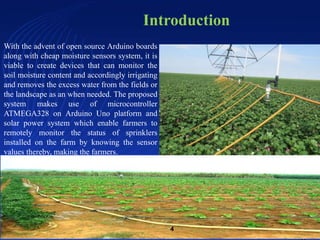
With the advent of open source Arduino boards
along with cheap moisture sensors system, it is
viable to create devices that can monitor the
soil moisture content and accordingly irrigating
and removes the excess water from the fields or
the landscape as an when needed. The proposed
system makes use of microcontroller
ATMEGA328 on Arduino Uno platform and
solar power system which enable farmers to
remotely monitor the status of sprinklers
installed on the farm by knowing the sensor
values thereby, making the farmers.
Introduction
4
Objective
To measure field temperature periodically by
deploying sensor nodes
To make use of solar power which could be
generated even in remote areas.
To study About Microcontroller and Arduino
uno.
To decide the need to provide irrigation to the
crops based on soil moisture data
5
6
Literature Review
Year Research Paper Title Author
2013 Android based Solar Powered Automatic Irrigation
System
Ashutosh Gupta
Varun Krishna
Amity University, Noida, India
2014 Automatic Monitoring and Controlling of Irrigation
System Using Wireless Sensor Networks and GSM
J.Krishna chaitanya
Y.nanda kishore
Vardhaman college of Engineering
Hyderabad, India
2012 Automated Irrigation System Using Solar Power Jia Uddin
S.M. Taslim Reza
International Islamic University
Chittagong
2018 Wireless solar Powered Automatic Drip Irrigation
System
N. Pughazendi
M. Muthukumaravel
Panimalar Engineering College,
Chennai, INDIA
2017 Smart Automated Drip Irrigation System Vinaya Kumar S R
Sachin Prabhu
SMVITM Bantakal Udupi, India
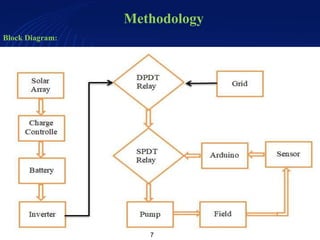
Block Diagram:
7
Methodology
8
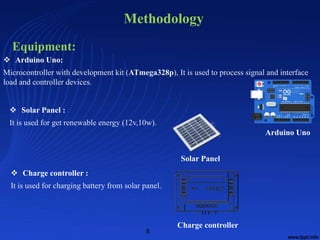
 Arduino Uno:
Microcontroller with development kit (ATmega328p), It is used to process signal and interface
load and controller devices.
Equipment:
Methodology
Arduino Uno
 Solar Panel :
It is used for get renewable energy (12v,10w).
Solar Panel
 Charge controller :
It is used for charging battery from solar panel.
Charge controller
9
 Inverter:
It is used for convert DC to AC
Methodology
Equipment:
Inverter DPDT & SPDT relay :
It is an electro-mechanical switch. It uses electro-
magnetism generated from a medium
voltage/current. We are used two type of relay Its
operating voltage 220v AC and 5V .
DPDT Relay
SPDT Relay
 Moisture sensor :
it is used measure soil dry or wet.
Moisture sensor
 Pump :
We are used Centrifugal
pump for supplying water
Centrifugal pump
10
Methodology
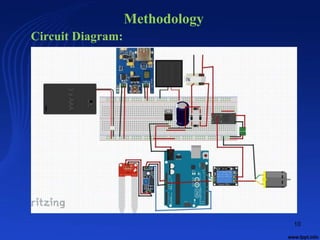
Circuit Diagram:
11
Methodology
Working Principle :
Main Part:
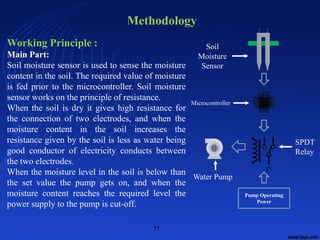
Soil moisture sensor is used to sense the moisture
content in the soil. The required value of moisture
is fed prior to the microcontroller. Soil moisture
sensor works on the principle of resistance.
When the soil is dry it gives high resistance for
the connection of two electrodes, and when the
moisture content in the soil increases the
resistance given by the soil is less as water being
good conductor of electricity conducts between
the two electrodes.
When the moisture level in the soil is below than
the set value the pump gets on, and when the
moisture content reaches the required level the
power supply to the pump is cut-off.
Pump Operating
Power
Soil
Moisture
Sensor
Microcontroller
SPDT
Relay
Water Pump
12
Methodology
Working Principle :
Operating Power Section:
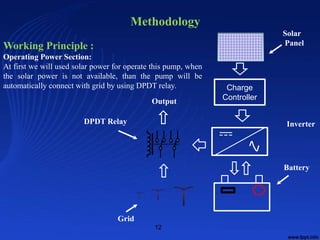
At first we will used solar power for operate this pump, when
the solar power is not available, than the pump will be
automatically connect with grid by using DPDT relay. Charge
Controller
Solar
Panel
Inverter
Battery
Output
DPDT Relay
Grid
13
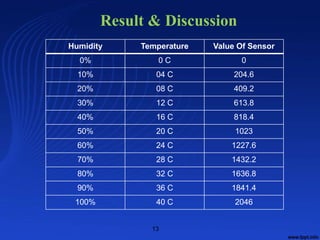
Result & Discussion
Humidity Temperature Value Of Sensor
0% 0 C 0
10% 04 C 204.6
20% 08 C 409.2
30% 12 C 613.8
40% 16 C 818.4
50% 20 C 1023
60% 24 C 1227.6
70% 28 C 1432.2
80% 32 C 1636.8
90% 36 C 1841.4
100% 40 C 2046
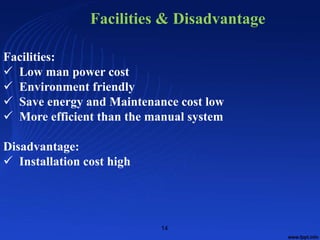
Facilities:
 Low man power cost
 Environment friendly
 Save energy and Maintenance cost low
 More efficient than the manual system
Disadvantage:
 Installation cost high
Facilities & Disadvantage
14
In this thesis we are trying to make a simple renewable energy based
automatic irrigation system which is cost efficient and increase our
irrigation production. Solar water pumping system is reliable and long
lasting. It requires minimum maintenance. Though it is expensive to
install but in the long run it is relatively cost effective. As a developing
country, Bangladesh needs these system so that we can have lower
maintenance cost and can have water for irrigation and other purposes.
With increasing reliance on natural gas and fossil fuels, we run the risk
of exhausting them in the near future. Our region is subject to a healthy
amount of sunshine as the results show, which makes it very important
for us to take initiatives and improve on solar powered technology.
Conclusion
15
[1]Solar,Photovoltaic_system[Online].Available:https://en.wikipedia
.org/wiki/Photovoltaic_system (Visited on 01/12/2018)
[2]Solar,PV_system,[Online],Available:http://www.fsec.ucf.edu/en/c
onsumer/solar_electricity/basics/how_pv_system_works.htm(Visited
on 02/12/2018)
[3]ChargeController,solar_system,[Online]Available:https://www.sol
ar-electric.com/learning-center/batteries-and-charging /solar-charge-
controller-basics.html(Visited on 5/12/2018)
Reference
16
THANK YOU
ANY QUESTION ?
17

Solar Power Based Automatic Irrigation System

  • 1.
    UNDERTHEGUIDENCE OF DR.MD.SHAKAWAT ZAMAN SARKER Associateprofessor Department of Electrical & Electronic Engineering Uttara University PRESENTEDBY  Md. Ataur Rahman Arif ID: M-21532411022  Md. Mehedi Hassan ID: M-21532411016  Milon Patowari ID: M-21532411011 20th (Regular) Department of Electrical and Electronics Engineering Uttara University 20th (Regular) 20th (Regular) Solar Power Based Automatic Irrigation System Using Arduino A Presentation on
  • 2.
  • 3.
    Introduction Agriculture is thebackbone of Bangladeshis economy. It is one of the major occupations for many people in Bangladesh. Out of 2/3rd water found on the Earth, only 3.5% is fresh water that can be put into use in any day-to-day activities. About 55% of this available freshwater is used in agriculture and 10-30% of this percentage gets wasted on a regular basis due to many reasons. Over the years different means of irrigation has evolved to minimize this wastage of water in agricultural lands. However, one of the major problems that still remains, leading to wastage of water, is the lack of proper knowledge of the farmers about the soil moisture content, and hence the requirement of the amount of water in the agricultural soil. [2] Moreover, due to lack of irrigation the crop to be very low, it's happen to the load shading. it can be reduced used solar power system. The global irrigation scenario is categorized based on increased demand for higher agricultural productivity and decrease the availability of water and power. 3
  • 4.
    With the adventof open source Arduino boards along with cheap moisture sensors system, it is viable to create devices that can monitor the soil moisture content and accordingly irrigating and removes the excess water from the fields or the landscape as an when needed. The proposed system makes use of microcontroller ATMEGA328 on Arduino Uno platform and solar power system which enable farmers to remotely monitor the status of sprinklers installed on the farm by knowing the sensor values thereby, making the farmers. Introduction 4
  • 5.
    Objective To measure fieldtemperature periodically by deploying sensor nodes To make use of solar power which could be generated even in remote areas. To study About Microcontroller and Arduino uno. To decide the need to provide irrigation to the crops based on soil moisture data 5
  • 6.
    6 Literature Review Year ResearchPaper Title Author 2013 Android based Solar Powered Automatic Irrigation System Ashutosh Gupta Varun Krishna Amity University, Noida, India 2014 Automatic Monitoring and Controlling of Irrigation System Using Wireless Sensor Networks and GSM J.Krishna chaitanya Y.nanda kishore Vardhaman college of Engineering Hyderabad, India 2012 Automated Irrigation System Using Solar Power Jia Uddin S.M. Taslim Reza International Islamic University Chittagong 2018 Wireless solar Powered Automatic Drip Irrigation System N. Pughazendi M. Muthukumaravel Panimalar Engineering College, Chennai, INDIA 2017 Smart Automated Drip Irrigation System Vinaya Kumar S R Sachin Prabhu SMVITM Bantakal Udupi, India
  • 7.
  • 8.
    8  Arduino Uno: Microcontrollerwith development kit (ATmega328p), It is used to process signal and interface load and controller devices. Equipment: Methodology Arduino Uno  Solar Panel : It is used for get renewable energy (12v,10w). Solar Panel  Charge controller : It is used for charging battery from solar panel. Charge controller
  • 9.
    9  Inverter: It isused for convert DC to AC Methodology Equipment: Inverter DPDT & SPDT relay : It is an electro-mechanical switch. It uses electro- magnetism generated from a medium voltage/current. We are used two type of relay Its operating voltage 220v AC and 5V . DPDT Relay SPDT Relay  Moisture sensor : it is used measure soil dry or wet. Moisture sensor  Pump : We are used Centrifugal pump for supplying water Centrifugal pump
  • 10.
  • 11.
    11 Methodology Working Principle : MainPart: Soil moisture sensor is used to sense the moisture content in the soil. The required value of moisture is fed prior to the microcontroller. Soil moisture sensor works on the principle of resistance. When the soil is dry it gives high resistance for the connection of two electrodes, and when the moisture content in the soil increases the resistance given by the soil is less as water being good conductor of electricity conducts between the two electrodes. When the moisture level in the soil is below than the set value the pump gets on, and when the moisture content reaches the required level the power supply to the pump is cut-off. Pump Operating Power Soil Moisture Sensor Microcontroller SPDT Relay Water Pump
  • 12.
    12 Methodology Working Principle : OperatingPower Section: At first we will used solar power for operate this pump, when the solar power is not available, than the pump will be automatically connect with grid by using DPDT relay. Charge Controller Solar Panel Inverter Battery Output DPDT Relay Grid
  • 13.
    13 Result & Discussion HumidityTemperature Value Of Sensor 0% 0 C 0 10% 04 C 204.6 20% 08 C 409.2 30% 12 C 613.8 40% 16 C 818.4 50% 20 C 1023 60% 24 C 1227.6 70% 28 C 1432.2 80% 32 C 1636.8 90% 36 C 1841.4 100% 40 C 2046
  • 14.
    Facilities:  Low manpower cost  Environment friendly  Save energy and Maintenance cost low  More efficient than the manual system Disadvantage:  Installation cost high Facilities & Disadvantage 14
  • 15.
    In this thesiswe are trying to make a simple renewable energy based automatic irrigation system which is cost efficient and increase our irrigation production. Solar water pumping system is reliable and long lasting. It requires minimum maintenance. Though it is expensive to install but in the long run it is relatively cost effective. As a developing country, Bangladesh needs these system so that we can have lower maintenance cost and can have water for irrigation and other purposes. With increasing reliance on natural gas and fossil fuels, we run the risk of exhausting them in the near future. Our region is subject to a healthy amount of sunshine as the results show, which makes it very important for us to take initiatives and improve on solar powered technology. Conclusion 15
  • 16.
    [1]Solar,Photovoltaic_system[Online].Available:https://en.wikipedia .org/wiki/Photovoltaic_system (Visited on01/12/2018) [2]Solar,PV_system,[Online],Available:http://www.fsec.ucf.edu/en/c onsumer/solar_electricity/basics/how_pv_system_works.htm(Visited on 02/12/2018) [3]ChargeController,solar_system,[Online]Available:https://www.sol ar-electric.com/learning-center/batteries-and-charging /solar-charge- controller-basics.html(Visited on 5/12/2018) Reference 16
  • 17.