DIAGNOSTIC ANALYSIS OF
SOIL & WATER
Presented by :-
ANURAG BERA (Ag-01)
&
SUBHA CHAKRABORTY (Ag-03)
(RAWE Programme)
Department of Agricultural Chemistry
and Soil Science
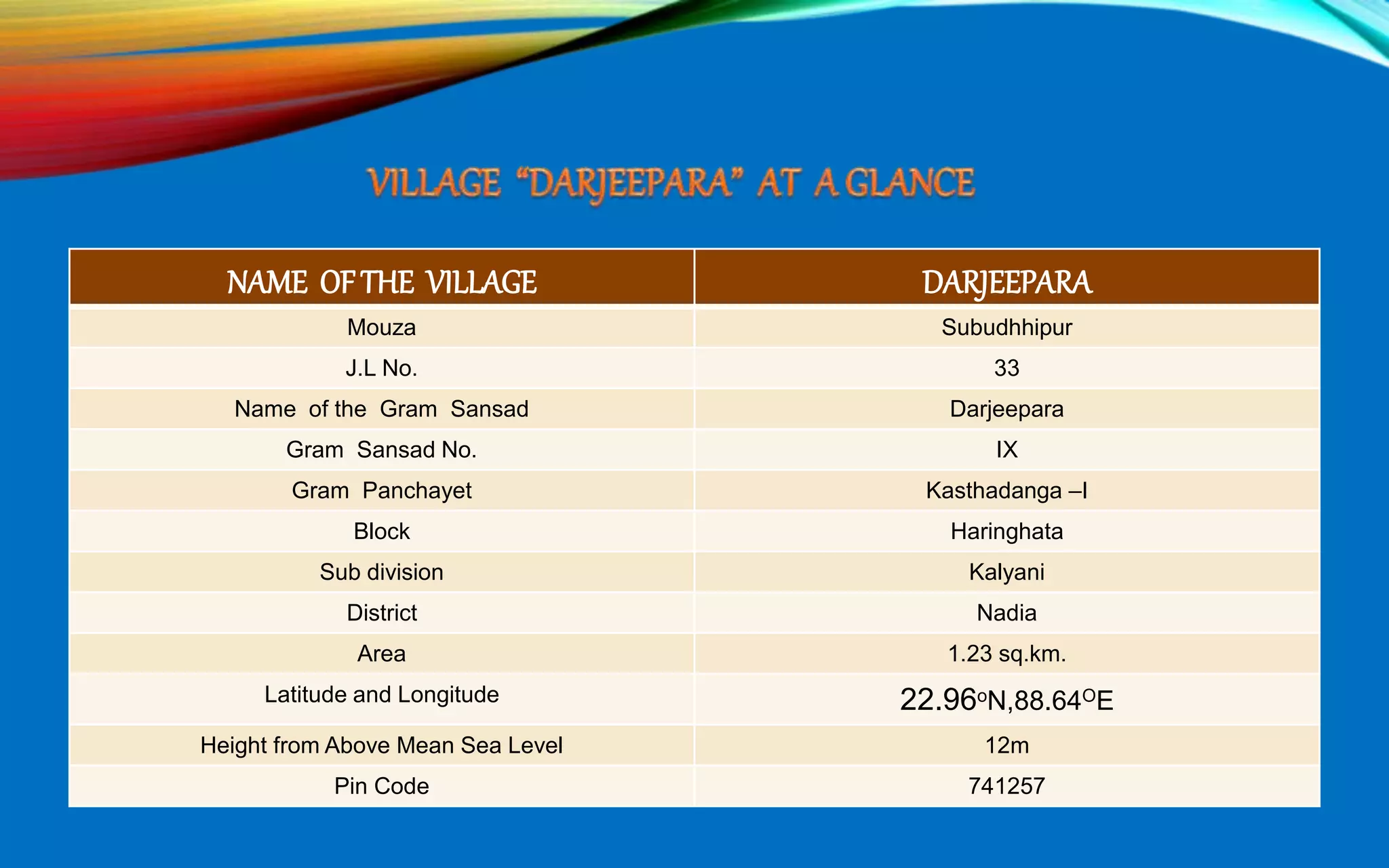
NAME OFTHE VILLAGE DARJEEPARA
Mouza Subudhhipur
J.L No. 33
Name of the Gram Sansad Darjeepara
Gram Sansad No. IX
Gram Panchayet Kasthadanga –I
Block Haringhata
Sub division Kalyani
District Nadia
Area 1.23 sq.km.
Latitude and Longitude 22.96oN,88.64OE
Height from Above Mean Sea Level 12m
Pin Code 741257
REPORTON SOIL ANALYSISOF THEVILLAGEDARJEEPARA
Introduction:- Soil testing is a useful
tool for making recommendation for the
application of fertilizer to crops. It gives
a measure of the availability of
nutrients to crops. In soil analysis, the
higher and lower critical limits become
significant in relation to agricultural
development of a country.
Objectives:-
1) Helping to evaluate soil productivity
2) Determining specific soil conditions,
like salinity, acidity which limits the
crop yield .
3) Predicting the probability of getting
profitable responses .
4) Grouping of soils into different
classes relative to the levels of nutrient
for suggesting fertilizer practices.
Field History:
Name of the farmer:- Qutubuddin Mondal.
Date of collection: 28/05/2019
Land situation: upland
Previous Crop: Summer Paddy
Irrigation facility: Shallow tubewell
 Fertilizer: Currenty not applied
Fertilizer generally used: Urea (20kg/bigha),
10:26:26 (10 kg/bigha) , SSP (30kg/bigha)
 Crop rotation: Summer Paddy( Boro season ) –
Aman Paddy (Kharif Season)
Next crop: Aman Paddy
 Area: 2 bigha ( 0.27 ha )
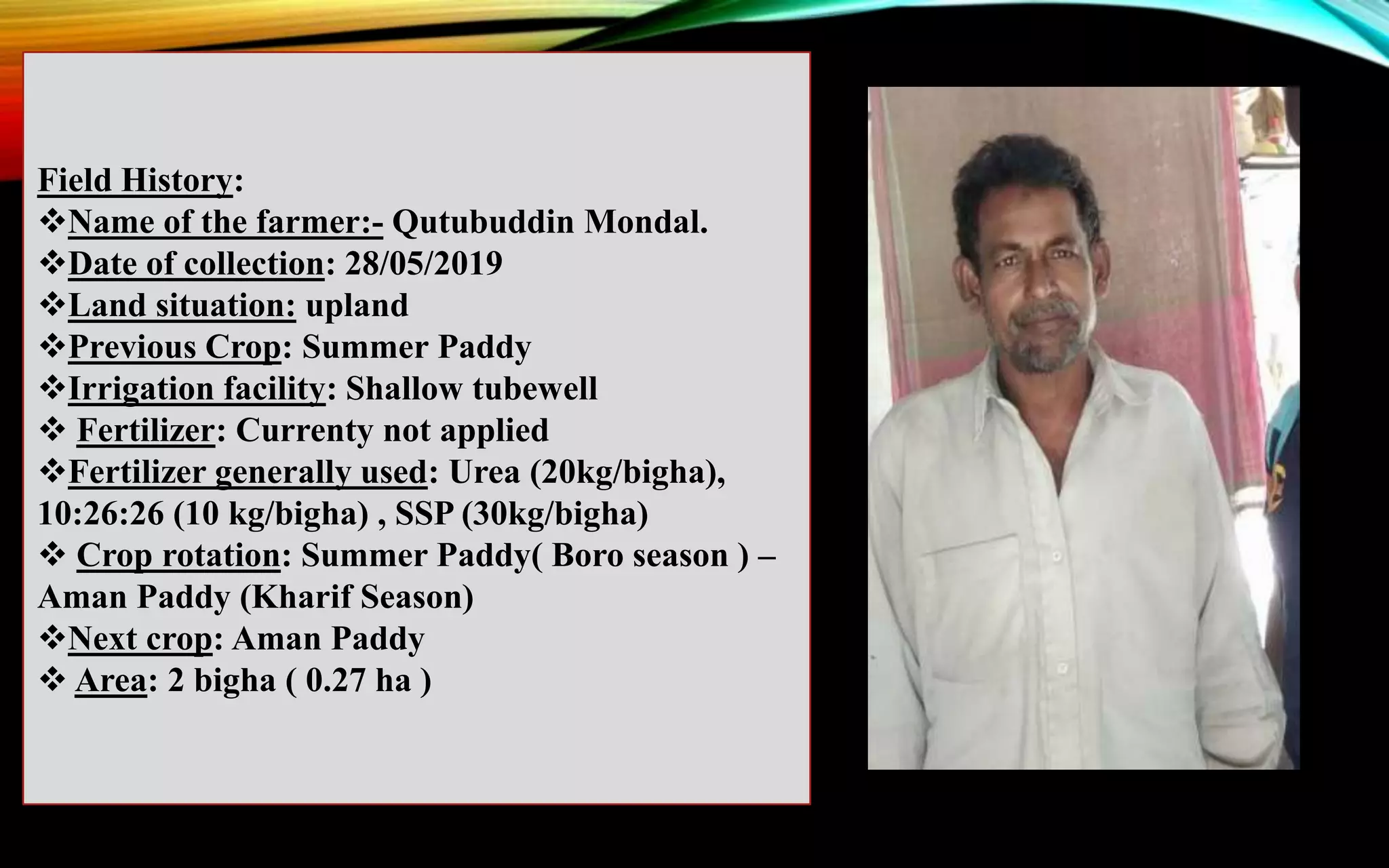
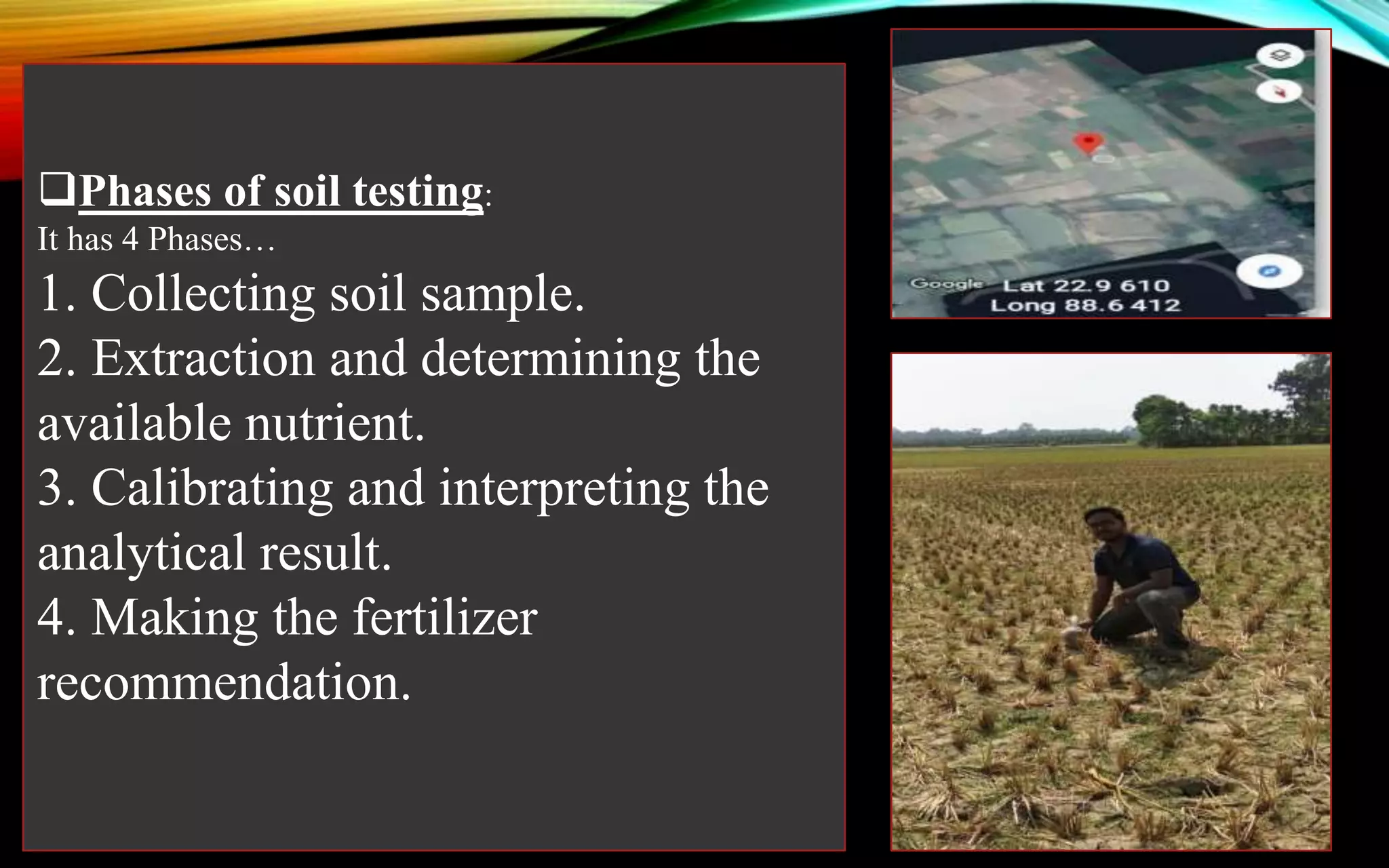
Phases of soil testing:
It has 4 Phases…
1. Collecting soil sample.
2. Extraction and determining the
available nutrient.
3. Calibrating and interpreting the
analytical result.
4. Making the fertilizer
recommendation.
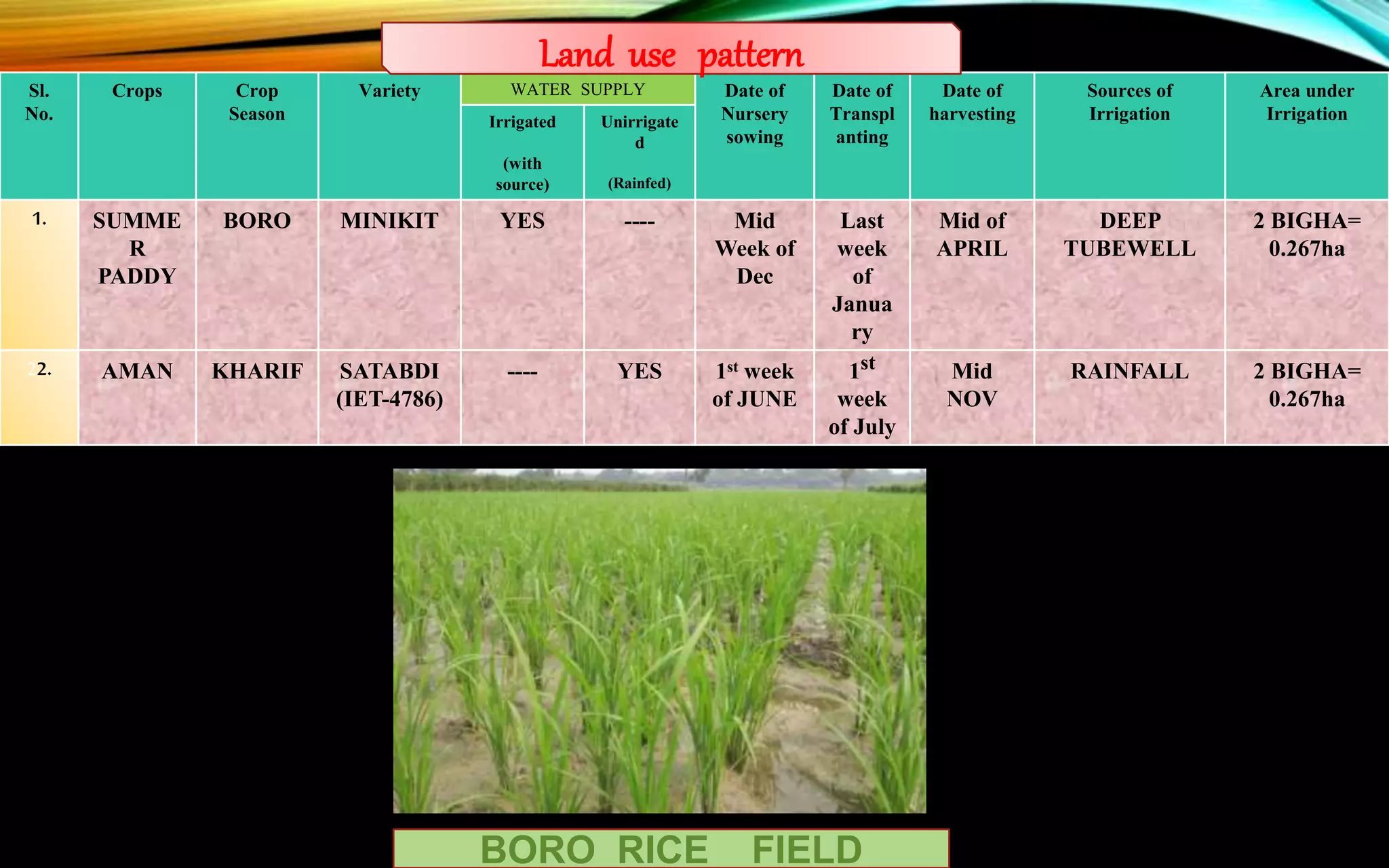
Sl.
No.
Crops Crop
Season
Variety WATER SUPPLY Date of
Nursery
sowing
Date of
Transpl
anting
Date of
harvesting
Sources of
Irrigation
Area under
IrrigationIrrigated
(with
source)
Unirrigate
d
(Rainfed)
1. SUMME
R
PADDY
BORO MINIKIT YES ---- Mid
Week of
Dec
Last
week
of
Janua
ry
Mid of
APRIL
DEEP
TUBEWELL
2 BIGHA=
0.267ha
22. AMAN KHARIF SATABDI
(IET-4786)
---- YES 1st week
of JUNE
1st
week
of July
Mid
NOV
RAINFALL 2 BIGHA=
0.267ha
Land use pattern
BORO RICE FIELD
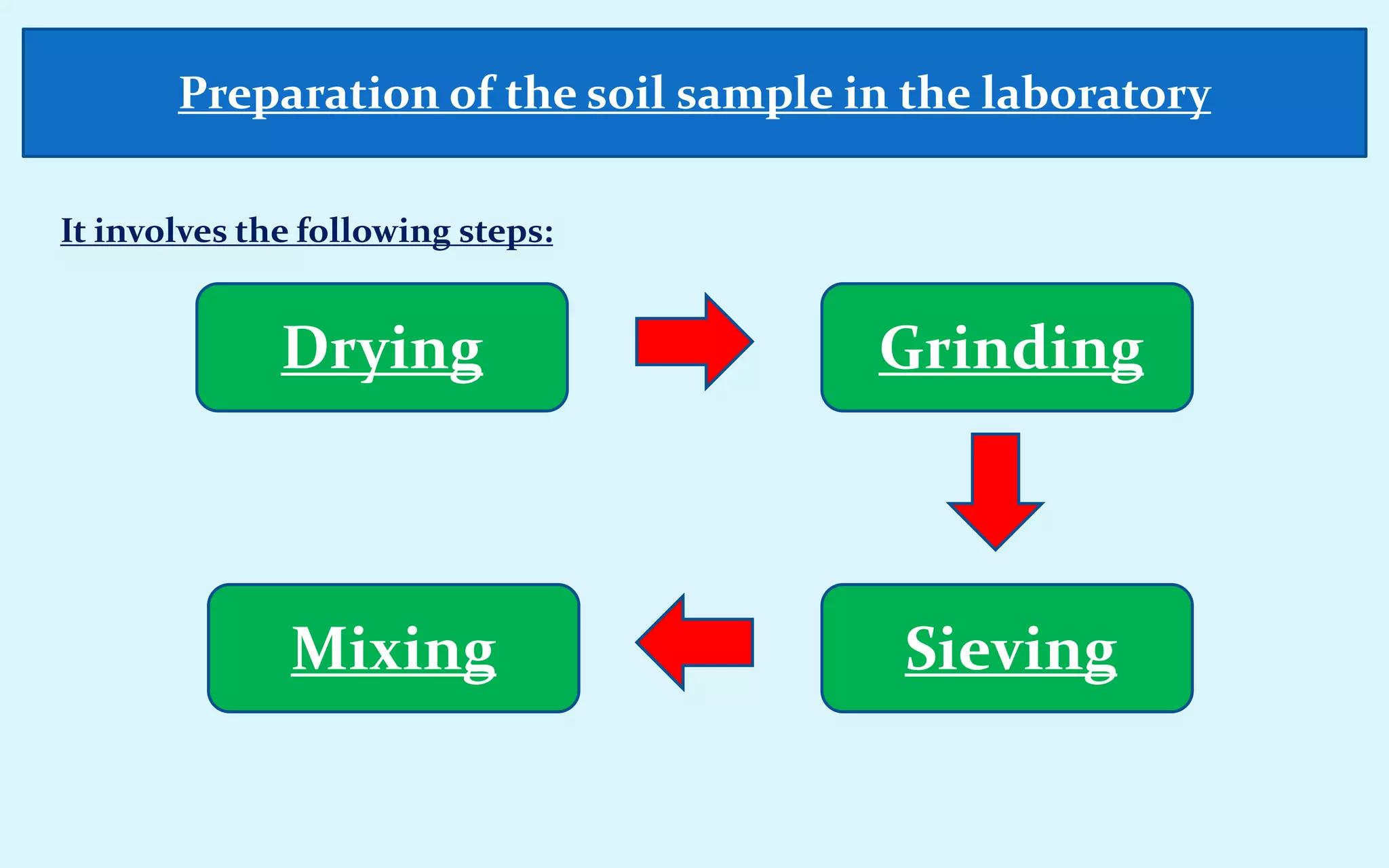
Preparation of the soil sample in the laboratory
It involves the following steps:
Drying Grinding
SievingMixing
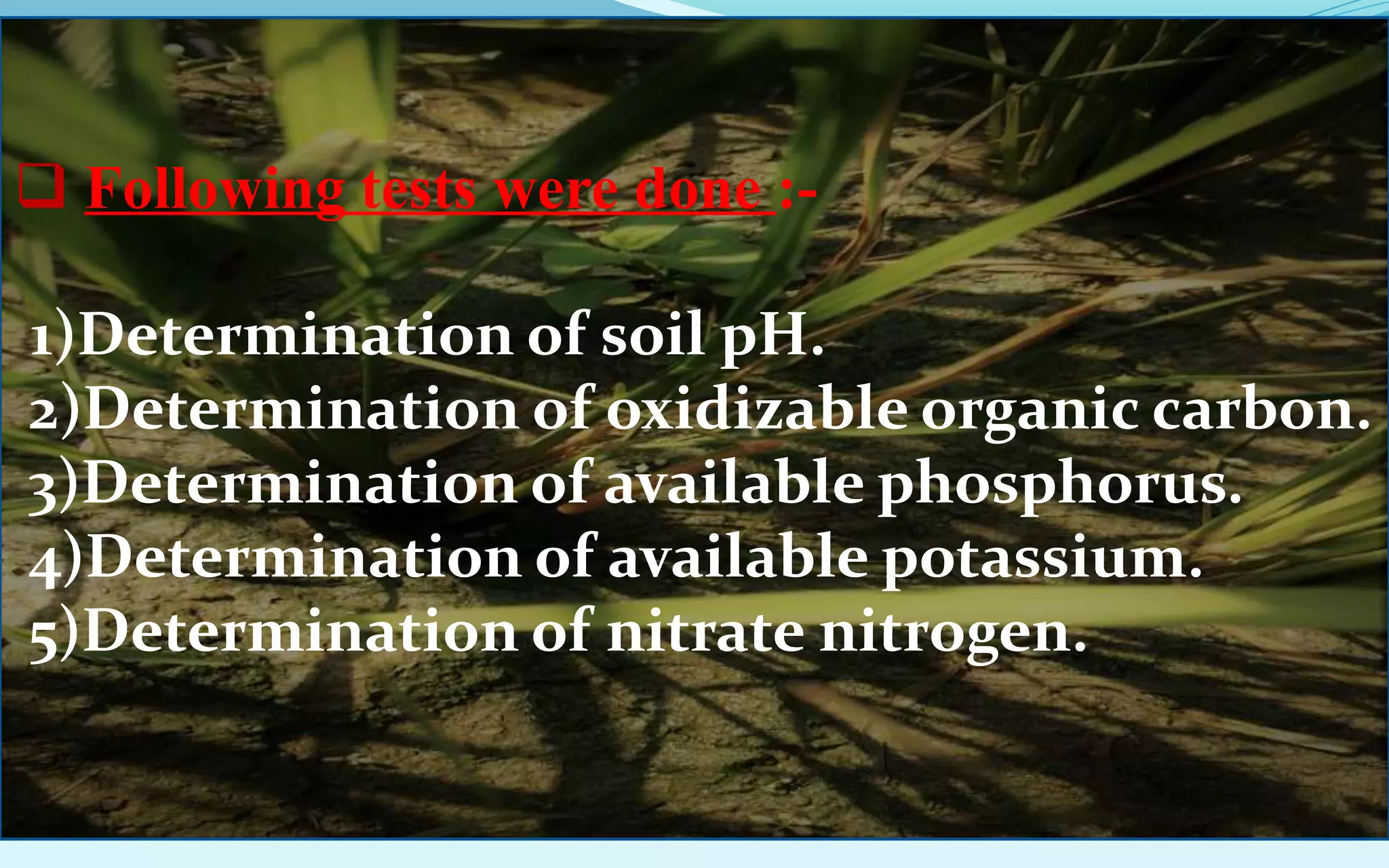
 Following tests were done :-
1)Determination of soil pH.
2)Determination of oxidizable organic carbon.
3)Determination of available phosphorus.
4)Determination of available potassium.
5)Determination of nitrate nitrogen.
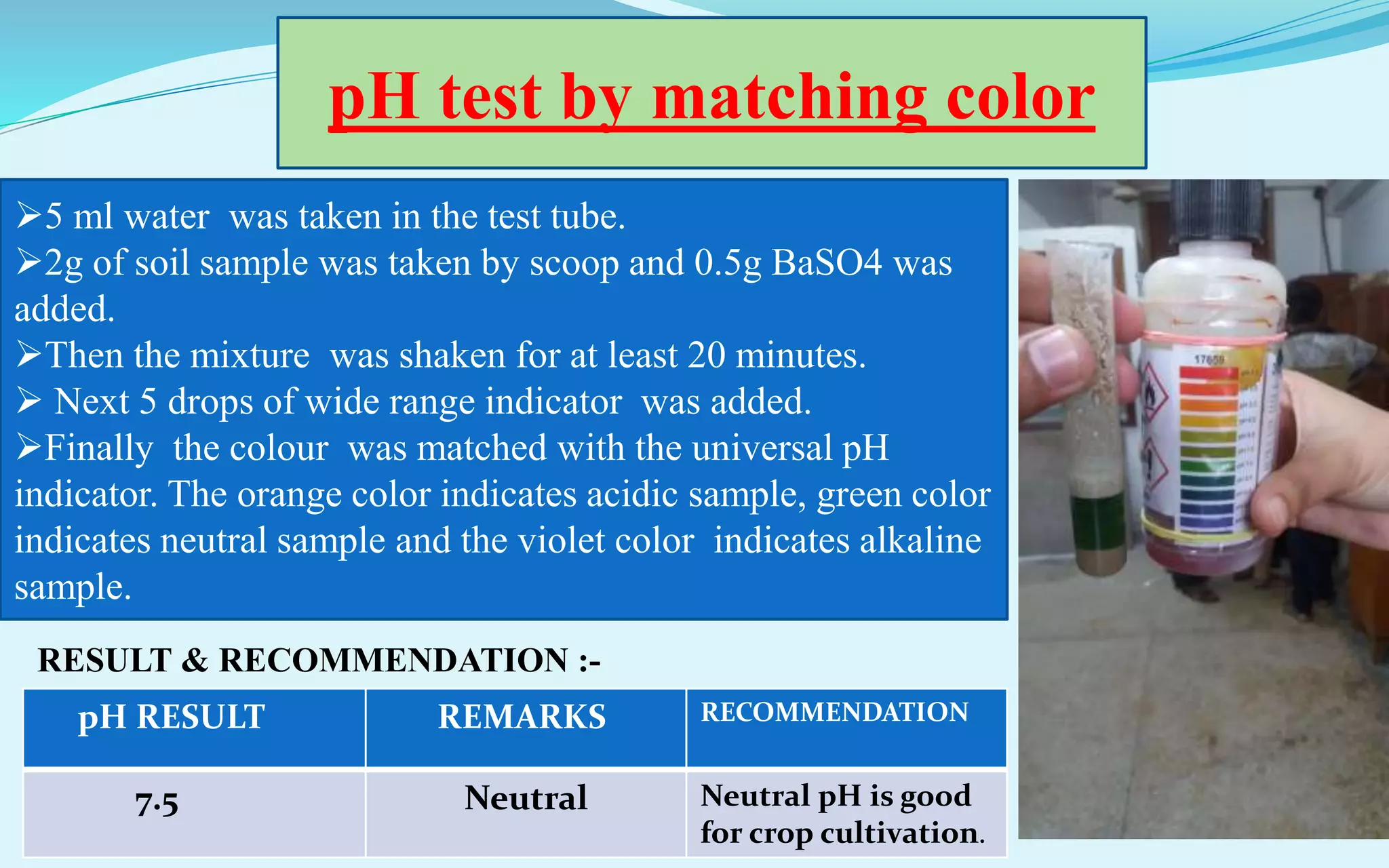
5 ml water was taken in the test tube.
2g of soil sample was taken by scoop and 0.5g BaSO4 was
added.
Then the mixture was shaken for at least 20 minutes.
 Next 5 drops of wide range indicator was added.
Finally the colour was matched with the universal pH
indicator. The orange color indicates acidic sample, green color
indicates neutral sample and the violet color indicates alkaline
sample.
pH test by matching color
pH RESULT REMARKS RECOMMENDATION
7.5 Neutral Neutral pH is good
for crop cultivation.
RESULT & RECOMMENDATION :-
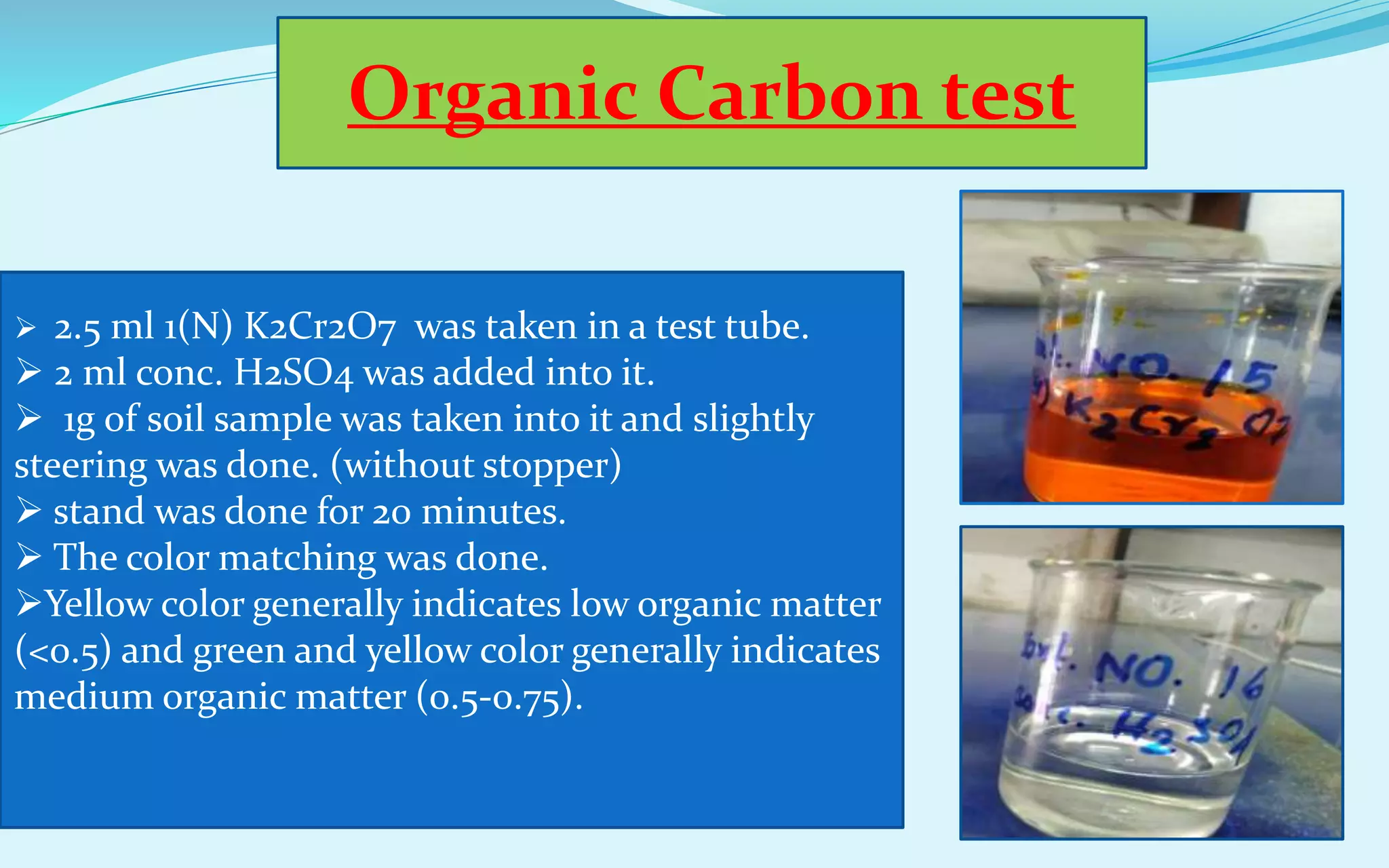
 2.5 ml 1(N) K2Cr2O7 was taken in a test tube.
 2 ml conc. H2SO4 was added into it.
 1g of soil sample was taken into it and slightly
steering was done. (without stopper)
 stand was done for 20 minutes.
 The color matching was done.
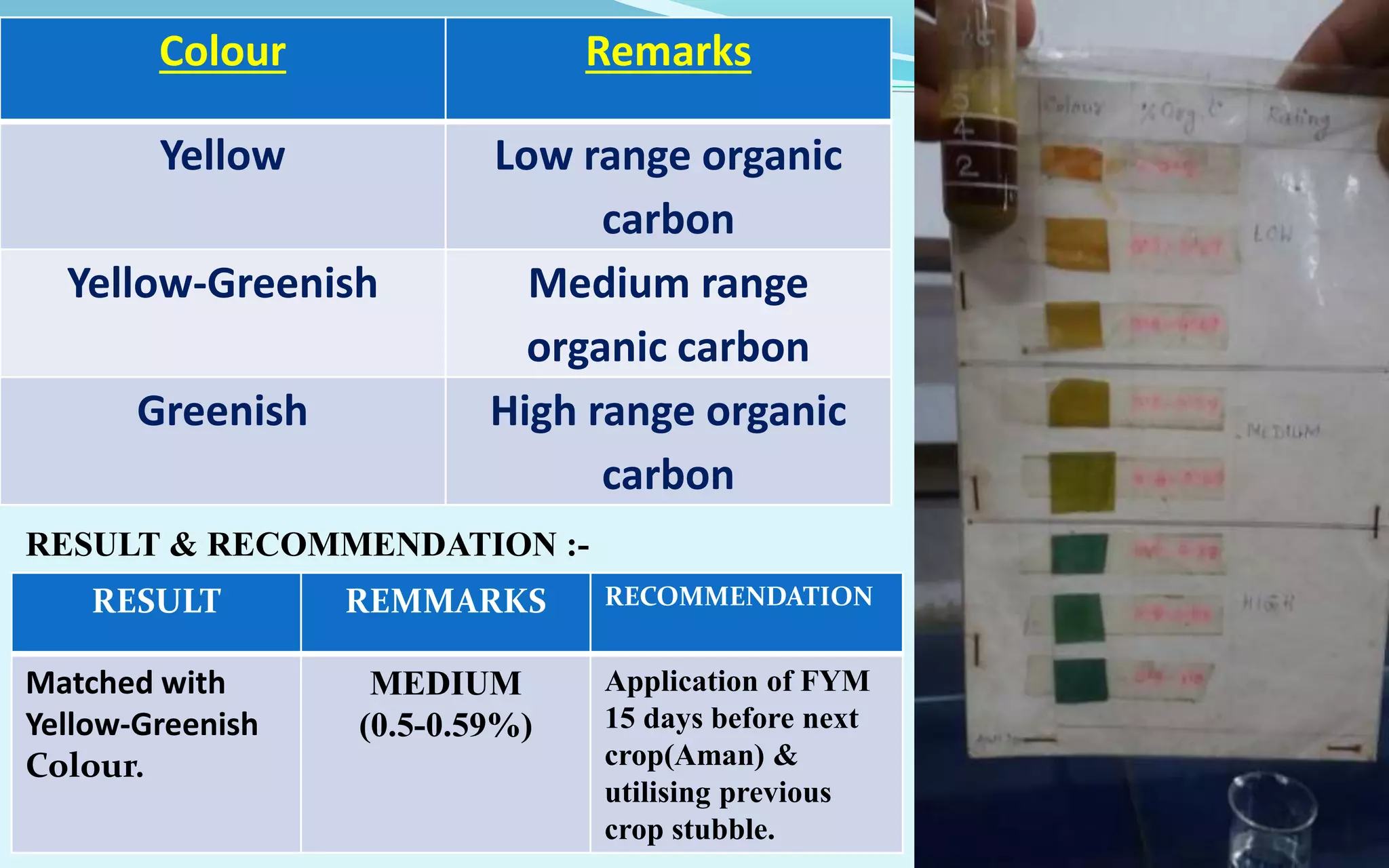
Yellow color generally indicates low organic matter
(<0.5) and green and yellow color generally indicates
medium organic matter (0.5-0.75).
Organic Carbon test
Colour Remarks
Yellow Low range organic
carbon
Yellow-Greenish Medium range
organic carbon
Greenish High range organic
carbon
RESULT REMMARKS RECOMMENDATION
Matched with
Yellow-Greenish
Colour.
MEDIUM
(0.5-0.59%)
Application of FYM
15 days before next
crop(Aman) &
utilising previous
crop stubble.
RESULT & RECOMMENDATION :-
Available P detection by
Olsen’s method
10 ml NaHCO3-Charcoal is taken in the test tube.
 Then add 2g of soil sample.
Then tight the stopper at the top.
Shake the mixture for 5-7 minutes.
 Filter the mixture with filter paper.
Then take 2ml mixture from filtrate. Add 2ml
Ammonium molybdate.
Add little amount of distilled water.
Then add 3 drops of SnCl2.
Make the volume up to ml.
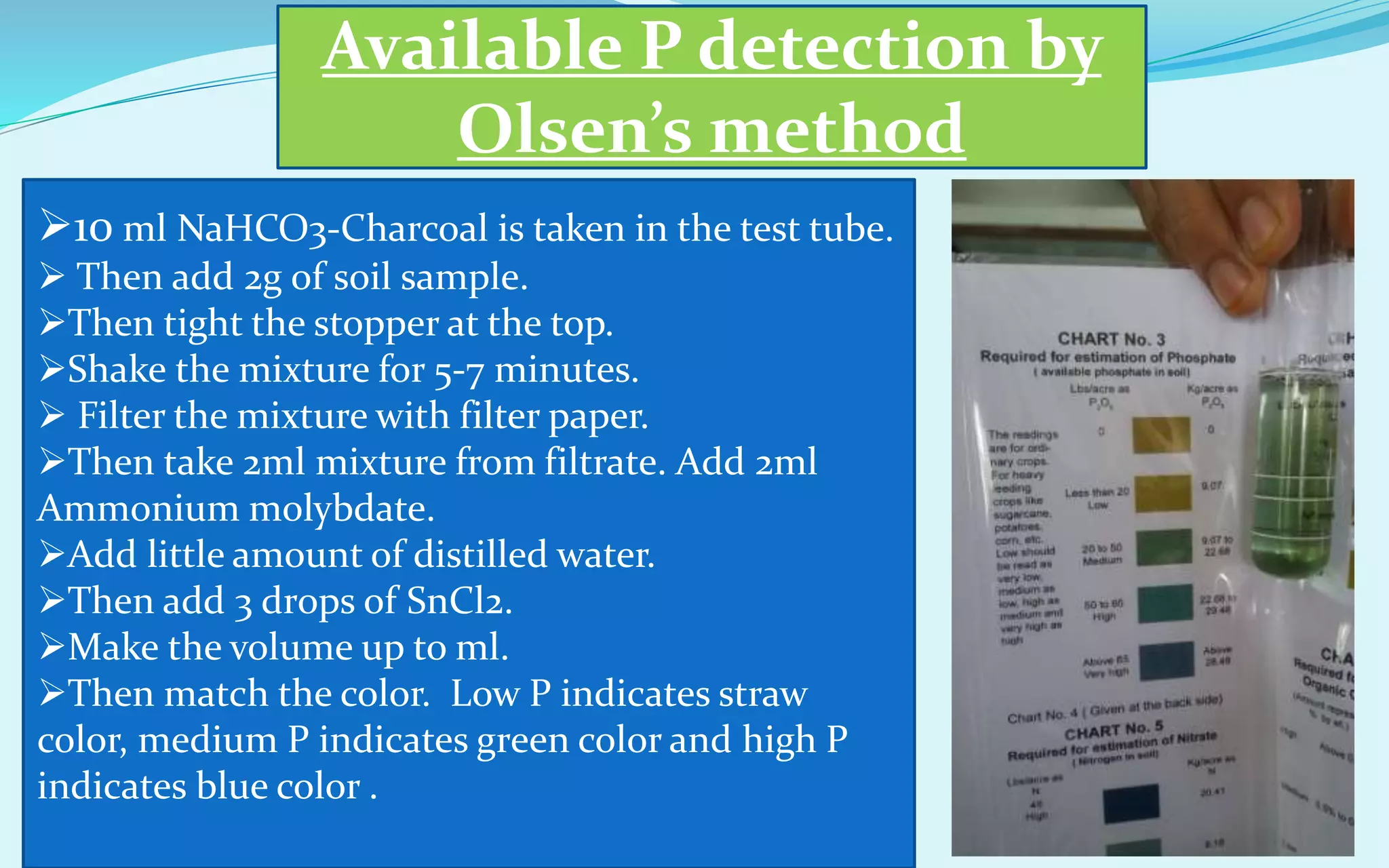
Then match the color. Low P indicates straw
color, medium P indicates green color and high P
indicates blue color .
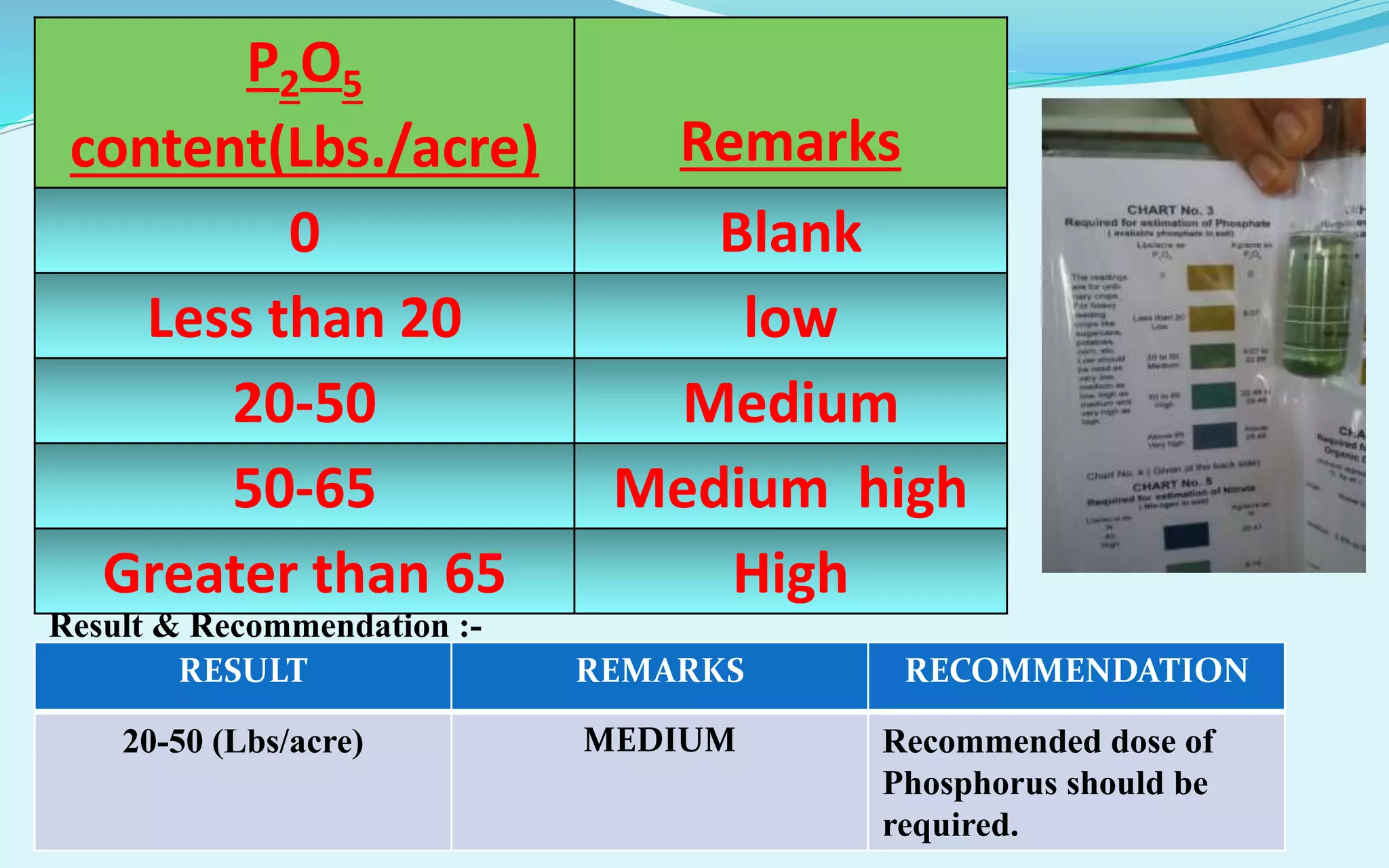
P2O5
content(Lbs./acre) Remarks
0 Blank
Less than 20 low
20-50 Medium
50-65 Medium high
Greater than 65 High
RESULT REMARKS RECOMMENDATION
20-50 (Lbs/acre) MEDIUM Recommended dose of
Phosphorus should be
required.
Result & Recommendation :-
Available K by Morgan’s
reagent
Add 5g of soil and then shake it.
Filtrate the mixture and take 2ml
from filtrate.
Add sodium cobultinitrate 6 drops.
Then add alcohol and aldehyde
mixture.
Shake it properly. Then the solution
become yellow color. In this case
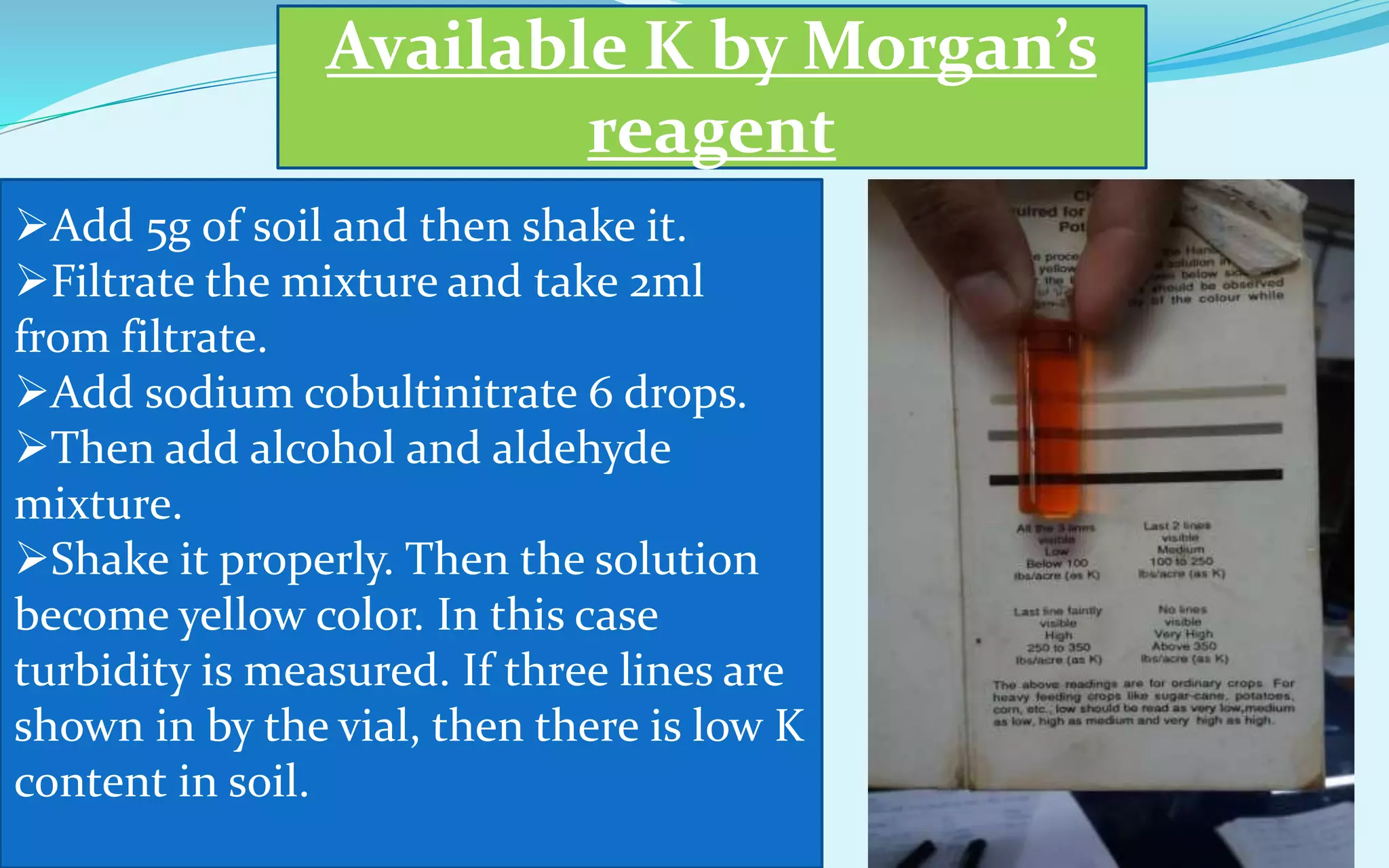
turbidity is measured. If three lines are
shown in by the vial, then there is low K
content in soil.
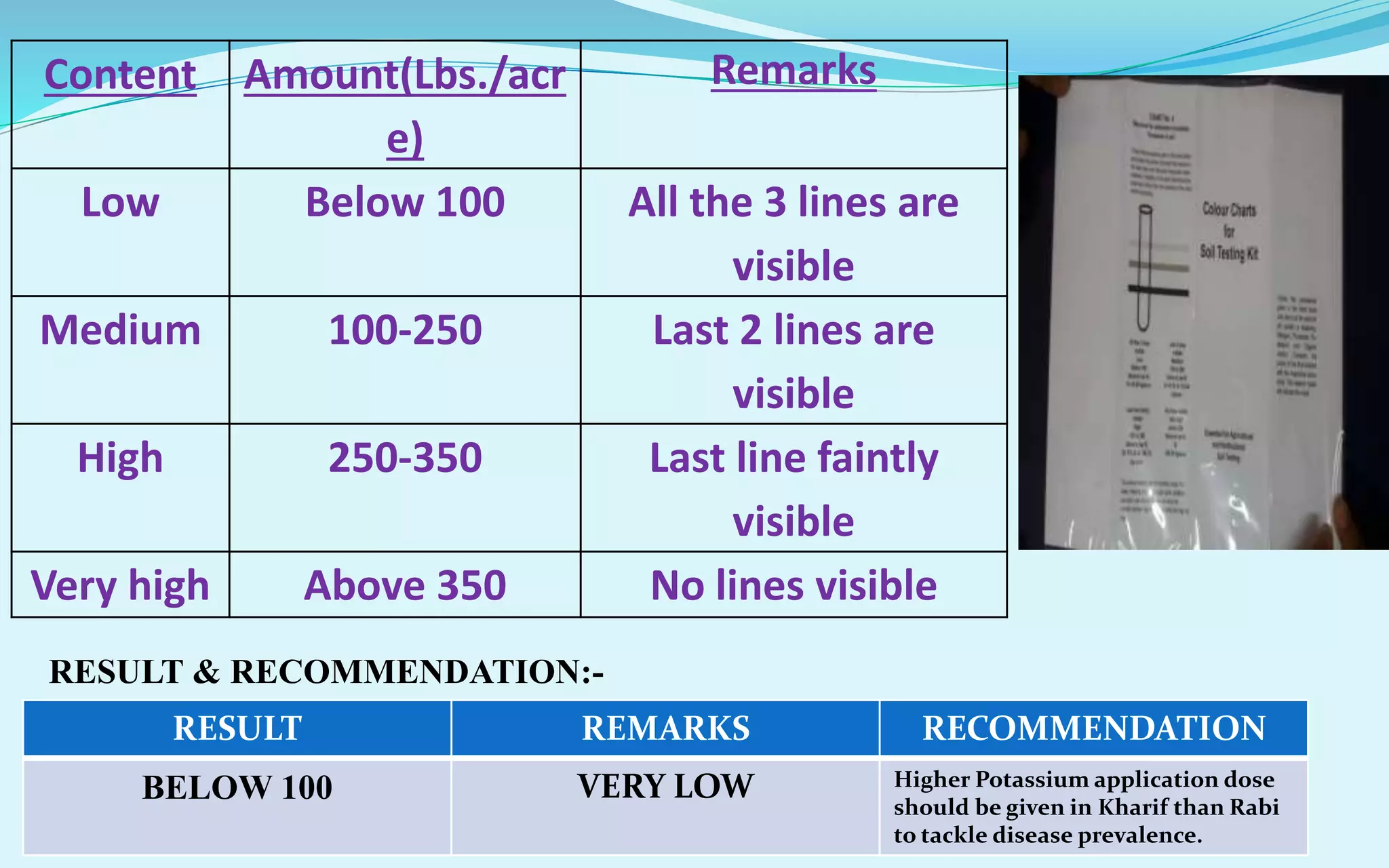
Content Amount(Lbs./acr
e)
Remarks
Low Below 100 All the 3 lines are
visible
Medium 100-250 Last 2 lines are
visible
High 250-350 Last line faintly
visible
Very high Above 350 No lines visible
RESULT & RECOMMENDATION:-
RESULT REMARKS RECOMMENDATION
BELOW 100 VERY LOW Higher Potassium application dose
should be given in Kharif than Rabi
to tackle disease prevalence.
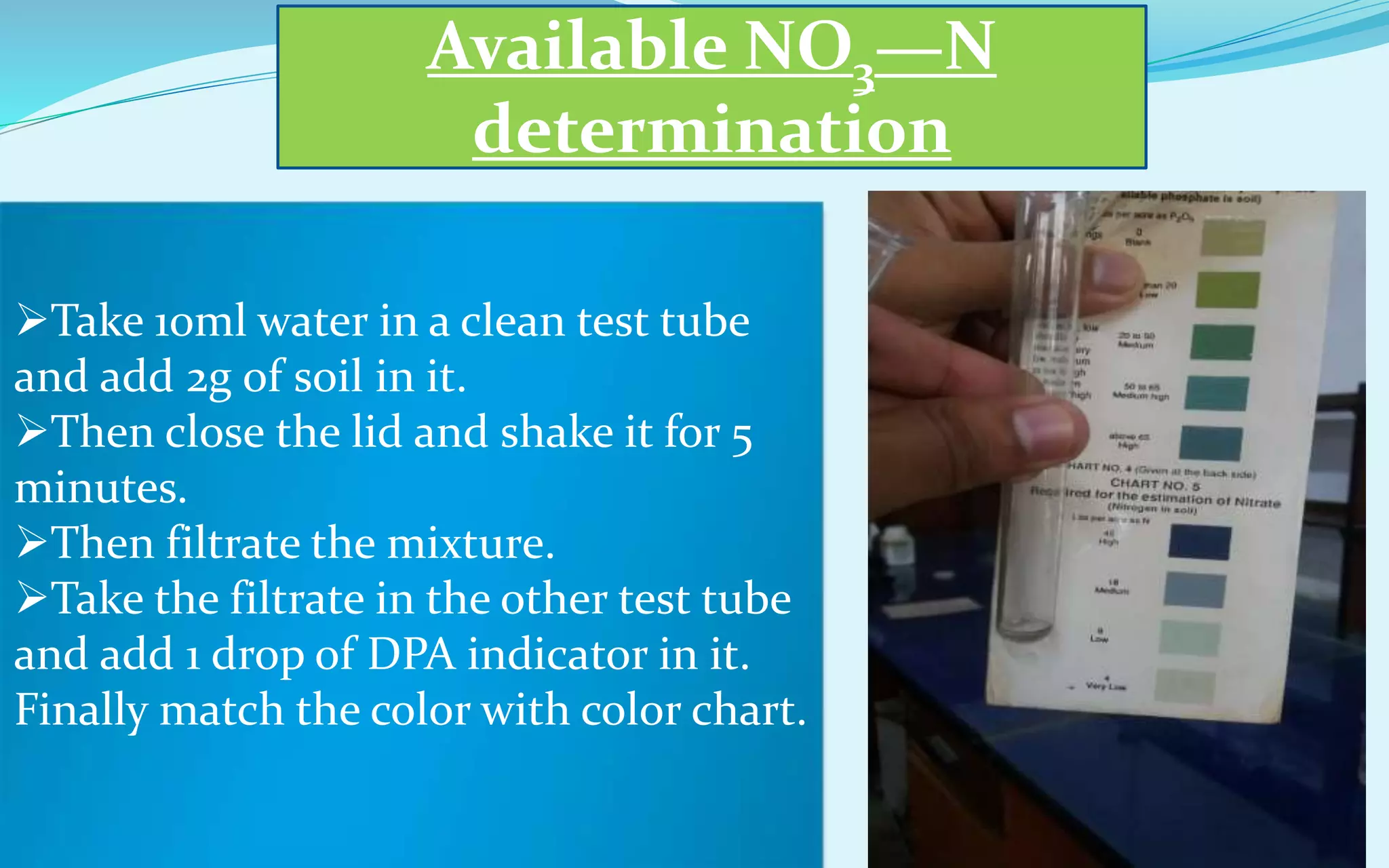
Available NO3—N
determination
Take 10ml water in a clean test tube
and add 2g of soil in it.
Then close the lid and shake it for 5
minutes.
Then filtrate the mixture.
Take the filtrate in the other test tube
and add 1 drop of DPA indicator in it.
Finally match the color with color chart.
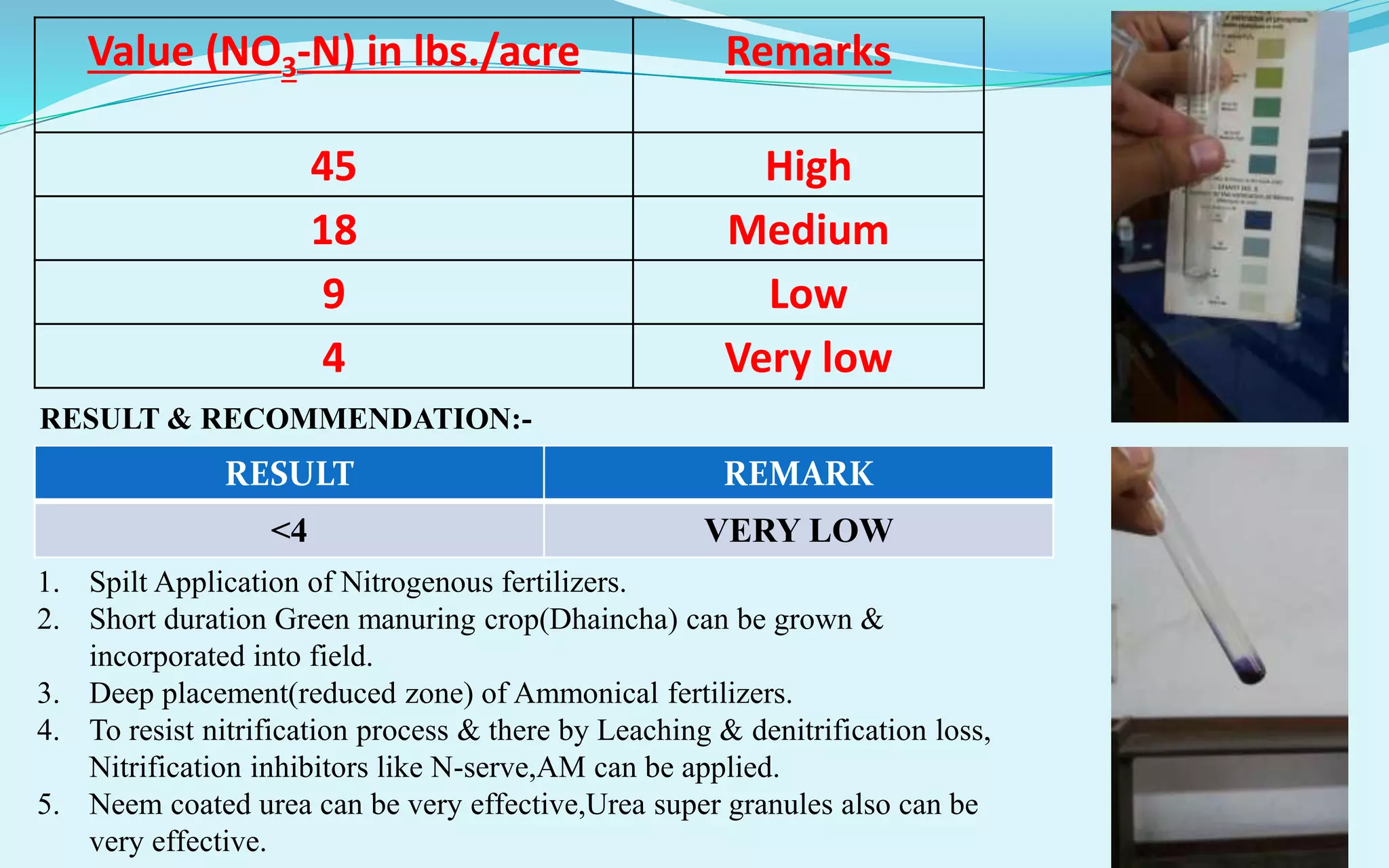
Value (NO3-N) in lbs./acre Remarks
45 High
18 Medium
9 Low
4 Very low
RESULT & RECOMMENDATION:-
RESULT REMARK
<4 VERY LOW
1. Spilt Application of Nitrogenous fertilizers.
2. Short duration Green manuring crop(Dhaincha) can be grown &
incorporated into field.
3. Deep placement(reduced zone) of Ammonical fertilizers.
4. To resist nitrification process & there by Leaching & denitrification loss,
Nitrification inhibitors like N-serve,AM can be applied.
5. Neem coated urea can be very effective,Urea super granules also can be
very effective.
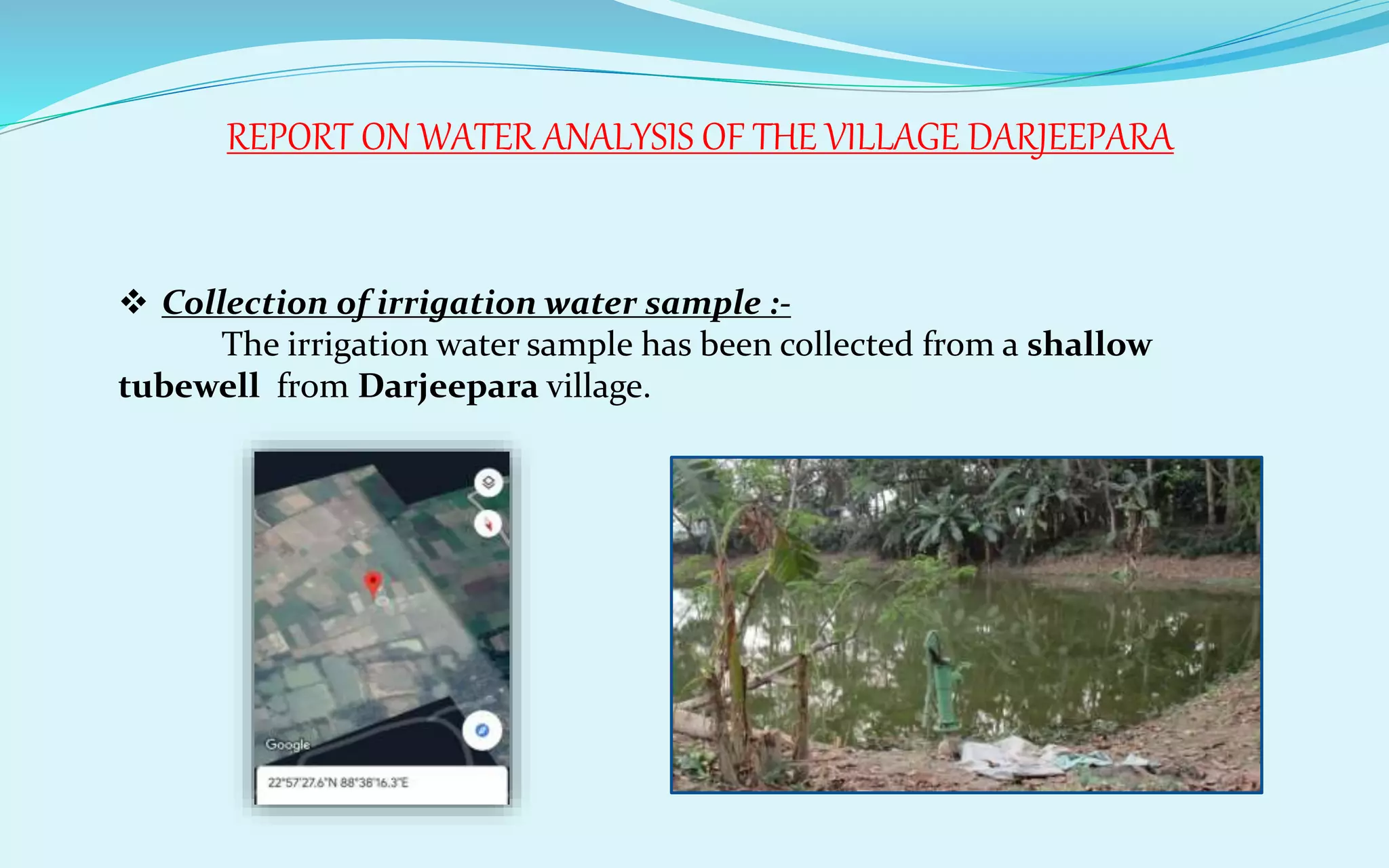
REPORT ON WATER ANALYSIS OF THE VILLAGE DARJEEPARA
 Collection of irrigation water sample :-
The irrigation water sample has been collected from a shallow
tubewell from Darjeepara village.
Quality parameter for Irrigation water analysis
• EC ( electrical conductivity )
• pH
• Na+ ion conc.
• Ca2+ & Mg2+ ion conc.
• CO3
2- & HCO3
- ion conc.
• RSC ( residual sodium carbonate )
• SAR ( sodium absorption ratio )
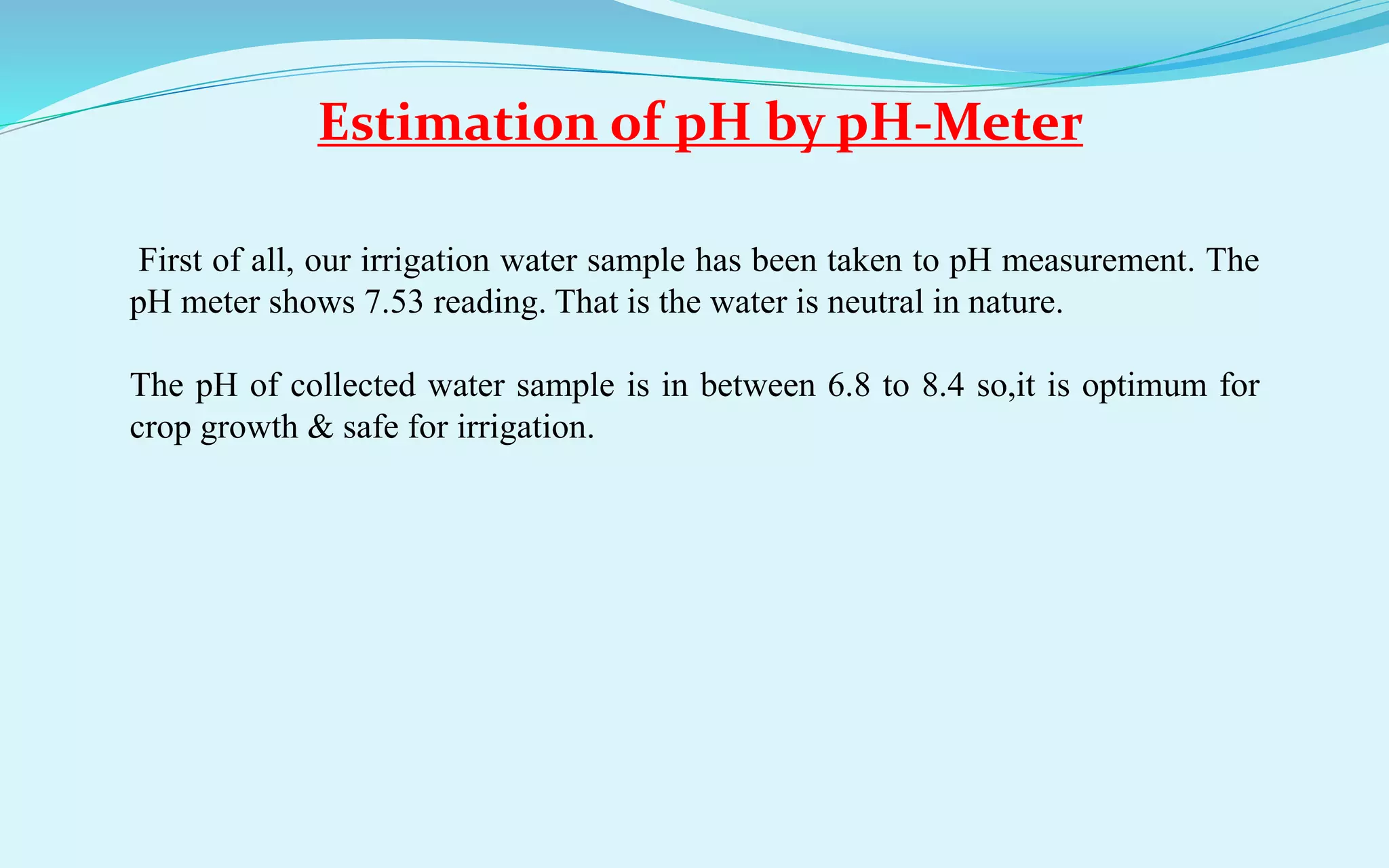
Estimation of pH by pH-Meter
First of all, our irrigation water sample has been taken to pH measurement. The
pH meter shows 7.53 reading. That is the water is neutral in nature.
The pH of collected water sample is in between 6.8 to 8.4 so,it is optimum for
crop growth & safe for irrigation.
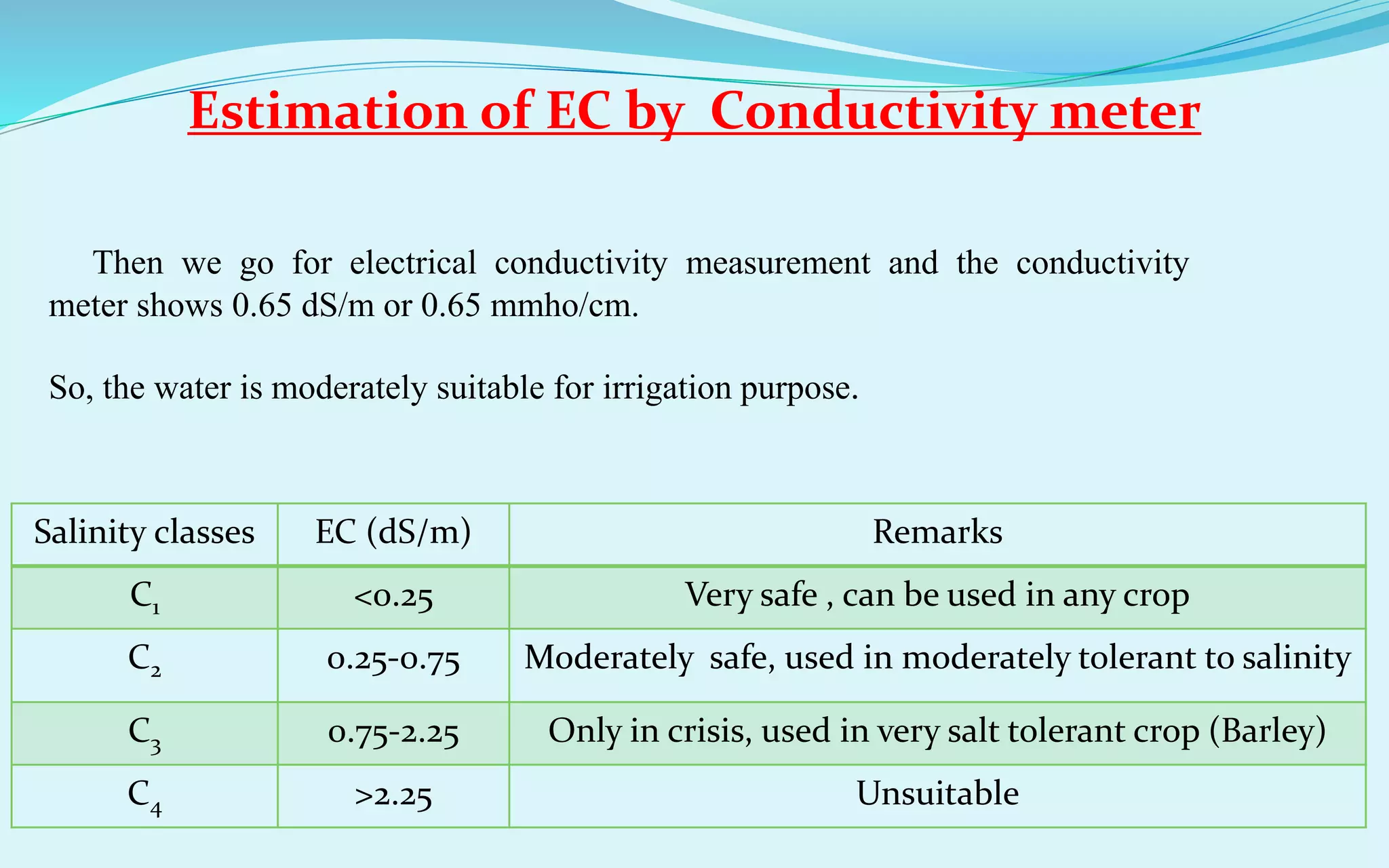
Estimation of EC by Conductivity meter
Then we go for electrical conductivity measurement and the conductivity
meter shows 0.65 dS/m or 0.65 mmho/cm.
So, the water is moderately suitable for irrigation purpose.
Salinity classes EC (dS/m) Remarks
C1 <0.25 Very safe , can be used in any crop
C2 0.25-0.75 Moderately safe, used in moderately tolerant to salinity
C3 0.75-2.25 Only in crisis, used in very salt tolerant crop (Barley)
C4 >2.25 Unsuitable
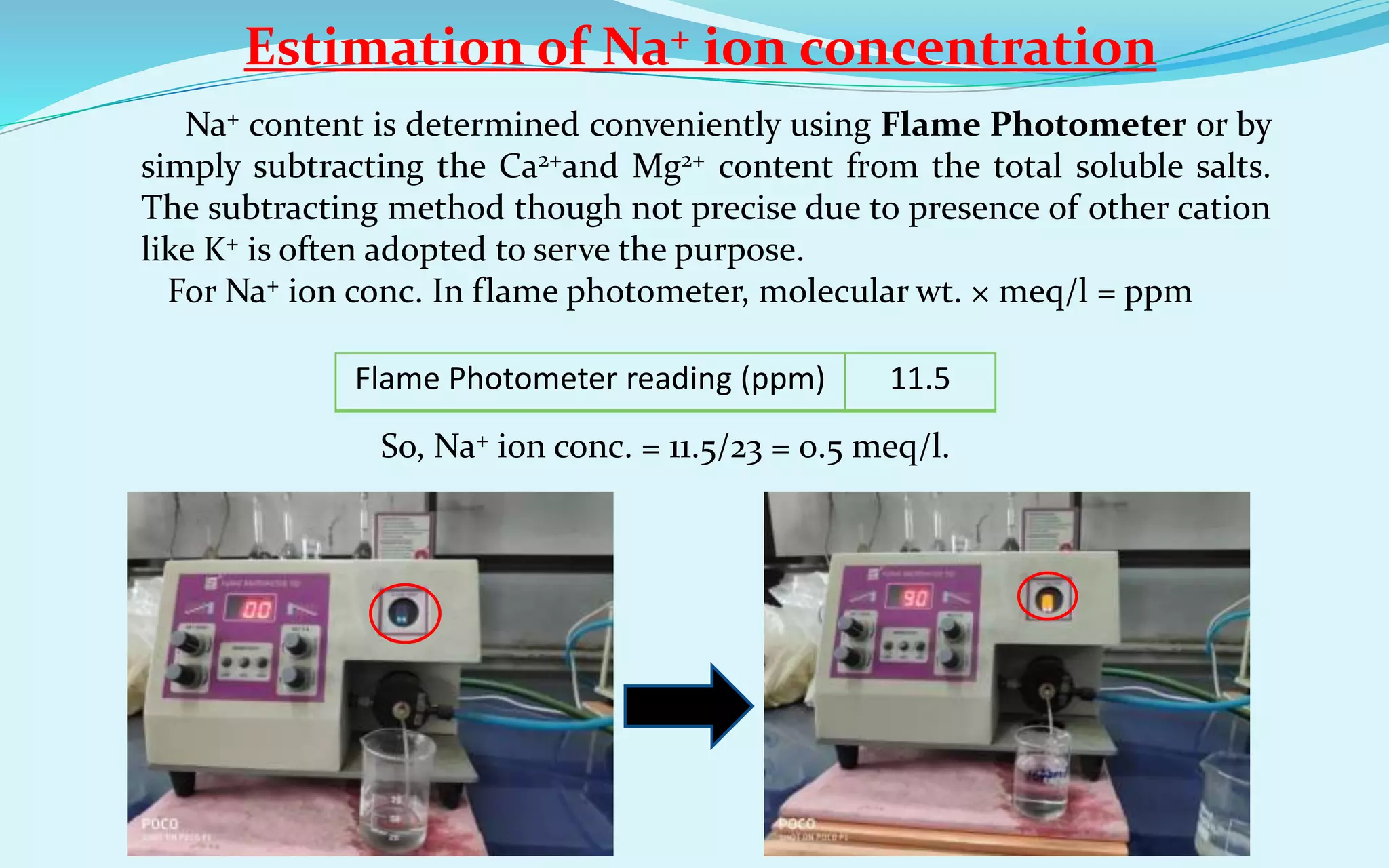
Estimation of Na+ ion concentration
Na+ content is determined conveniently using Flame Photometer or by
simply subtracting the Ca2+and Mg2+ content from the total soluble salts.
The subtracting method though not precise due to presence of other cation
like K+ is often adopted to serve the purpose.
For Na+ ion conc. In flame photometer, molecular wt. × meq/l = ppm
Flame Photometer reading (ppm) 11.5
So, Na+ ion conc. = 11.5/23 = 0.5 meq/l.
Estimation of Ca2+ & Mg2+ ion concentration
For determination of Ca2+ & Mg2+ in irrigation water , versinate titration
(Na2-EDTA) method is used. In which , EDTA disodium salt solution is used to
chelate them. In the versinate method of titration, no of cations including Ca2+ &
Mg2+ are known to form stable complex with versinate at different pH values. The
formation of Ca2+ & Mg2+ complex at pH 10.0 is achieved by NH4Cl - NH4OH
buffer solution.
 Procedure :-
• 10 ml water sample is taken in 100 ml conical flask.
•2ml of NH4Cl - NH4OH buffer solution is added and 3-4 drops of EBT
indicator is added .
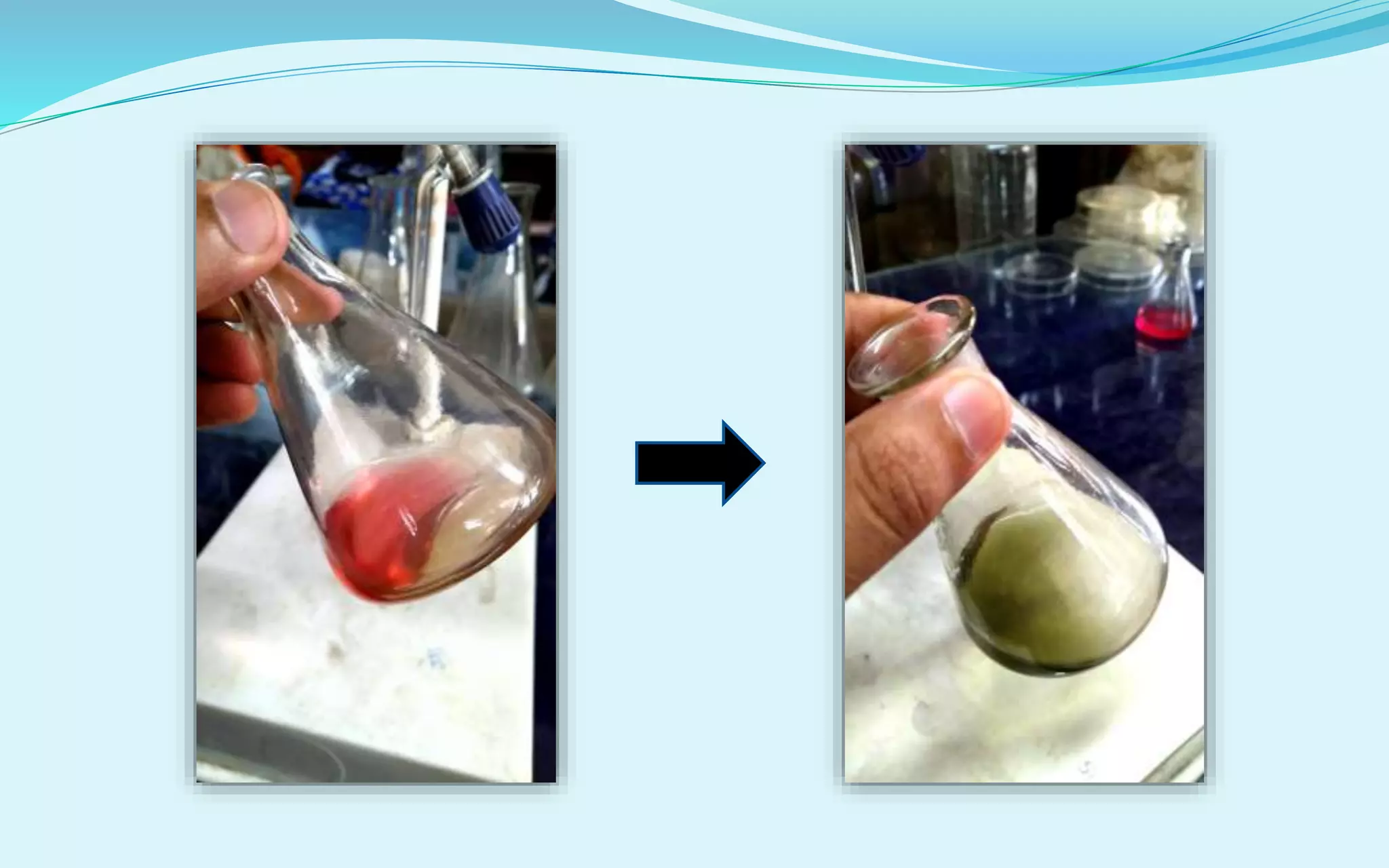
•Versinate solution is taken in a burette and titrate the content . The wine red
colour changes to light sky blue colour at the end point.
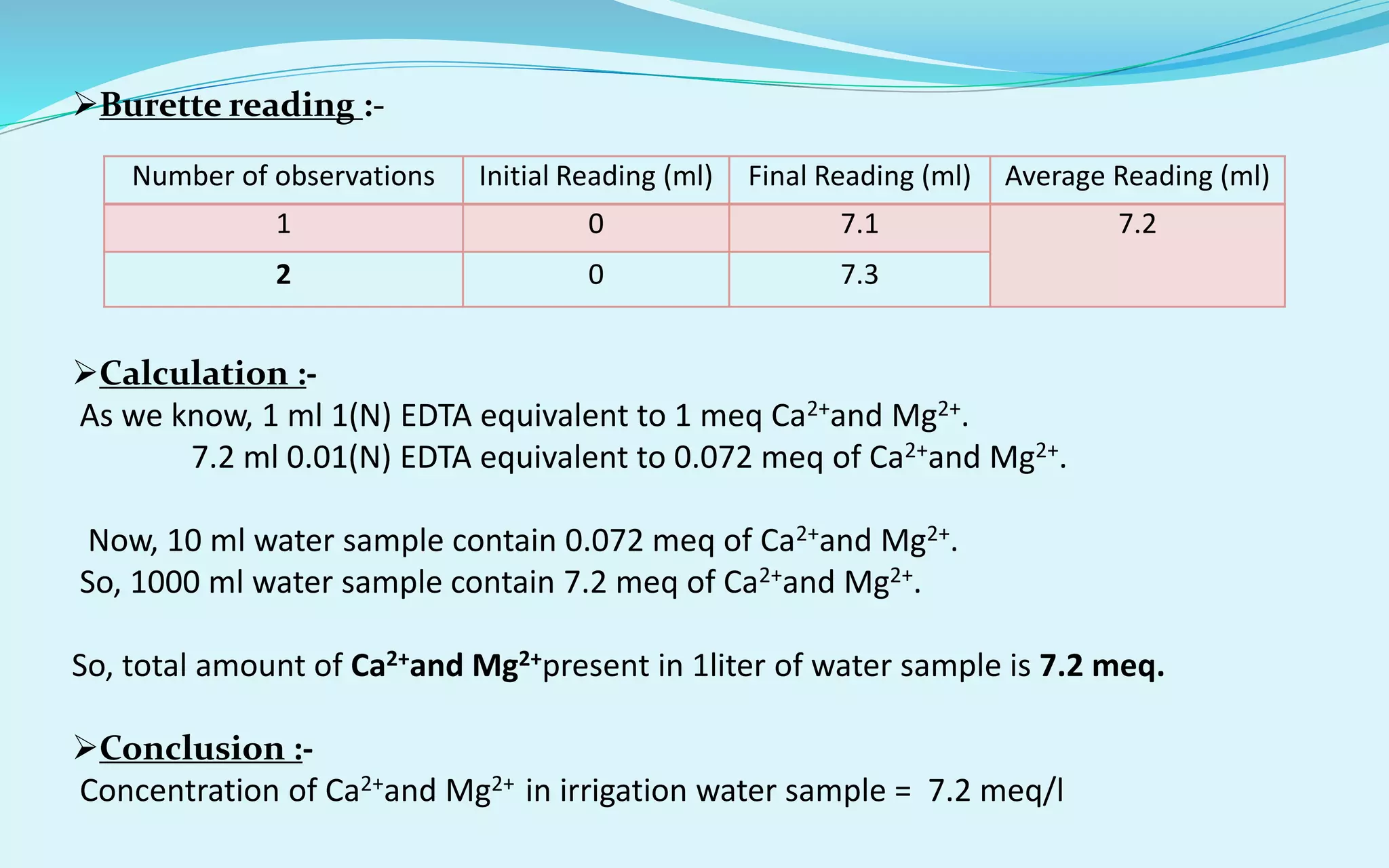
Number of observations Initial Reading (ml) Final Reading (ml) Average Reading (ml)
1 0 7.1 7.2
2 0 7.3
Burette reading :-
Calculation :-
As we know, 1 ml 1(N) EDTA equivalent to 1 meq Ca2+and Mg2+.
7.2 ml 0.01(N) EDTA equivalent to 0.072 meq of Ca2+and Mg2+.
Now, 10 ml water sample contain 0.072 meq of Ca2+and Mg2+.
So, 1000 ml water sample contain 7.2 meq of Ca2+and Mg2+.
So, total amount of Ca2+and Mg2+present in 1liter of water sample is 7.2 meq.
Conclusion :-
Concentration of Ca2+and Mg2+ in irrigation water sample = 7.2 meq/l
Estimation of CO3
2- & HCO3
- ion concentration
CO3
2- & HCO3
- in a irrigation water sample can be determined by titrating
the solution against standardise H2SO4 solution using phenolpthalin and
methyl orange indicator respectively.
 Procedure :-
• 10 ml water sample is taken in a 100 ml conical flask and 3 drops of
phenolpthalin is added . The sample remains colourless. So CO3
2- is not
present.
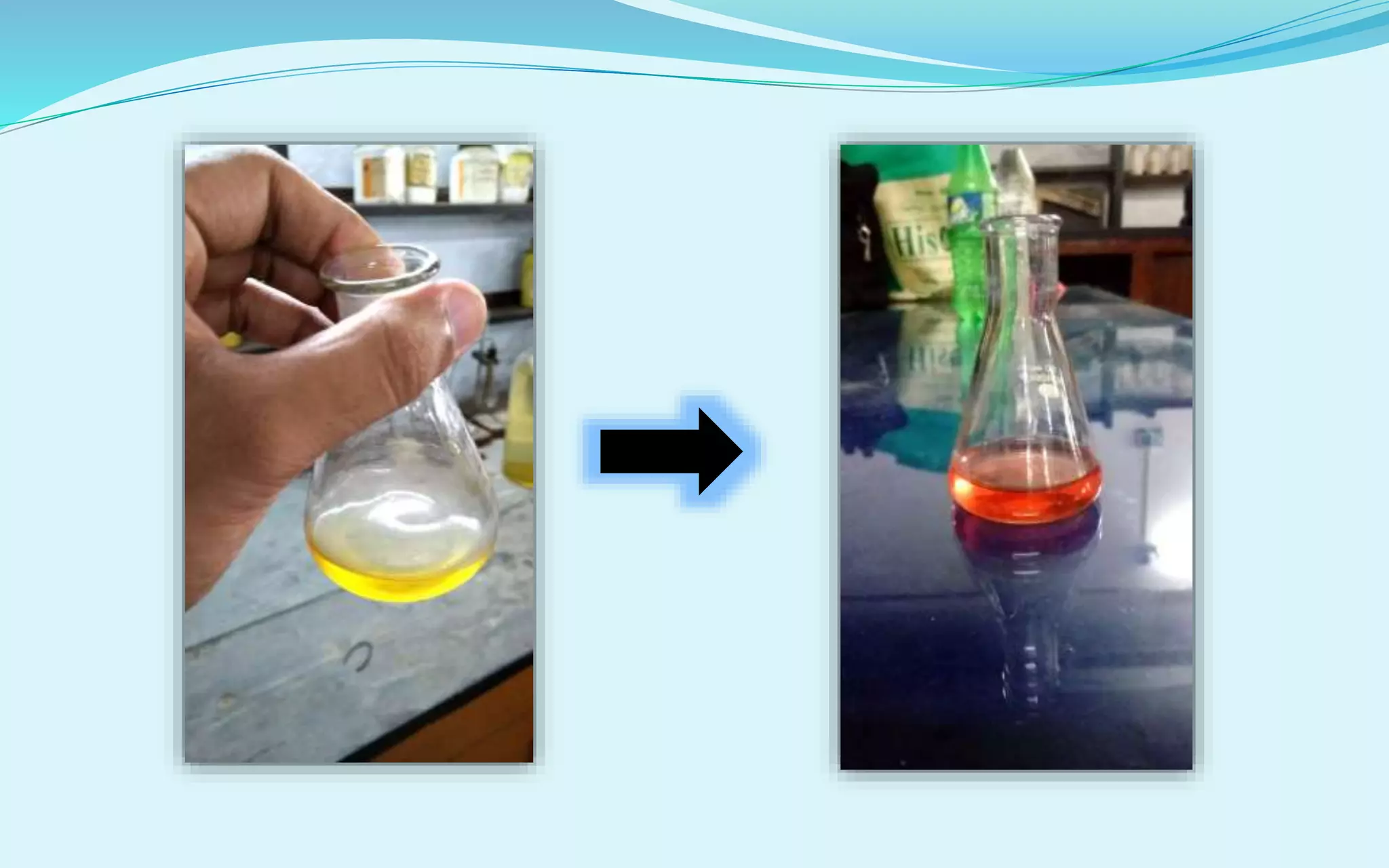
• Now 3 drops of methyl orange indicator is added to it , then the solution is
titrated with standard H2SO4 solution . The colour changes from yellow to
rose red. Now we take the reading.
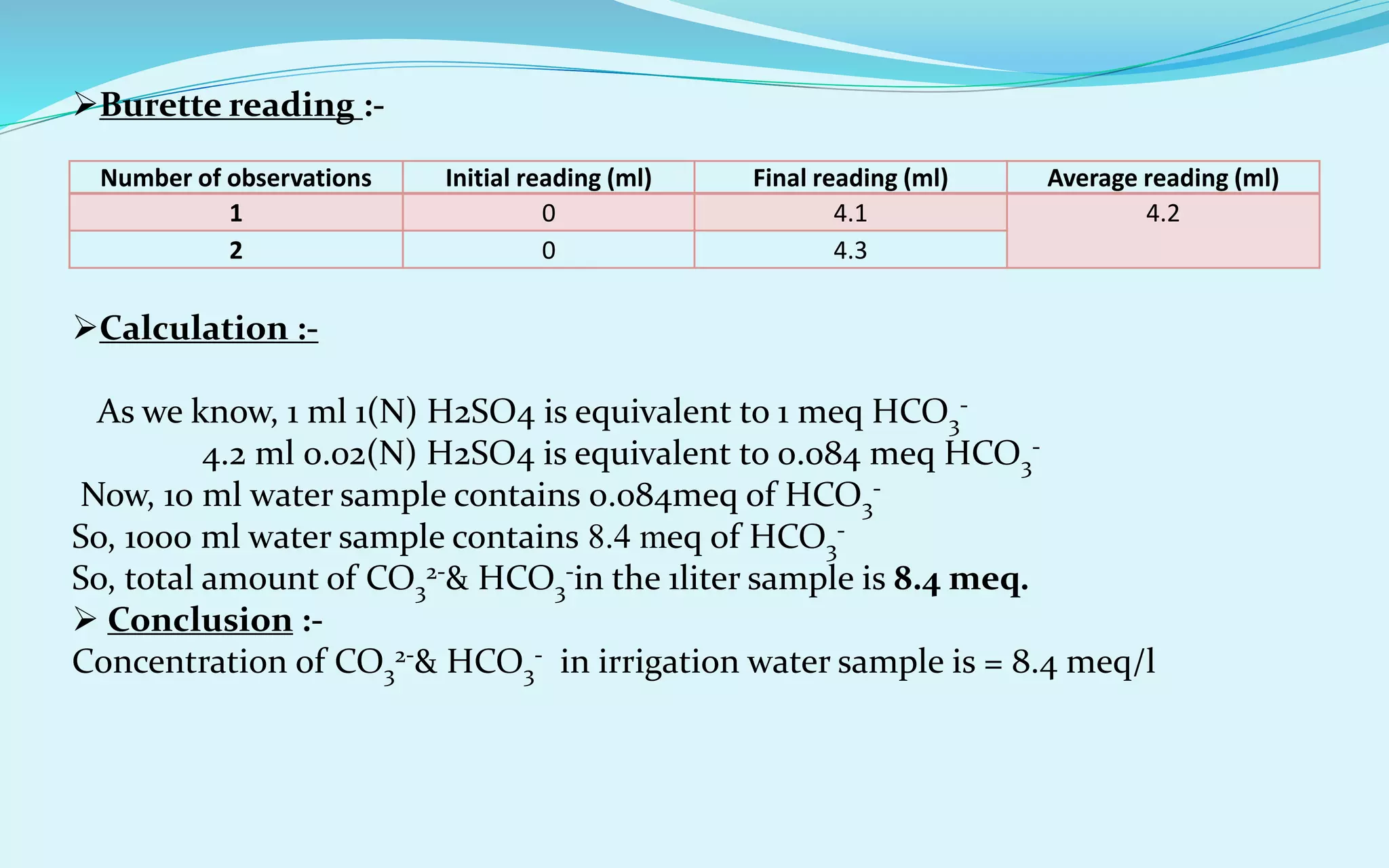
Number of observations Initial reading (ml) Final reading (ml) Average reading (ml)
1 0 4.1 4.2
2 0 4.3
Burette reading :-
Calculation :-
As we know, 1 ml 1(N) H2SO4 is equivalent to 1 meq HCO3
-
4.2 ml 0.02(N) H2SO4 is equivalent to 0.084 meq HCO3
-
Now, 10 ml water sample contains 0.084meq of HCO3
-
So, 1000 ml water sample contains 8.4 meq of HCO3
-
So, total amount of CO3
2-& HCO3
-in the 1liter sample is 8.4 meq.
 Conclusion :-
Concentration of CO3
2-& HCO3
- in irrigation water sample is = 8.4 meq/l
Calculation of RSC and SAR value
SAR = Na+/{(Ca2++Mg2+)/2}0.5 [Na+, Ca2+, Mg2+ ion conc. in meq/l ]
RSC (me/l) = (CO3
2-+HCO3
-) – (Ca2++Mg2+) [Ionic conc. Of CO3
2-,HCO3
-,Ca2+, Mg2+ in meq/l]
Calculation of RSC :-
As we know, RSC (me/l)= (CO3
2-+HCO3
-) – (Ca2++Mg2+)
= (8.4-7.2) = 1.2 meq/l
So, RSC (meq/l) = 1.2 meq/l
Calculation of SAR :-
As we know, SAR = Na+/{(Ca2++Mg2+)/2}0.5 [Na+, Ca2+, Mg2+ ion conc. in meq/l ]
So, SAR = 0.5/(7.2/2)0.5 = 0.264
As the SAR value is 0.264 (<10), so the water is safe for irrigation purpose.
RSC value (me/l) Water quality
<1.25 Water can be used safely
1.25-2.50 Water can be used with
certain management
>2.50 Unsuitable for irrigation
purpose
SAR value Water quality
<10 Safe
10-18 Tolerant to sodicity
18-26 Risky(only in crisis)
>26 Unsafe
Remarks
After determining all the important quality parameters
of irrigation water,we came to know that all the
parameters (except EC which is medium salinity range
so moderate leaching is required) are in the safe range.
So,on the basis of our result we can conclude that the
water sample is safe & farmers can use it for Crop
production without any measurement.
Soil & Water Analysis ppt  01,03

Soil & Water Analysis ppt 01,03

  • 1.
    DIAGNOSTIC ANALYSIS OF SOIL& WATER Presented by :- ANURAG BERA (Ag-01) & SUBHA CHAKRABORTY (Ag-03) (RAWE Programme) Department of Agricultural Chemistry and Soil Science
  • 2.
    NAME OFTHE VILLAGEDARJEEPARA Mouza Subudhhipur J.L No. 33 Name of the Gram Sansad Darjeepara Gram Sansad No. IX Gram Panchayet Kasthadanga –I Block Haringhata Sub division Kalyani District Nadia Area 1.23 sq.km. Latitude and Longitude 22.96oN,88.64OE Height from Above Mean Sea Level 12m Pin Code 741257
  • 3.
    REPORTON SOIL ANALYSISOFTHEVILLAGEDARJEEPARA Introduction:- Soil testing is a useful tool for making recommendation for the application of fertilizer to crops. It gives a measure of the availability of nutrients to crops. In soil analysis, the higher and lower critical limits become significant in relation to agricultural development of a country. Objectives:- 1) Helping to evaluate soil productivity 2) Determining specific soil conditions, like salinity, acidity which limits the crop yield . 3) Predicting the probability of getting profitable responses . 4) Grouping of soils into different classes relative to the levels of nutrient for suggesting fertilizer practices.
  • 4.
    Field History: Name ofthe farmer:- Qutubuddin Mondal. Date of collection: 28/05/2019 Land situation: upland Previous Crop: Summer Paddy Irrigation facility: Shallow tubewell  Fertilizer: Currenty not applied Fertilizer generally used: Urea (20kg/bigha), 10:26:26 (10 kg/bigha) , SSP (30kg/bigha)  Crop rotation: Summer Paddy( Boro season ) – Aman Paddy (Kharif Season) Next crop: Aman Paddy  Area: 2 bigha ( 0.27 ha )
  • 5.
    Phases of soiltesting: It has 4 Phases… 1. Collecting soil sample. 2. Extraction and determining the available nutrient. 3. Calibrating and interpreting the analytical result. 4. Making the fertilizer recommendation.
  • 6.
    Sl. No. Crops Crop Season Variety WATERSUPPLY Date of Nursery sowing Date of Transpl anting Date of harvesting Sources of Irrigation Area under IrrigationIrrigated (with source) Unirrigate d (Rainfed) 1. SUMME R PADDY BORO MINIKIT YES ---- Mid Week of Dec Last week of Janua ry Mid of APRIL DEEP TUBEWELL 2 BIGHA= 0.267ha 22. AMAN KHARIF SATABDI (IET-4786) ---- YES 1st week of JUNE 1st week of July Mid NOV RAINFALL 2 BIGHA= 0.267ha Land use pattern BORO RICE FIELD
  • 7.
    Preparation of thesoil sample in the laboratory It involves the following steps: Drying Grinding SievingMixing
  • 8.
     Following testswere done :- 1)Determination of soil pH. 2)Determination of oxidizable organic carbon. 3)Determination of available phosphorus. 4)Determination of available potassium. 5)Determination of nitrate nitrogen.
  • 9.
    5 ml waterwas taken in the test tube. 2g of soil sample was taken by scoop and 0.5g BaSO4 was added. Then the mixture was shaken for at least 20 minutes.  Next 5 drops of wide range indicator was added. Finally the colour was matched with the universal pH indicator. The orange color indicates acidic sample, green color indicates neutral sample and the violet color indicates alkaline sample. pH test by matching color pH RESULT REMARKS RECOMMENDATION 7.5 Neutral Neutral pH is good for crop cultivation. RESULT & RECOMMENDATION :-
  • 10.
     2.5 ml1(N) K2Cr2O7 was taken in a test tube.  2 ml conc. H2SO4 was added into it.  1g of soil sample was taken into it and slightly steering was done. (without stopper)  stand was done for 20 minutes.  The color matching was done. Yellow color generally indicates low organic matter (<0.5) and green and yellow color generally indicates medium organic matter (0.5-0.75). Organic Carbon test
  • 11.
    Colour Remarks Yellow Lowrange organic carbon Yellow-Greenish Medium range organic carbon Greenish High range organic carbon RESULT REMMARKS RECOMMENDATION Matched with Yellow-Greenish Colour. MEDIUM (0.5-0.59%) Application of FYM 15 days before next crop(Aman) & utilising previous crop stubble. RESULT & RECOMMENDATION :-
  • 12.
    Available P detectionby Olsen’s method 10 ml NaHCO3-Charcoal is taken in the test tube.  Then add 2g of soil sample. Then tight the stopper at the top. Shake the mixture for 5-7 minutes.  Filter the mixture with filter paper. Then take 2ml mixture from filtrate. Add 2ml Ammonium molybdate. Add little amount of distilled water. Then add 3 drops of SnCl2. Make the volume up to ml. Then match the color. Low P indicates straw color, medium P indicates green color and high P indicates blue color .
  • 13.
    P2O5 content(Lbs./acre) Remarks 0 Blank Lessthan 20 low 20-50 Medium 50-65 Medium high Greater than 65 High RESULT REMARKS RECOMMENDATION 20-50 (Lbs/acre) MEDIUM Recommended dose of Phosphorus should be required. Result & Recommendation :-
  • 14.
    Available K byMorgan’s reagent Add 5g of soil and then shake it. Filtrate the mixture and take 2ml from filtrate. Add sodium cobultinitrate 6 drops. Then add alcohol and aldehyde mixture. Shake it properly. Then the solution become yellow color. In this case turbidity is measured. If three lines are shown in by the vial, then there is low K content in soil.
  • 15.
    Content Amount(Lbs./acr e) Remarks Low Below100 All the 3 lines are visible Medium 100-250 Last 2 lines are visible High 250-350 Last line faintly visible Very high Above 350 No lines visible RESULT & RECOMMENDATION:- RESULT REMARKS RECOMMENDATION BELOW 100 VERY LOW Higher Potassium application dose should be given in Kharif than Rabi to tackle disease prevalence.
  • 16.
    Available NO3—N determination Take 10mlwater in a clean test tube and add 2g of soil in it. Then close the lid and shake it for 5 minutes. Then filtrate the mixture. Take the filtrate in the other test tube and add 1 drop of DPA indicator in it. Finally match the color with color chart.
  • 17.
    Value (NO3-N) inlbs./acre Remarks 45 High 18 Medium 9 Low 4 Very low RESULT & RECOMMENDATION:- RESULT REMARK <4 VERY LOW 1. Spilt Application of Nitrogenous fertilizers. 2. Short duration Green manuring crop(Dhaincha) can be grown & incorporated into field. 3. Deep placement(reduced zone) of Ammonical fertilizers. 4. To resist nitrification process & there by Leaching & denitrification loss, Nitrification inhibitors like N-serve,AM can be applied. 5. Neem coated urea can be very effective,Urea super granules also can be very effective.
  • 18.
    REPORT ON WATERANALYSIS OF THE VILLAGE DARJEEPARA  Collection of irrigation water sample :- The irrigation water sample has been collected from a shallow tubewell from Darjeepara village.
  • 19.
    Quality parameter forIrrigation water analysis • EC ( electrical conductivity ) • pH • Na+ ion conc. • Ca2+ & Mg2+ ion conc. • CO3 2- & HCO3 - ion conc. • RSC ( residual sodium carbonate ) • SAR ( sodium absorption ratio )
  • 20.
    Estimation of pHby pH-Meter First of all, our irrigation water sample has been taken to pH measurement. The pH meter shows 7.53 reading. That is the water is neutral in nature. The pH of collected water sample is in between 6.8 to 8.4 so,it is optimum for crop growth & safe for irrigation.
  • 21.
    Estimation of ECby Conductivity meter Then we go for electrical conductivity measurement and the conductivity meter shows 0.65 dS/m or 0.65 mmho/cm. So, the water is moderately suitable for irrigation purpose. Salinity classes EC (dS/m) Remarks C1 <0.25 Very safe , can be used in any crop C2 0.25-0.75 Moderately safe, used in moderately tolerant to salinity C3 0.75-2.25 Only in crisis, used in very salt tolerant crop (Barley) C4 >2.25 Unsuitable
  • 22.
    Estimation of Na+ion concentration Na+ content is determined conveniently using Flame Photometer or by simply subtracting the Ca2+and Mg2+ content from the total soluble salts. The subtracting method though not precise due to presence of other cation like K+ is often adopted to serve the purpose. For Na+ ion conc. In flame photometer, molecular wt. × meq/l = ppm Flame Photometer reading (ppm) 11.5 So, Na+ ion conc. = 11.5/23 = 0.5 meq/l.
  • 23.
    Estimation of Ca2+& Mg2+ ion concentration For determination of Ca2+ & Mg2+ in irrigation water , versinate titration (Na2-EDTA) method is used. In which , EDTA disodium salt solution is used to chelate them. In the versinate method of titration, no of cations including Ca2+ & Mg2+ are known to form stable complex with versinate at different pH values. The formation of Ca2+ & Mg2+ complex at pH 10.0 is achieved by NH4Cl - NH4OH buffer solution.  Procedure :- • 10 ml water sample is taken in 100 ml conical flask. •2ml of NH4Cl - NH4OH buffer solution is added and 3-4 drops of EBT indicator is added . •Versinate solution is taken in a burette and titrate the content . The wine red colour changes to light sky blue colour at the end point.
  • 25.
    Number of observationsInitial Reading (ml) Final Reading (ml) Average Reading (ml) 1 0 7.1 7.2 2 0 7.3 Burette reading :- Calculation :- As we know, 1 ml 1(N) EDTA equivalent to 1 meq Ca2+and Mg2+. 7.2 ml 0.01(N) EDTA equivalent to 0.072 meq of Ca2+and Mg2+. Now, 10 ml water sample contain 0.072 meq of Ca2+and Mg2+. So, 1000 ml water sample contain 7.2 meq of Ca2+and Mg2+. So, total amount of Ca2+and Mg2+present in 1liter of water sample is 7.2 meq. Conclusion :- Concentration of Ca2+and Mg2+ in irrigation water sample = 7.2 meq/l
  • 26.
    Estimation of CO3 2-& HCO3 - ion concentration CO3 2- & HCO3 - in a irrigation water sample can be determined by titrating the solution against standardise H2SO4 solution using phenolpthalin and methyl orange indicator respectively.  Procedure :- • 10 ml water sample is taken in a 100 ml conical flask and 3 drops of phenolpthalin is added . The sample remains colourless. So CO3 2- is not present. • Now 3 drops of methyl orange indicator is added to it , then the solution is titrated with standard H2SO4 solution . The colour changes from yellow to rose red. Now we take the reading.
  • 28.
    Number of observationsInitial reading (ml) Final reading (ml) Average reading (ml) 1 0 4.1 4.2 2 0 4.3 Burette reading :- Calculation :- As we know, 1 ml 1(N) H2SO4 is equivalent to 1 meq HCO3 - 4.2 ml 0.02(N) H2SO4 is equivalent to 0.084 meq HCO3 - Now, 10 ml water sample contains 0.084meq of HCO3 - So, 1000 ml water sample contains 8.4 meq of HCO3 - So, total amount of CO3 2-& HCO3 -in the 1liter sample is 8.4 meq.  Conclusion :- Concentration of CO3 2-& HCO3 - in irrigation water sample is = 8.4 meq/l
  • 29.
    Calculation of RSCand SAR value SAR = Na+/{(Ca2++Mg2+)/2}0.5 [Na+, Ca2+, Mg2+ ion conc. in meq/l ] RSC (me/l) = (CO3 2-+HCO3 -) – (Ca2++Mg2+) [Ionic conc. Of CO3 2-,HCO3 -,Ca2+, Mg2+ in meq/l] Calculation of RSC :- As we know, RSC (me/l)= (CO3 2-+HCO3 -) – (Ca2++Mg2+) = (8.4-7.2) = 1.2 meq/l So, RSC (meq/l) = 1.2 meq/l Calculation of SAR :- As we know, SAR = Na+/{(Ca2++Mg2+)/2}0.5 [Na+, Ca2+, Mg2+ ion conc. in meq/l ] So, SAR = 0.5/(7.2/2)0.5 = 0.264 As the SAR value is 0.264 (<10), so the water is safe for irrigation purpose. RSC value (me/l) Water quality <1.25 Water can be used safely 1.25-2.50 Water can be used with certain management >2.50 Unsuitable for irrigation purpose SAR value Water quality <10 Safe 10-18 Tolerant to sodicity 18-26 Risky(only in crisis) >26 Unsafe
  • 30.
    Remarks After determining allthe important quality parameters of irrigation water,we came to know that all the parameters (except EC which is medium salinity range so moderate leaching is required) are in the safe range. So,on the basis of our result we can conclude that the water sample is safe & farmers can use it for Crop production without any measurement.