INDIRAGANDHI KRISHI
VISWAVIDYALAYA,RAIPUR
SUBMITTED TO
DR.ANURAG
DEPT.OF SOIL SCIENCE
COLLEGE OF AGRICULTURE
,RAIPUR
SUBMITTED BY
DEBASIS PANDA
MSC.AGRONOMY (PREVIOUS)
ESTIMATION OF TOTAL SULPHUR
CONTENT IN GIVEN PLANT SAMPLE
adapted from chesin and yen (1950)
 In an aliquot of the test solution Barium
Sulphate turbidity is developed in the presence
of sodium acetate acetic acid buffer and gum
acacia by dissolving Barium chloride crystals
.The absorbance of Barium Sulphate turbidity
is measured at 420 nano meter wave length on
a spectrophotometer/kelplus photoelectric
calorimeter. The content of the sulphur is
estimated by reference to the std. calibration
curve
1. TALL BEAKERS 300 ML CAPACITY
2. HOT PLATE
3. FUME HOOD
4. VOL. FLASK
5. BURETTE
6. ACID BULB PIPETTE 20 ML AND 10 ML
7. GRADUATED PIPETTE 20,10,5,2,1 ML
CAPACITY
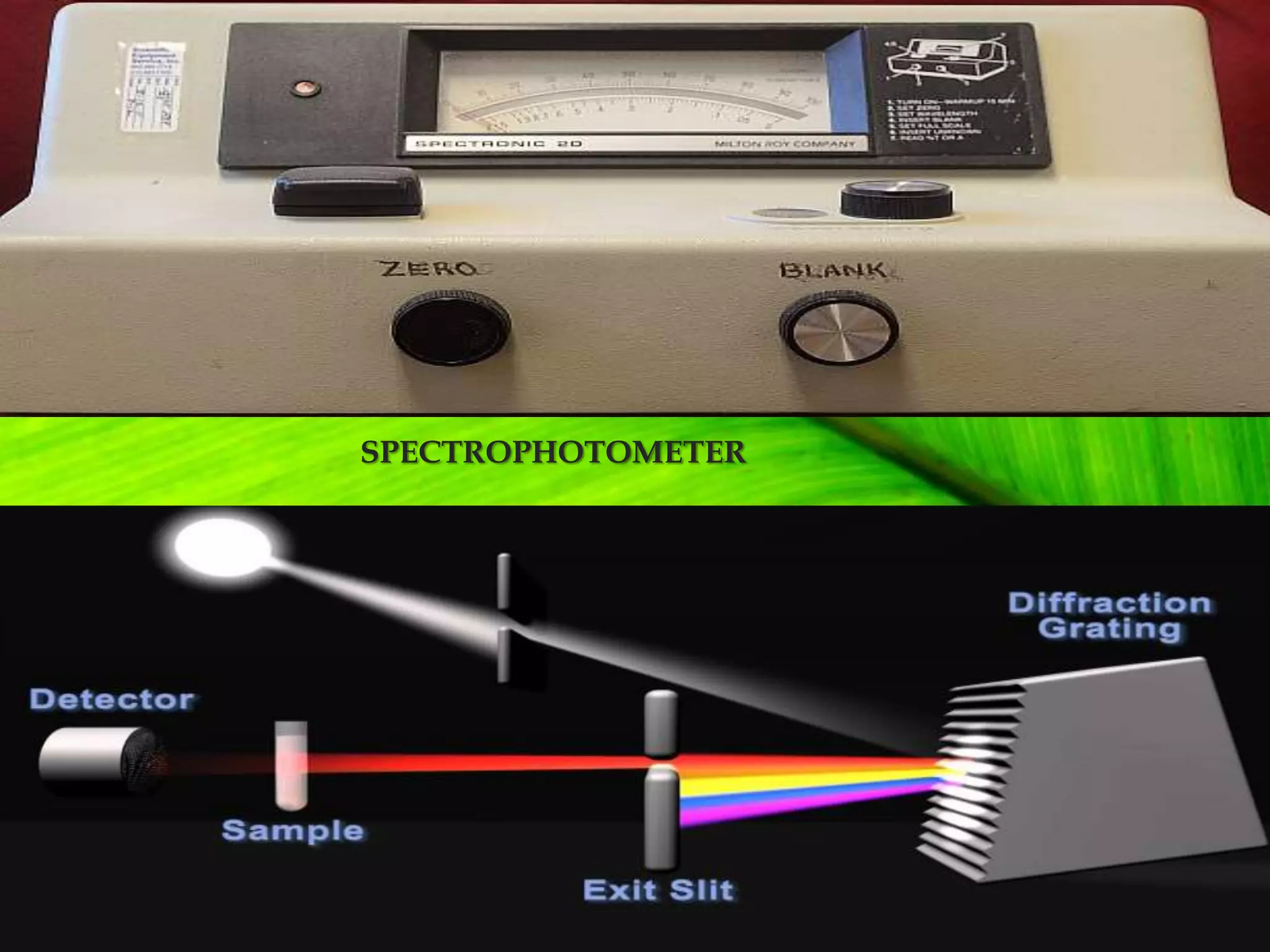
8. SPECTRO PHOTOMETER
9. COMPLETELY GLASS DISTILL
HOT PLATE
FUMEHOOD
SPECTROPHOTOMETER
 CONC. NITRIC ACID(AR)
 PERCHLORIC ACID(AR)
 SULPHUR FREE DISTILLED WATER
 BARIUM CHLORIDE CRYSTALS
 SODIUM ACETATE ACETIC ACID BUFFER
 0.25% GUM ACACIA SOLUTION
 100 PPM SULPHATE–S SOLUTION
 1 PPM SULPHATE–S SOLUTION
GUM ACACIA
CRYSTAL
 0.25% GUM ACACIA PREPARATION
 Transfer 0.25 gram of finely ground gum acacia
into a 100 ml. vol. flask. Add distilled water and
shake it to dissolve the contents .Dilute the content
to 100 ml mark ,leave it overnight .There after filter
the solution and collect the filterate.
 100 PPM SO4 –S PPM SOLUTION PREPARATION
 Dissolve 0.5370 gram of CaS04 2H2O in sodium
acetate-acetic acid buffer and diliute the solution
to1000ml with buffer solution
 1 PPM SO4 –S PPM SOLUTION PREPARATION
 Dilute 1 ml. of 100 ppm SO4 –S SOLUTION to 100
ml with sodium acetate-acetic acid buffer .
 Preparation of the sample and blank test solution
Prepare the plant sample test solution from 1 gram
finely ground sample following the wet digestion
procedure .Similarly prepare the blank test solution
without taking the plant sample.
 Development of BaSO4 turbidity in the aliquot of the
sample and blank test solution .Transfer 5 ml sample
and blank test solution into separate 25 ml volumetric
flask .Add to each 10 ml sodium acetate acetic acid
buffer and 1 gm of BaCl2 crystals. Allow it to stand for
a minute and swirl the content untill the crystals are
dissolved ,thereafter add to each 1 ml of 0.25 % gum
acacia solution . If the concentration of SO4 –S is <20
ppm,2 ml if concentration betwwen 20 to 40 ppm. Mix
the content and dilute it to 25 ml with distilled water.
 Measurement of the absorbance of BaSO 4
turbidity developed with aliquot of the sample
and blank test solution.Use spectrophotometer
adjusting its wavelength at 420 nm.Fill the
cuvette with distilled water and place it in the
socket provided .Thereafter switch on the
instrument to light the tungsten lamp and let it
warm for 10 minutes. Then fill the cuvette with
turbid solution obtained by developing turbidity
in aliquot of the blank test solution.
Place the cuvette in the socket provided and
adjust the meter reading to 100 %transmittance
i.e 0 absorbance or optical density
 Fill the second cuvette with turbid solution
obtained by developing turbidity in aliquot of
the sample test solution and place it in the
socket provided and removing the first cuvette
from the socket provided. Note the change in
the % transmittance or its absorbance i.e optical
density. The optical density of the turbid
solution be determined within 05 to 30 minutes
of developing BaSO4 turbidity.
 Measurement of the absorbance of the BaSO4
turbidity developed with SO4 –S standards.
Transfer 0,2,4,6,8,10ml of 1 ppm SO4 –S
solution into separate 25 ml volumetric flasks
and then develop baso4 turbidity in each as
described in step 2 procedure omitting the
addition of the sample or blank test solution.
 Measure the absorbance of the turbidity
developed with the SO4 –S standards adjusting
0 absorbance each time with the BaSO4
turbidity developed with 0 micro gram
SO4-S.Record the absorbance of the turbidity
developed corresponding to each standard SO4
–S.
 Preparation of the SO4 –S standard calibration
curve. On a linear scale graph paper, set the
scale of absorbance on the ordinate and the
corresponding scale for micro gram SO4 –S
taken for developing turbidity on the abscissa.
Plot the values of absorbance recorded
corresponding to microgram SO4 –S taken for
developing BaSO4 turbidity .Connect the point
of zero absorbance with point of maximum
absorbance by a straight line to obtain the
standard calibration curve.
 Estimation of the content of in the aliquot of the
plant sample test solution. Locate the point of
the absorbance of the BaSO4 turbidity
developed with the aliquot of the plant sample
test solution on the ordinate of the standard
calibration curve. Draw a line from the from
the point parallel to the abscissa, intersecting
the straight line calibration curve. From the
abscissa ,draw a perpendicular line that would
meet the point of intersection. Read the content
of so4-s on the abscissa at the origin of the
perpendicular.
 TOTAL SULPHUR IN PLNT
SAMPLE(PPM)=A*B/C*D=A*100/5*1
 %of sulphur in plant sample=total sulphur in ppm
*100/1000000
A=microgram SO4 –S estimated in BaSO4turbidity
developed with the aliquot of the sample test solution
B=total volume of sample test solution prepared by the
wet digestion procedure
C=ml. aliquot of the sample of the sample test solution
taken for developing BaSO4turbidity
D=mass of oven dry finely ground plant sample taken for
wet ashing to prepare sample test solution
 Glasswares must be carefully cleaned to remove
any potential nuclei for the formation of
irregularised BaSO4 crystals and the measuring cell
must be cleaned regularly with alkaline EDTA to
remove adhering BaSO4 and maintain sensitivity.
 A small amount of SO4 is generally added to the
aliquot of the sample test solution before
measurement of the absorbance of BaSO4 turbidity
to improve the sensitivity method and linearity of
the standard calibration curve.
 Apart from gum acacia ,we can also use gelatin
tween 80,polyvinyl alcohol,sorbitol as a stabilizer
of BaSO4 turbidity.
SULPHUR ESTIMATION IN PLANT SAMPLE

SULPHUR ESTIMATION IN PLANT SAMPLE

  • 1.
    INDIRAGANDHI KRISHI VISWAVIDYALAYA,RAIPUR SUBMITTED TO DR.ANURAG DEPT.OFSOIL SCIENCE COLLEGE OF AGRICULTURE ,RAIPUR SUBMITTED BY DEBASIS PANDA MSC.AGRONOMY (PREVIOUS) ESTIMATION OF TOTAL SULPHUR CONTENT IN GIVEN PLANT SAMPLE
  • 2.
    adapted from chesinand yen (1950)
  • 3.
     In analiquot of the test solution Barium Sulphate turbidity is developed in the presence of sodium acetate acetic acid buffer and gum acacia by dissolving Barium chloride crystals .The absorbance of Barium Sulphate turbidity is measured at 420 nano meter wave length on a spectrophotometer/kelplus photoelectric calorimeter. The content of the sulphur is estimated by reference to the std. calibration curve
  • 4.
    1. TALL BEAKERS300 ML CAPACITY 2. HOT PLATE 3. FUME HOOD 4. VOL. FLASK 5. BURETTE 6. ACID BULB PIPETTE 20 ML AND 10 ML 7. GRADUATED PIPETTE 20,10,5,2,1 ML CAPACITY 8. SPECTRO PHOTOMETER 9. COMPLETELY GLASS DISTILL
  • 5.
  • 6.
  • 9.
  • 10.
     CONC. NITRICACID(AR)  PERCHLORIC ACID(AR)  SULPHUR FREE DISTILLED WATER  BARIUM CHLORIDE CRYSTALS  SODIUM ACETATE ACETIC ACID BUFFER  0.25% GUM ACACIA SOLUTION  100 PPM SULPHATE–S SOLUTION  1 PPM SULPHATE–S SOLUTION
  • 11.
  • 13.
  • 16.
     0.25% GUMACACIA PREPARATION  Transfer 0.25 gram of finely ground gum acacia into a 100 ml. vol. flask. Add distilled water and shake it to dissolve the contents .Dilute the content to 100 ml mark ,leave it overnight .There after filter the solution and collect the filterate.  100 PPM SO4 –S PPM SOLUTION PREPARATION  Dissolve 0.5370 gram of CaS04 2H2O in sodium acetate-acetic acid buffer and diliute the solution to1000ml with buffer solution  1 PPM SO4 –S PPM SOLUTION PREPARATION  Dilute 1 ml. of 100 ppm SO4 –S SOLUTION to 100 ml with sodium acetate-acetic acid buffer .
  • 17.
     Preparation ofthe sample and blank test solution Prepare the plant sample test solution from 1 gram finely ground sample following the wet digestion procedure .Similarly prepare the blank test solution without taking the plant sample.  Development of BaSO4 turbidity in the aliquot of the sample and blank test solution .Transfer 5 ml sample and blank test solution into separate 25 ml volumetric flask .Add to each 10 ml sodium acetate acetic acid buffer and 1 gm of BaCl2 crystals. Allow it to stand for a minute and swirl the content untill the crystals are dissolved ,thereafter add to each 1 ml of 0.25 % gum acacia solution . If the concentration of SO4 –S is <20 ppm,2 ml if concentration betwwen 20 to 40 ppm. Mix the content and dilute it to 25 ml with distilled water.
  • 18.
     Measurement ofthe absorbance of BaSO 4 turbidity developed with aliquot of the sample and blank test solution.Use spectrophotometer adjusting its wavelength at 420 nm.Fill the cuvette with distilled water and place it in the socket provided .Thereafter switch on the instrument to light the tungsten lamp and let it warm for 10 minutes. Then fill the cuvette with turbid solution obtained by developing turbidity in aliquot of the blank test solution. Place the cuvette in the socket provided and adjust the meter reading to 100 %transmittance i.e 0 absorbance or optical density
  • 19.
     Fill thesecond cuvette with turbid solution obtained by developing turbidity in aliquot of the sample test solution and place it in the socket provided and removing the first cuvette from the socket provided. Note the change in the % transmittance or its absorbance i.e optical density. The optical density of the turbid solution be determined within 05 to 30 minutes of developing BaSO4 turbidity.
  • 20.
     Measurement ofthe absorbance of the BaSO4 turbidity developed with SO4 –S standards. Transfer 0,2,4,6,8,10ml of 1 ppm SO4 –S solution into separate 25 ml volumetric flasks and then develop baso4 turbidity in each as described in step 2 procedure omitting the addition of the sample or blank test solution.  Measure the absorbance of the turbidity developed with the SO4 –S standards adjusting 0 absorbance each time with the BaSO4 turbidity developed with 0 micro gram SO4-S.Record the absorbance of the turbidity developed corresponding to each standard SO4 –S.
  • 21.
     Preparation ofthe SO4 –S standard calibration curve. On a linear scale graph paper, set the scale of absorbance on the ordinate and the corresponding scale for micro gram SO4 –S taken for developing turbidity on the abscissa. Plot the values of absorbance recorded corresponding to microgram SO4 –S taken for developing BaSO4 turbidity .Connect the point of zero absorbance with point of maximum absorbance by a straight line to obtain the standard calibration curve.
  • 22.
     Estimation ofthe content of in the aliquot of the plant sample test solution. Locate the point of the absorbance of the BaSO4 turbidity developed with the aliquot of the plant sample test solution on the ordinate of the standard calibration curve. Draw a line from the from the point parallel to the abscissa, intersecting the straight line calibration curve. From the abscissa ,draw a perpendicular line that would meet the point of intersection. Read the content of so4-s on the abscissa at the origin of the perpendicular.
  • 23.
     TOTAL SULPHURIN PLNT SAMPLE(PPM)=A*B/C*D=A*100/5*1  %of sulphur in plant sample=total sulphur in ppm *100/1000000 A=microgram SO4 –S estimated in BaSO4turbidity developed with the aliquot of the sample test solution B=total volume of sample test solution prepared by the wet digestion procedure C=ml. aliquot of the sample of the sample test solution taken for developing BaSO4turbidity D=mass of oven dry finely ground plant sample taken for wet ashing to prepare sample test solution
  • 24.
     Glasswares mustbe carefully cleaned to remove any potential nuclei for the formation of irregularised BaSO4 crystals and the measuring cell must be cleaned regularly with alkaline EDTA to remove adhering BaSO4 and maintain sensitivity.  A small amount of SO4 is generally added to the aliquot of the sample test solution before measurement of the absorbance of BaSO4 turbidity to improve the sensitivity method and linearity of the standard calibration curve.  Apart from gum acacia ,we can also use gelatin tween 80,polyvinyl alcohol,sorbitol as a stabilizer of BaSO4 turbidity.