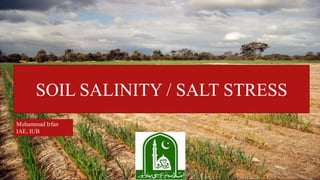
SOIL SALINITY / SALT STRESS
Muhammad Irfan
IAE, IUB
Salinity
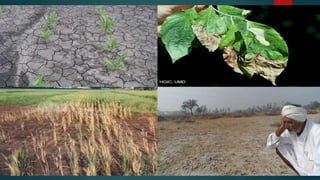
 Salinity is a condition where excessive salts in soil solution cause
inhibition of plant growth or plant death.
 On a world scale, no toxic substance restricts plant growth more
than does salts.
 Salt stress represents an increasing threat to plant agriculture.
Types of Salt Affected Soils
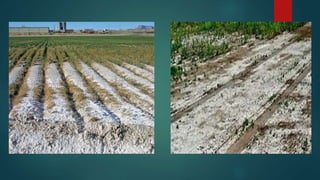
 Saline Soils
 Soil containing sufficient amount of soluble salts (Ca2+, Mg2+, Cl-,
SO4
2-, CO3
2- HCO3
-,) to adversely affect the growth of most of
crop plants.
 All these salts are white hence the saline soils exhibit white color.
 Also called white alkali soils.
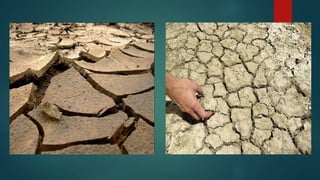
 Sodic Soils
 Soil containing sufficient amount of exchangeable Na to adversely
affect the growth of most of crop plants.
 The pH of the soil usually high, often above 9.
 These soils have dispersed structure.
 Also called black alkali soils.
 Saline Sodic Soils
 Soil containing sufficient amount of soluble salts as well as
exchangeable Na to adversely affect the growth of most of crop plants.
 These soils contain characters of both saline and sodic soils.
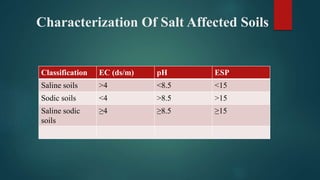
Characterization Of Salt Affected Soils
Classification EC (ds/m) pH ESP
Saline soils >4 <8.5 <15
Sodic soils <4 >8.5 >15
Saline sodic
soils
≥4 ≥8.5 ≥15
Global Distribution Of Salt Affected Soils
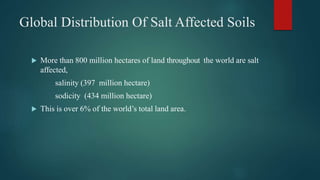
 More than 800 million hectares of land throughout the world are salt
affected,
salinity (397 million hectare)
sodicity (434 million hectare)
 This is over 6% of the world’s total land area.
National Distribution Of Salt Affected
Soils
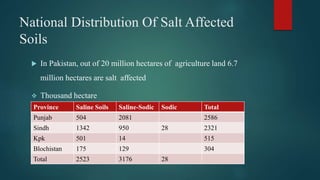
 In Pakistan, out of 20 million hectares of agriculture land 6.7
million hectares are salt affected
 Thousand hectare
Province Saline Soils Saline-Sodic Sodic Total
Punjab 504 2081 2586
Sindh 1342 950 28 2321
Kpk 501 14 515
Blochistan 175 129 304
Total 2523 3176 28
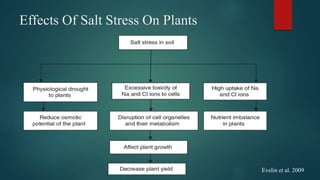
Effects Of Salt Stress On Plants
Evelin et al. 2009
Effects Of Salt Stress On Plants
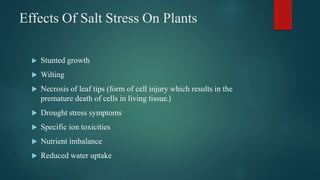
 Stunted growth
 Wilting
 Necrosis of leaf tips (form of cell injury which results in the
premature death of cells in living tissue.)
 Drought stress symptoms
 Specific ion toxicities
 Nutrient imbalance
 Reduced water uptake
CROP ADAPTATIONS TO SALT
STRESS
 Based on the responses to high concentration of salts, plants can be
divided into two broad groups.
1) Halophytes
2) Glycophytes
 Halophyte ( salt tolerant crops)
They are native to saline soils.
Examples: Saltbush, Pickleweed, Lizard tail, Switchgrass
 Glycophytes
Any halophyte that can only tolerate relatively low concentrations of
salt.
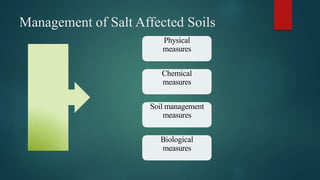
Management of Salt Affected Soils
Physical
measures
Chemical
measures
Soil management
measures
Biological
measures
Physical Measures
 Leaching
In this method, saline elements of the soil are transferred to lower levels
after dissolving with water.
 Drainage
• With drainage of additional water, the dissolved salts also drained out.
• Drains may be constructed in the field so that excess water keeps on
discharging.
 Regular irrigation and drainage provide successful reclamation of salt
affected soils.
Chemical Measures
 Reclamation of sodic soils requires neutralization of alkalinity and
replacement of most of the sodium ions by calcium ions.
 Chemical used:
1. Gypsum
2. Lime Stone
3. Sulphur, Acid of Sulphur
 Gypsum is the most commonly used chemical amendment.
Soil Management Measures
 Fields should be kept leveled for balanced distribution of irrigation
water.
 Sowing of crop should be done on the slope by following furrow
and basin method.
 Heavy irrigation prevents salt accumulation in the soil.
Biological Measures
 The biotic approach ‘plant-microbe interaction’ to overcome salt
stress has recently received a considerable attention.
 Different branches of the Proteobacteria and Pseudomonas contain
halophytic representatives.
 They are able to grow in up to 20 or 25% salts.
 Halophytes (Plants, Microbes) take excess of salts from the soil into
their body.
Thank you

Soil Salinity.pptx

  • 2.
    SOIL SALINITY /SALT STRESS Muhammad Irfan IAE, IUB
  • 3.
    Salinity  Salinity isa condition where excessive salts in soil solution cause inhibition of plant growth or plant death.  On a world scale, no toxic substance restricts plant growth more than does salts.  Salt stress represents an increasing threat to plant agriculture.
  • 4.
    Types of SaltAffected Soils  Saline Soils  Soil containing sufficient amount of soluble salts (Ca2+, Mg2+, Cl-, SO4 2-, CO3 2- HCO3 -,) to adversely affect the growth of most of crop plants.  All these salts are white hence the saline soils exhibit white color.  Also called white alkali soils.
  • 6.
     Sodic Soils Soil containing sufficient amount of exchangeable Na to adversely affect the growth of most of crop plants.  The pH of the soil usually high, often above 9.  These soils have dispersed structure.  Also called black alkali soils.
  • 8.
     Saline SodicSoils  Soil containing sufficient amount of soluble salts as well as exchangeable Na to adversely affect the growth of most of crop plants.  These soils contain characters of both saline and sodic soils.
  • 9.
    Characterization Of SaltAffected Soils Classification EC (ds/m) pH ESP Saline soils >4 <8.5 <15 Sodic soils <4 >8.5 >15 Saline sodic soils ≥4 ≥8.5 ≥15
  • 10.
    Global Distribution OfSalt Affected Soils  More than 800 million hectares of land throughout the world are salt affected, salinity (397 million hectare) sodicity (434 million hectare)  This is over 6% of the world’s total land area.
  • 11.
    National Distribution OfSalt Affected Soils  In Pakistan, out of 20 million hectares of agriculture land 6.7 million hectares are salt affected  Thousand hectare Province Saline Soils Saline-Sodic Sodic Total Punjab 504 2081 2586 Sindh 1342 950 28 2321 Kpk 501 14 515 Blochistan 175 129 304 Total 2523 3176 28
  • 12.
    Effects Of SaltStress On Plants Evelin et al. 2009
  • 13.
    Effects Of SaltStress On Plants  Stunted growth  Wilting  Necrosis of leaf tips (form of cell injury which results in the premature death of cells in living tissue.)  Drought stress symptoms  Specific ion toxicities  Nutrient imbalance  Reduced water uptake
  • 15.
    CROP ADAPTATIONS TOSALT STRESS  Based on the responses to high concentration of salts, plants can be divided into two broad groups. 1) Halophytes 2) Glycophytes  Halophyte ( salt tolerant crops) They are native to saline soils. Examples: Saltbush, Pickleweed, Lizard tail, Switchgrass  Glycophytes Any halophyte that can only tolerate relatively low concentrations of salt.
  • 16.
    Management of SaltAffected Soils Physical measures Chemical measures Soil management measures Biological measures
  • 17.
    Physical Measures  Leaching Inthis method, saline elements of the soil are transferred to lower levels after dissolving with water.  Drainage • With drainage of additional water, the dissolved salts also drained out. • Drains may be constructed in the field so that excess water keeps on discharging.  Regular irrigation and drainage provide successful reclamation of salt affected soils.
  • 18.
    Chemical Measures  Reclamationof sodic soils requires neutralization of alkalinity and replacement of most of the sodium ions by calcium ions.  Chemical used: 1. Gypsum 2. Lime Stone 3. Sulphur, Acid of Sulphur  Gypsum is the most commonly used chemical amendment.
  • 19.
    Soil Management Measures Fields should be kept leveled for balanced distribution of irrigation water.  Sowing of crop should be done on the slope by following furrow and basin method.  Heavy irrigation prevents salt accumulation in the soil.
  • 20.
    Biological Measures  Thebiotic approach ‘plant-microbe interaction’ to overcome salt stress has recently received a considerable attention.  Different branches of the Proteobacteria and Pseudomonas contain halophytic representatives.  They are able to grow in up to 20 or 25% salts.  Halophytes (Plants, Microbes) take excess of salts from the soil into their body.
  • 21.