
July 15, 2011VMware vSphere 5 ReleaseLicense Changes
AgendaUnderstanding the Key Driver for Licensing ChangevSphere 5: Licensing ChangesEdition Consolidation and Upgrade RightsvRAM Definition and EntitlementsvSphere 4: Staying PutDowngrade RightsVMware Support ModelQuestions and AnswersPlease include any questions in the chat window to the presenter and host
Softchoice at a Glance920 employees
More than 100 pre-sales resources
Traded on TSX Symbol: SO
US$884 million in revenues (2010)*
Top 4 VMware Reseller
45 Branch offices
15,000 North American Customers*Total Imputed Revenue of US$1. 874 billion**Computer Dealer News Magazine
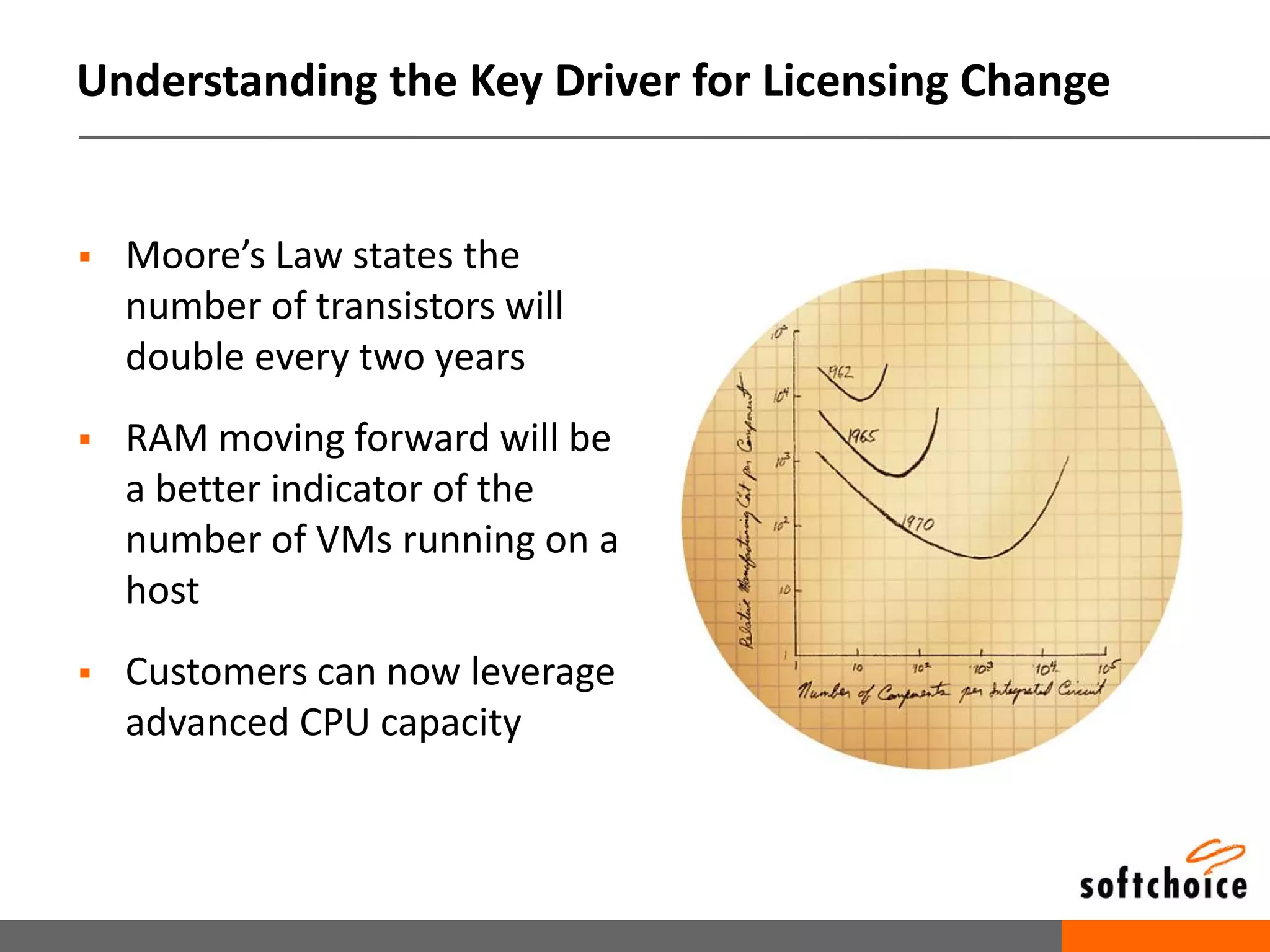
Understanding the Key Driver for Licensing ChangeMoore’s Law states the number of transistors will double every two yearsRAM moving forward will be a better indicator of the number of VMs running on a host Customers can now leverage advanced CPU capacity
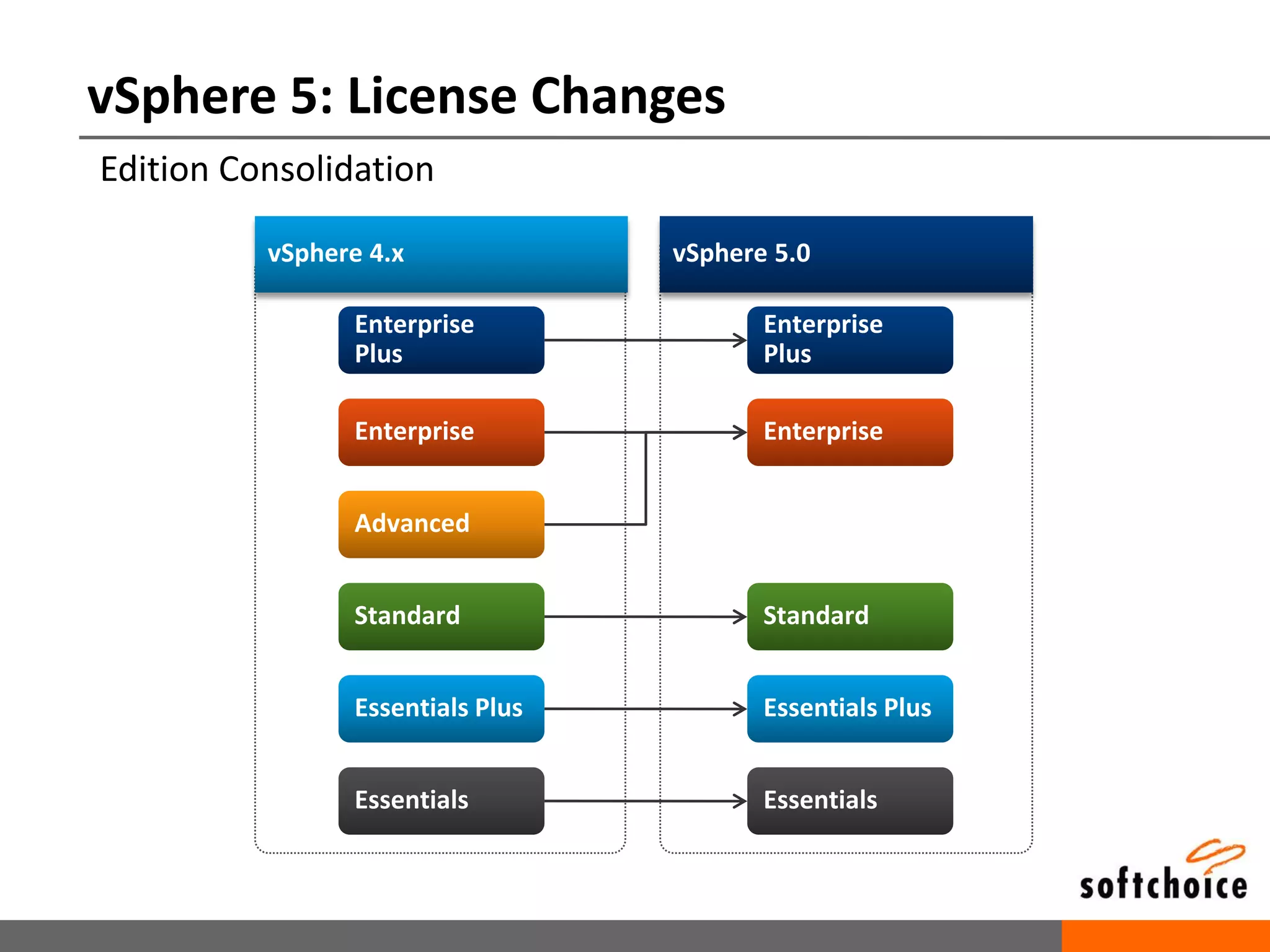
vSphere 5: License ChangesEdition ConsolidationvSphere 4.xvSphere 5.0Enterprise PlusEnterprise PlusEnterpriseEnterpriseAdvancedStandardStandardEssentials PlusEssentials PlusEssentialsEssentials
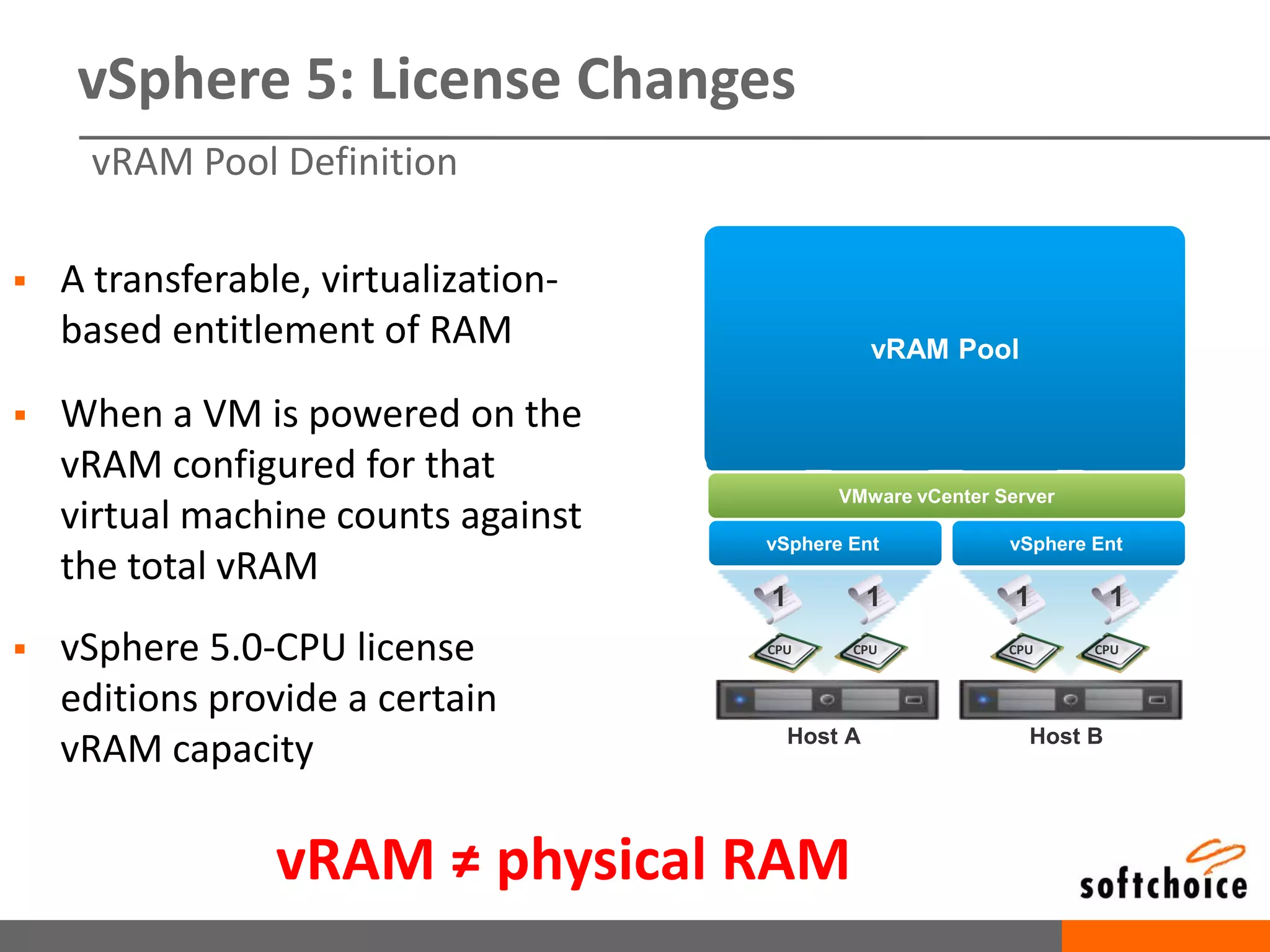
vSphere 5: License ChangesvRAM Pool DefinitionAtransferable, virtualization-based entitlement of RAMWhen a VM is powered on the vRAM configured for that virtual machine counts against the total vRAMvSphere 5.0-CPU license editions provide a certain vRAMcapacityvRAM Pool32GB32GB32GB32GBVMware vCenter ServervSphere Ent vSphere Ent 1111CPUCPUCPUCPUHost AHost BvRAM ≠ physical RAM
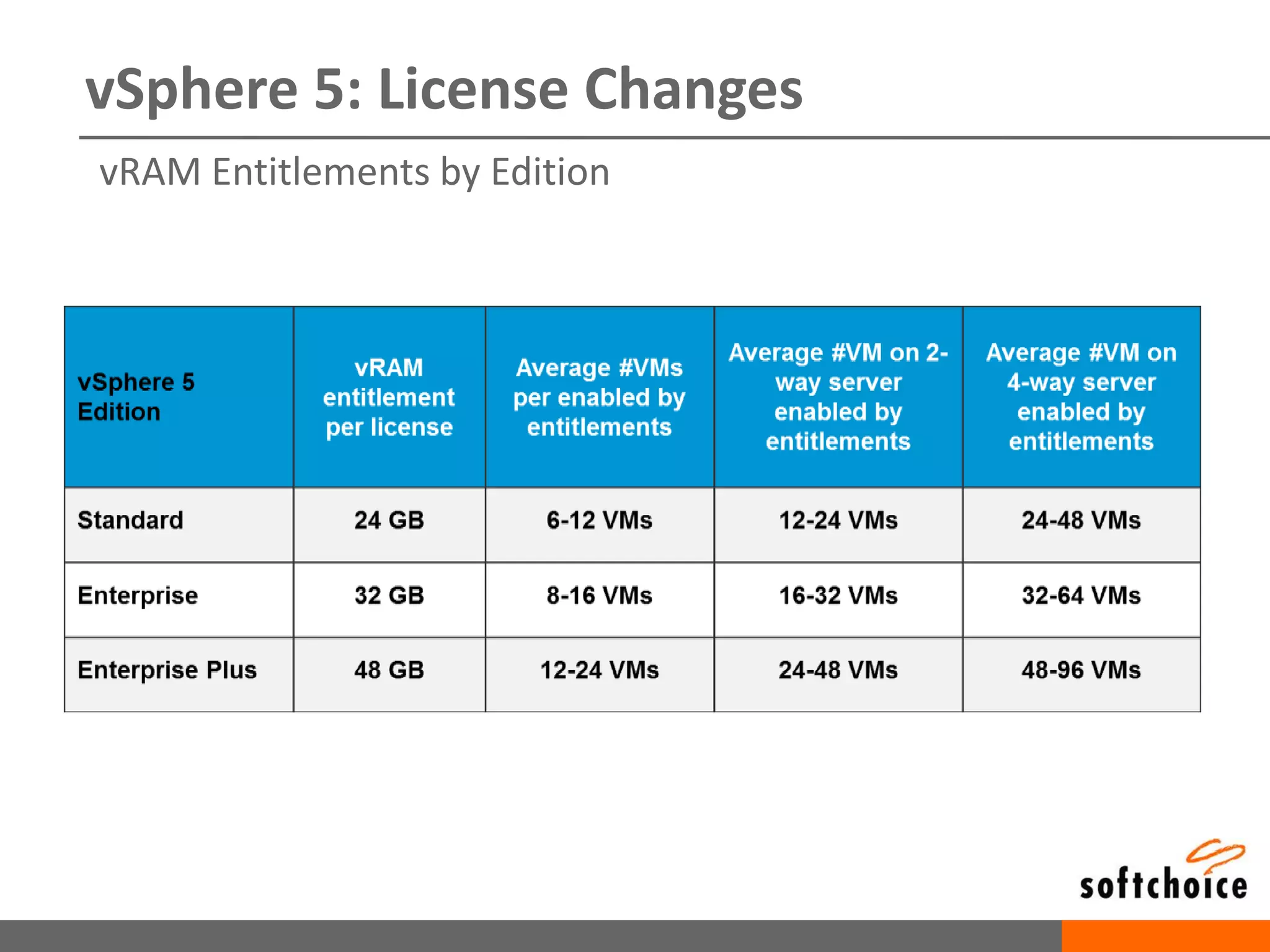
vSphere 5: License ChangesvRAM Entitlements by Edition
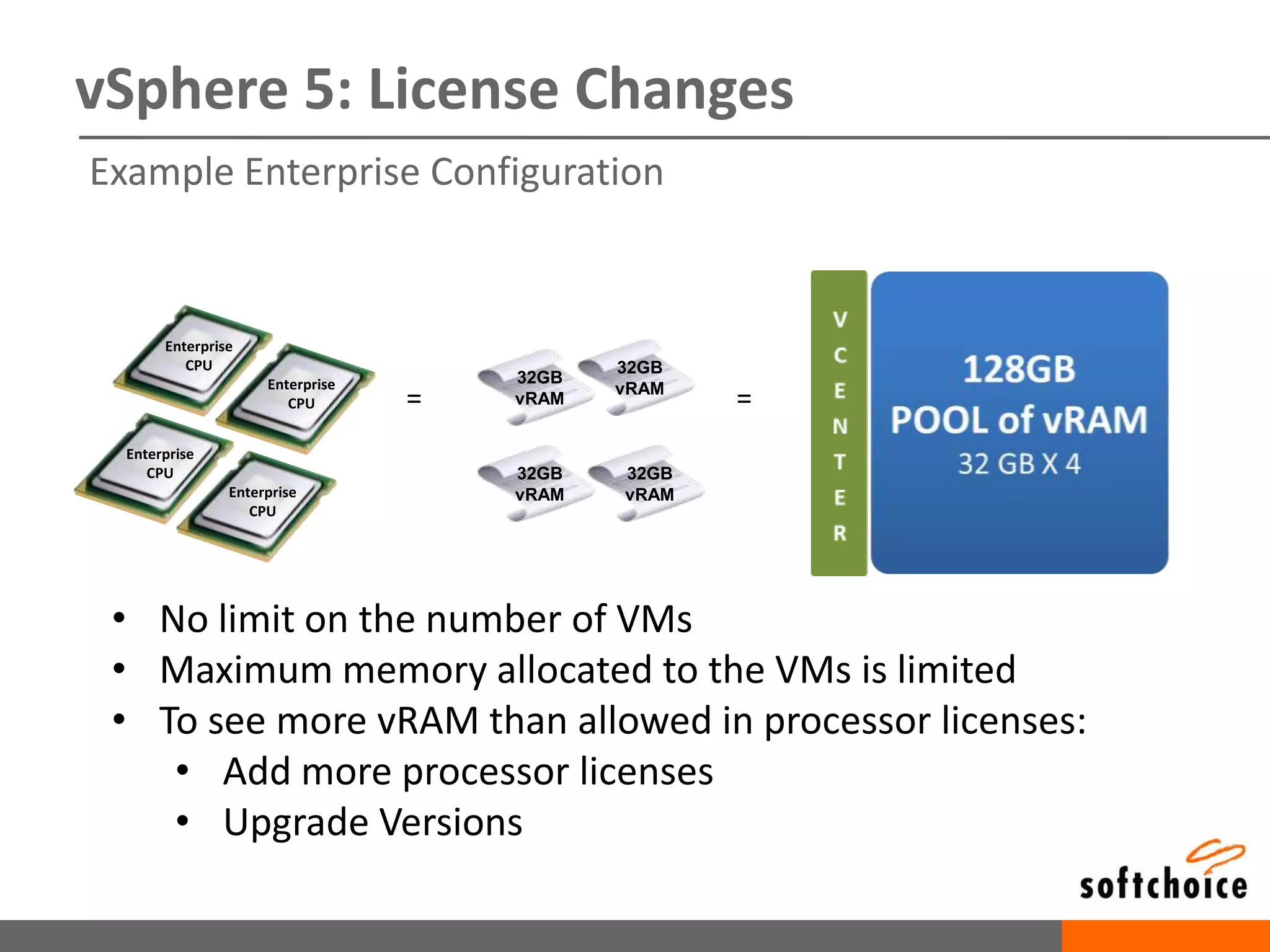
vSphere 5: License ChangesExample Enterprise ConfigurationEnterpriseCPUEnterpriseCPUEnterpriseCPUEnterpriseCPU==No limit on the number of VMs
Maximum memory allocated to the VMs is limited
To see more vRAM than allowed in processor licenses:
Add more processor licenses
Upgrade Versions32GB vRAM32GB vRAM32GB vRAM32GB vRAM
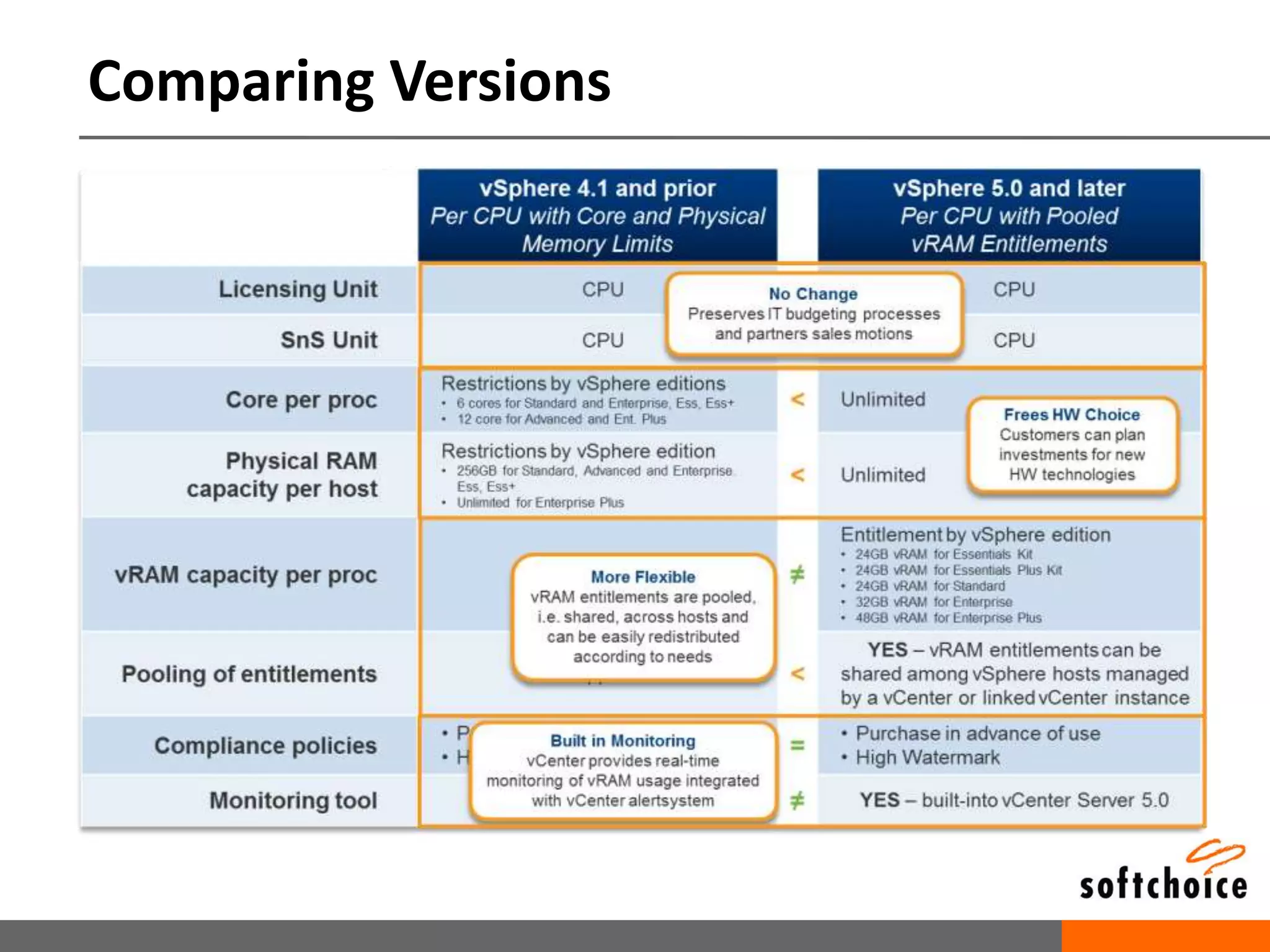
Comparing Versions

Softchoice Webinar: VMware 5 Release Summary

  • 1.
    July 15, 2011VMwarevSphere 5 ReleaseLicense Changes
  • 2.
    AgendaUnderstanding the KeyDriver for Licensing ChangevSphere 5: Licensing ChangesEdition Consolidation and Upgrade RightsvRAM Definition and EntitlementsvSphere 4: Staying PutDowngrade RightsVMware Support ModelQuestions and AnswersPlease include any questions in the chat window to the presenter and host
  • 3.
    Softchoice at aGlance920 employees
  • 4.
    More than 100pre-sales resources
  • 5.
    Traded on TSXSymbol: SO
  • 6.
    US$884 million inrevenues (2010)*
  • 7.
    Top 4 VMwareReseller
  • 8.
  • 9.
    15,000 North AmericanCustomers*Total Imputed Revenue of US$1. 874 billion**Computer Dealer News Magazine
  • 10.
    Understanding the KeyDriver for Licensing ChangeMoore’s Law states the number of transistors will double every two yearsRAM moving forward will be a better indicator of the number of VMs running on a host Customers can now leverage advanced CPU capacity
  • 11.
    vSphere 5: LicenseChangesEdition ConsolidationvSphere 4.xvSphere 5.0Enterprise PlusEnterprise PlusEnterpriseEnterpriseAdvancedStandardStandardEssentials PlusEssentials PlusEssentialsEssentials
  • 12.
    vSphere 5: LicenseChangesvRAM Pool DefinitionAtransferable, virtualization-based entitlement of RAMWhen a VM is powered on the vRAM configured for that virtual machine counts against the total vRAMvSphere 5.0-CPU license editions provide a certain vRAMcapacityvRAM Pool32GB32GB32GB32GBVMware vCenter ServervSphere Ent vSphere Ent 1111CPUCPUCPUCPUHost AHost BvRAM ≠ physical RAM
  • 13.
    vSphere 5: LicenseChangesvRAM Entitlements by Edition
  • 14.
    vSphere 5: LicenseChangesExample Enterprise ConfigurationEnterpriseCPUEnterpriseCPUEnterpriseCPUEnterpriseCPU==No limit on the number of VMs
  • 15.
    Maximum memory allocatedto the VMs is limited
  • 16.
    To see morevRAM than allowed in processor licenses:
  • 17.
  • 18.
    Upgrade Versions32GB vRAM32GBvRAM32GB vRAM32GB vRAM
  • 19.
  • 20.
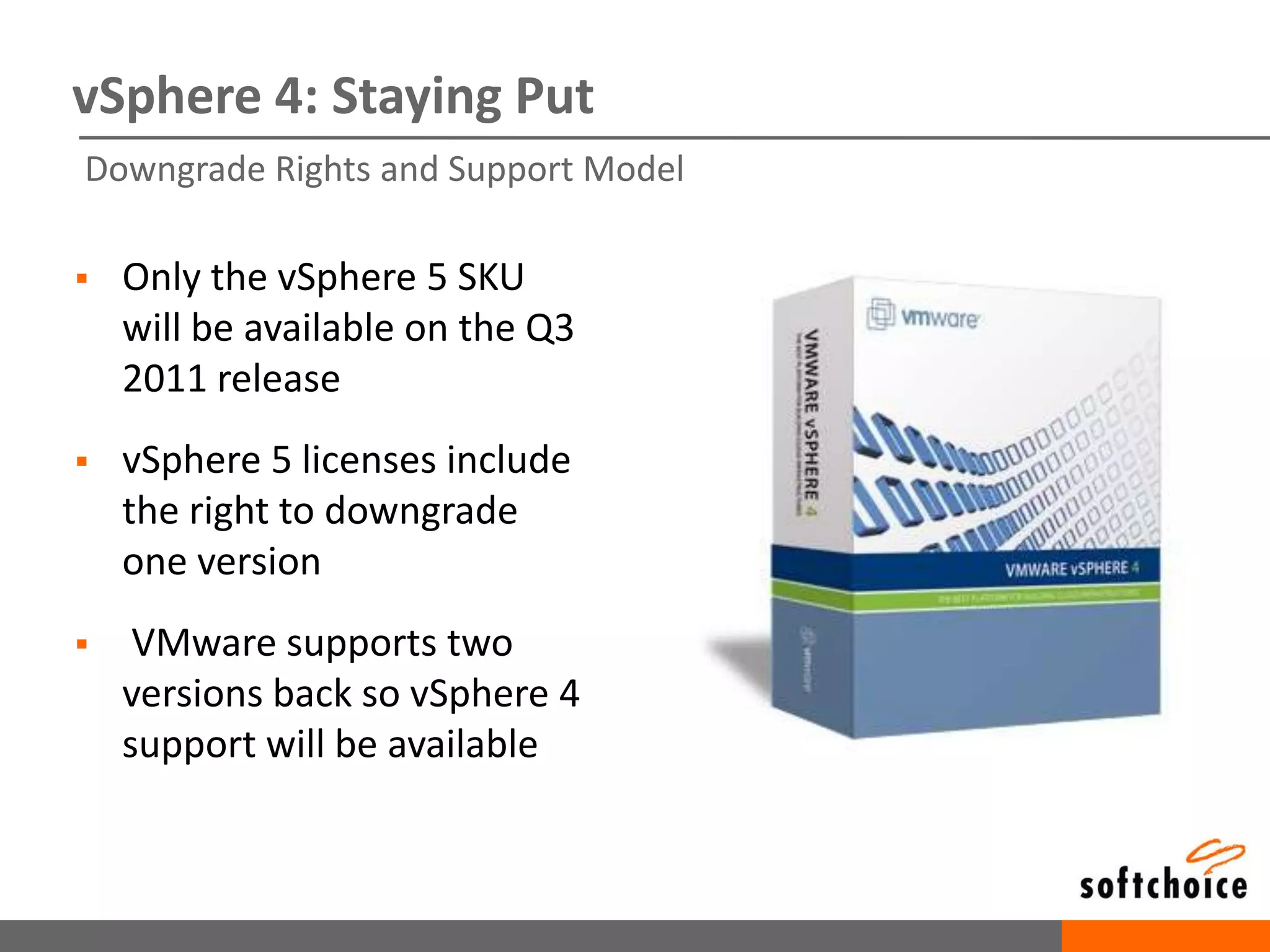
    vSphere 4: StayingPutDowngrade Rights and Support ModelOnly the vSphere 5 SKU will be available on the Q3 2011 releasevSphere 5 licenses include the right to downgrade one version VMware supports two versions back so vSphere 4 support will be available
  • 21.
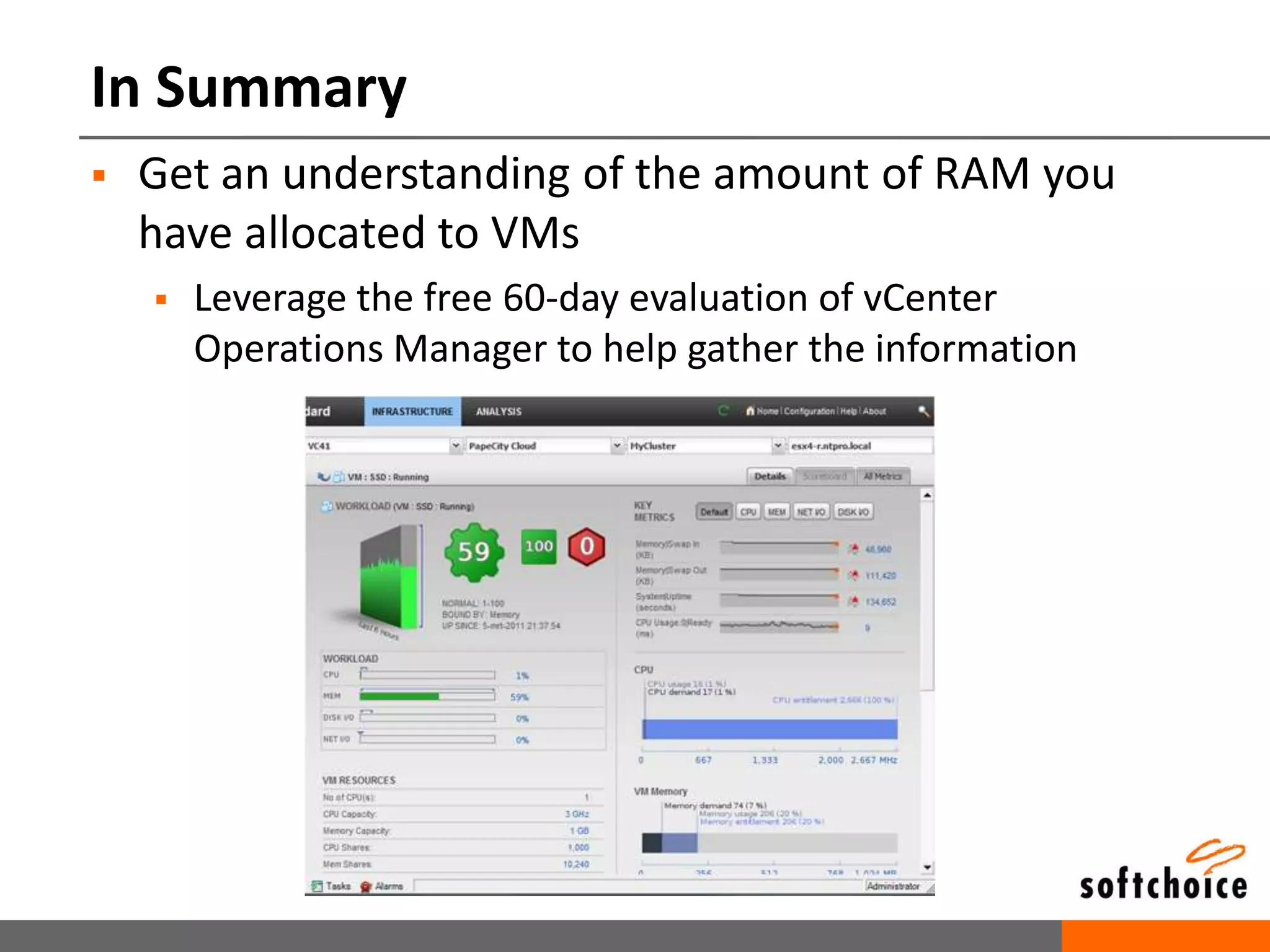
    In SummaryGet anunderstanding of the amount of RAM you have allocated to VMsLeverage the free 60-day evaluation of vCenter Operations Manager to help gather the information
  • 22.
    Contact Softchoice Softchoice&VMware Top 5 Reseller in North America
  • 23.
  • 24.
    Softchoice on VMwareTechnical Advisory Board
  • 25.
    Certified in AllVMware Solutions
  • 26.
  • 27.
  • 28.
  • 29.
    Top 10 Q&Asfrom the webinar
  • 30.
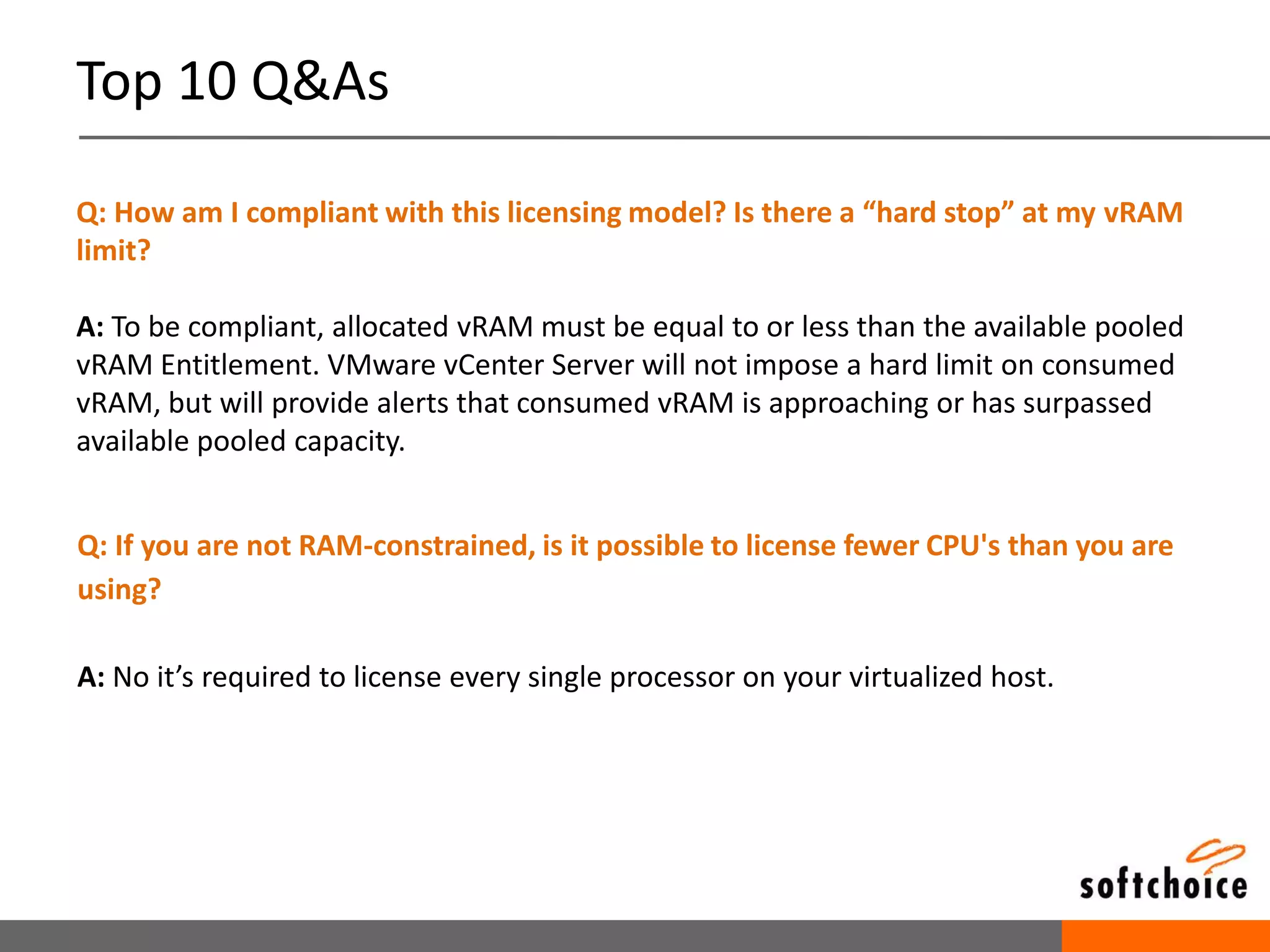
    Q: How amI compliant with this licensing model? Is there a “hard stop” at my vRAM limit?A: To be compliant, allocated vRAMmust be equal to or less than the available pooled vRAM Entitlement. VMware vCenter Server will not impose a hard limit on consumed vRAM, but will provide alerts that consumed vRAM is approaching or has surpassed available pooled capacity.Q: If you are not RAM-constrained, is it possible to license fewer CPU's than you are using?A: No it’s required to license every single processor on your virtualized host.Top 10 Q&As
  • 31.
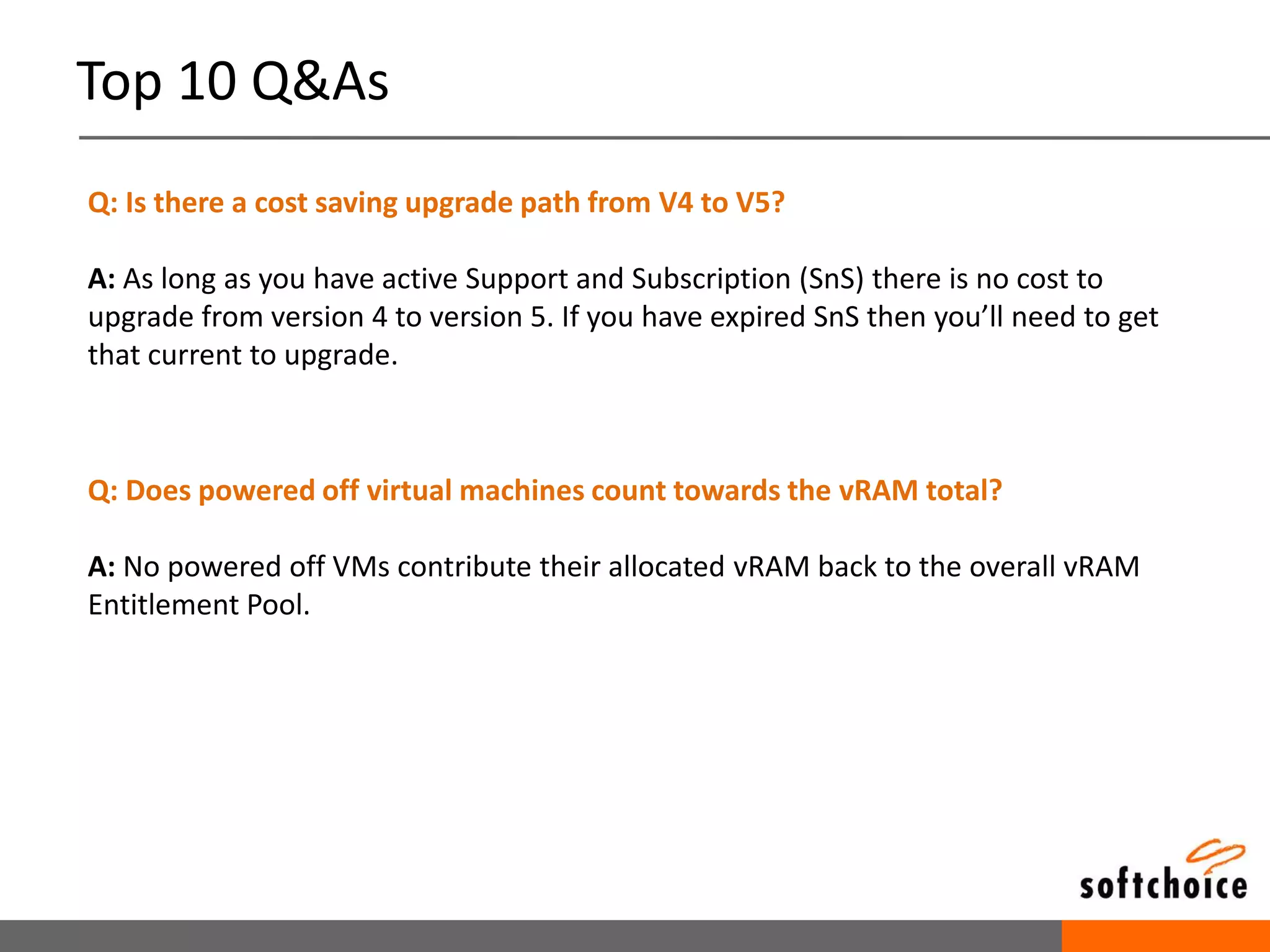
    Top 10 Q&AsQ: Is there a cost saving upgrade path from V4 to V5?A: As long as you have active Support and Subscription (SnS) there is no cost to upgrade from version 4 to version 5. If you have expired SnS then you’ll need to get that current to upgrade. Q: Does powered off virtual machines count towards the vRAMtotal?A: No powered off VMs contribute their allocated vRAM back to the overall vRAM Entitlement Pool.
  • 32.
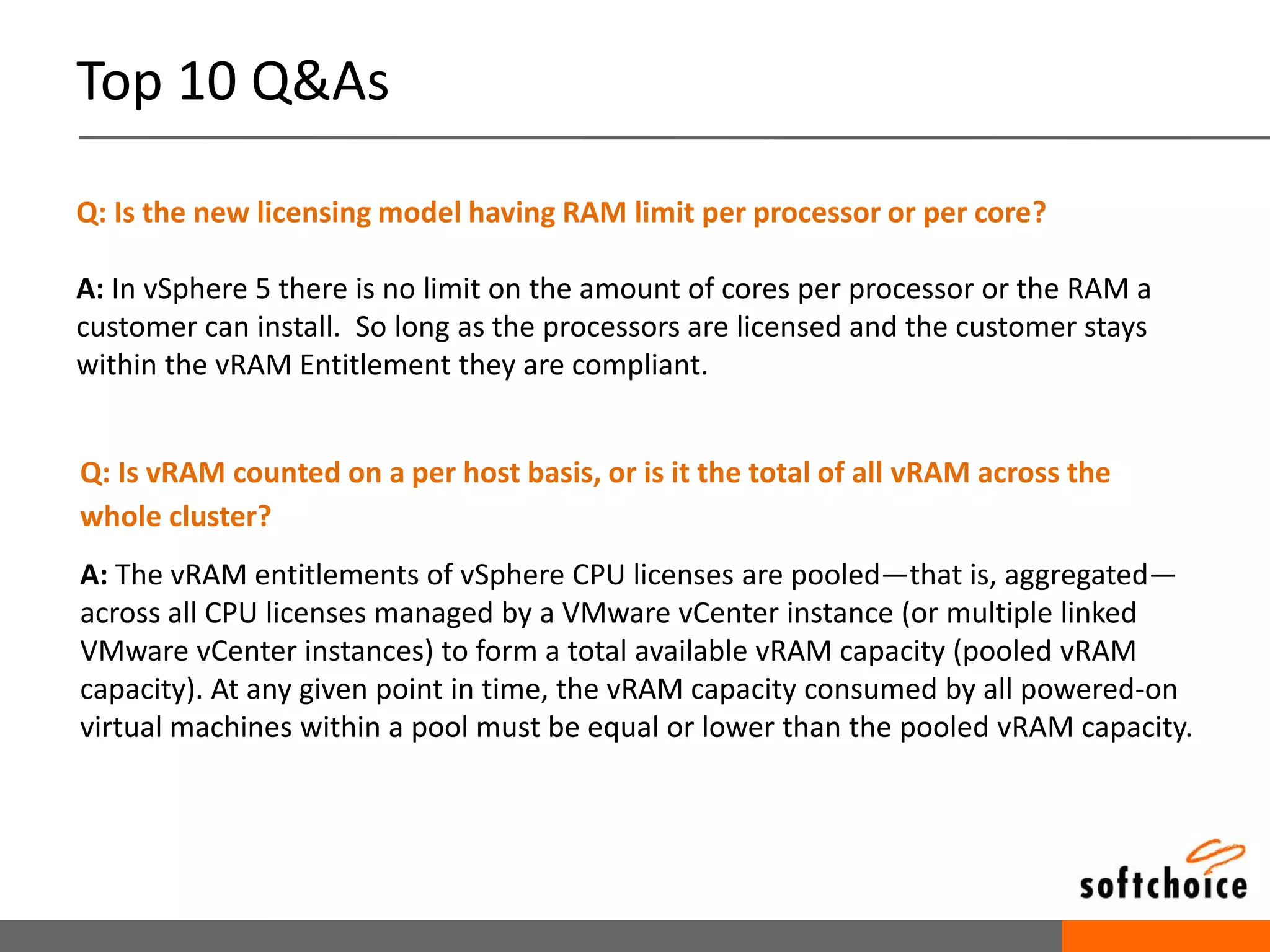
    Q: Is thenew licensing model having RAM limit per processor or per core?A:In vSphere 5 there is no limit on the amount of cores per processor or the RAM a customer can install. So long as the processors are licensed and the customer stays within the vRAM Entitlement they are compliant.Q: Is vRAM counted on a per host basis, or is it the total of all vRAM across the whole cluster?A:The vRAM entitlements of vSphere CPU licenses are pooled—that is, aggregated—across all CPU licenses managed by a VMware vCenter instance (or multiple linked VMware vCenter instances) to form a total available vRAM capacity (pooled vRAMcapacity). At any given point in time, the vRAM capacity consumed by all powered-on virtual machines within a pool must be equal or lower than the pooled vRAMcapacity.Top 10 Q&As
  • 33.
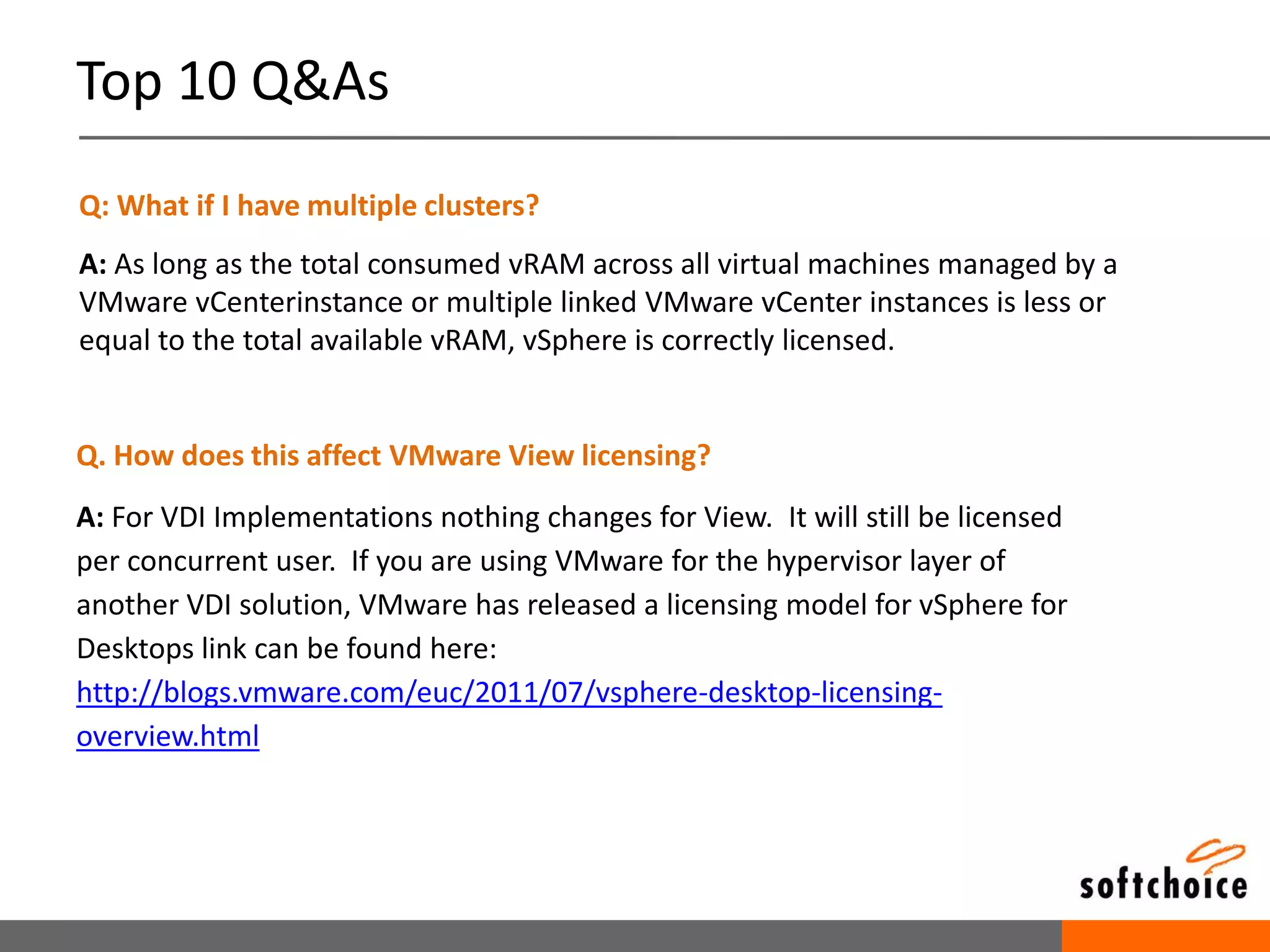
    Top 10 Q&AsQ: What if I have multiple clusters?A: As long as the total consumed vRAMacross all virtual machines managed by a VMware vCenterinstanceor multiple linked VMware vCenter instances is less orequal to the total available vRAM, vSphere is correctly licensed.Q. How does this affect VMware View licensing?A: For VDI Implementations nothing changes for View.  It will still be licensed per concurrent user.  If you are using VMware for the hypervisor layer of another VDI solution, VMware has released a licensing model for vSphere for Desktops link can be found here: http://blogs.vmware.com/euc/2011/07/vsphere-desktop-licensing-overview.html
  • 34.
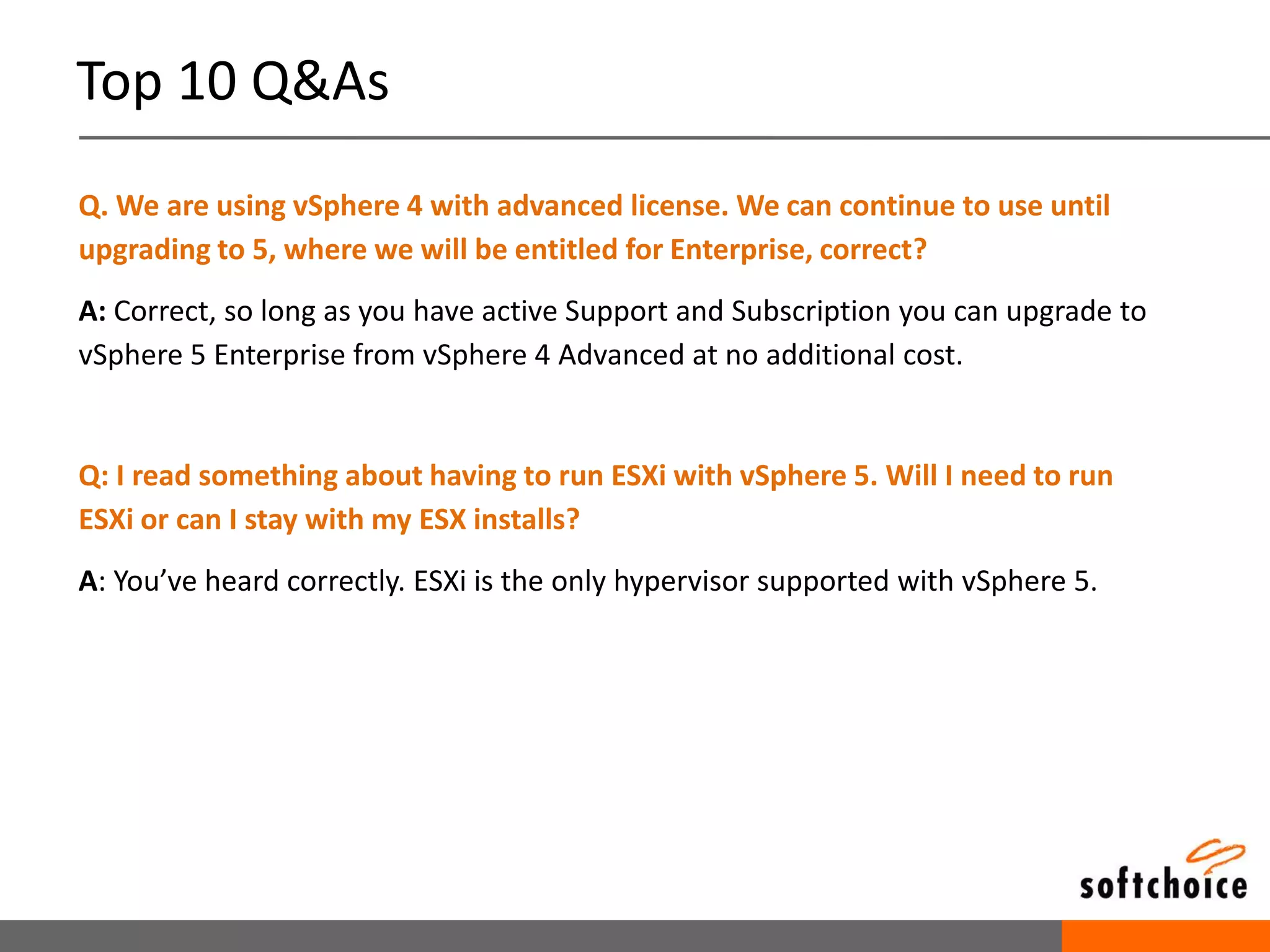
    Top 10 Q&AsQ. We are using vSphere 4 with advanced license. We can continue to use until upgrading to 5, where we will be entitled for Enterprise, correct?A: Correct, so long as you have active Support and Subscription you can upgrade to vSphere 5 Enterprise from vSphere 4 Advanced at no additional cost. Q: I read something about having to run ESXi with vSphere 5. Will I need to run ESXi or can I stay with my ESX installs?A: You’ve heard correctly. ESXi is the only hypervisor supported with vSphere 5.
  • 35.
    A Final NoteIfyou would like to dig deeper into the changes and how they might affect your business , we recommend that your read Understanding the vSphere5 vRAM Licensing Model, from VMware .We received several very specific questions that are not outlined in this presentation. We would be glad to answer these questions in one-on-one meetings. Please contact us at vmware@softchoice.com to book an appointment and speak with one of our representatives. Thank You