Sofosbuvir, Velpatasvir, and
Voxilaprevir
for Previously Treated HCV Infection
Presenter : Dr Umashankar
Moderator: Dr Geeta Kampani
N Engl J Med 2017;376:2134-46.DOI: 10.1056/NEJMoa1613512
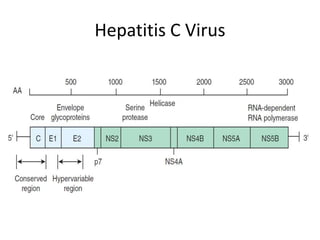
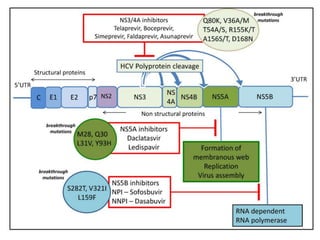
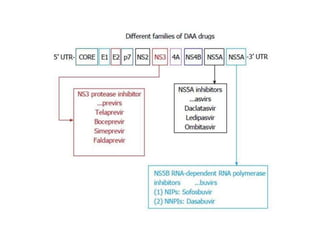
Hepatitis C Virus
INTRODUCTION
• The majority of chronically infected hepatitis C
virus (HCV) patients can now be successfully
treated with drugs that directly target viral
replication.
• Combination regimens of direct-acting
antiviral agents (DAAs) provide rates of
sustained virologic response exceeding 90%,
regardless of HCV genotype, disease stage, or
treatment history.
• No approved retreatment options for patients
who have previously received a regimen
containing an NS5A inhibitor.
• These represent the majority of patients with
recent treatment failures, are of particular
concern.
• The resistance-associated substitutions that are
selected by NS5A inhibitors maintain viral fitness
long after the end of the failed treatment.
• Sofosbuvir is a nucleotide analogue HCV NS5B
polymerase inhibitor
• In combination with other DAAs, approved for
the treatment of HCV infection of all genotypes.
• Velpatasvir is an HCV NS5A inhibitor with
pangenotypic potency.
• The fixed-dose combination of sofosbuvir and
velpatasvir provided high rates of sustained
virologic response( SVR) in phase 3 clinical trials .
• Recently been approved for the treatment of
patients with HCV infection of
 any genotype,
with or without cirrhosis,
 regardless of whether they have received
previous treatment with interferon-based
therapy.
• Voxilaprevir is a pangenotypic inhibitor of the
HCV NS3–NS4A protease.
• In phase 2 trials : the combination of
sofosbuvir, velpatasvir, and voxilaprevir was
effective in a broad range of patients with
chronic HCV infection.
• Two phase 3 trials were conducted to assess
the efficacy and safety of the fixed-dose
combination of sofosbuvir, velpatasvir, and
voxilaprevir for 12 weeks in patients who were
Chronically infected with HCV of any genotype
Patients with compensated cirrhosis
Previously received unsuccessful treatment
with DAA-based regimens
MATERIAL AND METHODS
• They used identical eligibility criteria for the two
trials.
• POLARIS-1 enrolled only patients whose previous
treatment included an NS5A inhibitor
• POLARIS-4 enrolled patients who had been
previously treated with any DAA regimen that did
not include an NS5A inhibitor
• Exception that those who had received only a
protease inhibitor with peginterferon and
ribavirin were not included, since these patients
have approved retreatment options.
EXCLUSION CRITERIA
• Patients had virologic failure after completing
previous treatment of less than 4 weeks
duration
• Discontinued owing to adverse events
• Virologic failure because of nonadherence to
treatment
TRAIL DESIGN
POLARIS-1
• Patients were enrolled at 108 sites in the United States,
Canada, New Zealand, Australia, France, Germany, and
the United Kingdom
• November 2015 to May 2016
HCV genotype 1 infection (with a target of having at least
30% of the sample made up of patients with
compensated cirrhosis)
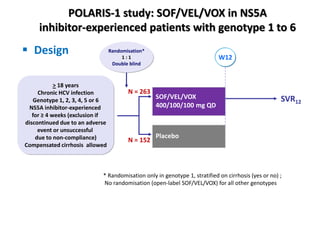
• Randomly assigned in a 1:1 ratio to receive sofosbuvir–
velpatasvir–voxilaprevir or matched placebo for 12
weeks
• Randomization was stratified according to cirrhosis
status.
• The investigators, patients, and study personnel
were unaware of the study group assignments for
patients with genotype 1 infection until after the
post-treatment week 4 visit.
• All patients of other genotypes or an
indeterminate genotype, regardless of whether
they had cirrhosis, were enrolled in the
sofosbuvir–velpatasvir–voxilaprevir group
• Since patients with non–genotype 1 infection
comprise a comparatively small proportion of
those who have virologic failure after treatment
with a DAA-based regimen.
• Fixed-dose combination tablet containing 400
mg of sofosbuvir, 100 mg of velpatasvir, and
100 mg of voxilaprevir or a matching placebo
tablet, administered orally once daily for 12
weeks.
• Patients who were randomly assigned to the
placebo group were eligible for 12 weeks of
subsequent treatment with sofosbuvir–
velpatasvir–voxilaprevir.
SOF/VEL/VOX
400/100/100 mg QD
N = 263
N = 152
W12
Placebo
> 18 years
Chronic HCV infection
Genotype 1, 2, 3, 4, 5 or 6
NS5A inhibitor-experienced
for ≥ 4 weeks (exclusion if
discontinued due to an adverse
event or unsuccessful
due to non-compliance)
Compensated cirrhosis allowed
Randomisation*
1 : 1
Double blind
* Randomisation only in genotype 1, stratified on cirrhosis (yes or no) ;
No randomisation (open-label SOF/VEL/VOX) for all other genotypes
SVR12
 Design
POLARIS-1 study: SOF/VEL/VOX in NS5A
inhibitor-experienced patients with genotype 1 to 6
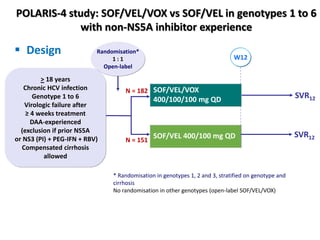
POLARIS-4
• Enrolled patients at 101 sites in the United
States, Canada, New Zealand, Australia, France,
Germany, and the United Kingdom
• January through May 2016.
• Open-label trial
• Patients with HCV genotype 1, 2, or 3 infection
were assigned in a 1:1 ratio to receive either
sofosbuvir–velpatasvir–voxilaprevir or
sofosbuvir–velpatasvir once daily for 12 weeks.
• Randomization was stratified according
HCV genotype
Cirrhosis status.
• Patients who were infected with HCV of any
other genotype were assigned to receive
sofosbuvir–velpatasvir–voxilaprevir
• 12 weeks
N = 182
N = 151
SOF/VEL 400/100 mg QD
> 18 years
Chronic HCV infection
Genotype 1 to 6
Virologic failure after
≥ 4 weeks treatment
DAA-experienced
(exclusion if prior NS5A
or NS3 (PI) + PEG-IFN + RBV)
Compensated cirrhosis
allowed
Randomisation*
1 : 1
Open-label
* Randomisation in genotypes 1, 2 and 3, stratified on genotype and
cirrhosis
No randomisation in other genotypes (open-label SOF/VEL/VOX)
SVR12
 Design
POLARIS-4 study: SOF/VEL/VOX vs SOF/VEL in genotypes 1 to 6
with non-NS5A inhibitor experience
W12
SVR12
SOF/VEL/VOX
400/100/100 mg QD
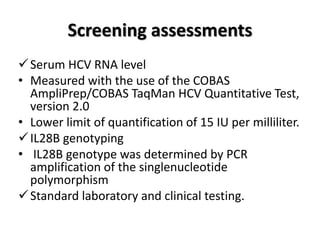
Screening assessments
Serum HCV RNA level
• Measured with the use of the COBAS
AmpliPrep/COBAS TaqMan HCV Quantitative Test,
version 2.0
• Lower limit of quantification of 15 IU per milliliter.
IL28B genotyping
• IL28B genotype was determined by PCR
amplification of the singlenucleotide
polymorphism
Standard laboratory and clinical testing.
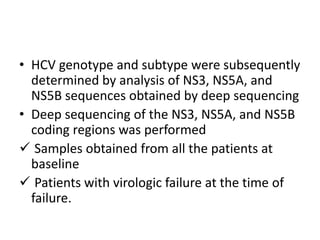
• HCV genotype and subtype were subsequently
determined by analysis of NS3, NS5A, and
NS5B sequences obtained by deep sequencing
• Deep sequencing of the NS3, NS5A, and NS5B
coding regions was performed
 Samples obtained from all the patients at
baseline
 Patients with virologic failure at the time of
failure.
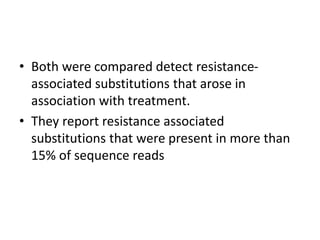
• Both were compared detect resistance-
associated substitutions that arose in
association with treatment.
• They report resistance associated
substitutions that were present in more than
15% of sequence reads
END POINTS
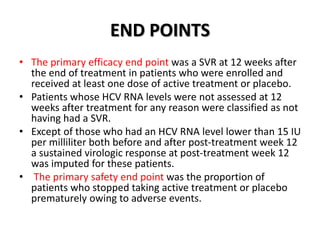
• The primary efficacy end point was a SVR at 12 weeks after
the end of treatment in patients who were enrolled and
received at least one dose of active treatment or placebo.
• Patients whose HCV RNA levels were not assessed at 12
weeks after treatment for any reason were classified as not
having had a SVR.
• Except of those who had an HCV RNA level lower than 15 IU
per milliliter both before and after post-treatment week 12
a sustained virologic response at post-treatment week 12
was imputed for these patients.
• The primary safety end point was the proportion of
patients who stopped taking active treatment or placebo
prematurely owing to adverse events.
RESULTS POLARIS-1
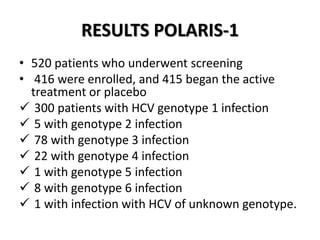
• 520 patients who underwent screening
• 416 were enrolled, and 415 began the active
treatment or placebo
 300 patients with HCV genotype 1 infection
 5 with genotype 2 infection
 78 with genotype 3 infection
 22 with genotype 4 infection
 1 with genotype 5 infection
 8 with genotype 6 infection
 1 with infection with HCV of unknown genotype.
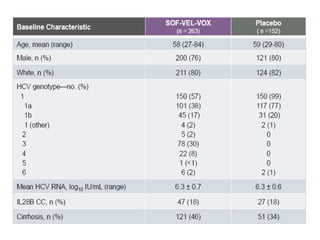
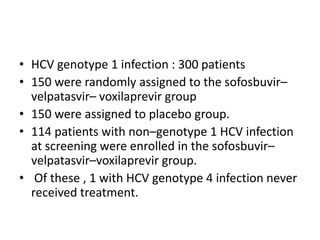
• HCV genotype 1 infection : 300 patients
• 150 were randomly assigned to the sofosbuvir–
velpatasvir– voxilaprevir group
• 150 were assigned to placebo group.
• 114 patients with non–genotype 1 HCV infection
at screening were enrolled in the sofosbuvir–
velpatasvir–voxilaprevir group.
• Of these , 1 with HCV genotype 4 infection never
received treatment.
POLARIS-4
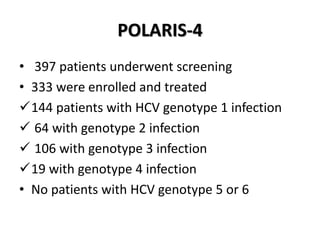
• 397 patients underwent screening
• 333 were enrolled and treated
144 patients with HCV genotype 1 infection
 64 with genotype 2 infection
 106 with genotype 3 infection
19 with genotype 4 infection
• No patients with HCV genotype 5 or 6
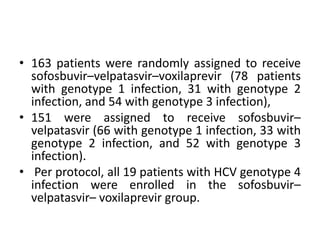
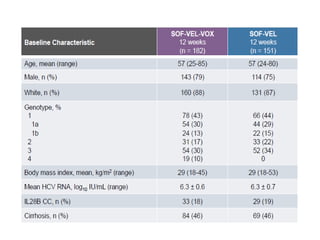
• 163 patients were randomly assigned to receive
sofosbuvir–velpatasvir–voxilaprevir (78 patients
with genotype 1 infection, 31 with genotype 2
infection, and 54 with genotype 3 infection),
• 151 were assigned to receive sofosbuvir–
velpatasvir (66 with genotype 1 infection, 33 with
genotype 2 infection, and 52 with genotype 3
infection).
• Per protocol, all 19 patients with HCV genotype 4
infection were enrolled in the sofosbuvir–
velpatasvir– voxilaprevir group.
EFFICACY POLARIS-1
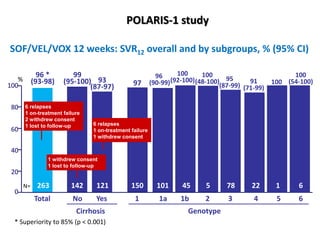
• The overall rate of SVR in the sofosbuvir–velpatasvir–
voxilaprevir group was 96% (95% confidence interval
[CI], 93 to 98), which was significantly superior to the
pre specified performance goal of 85% (P<0.001)
• Of the 253 patients with SVR 12 week after treatment,
i. 249 returned for the post-treatment week 24 visit.
ii. All 249 patients had a SVR at that time.
• None of the patients who received placebo had a SVR.
* Superiority to 85% (p < 0.001)
SOF/VEL/VOX 12 weeks: SVR12 overall and by subgroups, % (95% CI)
0
20
40
60
80
100
96 *
(93-98)
Total
99
(95-100)
No
121
93
(87-97)
Cirrhosis
150 101
100
(92-100)
4
5
100
6
Genotype
45
5
95
(87-99)
6 relapses
1 on-treatment failure
2 withdrew consent
1 lost to follow-up
1 withdrew consent
1 lost to follow-up
%
6 relapses
1 on-treatment failure
1 withdrew consent
1 31b1a 2
96
(90-99)
100
(48-100)
78 22 61
100
(54-100)
263 142
97 91
(71-99)
Yes
POLARIS-1 study
N=
Rates of sustained virologic response
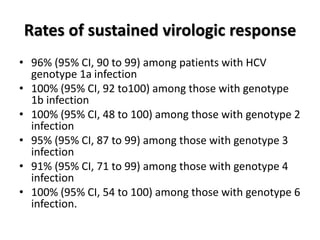
• 96% (95% CI, 90 to 99) among patients with HCV
genotype 1a infection
• 100% (95% CI, 92 to100) among those with genotype
1b infection
• 100% (95% CI, 48 to 100) among those with genotype 2
infection
• 95% (95% CI, 87 to 99) among those with genotype 3
infection
• 91% (95% CI, 71 to 99) among those with genotype 4
infection
• 100% (95% CI, 54 to 100) among those with genotype 6
infection.
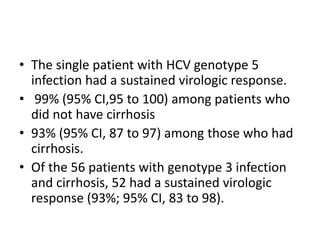
• The single patient with HCV genotype 5
infection had a sustained virologic response.
• 99% (95% CI,95 to 100) among patients who
did not have cirrhosis
• 93% (95% CI, 87 to 97) among those who had
cirrhosis.
• Of the 56 patients with genotype 3 infection
and cirrhosis, 52 had a sustained virologic
response (93%; 95% CI, 83 to 98).
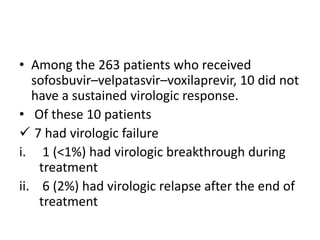
• Among the 263 patients who received
sofosbuvir–velpatasvir–voxilaprevir, 10 did not
have a sustained virologic response.
• Of these 10 patients
 7 had virologic failure
i. 1 (<1%) had virologic breakthrough during
treatment
ii. 6 (2%) had virologic relapse after the end of
treatment
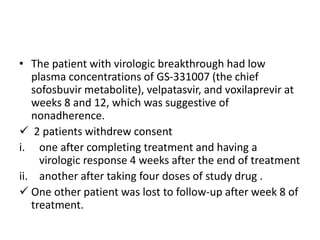
• The patient with virologic breakthrough had low
plasma concentrations of GS-331007 (the chief
sofosbuvir metabolite), velpatasvir, and voxilaprevir at
weeks 8 and 12, which was suggestive of
nonadherence.
 2 patients withdrew consent
i. one after completing treatment and having a
virologic response 4 weeks after the end of treatment
ii. another after taking four doses of study drug .
 One other patient was lost to follow-up after week 8 of
treatment.
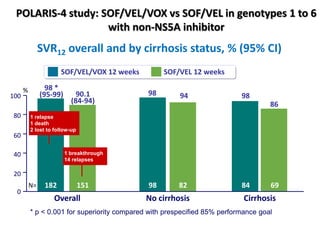
SVR12 overall and by cirrhosis status, % (95% CI)
0
20
40
60
80
100
98 *
(95-99)
Overall
90.1
(84-94)
98
98
82 84
86
69
1 relapse
1 death
2 lost to follow-up
1 breakthrough
14 relapses
%
No cirrhosis Cirrhosis
98
182 151
94
* p < 0.001 for superiority compared with prespecified 85% performance goal
POLARIS-4 study: SOF/VEL/VOX vs SOF/VEL in genotypes 1 to 6
with non-NS5A inhibitor
SOF/VEL/VOX 12 weeks SOF/VEL 12 weeks
N=
POLARIS-4
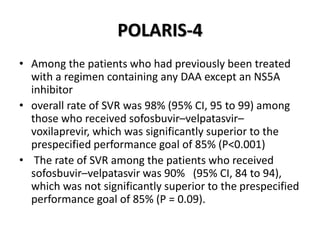
• Among the patients who had previously been treated
with a regimen containing any DAA except an NS5A
inhibitor
• overall rate of SVR was 98% (95% CI, 95 to 99) among
those who received sofosbuvir–velpatasvir–
voxilaprevir, which was significantly superior to the
prespecified performance goal of 85% (P<0.001)
• The rate of SVR among the patients who received
sofosbuvir–velpatasvir was 90% (95% CI, 84 to 94),
which was not significantly superior to the prespecified
performance goal of 85% (P = 0.09).
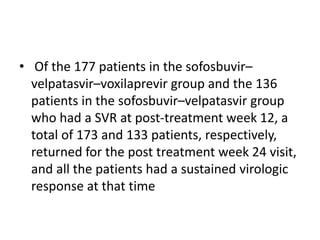
• Of the 177 patients in the sofosbuvir–
velpatasvir–voxilaprevir group and the 136
patients in the sofosbuvir–velpatasvir group
who had a SVR at post-treatment week 12, a
total of 173 and 133 patients, respectively,
returned for the post treatment week 24 visit,
and all the patients had a sustained virologic
response at that time
POLARIS-4
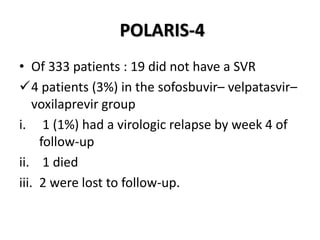
• Of 333 patients : 19 did not have a SVR
4 patients (3%) in the sofosbuvir– velpatasvir–
voxilaprevir group
i. 1 (1%) had a virologic relapse by week 4 of
follow-up
ii. 1 died
iii. 2 were lost to follow-up.
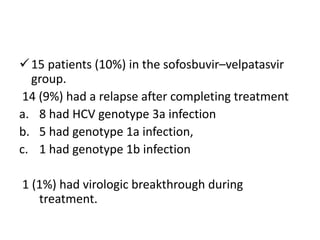
15 patients (10%) in the sofosbuvir–velpatasvir
group.
14 (9%) had a relapse after completing treatment
a. 8 had HCV genotype 3a infection
b. 5 had genotype 1a infection,
c. 1 had genotype 1b infection
1 (1%) had virologic breakthrough during
treatment.
Viral Resistance Testing
POLARIS-1
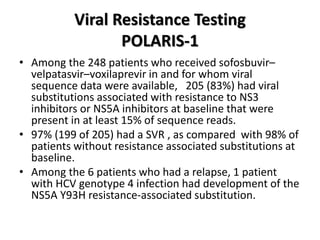
• Among the 248 patients who received sofosbuvir–
velpatasvir–voxilaprevir in and for whom viral
sequence data were available, 205 (83%) had viral
substitutions associated with resistance to NS3
inhibitors or NS5A inhibitors at baseline that were
present in at least 15% of sequence reads.
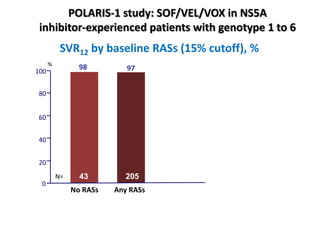
• 97% (199 of 205) had a SVR , as compared with 98% of
patients without resistance associated substitutions at
baseline.
• Among the 6 patients who had a relapse, 1 patient
with HCV genotype 4 infection had development of the
NS5A Y93H resistance-associated substitution.
SVR12 by baseline RASs (15% cutoff), %
0
20
40
60
80
100
98 97
Any RASsNo RASs
43 205 9 124 72
%
POLARIS-1 study: SOF/VEL/VOX in NS5A
inhibitor-experienced patients with genotype 1 to 6
N=
POLARIS-4
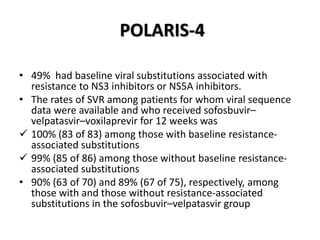
• 49% had baseline viral substitutions associated with
resistance to NS3 inhibitors or NS5A inhibitors.
• The rates of SVR among patients for whom viral sequence
data were available and who received sofosbuvir–
velpatasvir–voxilaprevir for 12 weeks was
 100% (83 of 83) among those with baseline resistance-
associated substitutions
 99% (85 of 86) among those without baseline resistance-
associated substitutions
• 90% (63 of 70) and 89% (67 of 75), respectively, among
those with and those without resistance-associated
substitutions in the sofosbuvir–velpatasvir group
Contd..
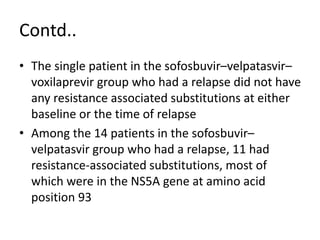
• The single patient in the sofosbuvir–velpatasvir–
voxilaprevir group who had a relapse did not have
any resistance associated substitutions at either
baseline or the time of relapse
• Among the 14 patients in the sofosbuvir–
velpatasvir group who had a relapse, 11 had
resistance-associated substitutions, most of
which were in the NS5A gene at amino acid
position 93
Safety
Discontinuation of treatment
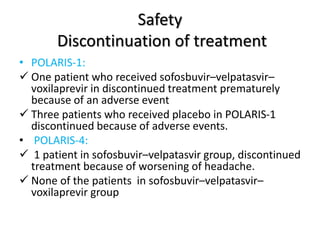
• POLARIS-1:
 One patient who received sofosbuvir–velpatasvir–
voxilaprevir in discontinued treatment prematurely
because of an adverse event
 Three patients who received placebo in POLARIS-1
discontinued because of adverse events.
• POLARIS-4:
 1 patient in sofosbuvir–velpatasvir group, discontinued
treatment because of worsening of headache.
 None of the patients in sofosbuvir–velpatasvir–
voxilaprevir group
Adverse Events
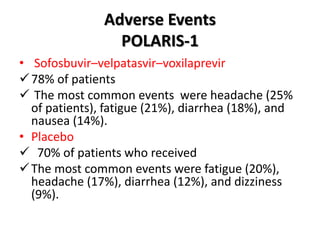
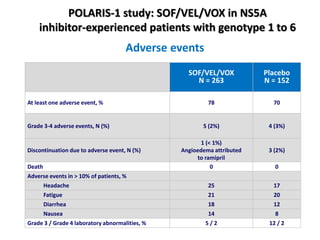
POLARIS-1
• Sofosbuvir–velpatasvir–voxilaprevir
78% of patients
 The most common events were headache (25%
of patients), fatigue (21%), diarrhea (18%), and
nausea (14%).
• Placebo
 70% of patients who received
The most common events were fatigue (20%),
headache (17%), diarrhea (12%), and dizziness
(9%).
SOF/VEL/VOX
N = 263
Placebo
N = 152
At least one adverse event, % 78 70
Grade 3-4 adverse events, N (%) 5 (2%) 4 (3%)
Discontinuation due to adverse event, N (%)
1 (< 1%)
Angioedema attributed
to ramipril
3 (2%)
Death 0 0
Adverse events in > 10% of patients, %
Headache 25 17
Fatigue 21 20
Diarrhea 18 12
Nausea 14 8
Grade 3 / Grade 4 laboratory abnormalities, % 5 / 2 12 / 2
Adverse events
POLARIS-1 study: SOF/VEL/VOX in NS5A
inhibitor-experienced patients with genotype 1 to 6
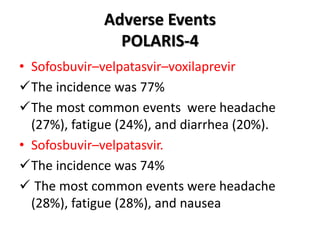
Adverse Events
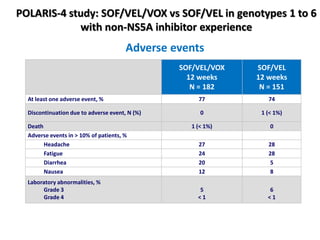
POLARIS-4
• Sofosbuvir–velpatasvir–voxilaprevir
The incidence was 77%
The most common events were headache
(27%), fatigue (24%), and diarrhea (20%).
• Sofosbuvir–velpatasvir.
The incidence was 74%
 The most common events were headache
(28%), fatigue (28%), and nausea
SOF/VEL/VOX
12 weeks
N = 182
SOF/VEL
12 weeks
N = 151
At least one adverse event, % 77 74
Discontinuation due to adverse event, N (%) 0 1 (< 1%)
Death 1 (< 1%) 0
Adverse events in > 10% of patients, %
Headache 27 28
Fatigue 24 28
Diarrhea 20 5
Nausea 12 8
Laboratory abnormalities, %
Grade 3
Grade 4
5
< 1
6
< 1
Adverse events
POLARIS-4 study: SOF/VEL/VOX vs SOF/VEL in genotypes 1 to 6
with non-NS5A inhibitor experience
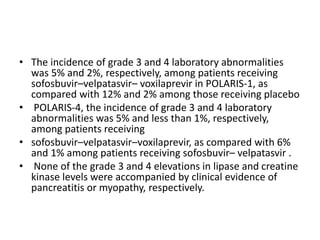
• The incidence of grade 3 and 4 laboratory abnormalities
was 5% and 2%, respectively, among patients receiving
sofosbuvir–velpatasvir– voxilaprevir in POLARIS-1, as
compared with 12% and 2% among those receiving placebo
• POLARIS-4, the incidence of grade 3 and 4 laboratory
abnormalities was 5% and less than 1%, respectively,
among patients receiving
• sofosbuvir–velpatasvir–voxilaprevir, as compared with 6%
and 1% among patients receiving sofosbuvir– velpatasvir .
• None of the grade 3 and 4 elevations in lipase and creatine
kinase levels were accompanied by clinical evidence of
pancreatitis or myopathy, respectively.
DISCUSSION
• The population of patients given 12 weeks of
treatment with sofosbuvir–velpatasvir–
voxilaprevir resulted in high rates SVR among
patients with and without compensated
cirrhosis who had HCV of any genotype, who
had not had a SVR after previous treatment
with regimens containing DAAs, including
NS5A inhibitors
• These have limited retreatment options.
• Because of their potency, NS5A inhibitors have
been a common component of DAA regimens.
• Substitutions in the viral genome that confer
resistance to NS5A inhibitors
• Unlike those that confer resistance to NS3
protease inhibitors and NS5B polymerase
inhibitors, it appear to maintain the viability of
the virus after unsuccessful treatment .
• POLARIS-1 and POLARIS-4 enrolled a substantial
number of patients who had resistance-
associated viral substitutions at baseline.
• Presence of such substitutions had no
discernible effect on the rates of SVR with
sofosbuvir–velpatasvir–voxilaprevir.
• The incidence of adverse events among the
patients was generally similar to the rates
among patients with placebo in POLARIS-1
and sofosbuvir–velpatasvir in POLARIS-4.
• No patient interrupted treatment or
discontinued treatment prematurely as a
result of these events.
LIMITATIONS
• Small numbers of patients in some sub
populations, including those with genotype 3
infection and cirrhosis and those infected with
rarer genotypes.
• Some patients did not receive previous treatment
with commercially available regimens.
• Small number of retreated patients had
treatment failure with the more recently
approved HCV regimens that include velpatasvir
or elbasvir.
• The results also cannot be generalized to
patients who were excluded from the trials,
such as those co infected with hepatitis B virus
or human immunodeficiency virus and those
with decompensated cirrhosis.
CONCLUSION
• Daily treatment with the single-tablet regimen
of sofosbuvir–velpatasvir–voxilaprevir for 12
weeks is highly effective for patients of any
genotype , with or without compensated
cirrhosis, who did not have a sustained
virologic response after treatment with DAA-
based regimens, including NS5A inhibitors .
Sofosbuvir ppt

Sofosbuvir ppt

  • 1.
    Sofosbuvir, Velpatasvir, and Voxilaprevir forPreviously Treated HCV Infection Presenter : Dr Umashankar Moderator: Dr Geeta Kampani N Engl J Med 2017;376:2134-46.DOI: 10.1056/NEJMoa1613512
  • 2.
  • 5.
    INTRODUCTION • The majorityof chronically infected hepatitis C virus (HCV) patients can now be successfully treated with drugs that directly target viral replication. • Combination regimens of direct-acting antiviral agents (DAAs) provide rates of sustained virologic response exceeding 90%, regardless of HCV genotype, disease stage, or treatment history.
  • 6.
    • No approvedretreatment options for patients who have previously received a regimen containing an NS5A inhibitor. • These represent the majority of patients with recent treatment failures, are of particular concern. • The resistance-associated substitutions that are selected by NS5A inhibitors maintain viral fitness long after the end of the failed treatment.
  • 7.
    • Sofosbuvir isa nucleotide analogue HCV NS5B polymerase inhibitor • In combination with other DAAs, approved for the treatment of HCV infection of all genotypes. • Velpatasvir is an HCV NS5A inhibitor with pangenotypic potency. • The fixed-dose combination of sofosbuvir and velpatasvir provided high rates of sustained virologic response( SVR) in phase 3 clinical trials .
  • 8.
    • Recently beenapproved for the treatment of patients with HCV infection of  any genotype, with or without cirrhosis,  regardless of whether they have received previous treatment with interferon-based therapy.
  • 9.
    • Voxilaprevir isa pangenotypic inhibitor of the HCV NS3–NS4A protease. • In phase 2 trials : the combination of sofosbuvir, velpatasvir, and voxilaprevir was effective in a broad range of patients with chronic HCV infection.
  • 10.
    • Two phase3 trials were conducted to assess the efficacy and safety of the fixed-dose combination of sofosbuvir, velpatasvir, and voxilaprevir for 12 weeks in patients who were Chronically infected with HCV of any genotype Patients with compensated cirrhosis Previously received unsuccessful treatment with DAA-based regimens
  • 11.
    MATERIAL AND METHODS •They used identical eligibility criteria for the two trials. • POLARIS-1 enrolled only patients whose previous treatment included an NS5A inhibitor • POLARIS-4 enrolled patients who had been previously treated with any DAA regimen that did not include an NS5A inhibitor • Exception that those who had received only a protease inhibitor with peginterferon and ribavirin were not included, since these patients have approved retreatment options.
  • 12.
    EXCLUSION CRITERIA • Patientshad virologic failure after completing previous treatment of less than 4 weeks duration • Discontinued owing to adverse events • Virologic failure because of nonadherence to treatment
  • 13.
    TRAIL DESIGN POLARIS-1 • Patientswere enrolled at 108 sites in the United States, Canada, New Zealand, Australia, France, Germany, and the United Kingdom • November 2015 to May 2016 HCV genotype 1 infection (with a target of having at least 30% of the sample made up of patients with compensated cirrhosis) • Randomly assigned in a 1:1 ratio to receive sofosbuvir– velpatasvir–voxilaprevir or matched placebo for 12 weeks • Randomization was stratified according to cirrhosis status.
  • 14.
    • The investigators,patients, and study personnel were unaware of the study group assignments for patients with genotype 1 infection until after the post-treatment week 4 visit. • All patients of other genotypes or an indeterminate genotype, regardless of whether they had cirrhosis, were enrolled in the sofosbuvir–velpatasvir–voxilaprevir group • Since patients with non–genotype 1 infection comprise a comparatively small proportion of those who have virologic failure after treatment with a DAA-based regimen.
  • 15.
    • Fixed-dose combinationtablet containing 400 mg of sofosbuvir, 100 mg of velpatasvir, and 100 mg of voxilaprevir or a matching placebo tablet, administered orally once daily for 12 weeks. • Patients who were randomly assigned to the placebo group were eligible for 12 weeks of subsequent treatment with sofosbuvir– velpatasvir–voxilaprevir.
  • 16.
    SOF/VEL/VOX 400/100/100 mg QD N= 263 N = 152 W12 Placebo > 18 years Chronic HCV infection Genotype 1, 2, 3, 4, 5 or 6 NS5A inhibitor-experienced for ≥ 4 weeks (exclusion if discontinued due to an adverse event or unsuccessful due to non-compliance) Compensated cirrhosis allowed Randomisation* 1 : 1 Double blind * Randomisation only in genotype 1, stratified on cirrhosis (yes or no) ; No randomisation (open-label SOF/VEL/VOX) for all other genotypes SVR12  Design POLARIS-1 study: SOF/VEL/VOX in NS5A inhibitor-experienced patients with genotype 1 to 6
  • 17.
    POLARIS-4 • Enrolled patientsat 101 sites in the United States, Canada, New Zealand, Australia, France, Germany, and the United Kingdom • January through May 2016. • Open-label trial • Patients with HCV genotype 1, 2, or 3 infection were assigned in a 1:1 ratio to receive either sofosbuvir–velpatasvir–voxilaprevir or sofosbuvir–velpatasvir once daily for 12 weeks.
  • 18.
    • Randomization wasstratified according HCV genotype Cirrhosis status. • Patients who were infected with HCV of any other genotype were assigned to receive sofosbuvir–velpatasvir–voxilaprevir • 12 weeks
  • 19.
    N = 182 N= 151 SOF/VEL 400/100 mg QD > 18 years Chronic HCV infection Genotype 1 to 6 Virologic failure after ≥ 4 weeks treatment DAA-experienced (exclusion if prior NS5A or NS3 (PI) + PEG-IFN + RBV) Compensated cirrhosis allowed Randomisation* 1 : 1 Open-label * Randomisation in genotypes 1, 2 and 3, stratified on genotype and cirrhosis No randomisation in other genotypes (open-label SOF/VEL/VOX) SVR12  Design POLARIS-4 study: SOF/VEL/VOX vs SOF/VEL in genotypes 1 to 6 with non-NS5A inhibitor experience W12 SVR12 SOF/VEL/VOX 400/100/100 mg QD
  • 20.
    Screening assessments Serum HCVRNA level • Measured with the use of the COBAS AmpliPrep/COBAS TaqMan HCV Quantitative Test, version 2.0 • Lower limit of quantification of 15 IU per milliliter. IL28B genotyping • IL28B genotype was determined by PCR amplification of the singlenucleotide polymorphism Standard laboratory and clinical testing.
  • 21.
    • HCV genotypeand subtype were subsequently determined by analysis of NS3, NS5A, and NS5B sequences obtained by deep sequencing • Deep sequencing of the NS3, NS5A, and NS5B coding regions was performed  Samples obtained from all the patients at baseline  Patients with virologic failure at the time of failure.
  • 22.
    • Both werecompared detect resistance- associated substitutions that arose in association with treatment. • They report resistance associated substitutions that were present in more than 15% of sequence reads
  • 23.
    END POINTS • Theprimary efficacy end point was a SVR at 12 weeks after the end of treatment in patients who were enrolled and received at least one dose of active treatment or placebo. • Patients whose HCV RNA levels were not assessed at 12 weeks after treatment for any reason were classified as not having had a SVR. • Except of those who had an HCV RNA level lower than 15 IU per milliliter both before and after post-treatment week 12 a sustained virologic response at post-treatment week 12 was imputed for these patients. • The primary safety end point was the proportion of patients who stopped taking active treatment or placebo prematurely owing to adverse events.
  • 24.
    RESULTS POLARIS-1 • 520patients who underwent screening • 416 were enrolled, and 415 began the active treatment or placebo  300 patients with HCV genotype 1 infection  5 with genotype 2 infection  78 with genotype 3 infection  22 with genotype 4 infection  1 with genotype 5 infection  8 with genotype 6 infection  1 with infection with HCV of unknown genotype.
  • 26.
    • HCV genotype1 infection : 300 patients • 150 were randomly assigned to the sofosbuvir– velpatasvir– voxilaprevir group • 150 were assigned to placebo group. • 114 patients with non–genotype 1 HCV infection at screening were enrolled in the sofosbuvir– velpatasvir–voxilaprevir group. • Of these , 1 with HCV genotype 4 infection never received treatment.
  • 27.
    POLARIS-4 • 397 patientsunderwent screening • 333 were enrolled and treated 144 patients with HCV genotype 1 infection  64 with genotype 2 infection  106 with genotype 3 infection 19 with genotype 4 infection • No patients with HCV genotype 5 or 6
  • 28.
    • 163 patientswere randomly assigned to receive sofosbuvir–velpatasvir–voxilaprevir (78 patients with genotype 1 infection, 31 with genotype 2 infection, and 54 with genotype 3 infection), • 151 were assigned to receive sofosbuvir– velpatasvir (66 with genotype 1 infection, 33 with genotype 2 infection, and 52 with genotype 3 infection). • Per protocol, all 19 patients with HCV genotype 4 infection were enrolled in the sofosbuvir– velpatasvir– voxilaprevir group.
  • 30.
    EFFICACY POLARIS-1 • Theoverall rate of SVR in the sofosbuvir–velpatasvir– voxilaprevir group was 96% (95% confidence interval [CI], 93 to 98), which was significantly superior to the pre specified performance goal of 85% (P<0.001) • Of the 253 patients with SVR 12 week after treatment, i. 249 returned for the post-treatment week 24 visit. ii. All 249 patients had a SVR at that time. • None of the patients who received placebo had a SVR.
  • 31.
    * Superiority to85% (p < 0.001) SOF/VEL/VOX 12 weeks: SVR12 overall and by subgroups, % (95% CI) 0 20 40 60 80 100 96 * (93-98) Total 99 (95-100) No 121 93 (87-97) Cirrhosis 150 101 100 (92-100) 4 5 100 6 Genotype 45 5 95 (87-99) 6 relapses 1 on-treatment failure 2 withdrew consent 1 lost to follow-up 1 withdrew consent 1 lost to follow-up % 6 relapses 1 on-treatment failure 1 withdrew consent 1 31b1a 2 96 (90-99) 100 (48-100) 78 22 61 100 (54-100) 263 142 97 91 (71-99) Yes POLARIS-1 study N=
  • 32.
    Rates of sustainedvirologic response • 96% (95% CI, 90 to 99) among patients with HCV genotype 1a infection • 100% (95% CI, 92 to100) among those with genotype 1b infection • 100% (95% CI, 48 to 100) among those with genotype 2 infection • 95% (95% CI, 87 to 99) among those with genotype 3 infection • 91% (95% CI, 71 to 99) among those with genotype 4 infection • 100% (95% CI, 54 to 100) among those with genotype 6 infection.
  • 33.
    • The singlepatient with HCV genotype 5 infection had a sustained virologic response. • 99% (95% CI,95 to 100) among patients who did not have cirrhosis • 93% (95% CI, 87 to 97) among those who had cirrhosis. • Of the 56 patients with genotype 3 infection and cirrhosis, 52 had a sustained virologic response (93%; 95% CI, 83 to 98).
  • 34.
    • Among the263 patients who received sofosbuvir–velpatasvir–voxilaprevir, 10 did not have a sustained virologic response. • Of these 10 patients  7 had virologic failure i. 1 (<1%) had virologic breakthrough during treatment ii. 6 (2%) had virologic relapse after the end of treatment
  • 35.
    • The patientwith virologic breakthrough had low plasma concentrations of GS-331007 (the chief sofosbuvir metabolite), velpatasvir, and voxilaprevir at weeks 8 and 12, which was suggestive of nonadherence.  2 patients withdrew consent i. one after completing treatment and having a virologic response 4 weeks after the end of treatment ii. another after taking four doses of study drug .  One other patient was lost to follow-up after week 8 of treatment.
  • 36.
    SVR12 overall andby cirrhosis status, % (95% CI) 0 20 40 60 80 100 98 * (95-99) Overall 90.1 (84-94) 98 98 82 84 86 69 1 relapse 1 death 2 lost to follow-up 1 breakthrough 14 relapses % No cirrhosis Cirrhosis 98 182 151 94 * p < 0.001 for superiority compared with prespecified 85% performance goal POLARIS-4 study: SOF/VEL/VOX vs SOF/VEL in genotypes 1 to 6 with non-NS5A inhibitor SOF/VEL/VOX 12 weeks SOF/VEL 12 weeks N=
  • 37.
    POLARIS-4 • Among thepatients who had previously been treated with a regimen containing any DAA except an NS5A inhibitor • overall rate of SVR was 98% (95% CI, 95 to 99) among those who received sofosbuvir–velpatasvir– voxilaprevir, which was significantly superior to the prespecified performance goal of 85% (P<0.001) • The rate of SVR among the patients who received sofosbuvir–velpatasvir was 90% (95% CI, 84 to 94), which was not significantly superior to the prespecified performance goal of 85% (P = 0.09).
  • 38.
    • Of the177 patients in the sofosbuvir– velpatasvir–voxilaprevir group and the 136 patients in the sofosbuvir–velpatasvir group who had a SVR at post-treatment week 12, a total of 173 and 133 patients, respectively, returned for the post treatment week 24 visit, and all the patients had a sustained virologic response at that time
  • 39.
    POLARIS-4 • Of 333patients : 19 did not have a SVR 4 patients (3%) in the sofosbuvir– velpatasvir– voxilaprevir group i. 1 (1%) had a virologic relapse by week 4 of follow-up ii. 1 died iii. 2 were lost to follow-up.
  • 40.
    15 patients (10%)in the sofosbuvir–velpatasvir group. 14 (9%) had a relapse after completing treatment a. 8 had HCV genotype 3a infection b. 5 had genotype 1a infection, c. 1 had genotype 1b infection 1 (1%) had virologic breakthrough during treatment.
  • 41.
    Viral Resistance Testing POLARIS-1 •Among the 248 patients who received sofosbuvir– velpatasvir–voxilaprevir in and for whom viral sequence data were available, 205 (83%) had viral substitutions associated with resistance to NS3 inhibitors or NS5A inhibitors at baseline that were present in at least 15% of sequence reads. • 97% (199 of 205) had a SVR , as compared with 98% of patients without resistance associated substitutions at baseline. • Among the 6 patients who had a relapse, 1 patient with HCV genotype 4 infection had development of the NS5A Y93H resistance-associated substitution.
  • 42.
    SVR12 by baselineRASs (15% cutoff), % 0 20 40 60 80 100 98 97 Any RASsNo RASs 43 205 9 124 72 % POLARIS-1 study: SOF/VEL/VOX in NS5A inhibitor-experienced patients with genotype 1 to 6 N=
  • 43.
    POLARIS-4 • 49% hadbaseline viral substitutions associated with resistance to NS3 inhibitors or NS5A inhibitors. • The rates of SVR among patients for whom viral sequence data were available and who received sofosbuvir– velpatasvir–voxilaprevir for 12 weeks was  100% (83 of 83) among those with baseline resistance- associated substitutions  99% (85 of 86) among those without baseline resistance- associated substitutions • 90% (63 of 70) and 89% (67 of 75), respectively, among those with and those without resistance-associated substitutions in the sofosbuvir–velpatasvir group
  • 44.
    Contd.. • The singlepatient in the sofosbuvir–velpatasvir– voxilaprevir group who had a relapse did not have any resistance associated substitutions at either baseline or the time of relapse • Among the 14 patients in the sofosbuvir– velpatasvir group who had a relapse, 11 had resistance-associated substitutions, most of which were in the NS5A gene at amino acid position 93
  • 45.
    Safety Discontinuation of treatment •POLARIS-1:  One patient who received sofosbuvir–velpatasvir– voxilaprevir in discontinued treatment prematurely because of an adverse event  Three patients who received placebo in POLARIS-1 discontinued because of adverse events. • POLARIS-4:  1 patient in sofosbuvir–velpatasvir group, discontinued treatment because of worsening of headache.  None of the patients in sofosbuvir–velpatasvir– voxilaprevir group
  • 46.
    Adverse Events POLARIS-1 • Sofosbuvir–velpatasvir–voxilaprevir 78%of patients  The most common events were headache (25% of patients), fatigue (21%), diarrhea (18%), and nausea (14%). • Placebo  70% of patients who received The most common events were fatigue (20%), headache (17%), diarrhea (12%), and dizziness (9%).
  • 47.
    SOF/VEL/VOX N = 263 Placebo N= 152 At least one adverse event, % 78 70 Grade 3-4 adverse events, N (%) 5 (2%) 4 (3%) Discontinuation due to adverse event, N (%) 1 (< 1%) Angioedema attributed to ramipril 3 (2%) Death 0 0 Adverse events in > 10% of patients, % Headache 25 17 Fatigue 21 20 Diarrhea 18 12 Nausea 14 8 Grade 3 / Grade 4 laboratory abnormalities, % 5 / 2 12 / 2 Adverse events POLARIS-1 study: SOF/VEL/VOX in NS5A inhibitor-experienced patients with genotype 1 to 6
  • 48.
    Adverse Events POLARIS-4 • Sofosbuvir–velpatasvir–voxilaprevir Theincidence was 77% The most common events were headache (27%), fatigue (24%), and diarrhea (20%). • Sofosbuvir–velpatasvir. The incidence was 74%  The most common events were headache (28%), fatigue (28%), and nausea
  • 49.
    SOF/VEL/VOX 12 weeks N =182 SOF/VEL 12 weeks N = 151 At least one adverse event, % 77 74 Discontinuation due to adverse event, N (%) 0 1 (< 1%) Death 1 (< 1%) 0 Adverse events in > 10% of patients, % Headache 27 28 Fatigue 24 28 Diarrhea 20 5 Nausea 12 8 Laboratory abnormalities, % Grade 3 Grade 4 5 < 1 6 < 1 Adverse events POLARIS-4 study: SOF/VEL/VOX vs SOF/VEL in genotypes 1 to 6 with non-NS5A inhibitor experience
  • 50.
    • The incidenceof grade 3 and 4 laboratory abnormalities was 5% and 2%, respectively, among patients receiving sofosbuvir–velpatasvir– voxilaprevir in POLARIS-1, as compared with 12% and 2% among those receiving placebo • POLARIS-4, the incidence of grade 3 and 4 laboratory abnormalities was 5% and less than 1%, respectively, among patients receiving • sofosbuvir–velpatasvir–voxilaprevir, as compared with 6% and 1% among patients receiving sofosbuvir– velpatasvir . • None of the grade 3 and 4 elevations in lipase and creatine kinase levels were accompanied by clinical evidence of pancreatitis or myopathy, respectively.
  • 51.
    DISCUSSION • The populationof patients given 12 weeks of treatment with sofosbuvir–velpatasvir– voxilaprevir resulted in high rates SVR among patients with and without compensated cirrhosis who had HCV of any genotype, who had not had a SVR after previous treatment with regimens containing DAAs, including NS5A inhibitors • These have limited retreatment options.
  • 52.
    • Because oftheir potency, NS5A inhibitors have been a common component of DAA regimens. • Substitutions in the viral genome that confer resistance to NS5A inhibitors • Unlike those that confer resistance to NS3 protease inhibitors and NS5B polymerase inhibitors, it appear to maintain the viability of the virus after unsuccessful treatment . • POLARIS-1 and POLARIS-4 enrolled a substantial number of patients who had resistance- associated viral substitutions at baseline.
  • 53.
    • Presence ofsuch substitutions had no discernible effect on the rates of SVR with sofosbuvir–velpatasvir–voxilaprevir. • The incidence of adverse events among the patients was generally similar to the rates among patients with placebo in POLARIS-1 and sofosbuvir–velpatasvir in POLARIS-4. • No patient interrupted treatment or discontinued treatment prematurely as a result of these events.
  • 54.
    LIMITATIONS • Small numbersof patients in some sub populations, including those with genotype 3 infection and cirrhosis and those infected with rarer genotypes. • Some patients did not receive previous treatment with commercially available regimens. • Small number of retreated patients had treatment failure with the more recently approved HCV regimens that include velpatasvir or elbasvir.
  • 55.
    • The resultsalso cannot be generalized to patients who were excluded from the trials, such as those co infected with hepatitis B virus or human immunodeficiency virus and those with decompensated cirrhosis.
  • 56.
    CONCLUSION • Daily treatmentwith the single-tablet regimen of sofosbuvir–velpatasvir–voxilaprevir for 12 weeks is highly effective for patients of any genotype , with or without compensated cirrhosis, who did not have a sustained virologic response after treatment with DAA- based regimens, including NS5A inhibitors .

Editor's Notes

  • #3 Organization of the hepatitis C virus genome and its associated, 3000-aminoacid (AA) proteins. The three structural genes at the 5’ end are the core region, C, which codes for the nucleocapsid, and the envelope regions, E1 and E2, which code for envelope glycoproteins. The 5’ untranslated region and the C region are highly conserved among isolates, whereas the envelope domain E2 contains the hypervariable region. At the 3’ end are seven nonstructural (NS) regions—p7, a membrane protein adjacent to the structural proteins that appears to function as an ion channel; NS2, which codes for a cysteine protease; NS3, which codes for a serine protease and an RNA helicase; NS4 and NS4B; NS5A, a multifunctional membrane-associated phosphoprotein, an essential component of the viral replication membranous web; and NS5B, which codes for an RNA-dependent RNA polymerase. After translation of the entire polyprotein, individual proteins are cleaved by both host and viral proteases
  • #4 The trt oh hep xc virus has changed drastically from thrice weekly IFN to once daily oral prepeeration after the introduction of directly acting antivirals. These daa are classified basewd oin mode of action