GCSE Sociology
Social Inequality
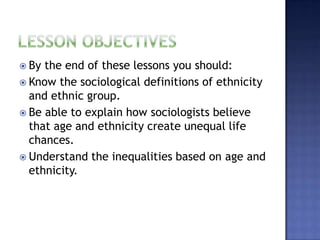
 By the end of these lessons you should:
 Know the sociological definitions of ethnicity
  and ethnic group.
 Be able to explain how sociologists believe
  that age and ethnicity create unequal life
  chances.
 Understand the inequalities based on age and
  ethnicity.
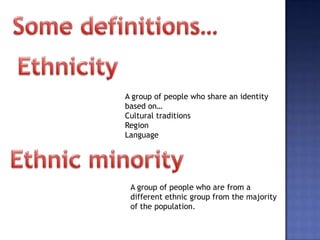
A group of people who share an identity
based on…
Cultural traditions
Region
Language


 A group of people who are from a
 different ethnic group from the majority
 of the population.
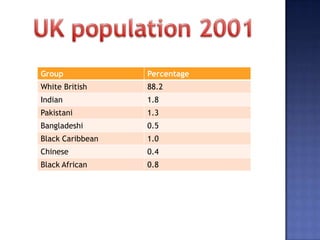
Group             Percentage
White British     88.2
Indian            1.8
Pakistani         1.3
Bangladeshi       0.5
Black Caribbean   1.0
Chinese           0.4
Black African     0.8
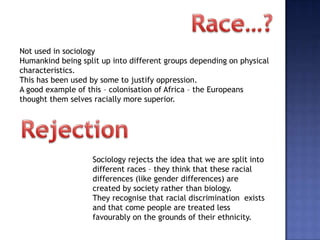
Not used in sociology
Humankind being split up into different groups depending on physical
characteristics.
This has been used by some to justify oppression.
A good example of this – colonisation of Africa – the Europeans
thought them selves racially more superior.


                   Sociology rejects the idea that we are split into
                   different races – they think that these racial
                   differences (like gender differences) are
                   created by society rather than biology.
                   They recognise that racial discrimination exists
                   and that come people are treated less
                   favourably on the grounds of their ethnicity.
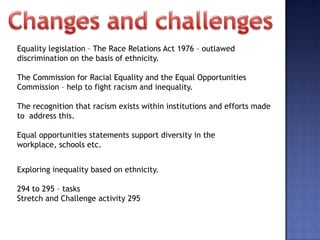
Equality legislation – The Race Relations Act 1976 – outlawed
discrimination on the basis of ethnicity.

The Commission for Racial Equality and the Equal Opportunities
Commission – help to fight racism and inequality.

The recognition that racism exists within institutions and efforts made
to address this.

Equal opportunities statements support diversity in the
workplace, schools etc.


Exploring inequality based on ethnicity.

294 to 295 – tasks
Stretch and Challenge activity 295
Social Inequality
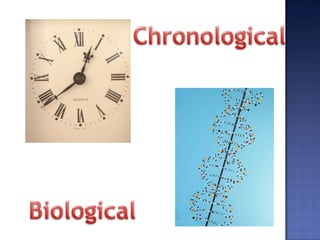
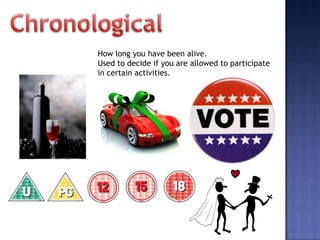
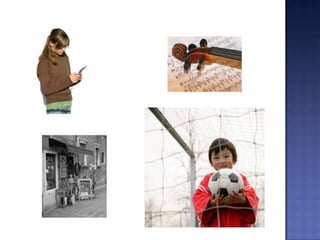
How long you have been alive.
Used to decide if you are allowed to participate
in certain activities.
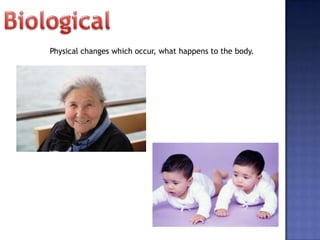
Physical changes which occur, what happens to the body.
Vincent (2001)
A social category which appears in all
societies.
                                Sociologists interested in how age is
                                viewed – do we have different
                                expectations of people at different
                                times in their lives?
Ideas about age differ between societies and over time.


Can you think of examples where age
can be seen both positively and
negatively?


                         Do different cultures view age in different
                         ways?
Research shows that the way that childhood is
                  viewed has changed over time.


Aires (1962)
In the Middle Ages Children were treated
as mini adults who entered the adult
world at a much younger age.

                                19th century child labour was
                                common, especially amongst the
                                poor. Children worked in mills and
                                factories to help to support their
                                families.
Now attitudes have changed and
there have been changes in the
law to present this.


                             Full time education was made
                             compulsory from 1880. This move
                             meant that children were not in the
                             work place and become more
                             dependent on their parents.

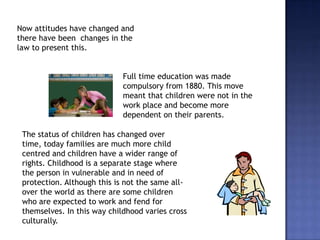
 The status of children has changed over
 time, today families are much more child
 centred and children have a wider range of
 rights. Childhood is a separate stage where
 the person in vulnerable and in need of
 protection. Although this is not the same all-
 over the world as there are some children
 who are expected to work and fend for
 themselves. In this way childhood varies cross
 culturally.
 How do we define youth?
 What changes may happen to people at this
  phase in their lives?
 At what age do you think youth starts and ends?
  Justify your answer?
 Should any age based restrictions change or
  should they say the same? Explain your answer.
 Why are many people depended on their parents
  during this time?
 Do all societies view this period of development
  in the same way? Give examples.
 How  might the status of older people differ
  between societies? (use the text and source
  material to help you)
 What is age discrimination?
 Give examples of age discrimination.
 What has the government done to try to stop
  age discrimination?
 What other factors might affect an older
  person’s life chances? Give examples to
  explain your answer.
 Discuss how far sociologists would agree that
 inequality based on ethnicity is a more
 significant cause of social division than social
 class in modern Britain. (12 marks)

 Discuss how far sociologists would agree that
 inequality based on gender is the most
 significant form of inequality found in Britain
 today.(12 marks)

SociologyExchange.co.uk Shared Resource

  • 1.
  • 2.
     By theend of these lessons you should:  Know the sociological definitions of ethnicity and ethnic group.  Be able to explain how sociologists believe that age and ethnicity create unequal life chances.  Understand the inequalities based on age and ethnicity.
  • 3.
    A group ofpeople who share an identity based on… Cultural traditions Region Language A group of people who are from a different ethnic group from the majority of the population.
  • 4.
    Group Percentage White British 88.2 Indian 1.8 Pakistani 1.3 Bangladeshi 0.5 Black Caribbean 1.0 Chinese 0.4 Black African 0.8
  • 5.
    Not used insociology Humankind being split up into different groups depending on physical characteristics. This has been used by some to justify oppression. A good example of this – colonisation of Africa – the Europeans thought them selves racially more superior. Sociology rejects the idea that we are split into different races – they think that these racial differences (like gender differences) are created by society rather than biology. They recognise that racial discrimination exists and that come people are treated less favourably on the grounds of their ethnicity.
  • 6.
    Equality legislation –The Race Relations Act 1976 – outlawed discrimination on the basis of ethnicity. The Commission for Racial Equality and the Equal Opportunities Commission – help to fight racism and inequality. The recognition that racism exists within institutions and efforts made to address this. Equal opportunities statements support diversity in the workplace, schools etc. Exploring inequality based on ethnicity. 294 to 295 – tasks Stretch and Challenge activity 295
  • 7.
  • 9.
    How long youhave been alive. Used to decide if you are allowed to participate in certain activities.
  • 10.
    Physical changes whichoccur, what happens to the body.
  • 11.
    Vincent (2001) A socialcategory which appears in all societies. Sociologists interested in how age is viewed – do we have different expectations of people at different times in their lives?
  • 13.
    Ideas about agediffer between societies and over time. Can you think of examples where age can be seen both positively and negatively? Do different cultures view age in different ways?
  • 14.
    Research shows thatthe way that childhood is viewed has changed over time. Aires (1962) In the Middle Ages Children were treated as mini adults who entered the adult world at a much younger age. 19th century child labour was common, especially amongst the poor. Children worked in mills and factories to help to support their families.
  • 15.
    Now attitudes havechanged and there have been changes in the law to present this. Full time education was made compulsory from 1880. This move meant that children were not in the work place and become more dependent on their parents. The status of children has changed over time, today families are much more child centred and children have a wider range of rights. Childhood is a separate stage where the person in vulnerable and in need of protection. Although this is not the same all- over the world as there are some children who are expected to work and fend for themselves. In this way childhood varies cross culturally.
  • 16.
     How dowe define youth?  What changes may happen to people at this phase in their lives?  At what age do you think youth starts and ends? Justify your answer?  Should any age based restrictions change or should they say the same? Explain your answer.  Why are many people depended on their parents during this time?  Do all societies view this period of development in the same way? Give examples.
  • 17.
     How might the status of older people differ between societies? (use the text and source material to help you)  What is age discrimination?  Give examples of age discrimination.  What has the government done to try to stop age discrimination?  What other factors might affect an older person’s life chances? Give examples to explain your answer.
  • 18.
     Discuss howfar sociologists would agree that inequality based on ethnicity is a more significant cause of social division than social class in modern Britain. (12 marks)  Discuss how far sociologists would agree that inequality based on gender is the most significant form of inequality found in Britain today.(12 marks)