Year 11 Sociology
Social Stratification
 By the end of these lessons you should:
 Know the difference between sex and gender
 Be able to explain how sociologists define
  gender
 Understand the inequalities based on gender
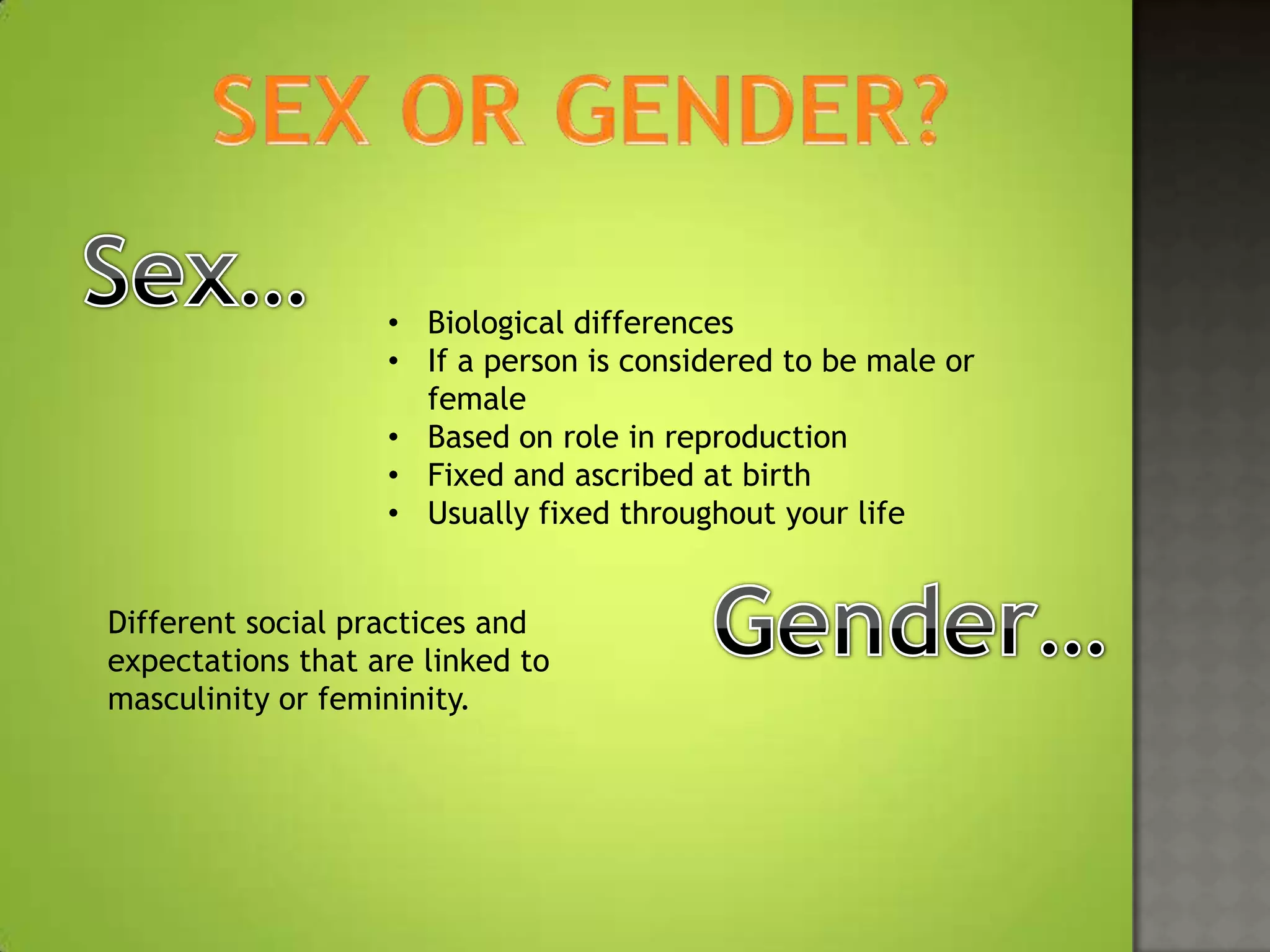
• Biological differences
                   • If a person is considered to be male or
                     female
                   • Based on role in reproduction
                   • Fixed and ascribed at birth
                   • Usually fixed throughout your life


Different social practices and
expectations that are linked to
masculinity or femininity.
• Does it start here?

                         • How do we dress babies?
                         • Do we use different language for girls
                           and boys?
                         • From birth we make girls and boys
                           different.
                         • We give them different types of names.
                         • We dress them differently.
Sociologists call this   • As babies get older we give girls and
primary                    boys different toys and books.
socialisation.
                         • This is called socialisation and
                           sociologists argue that it is highly
                           gendered.

                         • This means that girls and boys, even
                           from a young age are prepared to do
                           different things in society.
What contribution do these
agencies of secondary socialisation
make?
Sociologists argue that the differences between men and
women are socially constructed – they are created by the
society not by biology.

This can change over…

Time

Place

Culture


Complete gender in everyday life and cross-cultural differences
in gender on page 289.
Homework preparation:
Bring in old magazines and newspapers for Friday.
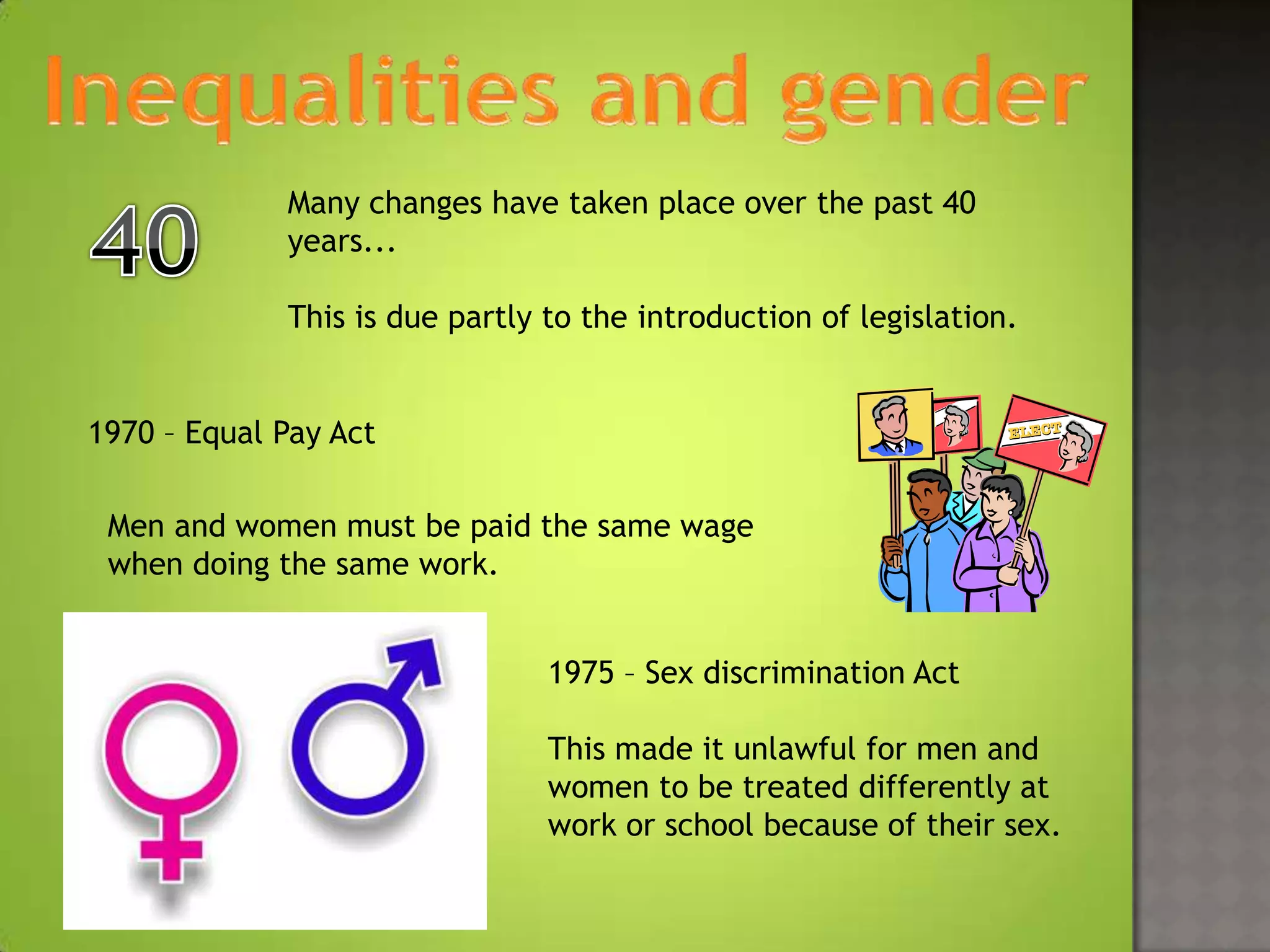
Many changes have taken place over the past 40
             years...

             This is due partly to the introduction of legislation.


1970 – Equal Pay Act

 Men and women must be paid the same wage
 when doing the same work.


                                1975 – Sex discrimination Act

                                This made it unlawful for men and
                                women to be treated differently at
                                work or school because of their sex.
Li (2008)
Women are more likely to achieve
good education, jobs and higher
salaries.


                               Holmes (2009)
                               Society is still organised in a way
                               that benefits men more than
                               women. Because…
                               Society is mainly controlled by
                               men who have power – workplace
                               and politics
                               Men have a bigger share of
                               rewards such as power and status.
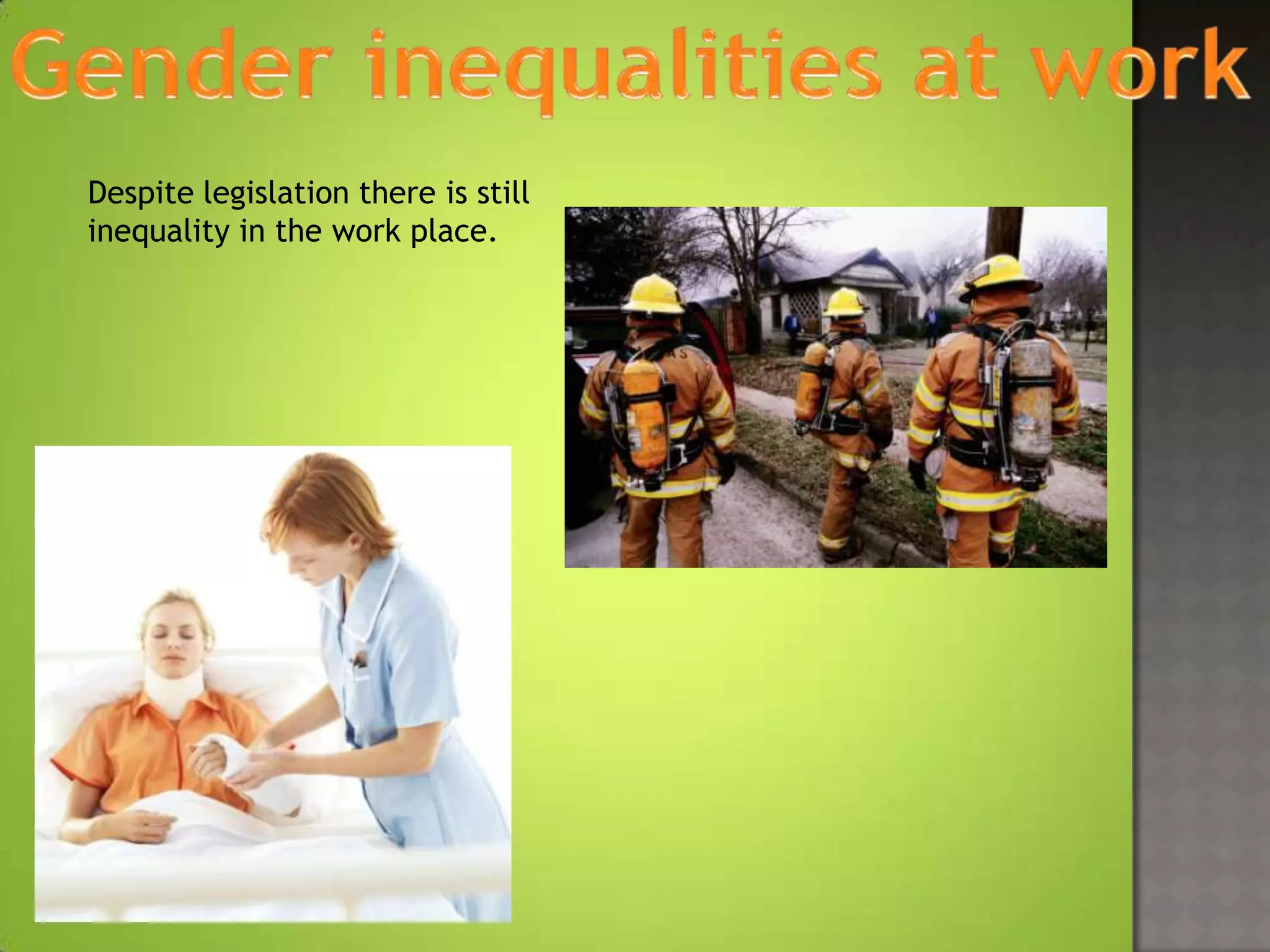
Despite legislation there is still
inequality in the work place.
When men and women work in the same occupation , women are
more likely to be in the lower or middle level jobs.

Men tend to be at a higher grade.


                              The Glass Ceiling

                              IT is argued that women are held
                              back in their careers, the glass
                              ceiling is like an invisible barrier to
                              their promotion.
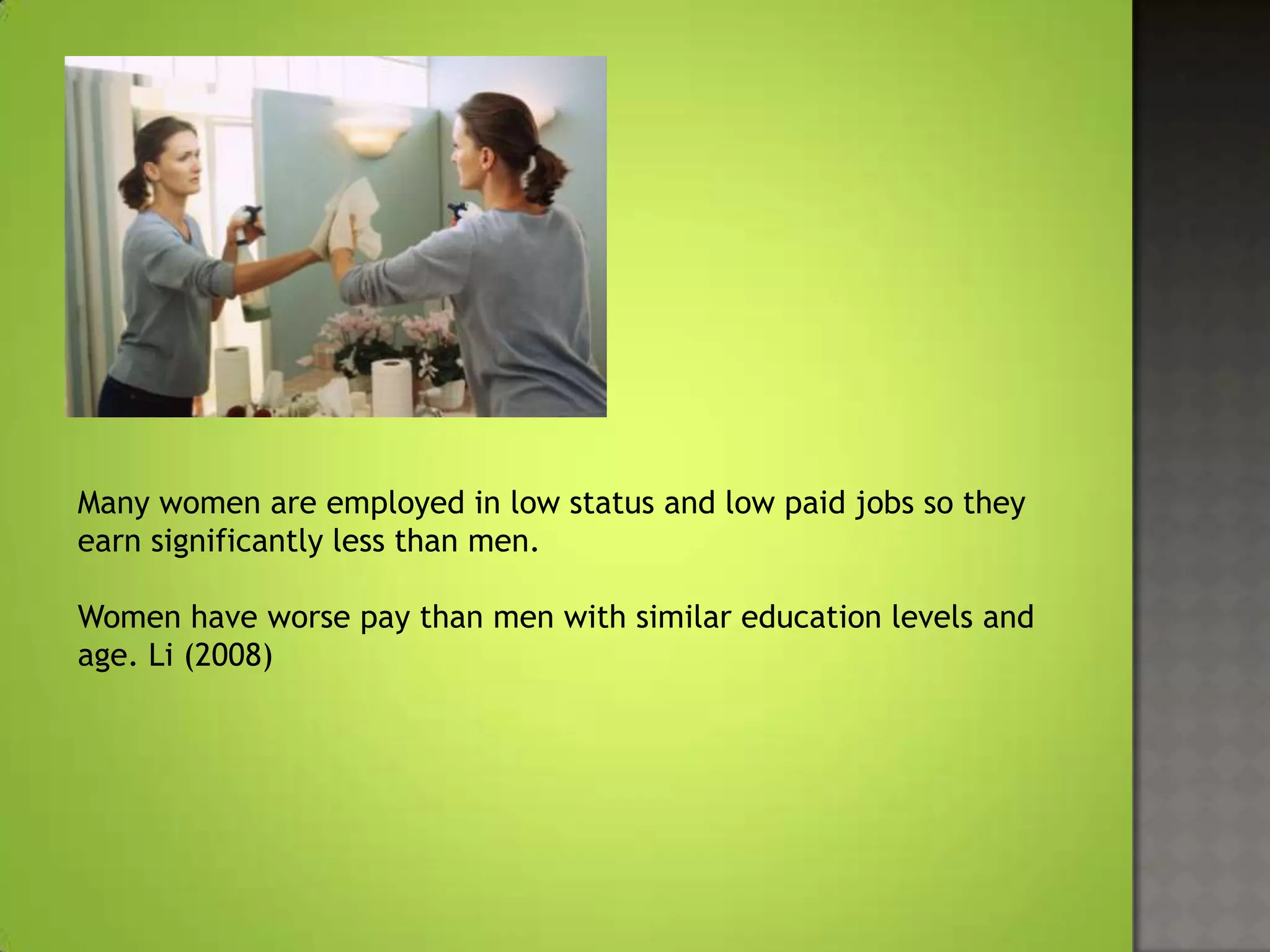
Many women are employed in low status and low paid jobs so they
earn significantly less than men.

Women have worse pay than men with similar education levels and
age. Li (2008)
Sex discrimination within the workplace.


Women’s triple shift – many women bear the burden of
working the triple shift – paid work, housework and
emotional work. So women may be held back from
promotion at work. Dunscombe and Marsden (1995)


Childcare provision – Britain has an inadequate and
expensive childcare system for the under 5s. This may
prevent women with young children from participating in
paid employment or staying in employment long enough to
progress their careers.
In pairs create a collage to show how both femininity and
masculinity are shown in the mass media.


Describe one way in which the social position of women in Britain
has changed over the last 50 years and explain the consequences of
this change. (5 marks)

Explain what sociologists mean by life chances. (4 marks)

Identify two barriers to social mobility that individuals might face.
(2 marks)

SociologyExchange.co.uk Shared Resource

  • 1.
  • 2.
     By theend of these lessons you should:  Know the difference between sex and gender  Be able to explain how sociologists define gender  Understand the inequalities based on gender
  • 4.
    • Biological differences • If a person is considered to be male or female • Based on role in reproduction • Fixed and ascribed at birth • Usually fixed throughout your life Different social practices and expectations that are linked to masculinity or femininity.
  • 6.
    • Does itstart here? • How do we dress babies? • Do we use different language for girls and boys? • From birth we make girls and boys different. • We give them different types of names. • We dress them differently. Sociologists call this • As babies get older we give girls and primary boys different toys and books. socialisation. • This is called socialisation and sociologists argue that it is highly gendered. • This means that girls and boys, even from a young age are prepared to do different things in society.
  • 7.
    What contribution dothese agencies of secondary socialisation make?
  • 8.
    Sociologists argue thatthe differences between men and women are socially constructed – they are created by the society not by biology. This can change over… Time Place Culture Complete gender in everyday life and cross-cultural differences in gender on page 289. Homework preparation: Bring in old magazines and newspapers for Friday.
  • 10.
    Many changes havetaken place over the past 40 years... This is due partly to the introduction of legislation. 1970 – Equal Pay Act Men and women must be paid the same wage when doing the same work. 1975 – Sex discrimination Act This made it unlawful for men and women to be treated differently at work or school because of their sex.
  • 11.
    Li (2008) Women aremore likely to achieve good education, jobs and higher salaries. Holmes (2009) Society is still organised in a way that benefits men more than women. Because… Society is mainly controlled by men who have power – workplace and politics Men have a bigger share of rewards such as power and status.
  • 12.
    Despite legislation thereis still inequality in the work place.
  • 15.
    When men andwomen work in the same occupation , women are more likely to be in the lower or middle level jobs. Men tend to be at a higher grade. The Glass Ceiling IT is argued that women are held back in their careers, the glass ceiling is like an invisible barrier to their promotion.
  • 16.
    Many women areemployed in low status and low paid jobs so they earn significantly less than men. Women have worse pay than men with similar education levels and age. Li (2008)
  • 17.
    Sex discrimination withinthe workplace. Women’s triple shift – many women bear the burden of working the triple shift – paid work, housework and emotional work. So women may be held back from promotion at work. Dunscombe and Marsden (1995) Childcare provision – Britain has an inadequate and expensive childcare system for the under 5s. This may prevent women with young children from participating in paid employment or staying in employment long enough to progress their careers.
  • 18.
    In pairs createa collage to show how both femininity and masculinity are shown in the mass media. Describe one way in which the social position of women in Britain has changed over the last 50 years and explain the consequences of this change. (5 marks) Explain what sociologists mean by life chances. (4 marks) Identify two barriers to social mobility that individuals might face. (2 marks)