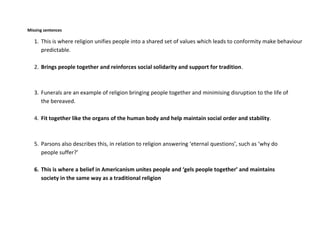
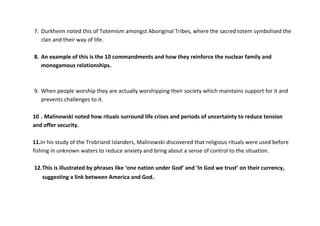
Religion can act as a conservative social force that prevents change and maintains stability, according to functionalist theories. Functionalism views religion as serving important functions for society, such as unifying people through shared values and rituals, reinforcing social solidarity and traditions, and reducing uncertainty and disruption during life events. Examples include religious funerals bringing communities together and rituals among Aboriginal tribes symbolizing cultural ways of life. Overall, Functionalism sees religion as binding members of society together and upholding the social order through these consensus-building and change-preventing functions.