Social structures in science from the perpective of 
bibliometrical data of PhD abstracts: a pilot project of the CBD 
Dr. Birutė Railienė 
Wroblewski Library of the Lithuanian Academy of 
Sciences 
New Directions in Digital History of Science. July 17, 
2014, Berlin, Germany
• A dissertation as a document provides data on 
new knowledge, but also – encodes important 
scientometrical information 
• A dissertation record may expose a scientific 
relation of research-advising both in personal 
and institutional levels within the certain 
scientific area
• Research project was inspired by the rich 
experience of PhD bibliographical tradition in 
Lithuania 
– Printed bibliographies 
– Card catalogues 
– E-library for records maintained after 1996 
– Participation in Networked Digital Library of 
Theses and Dissertations (NDLTD) 
– Investigation of scientific schools
Pilot project aims to: 
• analyze possibilities and quantities to register 
retrospective data on PhD abstracts 
• explore bibliographical description practices in 
selected PhD bibliographical indexes 
• explore PhD cataloguing practices in selected 
databases 
• suggest a change in cataloguing practice, 
which will facilitate data scrapping
Expectations 
• History of science – identify scientific schools 
• Science policy – encourage (including 
financial) informal social structures of science 
at national, institutional levels 
• Scientific school at individual level – a creator 
of scientific school deserves recollection, 
which also inspires followers in the future
Methodology 
• To analyze possibilities and quantities to 
register retrospective data on PhD abstracts 
• Due to vast amount of entries the manual 
survey of databases was excluded 
• The research-advise contribution is an 
optional field in a document description 
• Institutional contribution is an mandatory 
field in a document description
Field of survey 
• MARC format of PhD abstract description 
includes subfield (043.3) 
• Possibility for classification
PhD issues on WWW 
• DART-Europe is a partnership of research 
libraries and library consortia who are working 
together to improve global access to 
European research theses. 
• DART-Europe is endorsed by LIBER (Ligue des Bibliothèques Européennes 
de Recherche), and it is the European Working Group of the Networked 
Digital Library of Theses and Dissertations(NDLTD) 
• http://www.dart-europe.eu/About/info.php
PhD issues on WWW 
• NDLTD, an international organization 
dedicated to promoting the adoption, 
creation, use, dissemination, and preservation 
of electronic theses and dissertations (ETDs). 
• http://www.ndltd.org/
PhD issues on WWW 
• OnlinePhDProgram.org 
• http://onlinephdprogram.org/thesis-dissertation/
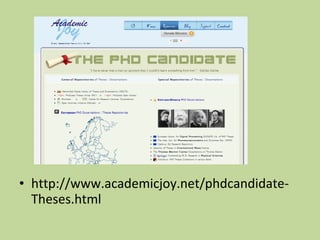
• http://www.academicjoy.net/phdcandidate- 
Theses.html
International guidelines 
• NDLTD, an international organization 
dedicated to promoting the adoption, 
creation, use, dissemination, and preservation 
of electronic theses and dissertations (ETDs). 
• ETD-MS v1.1: an Interoperability Metadata 
Standard for Electronic Theses and 
Dissertations 
http://www.ndltd.org/standards/metadata
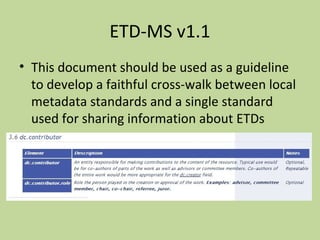
ETD-MS v1.1 
• This document should be used as a guideline 
to develop a faithful cross-walk between local 
metadata standards and a single standard 
used for sharing information about ETDs
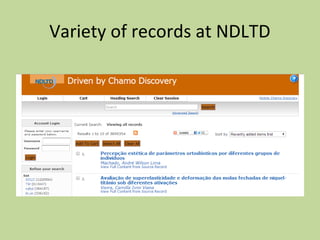
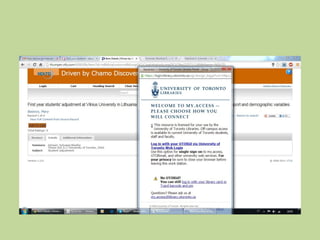
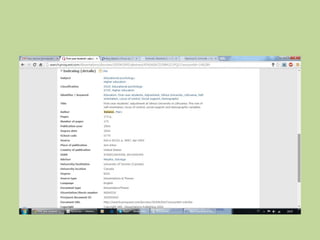
Variety of records at NDLTD
Difficulties for global search 
• Vocabulary differences 
• Classification systems 
• Institutional coverage 
• Language
ProQuest Dissertations & Theses A&I 
• This multidisciplinary database is the world’s 
most comprehensive collection of 
dissertations and theses from around the 
world, spanning from 1743 to the present day 
• http://search.proquest.com/pqdt? 
accountid=146284
Conclusions 
• PhD abstract is a formal source to indicate the 
teacher-pupil communication link 
• Research-advising is one of main formal links 
in scholarly communication (together with co-authorship 
and citation) 
• Research-advising links

Social Structures in Science

  • 1.
    Social structures inscience from the perpective of bibliometrical data of PhD abstracts: a pilot project of the CBD Dr. Birutė Railienė Wroblewski Library of the Lithuanian Academy of Sciences New Directions in Digital History of Science. July 17, 2014, Berlin, Germany
  • 2.
    • A dissertationas a document provides data on new knowledge, but also – encodes important scientometrical information • A dissertation record may expose a scientific relation of research-advising both in personal and institutional levels within the certain scientific area
  • 3.
    • Research projectwas inspired by the rich experience of PhD bibliographical tradition in Lithuania – Printed bibliographies – Card catalogues – E-library for records maintained after 1996 – Participation in Networked Digital Library of Theses and Dissertations (NDLTD) – Investigation of scientific schools
  • 4.
    Pilot project aimsto: • analyze possibilities and quantities to register retrospective data on PhD abstracts • explore bibliographical description practices in selected PhD bibliographical indexes • explore PhD cataloguing practices in selected databases • suggest a change in cataloguing practice, which will facilitate data scrapping
  • 5.
    Expectations • Historyof science – identify scientific schools • Science policy – encourage (including financial) informal social structures of science at national, institutional levels • Scientific school at individual level – a creator of scientific school deserves recollection, which also inspires followers in the future
  • 6.
    Methodology • Toanalyze possibilities and quantities to register retrospective data on PhD abstracts • Due to vast amount of entries the manual survey of databases was excluded • The research-advise contribution is an optional field in a document description • Institutional contribution is an mandatory field in a document description
  • 7.
    Field of survey • MARC format of PhD abstract description includes subfield (043.3) • Possibility for classification
  • 8.
    PhD issues onWWW • DART-Europe is a partnership of research libraries and library consortia who are working together to improve global access to European research theses. • DART-Europe is endorsed by LIBER (Ligue des Bibliothèques Européennes de Recherche), and it is the European Working Group of the Networked Digital Library of Theses and Dissertations(NDLTD) • http://www.dart-europe.eu/About/info.php
  • 9.
    PhD issues onWWW • NDLTD, an international organization dedicated to promoting the adoption, creation, use, dissemination, and preservation of electronic theses and dissertations (ETDs). • http://www.ndltd.org/
  • 10.
    PhD issues onWWW • OnlinePhDProgram.org • http://onlinephdprogram.org/thesis-dissertation/
  • 11.
  • 12.
    International guidelines •NDLTD, an international organization dedicated to promoting the adoption, creation, use, dissemination, and preservation of electronic theses and dissertations (ETDs). • ETD-MS v1.1: an Interoperability Metadata Standard for Electronic Theses and Dissertations http://www.ndltd.org/standards/metadata
  • 13.
    ETD-MS v1.1 •This document should be used as a guideline to develop a faithful cross-walk between local metadata standards and a single standard used for sharing information about ETDs
  • 14.
  • 17.
    Difficulties for globalsearch • Vocabulary differences • Classification systems • Institutional coverage • Language
  • 19.
    ProQuest Dissertations &Theses A&I • This multidisciplinary database is the world’s most comprehensive collection of dissertations and theses from around the world, spanning from 1743 to the present day • http://search.proquest.com/pqdt? accountid=146284
  • 20.
    Conclusions • PhDabstract is a formal source to indicate the teacher-pupil communication link • Research-advising is one of main formal links in scholarly communication (together with co-authorship and citation) • Research-advising links