
Presented by:

EL KARCHOULI Ghizlane
 OUMIMOUNE Rabab
Introduction
 Definition: What’s Social network?
 History of social network
 Why do people use social networks?
 Caracteristics of social network
 Impact of social network
 Kinds of social network
 Social networking statistics
 Social network and « The Arab Spring »
Conclusion
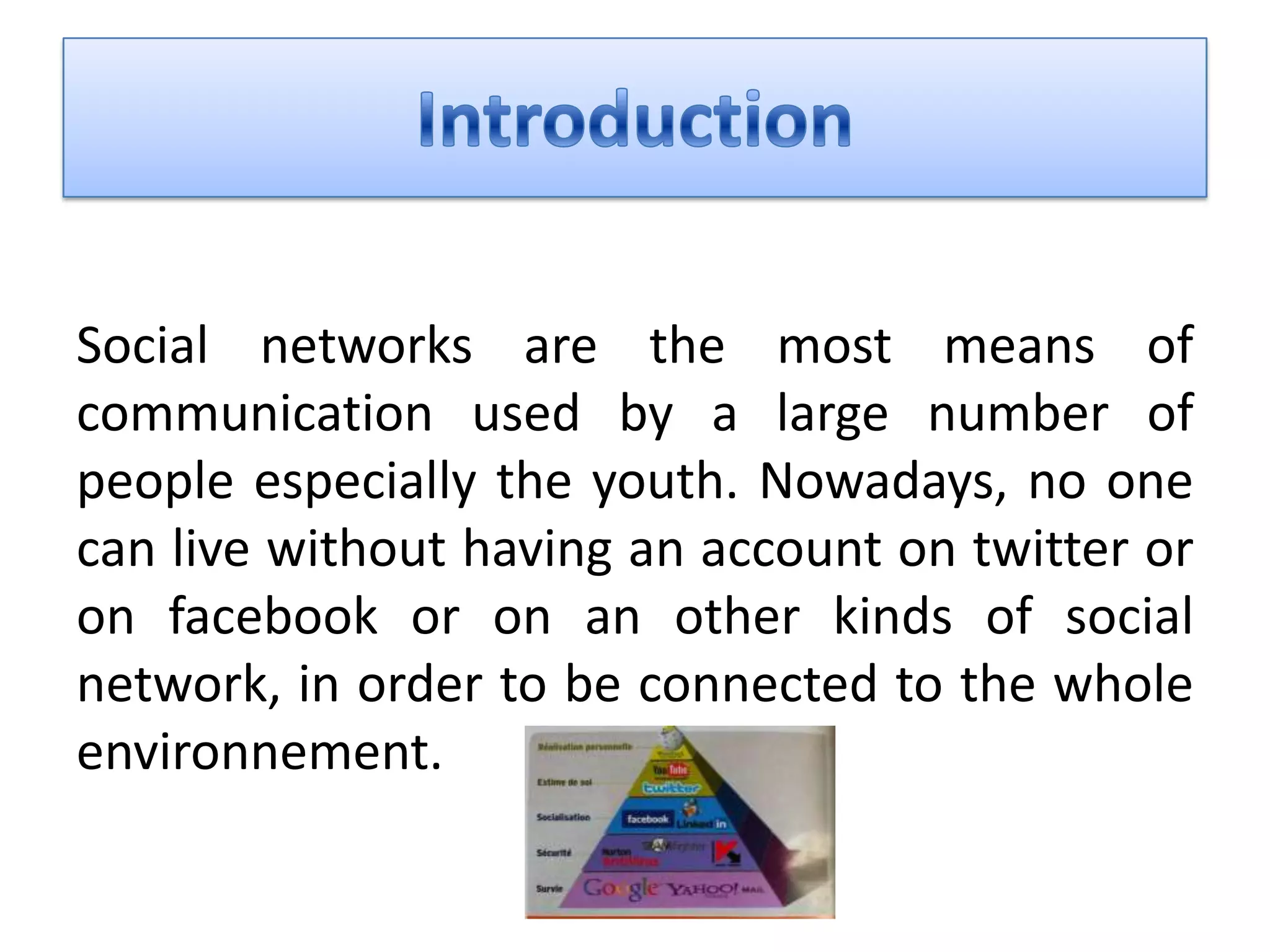
Social networks are the most means of
communication used by a large number of
people especially the youth. Nowadays, no one
can live without having an account on twitter or
on facebook or on an other kinds of social
network, in order to be connected to the whole
environnement.
 Social networking is the grouping of
  individuals into specific groups, like small rural
  communities or a neighborhood subdivision.
 Although social networking is possible in
  person, especially in the
  workplace, universities, and high schools, it is
  most popular online.
 1971: the first e-mail is sent. The two
  computers were sitting right next to each other.
 1994: One of the web’s first social networking
  sites. GEOCITIES is founded. The concept was
  for users to create their own websites.
 1995: the GLOBE.COM gave users the freedom
  to personalize their online experiences by
  publishing their own content and intercting
  with others with similar interests.
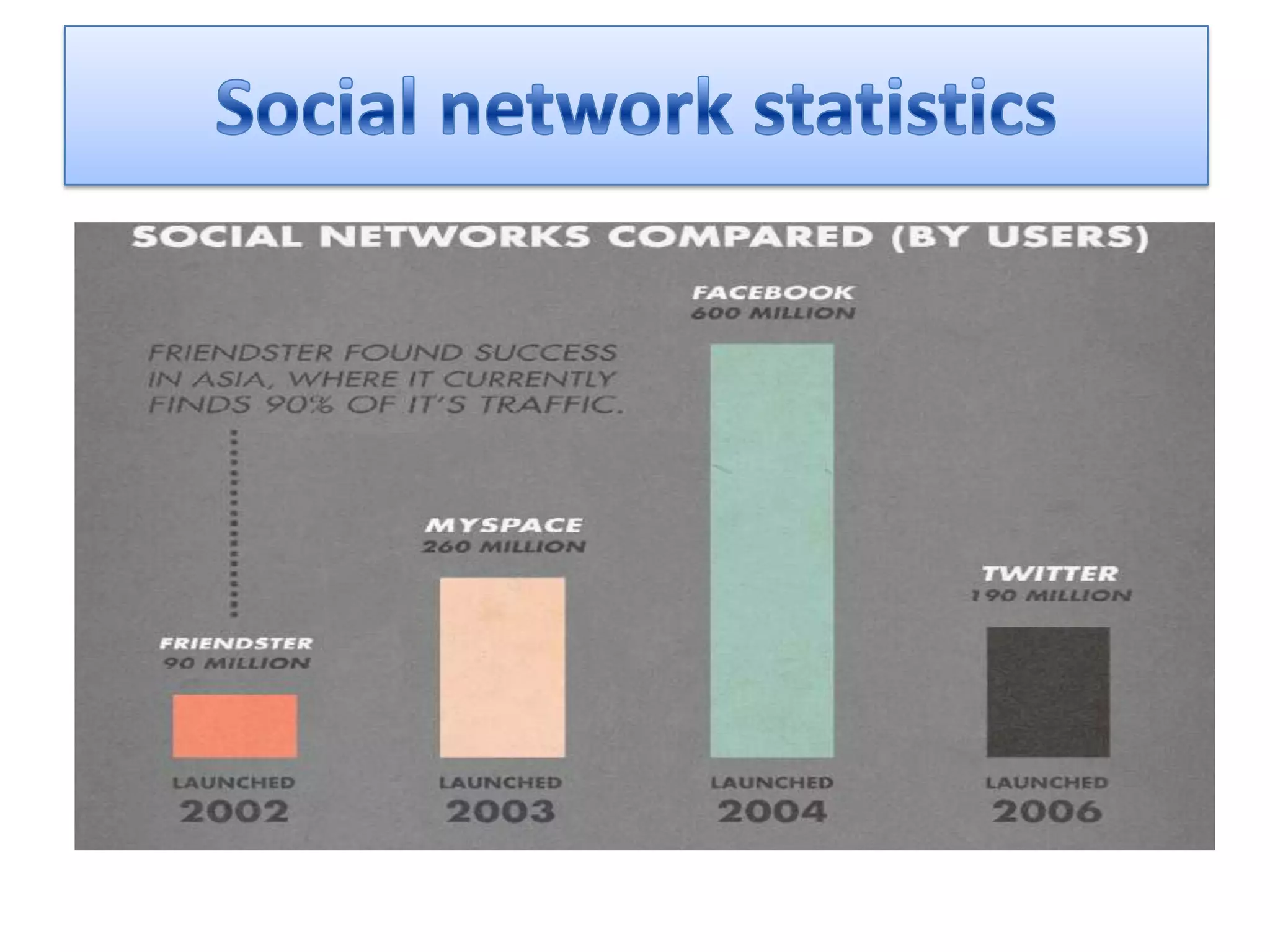
 2003:MySpeace is launched, first conceived as
  a FRIENDSTER CLONE created by an internet
  Marketing firm .
 2004:Facebook is launched originally as a way
  of connecting U.S college students. First
  launched at Harvard college.
 2006:Twitter is launched.
 2008: Facebook overtakes MySpeace as the
  leading Social networking site.
•   Saving time.
•   Meeting others with similar interests.
•   Sharing different kinds of information.
•   Having contact with OLD friends and
    classemates.
•   User-based
•   Interactive
•   Community-driven
•   Relationships
•   Emotion over content
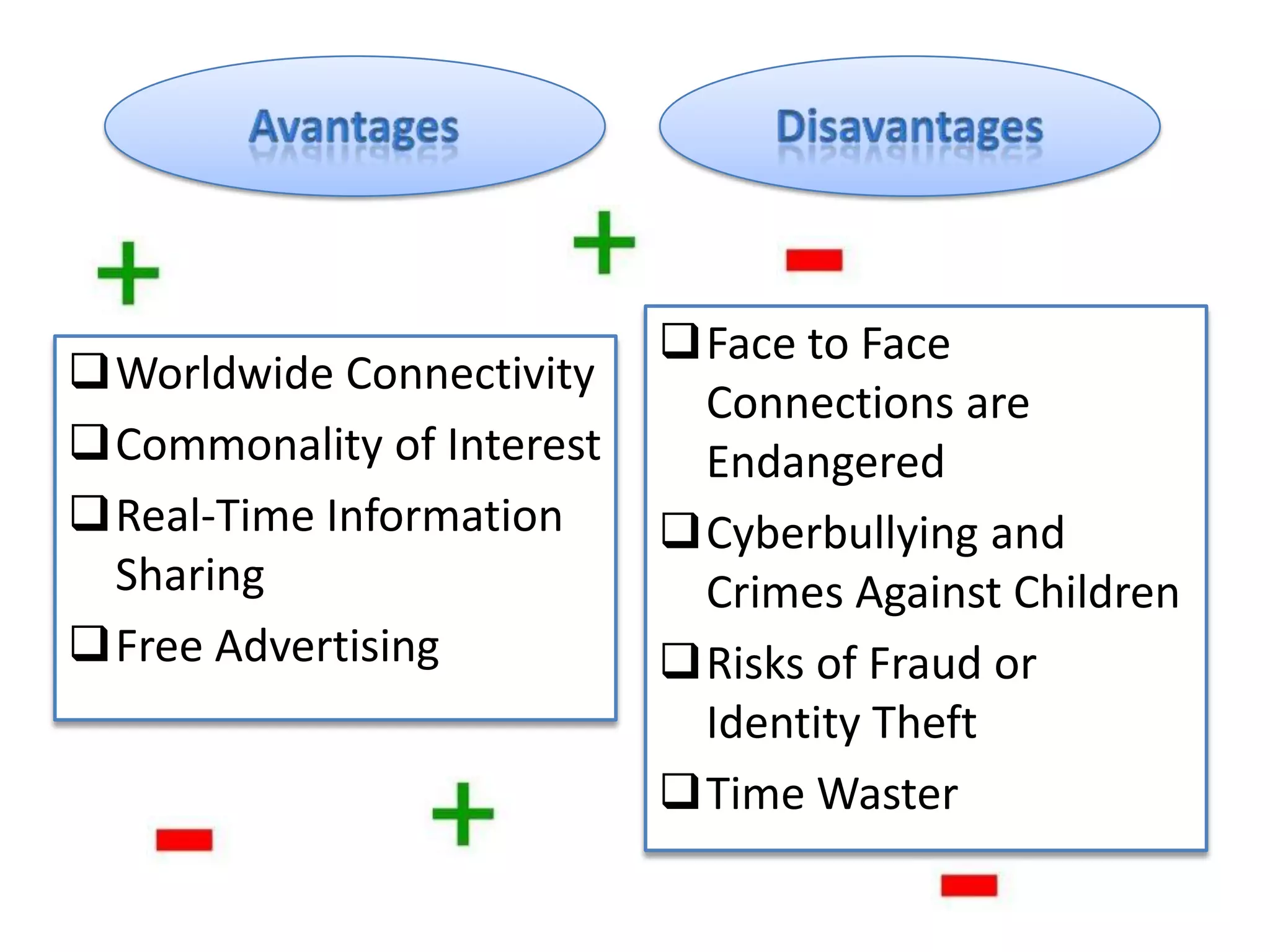
Face to Face
Worldwide Connectivity
                            Connections are
Commonality of Interest    Endangered
Real-Time Information     Cyberbullying and
 Sharing                    Crimes Against Children
Free Advertising          Risks of Fraud or
                            Identity Theft
                           Time Waster
 Communication
 Teenagers
 Recruitment
 Marketing/Advertisement
 Entertainment
• Founded in February 2004, Facebook is a social utility
  that helps people communicate more efficiently with
  their friends, family and coworkers. The company
  develops technologies that facilitate the sharing of
  information through the social graph, the digital
  mapping of people's real-world social connections.
  Anyone can sign up for Facebook and interact with
  the people they know in a trusted environment.
• Twitter is a social networking and microblogging
  service that allows you answer the question, "What
  are you doing?"by sending short text messages 140
  characters in length, called "tweets", to your friends,
  or "followers."
Viadeo is a professional social network with
over 40 million members. Viadeo is used by
those who want to:

• Increase their business opportunities
• Manage and develop their network of
professional contacts
LinkedIn is the world’s largest professional
network with over 120 million members and
growing rapidly. LinkedIn connects you to your
trusted contacts and helps you exchange
knowledge, ideas, and opportunities with a
broader network of professionals.
• Google+ (Google Plus ) is a social
  networking and identity service,[operated
  by Google.
• Google+ integrates social services such as Google
  Profiles and Google Buzz, and introduces new
  services identified as Circles and Sparks. Google+
  is available as a web site, and will be available as
  a desktop application, and is already available as
  a mobile application.
• MySpace is a social networking
  service launched in 2003. In August
  2011, MySpace had 33.1 million unique U.S.
  visitors.
"Our  evidence suggests that
social media carried a cascade
  of messages about freedom
 and democracy across North
Africa and the Middle East, and
 helped raise expectations for
     the success of political
           uprising,”
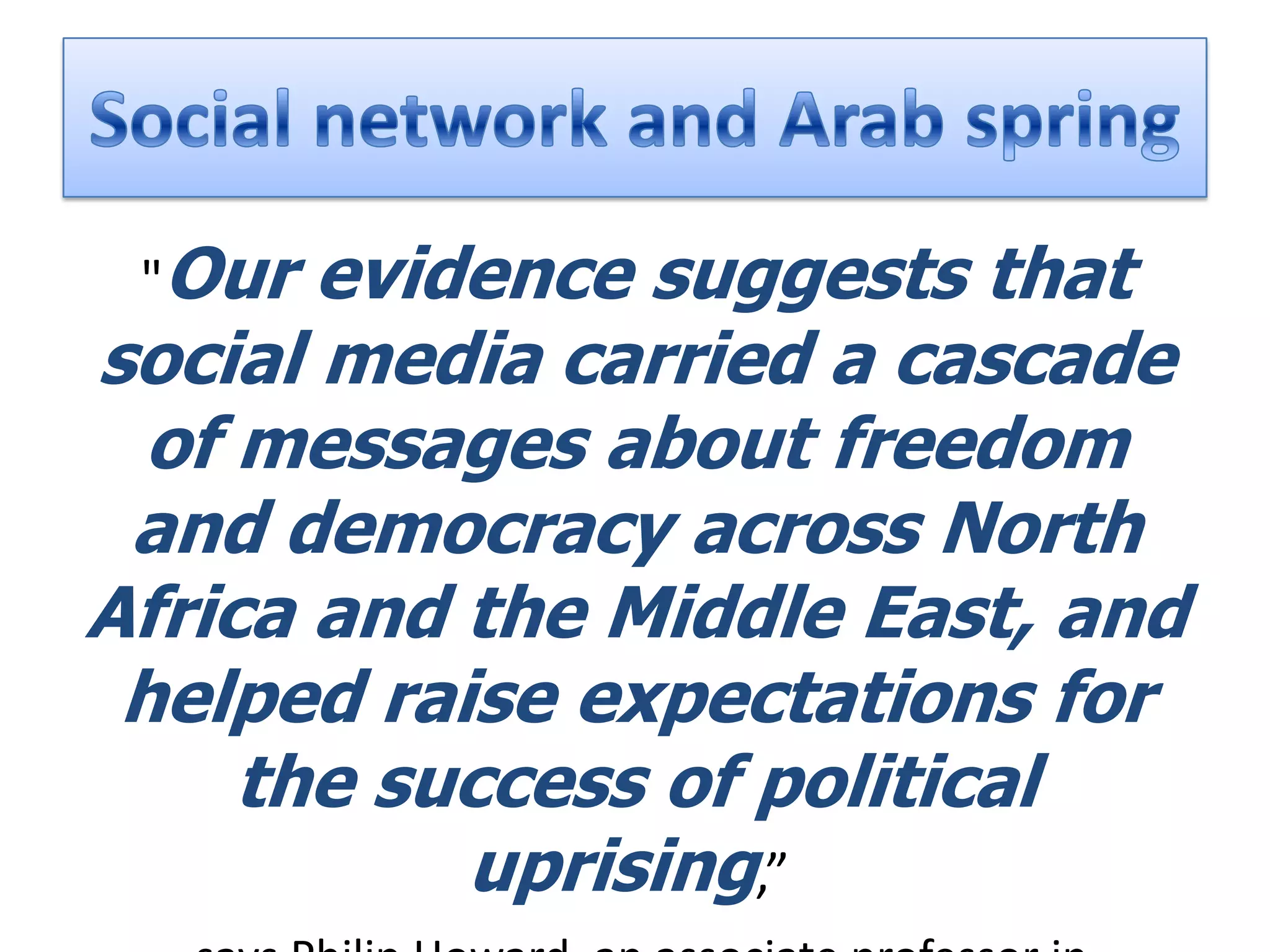
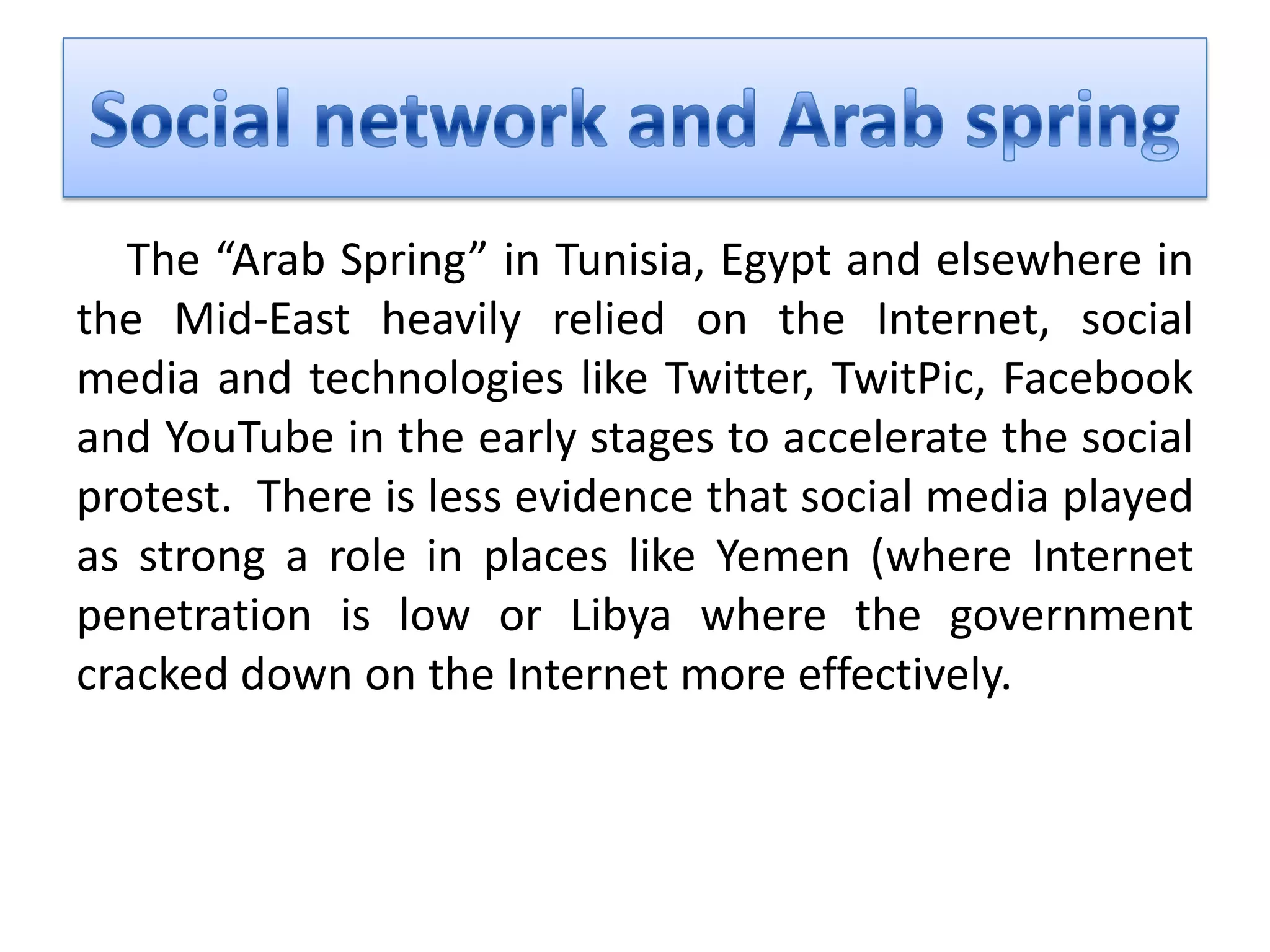
The “Arab Spring” in Tunisia, Egypt and elsewhere in
the Mid-East heavily relied on the Internet, social
media and technologies like Twitter, TwitPic, Facebook
and YouTube in the early stages to accelerate the social
protest. There is less evidence that social media played
as strong a role in places like Yemen (where Internet
penetration is low or Libya where the government
cracked down on the Internet more effectively.
Because networking in online social
communities is still a relatively young online
trend, whether or not social networking is
harmful is still unknown. Like any other type of
networking or social club with which individuals
become involved, it is a good idea to do your
homework and make sure that you know what
you are getting into. Understand the terms of
use, the rules and regulations, and be clear on
issues like security and privacy.
 http://www.onlineschools.org/blog/history-of-social-
  networking/
 http://wiki.answers.com/Q/Why_do_people_use_soci
  al_networking_sites
 http://socialnetworking.lovetoknow.com/Characteristic
  s_of_Social_Networks
 http://socialnetworking.lovetoknow.com/Advantages_
  and_Disadvantages_of_Social_Networking
 http://www.buzzom.com/2011/05/impact-of-social-
  networking-on-our-day-to-day-lives/
 http://socialnetworking.lovetoknow.com/Social_Netwo
  rking_Statistics
The social network

The social network

  • 1.
    Presented by: EL KARCHOULIGhizlane OUMIMOUNE Rabab
  • 2.
    Introduction  Definition: What’sSocial network?  History of social network  Why do people use social networks?  Caracteristics of social network  Impact of social network  Kinds of social network  Social networking statistics  Social network and « The Arab Spring » Conclusion
  • 3.
    Social networks arethe most means of communication used by a large number of people especially the youth. Nowadays, no one can live without having an account on twitter or on facebook or on an other kinds of social network, in order to be connected to the whole environnement.
  • 5.
     Social networkingis the grouping of individuals into specific groups, like small rural communities or a neighborhood subdivision.  Although social networking is possible in person, especially in the workplace, universities, and high schools, it is most popular online.
  • 7.
     1971: thefirst e-mail is sent. The two computers were sitting right next to each other.  1994: One of the web’s first social networking sites. GEOCITIES is founded. The concept was for users to create their own websites.  1995: the GLOBE.COM gave users the freedom to personalize their online experiences by publishing their own content and intercting with others with similar interests.
  • 8.
     2003:MySpeace islaunched, first conceived as a FRIENDSTER CLONE created by an internet Marketing firm .  2004:Facebook is launched originally as a way of connecting U.S college students. First launched at Harvard college.  2006:Twitter is launched.  2008: Facebook overtakes MySpeace as the leading Social networking site.
  • 10.
    Saving time. • Meeting others with similar interests. • Sharing different kinds of information. • Having contact with OLD friends and classemates.
  • 12.
    User-based • Interactive • Community-driven • Relationships • Emotion over content
  • 14.
    Face to Face WorldwideConnectivity Connections are Commonality of Interest Endangered Real-Time Information Cyberbullying and Sharing Crimes Against Children Free Advertising Risks of Fraud or Identity Theft Time Waster
  • 16.
     Communication  Teenagers Recruitment  Marketing/Advertisement  Entertainment
  • 18.
    • Founded inFebruary 2004, Facebook is a social utility that helps people communicate more efficiently with their friends, family and coworkers. The company develops technologies that facilitate the sharing of information through the social graph, the digital mapping of people's real-world social connections. Anyone can sign up for Facebook and interact with the people they know in a trusted environment.
  • 19.
    • Twitter isa social networking and microblogging service that allows you answer the question, "What are you doing?"by sending short text messages 140 characters in length, called "tweets", to your friends, or "followers."
  • 20.
    Viadeo is aprofessional social network with over 40 million members. Viadeo is used by those who want to: • Increase their business opportunities • Manage and develop their network of professional contacts
  • 21.
    LinkedIn is theworld’s largest professional network with over 120 million members and growing rapidly. LinkedIn connects you to your trusted contacts and helps you exchange knowledge, ideas, and opportunities with a broader network of professionals.
  • 22.
    • Google+ (GooglePlus ) is a social networking and identity service,[operated by Google. • Google+ integrates social services such as Google Profiles and Google Buzz, and introduces new services identified as Circles and Sparks. Google+ is available as a web site, and will be available as a desktop application, and is already available as a mobile application.
  • 23.
    • MySpace isa social networking service launched in 2003. In August 2011, MySpace had 33.1 million unique U.S. visitors.
  • 27.
    "Our evidencesuggests that social media carried a cascade of messages about freedom and democracy across North Africa and the Middle East, and helped raise expectations for the success of political uprising,”
  • 28.
    The “Arab Spring”in Tunisia, Egypt and elsewhere in the Mid-East heavily relied on the Internet, social media and technologies like Twitter, TwitPic, Facebook and YouTube in the early stages to accelerate the social protest. There is less evidence that social media played as strong a role in places like Yemen (where Internet penetration is low or Libya where the government cracked down on the Internet more effectively.
  • 29.
    Because networking inonline social communities is still a relatively young online trend, whether or not social networking is harmful is still unknown. Like any other type of networking or social club with which individuals become involved, it is a good idea to do your homework and make sure that you know what you are getting into. Understand the terms of use, the rules and regulations, and be clear on issues like security and privacy.
  • 30.
     http://www.onlineschools.org/blog/history-of-social- networking/  http://wiki.answers.com/Q/Why_do_people_use_soci al_networking_sites  http://socialnetworking.lovetoknow.com/Characteristic s_of_Social_Networks  http://socialnetworking.lovetoknow.com/Advantages_ and_Disadvantages_of_Social_Networking  http://www.buzzom.com/2011/05/impact-of-social- networking-on-our-day-to-day-lives/  http://socialnetworking.lovetoknow.com/Social_Netwo rking_Statistics