• Commissioned by Mr. D. Yadav
Submitted By : Pinal k. Jani
Contents
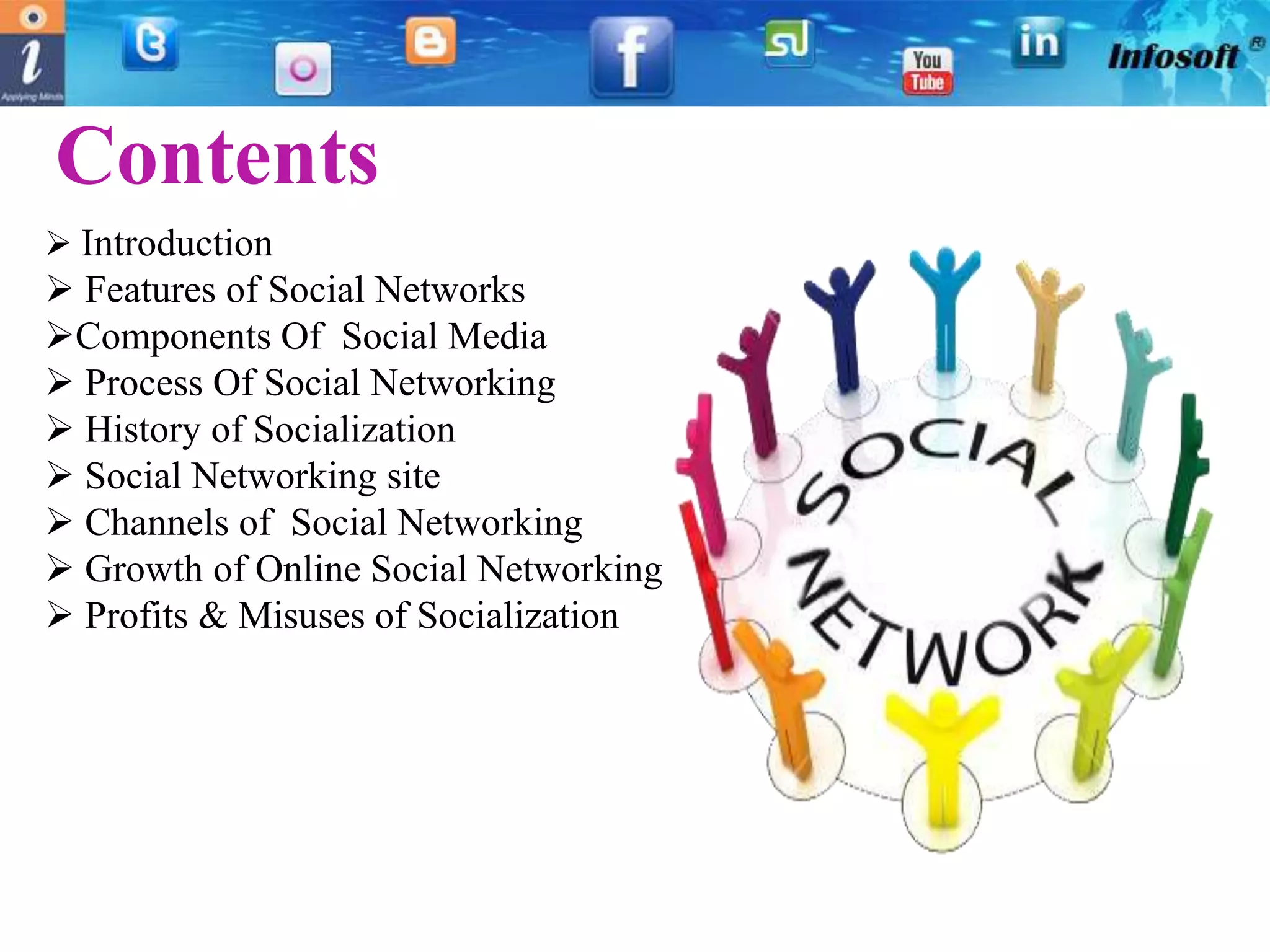
 Introduction
 Features of Social Networks
Components Of Social Media
 Process Of Social Networking
 History of Socialization
 Social Networking site
 Channels of Social Networking
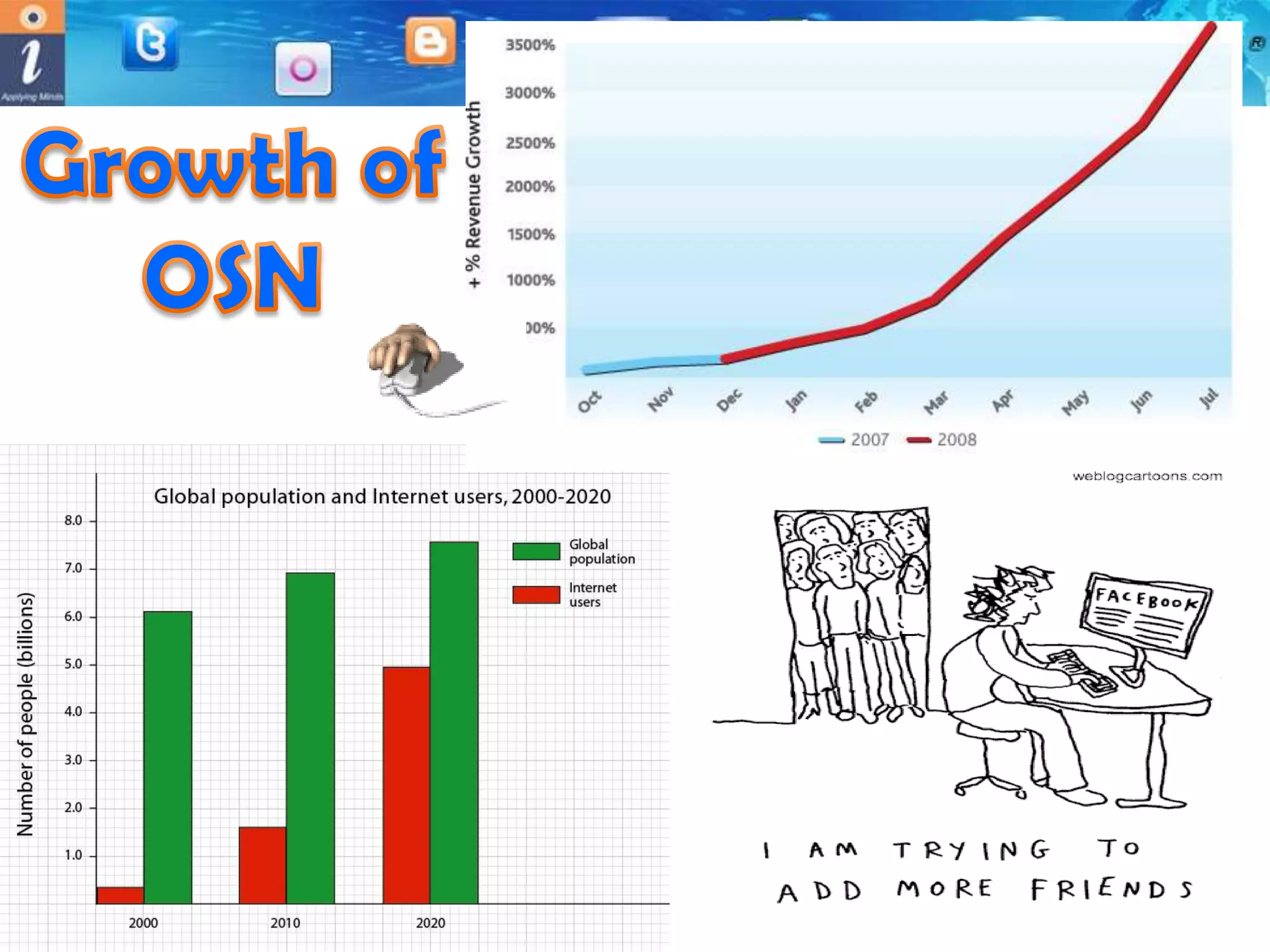
 Growth of Online Social Networking
 Profits & Misuses of Socialization
INTRODUCTION
 Social Networking Is A Part Of Communication It Means By Which
  Member Of Organization Work Together.

 Social Networks Facilitate Connections Between People Based On
  Shared Interests, Values, Membership In Particular Groups (I.E.,
  Friends, Professional Colleagues), Etc. They Make It Easier For
  People To Find And Communicate With Individuals Who Are In
  Their Networks Using The Web As The Interface.

 Social Networking Can Be Apt Fully Called As “The Life Blood”
  Of An Communication .

 As Sir John Harvey-jones Says, “Communication Is The Single
  Most Essential Skill”
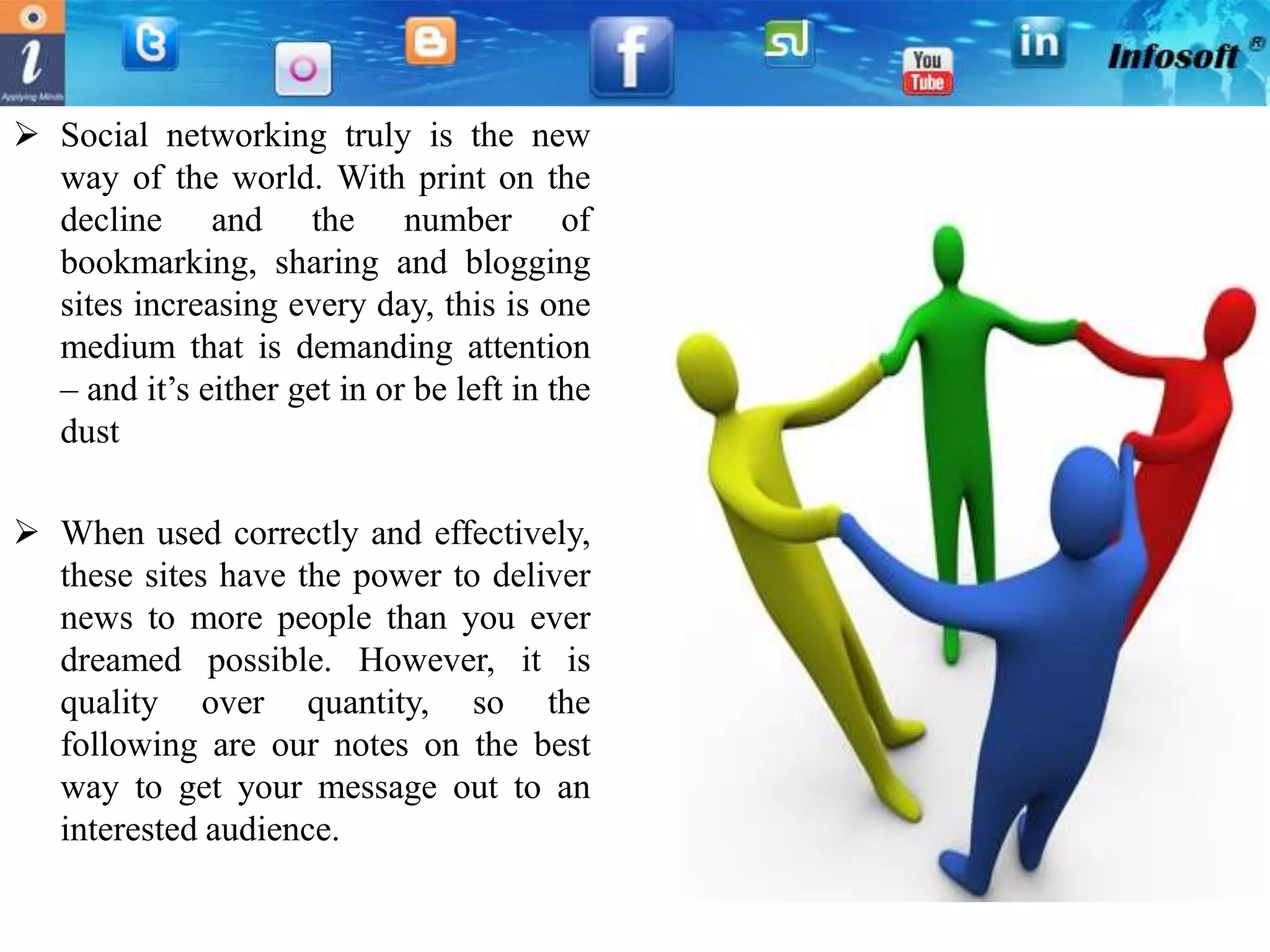
 Social networking truly is the new
  way of the world. With print on the
  decline and the number of
  bookmarking, sharing and blogging
  sites increasing every day, this is one
  medium that is demanding attention
  – and it’s either get in or be left in the
  dust

 When used correctly and effectively,
  these sites have the power to deliver
  news to more people than you ever
  dreamed possible. However, it is
  quality over quantity, so the
  following are our notes on the best
  way to get your message out to an
  interested audience.
 The Ability To Create A Profile Page – This Is Your Main “Home” On The Network.
  Different Networks Offer Varying Abilities To Personalize Your Page In Terms Of Look
  And Feel. They May Also Differ In Terms Of The Types Of Information You Would
  Include, Such As Name, Location, Education, Etc. Facebook, For Example, Asks For
  Your Relationship Status (Because It’s More “Social”), While On LinkedIn, Which Is
  Primarily For Professional Use, Does Not.

 A Way To Find And Link To “Friends” Or Connections–the Purpose Of A Network Is
  Connections, So Facilitating A Members’ Ability To Find And Connect To Other People
  Is Important. Each Network Offers Different Types Of Search Capabilities And Once
  You’ve Located A Potential Friend, You Must Send An “Invitation” To Invite Them Into
  Your Personal Network.

 Privacy Controls–in Most Networks, Your Ability To Access More Detailed Information
  About A Person Is Based On Their Status As One Of Your Connections; “Friends” Can
  See Much More Information Than Those Who Are Not Your “Friends.” You Can Control
  Who Is Actually In Your Personal Network By Effectively Managing Who You Invite
  Into Your Network And Whose Invitations You Accept.
 The Ability To Send Public And Private
  Messages – In Ning And Facebook, You
  Can Communicate With Your Connections
  Either By Sending A Private Message Or
  “Writing On Their Wall.” On Linked in, You
  Communicate       Via     Person-to-person
  Messages. Ning Also Provides Forums
  Where Members Can Interact With One
  Another On Specific Topics (You’re
  Reading This In One Of The Ning Forums).

 Ability To Share Various Digital Objects
  And Information – Both          Ning And
  Facebook Allow Members To Share Various
  Online Items, Including Photos, Videos And
  Rss Feeds. Linked in Offers Some Ability To
  Share Links, Although It’s Multimedia
  Capacities Are Nothing Like What You Find
  On Facebook Or Ning
Social Media Targets
   ( In a nutshell)
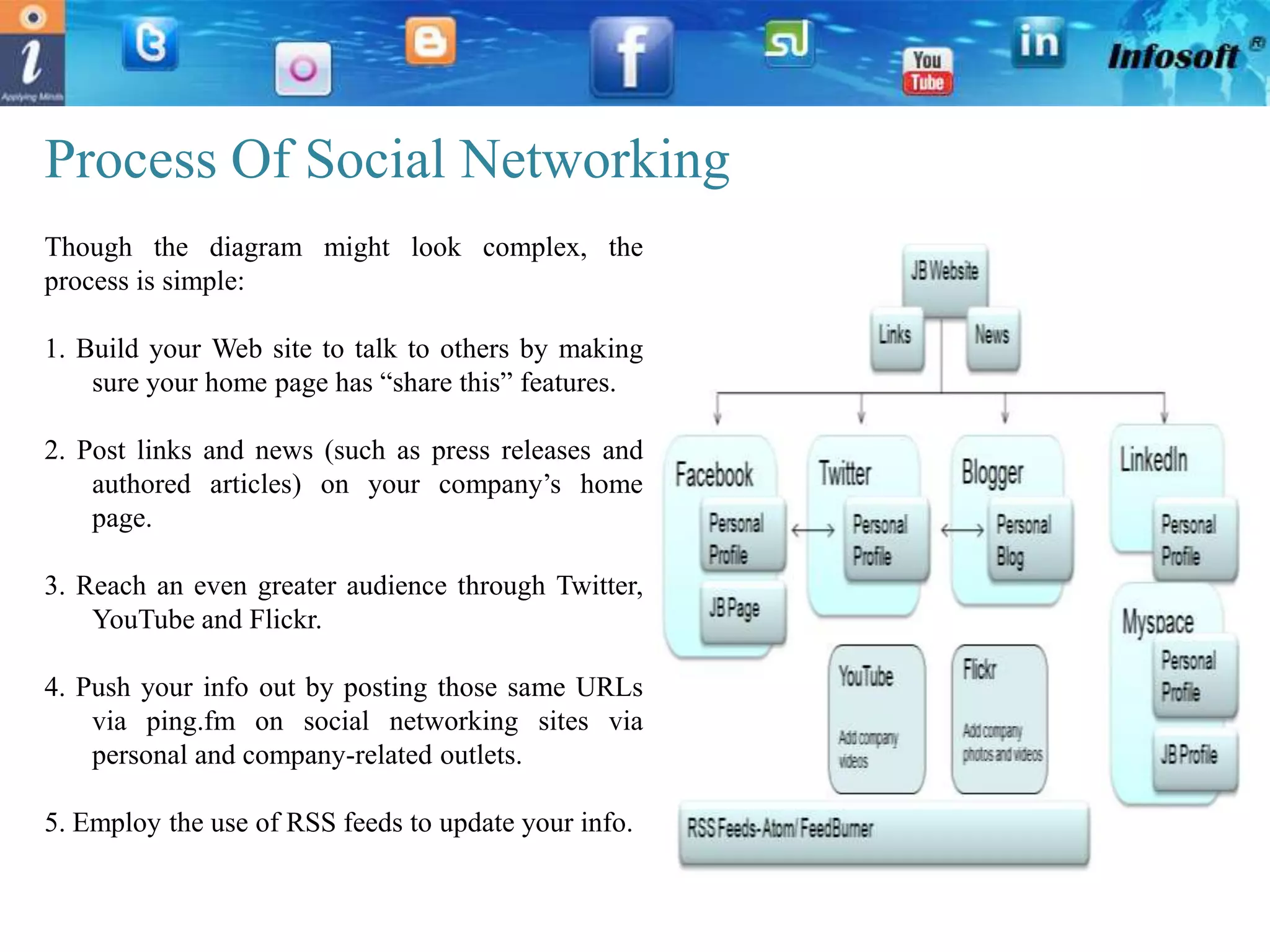
Process Of Social Networking
Though the diagram might look complex, the
process is simple:

1. Build your Web site to talk to others by making
    sure your home page has “share this” features.

2. Post links and news (such as press releases and
    authored articles) on your company’s home
    page.

3. Reach an even greater audience through Twitter,
    YouTube and Flickr.

4. Push your info out by posting those same URLs
    via ping.fm on social networking sites via
    personal and company-related outlets.

5. Employ the use of RSS feeds to update your info.
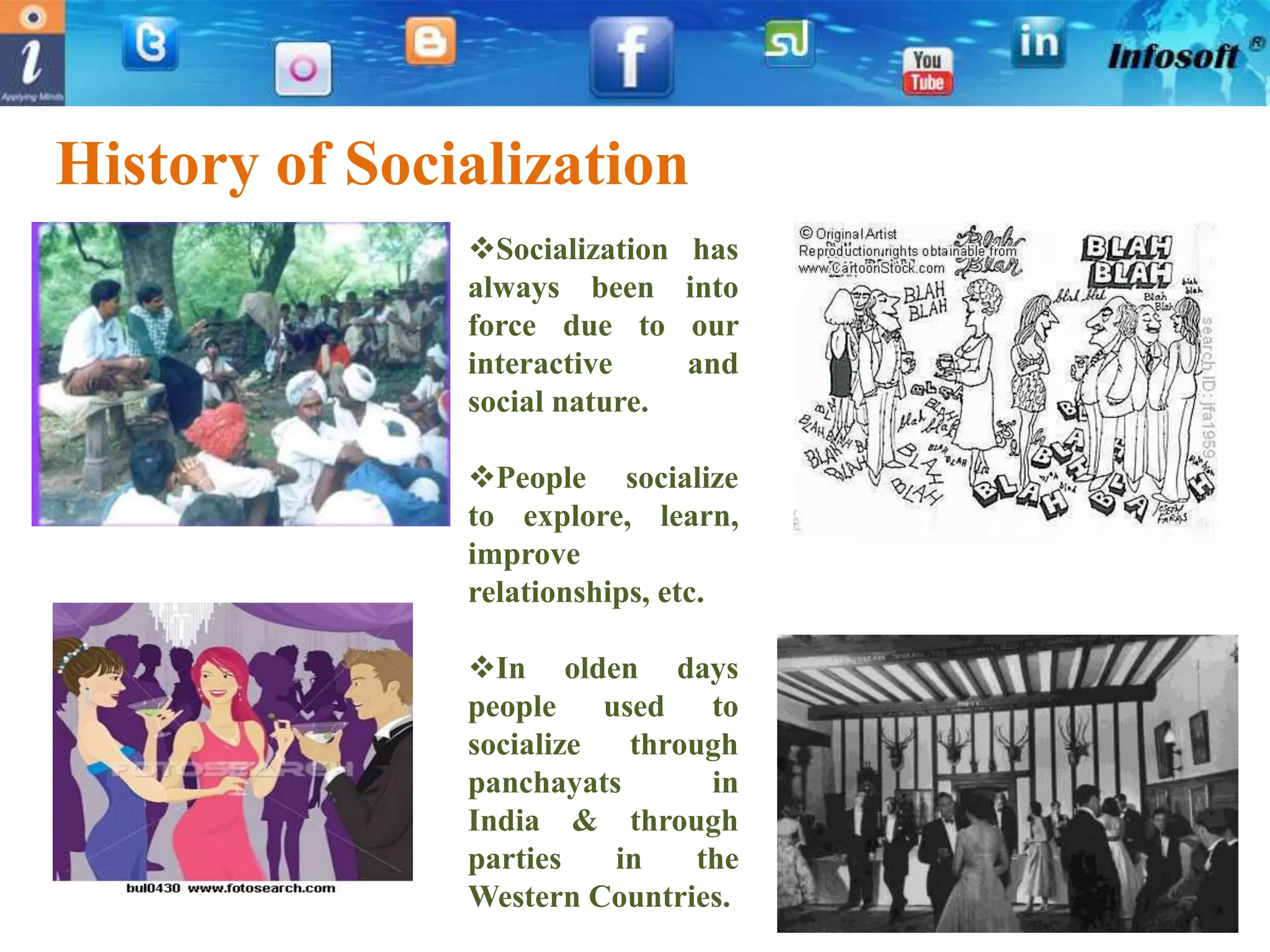
History of Socialization
               Socialization    has
               always been      into
               force due to      our
               interactive      and
               social nature.

               People socialize
               to explore, learn,
               improve
               relationships, etc.

               In olden days
               people used to
               socialize  through
               panchayats       in
               India & through
               parties   in    the
               Western Countries.
Social Networking site Micro Blogging & Blogging

What are micro blogging and blogging sites all
 about?
Micro blogging sites (i.e. Twitter) allow you to post short versions (around 140
  characters) of what you are up to. You can post a new article, blog entry, or
  article as a “tweet,” status update, etc, which others can then view.

Blogging sites allow for more room and greater versatility. Write relatively short
   posts that will engage the reader; create an angle and write engaging pieces that
   make the reader want to return.
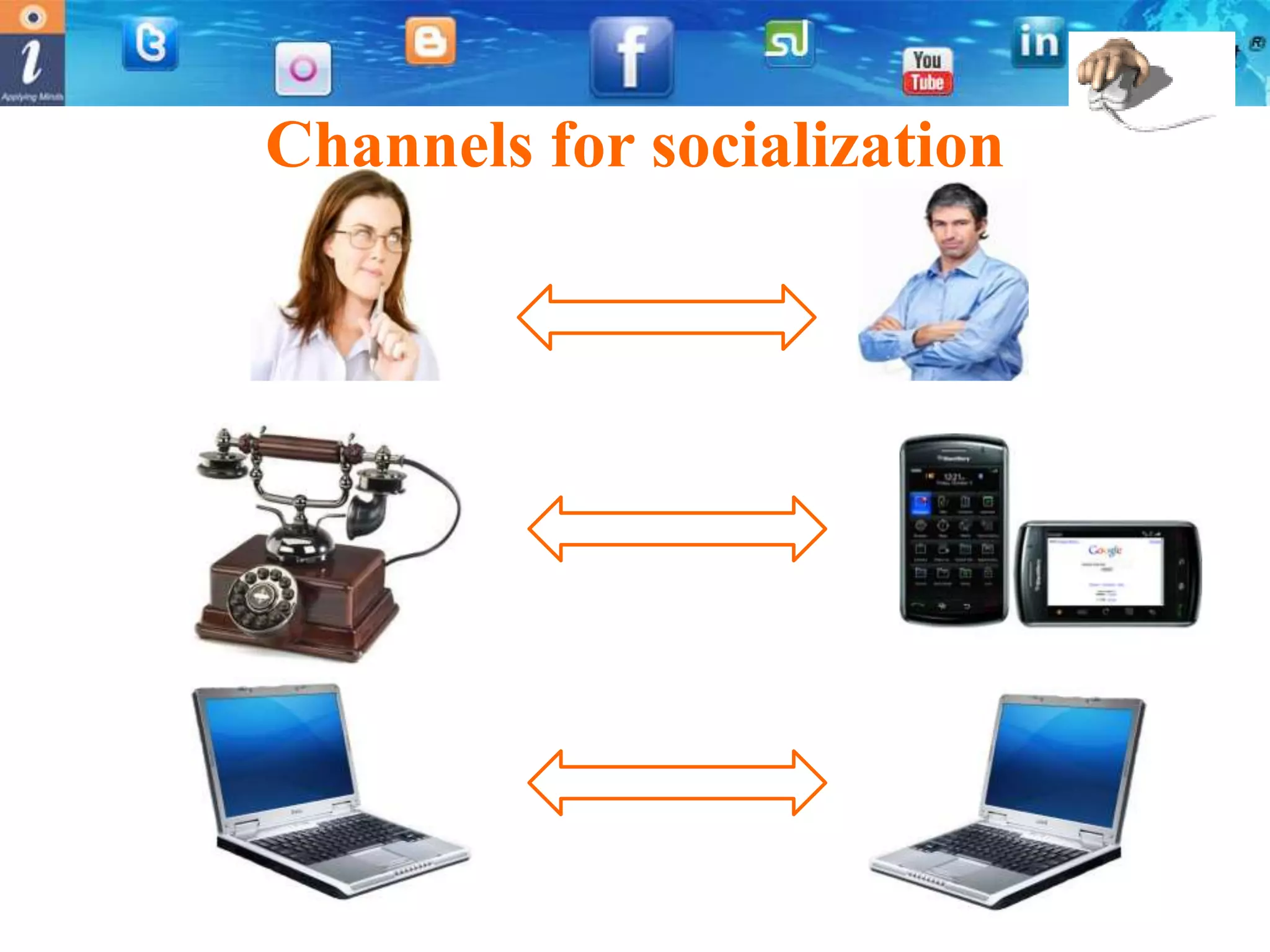
Channels for socialization
Invasion of
OSN
PROFITS :-                      MISUSES:-

Stay Connected                 x. Social Depression

Conduct Business               x. Loneliness

Can Share Interests            x. Disconnection from
                                   Reality
Can Find Out Perfect
 Matches                        x. The Information accessed
                                   May be Misused
Enjoy Different Applications
                                x. Continuous Exposure
E.g.:- quizzes, games,            Causes All Possible
 horoscope, etc.                   Sensory Problems

                                x. E.g.:- Lowered Eyesight,
                                   Back Ache, Lowered
                                   Concentration, etc
Social Network

Social Network

  • 1.
    • Commissioned byMr. D. Yadav
  • 2.
    Submitted By :Pinal k. Jani
  • 3.
    Contents  Introduction  Featuresof Social Networks Components Of Social Media  Process Of Social Networking  History of Socialization  Social Networking site  Channels of Social Networking  Growth of Online Social Networking  Profits & Misuses of Socialization
  • 4.
    INTRODUCTION  Social NetworkingIs A Part Of Communication It Means By Which Member Of Organization Work Together.  Social Networks Facilitate Connections Between People Based On Shared Interests, Values, Membership In Particular Groups (I.E., Friends, Professional Colleagues), Etc. They Make It Easier For People To Find And Communicate With Individuals Who Are In Their Networks Using The Web As The Interface.  Social Networking Can Be Apt Fully Called As “The Life Blood” Of An Communication .  As Sir John Harvey-jones Says, “Communication Is The Single Most Essential Skill”
  • 5.
     Social networkingtruly is the new way of the world. With print on the decline and the number of bookmarking, sharing and blogging sites increasing every day, this is one medium that is demanding attention – and it’s either get in or be left in the dust  When used correctly and effectively, these sites have the power to deliver news to more people than you ever dreamed possible. However, it is quality over quantity, so the following are our notes on the best way to get your message out to an interested audience.
  • 6.
     The AbilityTo Create A Profile Page – This Is Your Main “Home” On The Network. Different Networks Offer Varying Abilities To Personalize Your Page In Terms Of Look And Feel. They May Also Differ In Terms Of The Types Of Information You Would Include, Such As Name, Location, Education, Etc. Facebook, For Example, Asks For Your Relationship Status (Because It’s More “Social”), While On LinkedIn, Which Is Primarily For Professional Use, Does Not.  A Way To Find And Link To “Friends” Or Connections–the Purpose Of A Network Is Connections, So Facilitating A Members’ Ability To Find And Connect To Other People Is Important. Each Network Offers Different Types Of Search Capabilities And Once You’ve Located A Potential Friend, You Must Send An “Invitation” To Invite Them Into Your Personal Network.  Privacy Controls–in Most Networks, Your Ability To Access More Detailed Information About A Person Is Based On Their Status As One Of Your Connections; “Friends” Can See Much More Information Than Those Who Are Not Your “Friends.” You Can Control Who Is Actually In Your Personal Network By Effectively Managing Who You Invite Into Your Network And Whose Invitations You Accept.
  • 7.
     The AbilityTo Send Public And Private Messages – In Ning And Facebook, You Can Communicate With Your Connections Either By Sending A Private Message Or “Writing On Their Wall.” On Linked in, You Communicate Via Person-to-person Messages. Ning Also Provides Forums Where Members Can Interact With One Another On Specific Topics (You’re Reading This In One Of The Ning Forums).  Ability To Share Various Digital Objects And Information – Both Ning And Facebook Allow Members To Share Various Online Items, Including Photos, Videos And Rss Feeds. Linked in Offers Some Ability To Share Links, Although It’s Multimedia Capacities Are Nothing Like What You Find On Facebook Or Ning
  • 8.
    Social Media Targets ( In a nutshell)
  • 9.
    Process Of SocialNetworking Though the diagram might look complex, the process is simple: 1. Build your Web site to talk to others by making sure your home page has “share this” features. 2. Post links and news (such as press releases and authored articles) on your company’s home page. 3. Reach an even greater audience through Twitter, YouTube and Flickr. 4. Push your info out by posting those same URLs via ping.fm on social networking sites via personal and company-related outlets. 5. Employ the use of RSS feeds to update your info.
  • 10.
    History of Socialization Socialization has always been into force due to our interactive and social nature. People socialize to explore, learn, improve relationships, etc. In olden days people used to socialize through panchayats in India & through parties in the Western Countries.
  • 11.
    Social Networking siteMicro Blogging & Blogging What are micro blogging and blogging sites all about? Micro blogging sites (i.e. Twitter) allow you to post short versions (around 140 characters) of what you are up to. You can post a new article, blog entry, or article as a “tweet,” status update, etc, which others can then view. Blogging sites allow for more room and greater versatility. Write relatively short posts that will engage the reader; create an angle and write engaging pieces that make the reader want to return.
  • 13.
  • 14.
  • 17.
    PROFITS :- MISUSES:- Stay Connected x. Social Depression Conduct Business x. Loneliness Can Share Interests x. Disconnection from Reality Can Find Out Perfect Matches x. The Information accessed May be Misused Enjoy Different Applications x. Continuous Exposure E.g.:- quizzes, games, Causes All Possible horoscope, etc. Sensory Problems x. E.g.:- Lowered Eyesight, Back Ache, Lowered Concentration, etc