


 Social media is computer-mediated tool that allow people to create, share or exchange information, career
interests,[ideas, and pictures/videos in virtual communities and networks.
 Social media has been broadly defined to refer to 'the many relatively inexpensive and widely accessible electronic
tools that enable anyone to publish and access information, collaborate on a common effort, or build relationships.
 Furthermore, social media depends on mobile and web-based technologies to create highly interactive platforms
through which individuals and communities share, co-create, discuss, and modify user-generated content.
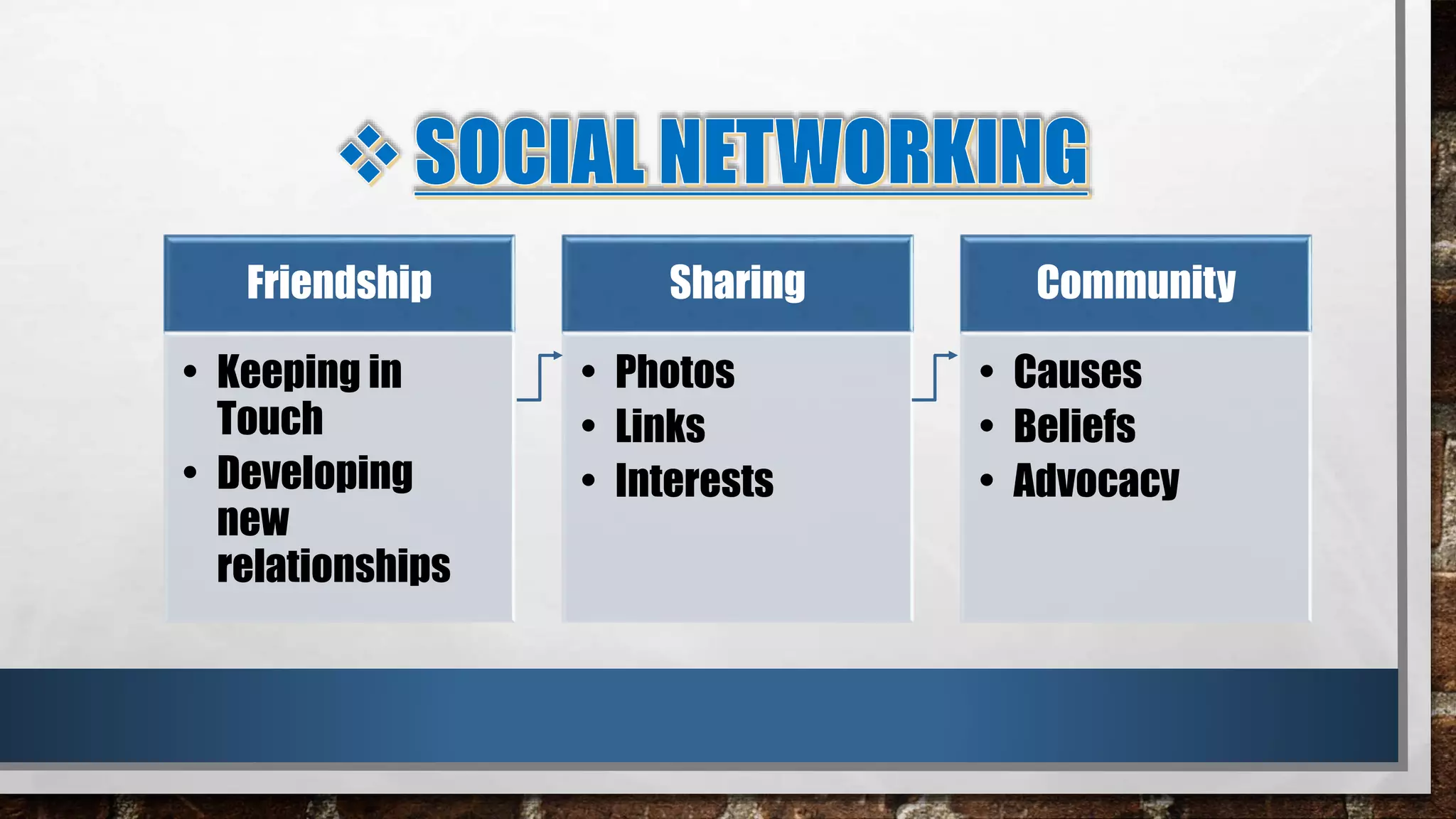
SOCIAL NETWORKING IS THE USE OF
COMMUNITIES TO ENGAGE WITH OTHERS:
FACEBOOK, MYSPACE, LINKEDIN, TWITTER.
SOCIAL NETWORKING SITES OFTEN INCLUDE
SOCIAL MEDIA TOOLS TO FACILITATE THE
INTERACTION AND CONVERSATION
Friendship
• Keeping in
Touch
• Developing
new
relationships
Sharing
• Photos
• Links
• Interests
Community
• Causes
• Beliefs
• Advocacy
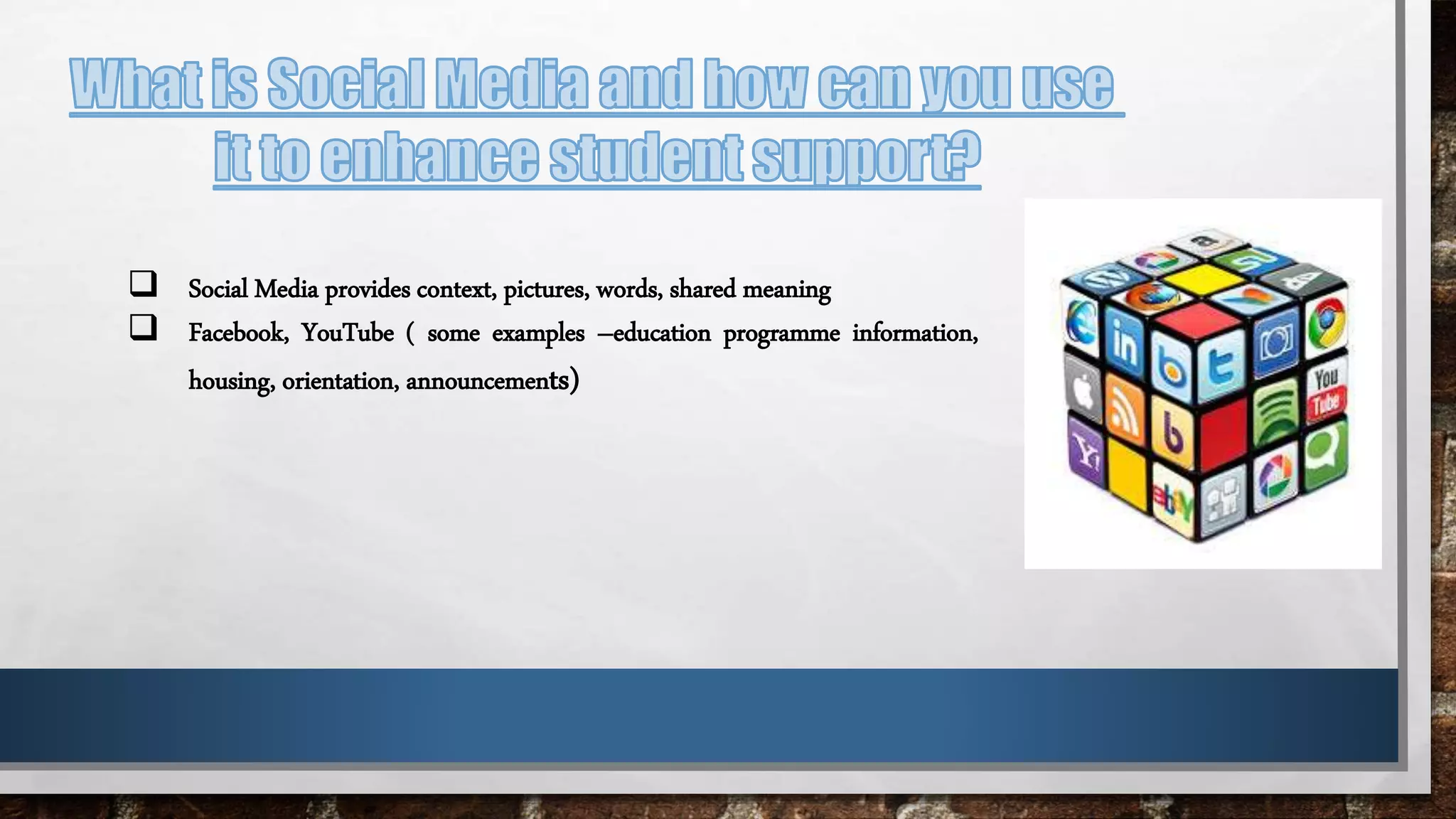
 Social Media provides context, pictures, words, shared meaning
 Facebook, YouTube ( some examples –education programme information,
housing, orientation, announcements)
IF YOUR KIDS ARE AWAKE THEY ARE PROBABLY ONLINE
THE AVERAGE YOUNG AMERICAN NOW SPENDS EVERY WAKING MINUTE – EXCEPT
THE TIME IN SCHOOL – USING A SMART PHONE, COMPUTER, TV OR OTHER
ELECTRONIC DEVICE ACCORDING TO A NEW STUDY FROM THE KAISER FAMILY
FOUNDATION. THOSE AGES 8 – 18 SPEND MORE THAN 7 HOURS A DAY WITH SUCH
DEVICES. AND THAT DOES NOT COUNT THE HOUR AND A HALF THAT YOUTHS
SPEND TEXTING OR TALKING ON THEIR PHONES
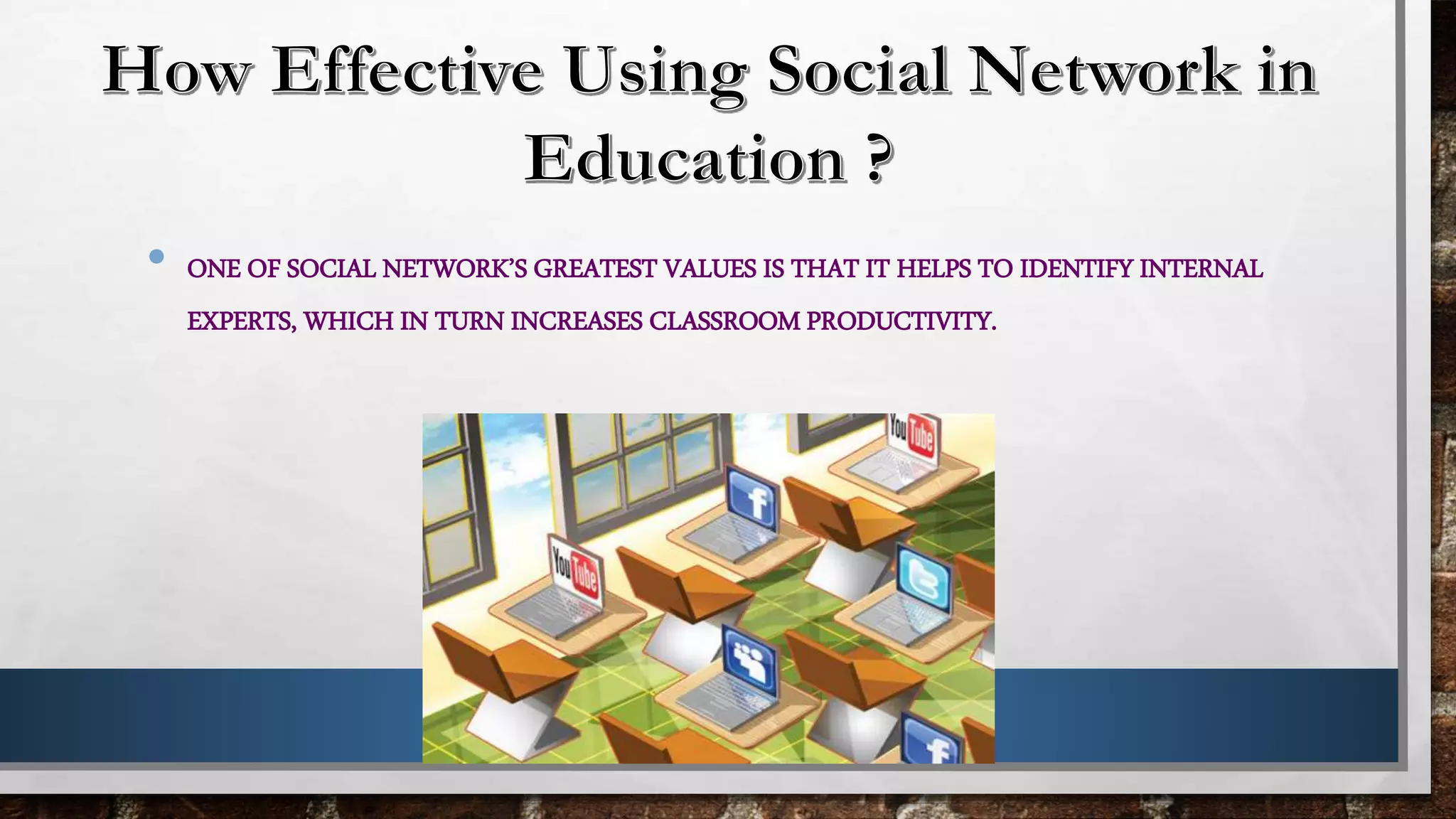
• ONE OF SOCIAL NETWORK’S GREATEST VALUES IS THAT IT HELPS TO IDENTIFY INTERNAL
EXPERTS, WHICH IN TURN INCREASES CLASSROOM PRODUCTIVITY.
IN WORK ENVIRONMENT KNOWLEDGE MANAGEMENT IS WHEN COMPANY MANAGEMENT
TELLS EMPLOYEES WHAT THEY NEED TO KNOW.
IN HIGHER EDUCATION FACULTY PRACTICE KNOWLEDGE MANAGEMENT BY TELLING THE
STUDENTS WHAT THEY NEED TO KNOW.
SOCIAL NETWORK IS A METHOD USE TO SHOW CONNECTIONS TO THE CONTENT THEY
THINK IS IMPORTANT.
 Social Media for Higher Education
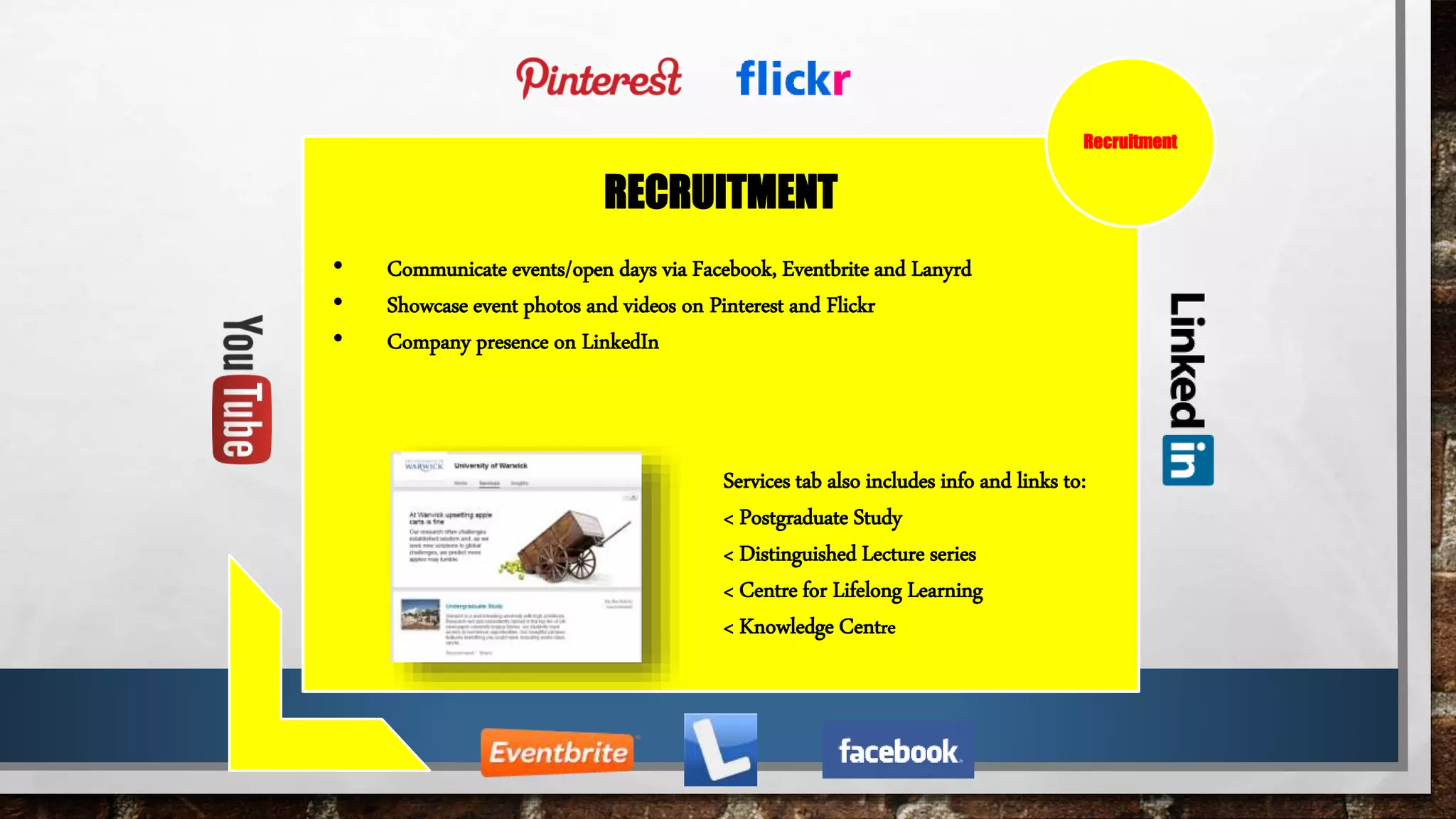
RECRUITMENT
• Communicate events/open days via Facebook, Eventbrite and Lanyrd
• Showcase event photos and videos on Pinterest and Flickr
• Company presence on LinkedIn
Recruitment
Services tab also includes info and links to:
< Postgraduate Study
< Distinguished Lecture series
< Centre for Lifelong Learning
< Knowledge Centre
STUDENT GUIDANCE
• Facebook and Wikis for FAQs and space to raise questions
• Twitter to signpost support areas such as wellbeing, study support, disability support
• Social Bookmarking tools such as Diigo to tag and highlight key documents and web
resources
• Pinterest board of Who's Who in Student Support
ResearchStudent
Guidance
TEACHING
• Blogs to share introductions and other induction activities
• Wikis and Google Drive for project collaboration
• Google hangouts for group online meetings
• YouTube videos for how to guides
• Screencast tools such as Jing and Screencast-o-matic to create short summaries
• Pinterest for visual reading lists
Research
Teaching
PEER SUPPORT
• Maintain/make new connections/friendships via Facebook happens!
• Course blogs to share interests, hobbies etc.
• Collaborative Pinterest boards to share inspirational quotes
• Picture quizzes of places and people in University
• Online group chat using Google+ hangouts, Skype or Blackboard Collaborate
ResearchPeer Support
UNIVERSITY COMMUNICATION
• Twitter, LinkedIn Company page, Facebook
ResearchUniversity
Comms
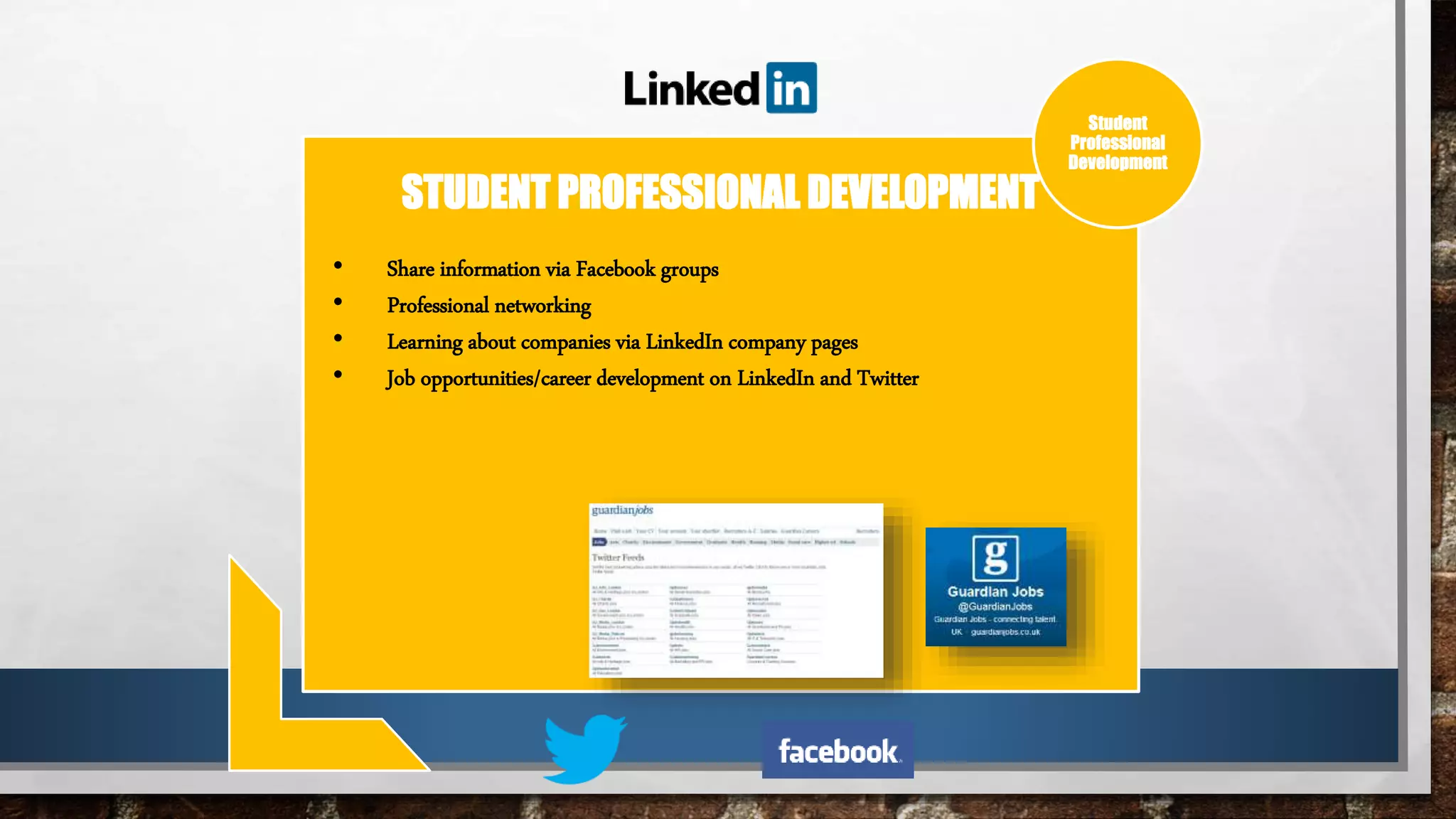
STUDENT PROFESSIONAL DEVELOPMENT
• Share information via Facebook groups
• Professional networking
• Learning about companies via LinkedIn company pages
• Job opportunities/career development on LinkedIn and Twitter
Student
Professional
Development
ACADEMIC PROFESSIONAL DEVELOPMENT
• Sharing information via Twitter and LinkedIn
• Discussion forums such LinkedIn groups and Google+ communities
• Curation tools to gather resources on specific topics
Academic
Professional
Development
RESEARCH
• Be known as an expert in your field
• Research your project definition, funding and collaboration
• Share and promote publications: papers, books, articles, websites, presentations
Research
 Facebook is an online social networking service headquartered in Menlo Park, California. Its website was launched on February 4, 2004, by Mark
Zuckerberg with his Harvard College roommates and fellow students Eduardo Saverin, Andrew McCollum, Dustin Moskovitz and Chris Hughes.
 The founders had initially limited the website's membership to Harvard students, but later expanded it to colleges in the Boston area, the Ivy League,
and Stanford University.
 It gradually added support for students at various other universities and later to high-school students. Since 2006, anyone who is at least 13 years old
was allowed to become a registered user of the website, though the age requirement may be higher depending on applicable local laws. Its name comes
from a colloquialism for the directory given to it by American universities' students.
1) Twitter (/ˈtwɪtər/) is an online social networking service that enables users to send
and read short 140-character messages called "tweets".
2) Registered users can read and post tweets, but unregistered users can only read them.
Users access Twitter through the website interface, SMS, or mobile device app.Twitter
Inc. is based in San Francisco and has more than 25 offices around the world.
3) Twitter was created in March 2006 by Jack Dorsey, Evan Williams, Biz
Stone and Noah Glass and launched by July 2006. The service rapidly gained
worldwide popularity, with more than 100 million users who in 2012 posted 340
million tweets per day.
o is a business-oriented social networking service. Founded in December 2002 and launched
on May 5, 2003, it is mainly used for professional networking. As of 2015, most of the site's
revenue comes from selling access to information about its users to recruiters.
o The site is available in 24
languages, including Arabic, Chinese, English, French, German, Italian, Portuguese, Spanis
h, Dutch,Swedish, Danish, Romanian, Russian, Turkish, Japanese, Czech, Polish, Korean, I
ndonesian, Malay, and Tagalog. As of 2 July 2013, Quantcast reports LinkedIn has
65.6 million monthly unique U.S. visitors and 178.4 million globally, a number that as of 29
October 2013 has increased to 184 million. In June 2011, LinkedIn had 33.9 million unique
visitors, up 63 percent from a year.
Google Hangouts is a communication platform developed by Google which
includes instant messaging, video chat, SMS and VOIP features. It replaces three
messaging products that Google had implemented concurrently within its services,
including Google Talk ,Google+ Messenger (formerly: Huddle), and Hangouts, a
video chat system present within Google+. Google has also stated that Hangouts is
designed to be "the future" of its telephony product, Google Voice, and integrated
some of the capabilities of Google Voice into Hangouts. In current versions of
Android, Hangouts is the default application for text messaging.
What
WhatsApp Inc. is an early stage technology startup founded in the heart of Silicon Valley.
What does the name mean you ask? Well, WhatsApp is a pun onWhat's Up in case you
didn't get it yet:)
Why
Because we want to build a better SMS alternative. Because we believe we can. Because
someday very soon everybody will have a Smartphone.
Who
WhatsApp was founded by two guys who spent combined 20 years doing geeky stuff at
Yahoo! Inc. before starting WhatsApp Inc.
YouTube is a video-sharing website headquartered in San Bruno, California, United States.
The service was created by three former PayPal employees in February 2005. In November
2006, it was bought by Google for US$1.65 billion. YouTube now operates as one of
Google's subsidiaries. The site allows users to upload, view, and share videos, and it makes
use of WebM,H.264/MPEG-4 AVC, and Adobe Flash Video technology to display a wide
variety of user-generated and corporate media video. Available content includes video clips,
TV clips, music videos, and other content such as video blogging, short original videos, and
educational videos.
Social media Project By Somnath.

Social media Project By Somnath.

  • 2.
     Social mediais computer-mediated tool that allow people to create, share or exchange information, career interests,[ideas, and pictures/videos in virtual communities and networks.  Social media has been broadly defined to refer to 'the many relatively inexpensive and widely accessible electronic tools that enable anyone to publish and access information, collaborate on a common effort, or build relationships.  Furthermore, social media depends on mobile and web-based technologies to create highly interactive platforms through which individuals and communities share, co-create, discuss, and modify user-generated content.
  • 3.
    SOCIAL NETWORKING ISTHE USE OF COMMUNITIES TO ENGAGE WITH OTHERS: FACEBOOK, MYSPACE, LINKEDIN, TWITTER. SOCIAL NETWORKING SITES OFTEN INCLUDE SOCIAL MEDIA TOOLS TO FACILITATE THE INTERACTION AND CONVERSATION
  • 6.
    Friendship • Keeping in Touch •Developing new relationships Sharing • Photos • Links • Interests Community • Causes • Beliefs • Advocacy
  • 7.
     Social Mediaprovides context, pictures, words, shared meaning  Facebook, YouTube ( some examples –education programme information, housing, orientation, announcements)
  • 8.
    IF YOUR KIDSARE AWAKE THEY ARE PROBABLY ONLINE THE AVERAGE YOUNG AMERICAN NOW SPENDS EVERY WAKING MINUTE – EXCEPT THE TIME IN SCHOOL – USING A SMART PHONE, COMPUTER, TV OR OTHER ELECTRONIC DEVICE ACCORDING TO A NEW STUDY FROM THE KAISER FAMILY FOUNDATION. THOSE AGES 8 – 18 SPEND MORE THAN 7 HOURS A DAY WITH SUCH DEVICES. AND THAT DOES NOT COUNT THE HOUR AND A HALF THAT YOUTHS SPEND TEXTING OR TALKING ON THEIR PHONES
  • 9.
    • ONE OFSOCIAL NETWORK’S GREATEST VALUES IS THAT IT HELPS TO IDENTIFY INTERNAL EXPERTS, WHICH IN TURN INCREASES CLASSROOM PRODUCTIVITY.
  • 10.
    IN WORK ENVIRONMENTKNOWLEDGE MANAGEMENT IS WHEN COMPANY MANAGEMENT TELLS EMPLOYEES WHAT THEY NEED TO KNOW. IN HIGHER EDUCATION FACULTY PRACTICE KNOWLEDGE MANAGEMENT BY TELLING THE STUDENTS WHAT THEY NEED TO KNOW. SOCIAL NETWORK IS A METHOD USE TO SHOW CONNECTIONS TO THE CONTENT THEY THINK IS IMPORTANT.
  • 12.
     Social Mediafor Higher Education
  • 13.
    RECRUITMENT • Communicate events/opendays via Facebook, Eventbrite and Lanyrd • Showcase event photos and videos on Pinterest and Flickr • Company presence on LinkedIn Recruitment Services tab also includes info and links to: < Postgraduate Study < Distinguished Lecture series < Centre for Lifelong Learning < Knowledge Centre
  • 14.
    STUDENT GUIDANCE • Facebookand Wikis for FAQs and space to raise questions • Twitter to signpost support areas such as wellbeing, study support, disability support • Social Bookmarking tools such as Diigo to tag and highlight key documents and web resources • Pinterest board of Who's Who in Student Support ResearchStudent Guidance
  • 15.
    TEACHING • Blogs toshare introductions and other induction activities • Wikis and Google Drive for project collaboration • Google hangouts for group online meetings • YouTube videos for how to guides • Screencast tools such as Jing and Screencast-o-matic to create short summaries • Pinterest for visual reading lists Research Teaching
  • 16.
    PEER SUPPORT • Maintain/makenew connections/friendships via Facebook happens! • Course blogs to share interests, hobbies etc. • Collaborative Pinterest boards to share inspirational quotes • Picture quizzes of places and people in University • Online group chat using Google+ hangouts, Skype or Blackboard Collaborate ResearchPeer Support
  • 17.
    UNIVERSITY COMMUNICATION • Twitter,LinkedIn Company page, Facebook ResearchUniversity Comms
  • 18.
    STUDENT PROFESSIONAL DEVELOPMENT •Share information via Facebook groups • Professional networking • Learning about companies via LinkedIn company pages • Job opportunities/career development on LinkedIn and Twitter Student Professional Development
  • 19.
    ACADEMIC PROFESSIONAL DEVELOPMENT •Sharing information via Twitter and LinkedIn • Discussion forums such LinkedIn groups and Google+ communities • Curation tools to gather resources on specific topics Academic Professional Development
  • 20.
    RESEARCH • Be knownas an expert in your field • Research your project definition, funding and collaboration • Share and promote publications: papers, books, articles, websites, presentations Research
  • 22.
     Facebook isan online social networking service headquartered in Menlo Park, California. Its website was launched on February 4, 2004, by Mark Zuckerberg with his Harvard College roommates and fellow students Eduardo Saverin, Andrew McCollum, Dustin Moskovitz and Chris Hughes.  The founders had initially limited the website's membership to Harvard students, but later expanded it to colleges in the Boston area, the Ivy League, and Stanford University.  It gradually added support for students at various other universities and later to high-school students. Since 2006, anyone who is at least 13 years old was allowed to become a registered user of the website, though the age requirement may be higher depending on applicable local laws. Its name comes from a colloquialism for the directory given to it by American universities' students.
  • 23.
    1) Twitter (/ˈtwɪtər/)is an online social networking service that enables users to send and read short 140-character messages called "tweets". 2) Registered users can read and post tweets, but unregistered users can only read them. Users access Twitter through the website interface, SMS, or mobile device app.Twitter Inc. is based in San Francisco and has more than 25 offices around the world. 3) Twitter was created in March 2006 by Jack Dorsey, Evan Williams, Biz Stone and Noah Glass and launched by July 2006. The service rapidly gained worldwide popularity, with more than 100 million users who in 2012 posted 340 million tweets per day.
  • 24.
    o is abusiness-oriented social networking service. Founded in December 2002 and launched on May 5, 2003, it is mainly used for professional networking. As of 2015, most of the site's revenue comes from selling access to information about its users to recruiters. o The site is available in 24 languages, including Arabic, Chinese, English, French, German, Italian, Portuguese, Spanis h, Dutch,Swedish, Danish, Romanian, Russian, Turkish, Japanese, Czech, Polish, Korean, I ndonesian, Malay, and Tagalog. As of 2 July 2013, Quantcast reports LinkedIn has 65.6 million monthly unique U.S. visitors and 178.4 million globally, a number that as of 29 October 2013 has increased to 184 million. In June 2011, LinkedIn had 33.9 million unique visitors, up 63 percent from a year.
  • 25.
    Google Hangouts isa communication platform developed by Google which includes instant messaging, video chat, SMS and VOIP features. It replaces three messaging products that Google had implemented concurrently within its services, including Google Talk ,Google+ Messenger (formerly: Huddle), and Hangouts, a video chat system present within Google+. Google has also stated that Hangouts is designed to be "the future" of its telephony product, Google Voice, and integrated some of the capabilities of Google Voice into Hangouts. In current versions of Android, Hangouts is the default application for text messaging.
  • 26.
    What WhatsApp Inc. isan early stage technology startup founded in the heart of Silicon Valley. What does the name mean you ask? Well, WhatsApp is a pun onWhat's Up in case you didn't get it yet:) Why Because we want to build a better SMS alternative. Because we believe we can. Because someday very soon everybody will have a Smartphone. Who WhatsApp was founded by two guys who spent combined 20 years doing geeky stuff at Yahoo! Inc. before starting WhatsApp Inc.
  • 27.
    YouTube is avideo-sharing website headquartered in San Bruno, California, United States. The service was created by three former PayPal employees in February 2005. In November 2006, it was bought by Google for US$1.65 billion. YouTube now operates as one of Google's subsidiaries. The site allows users to upload, view, and share videos, and it makes use of WebM,H.264/MPEG-4 AVC, and Adobe Flash Video technology to display a wide variety of user-generated and corporate media video. Available content includes video clips, TV clips, music videos, and other content such as video blogging, short original videos, and educational videos.

Editor's Notes

  • #14 Events: http://lanyrd.com/dashboard/ http://www.eventbrite.com/ Images: http://pinterest.com/ http://www.flickr.com/ LinkedIn company pages: http://marketing.linkedin.com/company-pages/