searching for the material of
Twitter discussion events
Open online
spaces of
learning
Overview
Background to the study
The research site
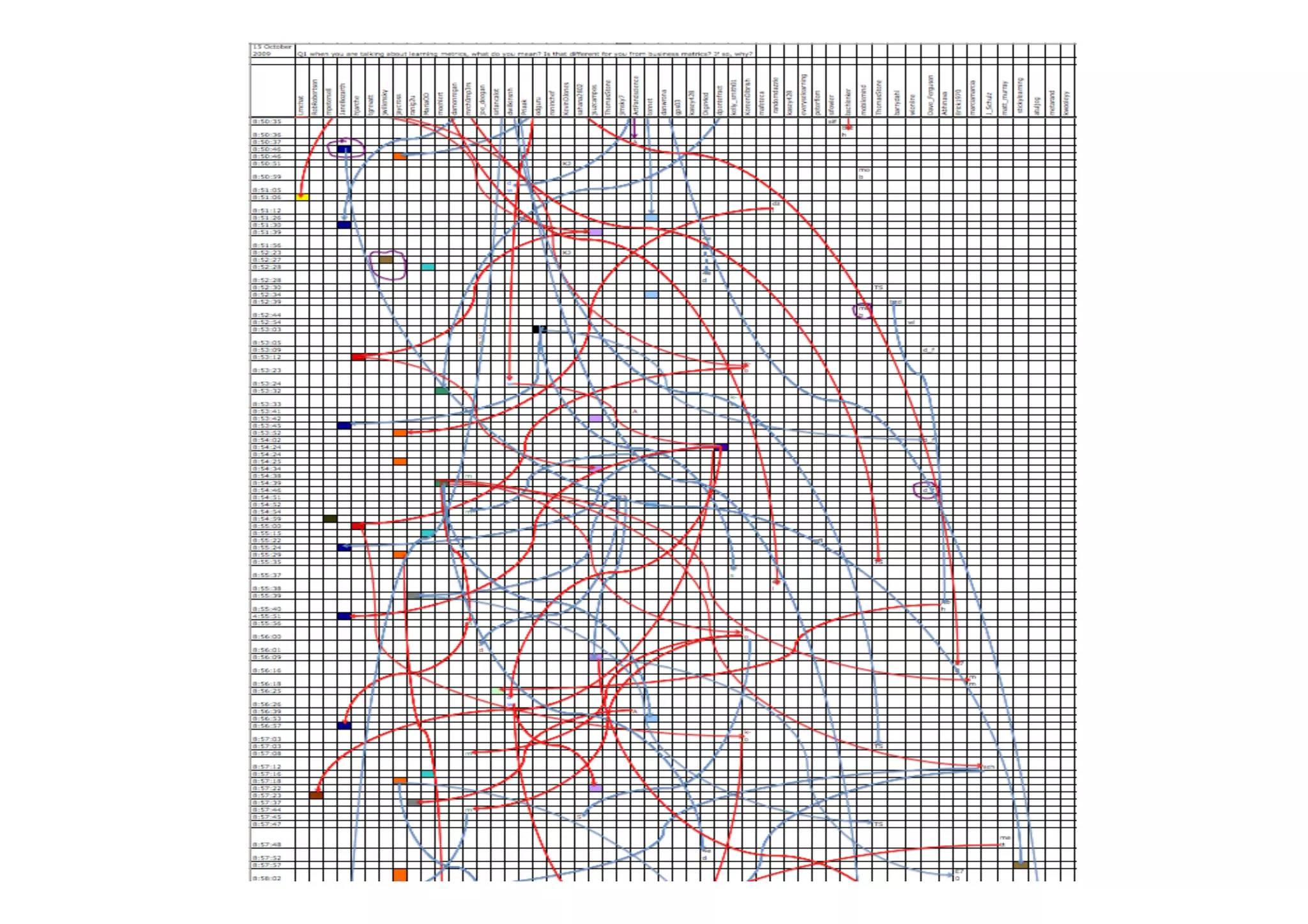
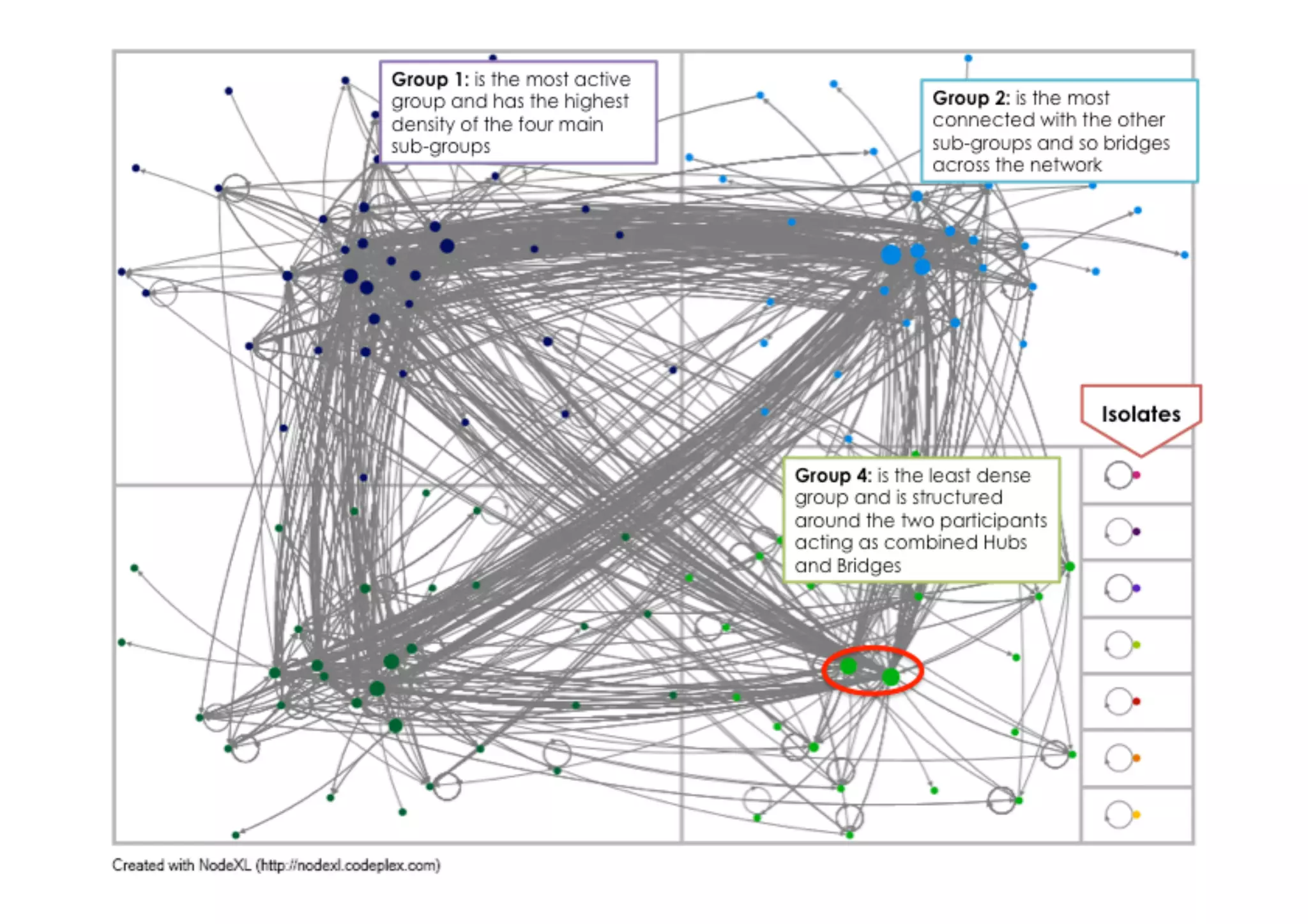
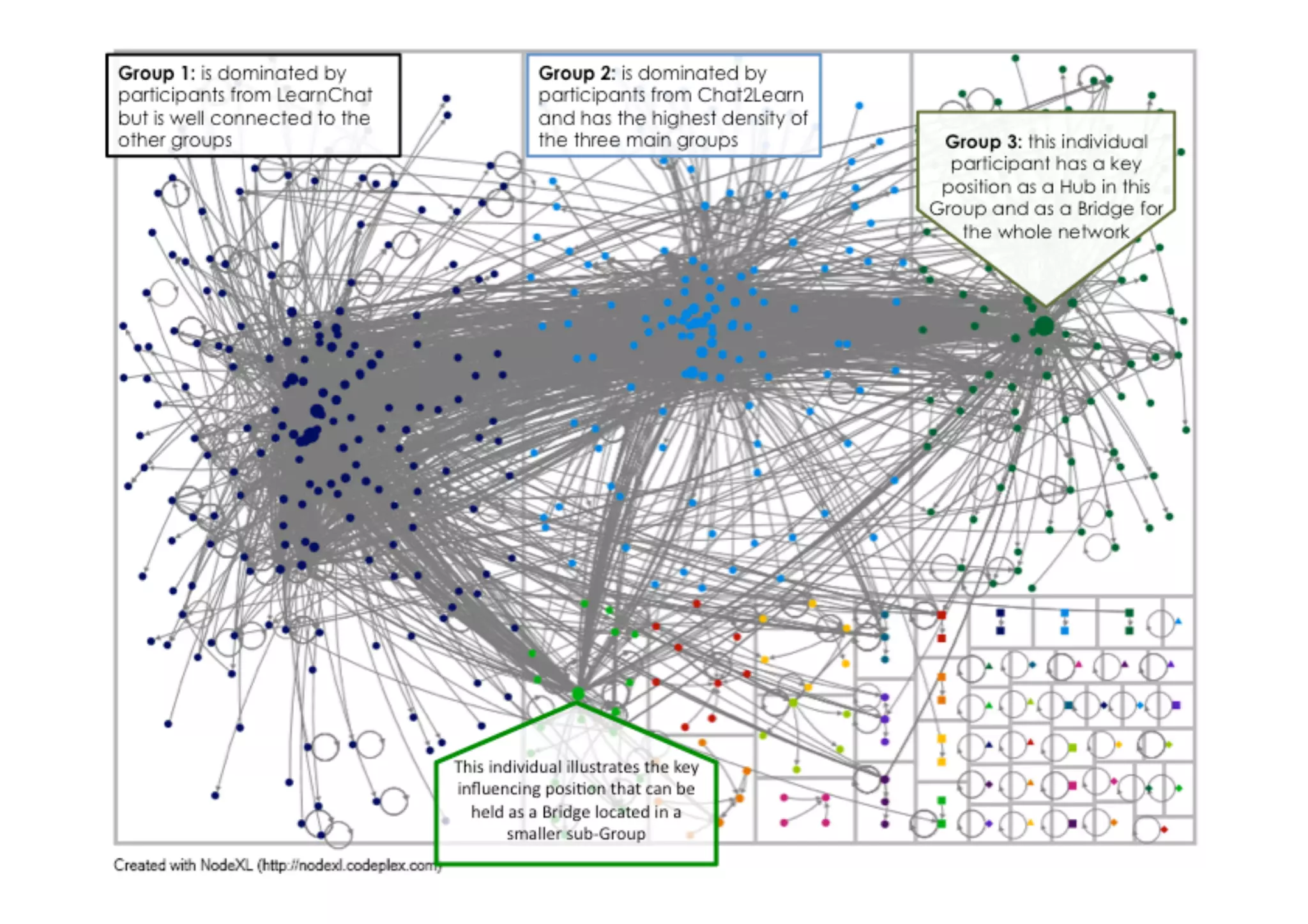
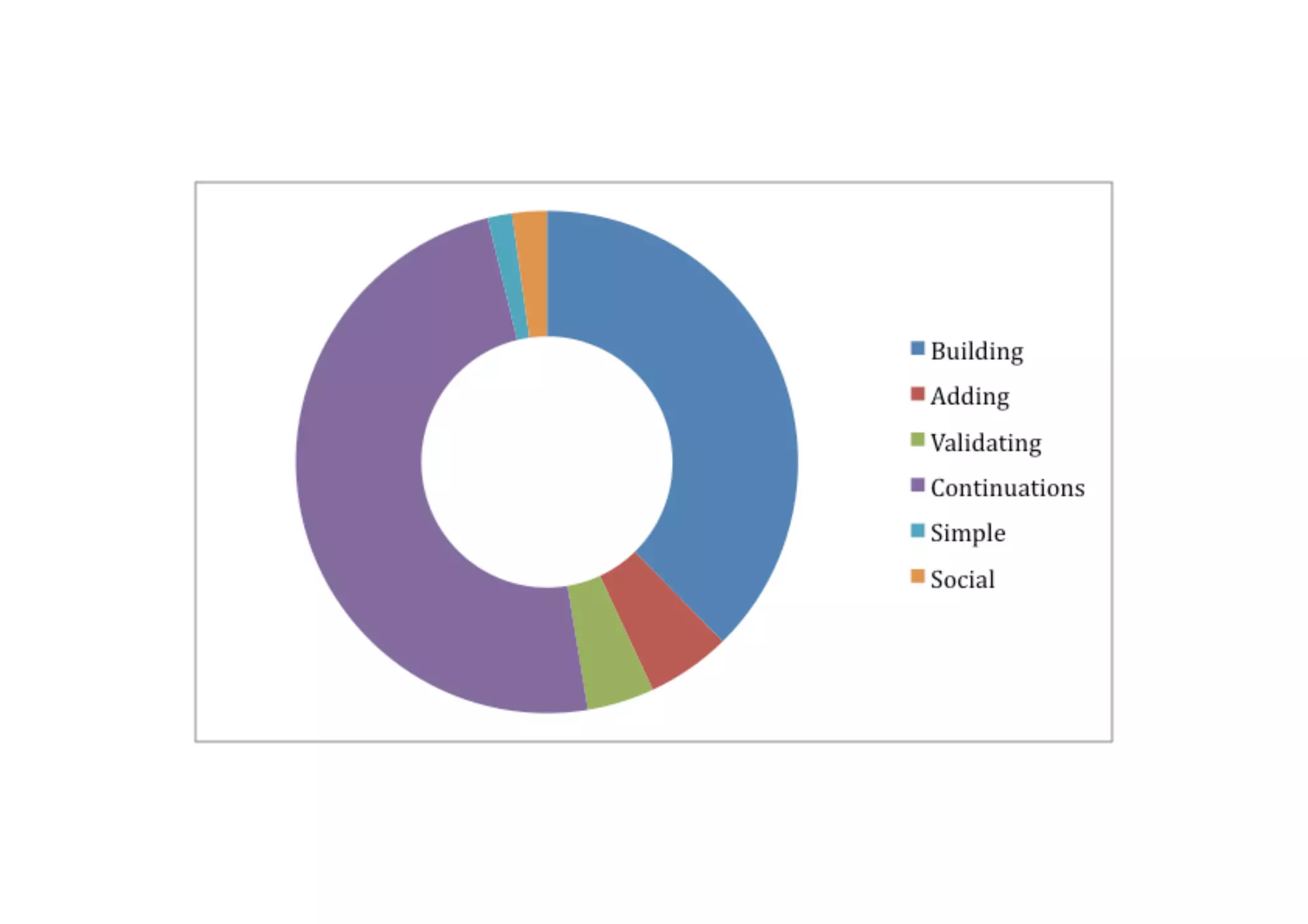
Pattern seeking data
Where it s leading
Background
How is professional identity
negotiated and performed?
What are the dynamics of
professional community formation?
Background
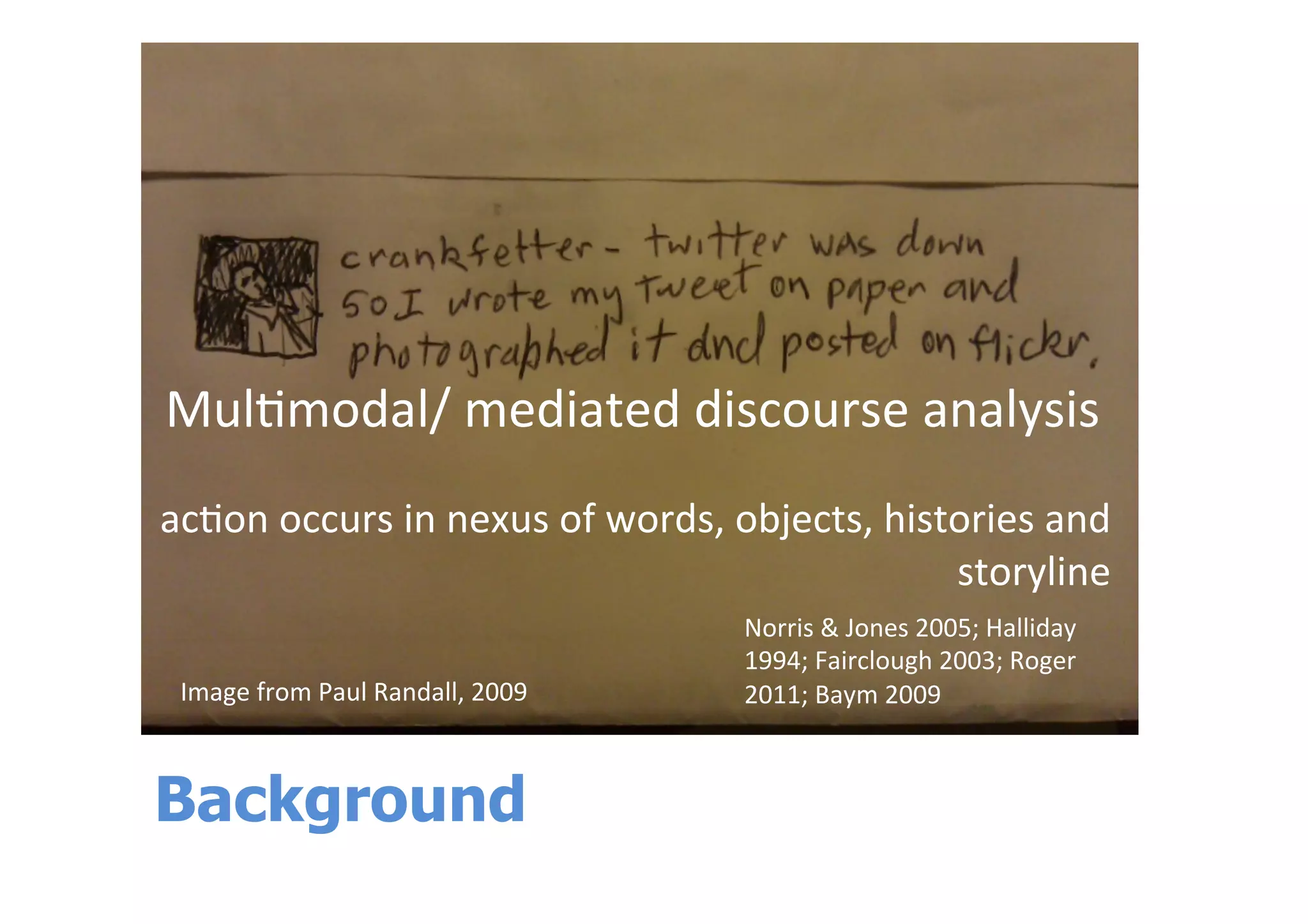
Mul$modal/	
  mediated	
  discourse	
  analysis	


ac$on	
  occurs	
  in	
  nexus	
  of	
  words,	
  objects,	
  histories	
  and	
  
storyline	


  Image	
  from	
  Paul	
  Randall,	
  2009	
  	
  
Norris	
  &	
  Jones	
  2005;	
  Halliday	
  
1994;	
  Fairclough	
  2003;	
  Roger	
  
2011;	
  Baym	
  2009	
  
Background
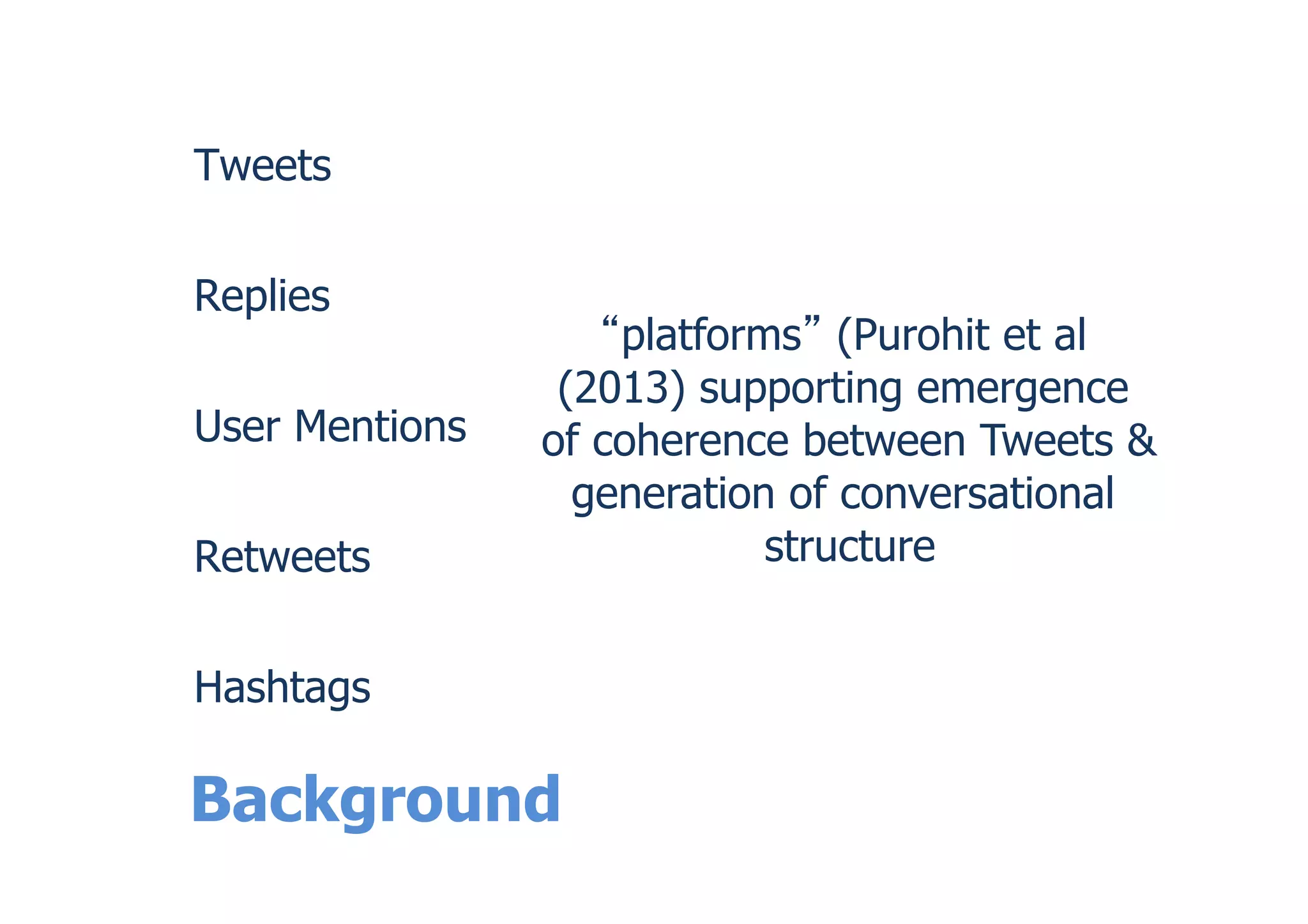
Tweets
Replies
User Mentions
Retweets
Hashtags
platforms (Purohit et al
(2013) supporting emergence
of coherence between Tweets &
generation of conversational
structure
Background
… to co-create a fluid and dynamic
structure within the tweet timeline that
facilitates information discovery: anyone
searching for the hashtag can see what
everyone else is saying about this topic
(Procter, Vis & Voss 2013: 198).
#	
  
What	
  are	
  the	
  dynamics	
  of	
  professional	
  
community	
  forma$on	
  	
  
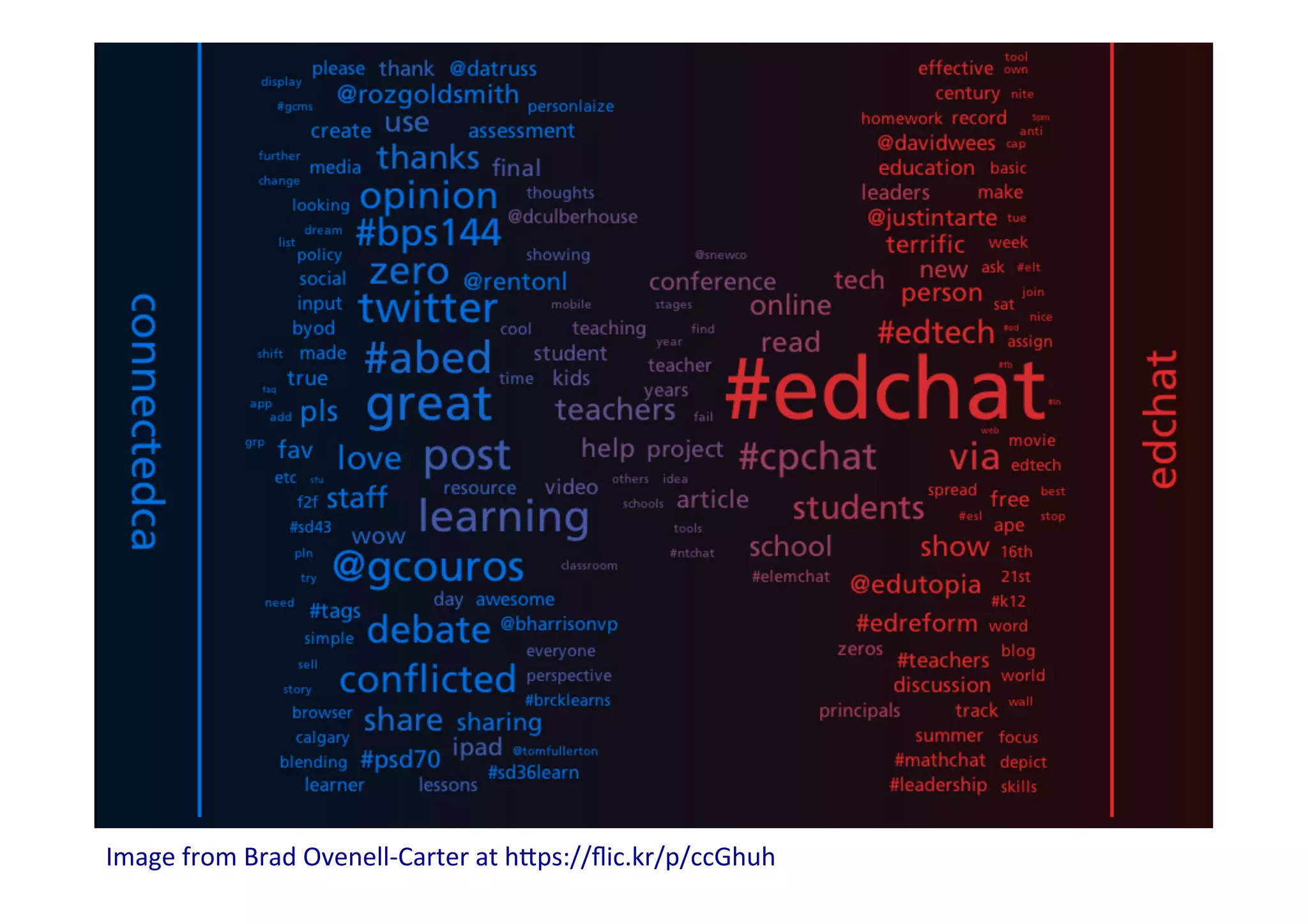
Image	
  from	
  Brad	
  Ovenell-­‐Carter	
  at	
  hSps://flic.kr/p/ccGhuh	
  	
  
What	
  are	
  the	
  dynamics	
  of	
  professional	
  
community	
  forma$on	
  	
  
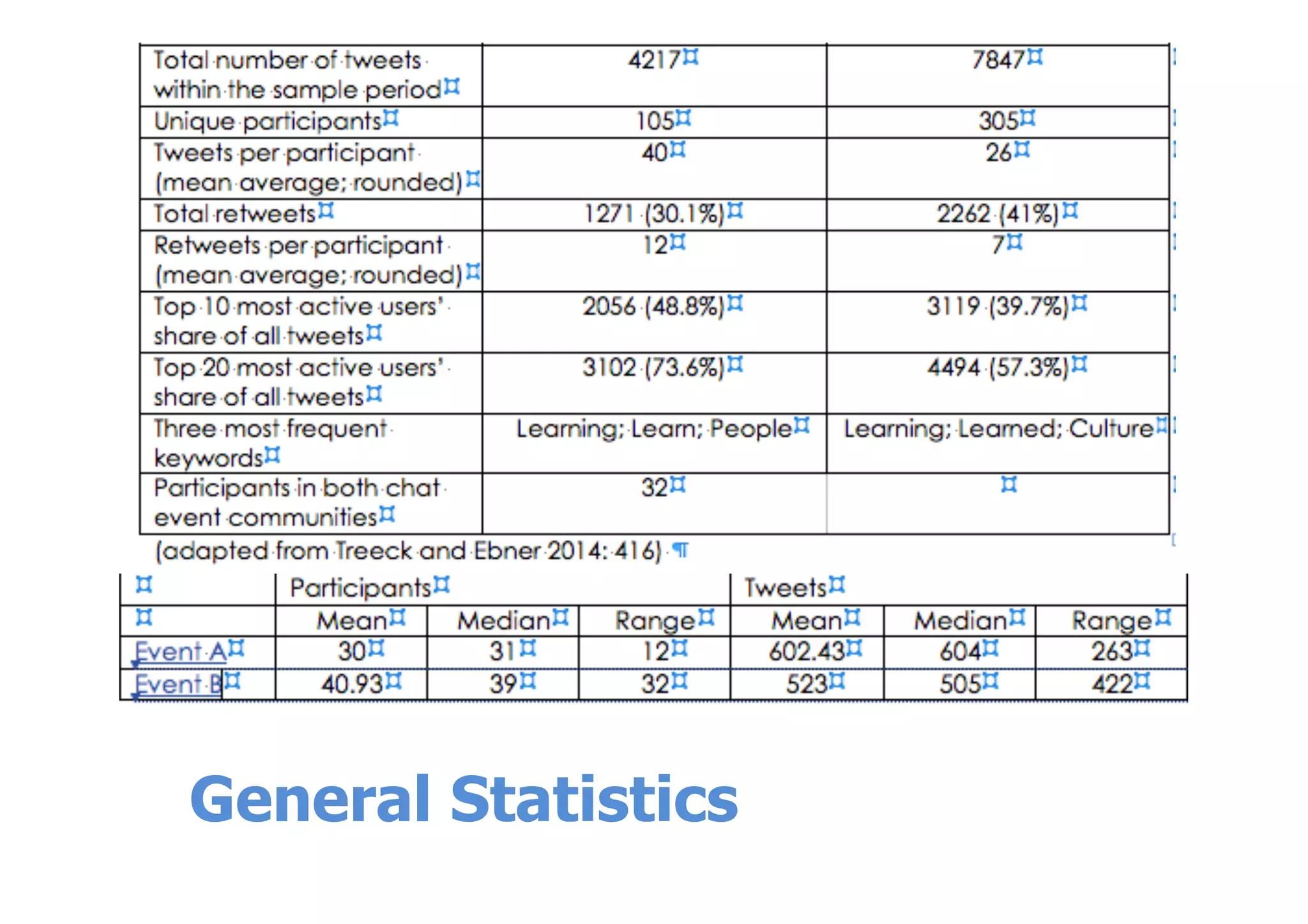
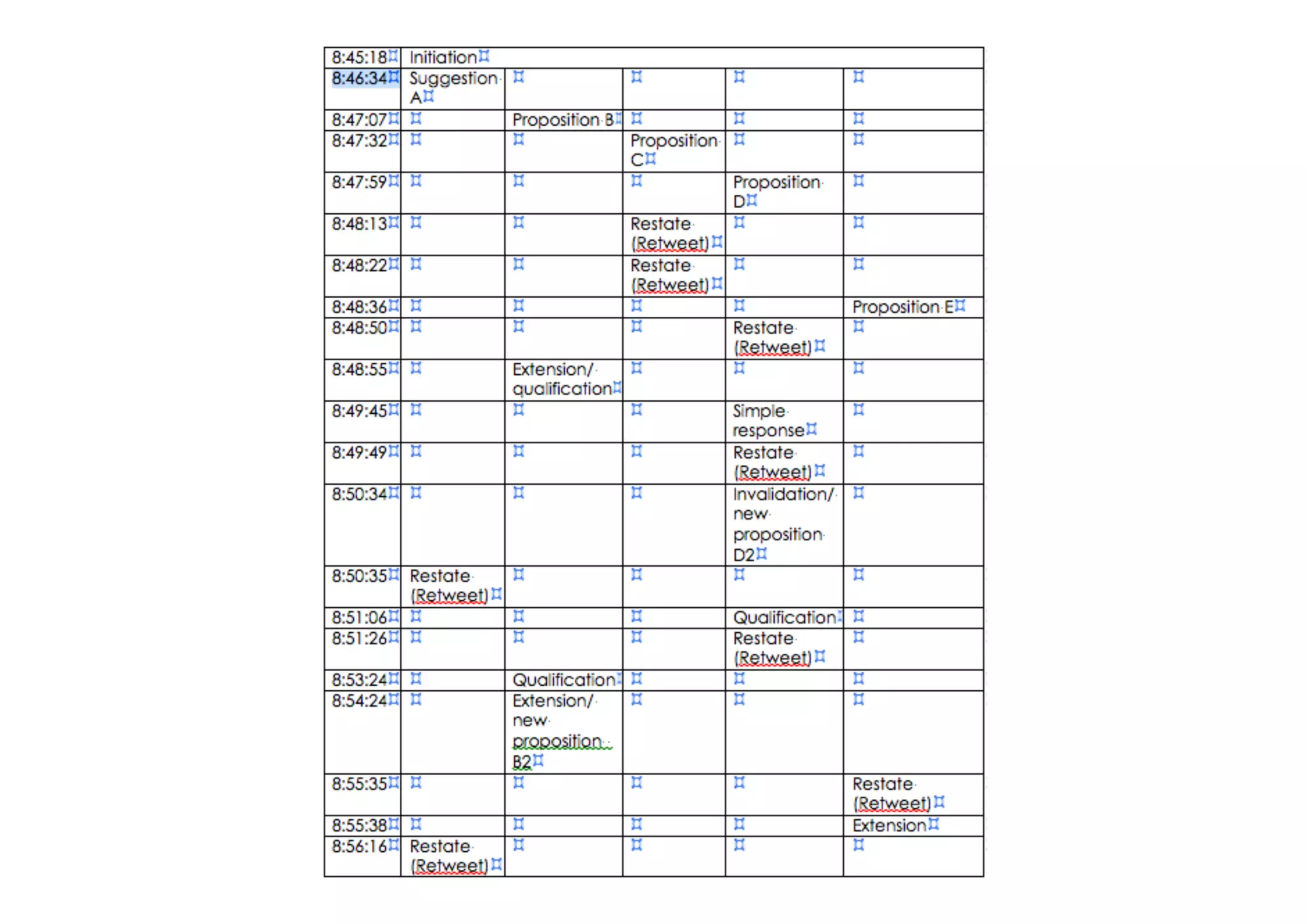
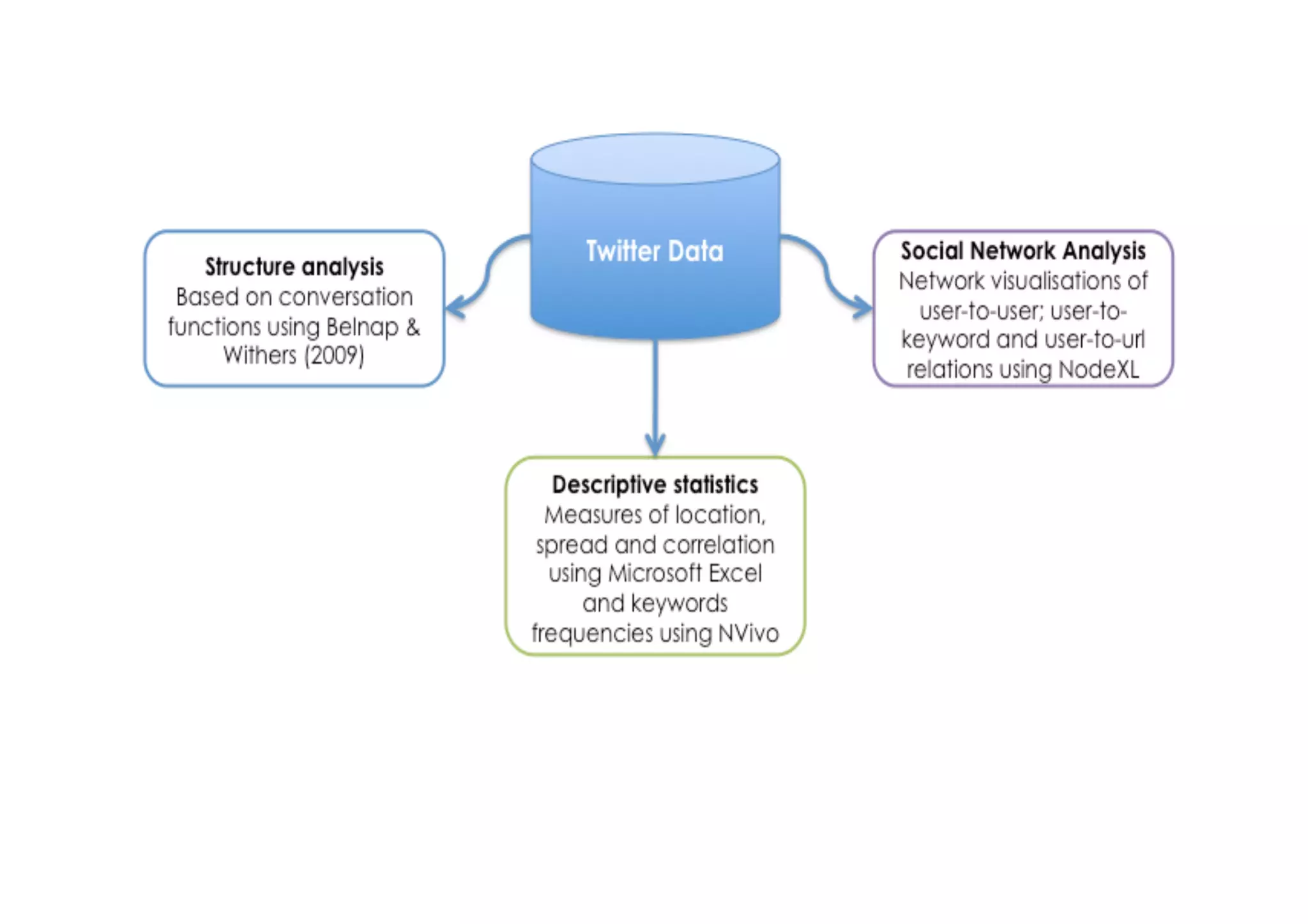
General Statistics
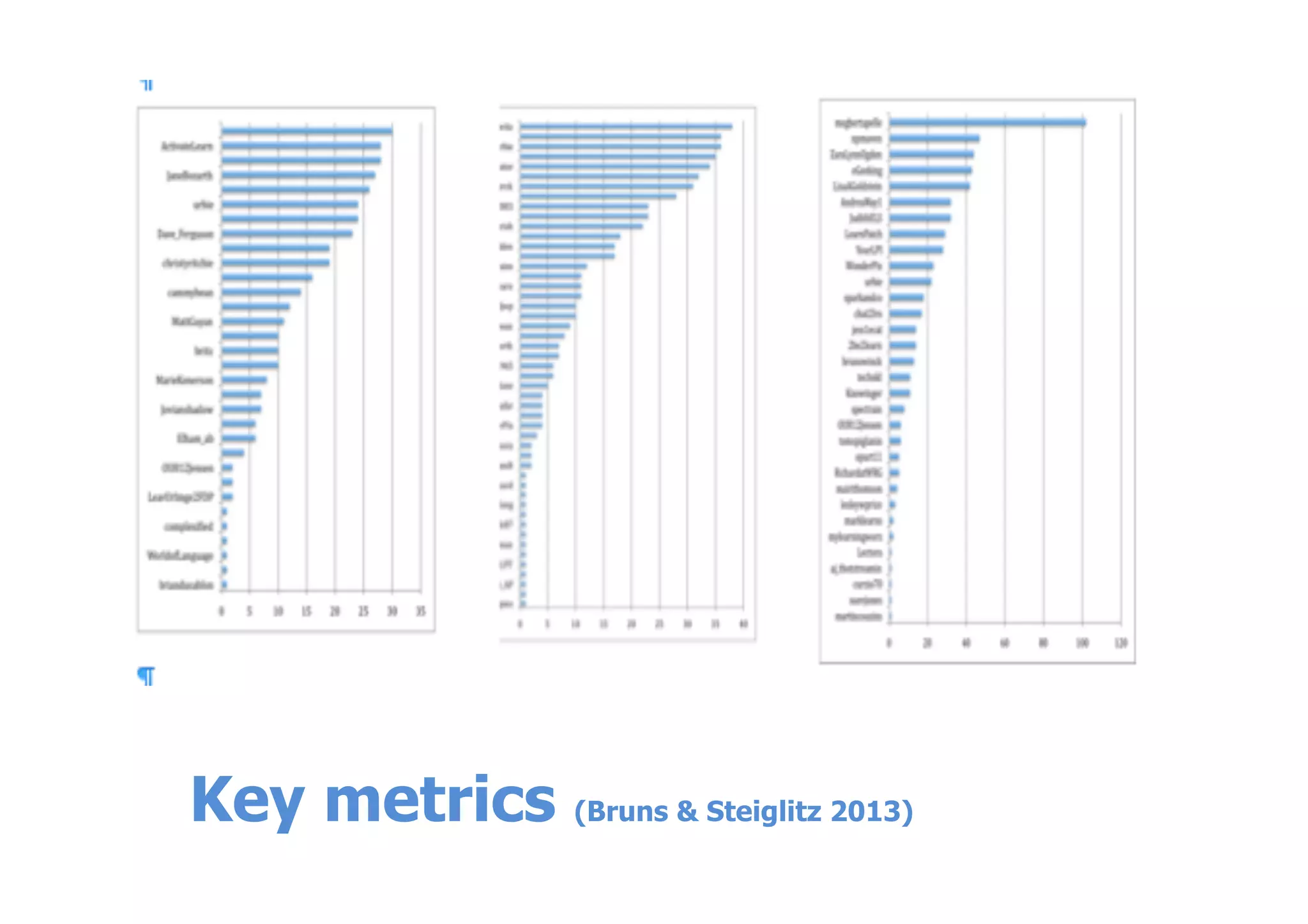
Key metrics (Bruns & Steiglitz 2013)
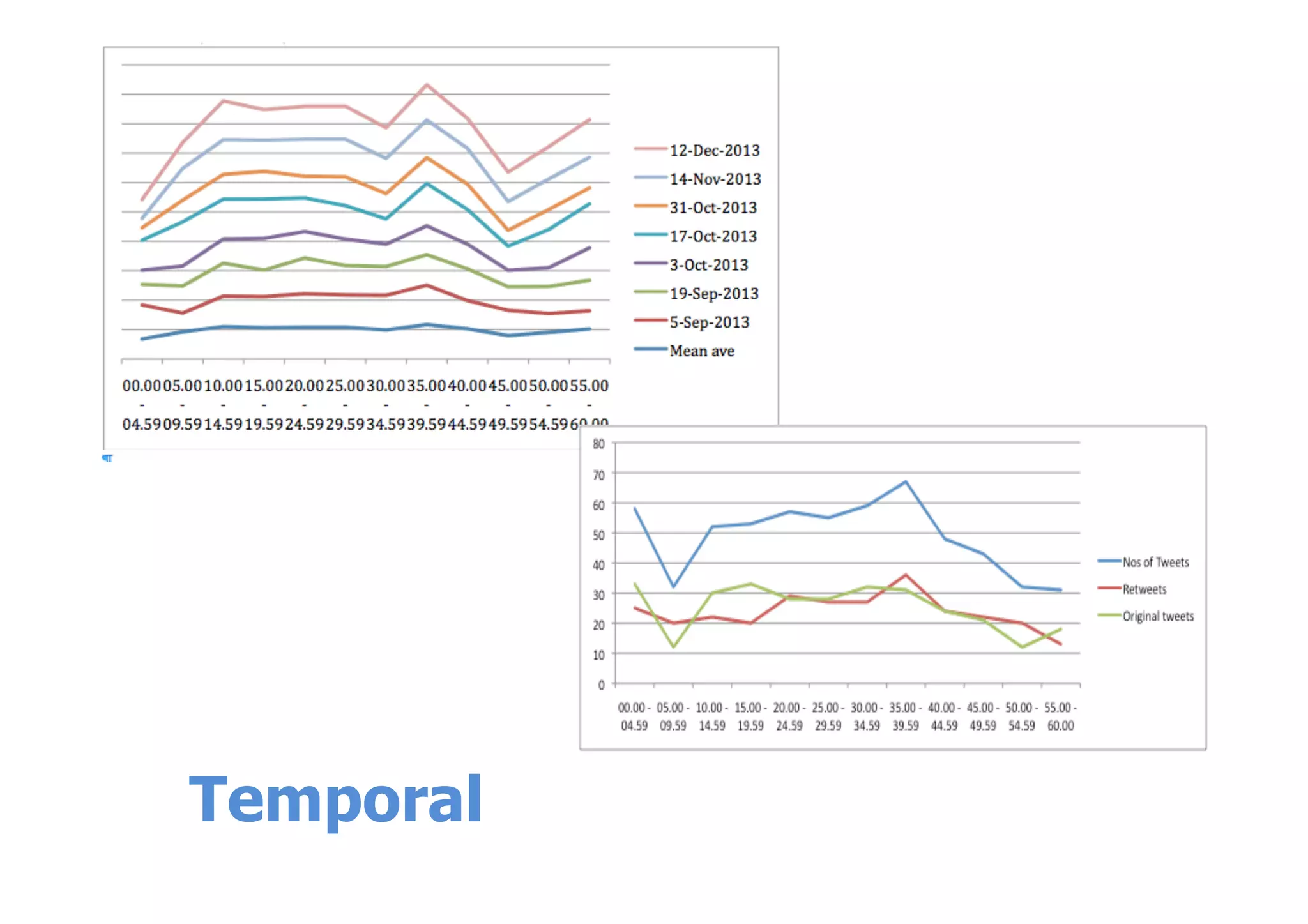
Temporal
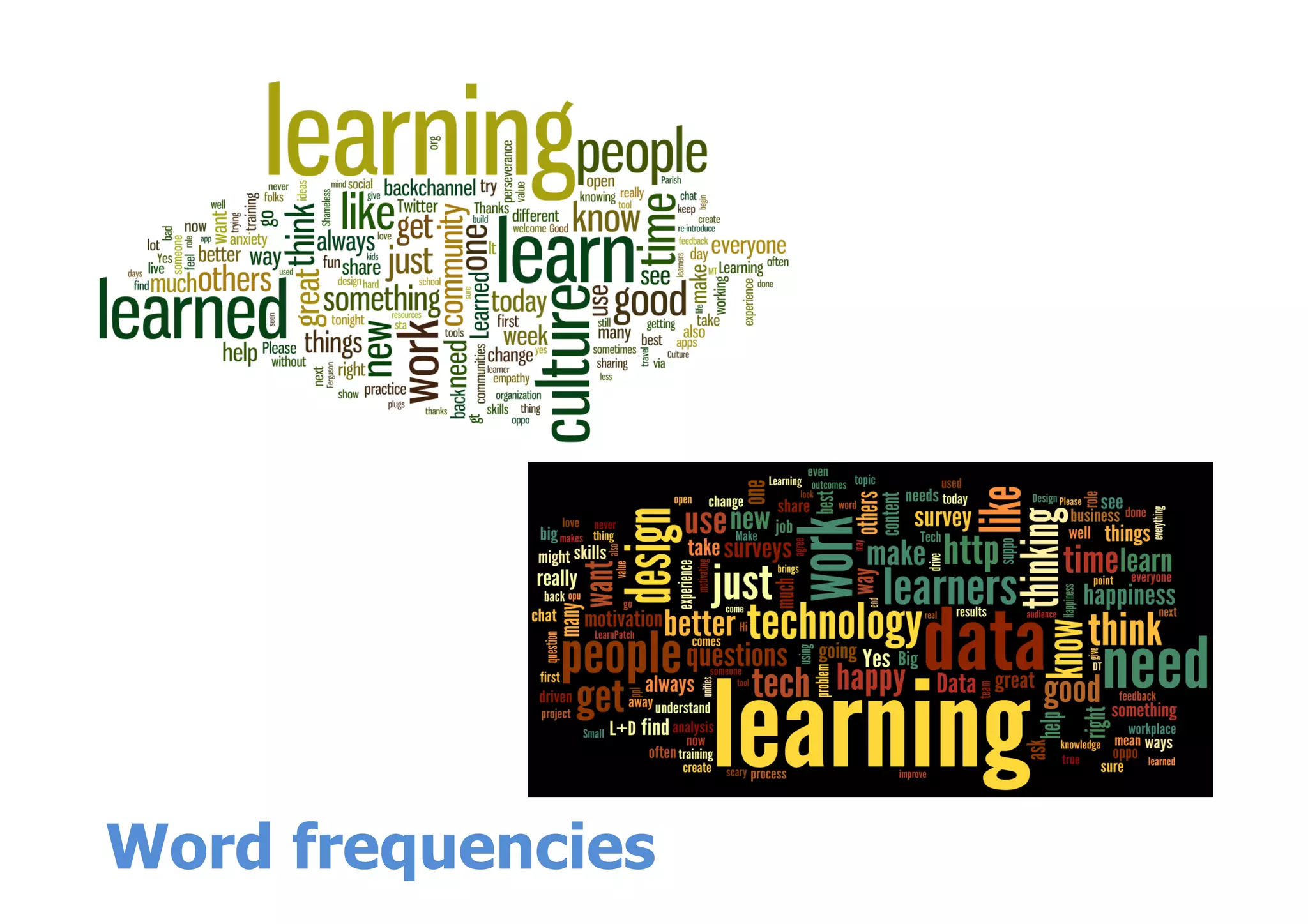
Word frequencies
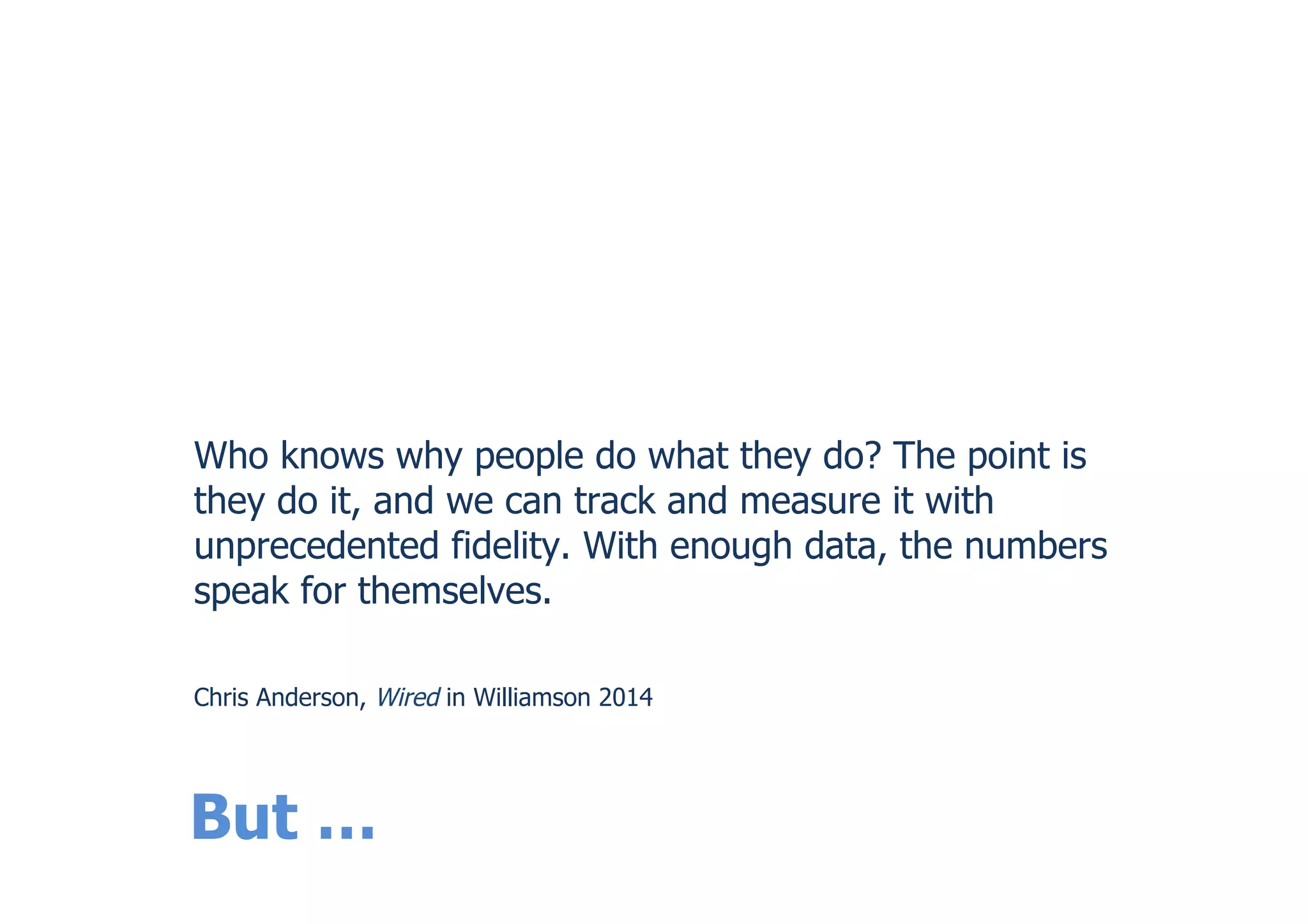
Who knows why people do what they do? The point is
they do it, and we can track and measure it with
unprecedented fidelity. With enough data, the numbers
speak for themselves.
Chris Anderson, Wired in Williamson 2014
But …
But …
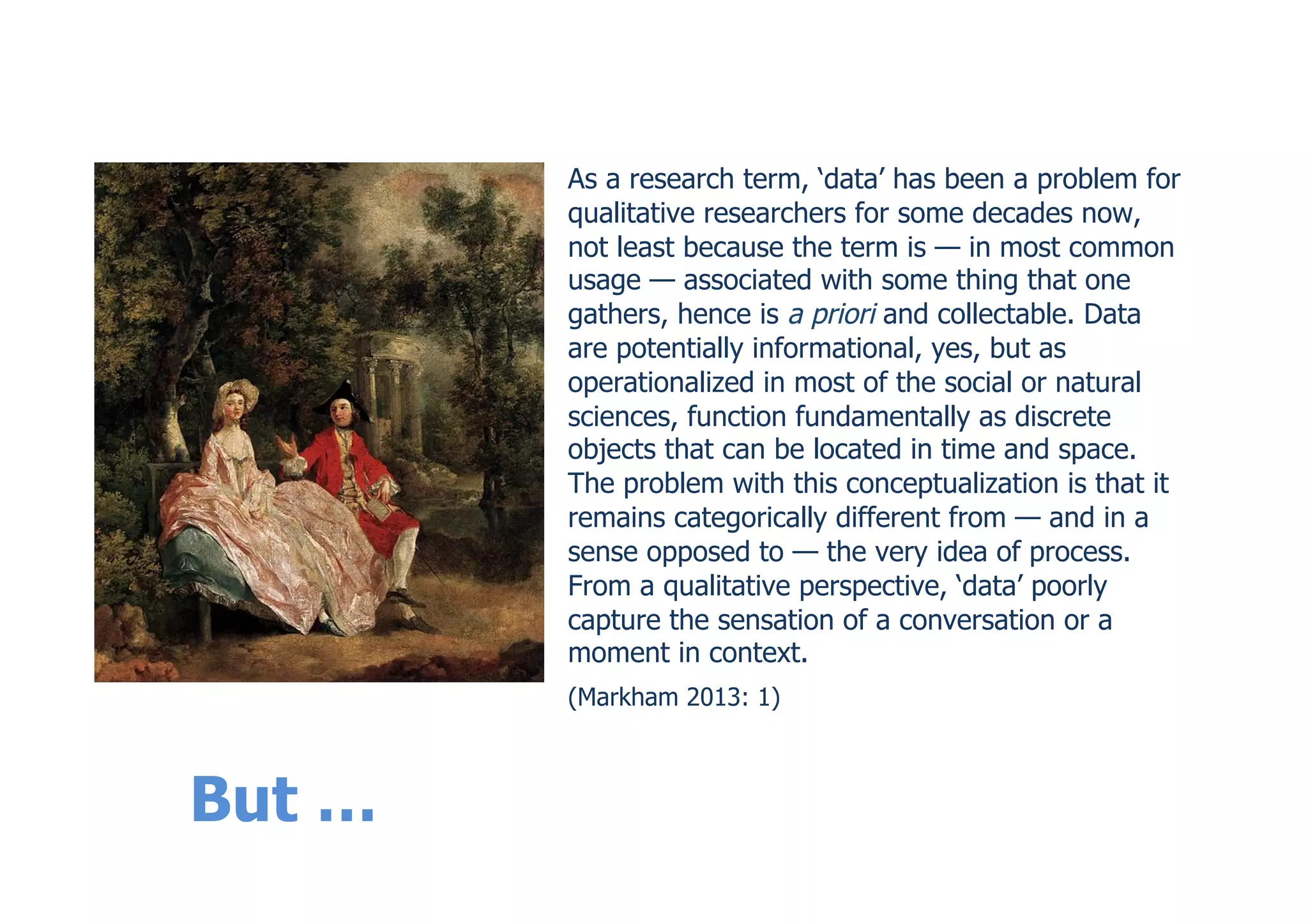
As a research term, ‘data’ has been a problem for
qualitative researchers for some decades now,
not least because the term is — in most common
usage — associated with some thing that one
gathers, hence is a priori and collectable. Data
are potentially informational, yes, but as
operationalized in most of the social or natural
sciences, function fundamentally as discrete
objects that can be located in time and space.
The problem with this conceptualization is that it
remains categorically different from — and in a
sense opposed to — the very idea of process.
From a qualitative perspective, ‘data’ poorly
capture the sensation of a conversation or a
moment in context.
(Markham 2013: 1)
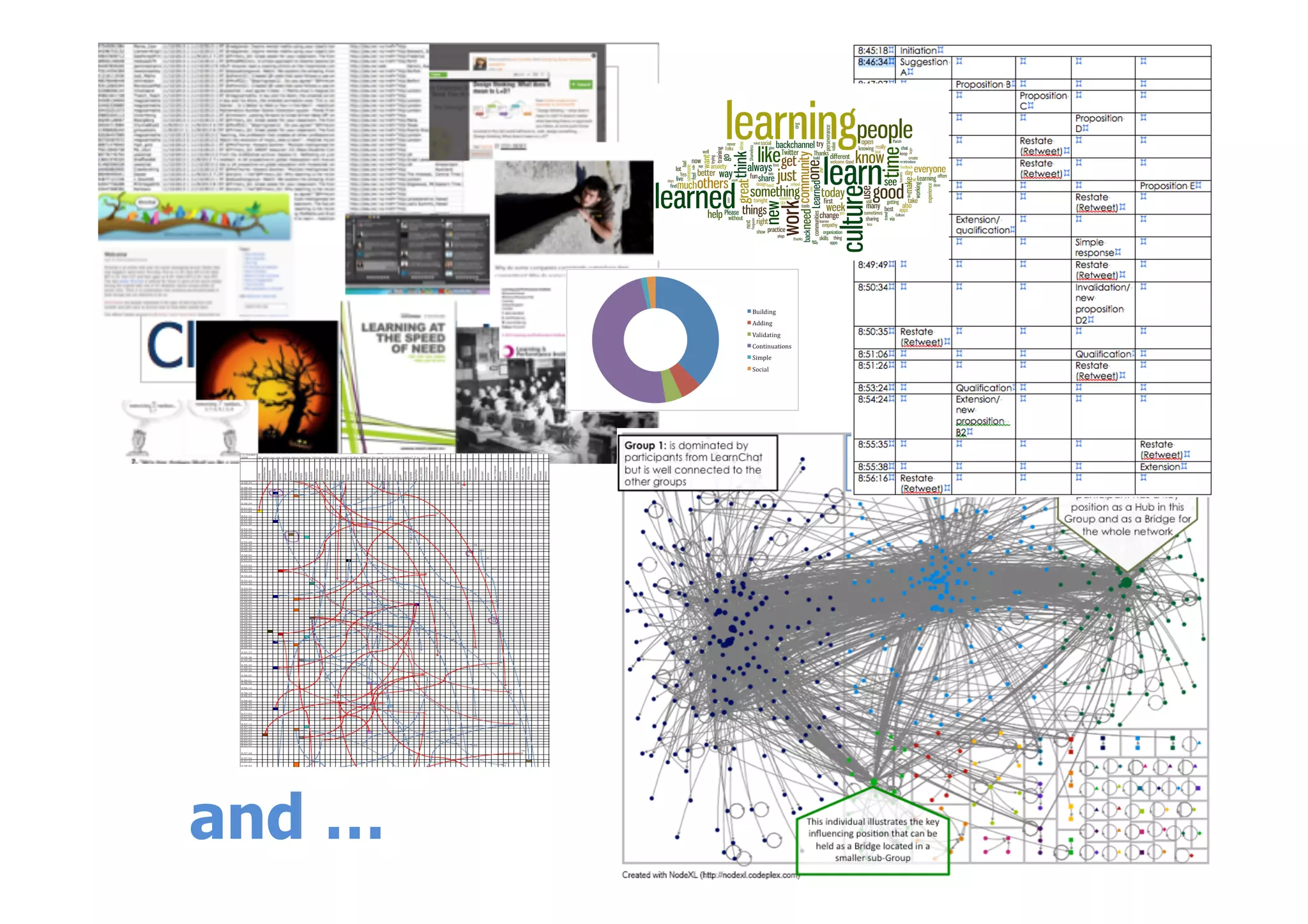
and …
References
Baym, N.K. (2009). A Call for Groundingi the Face of Blurred Boudaries. Journal of Computer-
Mediated Communication. 14: 720-723
Halliday, M.A.K. (1994). Introduction to Functional Grammar. London: Arnold
Introna, L.D. (2007). Towards a post-human intra-actional account of socio-technical ahency
(and morality). Prepared for the Moral Agency and Technical Artefacts. Scientific Workshop –
NIAS Hague, 10-12 May.
Markham, A. N. (2013). Undermining data : A critical examination of a core term in scientific
inquiry. First Monday. 18 (10).
Markham, A.N. and Lindgren, S. (2012). From Object to Flow: Network sensibility, symbolic
interactionism and social media. Studies in Symbolic Interaction
Norris, S. and Jones, R.H. (2005). Discourse in action: introducing mediated discourse analysis.
London: Routledge
Roger, R. (ed). (2011). An introduction to critical discourse analysis in education. 2nd edition.
London: Sage
Thurlow, Crispin. and Mroczek, Kristine. (2011). Digital discourse: language in the new media.
Oxford: Oxford University Press
Van Leeuwen, Theo. (2008). Discourse & Practice. Oxford: Oxford University Press
Williamson, B. 2014. The death of the theorist and the emergence of data and algorithms in
digital social research. LSE Impact of Social Sciences, 10 February 2014: http://blogs.lse.ac.uk/
impactofsocialsciences/2014/02/10/the-death-of-the-theorist-in-digital-social-research/

Open learning spaces_twitter.ppt

  • 1.
    searching for thematerial of Twitter discussion events Open online spaces of learning
  • 2.
    Overview Background to thestudy The research site Pattern seeking data Where it s leading
  • 3.
    Background How is professionalidentity negotiated and performed? What are the dynamics of professional community formation?
  • 4.
    Background Mul$modal/  mediated  discourse  analysis     ac$on  occurs  in  nexus  of  words,  objects,  histories  and   storyline              Image  from  Paul  Randall,  2009     Norris  &  Jones  2005;  Halliday   1994;  Fairclough  2003;  Roger   2011;  Baym  2009  
  • 5.
    Background Tweets Replies User Mentions Retweets Hashtags platforms (Purohitet al (2013) supporting emergence of coherence between Tweets & generation of conversational structure
  • 6.
    Background … to co-createa fluid and dynamic structure within the tweet timeline that facilitates information discovery: anyone searching for the hashtag can see what everyone else is saying about this topic (Procter, Vis & Voss 2013: 198). #  
  • 7.
    What  are  the  dynamics  of  professional   community  forma$on     Image  from  Brad  Ovenell-­‐Carter  at  hSps://flic.kr/p/ccGhuh    
  • 8.
    What  are  the  dynamics  of  professional   community  forma$on    
  • 11.
  • 12.
    Key metrics (Bruns& Steiglitz 2013)
  • 13.
  • 16.
  • 20.
    Who knows whypeople do what they do? The point is they do it, and we can track and measure it with unprecedented fidelity. With enough data, the numbers speak for themselves. Chris Anderson, Wired in Williamson 2014 But …
  • 21.
    But … As aresearch term, ‘data’ has been a problem for qualitative researchers for some decades now, not least because the term is — in most common usage — associated with some thing that one gathers, hence is a priori and collectable. Data are potentially informational, yes, but as operationalized in most of the social or natural sciences, function fundamentally as discrete objects that can be located in time and space. The problem with this conceptualization is that it remains categorically different from — and in a sense opposed to — the very idea of process. From a qualitative perspective, ‘data’ poorly capture the sensation of a conversation or a moment in context. (Markham 2013: 1)
  • 22.
  • 23.
    References Baym, N.K. (2009).A Call for Groundingi the Face of Blurred Boudaries. Journal of Computer- Mediated Communication. 14: 720-723 Halliday, M.A.K. (1994). Introduction to Functional Grammar. London: Arnold Introna, L.D. (2007). Towards a post-human intra-actional account of socio-technical ahency (and morality). Prepared for the Moral Agency and Technical Artefacts. Scientific Workshop – NIAS Hague, 10-12 May. Markham, A. N. (2013). Undermining data : A critical examination of a core term in scientific inquiry. First Monday. 18 (10). Markham, A.N. and Lindgren, S. (2012). From Object to Flow: Network sensibility, symbolic interactionism and social media. Studies in Symbolic Interaction Norris, S. and Jones, R.H. (2005). Discourse in action: introducing mediated discourse analysis. London: Routledge Roger, R. (ed). (2011). An introduction to critical discourse analysis in education. 2nd edition. London: Sage Thurlow, Crispin. and Mroczek, Kristine. (2011). Digital discourse: language in the new media. Oxford: Oxford University Press Van Leeuwen, Theo. (2008). Discourse & Practice. Oxford: Oxford University Press Williamson, B. 2014. The death of the theorist and the emergence of data and algorithms in digital social research. LSE Impact of Social Sciences, 10 February 2014: http://blogs.lse.ac.uk/ impactofsocialsciences/2014/02/10/the-death-of-the-theorist-in-digital-social-research/