So what is about Content
Delivery Network you need
to know
Nishant Kumar Behl
So What is it actually
 CDN is kind of like cache that helps the sites serving huge amount of static media
e.g.: pictures, videos etc..
 Just like Cache, request always will land up on CDN first for static media
 CDN will serve the request from the nearest CDN source to make it look like data
is available locally
 Few CDN’s does support Dynamic data; e.g.;Amazon CloudFront
 CDM will cost you but cost incurred shall be weighed against the benefits and cost
saved with using it ofcourse
Why CDN
 Speed of serving Data
 CDN ensures that user requesting data gets the data from the nearest source
 CDN minimized the number of hops needed to deliver the content to the user
 CDN is extremely efficient in servicing request
 Reduces the load on backend servers
Types
Push CDN
 You(Application) push datainformation to CDN
 CDN doesn’t look back and interact
 Application responsible for provide, upload and re-writing of URL to point to
CDN
 Content is uploaded to CDN when its new or changed
 Minimize the Traffic , Maximize Storage
 Sites with low-traffic or less uploads is best suited to use Push CDN
Types
Pull CDN
 CDN looks back and pulls data from the server if it doesn’t have it
 CDN is responsible to pull the data and store
 TTL (time to live) plays important role in duration of cached content on CDN
before it expires
 Minimize the Storage, Maximize traffic in some cases due to redundancy
 Sites with Heavy traffic utilizes Pull CDN
 Only Recently requested information resides on Pull CDN’s
Origin & Bridge Servers
Origin Server
 Server where the web files are hosted, location will be whichever datacentre
his servers is hosted
 In Absence of CDN, all request is served by Origin Server
 When all requests are served by Origin Server and CDN is not part of solution
architecture, Latency can be high if users are far away from Origin server
location.
Origin & Bridge Servers
Bridge Server
 Servers that cached contents that are uploaded  taken from Origin server
 Point of Presence (POP) refers to all places where CDN servers are present
 Multiple servers can be part of particular POP at a particular location
 More number of CDN servers in particular location introduce redundancy of
informationData
CDN Reverse Proxy
 Intermediate or server in the middle between client and backend server
 CDN reverse proxy assumes responsibility of caching the content which is
enroute to the client
 CDN Reverse proxy is used with CDN Pull model
 Helps in load balancing, scalability and security to an extent
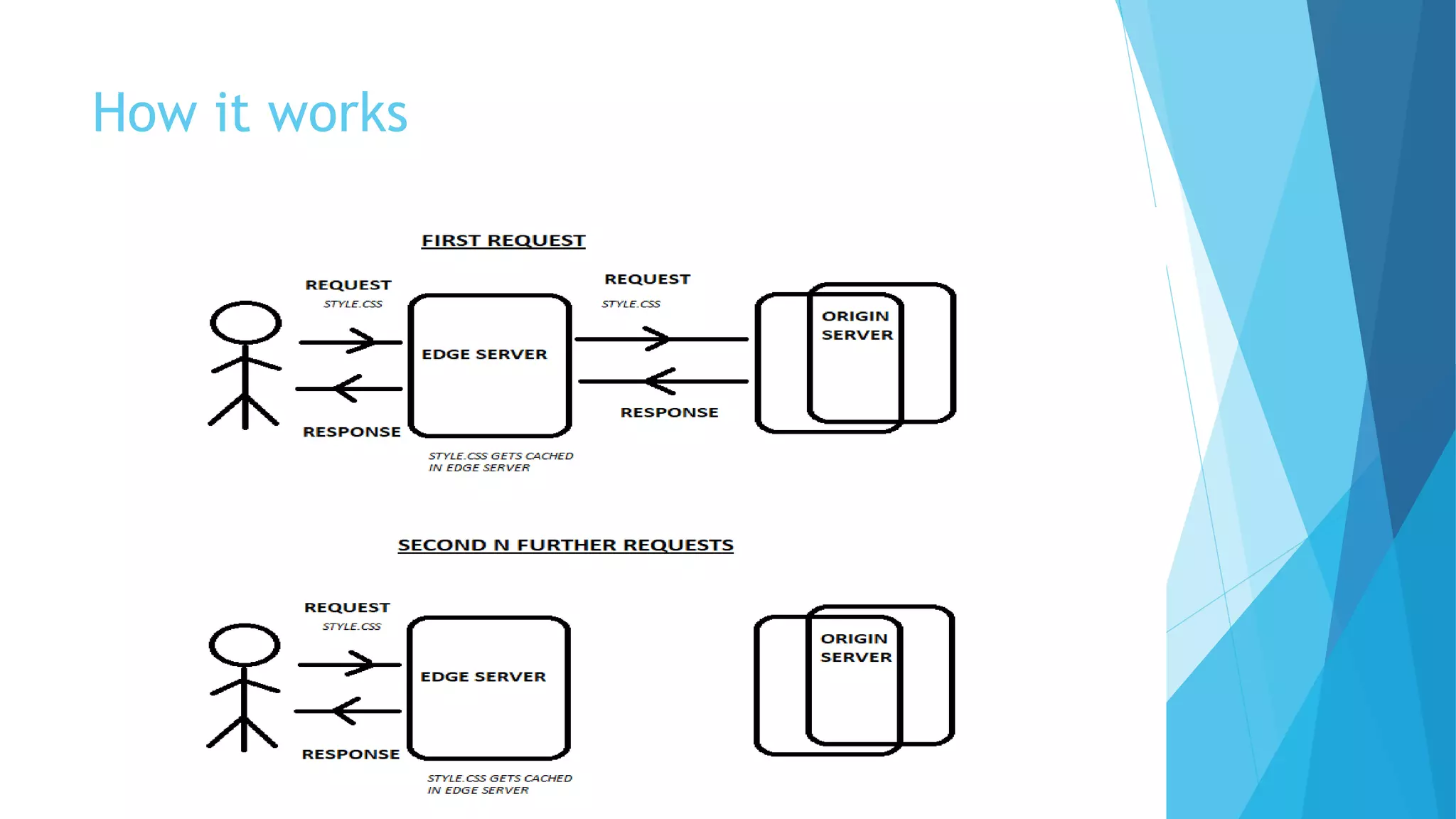
How it works
Very First Request:
1. Client sends the request
2. Bridge server catches the request
3. Bridge server reach out to Origin Server that host the web files
4. Origin server send the response
5. Bridge server catch the response and cache it
6. Post caching Bridge server sends back response to client
Second and Subsequent Request:
1. Client sends the request
2. Bridge server lookup for the content
3. Bridge servers finds the content
4. Bridge servers sends the request to Client
How it works
CDN Option in Industry
In no particular priority order
 Rackspace CDN.
 Google Cloud CDN.
 Akamai
 Swarmify
 Limelight
 Microsoft Azure CDN
 Amazon CloudFront
 CloudFlare
What did you get with this Presentation
 Good amount of understanding on CDN and Whole lot of recap  

So what is about Content Delivery Network you need to know

  • 1.
    So what isabout Content Delivery Network you need to know Nishant Kumar Behl
  • 2.
    So What isit actually  CDN is kind of like cache that helps the sites serving huge amount of static media e.g.: pictures, videos etc..  Just like Cache, request always will land up on CDN first for static media  CDN will serve the request from the nearest CDN source to make it look like data is available locally  Few CDN’s does support Dynamic data; e.g.;Amazon CloudFront  CDM will cost you but cost incurred shall be weighed against the benefits and cost saved with using it ofcourse
  • 3.
    Why CDN  Speedof serving Data  CDN ensures that user requesting data gets the data from the nearest source  CDN minimized the number of hops needed to deliver the content to the user  CDN is extremely efficient in servicing request  Reduces the load on backend servers
  • 4.
    Types Push CDN  You(Application)push datainformation to CDN  CDN doesn’t look back and interact  Application responsible for provide, upload and re-writing of URL to point to CDN  Content is uploaded to CDN when its new or changed  Minimize the Traffic , Maximize Storage  Sites with low-traffic or less uploads is best suited to use Push CDN
  • 5.
    Types Pull CDN  CDNlooks back and pulls data from the server if it doesn’t have it  CDN is responsible to pull the data and store  TTL (time to live) plays important role in duration of cached content on CDN before it expires  Minimize the Storage, Maximize traffic in some cases due to redundancy  Sites with Heavy traffic utilizes Pull CDN  Only Recently requested information resides on Pull CDN’s
  • 6.
    Origin & BridgeServers Origin Server  Server where the web files are hosted, location will be whichever datacentre his servers is hosted  In Absence of CDN, all request is served by Origin Server  When all requests are served by Origin Server and CDN is not part of solution architecture, Latency can be high if users are far away from Origin server location.
  • 7.
    Origin & BridgeServers Bridge Server  Servers that cached contents that are uploaded taken from Origin server  Point of Presence (POP) refers to all places where CDN servers are present  Multiple servers can be part of particular POP at a particular location  More number of CDN servers in particular location introduce redundancy of informationData
  • 8.
    CDN Reverse Proxy Intermediate or server in the middle between client and backend server  CDN reverse proxy assumes responsibility of caching the content which is enroute to the client  CDN Reverse proxy is used with CDN Pull model  Helps in load balancing, scalability and security to an extent
  • 9.
  • 10.
    Very First Request: 1.Client sends the request 2. Bridge server catches the request 3. Bridge server reach out to Origin Server that host the web files 4. Origin server send the response 5. Bridge server catch the response and cache it 6. Post caching Bridge server sends back response to client Second and Subsequent Request: 1. Client sends the request 2. Bridge server lookup for the content 3. Bridge servers finds the content 4. Bridge servers sends the request to Client How it works
  • 11.
    CDN Option inIndustry In no particular priority order  Rackspace CDN.  Google Cloud CDN.  Akamai  Swarmify  Limelight  Microsoft Azure CDN  Amazon CloudFront  CloudFlare
  • 12.
    What did youget with this Presentation  Good amount of understanding on CDN and Whole lot of recap  