

CDNetworks
How Content Delivery Networks Work
How CDNs Work
A CDN has Points of Presence (PoPs) or data centers that are situated around the
world. Within each PoP are thousands of servers. Both the PoPs and servers help
accelerate the speed at which content is delivered to the end user.
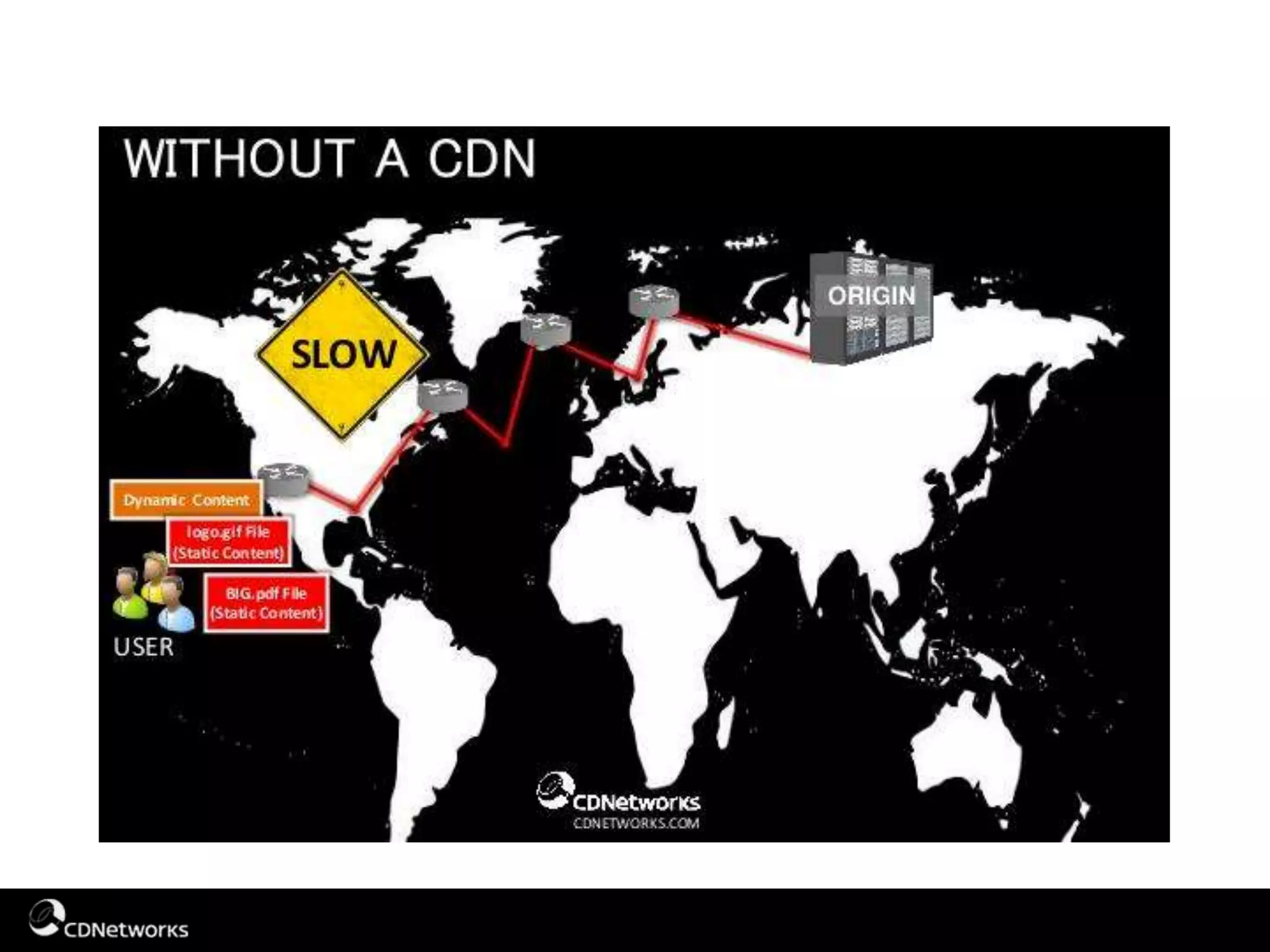
Below, is a representation of how a web page works without a CDN. An end user
requests a page in which all the page’s components (images, HTML, dynamic
content) are retrieved from the website’s server or origin, which could be anywhere
in the world. In the example below, you can see the user is in North America, while
the origin that holds the content requested is all the way across the globe.
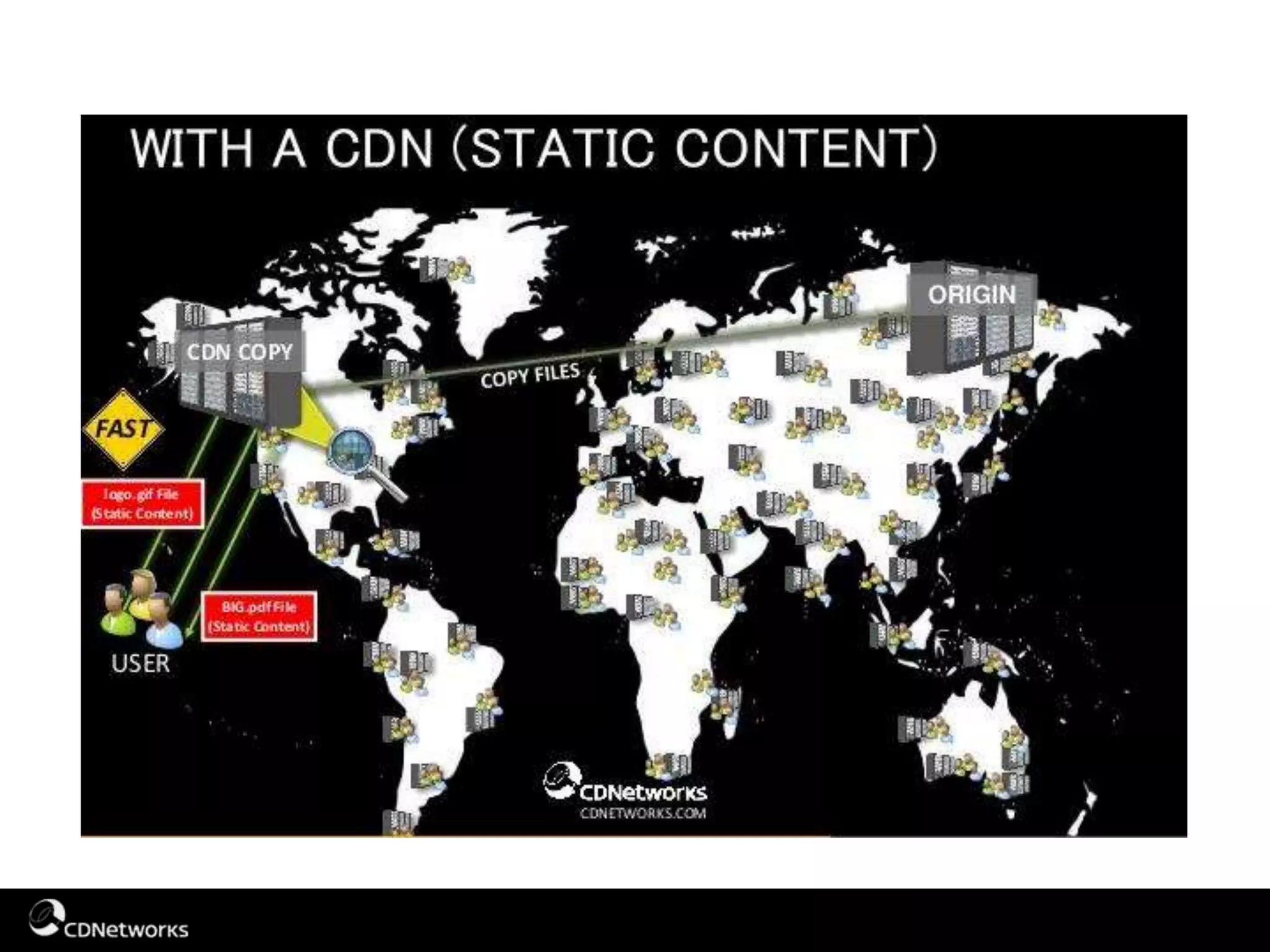
Below images represent how a web page loads content using a CDN. A CDN caches
all files locally (images, HTML) in the local PoP they have established. As a result,
when an end user requests a web page, it loads faster. If the CDN does not have an
image or file that is requested by the user, it will load from the origin as needed.
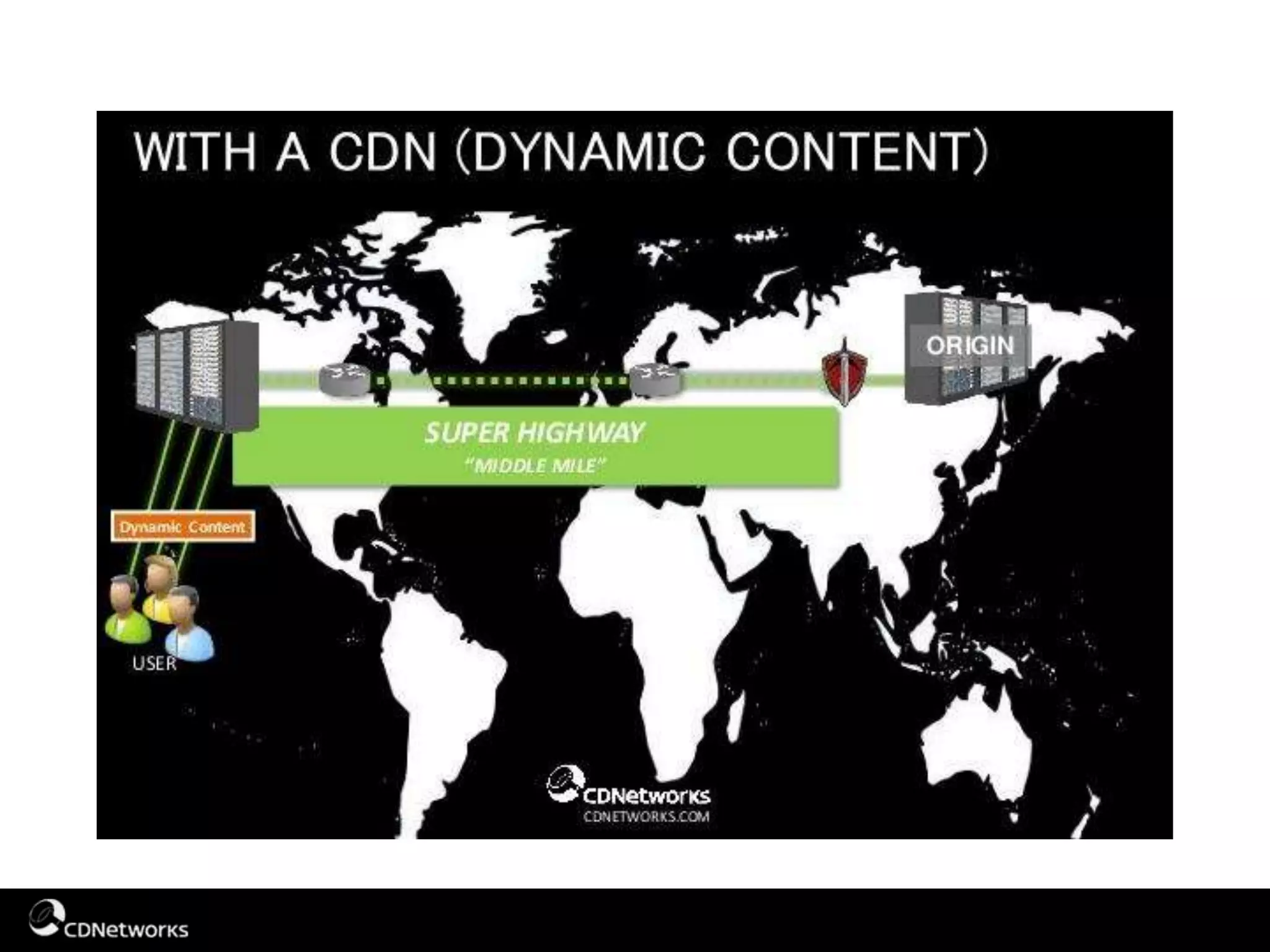
A CDNs approach changes for sites that have dynamic content. CDNs that support
dynamic content create a “super highway” to accelerate the delivery of content
across a longer distance. An individual ISP cannot provide this. In the image below,
you can see the “super highway” helping to facilitate the delivery of dynamic content
from the origin to the end user.
Lastly, a CDN should protect itself and all the data it stores as well as a website’s
origin from any data breaches or internet hackers. The most common data threat are
various forms of distributed denial of service (DDoS) attacks. A CDN has proper
techniques for preventing, detecting and correcting different forms of DDoS attacks.
Prevention measures such as HTTP load balancing, have an always-on approach,
making sites less vulnerable to attacks. Detection systems within a CDN look for
suspicious behavior and highlight the need for additional investigation and action.
An example of a detection might be a traffic surge in which case the CDN provider
has systems in place to automatically notify those responsible for the website.
Corrective measures such as secured DNS will block out unwanted requests while
continuing to allow trustworthy requests to continue being served.
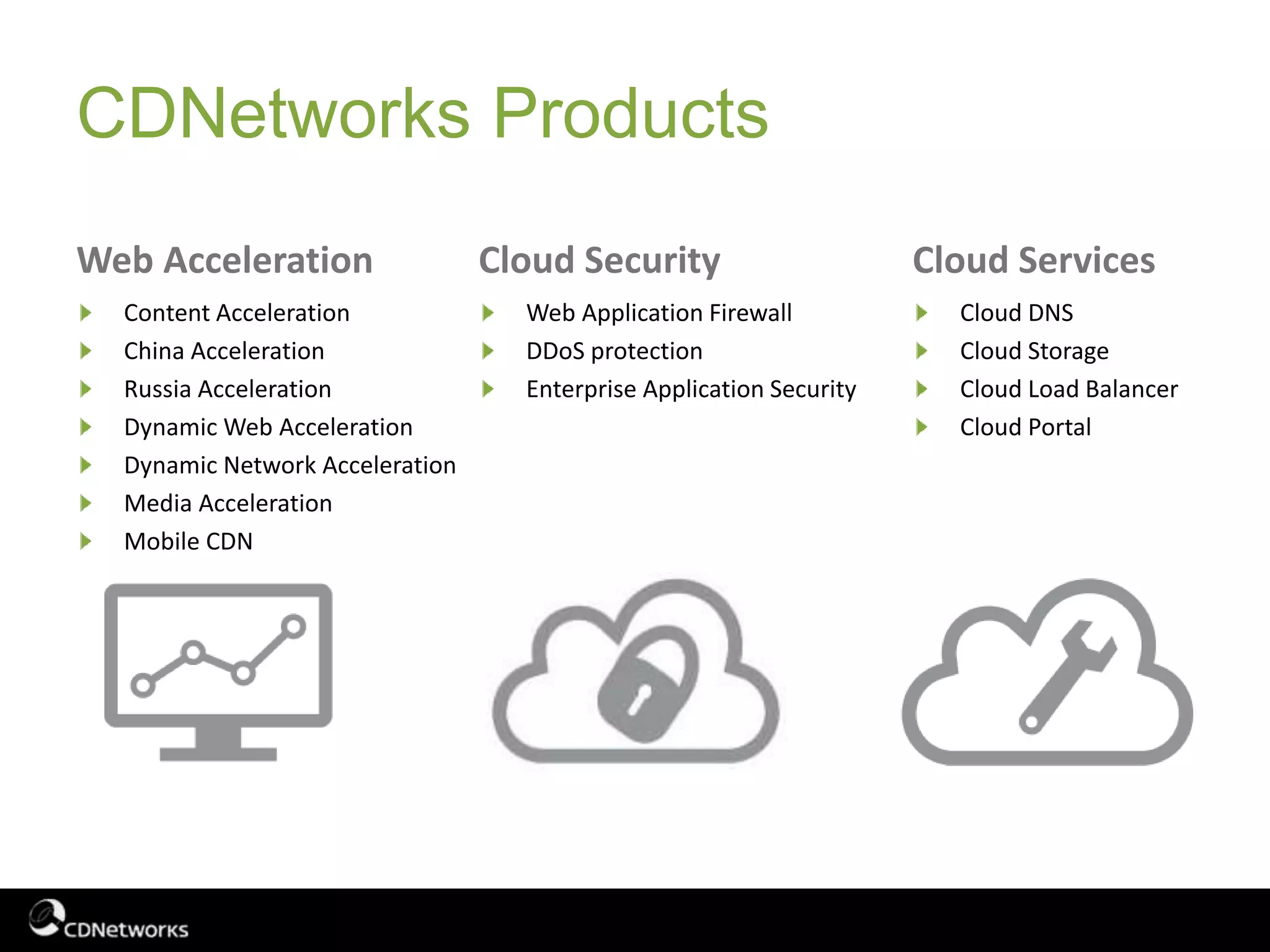
CDNetworks Products
Web Acceleration
Content Acceleration
China Acceleration
Russia Acceleration
Dynamic Web Acceleration
Dynamic Network Acceleration
Media Acceleration
Mobile CDN
Cloud Services
Cloud DNS
Cloud Storage
Cloud Load Balancer
Cloud Portal
Cloud Security
Web Application Firewall
DDoS protection
Enterprise Application Security
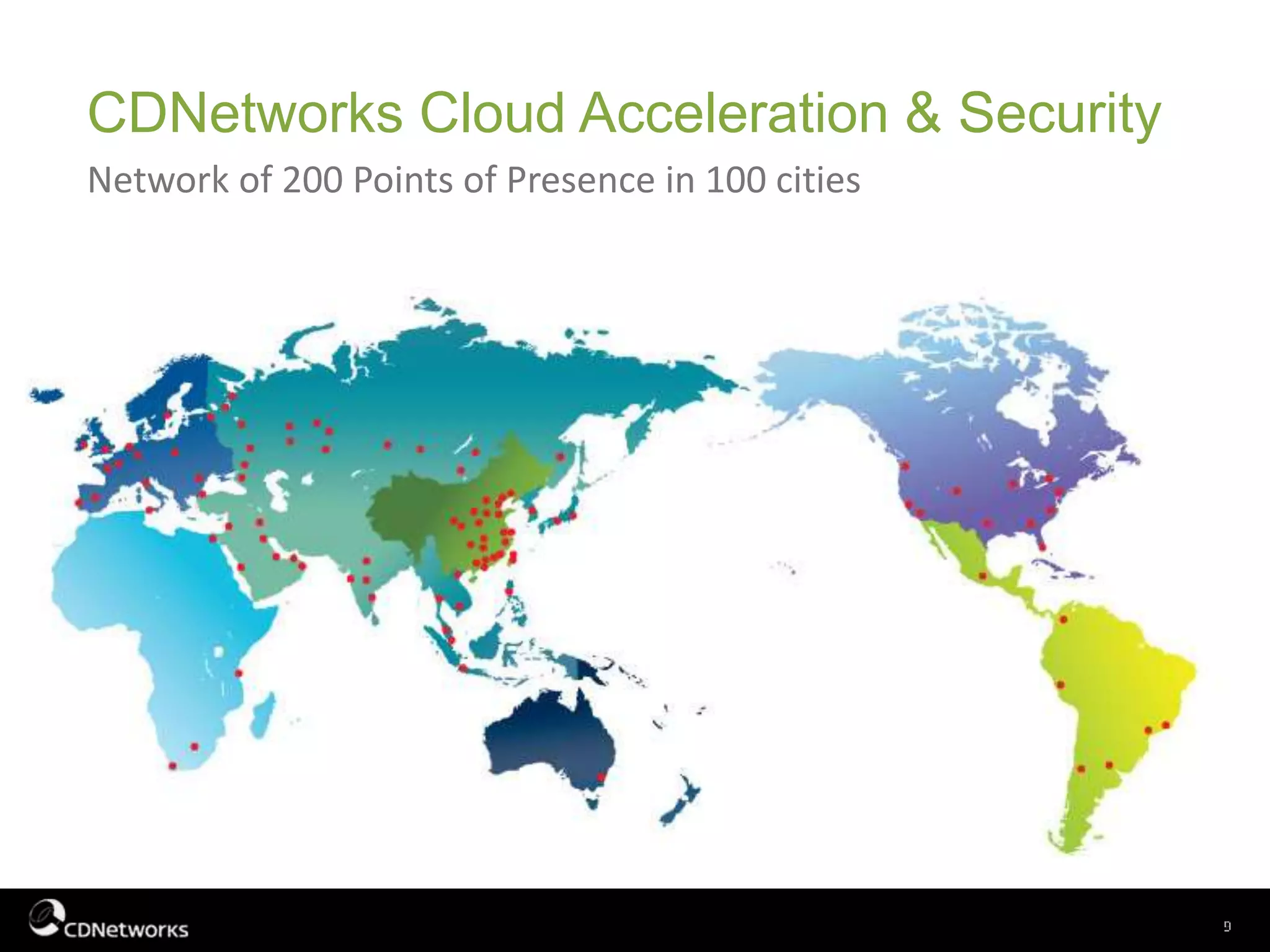
CDNetworks Cloud Acceleration & Security
Network of 200 Points of Presence in 100 cities
CDNetworks
www.cdnetworks.com
Thank You!

How Content Delivery Networks Work

  • 1.
  • 2.
    How CDNs Work ACDN has Points of Presence (PoPs) or data centers that are situated around the world. Within each PoP are thousands of servers. Both the PoPs and servers help accelerate the speed at which content is delivered to the end user. Below, is a representation of how a web page works without a CDN. An end user requests a page in which all the page’s components (images, HTML, dynamic content) are retrieved from the website’s server or origin, which could be anywhere in the world. In the example below, you can see the user is in North America, while the origin that holds the content requested is all the way across the globe.
  • 4.
    Below images representhow a web page loads content using a CDN. A CDN caches all files locally (images, HTML) in the local PoP they have established. As a result, when an end user requests a web page, it loads faster. If the CDN does not have an image or file that is requested by the user, it will load from the origin as needed.
  • 6.
    A CDNs approachchanges for sites that have dynamic content. CDNs that support dynamic content create a “super highway” to accelerate the delivery of content across a longer distance. An individual ISP cannot provide this. In the image below, you can see the “super highway” helping to facilitate the delivery of dynamic content from the origin to the end user.
  • 8.
    Lastly, a CDNshould protect itself and all the data it stores as well as a website’s origin from any data breaches or internet hackers. The most common data threat are various forms of distributed denial of service (DDoS) attacks. A CDN has proper techniques for preventing, detecting and correcting different forms of DDoS attacks. Prevention measures such as HTTP load balancing, have an always-on approach, making sites less vulnerable to attacks. Detection systems within a CDN look for suspicious behavior and highlight the need for additional investigation and action. An example of a detection might be a traffic surge in which case the CDN provider has systems in place to automatically notify those responsible for the website. Corrective measures such as secured DNS will block out unwanted requests while continuing to allow trustworthy requests to continue being served.
  • 9.
    CDNetworks Products Web Acceleration ContentAcceleration China Acceleration Russia Acceleration Dynamic Web Acceleration Dynamic Network Acceleration Media Acceleration Mobile CDN Cloud Services Cloud DNS Cloud Storage Cloud Load Balancer Cloud Portal Cloud Security Web Application Firewall DDoS protection Enterprise Application Security
  • 10.
    CDNetworks Cloud Acceleration& Security Network of 200 Points of Presence in 100 cities
  • 11.