GALAXY CLUSTER GAS MOTIONS
AND ASTRO-H: PREDICTIONS AND
CHALLENGES FROM SIMULATIONS
John ZuHone, MIT Kavli Institute
with
Aurora Simionescu (ISAS/JAXA), Eric Miller (MIT),
and Mark Bautz (MIT)
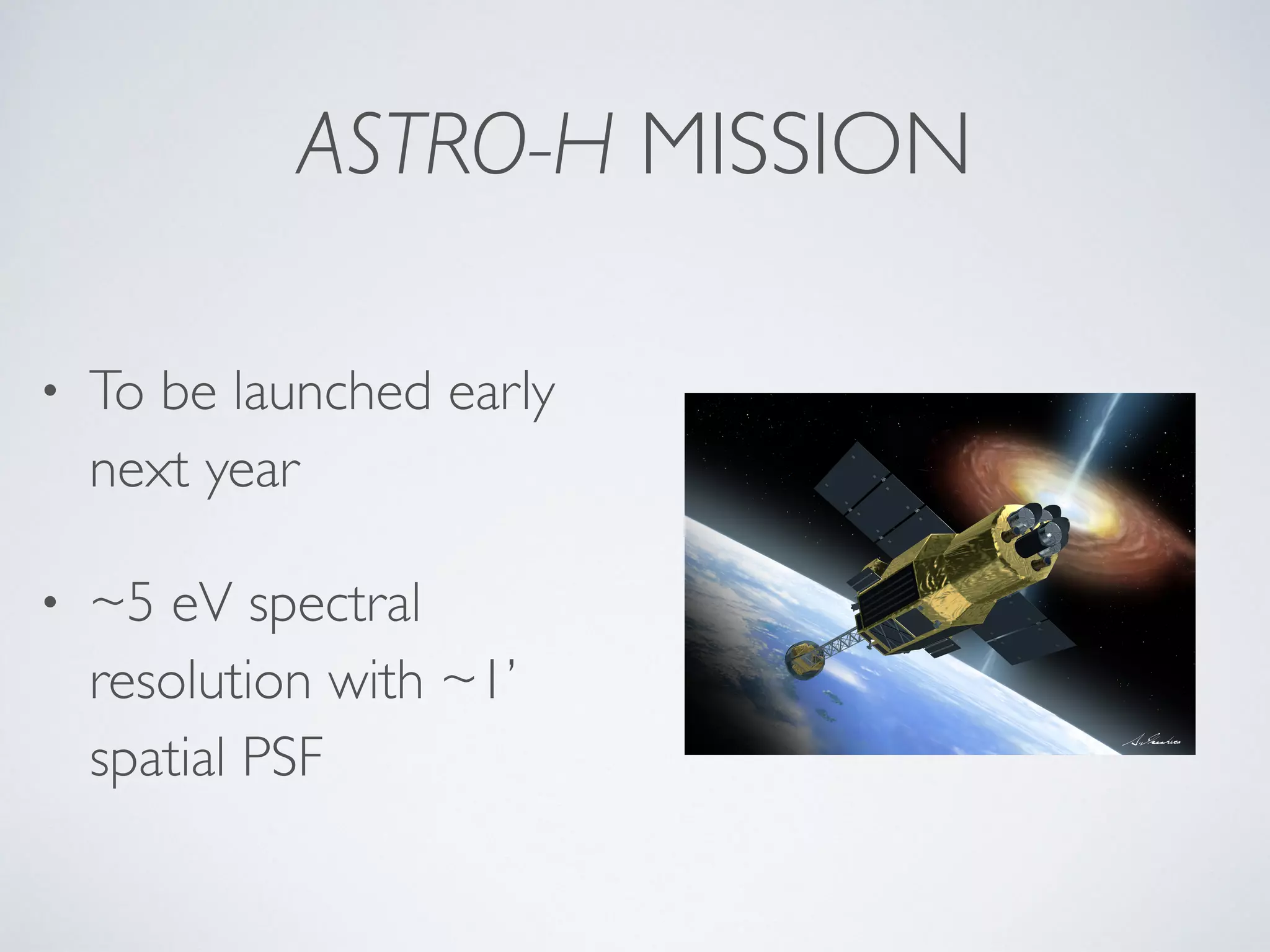
ASTRO-H MISSION
• To be launched early
next year
• ~5 eV spectral
resolution with ~1’
spatial PSF
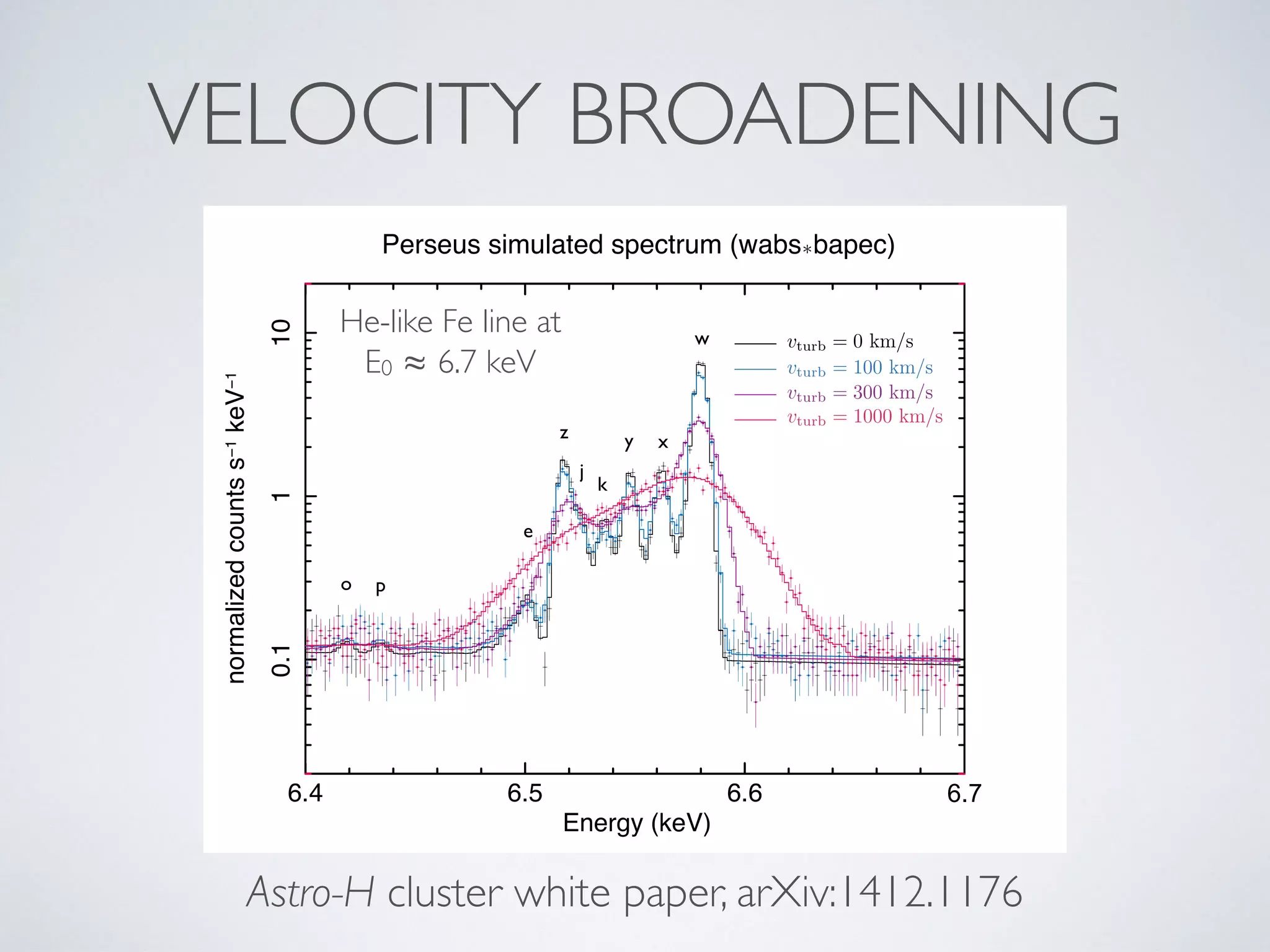
VELOCITY BROADENING
6.4 6.5 6.6
0.1110
normalizedcountss−1keV−1
Energy (keV)
data and folded model
sekiya 6−Jun−2011 12:36
vturb = 0 km/s
vturb = 100 km/s
vturb = 300 km/s
vturb = 1000 km/s
6.7
w
xyz
j
k
e
po
Perseus simulated spectrum (wabs*bapec)
Astro-H cluster white paper, arXiv:1412.1176
He-like Fe line at
E0 ≈ 6.7 keV
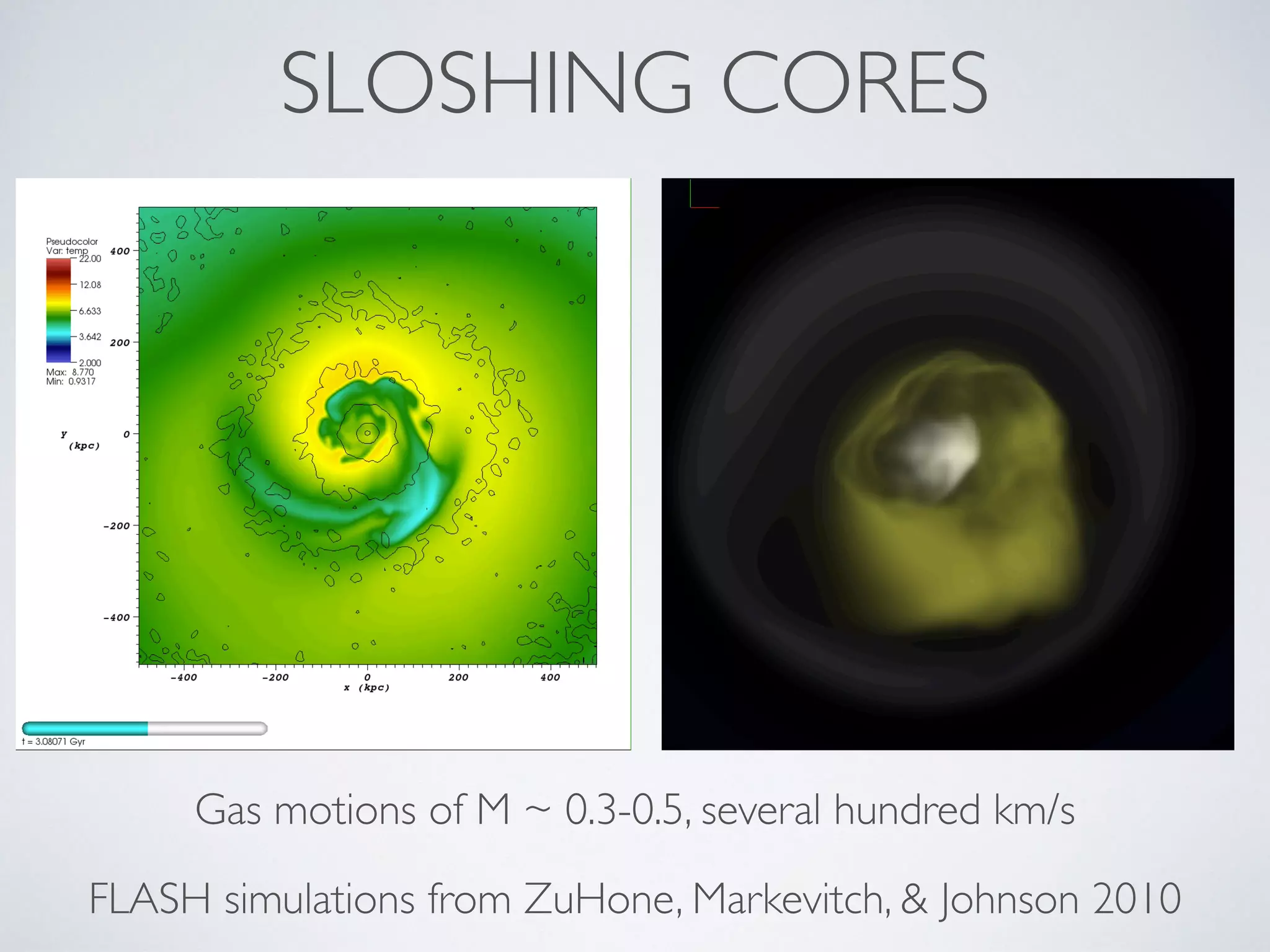
SLOSHING CORES
FLASH simulations from ZuHone, Markevitch, & Johnson 2010
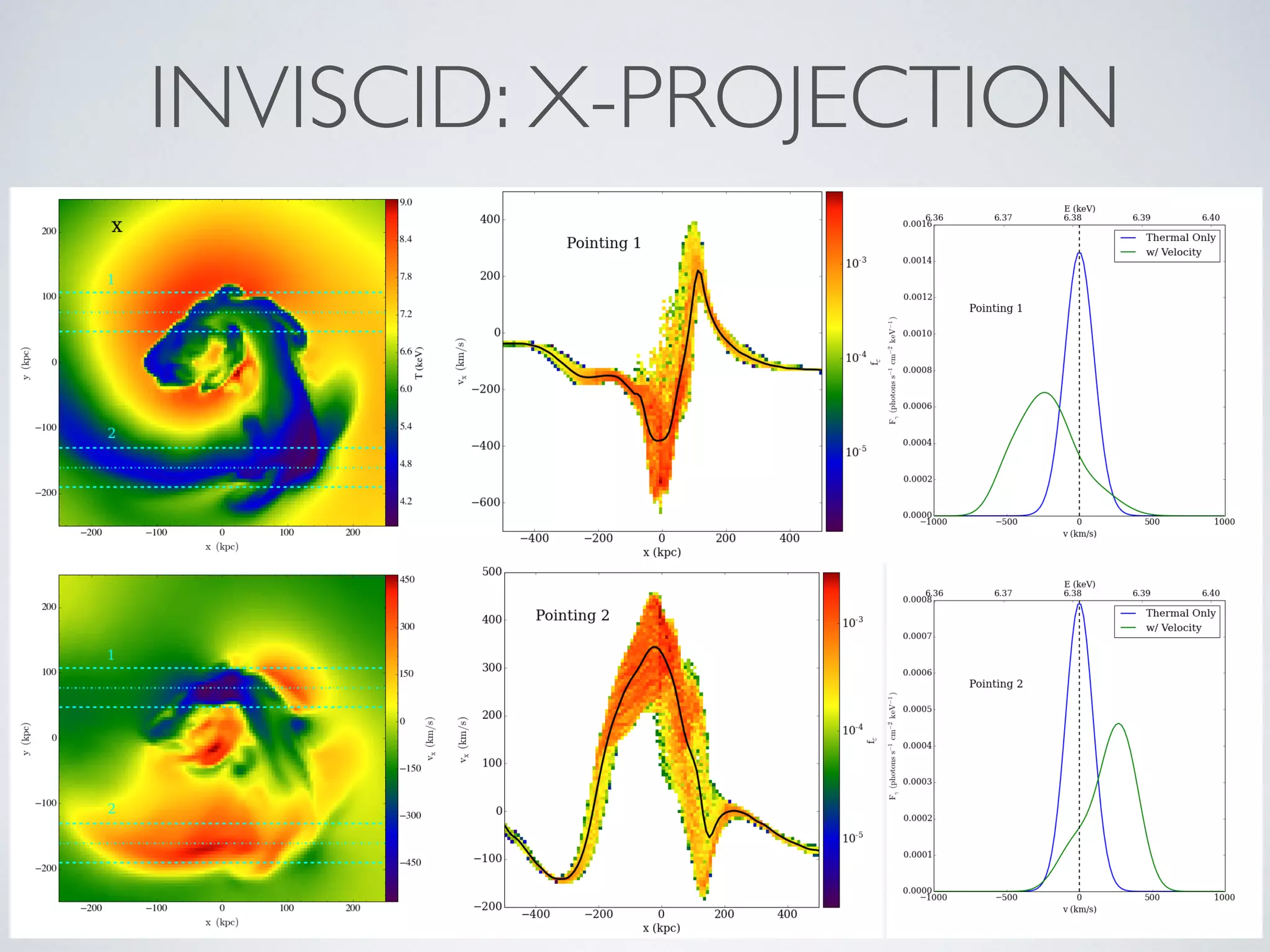
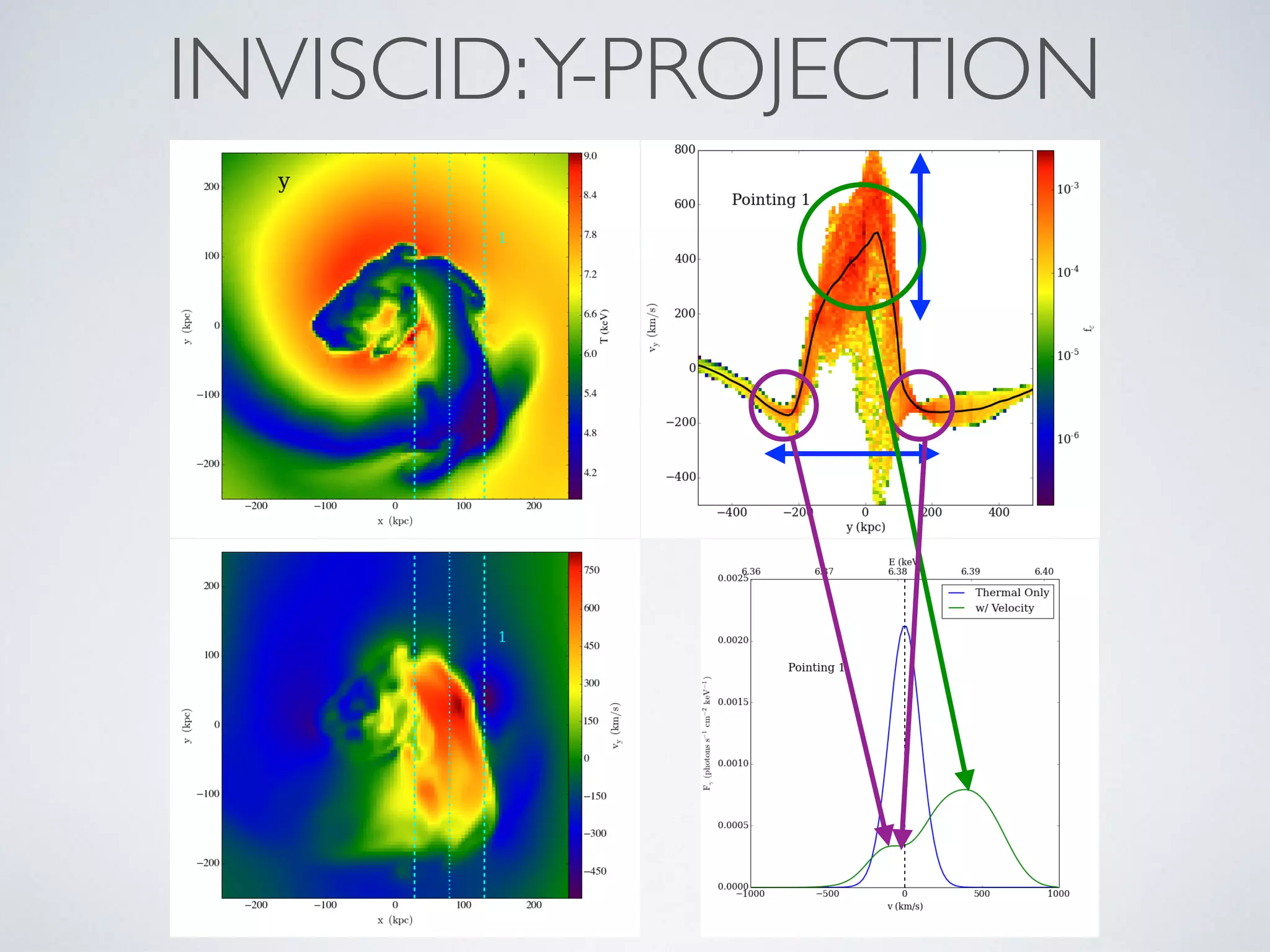
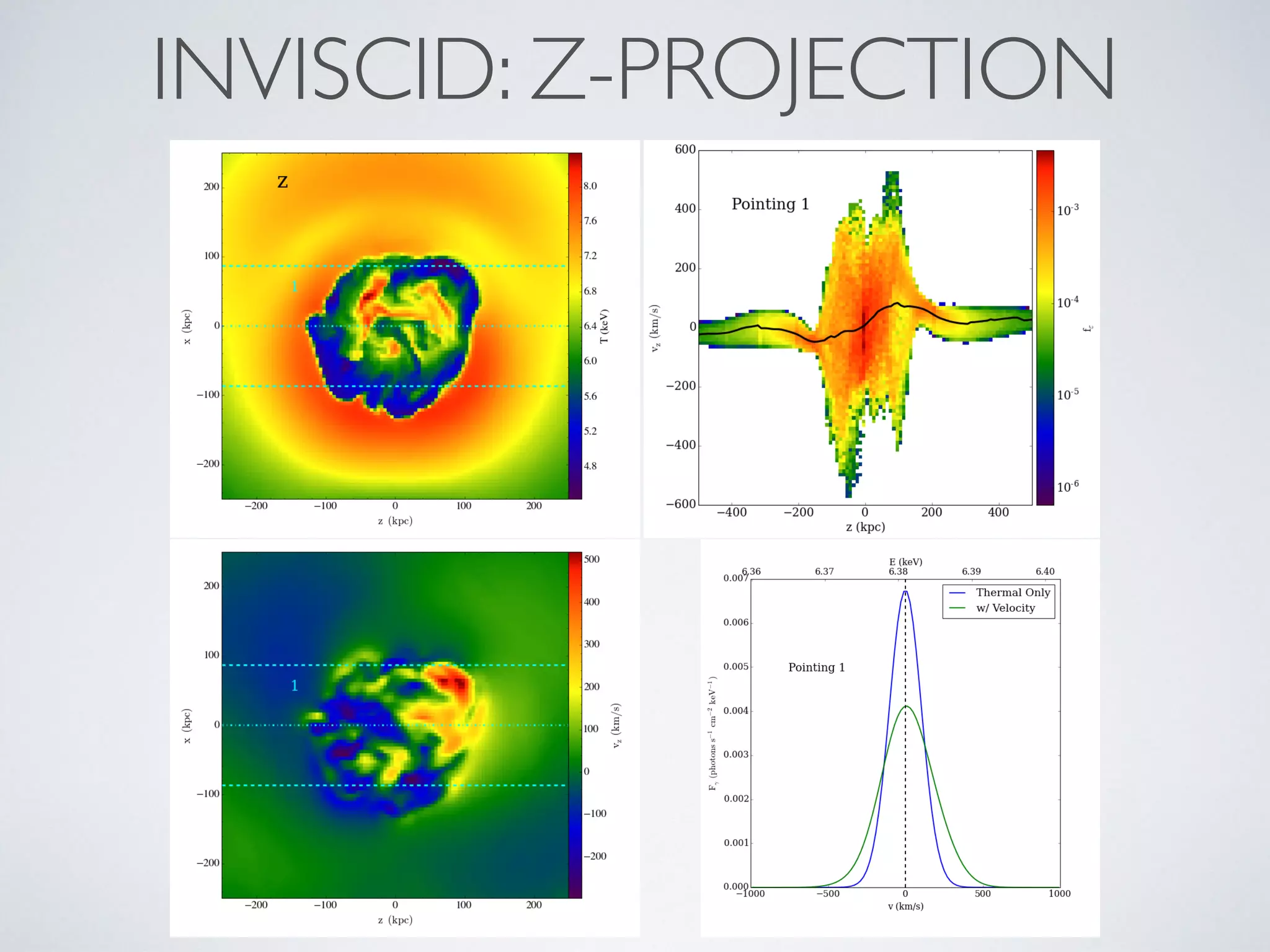
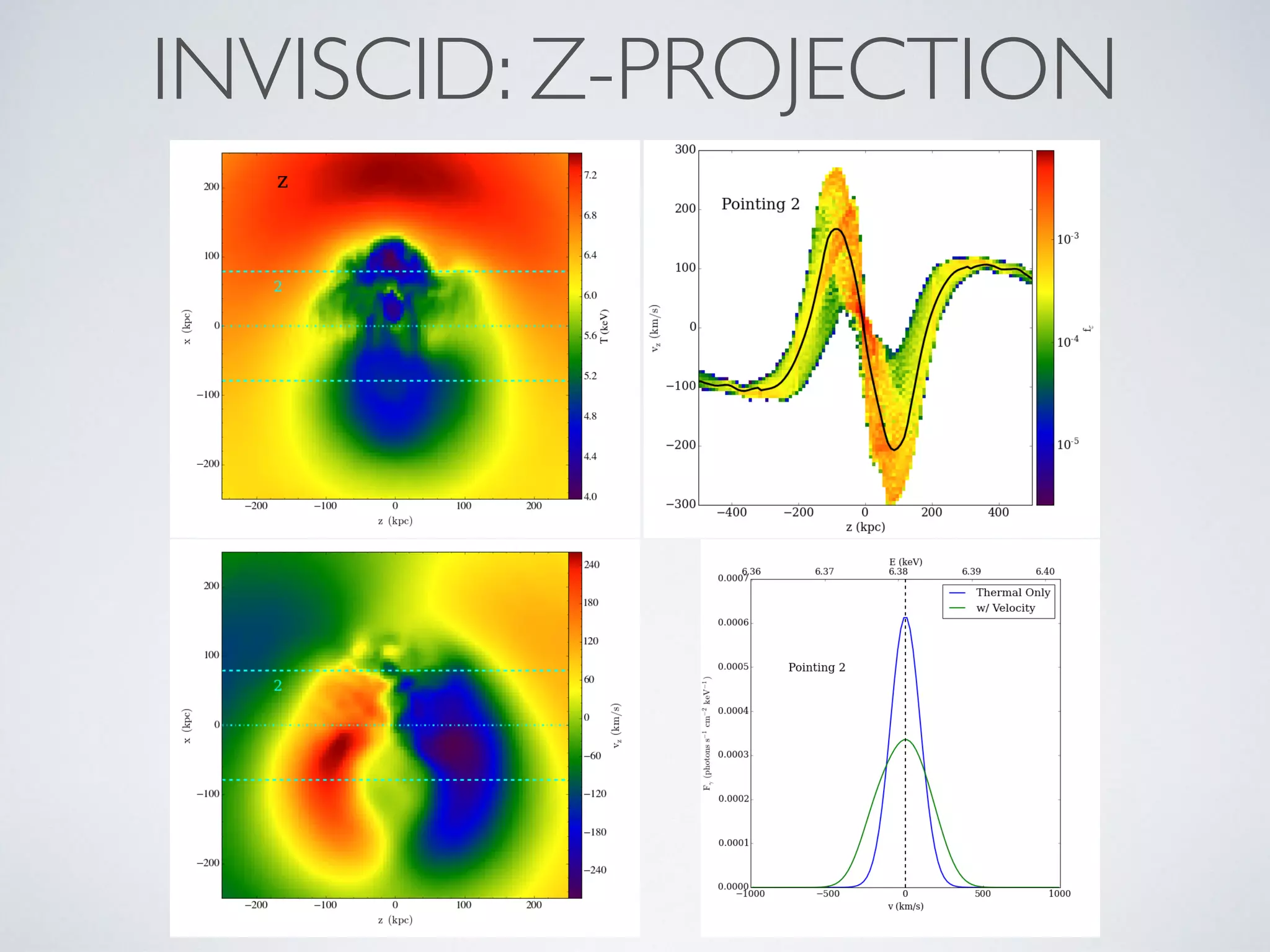
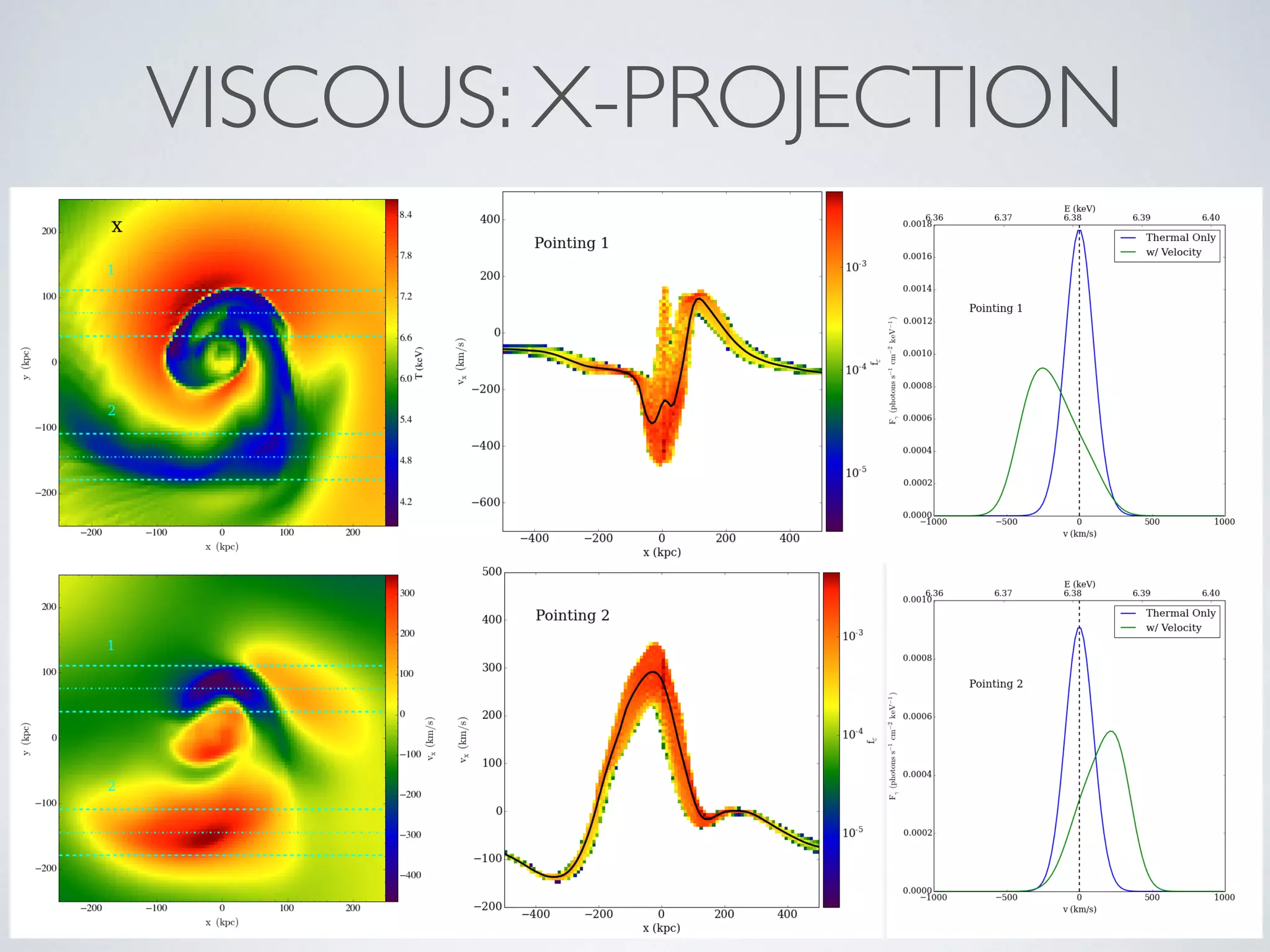
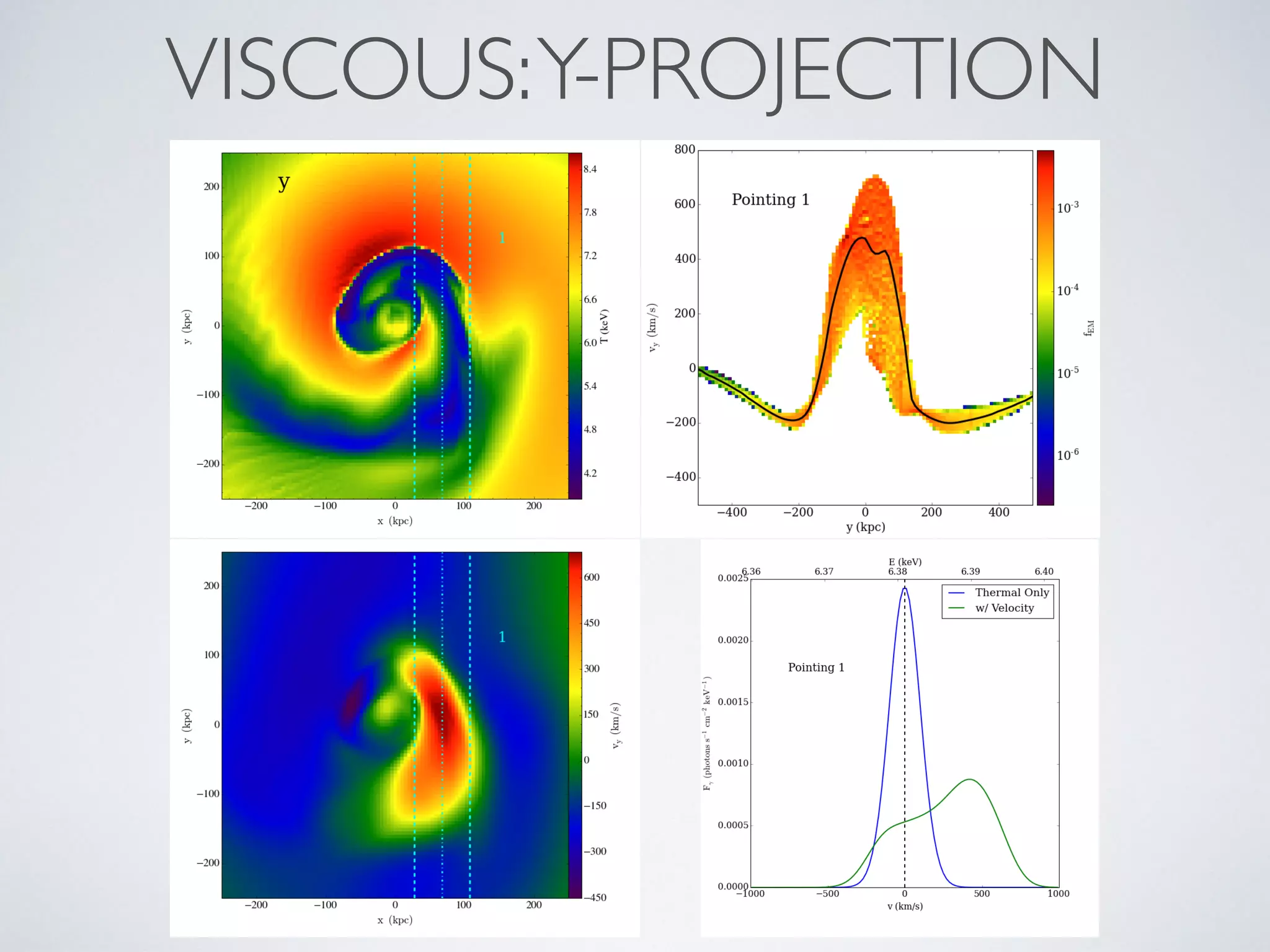
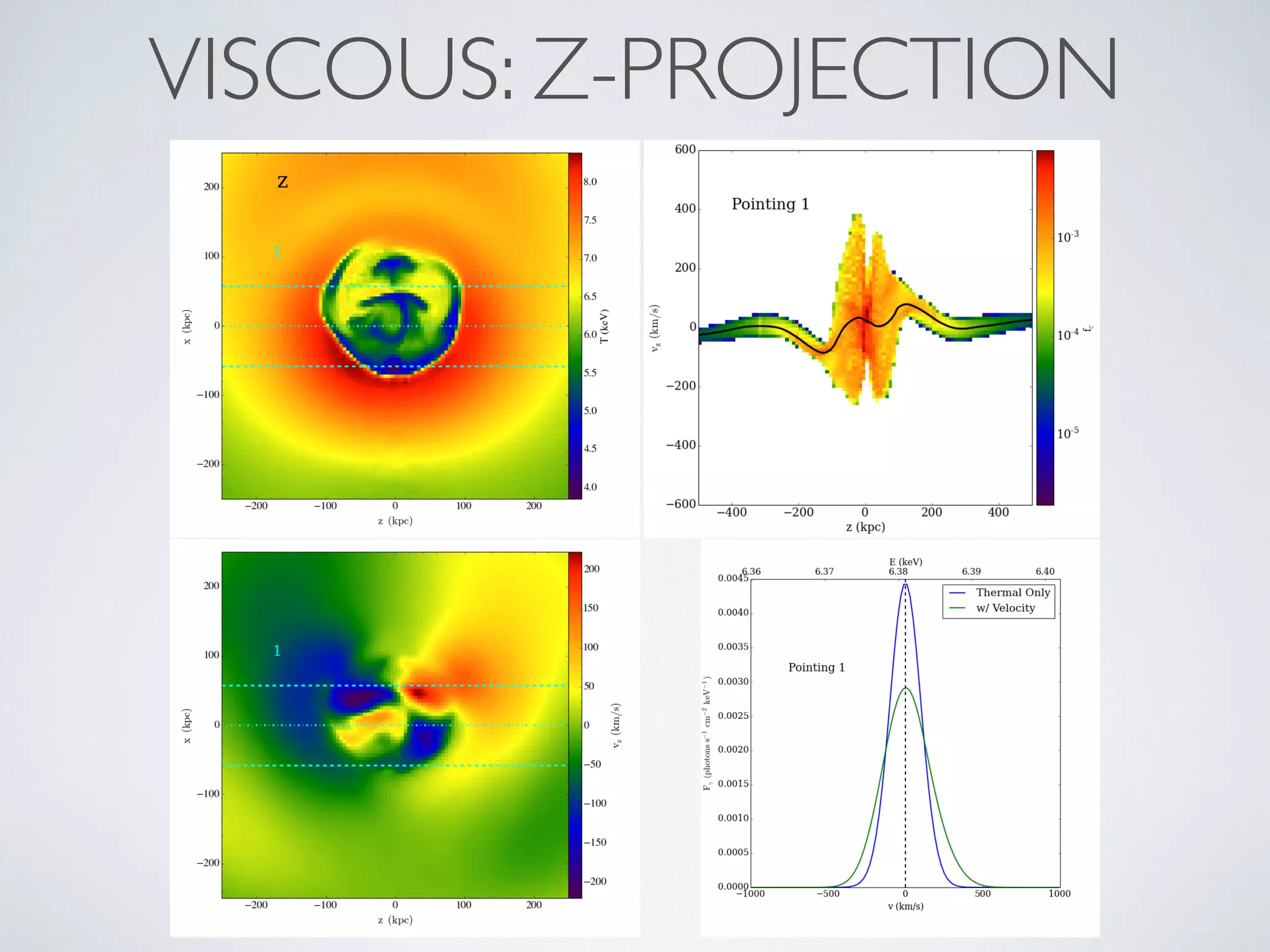
Gas motions of M ~ 0.3-0.5, several hundred km/s
• Can we detect these sloshing motions with
Astro-H?
• If so, what effect will these motions have on
the shift and shape of spectral lines?
• Can we use this spectral analysis to tell us
something about microphysics?
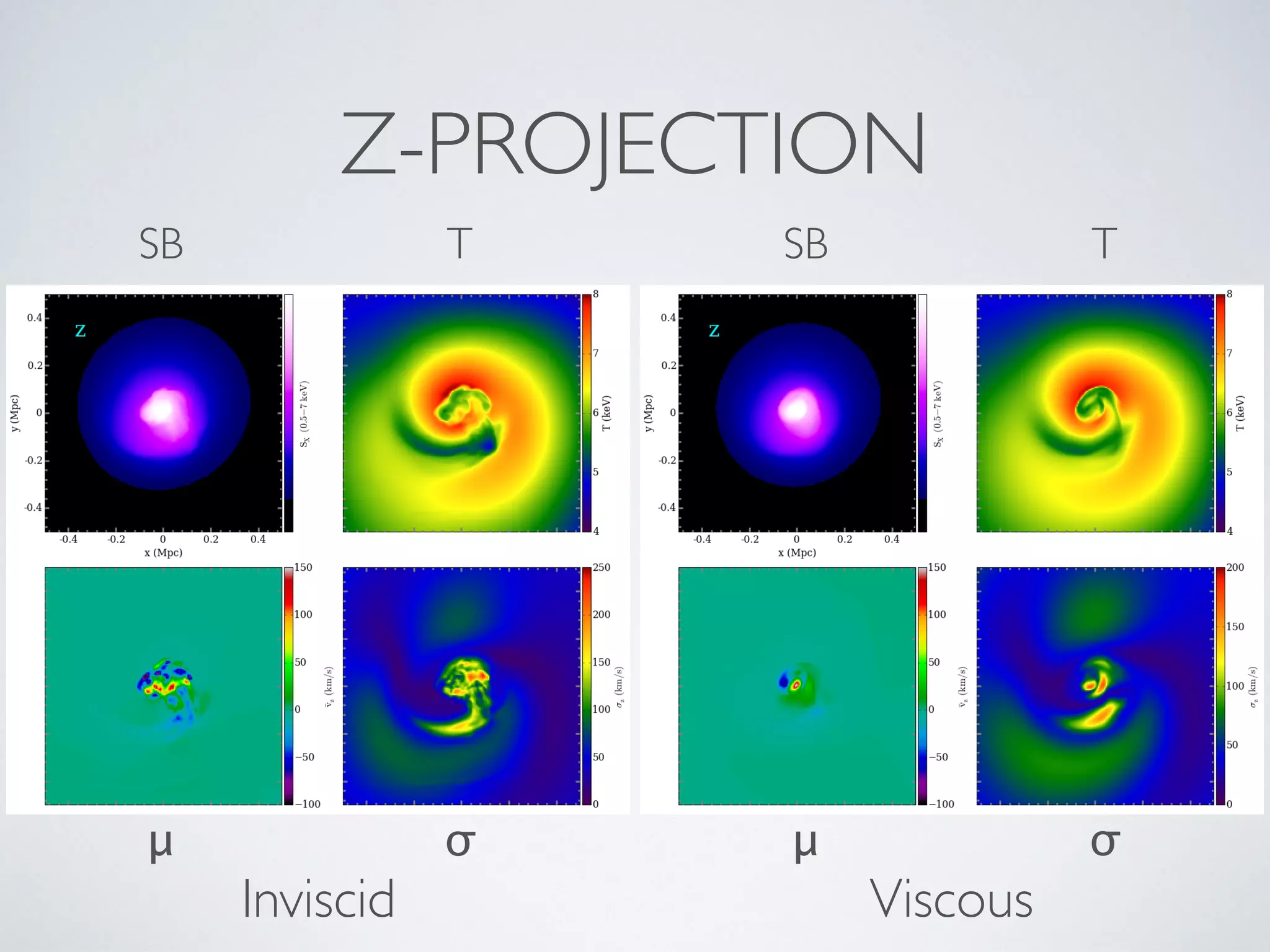
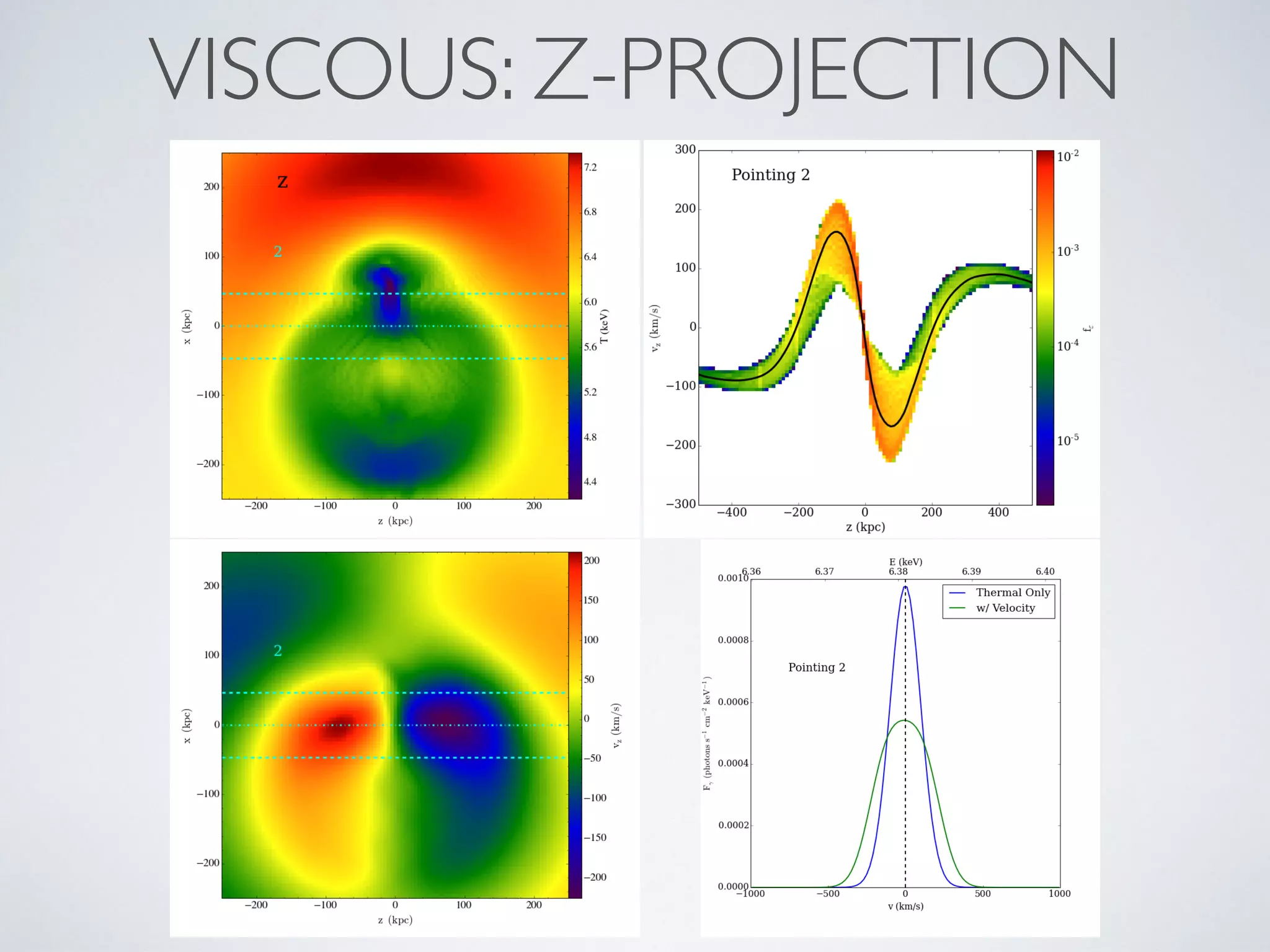
Z-PROJECTION
Inviscid Viscous
SB T
σμ
SB T
σμ
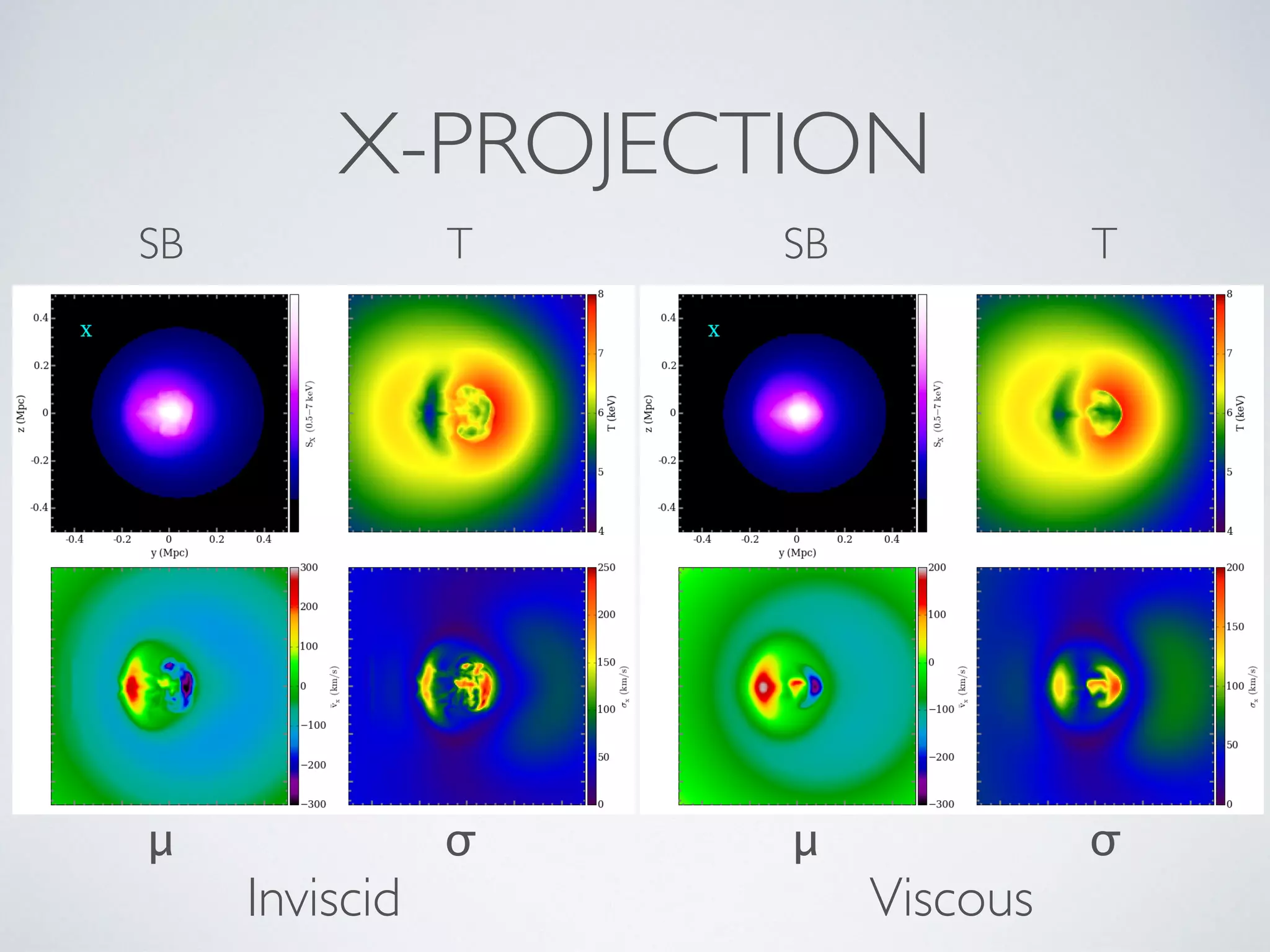
X-PROJECTION
Inviscid Viscous
SB T
σμ
SB T
σμ
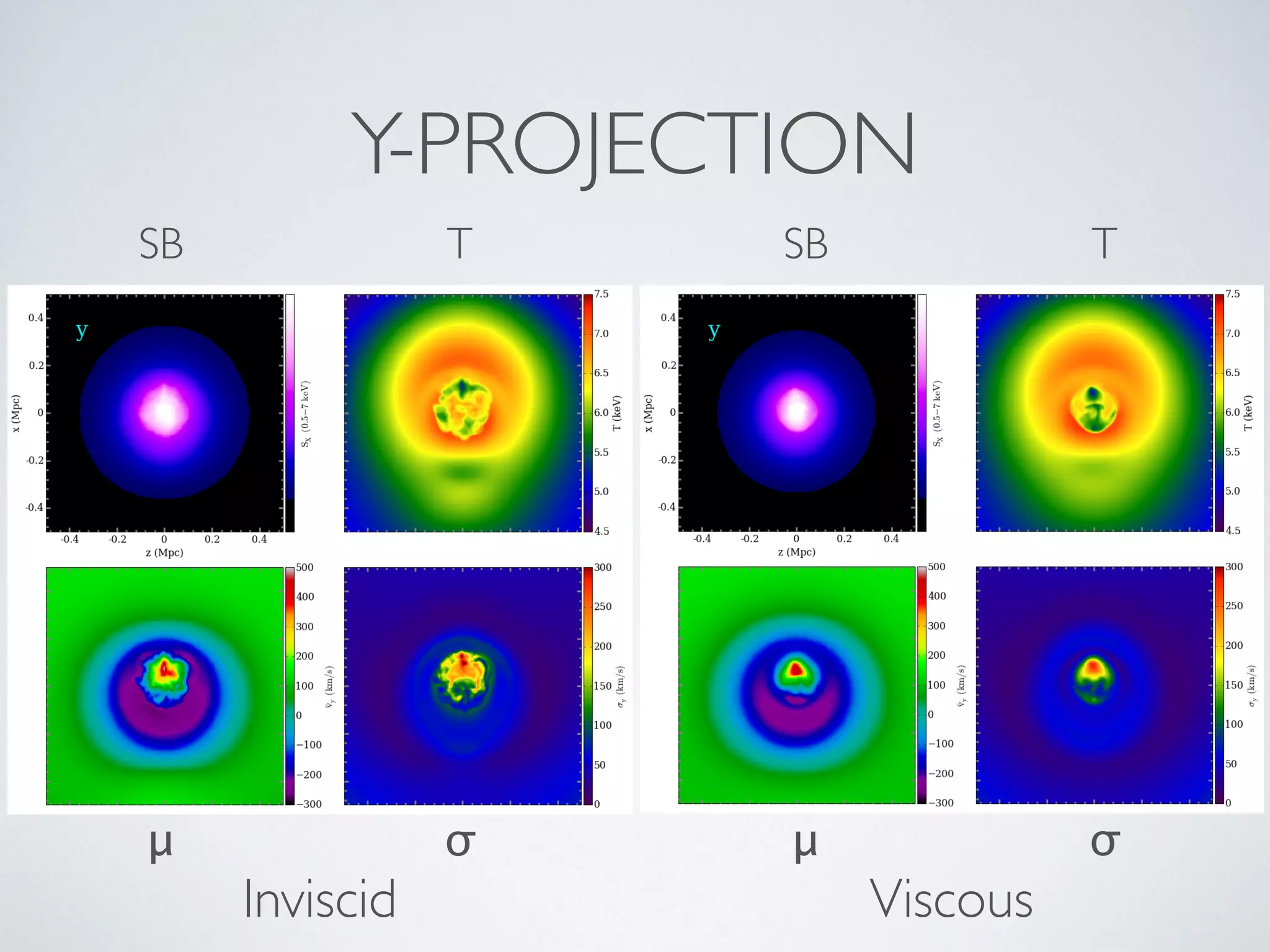
Y-PROJECTION
Inviscid Viscous
SB T
σμ
SB T
σμ
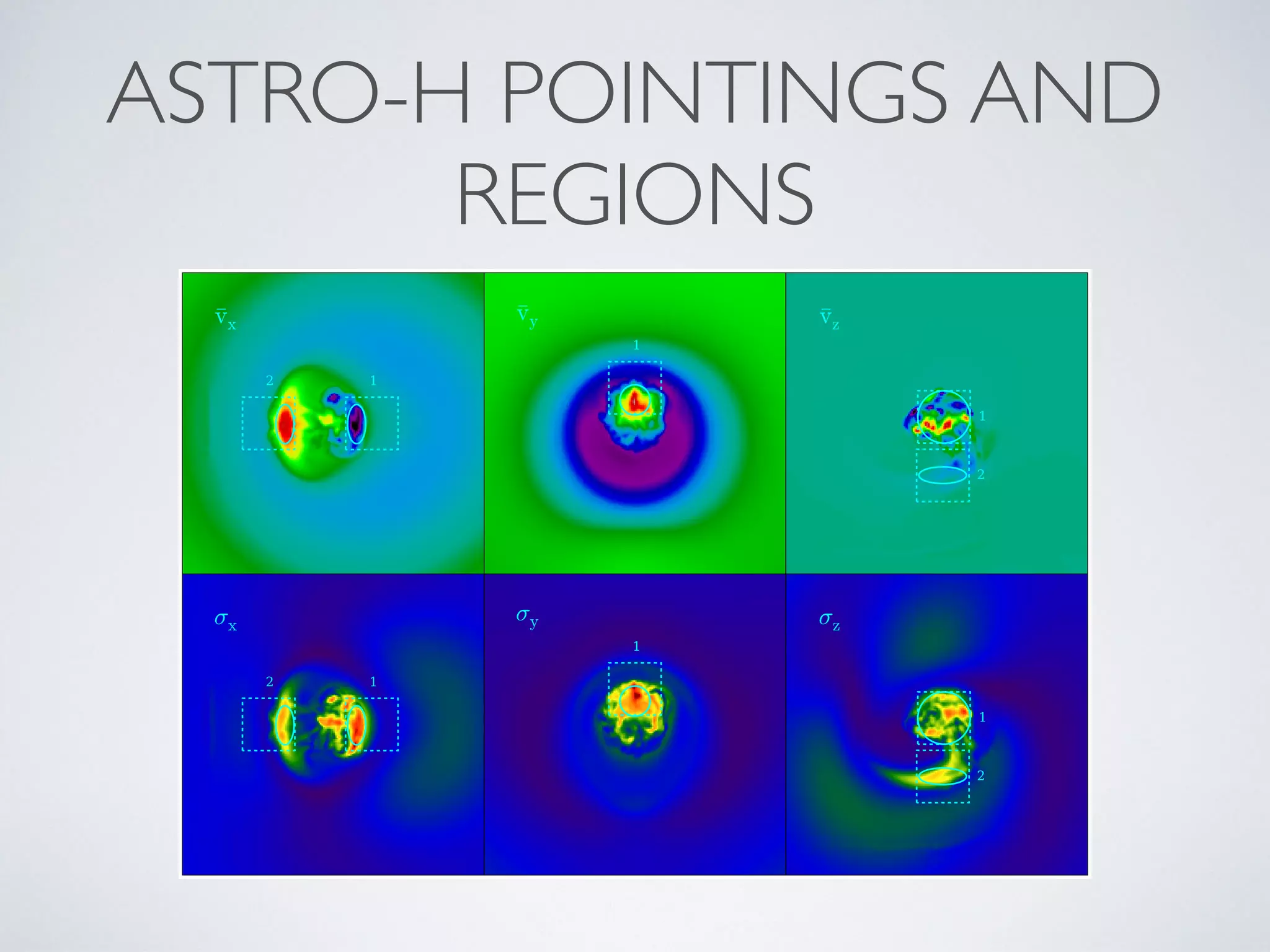
ASTRO-H POINTINGS AND
REGIONS
INVISCID: X-PROJECTION
INVISCID:Y-PROJECTION
INVISCID: Z-PROJECTION
VISCOUS: X-PROJECTION
VISCOUS:Y-PROJECTION
VISCOUS: Z-PROJECTION
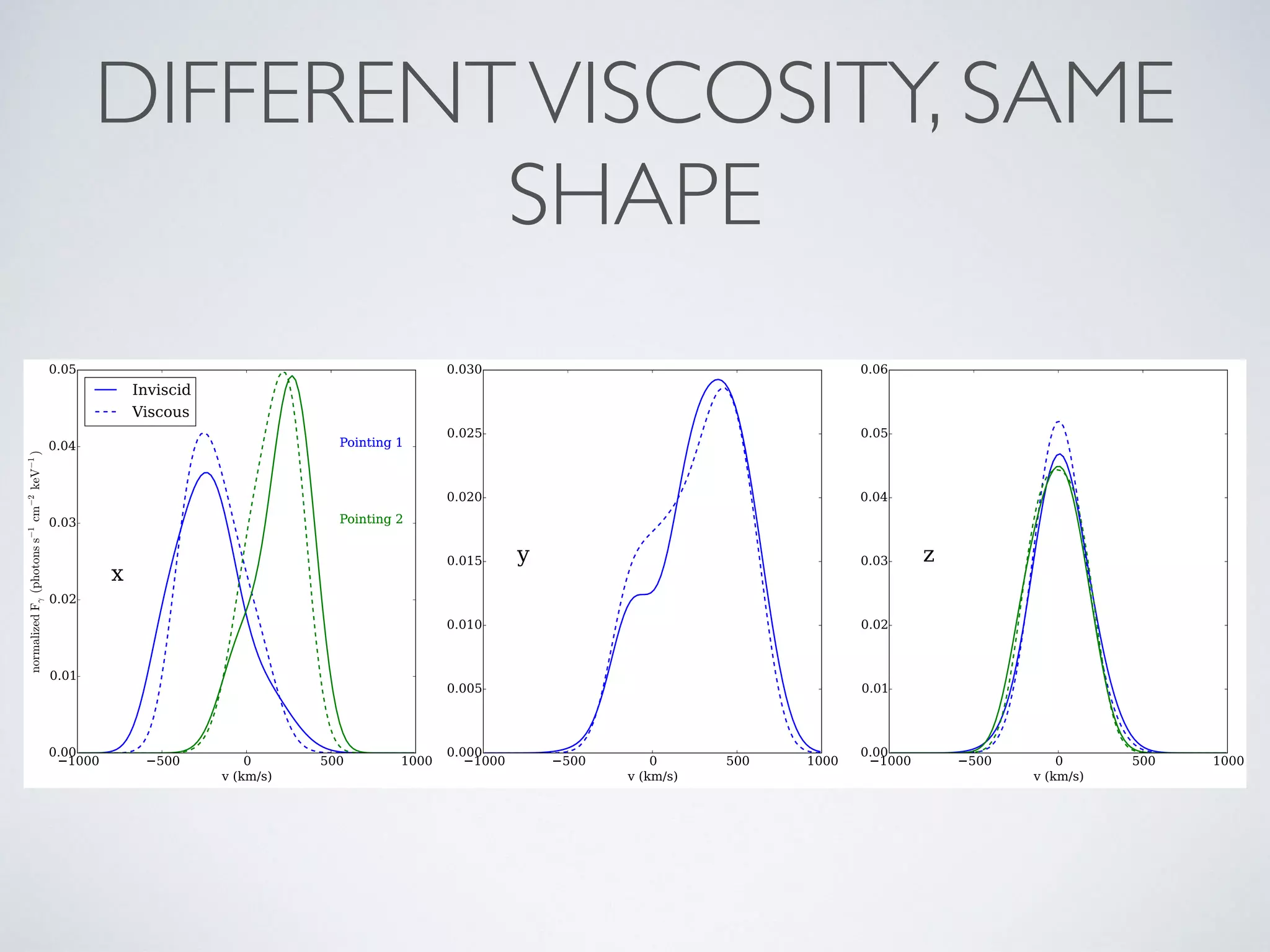
DIFFERENTVISCOSITY, SAME
SHAPE
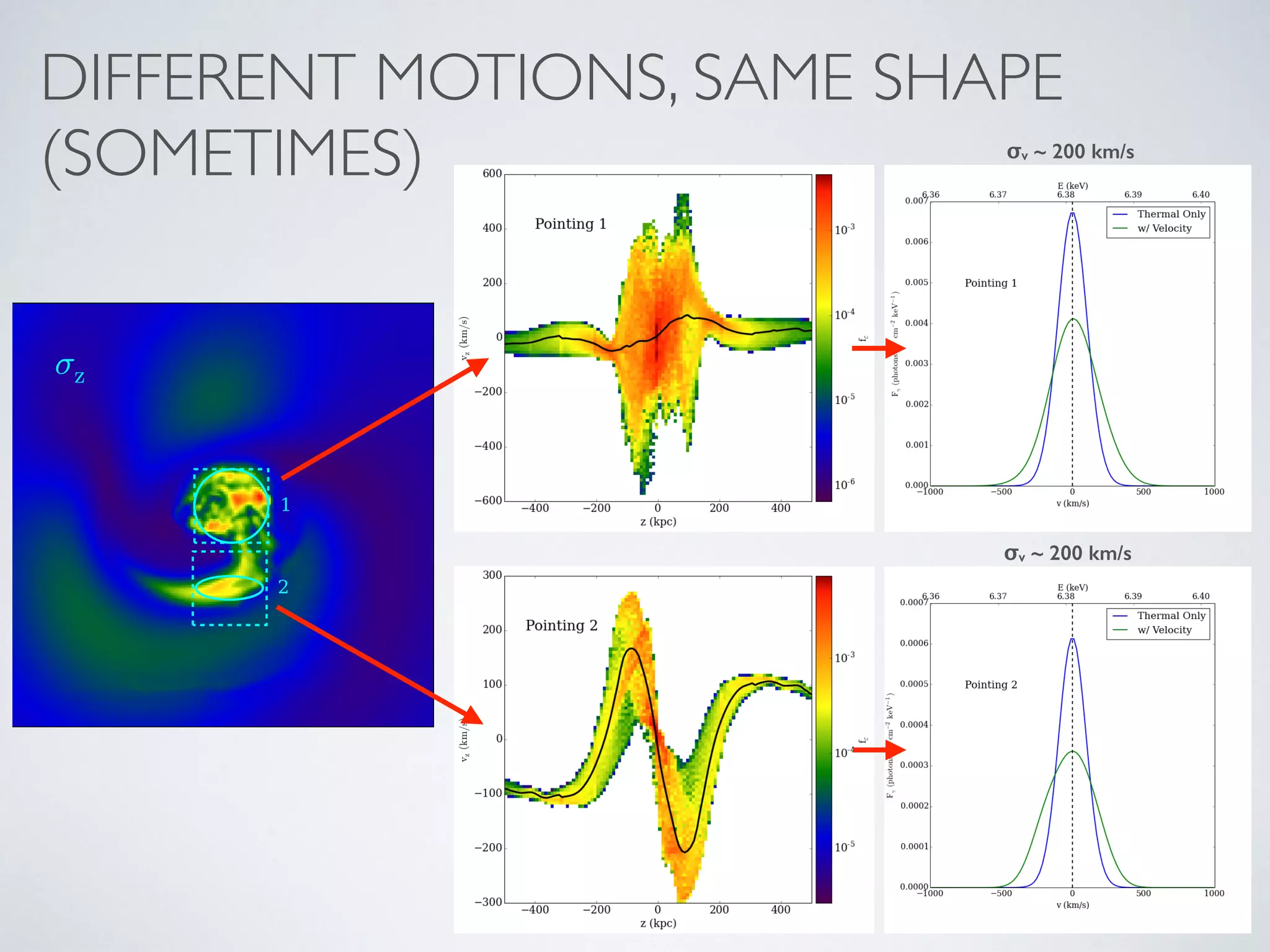
DIFFERENT MOTIONS, SAME SHAPE
(SOMETIMES) σv ~ 200 km/s
σv ~ 200 km/s
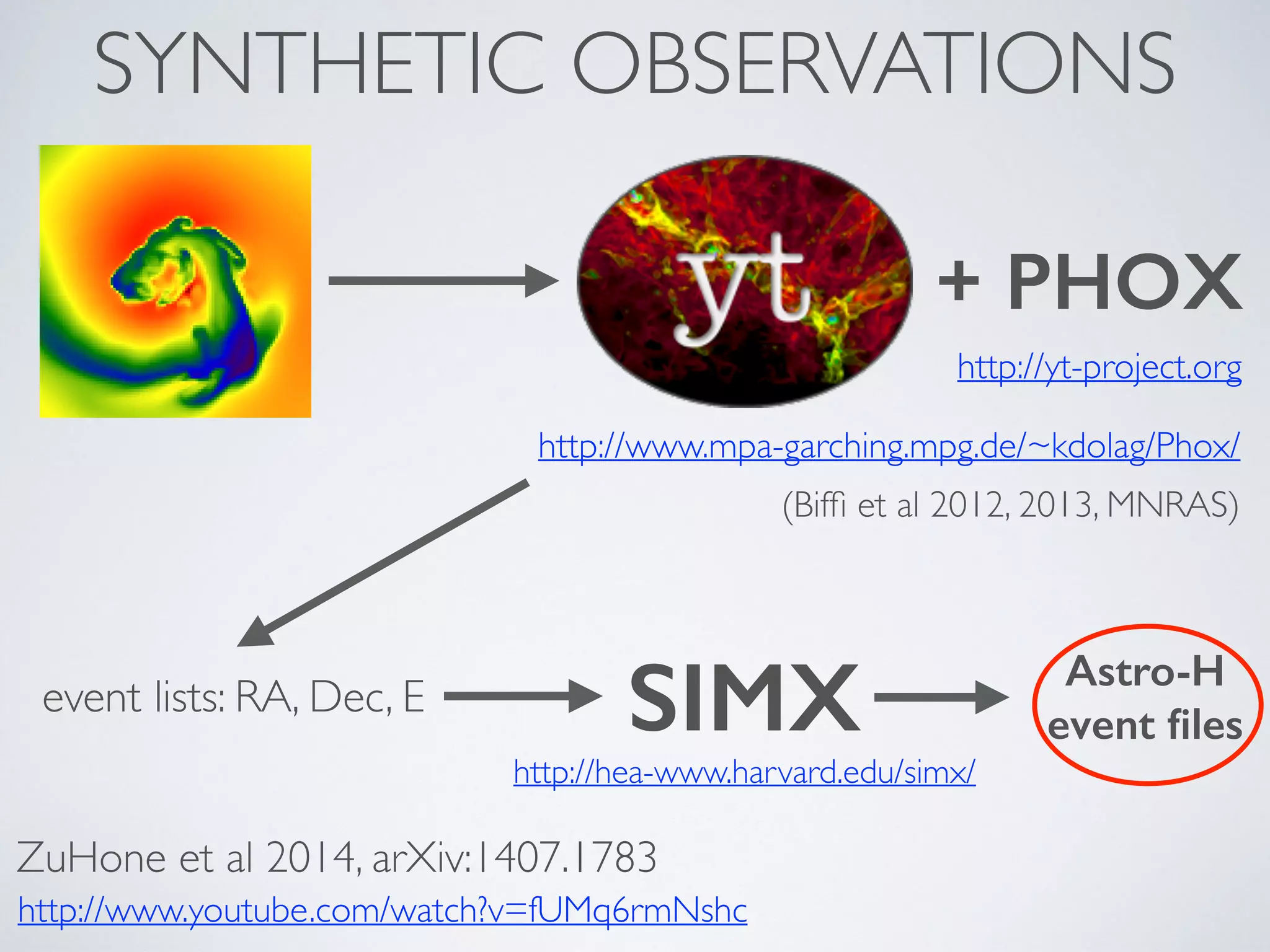
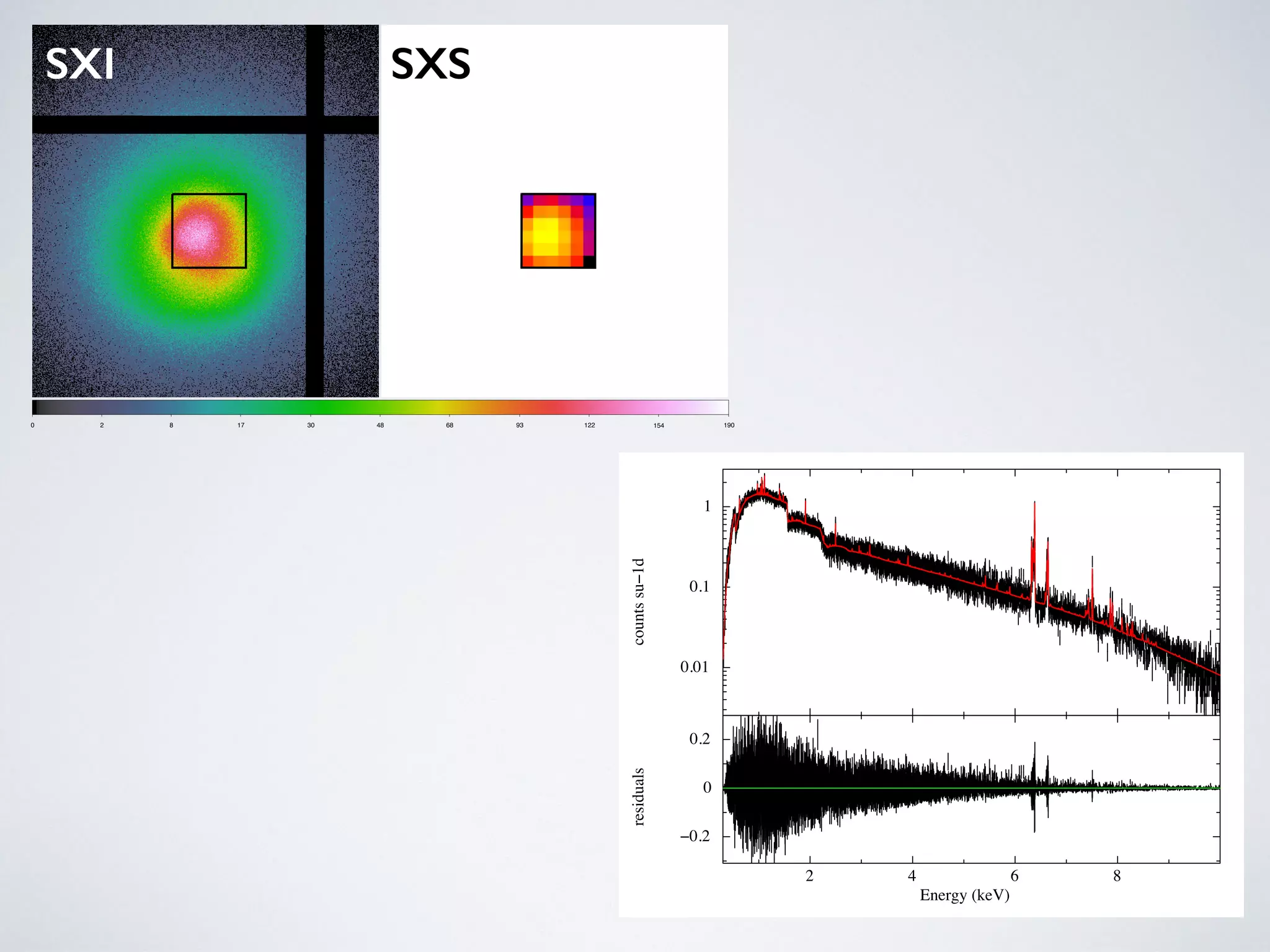
SYNTHETIC OBSERVATIONS
ZuHone et al 2014, arXiv:1407.1783
SIMX
http://www.youtube.com/watch?v=fUMq6rmNshc
http://yt-project.org
http://hea-www.harvard.edu/simx/
+ PHOX
http://www.mpa-garching.mpg.de/~kdolag/Phox/
(Biffi et al 2012, 2013, MNRAS)
event lists: RA, Dec, E
Astro-H
event files
0.01
0.1
1
countssu−1d
2 4 6 8
−0.2
0
0.2
residuals
Energy (keV)
0 2 8 17 30 48 68 93 122 154 190
SXI SXS
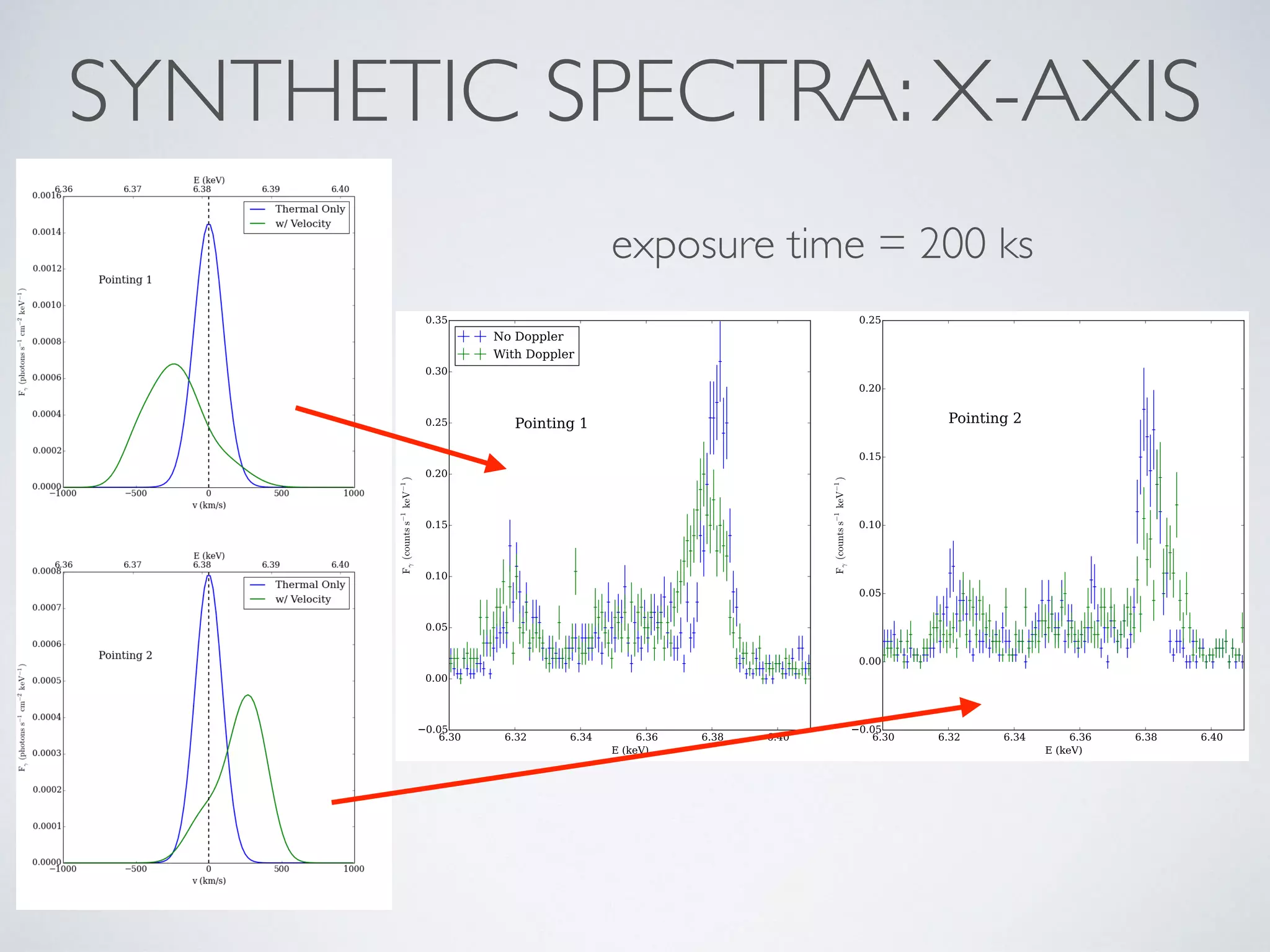
SYNTHETIC SPECTRA: X-AXIS
exposure time = 200 ks
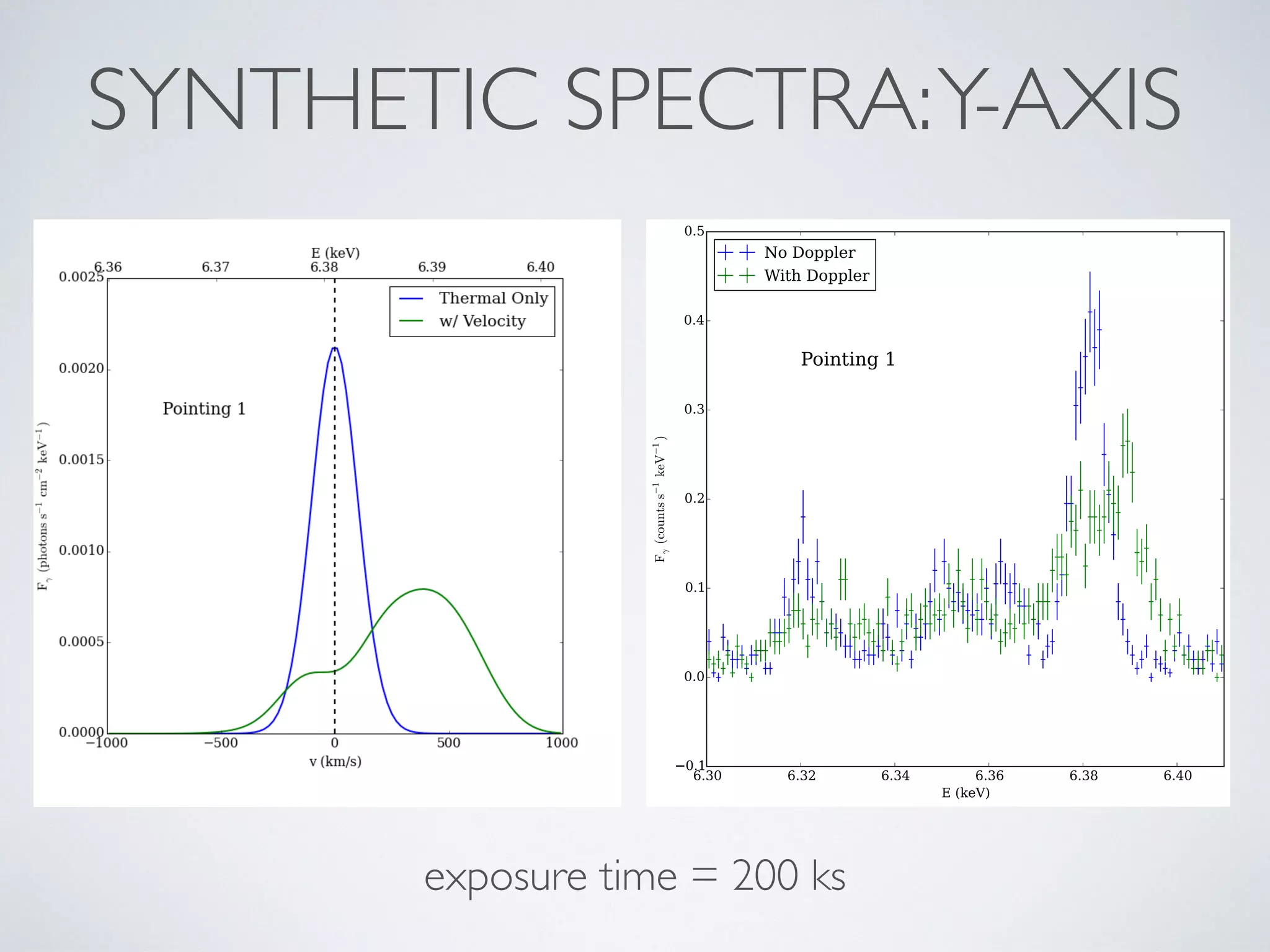
SYNTHETIC SPECTRA:Y-AXIS
exposure time = 200 ks
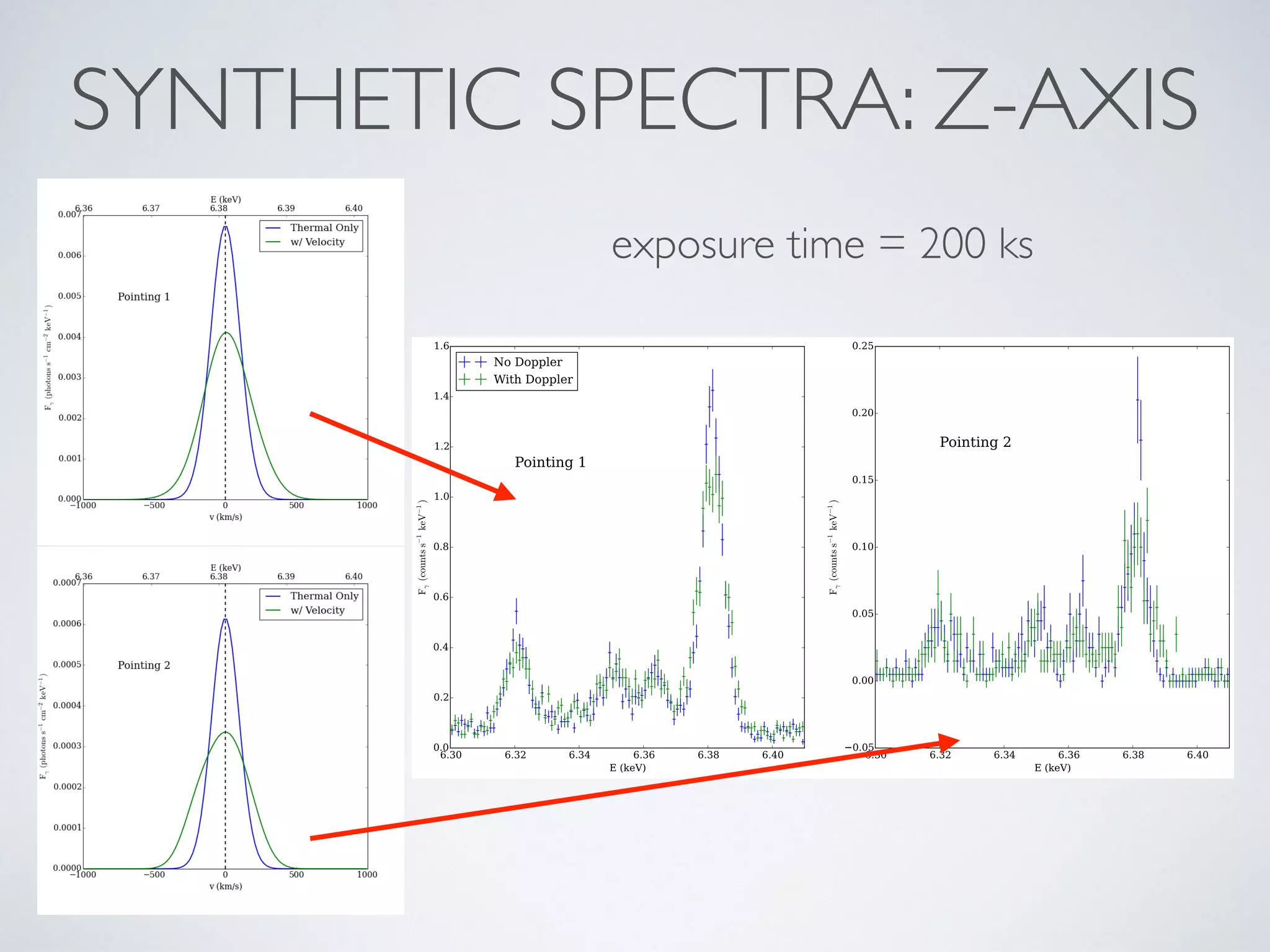
SYNTHETIC SPECTRA: Z-AXIS
exposure time = 200 ks
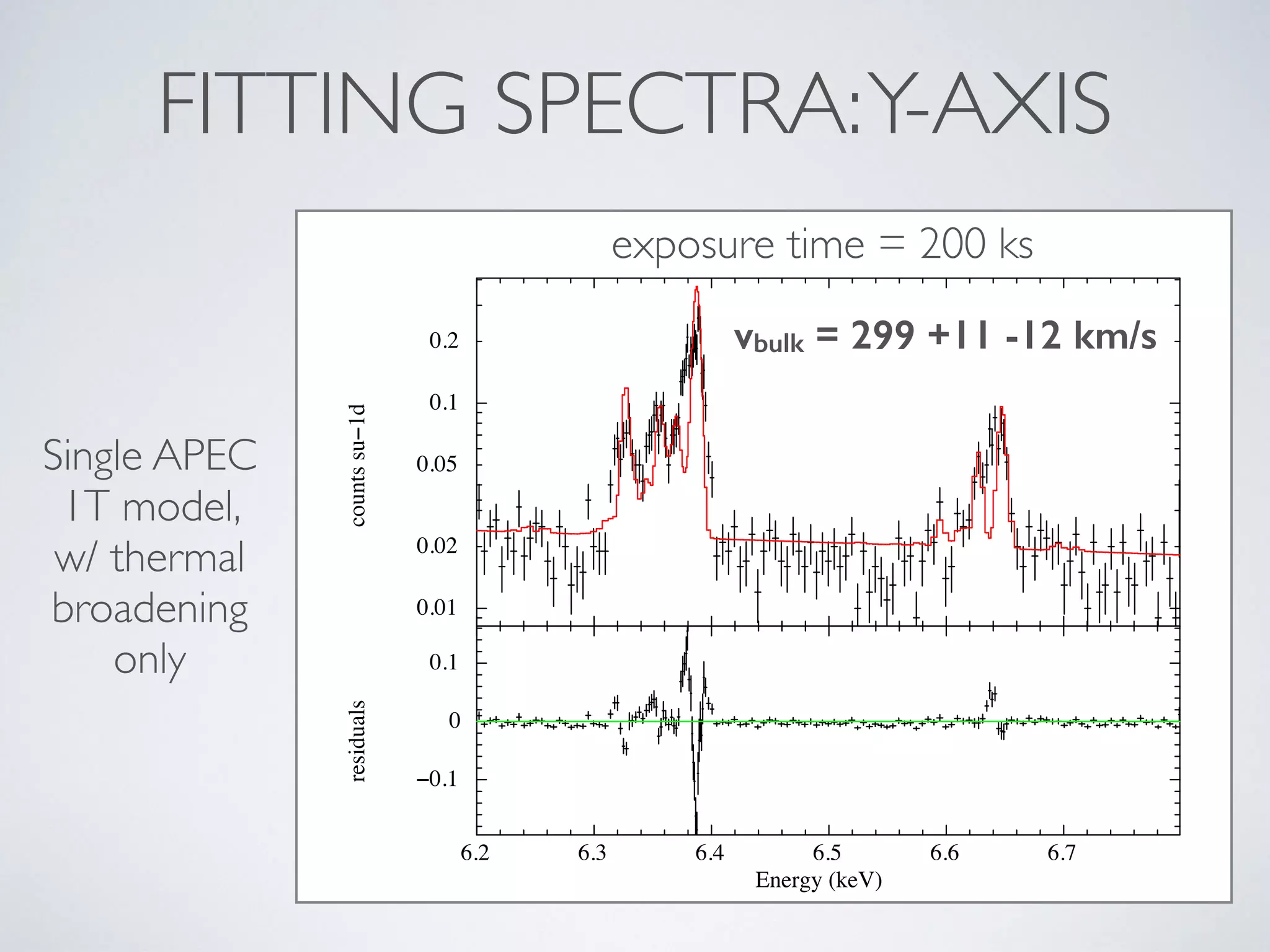
FITTING SPECTRA:Y-AXIS
0.01
0.1
0.02
0.05
0.2
countssu−1d
6.2 6.3 6.4 6.5 6.6 6.7
−0.1
0
0.1
residuals
Energy (keV)
Single APEC
1T model,
w/ thermal
broadening
only
exposure time = 200 ks
vbulk = 299 +11 -12 km/s
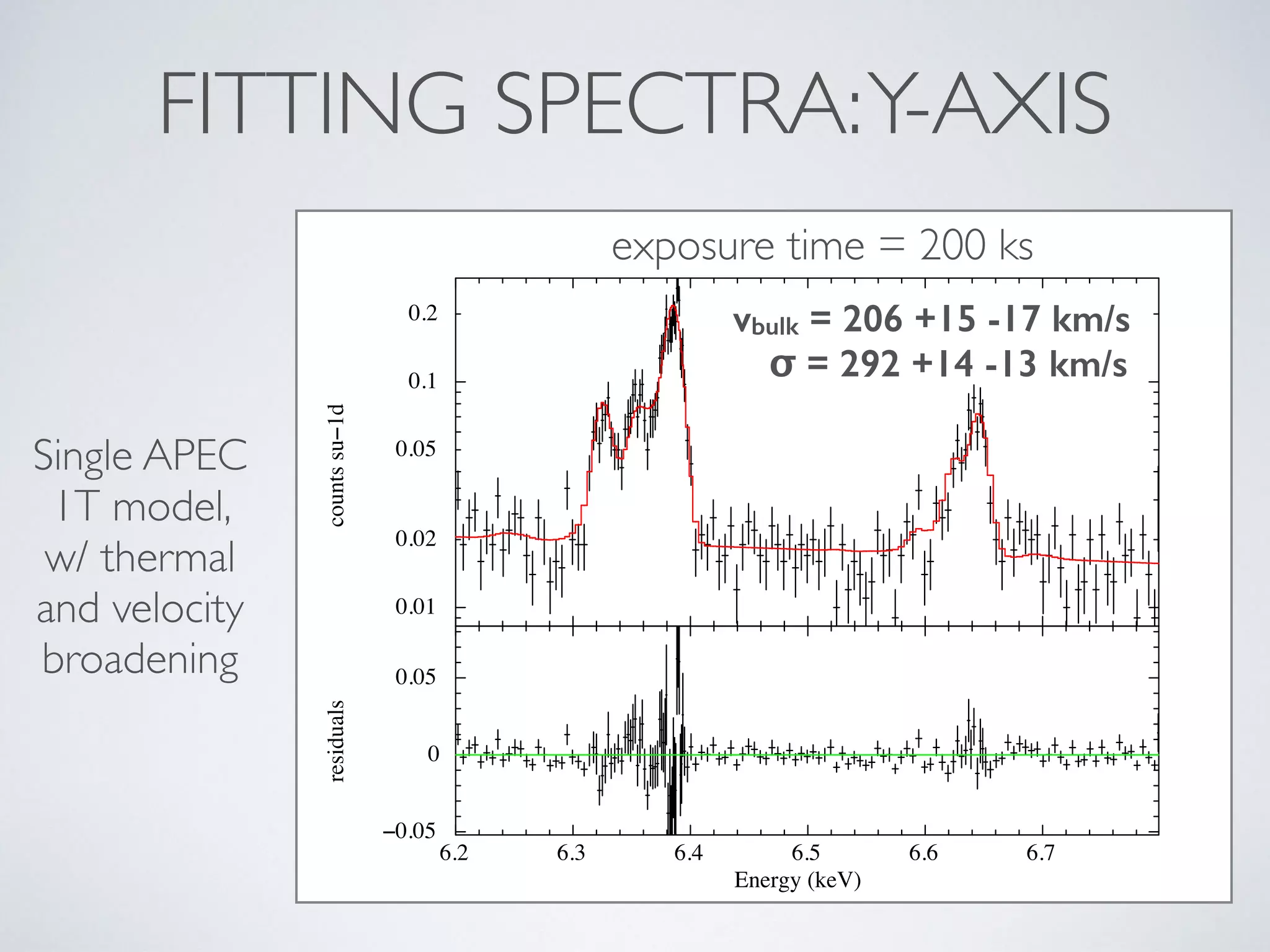
FITTING SPECTRA:Y-AXIS
Single APEC
1T model,
w/ thermal
and velocity
broadening
exposure time = 200 ks
0.01
0.1
0.02
0.05
0.2
countssu−1d
6.2 6.3 6.4 6.5 6.6 6.7
−0.05
0
0.05
residuals
Energy (keV)
vbulk = 206 +15 -17 km/s
σ = 292 +14 -13 km/s
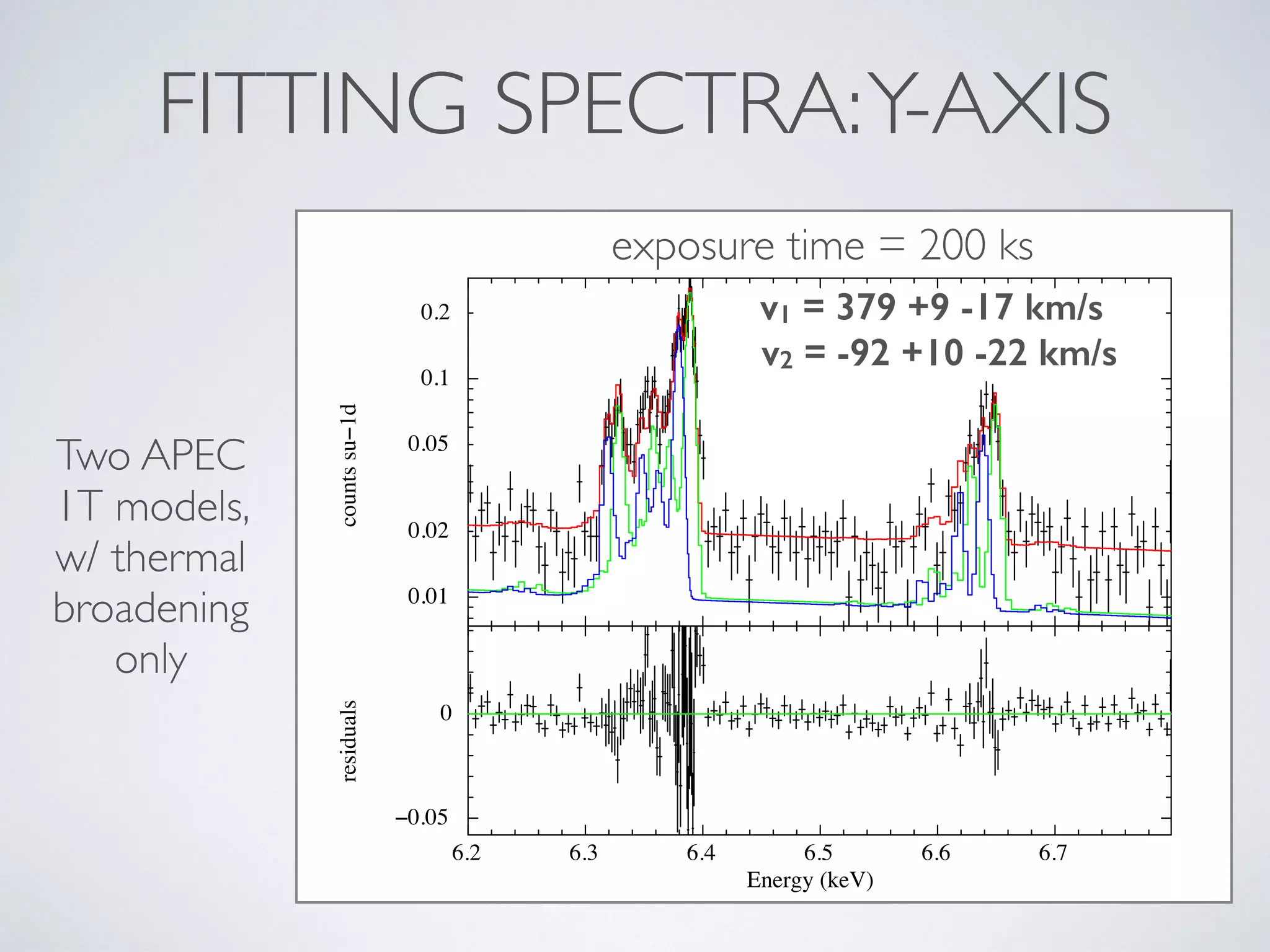
FITTING SPECTRA:Y-AXIS
Two APEC
1T models,
w/ thermal
broadening
only
exposure time = 200 ks
v1 = 379 +9 -17 km/s
0.01
0.1
0.02
0.05
0.2
countssu−1d
6.2 6.3 6.4 6.5 6.6 6.7
−0.05
0
residuals
Energy (keV)
v2 = -92 +10 -22 km/s
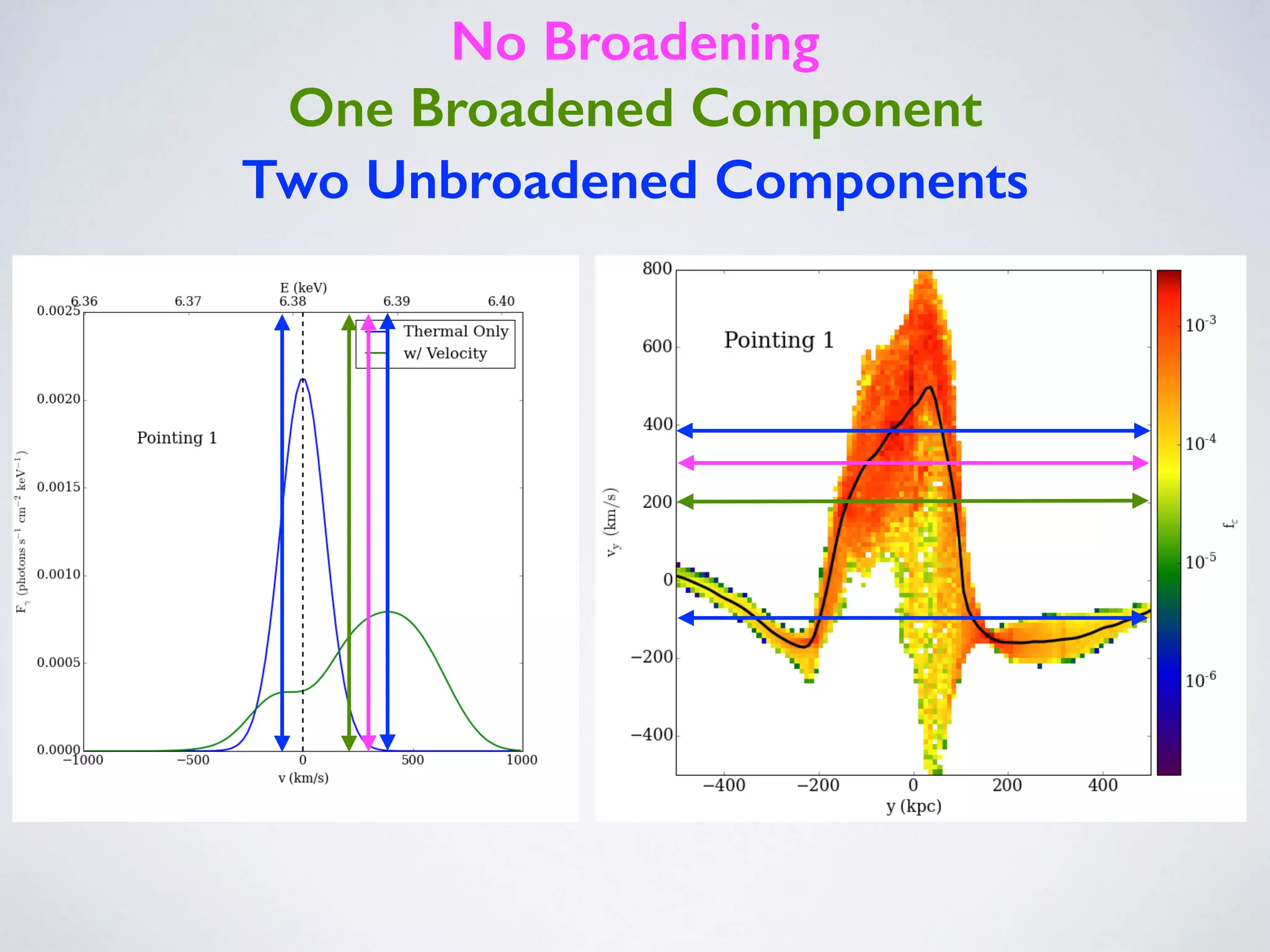
No Broadening
One Broadened Component
Two Unbroadened Components
THE UPSHOT
• Even in relaxed clusters, we should be able to detect some interesting gas flows with
Astro-H
• But we won’t necessarily be able to tell what those motions are—bulk flows,
turbulence? Constraints on viscosity are hence probably limited
• Higher-res imaging may give us some clues to:
• What we’re looking at in the first place (can already do with existing Chandra,
XMM-Newton observations)
• Measuring spatial variations in l.o.s. velocity (need Athena, SMART-X, etc.)
• Looking at major mergers next…
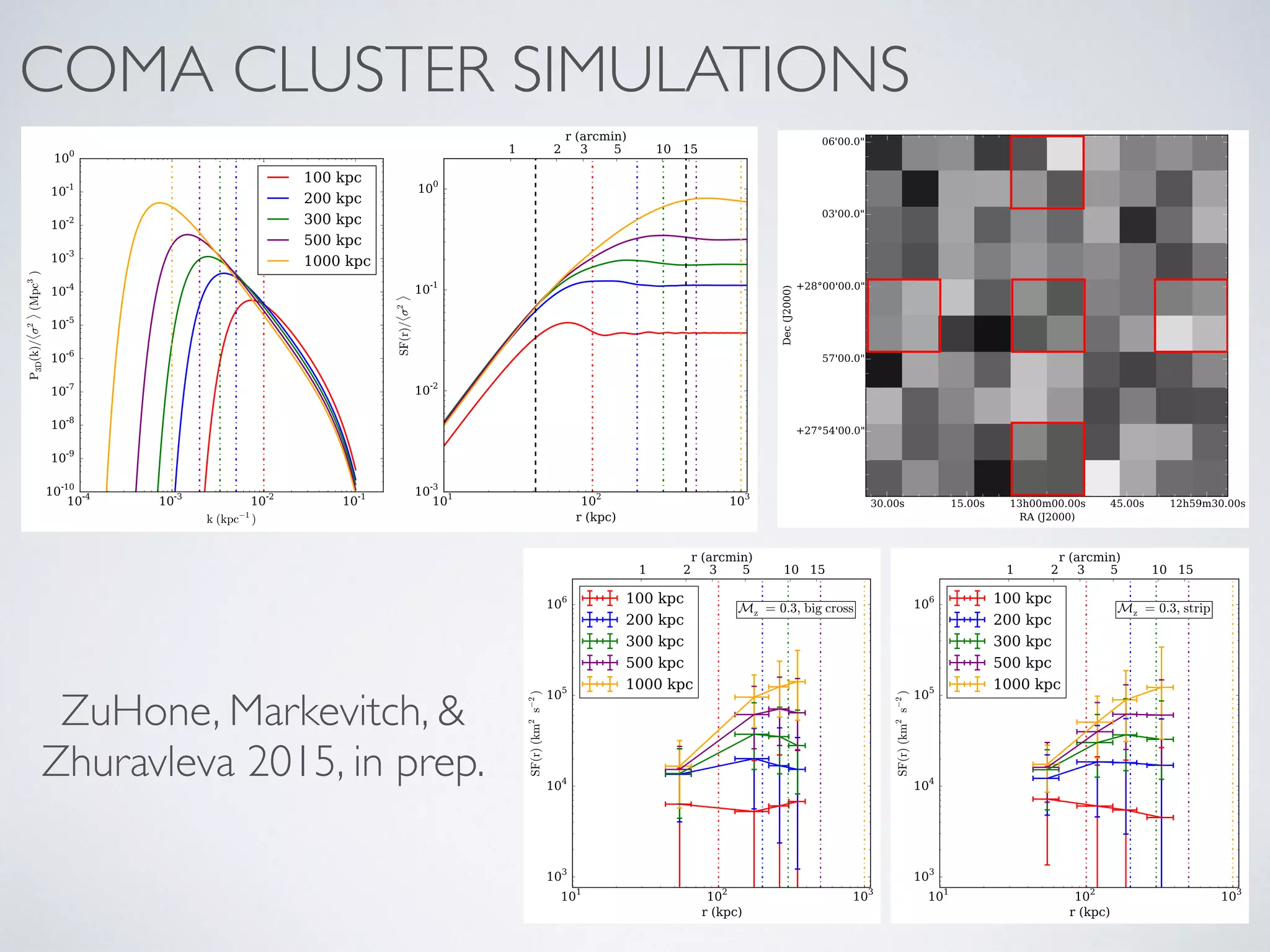
COMA CLUSTER SIMULATIONS
ZuHone, Markevitch, &
Zhuravleva 2015, in prep.

Galaxy Cluster Gas Motions and Astro-H: Predictions and Challenges from Simulations