Where do we go from here? Ryan Herzog, Ph.D.  Assistant Professor of Economics Gonzaga University 06/16/2010 Prepared for Spokane Mortgage and Lenders Association
Outline Brief Economic Overview Unemployment Long-term interest rates Government Deficits Monetary Policy China Europe Financial Regulation
Job Creation Unemployment rates are stubbornly high (9.7%). Are will missing the root of the problem? Workers unemployed for more than 26 weeks continues to rise.
Structural Concerns
Construction and Manufacturing
Jobs The recession has simply magnified and sped up job losses in the manufacturing sectors. The construction industry temporarily provided alternative employment.  We need to focus on retraining 7 million manufacturing workers. Extending unemployment compensation does not address the structural problems. Workers are searching for jobs that do not exist or will not exist in the near future. The combination of unions and the emergence of China have made U.S. manufacturing uncompetitive.
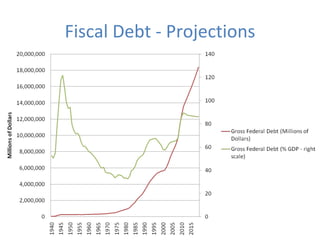
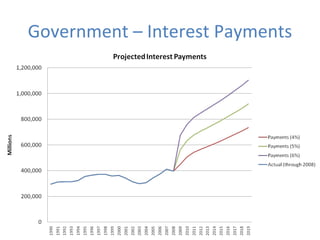
Fiscal Policy The cost of current and future government deficits could amount to annual interest payments over $1 trillion. Who will continue buying U.S. debt, at what rate?
Fiscal Debt - Projections
Government – Interest Payments
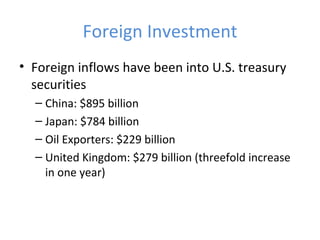
Foreign Investment Foreign inflows have been into U.S. treasury securities China: $895 billion Japan: $784 billion Oil Exporters: $229 billion United Kingdom: $279 billion (threefold increase in one year)
Overview of Fiscal Policy Should we be concerned about added spending? We need to return deficits to manageable levels. The current path of government spending will crowd out private investment through sharp increases in interest rates. Where will the money come from and at what cost? How dependent will we be on external funding?
Monetary Policy How long will the Fed maintain a low interest rate policy? Is inflation a rising concern? What can we learn from Bernanke’s recent statements on government deficits?
Credit Easing
Money Supply
Inflationary Concerns?
Will the Fed Raise Rates?
Are Banks Beginning to Lend?
Is the Economy Starting to Respond?
Monetary Policy - Overview Will the Fed be able to unwind their balance sheet before inflation risks mount? The Fed is paying interest on reserve holdings which will allow them the time to take reserves out of the system. Will the Fed be able to withstand political pressure when they need to increase rates? The Fed will likely keep short-term rates low for the foreseeable future, and will slowly reverse the credit easing program.
Europe and China Is China starting to overheat?  What effect will this have on the U.S.? Will China be able to maintain a pegged exchange rate policy?  Are the EU’s struggles over?  Will we continue to see a capital flight from Europe to the U.S.?
Long-term Interest Rates Bonds are still sexy (Japan’s marketing campaign) and in demand . Stock market could be overvalued by 40-50% (Smithers & Co.). Long-term interest rates will start to increase in the near future. As foreign economies begin to recover demand for U.S. bonds will decline. The Federal Reserve will start to sell off MBS.
Long-term Interest Rates China is facing high inflationary risks, which could force them to abandon their exchange rate peg. They will decrease their holdings of U.S. debt. Increased capital requirements will slow down lending (and raise rates). High levels of uncertainty over the short run should outweigh risks mounting from China, Fed, and financial reform.

Smla 2010

  • 1.
    Where do wego from here? Ryan Herzog, Ph.D. Assistant Professor of Economics Gonzaga University 06/16/2010 Prepared for Spokane Mortgage and Lenders Association
  • 2.
    Outline Brief EconomicOverview Unemployment Long-term interest rates Government Deficits Monetary Policy China Europe Financial Regulation
  • 3.
    Job Creation Unemploymentrates are stubbornly high (9.7%). Are will missing the root of the problem? Workers unemployed for more than 26 weeks continues to rise.
  • 4.
  • 5.
  • 6.
    Jobs The recessionhas simply magnified and sped up job losses in the manufacturing sectors. The construction industry temporarily provided alternative employment. We need to focus on retraining 7 million manufacturing workers. Extending unemployment compensation does not address the structural problems. Workers are searching for jobs that do not exist or will not exist in the near future. The combination of unions and the emergence of China have made U.S. manufacturing uncompetitive.
  • 7.
    Fiscal Policy Thecost of current and future government deficits could amount to annual interest payments over $1 trillion. Who will continue buying U.S. debt, at what rate?
  • 8.
    Fiscal Debt -Projections
  • 9.
  • 10.
    Foreign Investment Foreigninflows have been into U.S. treasury securities China: $895 billion Japan: $784 billion Oil Exporters: $229 billion United Kingdom: $279 billion (threefold increase in one year)
  • 11.
    Overview of FiscalPolicy Should we be concerned about added spending? We need to return deficits to manageable levels. The current path of government spending will crowd out private investment through sharp increases in interest rates. Where will the money come from and at what cost? How dependent will we be on external funding?
  • 12.
    Monetary Policy Howlong will the Fed maintain a low interest rate policy? Is inflation a rising concern? What can we learn from Bernanke’s recent statements on government deficits?
  • 13.
  • 14.
  • 15.
  • 16.
    Will the FedRaise Rates?
  • 17.
  • 18.
    Is the EconomyStarting to Respond?
  • 19.
    Monetary Policy -Overview Will the Fed be able to unwind their balance sheet before inflation risks mount? The Fed is paying interest on reserve holdings which will allow them the time to take reserves out of the system. Will the Fed be able to withstand political pressure when they need to increase rates? The Fed will likely keep short-term rates low for the foreseeable future, and will slowly reverse the credit easing program.
  • 20.
    Europe and ChinaIs China starting to overheat? What effect will this have on the U.S.? Will China be able to maintain a pegged exchange rate policy? Are the EU’s struggles over? Will we continue to see a capital flight from Europe to the U.S.?
  • 21.
    Long-term Interest RatesBonds are still sexy (Japan’s marketing campaign) and in demand . Stock market could be overvalued by 40-50% (Smithers & Co.). Long-term interest rates will start to increase in the near future. As foreign economies begin to recover demand for U.S. bonds will decline. The Federal Reserve will start to sell off MBS.
  • 22.
    Long-term Interest RatesChina is facing high inflationary risks, which could force them to abandon their exchange rate peg. They will decrease their holdings of U.S. debt. Increased capital requirements will slow down lending (and raise rates). High levels of uncertainty over the short run should outweigh risks mounting from China, Fed, and financial reform.