Downloaded 37 times
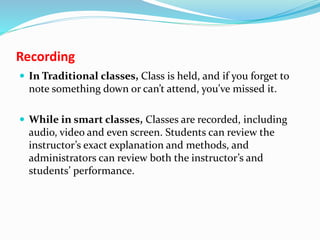

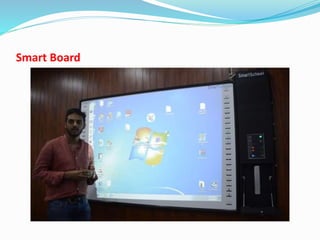
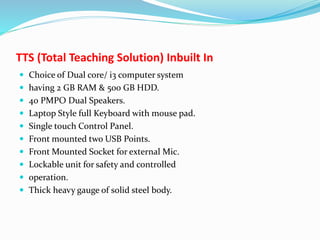
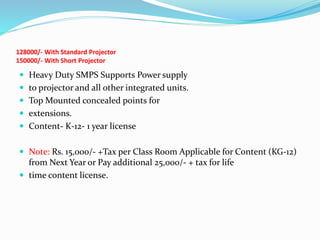

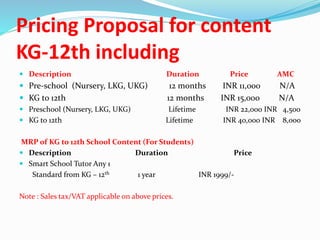
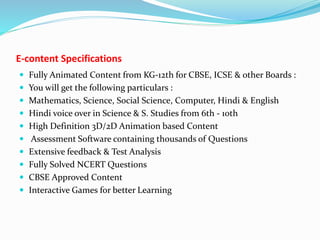


The document summarizes the key differences between traditional and smart classrooms. In traditional classrooms, teaching methods are teacher-centric, schedules and class sizes are fixed, collaboration is limited, and evaluation and recording of classes is not possible. Smart classrooms, on the other hand, use technology like videos and presentations to make learning more engaging. Schedules are flexible, heterogeneous groups of global students are supported, learner-centric and collaborative teaching is enabled, and classes can be automatically evaluated, recorded and reviewed. The document also provides pricing details for hardware, content and annual maintenance of a smart classroom setup.


