Smart Cities
João Gabriel Kroth
Smart Cities Vision
Exploting the most advanced
communication Technologies to support
added-value services for the
administration of the city and for the
citizens
Smarter & More Sustainable Cities
Big data Technologies to improve the living standard
Data-driven urbanism
ICT’s: Information & Communication Technologies
Applications
Home/Industrial automation
Medical aids
Mobile healthcare
Elderly assistance
Intelligent energy management
Smart grids
Automotive
Traffic management
Final Aim
Make a better use of public resources, increasing the quality
of the services offered to the citizens, while reducing the
operational costs of the public administration
Agenda
INTRO TO
IOT
CITY
SYSTEMS
URBAN IOT CASES
What is IoT?
“Taking all the things in the world and connecting them to the internet.”
1. Things that collect information and then send it
2. Things that receive information and then act on it
3. Things that do both
“The Internet of Things (IoT) is a system of interrelated computing
devices, mechanical and digital machines, objects, animals or people
that are provided with unique identifiers and the ability to transfer data
over a network without requiring human-to-human or human-to-
computer interaction.”
Agenda
INTRO TO
IOT
CITY
SYSTEMS
URBAN IOT CASES
City Systems
Parking
Public transit
Air quality
Environmental conditions
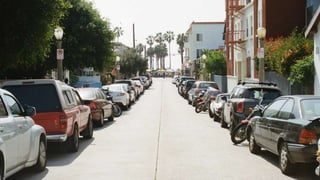
Parking
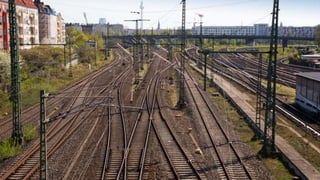
Public Transit
Air qualityAELORA
Environmental Conditions
What if a light pole told you to watch out for an icy patch of
sidewalk ahead?
What if an app told you the most populated route for a late-night
walk to the El station by yourself?
What if you could get weather and air quality information block-
by-block, instead of city-by-city?
City Systems
Parking
Public transit
Air quality
Environmental conditions
Connected streetlights
Energy
Smart grid
Water
Agenda
INTRO TO
IOT
CITY
SYSTEMS
URBAN IOT CASES
Urban IoT architecture
Capability of integrating diferent technologies with the
existing communication infrastructure.
Make the data collected by the urban IoT easily acessible by
authorities and citizens.
Urban IoT architecture
1. Web service approach for IoT service architecture
2. Link layer Technologies
3. Devices
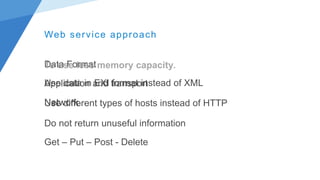
Web service approach
Data Format
Application and transport
Network
To use less memory capacity.
Use data in EXI format instead of XML
Use different types of hosts instead of HTTP
Do not return unuseful information
Get – Put – Post - Delete
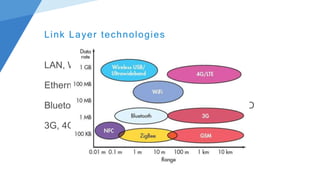
Link Layer technologies
LAN, WAN (LoRaWAN)
Ethernet, WiFi
Bluetooth, Bluetooth Low Energy, PLC, NFC, RFID
3G, 4G, 5G
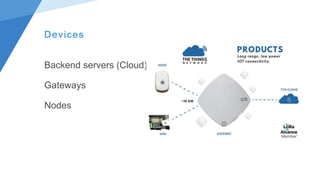
Devices
Backend servers (Cloud)
Gateways
Nodes
Urban IoT architecture
1. Web service approach for IoT service architecture
2. Link layer Technologies
3. Devices
Agenda
INTRO TO
IOT
CITY
SYSTEMS
URBAN IOT CASES
Our mission is to build a
DECENTRALIZED,
OPEN and CROWDSOURCED
INTERNET OF THINGS data network
OWNED and OPERATED by its USERS
July 2015, Amsterdam
HOW IT ALL STARTED
With help of communities
BUILDING A GLOBAL NETWORK
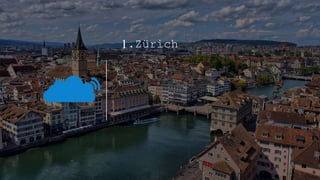
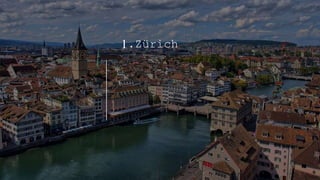
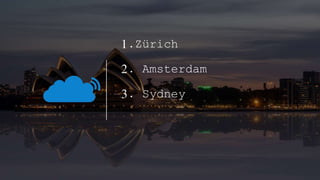
1.Zürich
1.Zürich
1.Zürich
1.Zürich
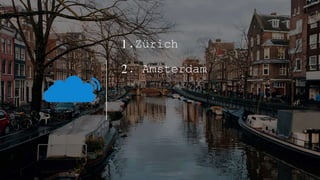
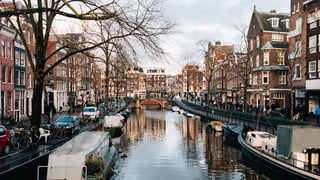
2. Amsterdam
1.Zürich
2. Amsterdam
3. Sydney
1.Zürich
2. Amsterdam
3. Sydney
4. Madrid
1.Zürich
2. Amsterdam
3. Sydney
4. Madrid
5. Berlin
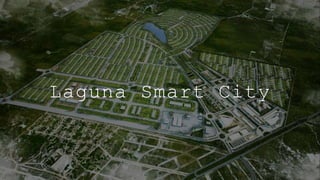
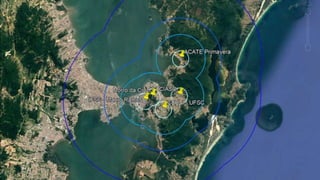
Laguna Smart City
Smart Calgary
LET’S UNLEASH THE
INTERNET OF THINGS!
Any questions?
YOU ARE THE NETWORK
LET’S BUILD THIS THING TOGETHER!
João Gabriel Kroth
linkedin.com/in/joaokroth
joao.kroth@labmetro.ufsc.br
www.thethingsnetwork.org

Smart Cities (19.2)

Editor's Notes

  • #3 For those who know nothing about what is a smart city. Use techonologies to help city administration and improve people well-being.
  • #4 Abuse of marketing on some topics as Innovation, Smart technologies, Artificial Intelligence, Smart Cities, etc. I want to present you smart cities topic behind of all this marketing, focusing on applications, on how it really works.
  • #5 So, in order to have smarter and more sustainable cities, we need 1st – big data Technologies. We as our environment are generating data every second. What if we could collect part of this data and use it to help us in different ways? 2nd - To get all this data, we need a data-driven urbanism. Buildings, street lights, city lamps, etc. can be used to collect it. 3rd - Then, we need ICT’s. We need to understand wich data we want to get – for what we are going to use it.
  • #8 Quality of services Reduce operational costs
  • #10 Joke – dog connected to internet, instagram of dogs https://www.iotforall.com/what-is-iot-simple-explanation/ i.e.: You left your room window opened. A sensor in it send you a message, telling you that you left it open. A humidity/temperature/pressure sensor on the outside tells you the probability of raining. You are now able to decide if you return and close the window, or not.
  • #15 Smart Parking Avoid time wasting Helps to solve the pollution problem
  • #17 https://www.govtech.com/fs/news/How-the-Internet-of-Things-is-Keeping-Trains-on-Track.html RCAS – Railway Collision Avoidance System, by DLR Airplanes have TCAS, Ships have other system, but trains.... Difficulties: On wich track is the train? Parallel tracks are 4-5 feet away from each other Trains move in 1.5D (Front, down, and sometimes switch track)
  • #18 Air Quality sensor, embedded in a 3D printed bird. Tale = antenna Sensors are embedded in the beak of the bird City = Arnhem
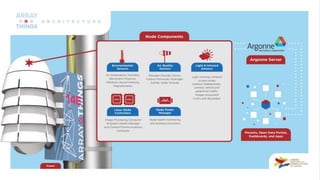
  • #19 Chicago Networked urban sensor project 100 nodes in May Air quality <> Traffic Pattern <> Schedules Sensors monitoring air quality, sound and vibration (to detect heavy vehicle traffic), and temperature can be used to suggest the healthiest and unhealthiest walking times and routes through the city, or to study the relationship between diseases and the urban environment. Real-time detection of urban flooding can improve city services and infrastructure to prevent property damage and illness. Measurements of micro-climate in different areas of the city, so that residents can get up-to-date, high-resolution "block-by-block" weather and climate information. Observe which areas of the city are heavily populated by pedestrians at different times of day to suggest safe and efficient routes for walking late at night or for timing traffic lights during peak traffic hours to improve pedestrian safety and reduce congestion-related pollution.
  • #24 Capability of integrating diferent technologies with the existing communication infrastructure. in order to support a progressive Evolution of the IoT, with the interconnection of other devices and the realization of novel functionalities and services. Another fundamental aspect is the necessity to make (part of) the data collected by the urban IoT easily accessible by authorities and citizens, to increase the responsiveness of authorities to city problems, and to promote the awareness and the participation of citizens in public matters
  • #33 User are owners, not telcos. Bottom-up development Due to the low costs, we don’t have to rely on large corporations. We can be in charge of the network and data routing ourselves.
  • #34 In Aug-Sept 2015, the city center of Amsterdam was covered by crowdsourcing ±10 gateways (costing each around 1000 euros) For more insight on this, see: https://medium.com/@wienke/the-things-network-building-a-global-iot-data-network-in-6-months-adc2c0b1ae9b
  • #36 Hoosje Bootje, first use case It is the use cases (applicationsa) that adds value to the network. Here you can see an example of a water leakage detector in boats. Amsterdam has a lot of canals and people use boats to travel from one place to another. These sensors placed in the boats can detect if there is any leakage and inform the cleaning/repair company to fix it asap. The communication between the sensors in the boats and gateway doesnt have to depend on 3G/WiFi/Bluetooth, It happens over LoRaWAN. Also the battery life of these sensors is so high that you don’t have to worry about replacing them every now and then. You should find a use-case/application that can be built over the network and provides value to the community.
  • #48 Brazil, Ceará Social Smart City (social = the houses are affordable, R$90.000,00 – R$150.000,00) Still developing Urban and Architecture planning Environmental sustainability Social Inclusion Technology PLANET Project
  • #49 4th biggest city of Canada Semtech: Semiconductors and Algorithms IoT Data Centers Mobility 10.000 sensors 3 gateways – University LoRa – also use TTN/GitHub Tektelic – gateways Cases: Acoustic monitoring Devonian gardens Shaganappi golf course