1.

2.

3.

4.

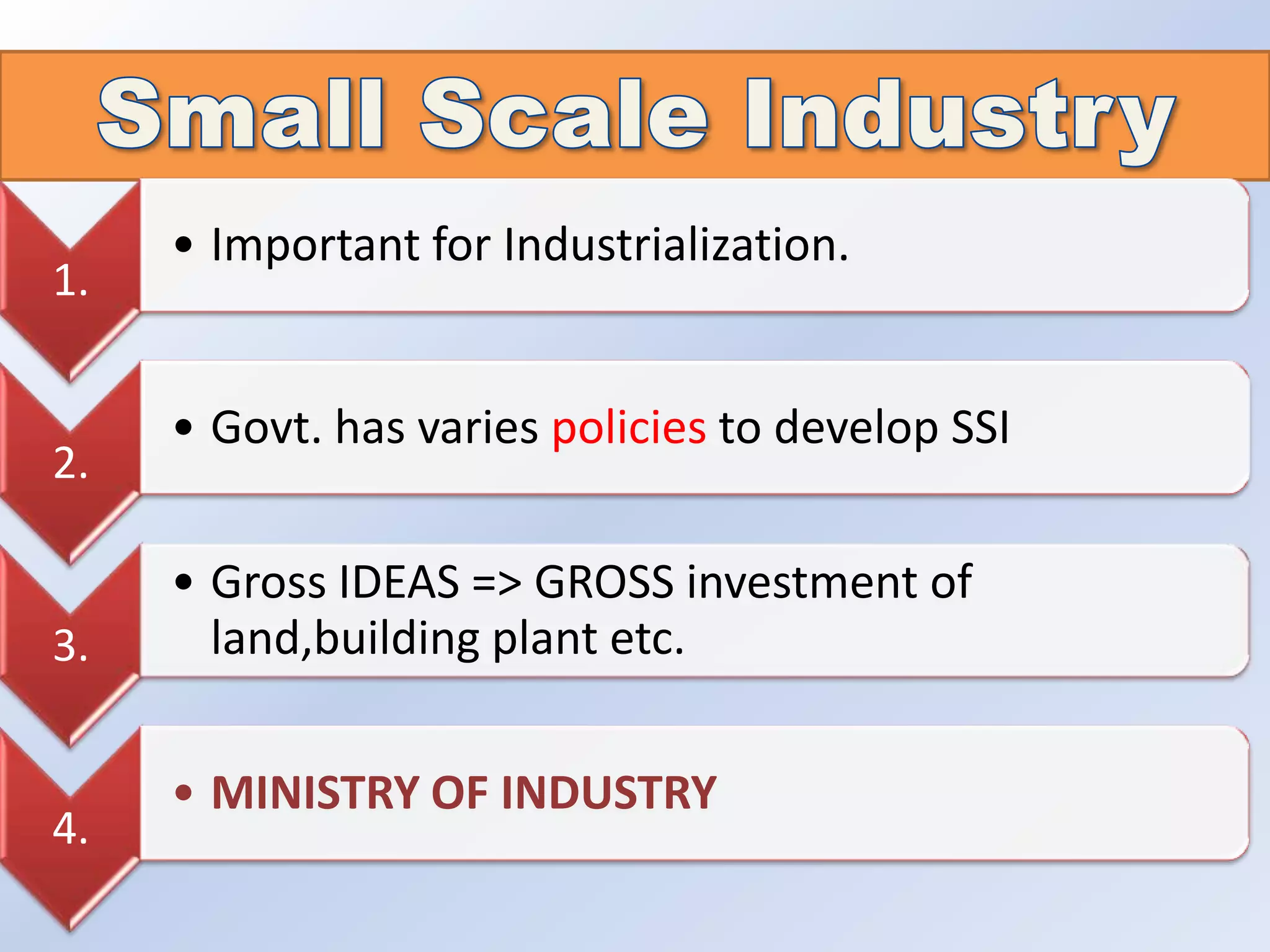
• Important for Industrialization.

• Govt. has varies policies to develop SSI
• Gross IDEAS => GROSS investment of
land,building plant etc.
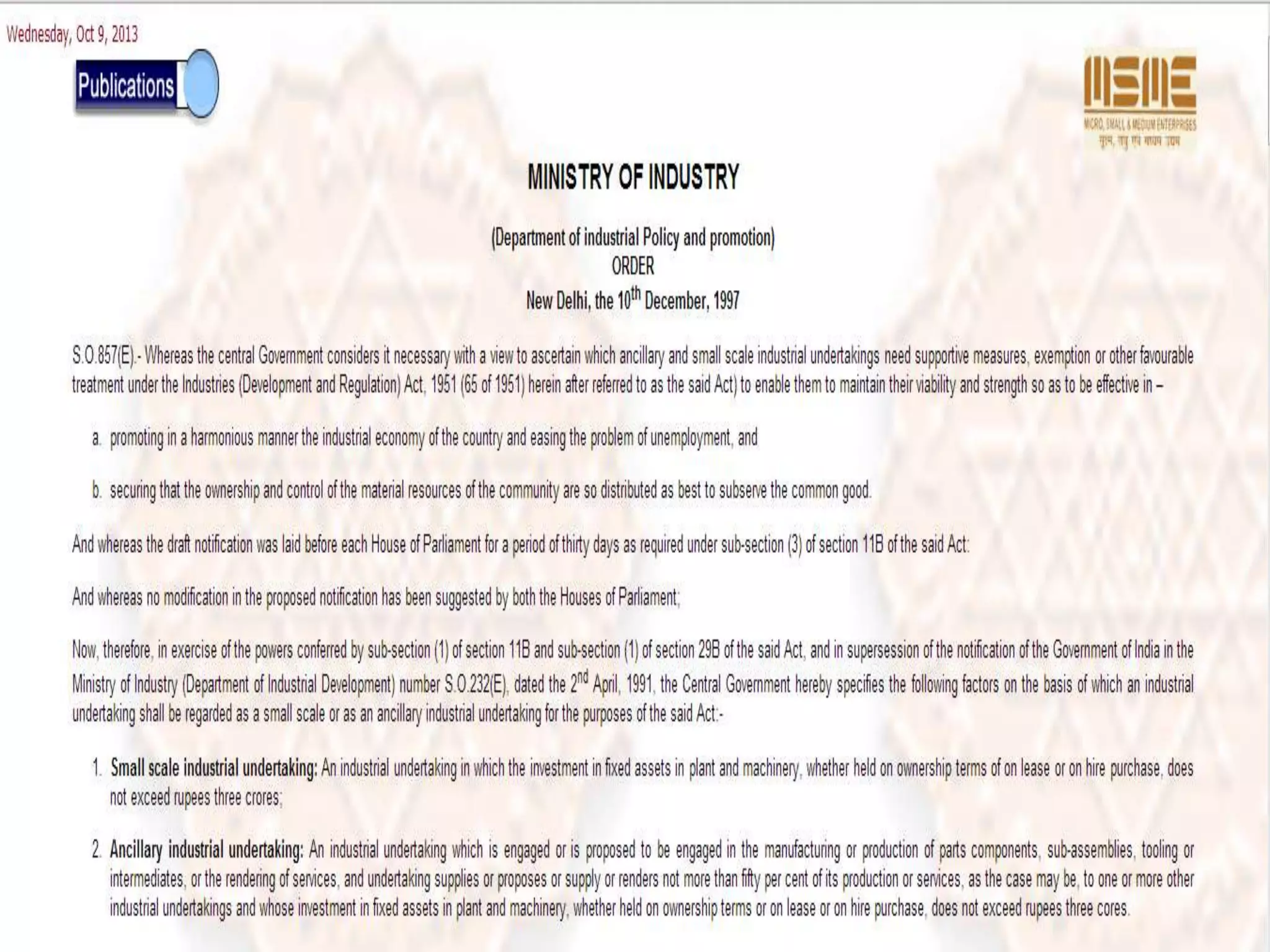
• MINISTRY OF INDUSTRY
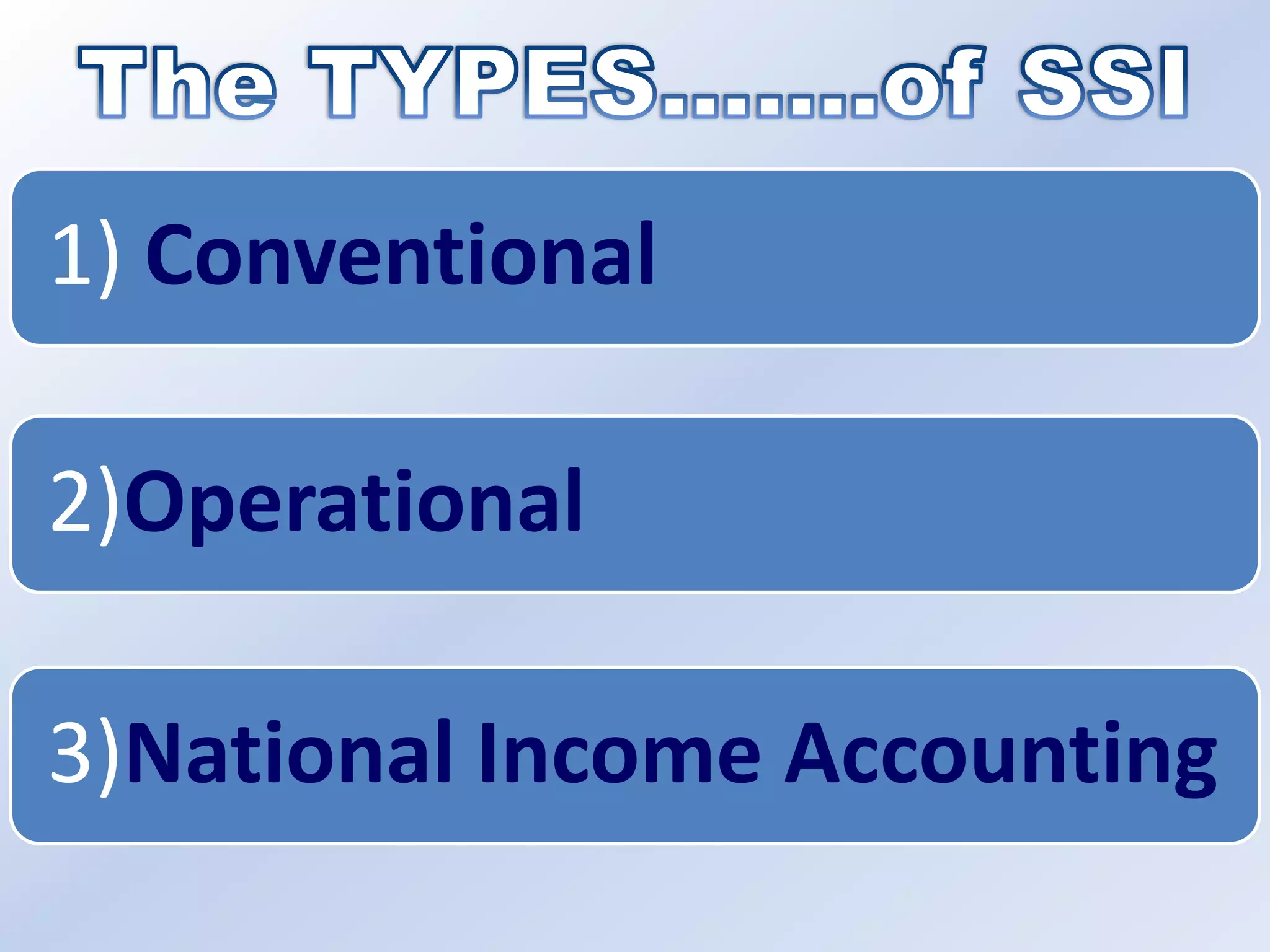
1) Conventional
2)Operational
3)National Income Accounting
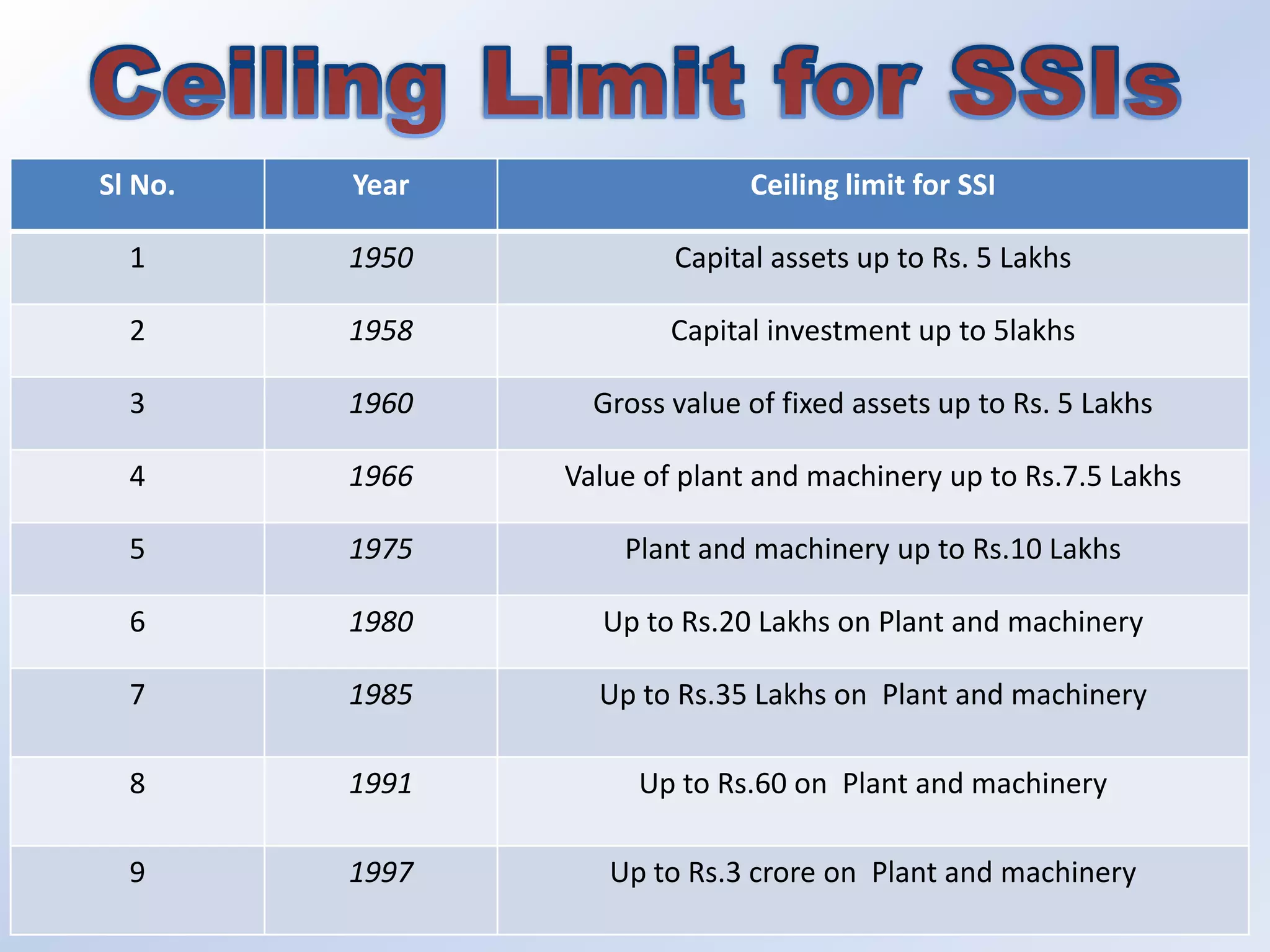
Sl No.

Year

Ceiling limit for SSI

1

1950

Capital assets up to Rs. 5 Lakhs

2

1958

Capital investment up to 5lakhs

3

1960

Gross value of fixed assets up to Rs. 5 Lakhs

4

1966

Value of plant and machinery up to Rs.7.5 Lakhs

5

1975

Plant and machinery up to Rs.10 Lakhs

6

1980

Up to Rs.20 Lakhs on Plant and machinery

7

1985

Up to Rs.35 Lakhs on Plant and machinery

8

1991

Up to Rs.60 on Plant and machinery

9

1997

Up to Rs.3 crore on Plant and machinery
Few of them may grow as medium scale
industry
Technology may become obsolete resulting in
closure of SSI
Generally found in urban or semi-urban
areas.
In India plenty of labour is available and capital
investment is less
 “Small Scale Industries” have very good future
in this scenario.
1) Innovative
2) Self Satisfaction
3) Caters to individual taste and styles
4) Small in operation
5) Strength of nation
6) Spread over wide areas
Scope for the Small Scale Industry in India is very vast.
Even by the help of Govt. & its policies. It has covered
most socioeconomic fields of this arena. Some common
areas of scope to be listed are,

a)
b)
c)
d)
e)
f)
g)
h)

Manufacturing, Servicing & repairing.
Construction.
Financial.
Retailing.
Wholesale business.
Transporting.
Public Utilities.
Communication.
1. Registered Small Scale Industries growth rate also

from 2.5

Lakhs during 1973-74 to 36 Lakhs in 2006-07
2. The production of goods improved from 7200 crore in 1973-74 to
700,000 crore in 2006-07

3. Employment increased from 40 Lakhs in 1973-74 to 200 lakhs in
2006-07
4. Accordingly exports rate also increased to Rs.75,000 Lakhs

5. In this way SSI accounts for 35% in total manufacturing, 80% in total
employment and 38% of total exports of the country.
1. Selection of Industry type
2. Arrangement of technology
3. Study of equipment requirement
4. Study of resource requirement
5. Selection of land and premises
6. Study of Investment requirement
7. Study of Plant & equipment requirement
8. Study of raw material & source of supply requirement
9. Study of economic viability pricing strategy, financing
and Breakeven analysis
10.Application for loan to financial institution
11.Project report preparation
12
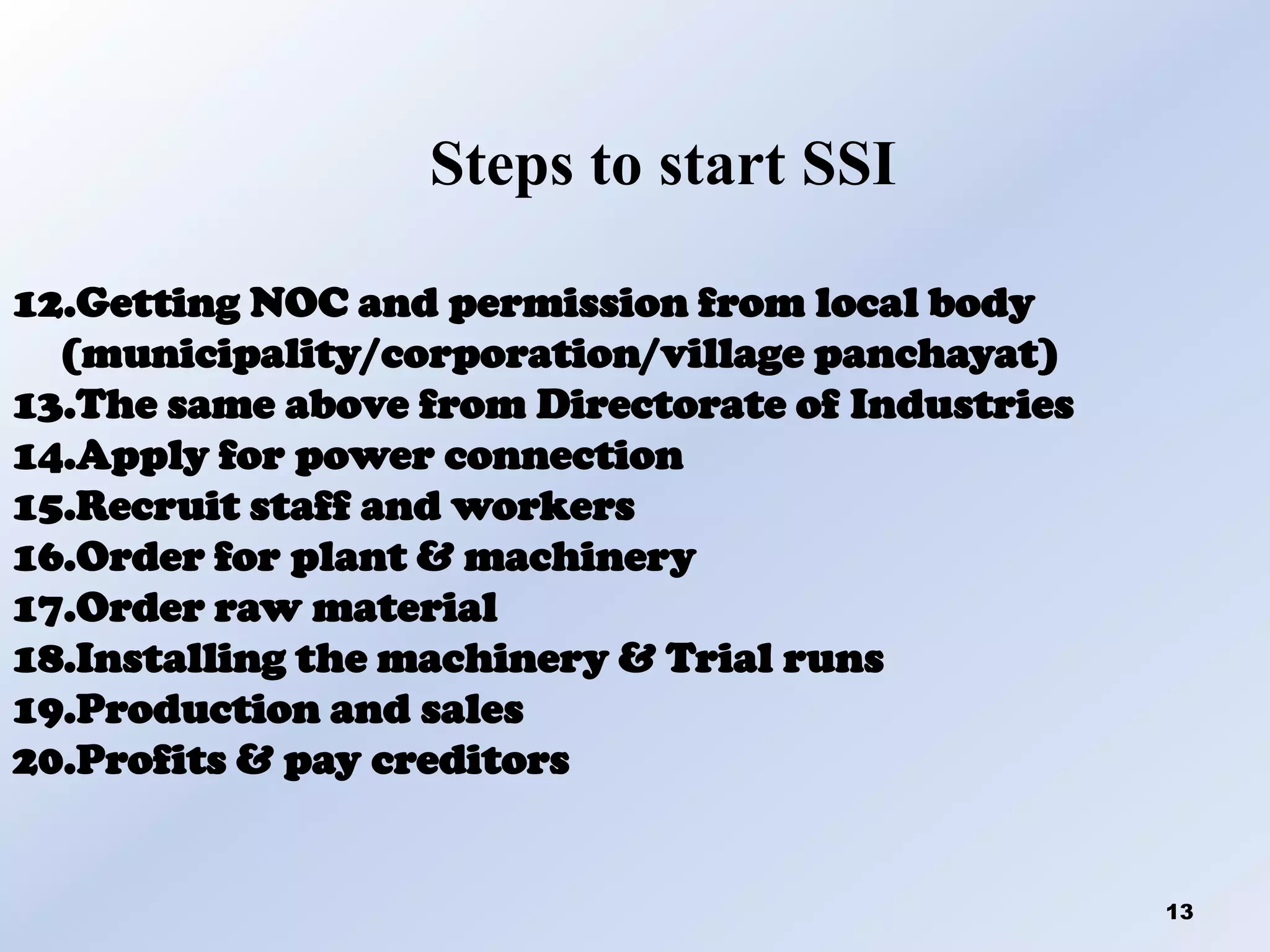
Steps to start SSI
12.Getting NOC and permission from local body
(municipality/corporation/village panchayat)
13.The same above from Directorate of Industries
14.Apply for power connection
15.Recruit staff and workers
16.Order for plant & machinery
17.Order raw material
18.Installing the machinery & Trial runs
19.Production and sales
20.Profits & pay creditors

13
Small scale industry

Small scale industry

  • 1.
    1. 2. 3. 4. • Important forIndustrialization. • Govt. has varies policies to develop SSI • Gross IDEAS => GROSS investment of land,building plant etc. • MINISTRY OF INDUSTRY
  • 3.
  • 4.
    Sl No. Year Ceiling limitfor SSI 1 1950 Capital assets up to Rs. 5 Lakhs 2 1958 Capital investment up to 5lakhs 3 1960 Gross value of fixed assets up to Rs. 5 Lakhs 4 1966 Value of plant and machinery up to Rs.7.5 Lakhs 5 1975 Plant and machinery up to Rs.10 Lakhs 6 1980 Up to Rs.20 Lakhs on Plant and machinery 7 1985 Up to Rs.35 Lakhs on Plant and machinery 8 1991 Up to Rs.60 on Plant and machinery 9 1997 Up to Rs.3 crore on Plant and machinery
  • 6.
    Few of themmay grow as medium scale industry Technology may become obsolete resulting in closure of SSI Generally found in urban or semi-urban areas.
  • 7.
    In India plentyof labour is available and capital investment is less  “Small Scale Industries” have very good future in this scenario. 1) Innovative 2) Self Satisfaction 3) Caters to individual taste and styles 4) Small in operation 5) Strength of nation 6) Spread over wide areas
  • 9.
    Scope for theSmall Scale Industry in India is very vast. Even by the help of Govt. & its policies. It has covered most socioeconomic fields of this arena. Some common areas of scope to be listed are, a) b) c) d) e) f) g) h) Manufacturing, Servicing & repairing. Construction. Financial. Retailing. Wholesale business. Transporting. Public Utilities. Communication.
  • 10.
    1. Registered SmallScale Industries growth rate also from 2.5 Lakhs during 1973-74 to 36 Lakhs in 2006-07 2. The production of goods improved from 7200 crore in 1973-74 to 700,000 crore in 2006-07 3. Employment increased from 40 Lakhs in 1973-74 to 200 lakhs in 2006-07 4. Accordingly exports rate also increased to Rs.75,000 Lakhs 5. In this way SSI accounts for 35% in total manufacturing, 80% in total employment and 38% of total exports of the country.
  • 12.
    1. Selection ofIndustry type 2. Arrangement of technology 3. Study of equipment requirement 4. Study of resource requirement 5. Selection of land and premises 6. Study of Investment requirement 7. Study of Plant & equipment requirement 8. Study of raw material & source of supply requirement 9. Study of economic viability pricing strategy, financing and Breakeven analysis 10.Application for loan to financial institution 11.Project report preparation 12
  • 13.
    Steps to startSSI 12.Getting NOC and permission from local body (municipality/corporation/village panchayat) 13.The same above from Directorate of Industries 14.Apply for power connection 15.Recruit staff and workers 16.Order for plant & machinery 17.Order raw material 18.Installing the machinery & Trial runs 19.Production and sales 20.Profits & pay creditors 13