
Dr. Rajib Bhattacharjee
Apollo Gleneagles Hospital,
kolkata
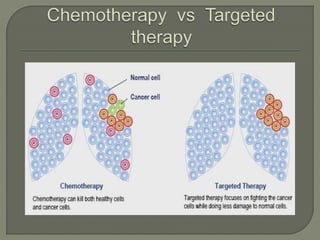
Monoclonal Antibodies Small molecule agent
ENZYME
INHIBITORS
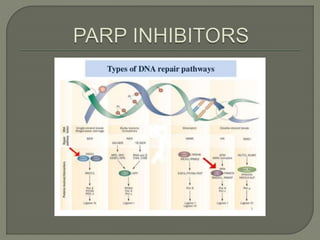
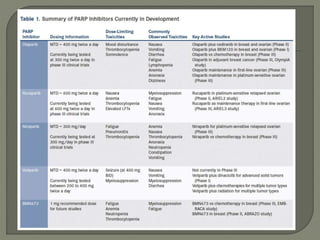
PARP Inhibitors
Fernesyl
Transferase
inhibitors
CDK Inhibitors
Histone
Deacetylase
Inhibitors
Proteasome
Inhibitors
EMP
Dehydrogenase
inhibitors
TYROSINE KINASE
INHIBITORS
Single
Receptor TKI
Erlotinib
Multireceptor
TKI
Sunitinib
Non
Receptor TKI
Imatinib
Defined as the situation when a mutation in either of two genes
individually has no effect, but combining the mutations lead to death.
P
A
L
O
M
A
1
Conclusion: PALOMA-2 expands and confirms the
significant clinical benefit and safety of P+L in
ER+/HER2– ABC pts who had not received prior
systemic therapy for their advanced disease.
Conclusion: Palbociclib plus Fulvestrant improves
PFS and was well tolerated in this study.
Palbociclib is indicated for the treatment of
HR-positive, HER2-negative advanced or
metastatic breast cancer in combination
with:
 An aromatase inhibitor as initial endocrine
based therapy in postmenopausal women; or.
 Fulvestrant in women with disease
progression following endocrine therapy
FDA approved indications
 Third-line treatment of
multiple myeloma
(2003) and expanded
to first-line treatment
in 2008.
 Mantle cell lymphoma
(2006).
 First-line in multiple
myeloma with
Melphalan &
Prednisolone(VMP).
Adverse effects
 Thrombocytopenia
 Peripheral
Neuropathy
Possible use in Solid tumors
•NSCLC
•RCC
•Breast carcinoma
Indications
Relapsed or refractory
Multiple Myeloma 2-4th
line
 Monotherapy: 20/27 or
20/56 schedule
 Dual regimen: with
Dexamethasone
 Triple combination: with
Lenalidomide &
Dexamethasone (Aspire
Trial)
Toxicities
 Hematologic –
Neutropenia,
Thrombocytopenia
 Cardiac – CHF, IHD
 Pulm HTN
 Hepatic – elevation of
transaminase
 Peripheral neuropathy
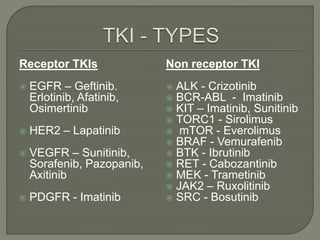
Receptor TKIs
 EGFR – Geftinib.
Erlotinib, Afatinib,
Osimertinib
 HER2 – Lapatinib
 VEGFR – Sunitinib,
Sorafenib, Pazopanib,
Axitinib
 PDGFR - Imatinib
Non receptor TKI
 ALK - Crizotinib
 BCR-ABL - Imatinib
 KIT – Imatinib, Sunitinib
 TORC1 - Sirolimus
 mTOR - Everolimus
 BRAF - Vemurafenib
 BTK - Ibrutinib
 RET - Cabozantinib
 MEK - Trametinib
 JAK2 – Ruxolitinib
 SRC - Bosutinib
 Imatinib
 Dasatinib
 Nilotinib
 Bosutinib
 Ponatinib
Indications
 CML - Ph+
 ALL
 GIST
 Darmatofibrosarcoma
protuberance
 MDS/MPS
 Hypereosinophillic
syndrome
 Mastocytosis
Adverse effects
 Edema
 Neutropenia
 Nausea
 Muscle cramps
 Thrombocytopenia
 Rash, fatigue, diarrhea
 Headache, arthralgia,
 Myalgia
1st generation 2nd generation 3rd generation
Crizotonib Ceritinib Lorlatinib
Alectinib
Brigatinib
Crizotinib is active both in 1st as well as 2nd line
2. Poor CNS Penetration
Toxicities
Visual disorders
GI effects
Edema
Fatigue
Elevated liver
enzymes
QT Prolongation
Pneumonitis
Indications
 In April 2014, Ceritinib
received accelerated
approval for patients with
ALK-positive metastatic
NSCLC whose disease
has progressed or who
are intolerant to crizotinib
 On May 26, 2017, the
U.S. F.D.A granted regular
approval to ceritinib for
metastatic ALK-positive
NSCLC
Adverse Effects
 GI Effects
 Anemia
 Elevated liver enzymes
 Fatigue
 Pneumonitis
Indications
 In ALK +ve advanced
NSCLC – after
progression
/intolerance to
Crizotinib (FDA 2015)
 Upfront setting (FDA
2017)
Adverse Effects
 Constipation
 Elevated CPK
 Fatigue, myalgia
 Fluid retention
 Elevated liver enzymes
 Bradycardia
 Pneumonitis
Indication
1st line drug in
metastatic
NSCLC with
sensitising EGFR
mutation
Adverse Effects
 Elevated liver enzymes
 GI Effects
 Skin reaction
 Proteinuria
 Anorexia
 Asthenia
 Interstitial lung disease
 Keratitis, Dry eye
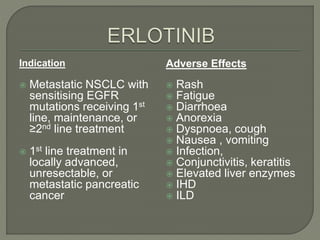
Indication
 Metastatic NSCLC with
sensitising EGFR
mutations receiving 1st
line, maintenance, or
≥2nd line treatment
 1st line treatment in
locally advanced,
unresectable, or
metastatic pancreatic
cancer
Adverse Effects
 Rash
 Fatigue
 Diarrhoea
 Anorexia
 Dyspnoea, cough
 Nausea , vomiting
 Infection,
 Conjunctivitis, keratitis
 Elevated liver enzymes
 IHD
 ILD
Adverse Effects
 Diarrhea, stomatitis
 Acneiform rash/dermatitis
 Paronychia, dry skin
 Decreased appetite
 Loss of weight
 Cystitis
 Epistaxis, rhinorrhea
 Elevated liver enzymes
 Pyrexia
 Lymphopenia
 Thrombocytopenia
 Anemia
 Diarrhea
 Rash
 Neutropenia
 Dry skin
 Hyponatremia
 Nail toxicity
 Venous
thromboembolism
 Pneumonia
 Interstitial lung
disease/pneumonitis
 QTc prolongation
 Cardiomyopathy
 Keratitis
Adverse Effects
Small molecule targeted therapy

Small molecule targeted therapy

  • 1.
    Dr. Rajib Bhattacharjee ApolloGleneagles Hospital, kolkata
  • 3.
  • 4.
  • 7.
    Defined as thesituation when a mutation in either of two genes individually has no effect, but combining the mutations lead to death.
  • 16.
  • 19.
    Conclusion: PALOMA-2 expandsand confirms the significant clinical benefit and safety of P+L in ER+/HER2– ABC pts who had not received prior systemic therapy for their advanced disease.
  • 20.
    Conclusion: Palbociclib plusFulvestrant improves PFS and was well tolerated in this study.
  • 21.
    Palbociclib is indicatedfor the treatment of HR-positive, HER2-negative advanced or metastatic breast cancer in combination with:  An aromatase inhibitor as initial endocrine based therapy in postmenopausal women; or.  Fulvestrant in women with disease progression following endocrine therapy
  • 26.
    FDA approved indications Third-line treatment of multiple myeloma (2003) and expanded to first-line treatment in 2008.  Mantle cell lymphoma (2006).  First-line in multiple myeloma with Melphalan & Prednisolone(VMP). Adverse effects  Thrombocytopenia  Peripheral Neuropathy Possible use in Solid tumors •NSCLC •RCC •Breast carcinoma
  • 27.
    Indications Relapsed or refractory MultipleMyeloma 2-4th line  Monotherapy: 20/27 or 20/56 schedule  Dual regimen: with Dexamethasone  Triple combination: with Lenalidomide & Dexamethasone (Aspire Trial) Toxicities  Hematologic – Neutropenia, Thrombocytopenia  Cardiac – CHF, IHD  Pulm HTN  Hepatic – elevation of transaminase  Peripheral neuropathy
  • 29.
    Receptor TKIs  EGFR– Geftinib. Erlotinib, Afatinib, Osimertinib  HER2 – Lapatinib  VEGFR – Sunitinib, Sorafenib, Pazopanib, Axitinib  PDGFR - Imatinib Non receptor TKI  ALK - Crizotinib  BCR-ABL - Imatinib  KIT – Imatinib, Sunitinib  TORC1 - Sirolimus  mTOR - Everolimus  BRAF - Vemurafenib  BTK - Ibrutinib  RET - Cabozantinib  MEK - Trametinib  JAK2 – Ruxolitinib  SRC - Bosutinib
  • 32.
     Imatinib  Dasatinib Nilotinib  Bosutinib  Ponatinib
  • 35.
    Indications  CML -Ph+  ALL  GIST  Darmatofibrosarcoma protuberance  MDS/MPS  Hypereosinophillic syndrome  Mastocytosis Adverse effects  Edema  Neutropenia  Nausea  Muscle cramps  Thrombocytopenia  Rash, fatigue, diarrhea  Headache, arthralgia,  Myalgia
  • 38.
    1st generation 2ndgeneration 3rd generation Crizotonib Ceritinib Lorlatinib Alectinib Brigatinib
  • 39.
    Crizotinib is activeboth in 1st as well as 2nd line
  • 40.
    2. Poor CNSPenetration Toxicities Visual disorders GI effects Edema Fatigue Elevated liver enzymes QT Prolongation Pneumonitis
  • 41.
    Indications  In April2014, Ceritinib received accelerated approval for patients with ALK-positive metastatic NSCLC whose disease has progressed or who are intolerant to crizotinib  On May 26, 2017, the U.S. F.D.A granted regular approval to ceritinib for metastatic ALK-positive NSCLC Adverse Effects  GI Effects  Anemia  Elevated liver enzymes  Fatigue  Pneumonitis
  • 46.
    Indications  In ALK+ve advanced NSCLC – after progression /intolerance to Crizotinib (FDA 2015)  Upfront setting (FDA 2017) Adverse Effects  Constipation  Elevated CPK  Fatigue, myalgia  Fluid retention  Elevated liver enzymes  Bradycardia  Pneumonitis
  • 52.
    Indication 1st line drugin metastatic NSCLC with sensitising EGFR mutation Adverse Effects  Elevated liver enzymes  GI Effects  Skin reaction  Proteinuria  Anorexia  Asthenia  Interstitial lung disease  Keratitis, Dry eye
  • 56.
    Indication  Metastatic NSCLCwith sensitising EGFR mutations receiving 1st line, maintenance, or ≥2nd line treatment  1st line treatment in locally advanced, unresectable, or metastatic pancreatic cancer Adverse Effects  Rash  Fatigue  Diarrhoea  Anorexia  Dyspnoea, cough  Nausea , vomiting  Infection,  Conjunctivitis, keratitis  Elevated liver enzymes  IHD  ILD
  • 67.
    Adverse Effects  Diarrhea,stomatitis  Acneiform rash/dermatitis  Paronychia, dry skin  Decreased appetite  Loss of weight  Cystitis  Epistaxis, rhinorrhea  Elevated liver enzymes  Pyrexia
  • 77.
     Lymphopenia  Thrombocytopenia Anemia  Diarrhea  Rash  Neutropenia  Dry skin  Hyponatremia  Nail toxicity  Venous thromboembolism  Pneumonia  Interstitial lung disease/pneumonitis  QTc prolongation  Cardiomyopathy  Keratitis Adverse Effects